Bitten by a Cottonmouth While Clearing Leaves Near a North Carolina Pond? Here’s What to Do
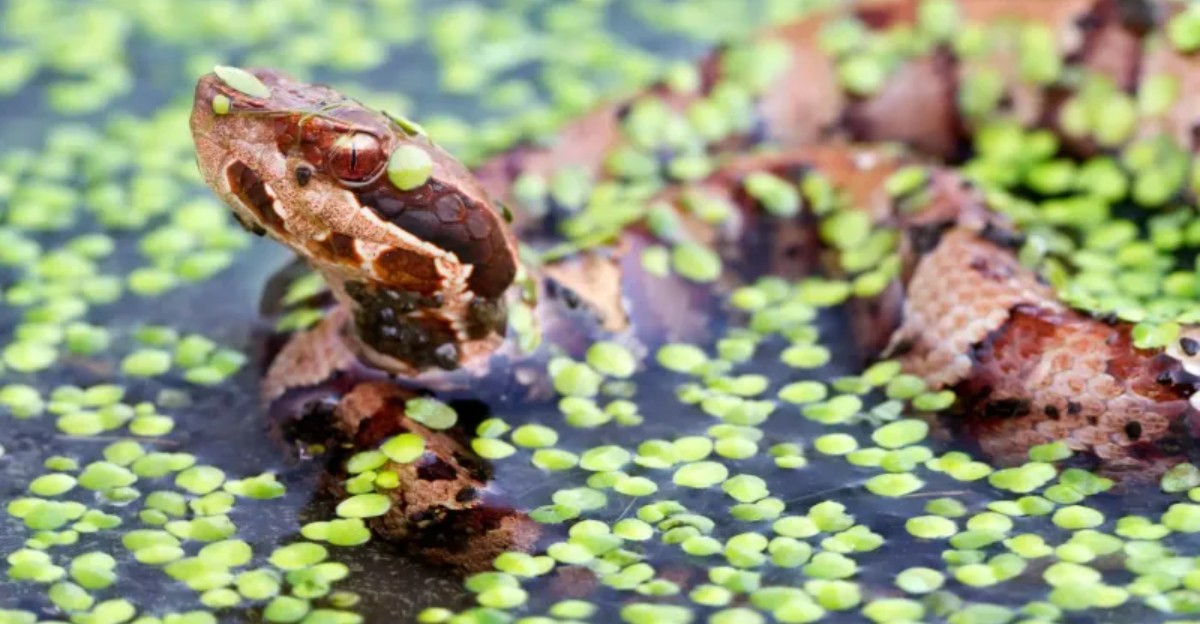
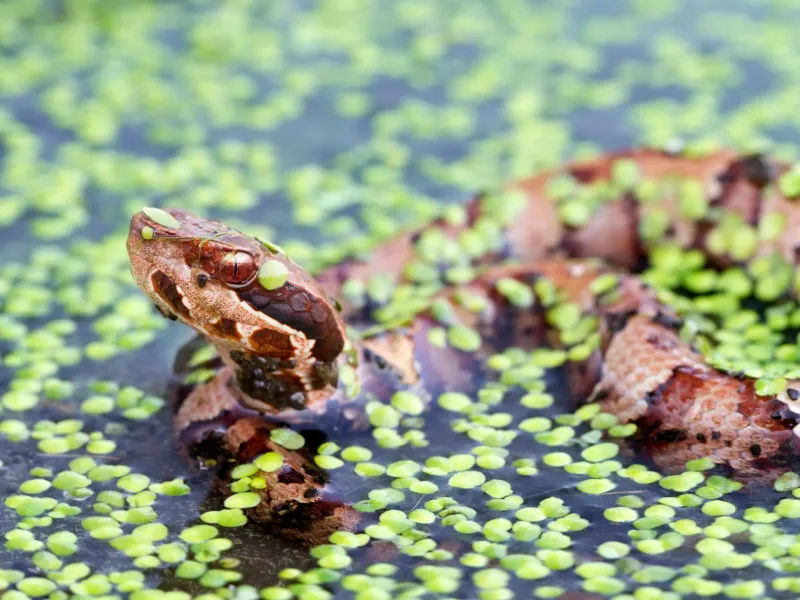
A baby version of this pond snake wiggles a bright yellow-green tail tip like a tiny worm to lure frogs close. That clever trick works on curious hands, too. Fall is when many of these youngsters are out exploring.
One thing I love about autumn is raking soggy leaves by the water while the air turns crisp. The real question is what hides under those damp piles. Around ponds in eastern North Carolina, the answer can be a heavy, dark snake with a surprising white mouth.
I tend to think most of us picture snakes as summer problems. Yet cooler days often push certain species into daytime activity, right when we grab our rakes and gloves.
So what would you do in the first five minutes after a sudden, sharp sting near the pond’s edge? Your answer matters more than you might guess.
1. That Sharp Sting Under the Pond-Side Leaf Pile Deserves a Closer Look
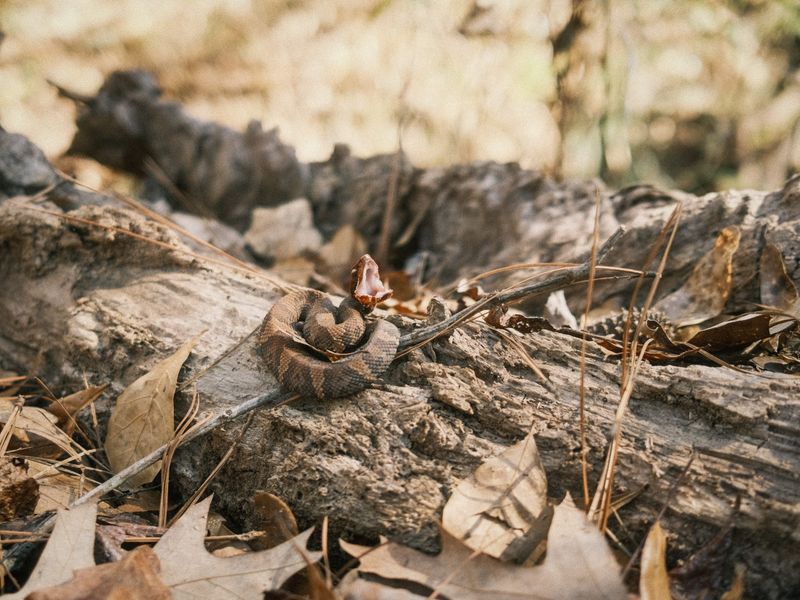
Raking near water feels peaceful until something jabs your hand or ankle with a burning bite. In much of North Carolina, especially the Coastal Plain and Sandhills, a cottonmouth is a real possibility near ponds, swamps, and slow creeks.
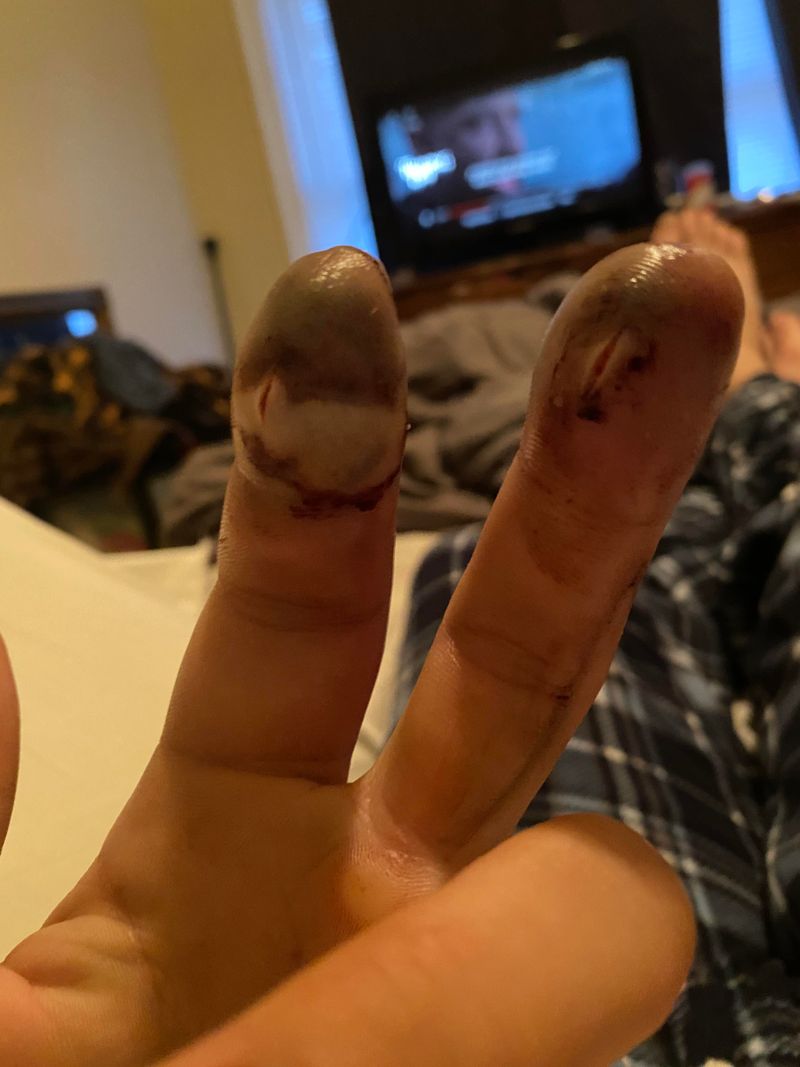
Venomous bites usually announce themselves fast. Many people feel sharp, intense pain within minutes, followed by swelling that spreads up the arm or leg. You may also spot one or two puncture marks, though bites can look messy or hard to read.
Bruising, discoloration, and blisters can show up around the wound as time passes. Some people also notice a metallic taste, tingling, nausea, or dizziness. Those signs point to venom moving through the body.
A so-called dry bite, with little or no venom, does happen. Still, nobody can tell a dry bite from a serious one just by looking at it in the first few minutes. Symptoms can also start mild and grow worse later.
So treat any bite from an unidentified snake near water as a medical emergency. Even a harmless water snake bite deserves a doctor’s check, but guessing wrong about a cottonmouth carries a much bigger price. Let professionals sort it out.
2. Call 911 and the Carolinas Poison Center Before Anything Else
Your phone is the most useful first-aid tool you own after a snakebite. Call 911 right away, even if the pain seems manageable. Getting to a hospital with antivenom quickly gives you the best shot at a smooth recovery.
While you wait, the Carolinas Poison Center at 1-800-222-1222 can guide you step by step. Their specialists handle hundreds of snakebite calls each year, and they can also coach the hospital team if needed.
Next, move away from the snake. Do not try to catch it or chase it for identification, because second bites happen that way. A quick photo from a safe distance is plenty.
Then take off rings, watches, bracelets, and tight sleeves on the bitten limb. Swelling can build fast, and jewelry can become a painful trap within an hour.
Gently wash the bite with soap and water if it is handy, and cover it with a clean, dry dressing. Keep the limb still and roughly at heart level.
Try to stay calm and limit walking. If someone else can drive you to meet the ambulance or reach the emergency room, let them handle it. Note the time of the bite for the doctors.
3. Skip the Tourniquet, Ice Pack, and Old Snakebite Kit
Old Westerns made snakebite care look dramatic, with knives, suction, and a rope tied tight. Sadly, those movie moves can turn a treatable bite into a much bigger mess.
Cutting the wound adds damage and opens the door to infection. Sucking out venom, by mouth or with a plastic suction kit, removes little if any venom, according to medical guidance. Save your energy for getting help.
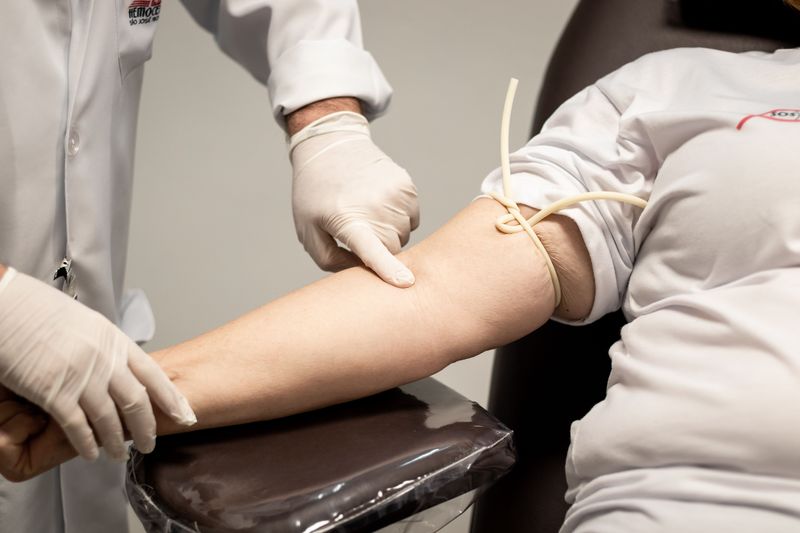
Tourniquets and tight bandages are another hard no. Cottonmouth venom mainly harms tissue, so trapping it in one spot can make local injury worse. A loose, clean dressing is all the wound needs.
Ice and cold packs also cause trouble. Cold can add tissue injury on top of venom damage, and it does nothing to neutralize the bite.
Hold off on pain relievers like aspirin or ibuprofen unless a doctor approves them, since they can affect bleeding. Skip caffeine and any other drinks meant to steady your nerves, too.
Finally, avoid electric shock gadgets and home remedies you find online. Antivenom given in a hospital is the proven treatment. Everything else mostly wastes precious time.
4. How to Spot a Cottonmouth by Its White Mouth and Thick Body
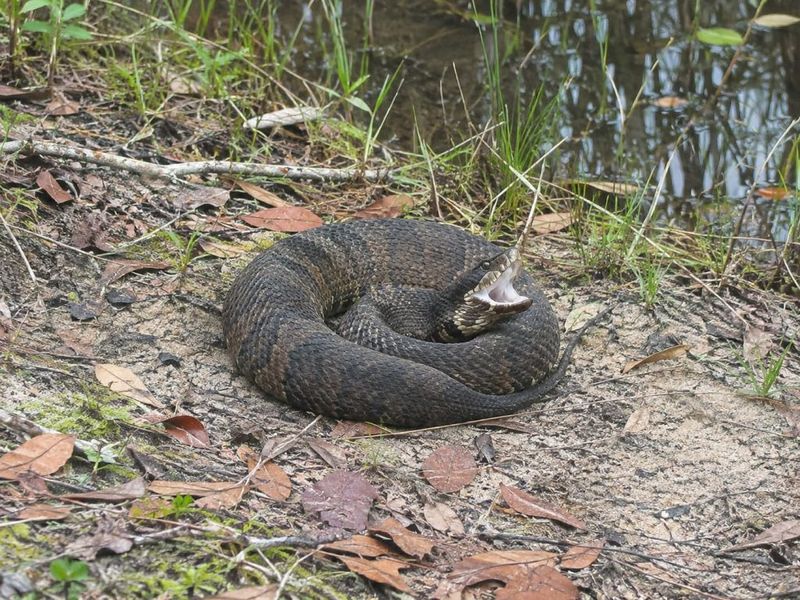
Few snakes come with a built-in warning sign quite like this one. When threatened, a cottonmouth often opens its mouth wide to flash a bright white lining, which inspired its common name.
Adults usually reach 3 to 4 feet, with thick, heavy bodies in dark olive, brown, or nearly black. The head is broad and blocky, clearly wider than the neck. A dark stripe often runs from the eye toward the jaw.
Young cottonmouths look quite different. They show bold, reddish-brown crossbands and a yellowish or greenish tail tip used to lure frogs and fish.
Here is the tricky part. Harmless water snakes, like the northern water snake, look similar and live in the same ponds. Many people mistake them for cottonmouths, and the reverse also happens.
Swimming style can offer a clue. Cottonmouths tend to float high, with much of the body riding on the surface, while water snakes usually swim lower.
Even so, identifying snakes up close is not worth the risk. Watch from at least several feet away, and treat any thick, dark pond snake with respect. North Carolina hosts plenty of look-alikes.
5. Cottonmouth Venom Works on Tissue and Blood, Not Nerves
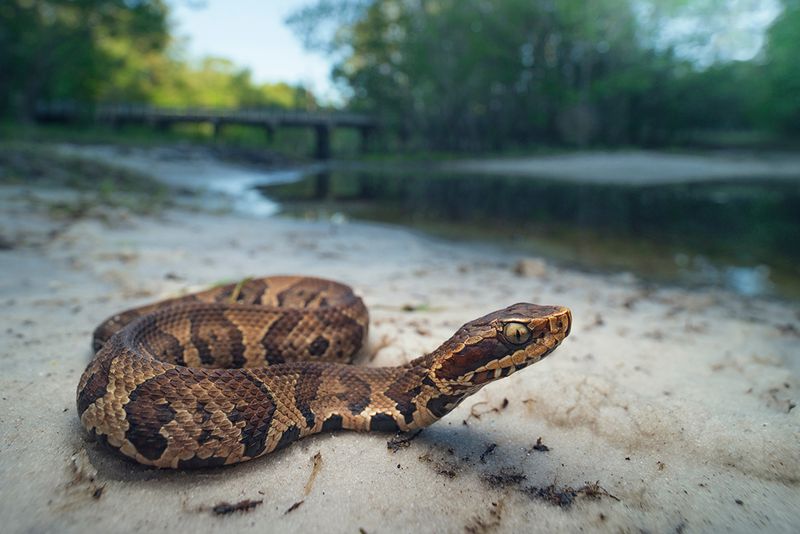
Doctors call cottonmouth venom hemotoxic, and that word explains a lot. It mainly targets tissue, blood vessels, and blood clotting rather than the nervous system.
That is why pain, swelling, and bruising lead the show. Without treatment, damage around the bite can keep spreading over hours, and severe cases may bring blisters or tissue loss near the wound.
Some people also develop body-wide symptoms. Nausea, vomiting, weakness, sweating, and low blood pressure can appear with moderate or serious bites. Blood tests help doctors check clotting problems you cannot see.
Hospitals in North Carolina typically treat these bites with antivenom, such as CroFab or Anavip, which work against pit viper venom.
Doctors decide on doses based on how symptoms progress, so expect close monitoring, sometimes for a day or longer.
Thankfully, severe outcomes from cottonmouth bites are rare with modern care. The bigger concern for most patients is lasting stiffness or tissue injury in a hand or foot.
Recovery may include follow-up visits and some physical therapy. Ask your care team about warning signs to watch for at home, like returning swelling or unusual bleeding. Fast treatment usually means a faster return to your garden.
6. Fall Leaf Raking Near Water Puts You in the Snake Zone
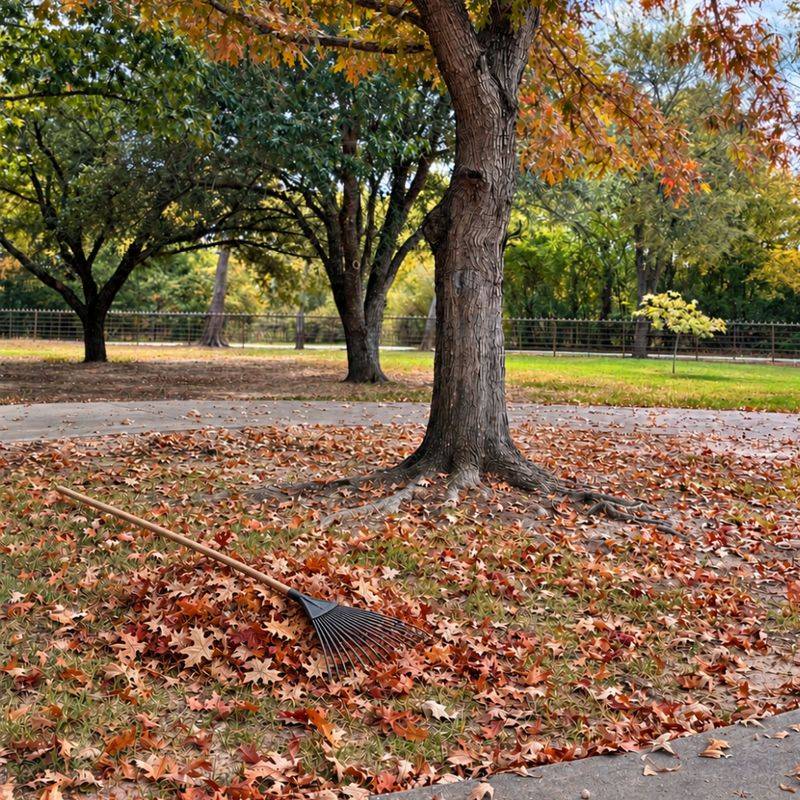
Autumn brings a handful of reasons cottonmouths cross paths with gardeners. Snakes are cold-blooded, so their activity follows the weather. On hot summer days they often move more at night, but mild fall afternoons can draw them out to bask.
Births add to the count. Cottonmouths give birth to live young, usually from late summer into early fall. Those newborns disperse in search of food and shelter, and inexperienced youngsters may turn up in surprising spots.
As temperatures dip, many cottonmouths also travel toward winter shelters. These spots include stump holes, root tangles, burrows, and slightly higher ground near wetlands. That movement can carry them through yards and across paths.
Now add leaf piles. Thick, damp layers of leaves stay cool and hidden, offering cover for snakes and for the frogs they hunt.
Wet edges around ponds rank as prime territory. Mud, cattails, and fallen branches create the kind of habitat these snakes favor.
None of this means danger lurks behind every rake stroke. It simply means paying attention matters more during fall cleanup. Slow down near the water and look before your hands go in.
7. Snake-Smart Habits Make Pond Cleanup Much Safer
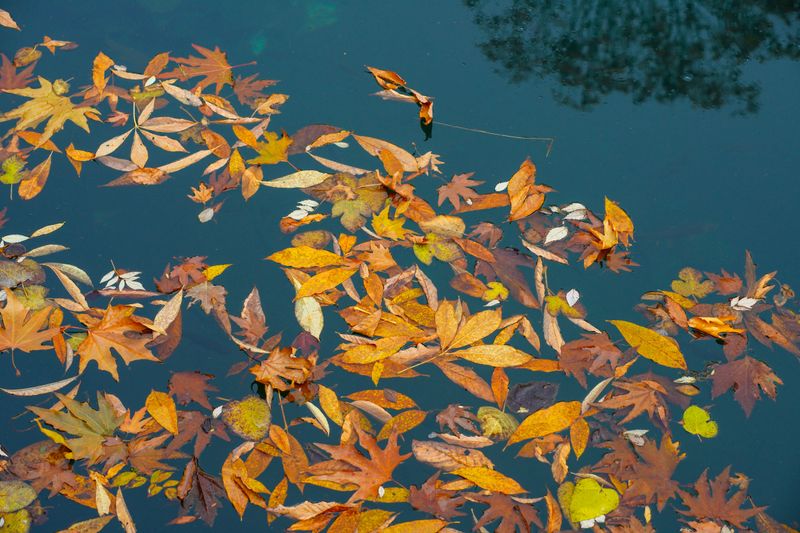
A few small changes in your routine can lower bite risk a lot. Most bites happen to hands and feet, so protect those first.
Wear thick leather gloves and tall boots when working near water. Long, loose pants add another layer between your skin and anything hidden in the leaves.
Use a long-handled rake to tug piles apart before you reach in. Lifting a corner and pausing for a moment gives any resting snake time to slip away.
Look where you step and where you sit. Logs, stone edges, and boards make tempting perches for people and snakes alike. Kick or tap them gently first.
Keep grass trimmed around the pond and avoid leaving leaf heaps, brush, or woodpiles close to paths. Less cover usually means fewer surprise meetings.
At dusk or after dark, carry a flashlight, even in your own yard. Warm evenings in early fall can bring snakes out hunting.
If you spot a snake, step back slowly and give it room, about six feet or more. Cottonmouths rarely chase people. Most bites happen when someone tries to grab, move, or harm the snake.
8. Save That Poison Center Number and Leave Pond Snakes Be
Ready for the simplest safety step on this list? Save 1-800-222-1222 in your phone right now. That Carolinas Poison Center line is free, open around the clock, and staffed by experts.
Share it with family members and anyone who helps with yard chores. Kids and visitors should also know to back away from any snake and call for an adult.
Remember, the North Carolina Wildlife Resources Commission does not remove snakes from private property. Their staff focuses on education and coexistence, and they can answer questions about identification.
If a venomous snake keeps showing up near your home, a licensed wildlife control operator can help. Avoid trying to trap or relocate it yourself.
Pond snakes also earn their keep. They eat rodents, fish, frogs, and other small creatures, helping keep a natural balance around your water garden.
Most nonvenomous water snakes are protected from needless harm, and harming any snake raises your own bite risk. Watching from a distance works better for everyone.
With gloves on, eyes open, and that number saved, you can keep enjoying fall chores by the pond. A little preparation turns panic into a plan.