How to Prune Orchids in Arizona Homes After They Finish Blooming
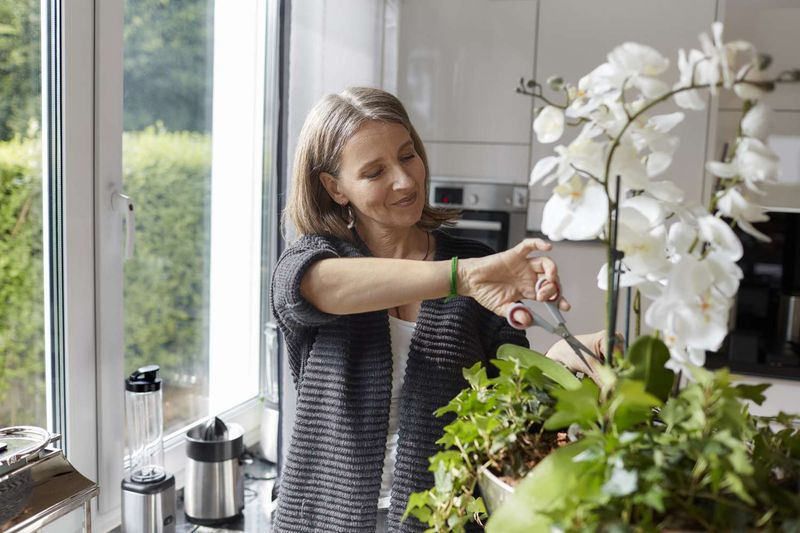
Cut a finished orchid spike the right way, and your plant may rest well. Cut it the wrong way, and you could stress a healthy plant for nothing.
The right move depends on the orchid you own and the color of its spike. Here is how Arizona growers can sort it out with a few quick checks.
Identify the Orchid Before You Cut
Before any blade touches your plant, figure out what you are growing. Orchids are a big family, and their care needs differ from one type to the next.
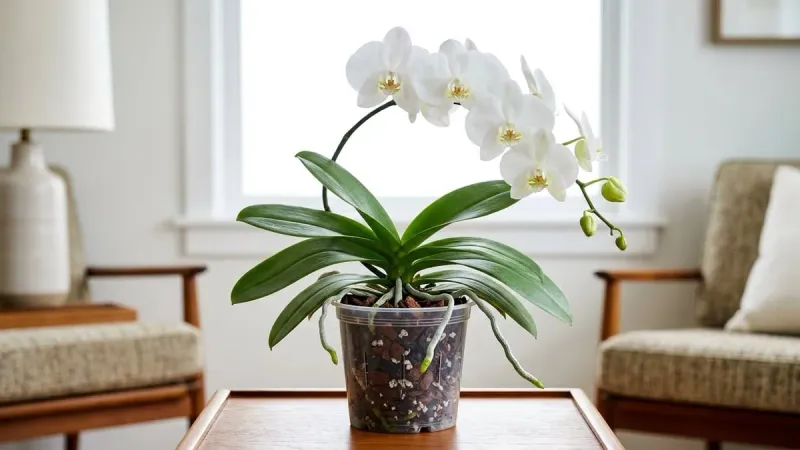
A grocery-store moth orchid, called Phalaenopsis, is the most common houseplant example, so it is a good starting guess.
Other orchids turn up in homes too. Iowa State Extension lists Phalaenopsis, Oncidium, Dendrobium, Cattleya, and Paphiopedilum among popular indoor choices, each with its own needs.
That is a hint that one pruning rule will not fit every pot on your shelf.
Check the plant tag if you still have it. Look at the leaves too.
Moth orchids have broad, flat, leathery leaves that grow in a fan from the center, with thick roots often poking over the pot rim. Other types may have tall pseudobulbs, narrow leaves, or cane-like stems.
Even within one genus, plants can behave a little differently. If you cannot name your orchid, take a photo to a local nursery or an orchid society member in Arizona.
A few minutes of identifying now can save you from a cut you cannot undo.
Check Whether the Spike Is Green or Drying
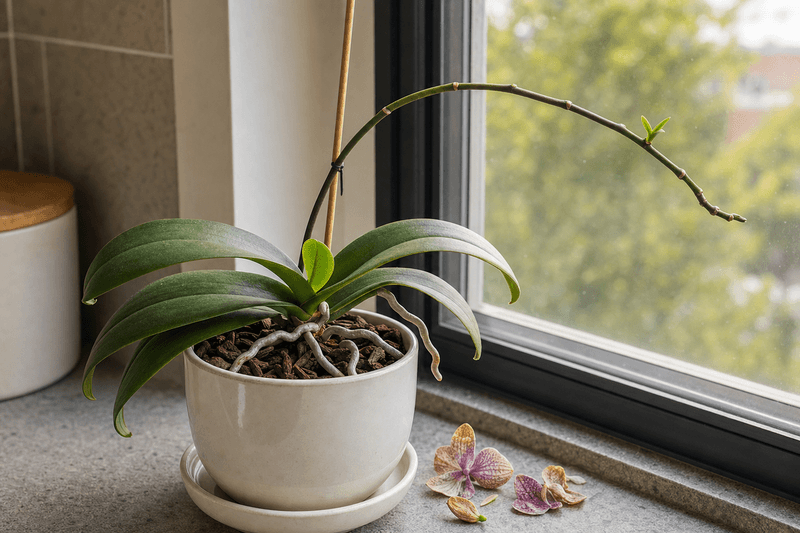
Once the last flower drops, take a good look at the spike itself. Its color tells you most of what you need to know.
A spike that has turned brown, tan, or papery is finished, while a plump green one may still have a job to do.
According to the American Orchid Society, most orchid genera flower just once on a spike. After it dries, you can cut it where it joins the plant.
For these orchids, there is nothing left to save on that stem.
A green spike is different. Some orchids can flower again from the same stem, so green does not automatically mean remove it.
Do not cut every green spike just because the blooms have faded.
Gently pinch the spike to feel it. Firm and green is alive, while hollow, shriveled, and yellow-brown is drying out.
Focus only on the flower spike here. Leaves and roots are a separate question, covered later.
Choose What to Do With a Green Phalaenopsis Spike
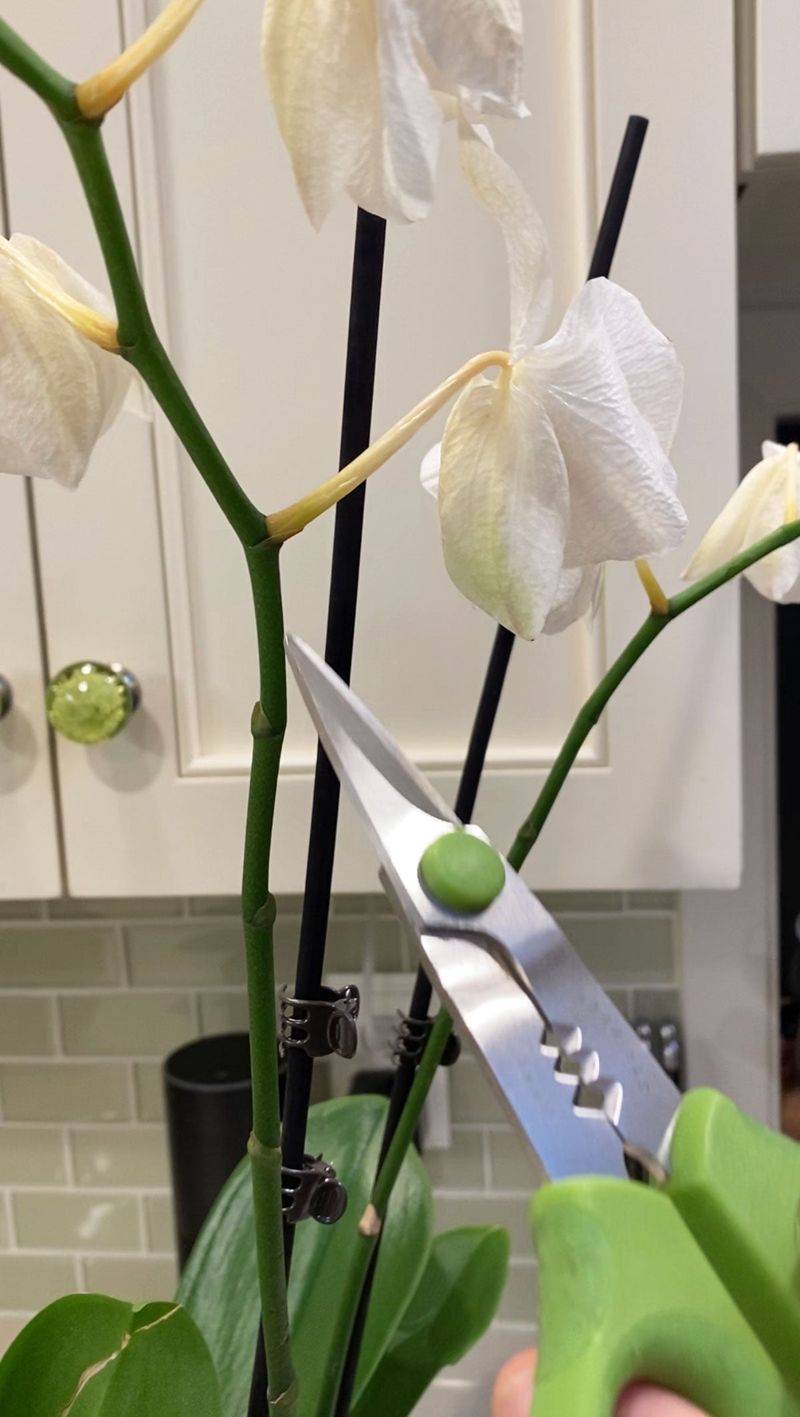
A healthy, large moth orchid with a green spike gives you two choices. Neither one is required, so pick the one that suits your plant.
Both are fine when the orchid looks strong.
The first option is to cut the spike about an inch above an unused node, one of the small bumps lower on the stem. This is an attempt to get another flush of flowers from the same spike.
The American Orchid Society notes that a second flush may be weaker and can tax the plant.
The second option is to cut the spike near the base and let the orchid recover. The same source says recovery is often the better choice.
A rested plant puts its energy into new leaves and roots.
New blooms from a trimmed spike can appear in about two to three months, but Iowa State makes clear they are not guaranteed. If your orchid looks small, tired, or limp, skip the node cut and choose recovery.
Some Other Orchids Can Reuse a Green Spike
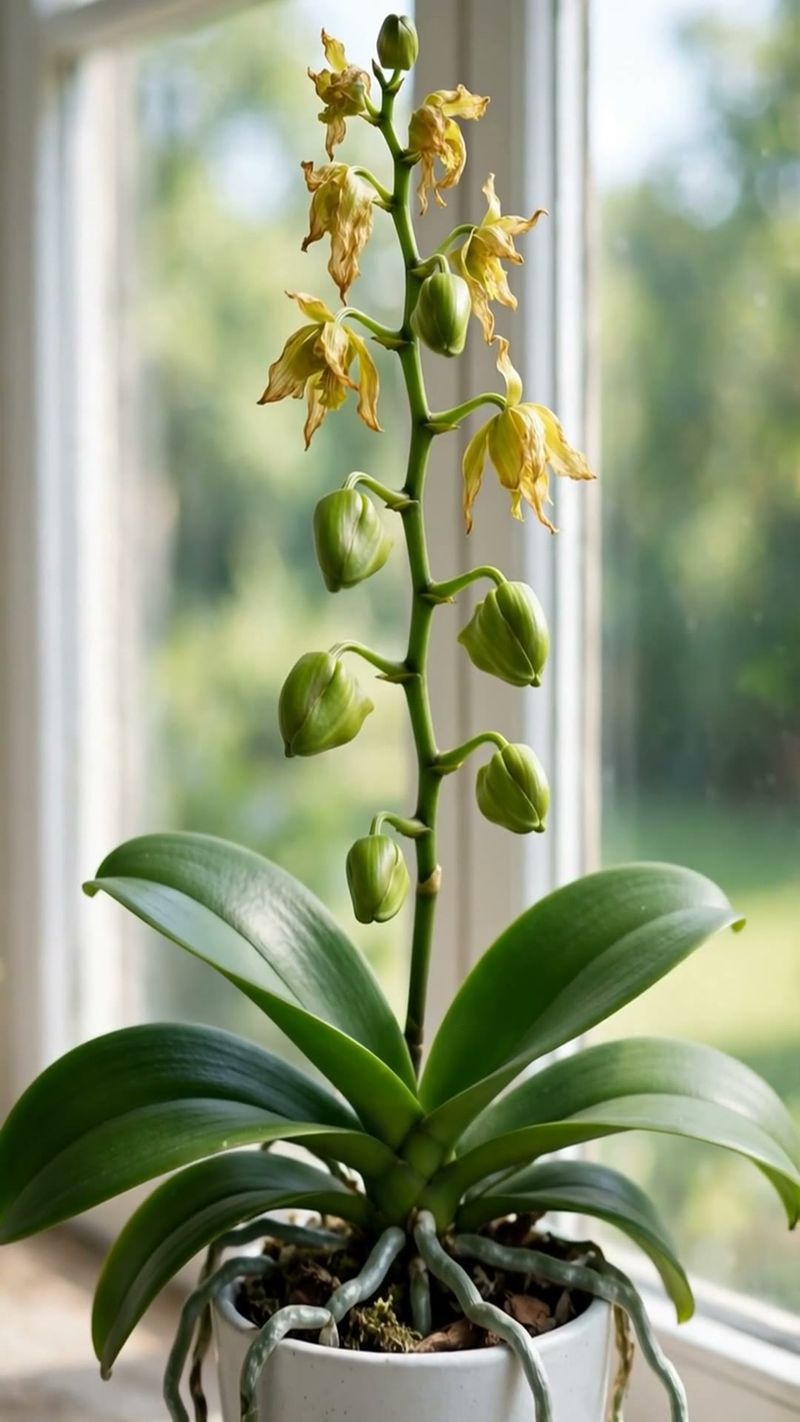
Moth orchids are not the only plants with spike surprises. A few orchids keep using the same green spike, which makes the cut-at-the-base rule too broad.
Knowing your plant keeps you from removing a stem that still has more to offer.
The American Orchid Society says some orchids can flower repeatedly from a green spike. Examples include novelty Phalaenopsis, Psychopsis, and some Dendrobiums.
The key word is some, since not every plant in those groups behaves this way.
This differs from the moth orchid node trick. With a standard Phalaenopsis, you cut above a node on purpose to try for new branches.
With these other orchids, the spike itself may keep producing, so you simply leave it alone while it stays green.
If you are unsure, wait. A green, firm spike does no harm sitting on the plant for a while.
Remove it only once it turns brown and dry, and look up your orchid’s type if you want to know its habits.
Use a Clean Tool for Any Necessary Cut
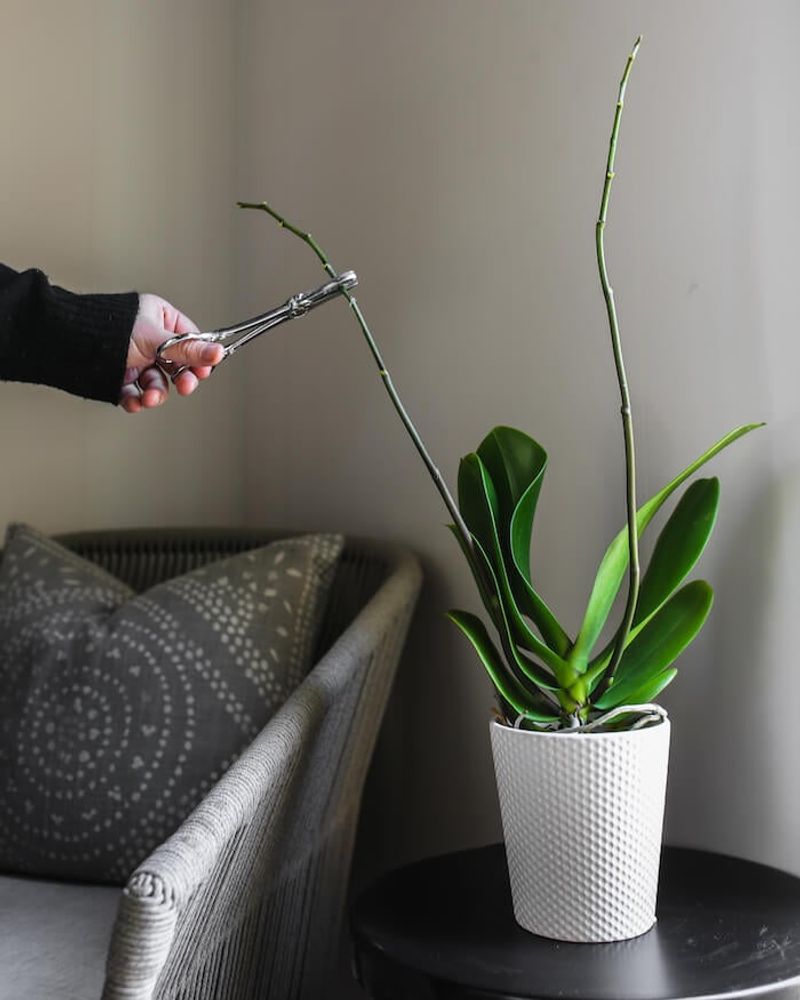
When the spike and plant type call for a cut, keep it simple. Use sharp scissors or pruners so the cut is clean rather than crushed.
A dull blade can tear tissue and leave a ragged wound.
The American Orchid Society advises cutting a spent spike of most orchids at the base. On a moth orchid, you can also trim off the brown portion of the spike.
Leave any green part alone unless you have chosen to remove it.
Clean your tool before moving to the next plant. According to Iowa State Extension, contaminated tools can pass viruses between orchids.
Wiping the blades with alcohol or a 10 percent bleach solution are two sterilizing options.
You do not need a pile of cuts or a special kit. One quick trim and a wipe-down are plenty.
If a plant needs no cut yet, put the shears away.
Leave Healthy Leaves, Roots, and Pseudobulbs Alone
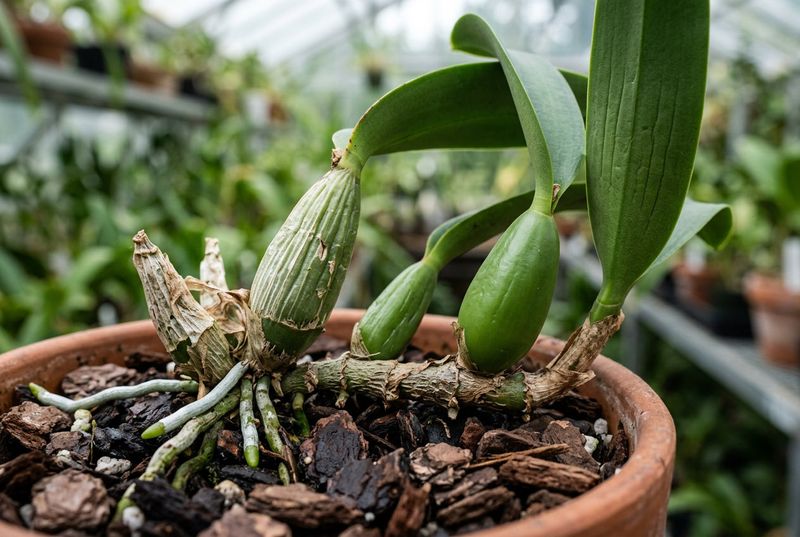
A finished flower spike is the only thing that needs routine attention after blooming. Healthy green leaves feed the plant, and fleshy pseudobulbs store water and energy.
Cutting them for looks will not help the orchid rebloom.
Orchid training material from the University of Hawaii says not to cut fleshy leaves or pseudobulbs unless they are diseased. It also separates rotten roots from dry ones, which can still be healthy.
Firm roots, whether green or silvery, should stay.
Damaged tissue is the exception. Iowa State Extension suggests removing brown leaves and aerial roots with sharp pruners or scissors.
Mushy, hollow, or papery brown parts are fair game, while plump, firm growth is not.
Pruning by itself does not trigger flowers. Light, temperature, and water do much more of that work.
So if a leaf or root looks healthy, leave it be.
Adjust After-Bloom Care to Your Arizona Home
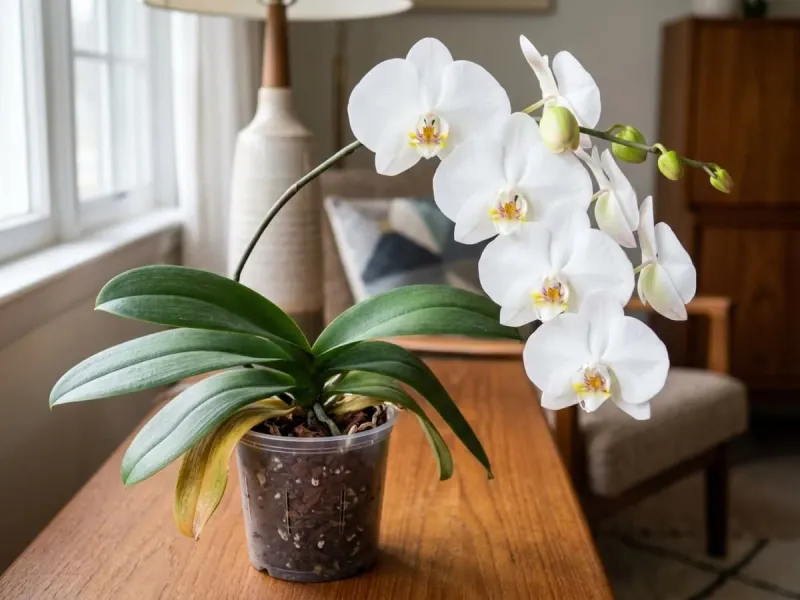
Arizona does not change how you cut a spike. It does change the air your orchid breathes.
Indoor conditions after flowering deserve a closer look.
University of Arizona Extension notes in its indoor plant guide that air conditioning can dry indoor air. A plant near a cooling vent may lose moisture faster than one in a quiet corner.
Move it out of direct blasts if you can.
Skip the fixed calendar. Iowa State says the right watering interval depends on the orchid type, pot, medium, light, temperature, and growth stage.
Feel the potting mix, and water when it has dried to the degree your orchid prefers, then let the pot drain fully.
You may read that some orchids handle desert heat and low humidity well. The Arizona-Sonora Desert Museum describes selected orchids it offers that way, but that does not describe every houseplant orchid.
Treat your grocery-store moth orchid as its own case and watch how it responds.
Let the Plant Recover and Keep Its Conditions Steady
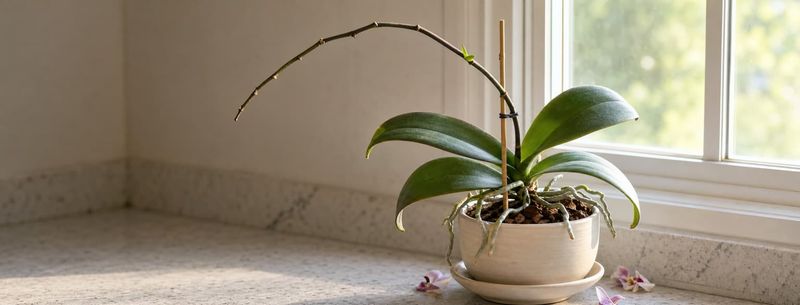
After the cut, the best thing you can do is very little. Skip extra trimming and keep up the ordinary care your orchid already likes.
Steady habits help a plant settle in.
Remember that repeat flowering is not decided by scissors alone. Iowa State Extension points to proper light, temperature, and water as part of what encourages blooms.
A well-placed orchid has a better chance than a heavily pruned one.
A node trim on a green Phalaenopsis spike is only an attempt. If a new branch forms, enjoy it.
If the spike browns instead, the American Orchid Society reminds us that resting the plant is often the better route anyway.
Watch for new leaves and fresh roots, since those are signs of a happy plant. Patience is the quiet skill of orchid growing.