The One Thing You Must Do To North Carolina Dahlias Before The Weekend Storms Hit
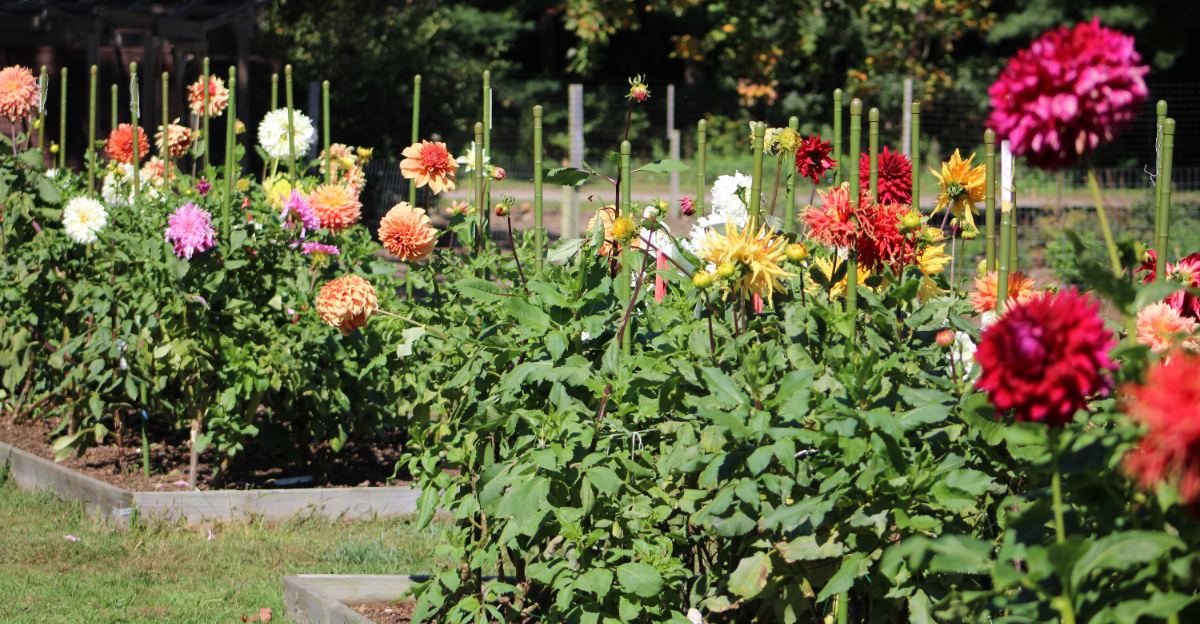
Staking dahlias securely is the one task North Carolina gardeners cannot skip before weekend storms roll through with strong wind and heavy rain.
These plants often grow tall with heavy blooms, making them especially vulnerable to snapping or bending during sudden gusts.
Checking existing stakes for stability now prevents last minute scrambling once storm conditions actually arrive. Adding extra support ties around main stems helps distribute stress more evenly across the plant during high wind.
Cutting back any particularly top heavy blooms beforehand can also reduce the overall strain on stems and stakes. Ensuring soil around the base is firm, rather than loose or recently disturbed, helps roots hold steady during heavy rain.
Checking drainage nearby prevents water from pooling around the base and weakening root stability further. Taking a few minutes now can save dahlias from serious storm damage this weekend.
1. Tall Dahlias Need Support Before The Storm
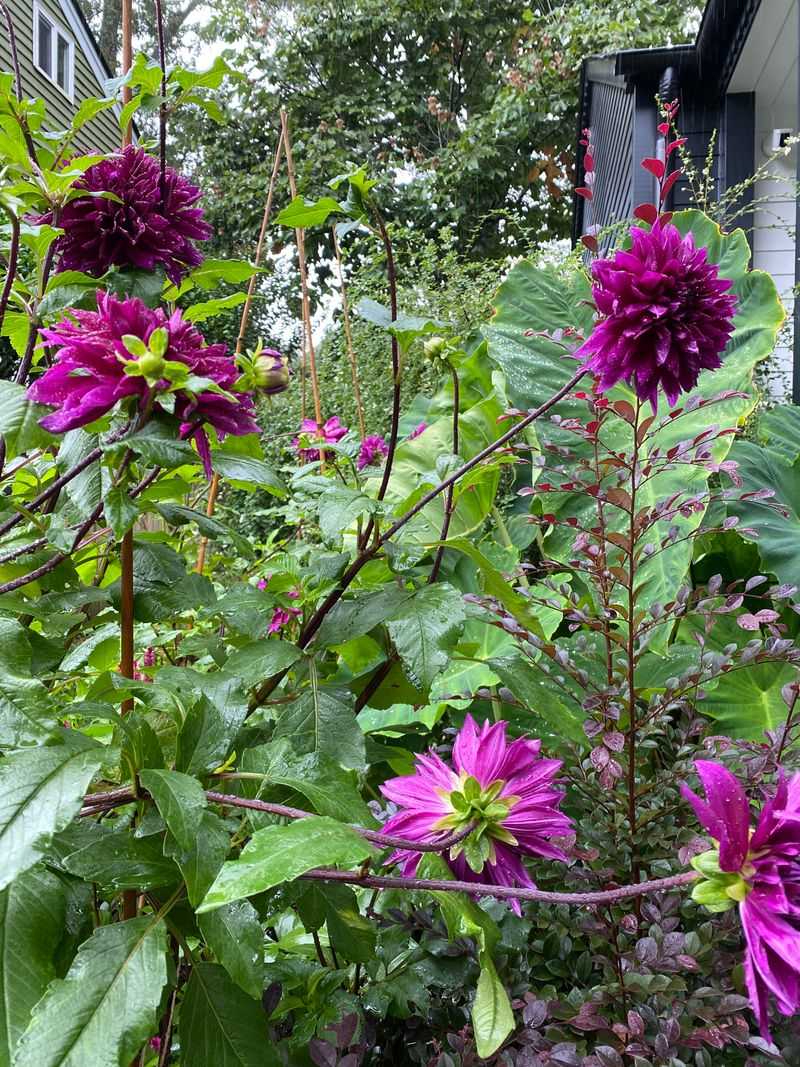
Some plants just know how to show off, and dahlias are at the top of that list. In North Carolina gardens, dahlias can grow anywhere from two feet to well over five feet tall depending on the variety.
Those impressive heights are part of their charm, but they also mean the plants carry a serious amount of weight on stems that were never designed to handle strong gusts or sheets of rain.
When a storm rolls in, unsupported dahlias become vulnerable fast. The large flower heads that make them so beautiful also act like sails in the wind, catching gusts and pulling the whole plant sideways.
Heavy rainfall adds even more weight to those blooms, and stems that look sturdy on a calm day can bend, split, or topple without any warning once the weather turns rough.
Not every dahlia needs the same level of attention before a storm. Compact dwarf varieties tend to stay low and handle wind better than their taller cousins.
But if you are growing dinner plate dahlias, decorative types, or any variety that reaches past three feet, support is not optional. Think of staking as giving your plants a safety net before they need one.
Getting ahead of the storm instead of reacting after it passes is always the smarter move for any serious dahlia grower in North Carolina.
2. Stakes Must Be Firm Before The Soil Becomes Saturated
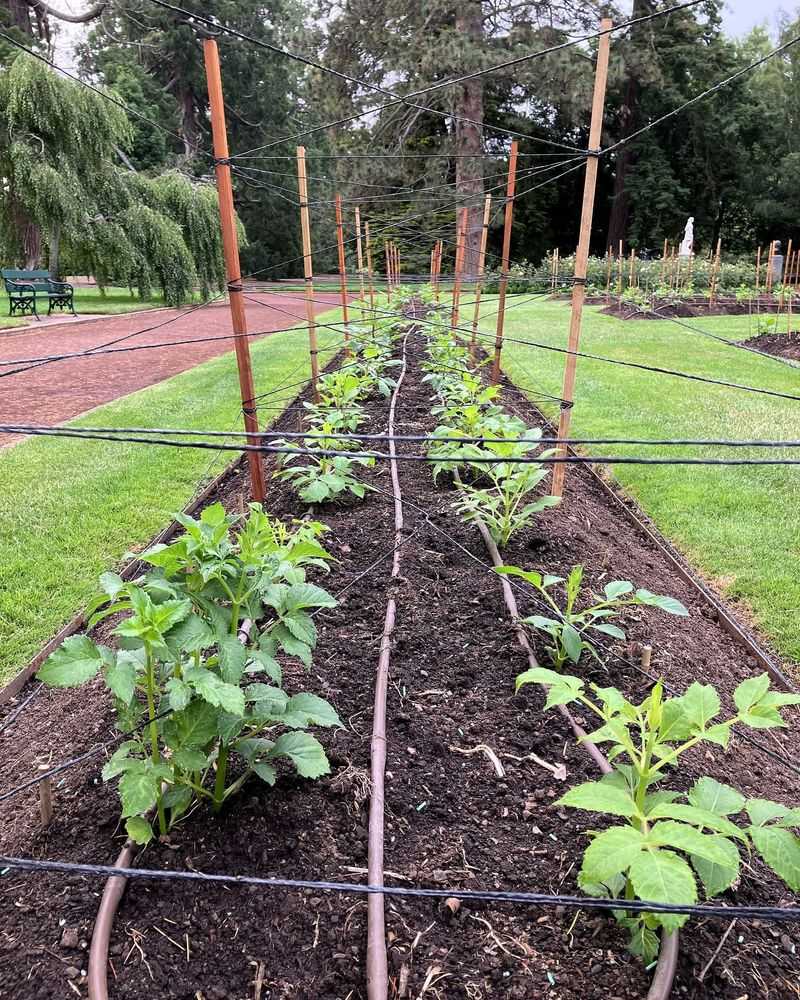
Timing really does matter when it comes to staking dahlias, and most gardeners learn this the hard way.
Pushing a stake into dry soil gives you far more control and stability than trying to do the same thing after a heavy downpour has turned your garden bed into soft mud.
Once the ground gets saturated, stakes can wobble, lean, or pull out entirely when the wind puts pressure on the plant above.
Before the weekend storms arrive, walk through your garden and check every stake already in place. Press gently around the base of each one with your hand.
If it shifts or feels loose, drive it deeper now while the soil is still firm enough to grip it properly.
Your North Carolina Garden Changes Every Week. Your Plan Should Too.
Gardening in North Carolina changes quickly throughout the season. Every Friday you’ll receive a simple weekly plan showing exactly what to plant, prune, fertilize, harvest, and protect so you never miss the right timing.
For plants that have not been staked yet, aim to push the stake at least twelve to eighteen inches into the ground to give it enough anchor depth to hold through wind and rain.
Placement matters just as much as depth. Position each stake close enough to the main stem to offer real support, but take care not to drive it straight through the tuberous roots growing underground.
Dahlias store their energy in those roots, so protecting them during the staking process is just as important as the staking itself.
A stake placed a few inches away from the base of the stem and angled slightly toward the plant hits the sweet spot between firm support and root safety.
Check everything one more time the morning before the storm and make any final adjustments while conditions are still dry.
3. Soft Ties Protect Dahlia Stems
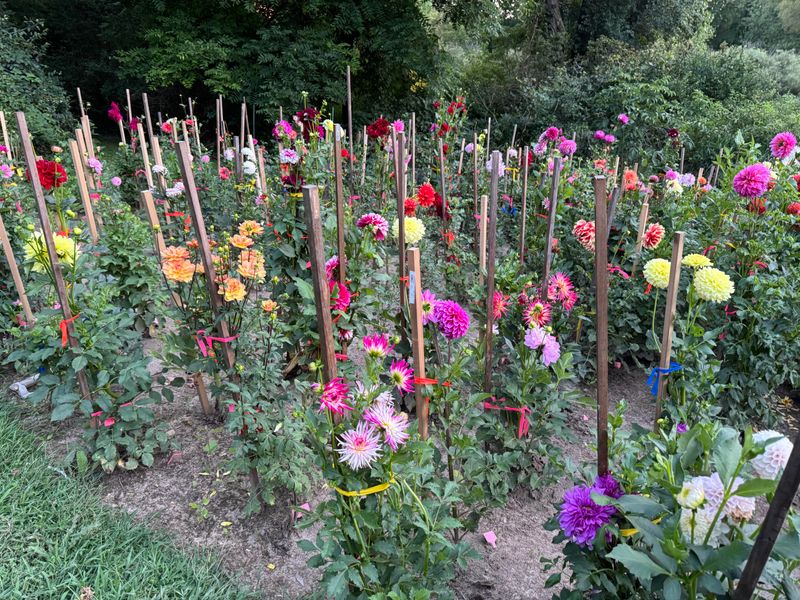
Picture this: you spend weeks nurturing a dahlia to full height, only to find that the very tie holding it to its stake has cut into the stem and caused damage.
It happens more often than most gardeners expect, and the culprit is almost always a material that was too stiff, too thin, or too tight for the job. Choosing the right tie before a storm is just as important as choosing the right stake.
Soft materials work best for securing dahlia stems. Garden tape, cloth strips, old pantyhose, or soft jute twine all do the job without pressing painfully into the plant as it grows.
These flexible options hold the stem in place while still allowing it to breathe and expand naturally.
Thin wire, rough twine, or stiff plastic cord can dig into the stem over time, especially after rain softens the tissue and the wind keeps pushing the plant against the tie repeatedly.
Before the weekend weather arrives, take a few minutes to inspect every tie currently on your dahlias. Run your fingers along each one and feel whether it has gotten too tight as the stem has thickened through the season.
Ties that were perfectly loose in early summer can become constricting by late summer when growth is at its peak. Replace anything that feels snug, brittle, or rough with a fresh, soft strip of material.
A quick check now can prevent a lot of unnecessary stem damage once the storm passes through and the full force of wind and rain tests every connection point on the plant.
4. Loose Figure Eight Ties Allow Safe Movement
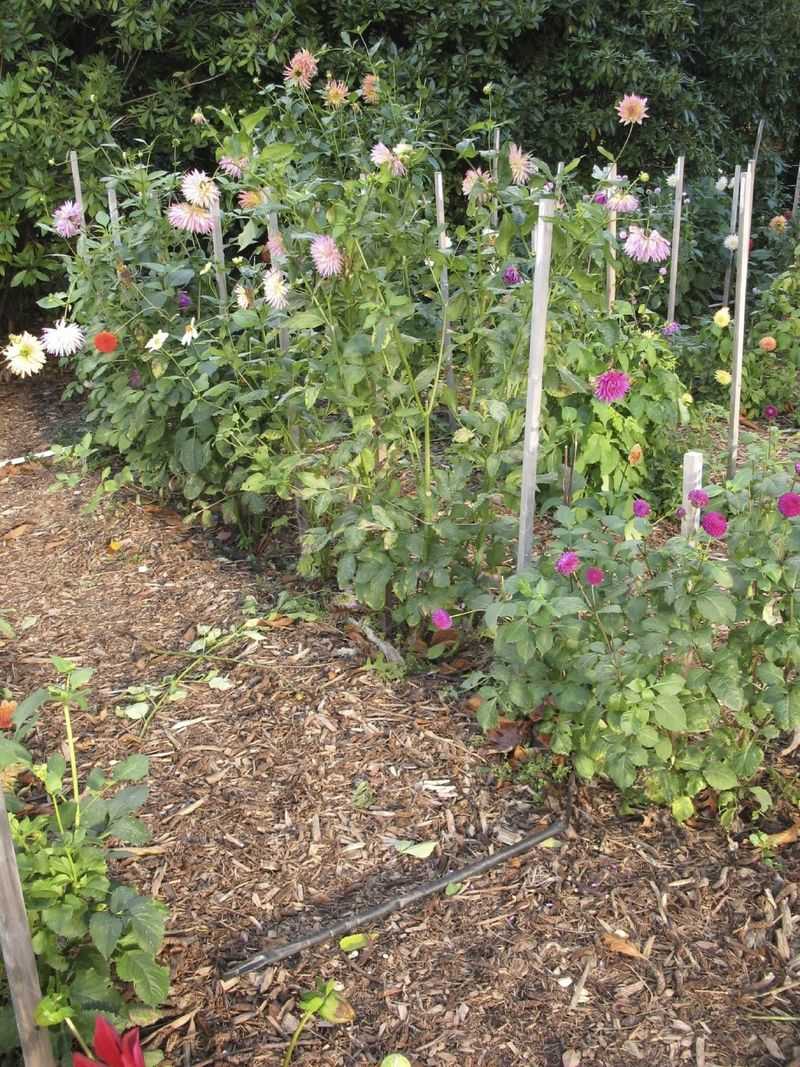
There is a simple tying technique that experienced dahlia growers swear by, and once you see it in action, you will wonder why you ever did it any other way.
The figure eight tie uses one continuous loop of soft material to connect the stem and the stake without letting the two touch directly.
It takes about thirty seconds per tie and makes a real difference when a storm arrives and starts testing every connection in your garden.
To make a figure eight, wrap the soft material around the stake first, then cross it over itself to form the middle of the eight, and loop it around the dahlia stem on the other side.
The crossing point sits between the stem and the stake, acting as a small cushion that prevents rubbing.
The stem gets held upright without being pressed or squeezed against the hard surface of the support. This small gap is exactly what protects the plant during hours of wind-driven movement.
The key to making this technique work is keeping both loops genuinely loose. A figure eight tie that is pulled too tight defeats its own purpose by restricting the stem and blocking the natural flex that helps a plant handle wind safely.
Dahlias are not rigid structures, and they actually do better in storms when they can sway slightly rather than being locked in place completely.
Aim for just enough snugness to keep the stem from flopping sideways, while still letting it move a little within the loop.
Practice on a single stem and you will have the motion down perfectly before moving through the rest of the garden.
5. Several Tie Points Support Tall Growth
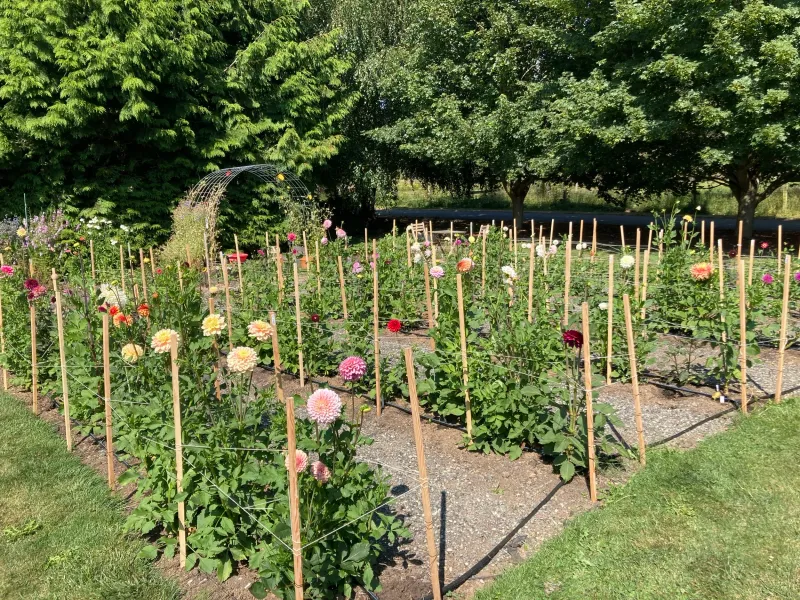
One tie near the bottom of a five-foot dahlia is a bit like wearing just one button on a raincoat. It might look like support, but the rest of the plant is still completely exposed.
Tall dahlias grow quickly through the season, and by late summer many of them carry so much stem length and so many branches that a single tie point simply cannot keep the whole plant stable during a serious storm.
Adding multiple tie points as the plant grows taller is the most effective way to distribute the load.
A good general approach is to place ties roughly every twelve to fifteen inches along the main stem, starting from about a third of the way up and continuing toward the top of the plant.
Each tie shares some of the wind resistance, so no single point has to carry all the strain when gusts start pushing the upper growth around. The more evenly the support is spread, the less likely the stem is to bend sharply at any one spot.
Before the weekend storms arrive, walk around each tall plant and look at it from multiple angles. It is easy to check the front of the plant and miss a leaning section on the back side.
Gently run your hand along the main stem from bottom to top and feel for any sections that seem unsupported or that flex more than the rest. Add ties wherever the stem feels unsecured.
Spending an extra five minutes on each tall plant now can be the difference between a dahlia that sails through a rough weekend and one that needs serious recovery work on Monday morning.
6. Flowering Branches May Need Extra Support
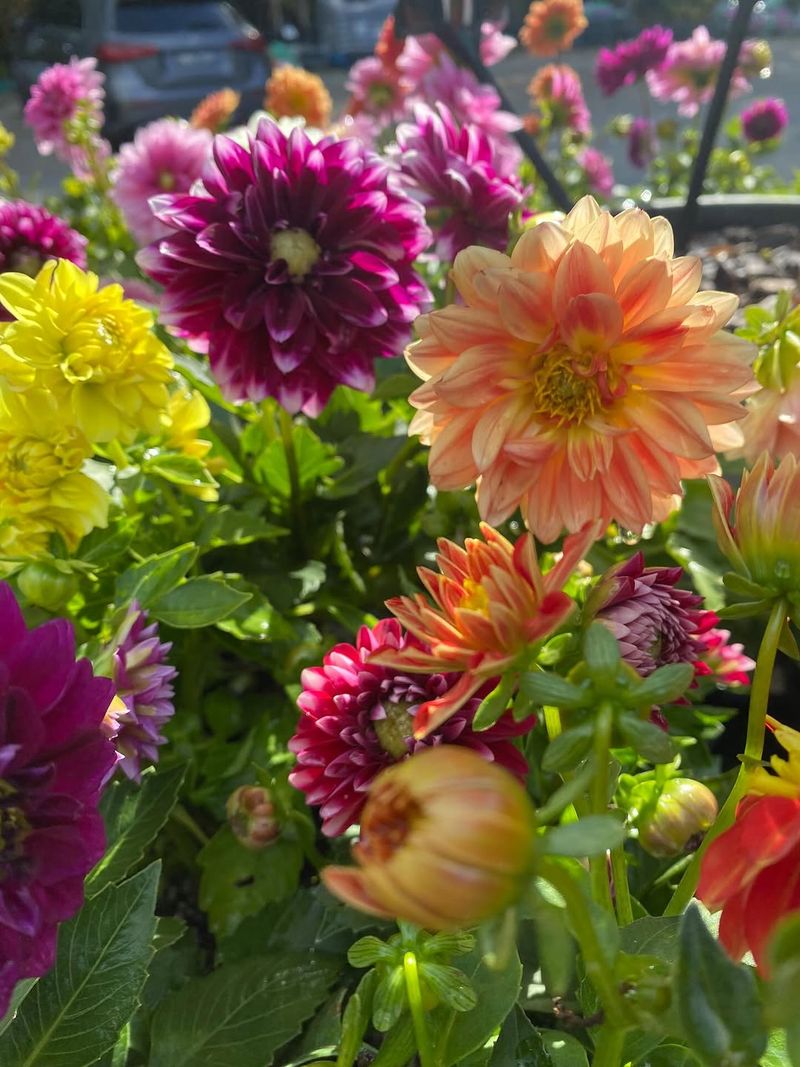
Anyone who has grown dinner plate dahlias knows the jaw-dropping moment when a bloom opens to the size of a dinner plate, but those giant flowers come with a real structural challenge.
Flowering branches carry far more weight than bare stems, and that weight multiplies significantly once rain starts filling every petal like a tiny cup.
What felt like a manageable branch on a dry Thursday can become a seriously heavy limb by Saturday morning after a few hours of steady rain.
Side branches that hold large flowers are particularly vulnerable because they grow out from the main stem at an angle, and that joint point takes the full force of the flower’s weight plus any wind movement.
Before the storm, look at each flowering branch and judge whether it can realistically handle extra weight.
Long branches reaching out horizontally are the ones most likely to need help. A second stake placed close to the branch and tied loosely near the flower head can give it the extra lift it needs without forcing it into an awkward position.
For wider plants with multiple flowering branches spreading in several directions, a supportive framework can work better than individual stakes.
Some gardeners use a cage-style ring support placed around the whole plant, which catches branches from all sides without requiring individual ties on every stem.
Whatever method you choose, avoid bending rigid branches sharply or pushing them into positions they do not naturally want to hold. Forcing a branch that is already under strain can cause more harm than the storm itself.
Work with the plant’s natural shape and add support where it naturally needs it most.
7. Early Support Protects The Remaining Flower Display
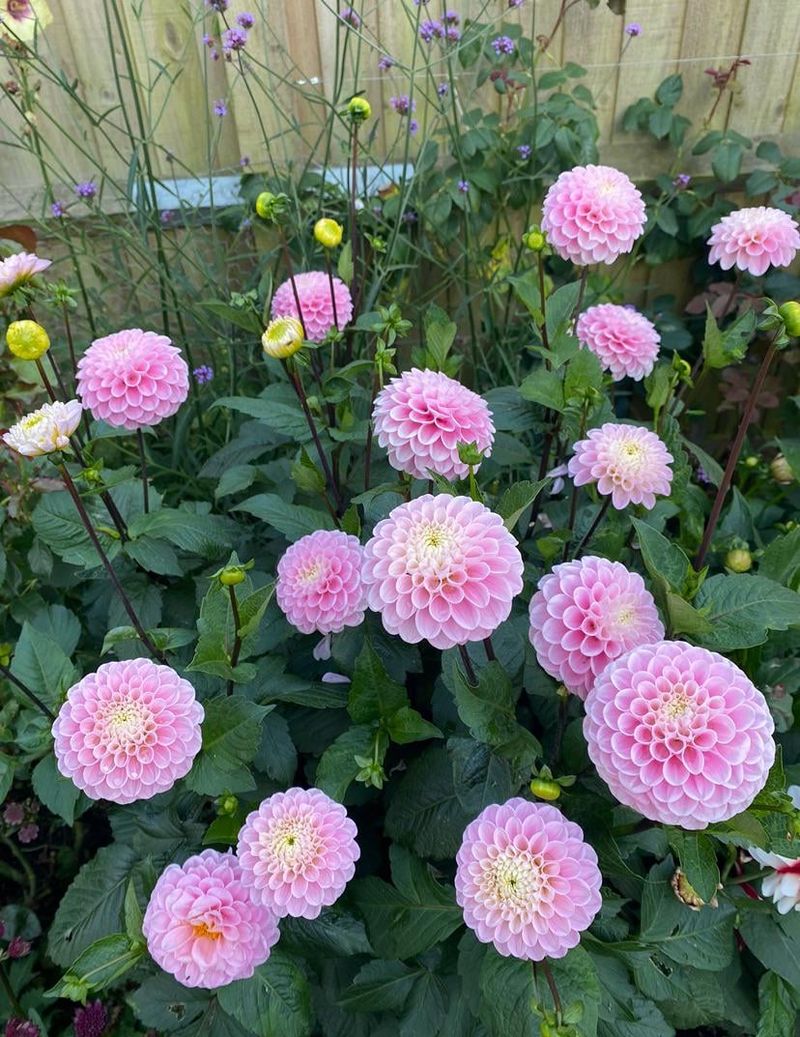
Getting your dahlia supports in place before a storm is not just about surviving one rough weekend.
North Carolina’s dahlia season runs well into fall, and the plants you protect now will keep producing fresh buds and open flowers for weeks to come.
Every stem that stays upright through a storm is another stem that can deliver more blooms once the sun comes back out. Early preparation pays off long after the clouds clear.
After the storm passes, head back into the garden and do a careful walkthrough before anything else. Check each stake to make sure it is still sitting firmly in the now-saturated soil.
Look at every tie and adjust anything that shifted during the wind. Gently press any stems that leaned slightly back toward their supports and re-tie them with fresh soft material.
It is much easier to correct a small lean right after a storm than to try to straighten a stem that has been sitting at an angle for several days and started to set that way.
While you are checking the supports, take a moment to remove any blooms that took a heavy beating from the rain and wind.
Flowers that are waterlogged, bent, or fading are unlikely to recover fully, and removing them actually encourages the plant to push energy toward the healthy buds still developing.
Staking is not a guarantee against every weather-related setback, and a truly severe storm can challenge even the best-prepared garden.
But tall dahlias with firm stakes, soft ties, and multiple support points consistently come through rough weather in far better shape than plants left to face the storm on their own.