Brown Patch, Grubs, or Drought Damage? How to Tell What’s Hurting Your Virginia Lawn
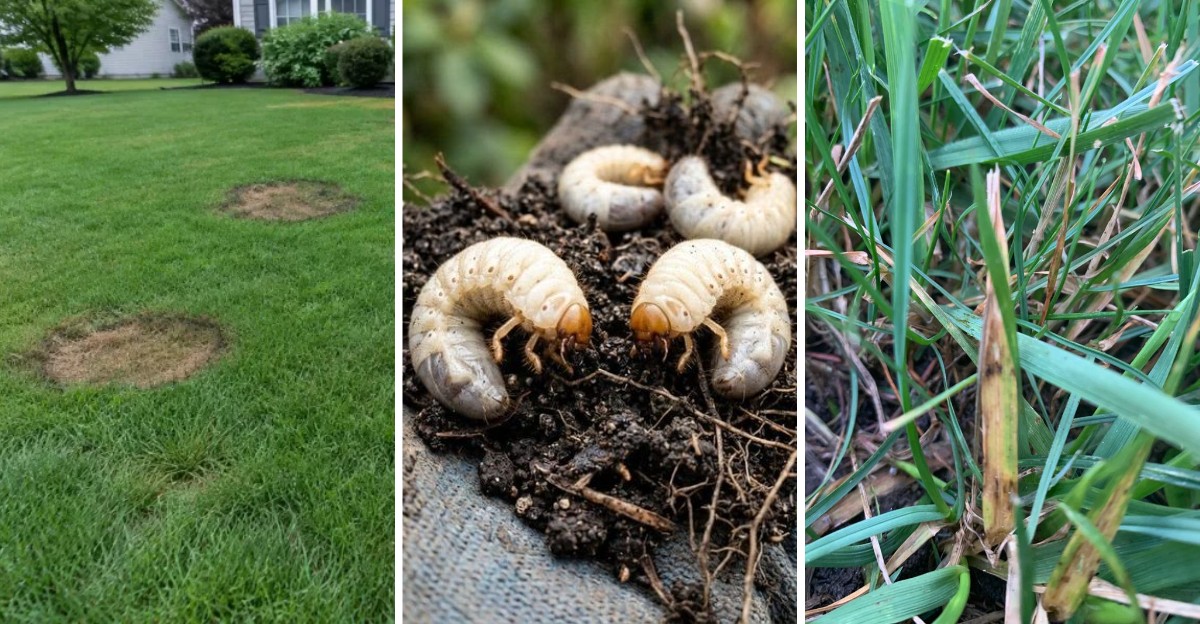
A single square foot of lawn can hide a dozen fat, C-shaped larvae chewing roots while the grass above looks merely tired. Skunks know it before you do. They can smell a buffet under your feet and will happily dig for it overnight.
I like a mystery, but not on my own front yard. Brown spots show up every summer across Virginia, and they rarely announce their cause.
One patch might be begging for water. Another might be fighting a fungus that loves sticky July nights.
Personally, I wasted a whole season watering a problem that had nothing to do with thirst. You need clues, not guesses. The grass actually leaves plenty of them, from the feel of the turf to the color of the blades.
So what is your lawn really trying to tell you? A few simple checks can crack the case faster than you expect.
That Spongy Turf Under Your Feet Has a Story to Tell
Walk across your yard barefoot and pay attention to the bounce. Healthy turf feels firm, like a thick rug on a solid floor.
Grass with grub trouble often feels soft and springy, almost like stepping on a wet sponge.
That squishy feeling happens because something underground is eating the roots. In Virginia, the usual suspects are the larvae of Japanese beetles, masked chafers, and June beetles.
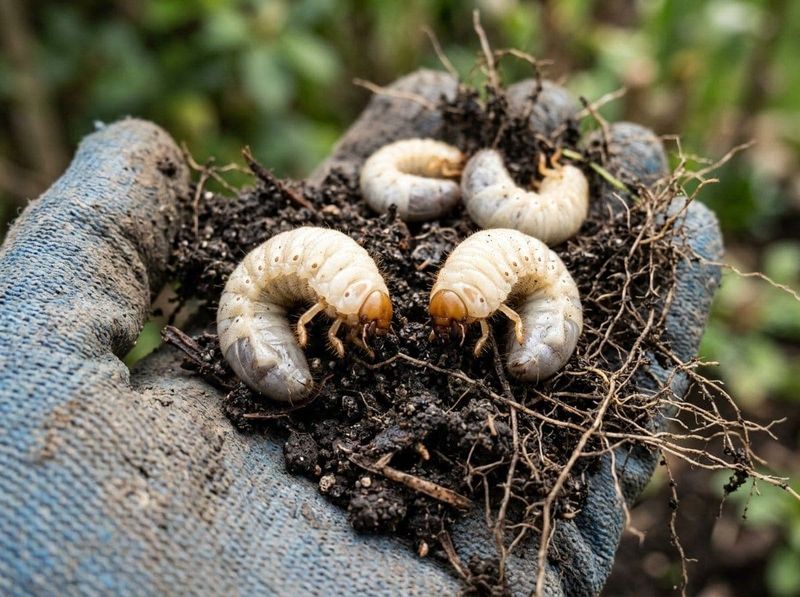
These grubs are creamy white, curled into a C shape, and have brown heads with six small legs near the front.
Here comes the best test you can do in under a minute. Grab a handful of brown grass at the edge of a patch and give it a firm tug.
If it lifts up like loose carpet with barely any roots attached, grubs are the top suspect.
Peel back a square foot of sod in a few spots and count what you find. Virginia Cooperative Extension notes that roughly 6 to 10 grubs per square foot can cause visible damage in many lawns.
A couple of grubs is normal and nothing to panic over.
Timing helps too. Grub damage tends to show up in late summer and early fall, when the young larvae are feeding hardest near the surface.
Brown spots in August and September deserve a closer look.
Brown Circles With a Smoky Edge Point to Brown Patch Fungus
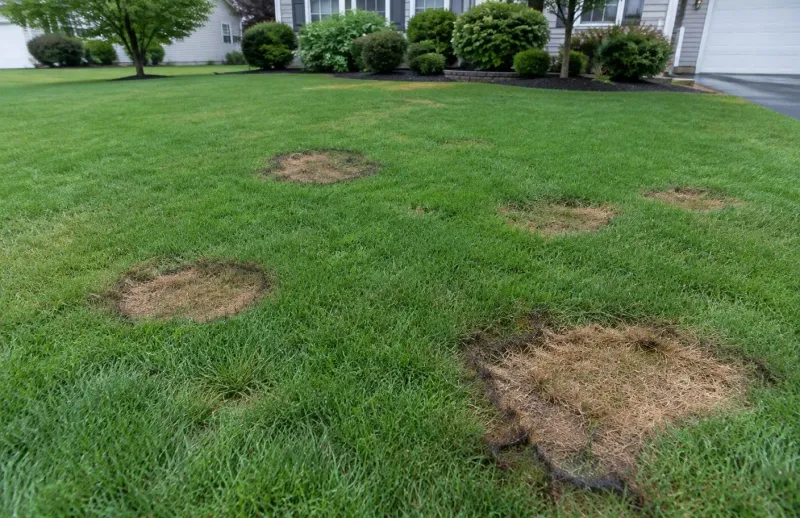
Round brown spots in a fescue lawn during a muggy summer are a classic calling card. Brown patch, caused by the fungus Rhizoctonia solani, loves tall fescue more than most other grasses.
The patches can run from a few inches to several feet across.
Early morning is your best detective hour. Look for a darker, grayish ring around the edge of a patch while dew still clings to the grass.
Turf experts call it a smoke ring, and it fades quickly once the sun dries things out.
Next, pick up a few individual blades from the edge. Brown patch usually leaves tan, irregular spots on the leaves with a dark brown border.
Healthy blades nearby will look normal, which helps you rule out simple heat stress.
Now try the same tug test from the grub check. Grass hurt by brown patch stays firmly anchored because the fungus attacks leaves, not roots.
That single difference saves a lot of people from buying the wrong product.
Weather is a huge clue as well. Brown patch flares up when nights stay above about 65 to 70 degrees and days climb into the high 80s or 90s with plenty of humidity.
Long stretches of wet grass overnight give the fungus exactly what it wants.
Footprints That Linger Usually Mean Thirsty Grass
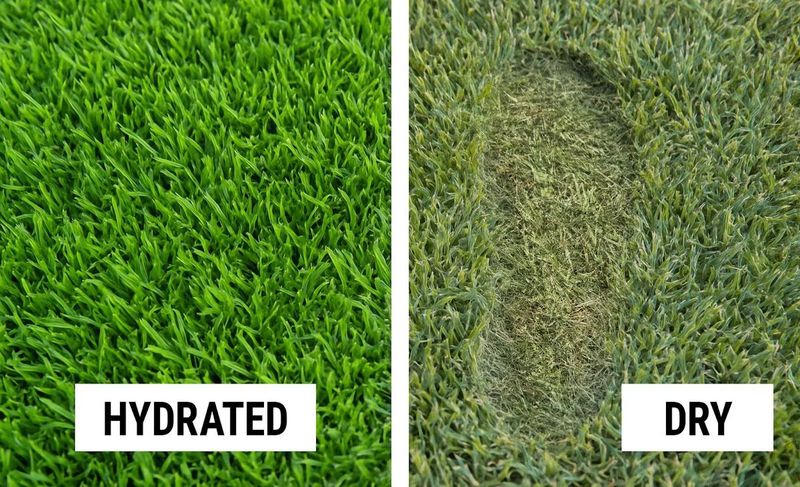
Sometimes the answer is wonderfully boring. A parched lawn is one of the most common summer sights in Virginia, especially during hot, rain-free stretches in July and August.
Before blaming bugs or fungus, check whether your grass is simply thirsty.
Drought stress has a color pattern all its own. Grass first turns a dull blue-gray or bluish green, then fades toward yellow and finally straw brown.
The browning tends to spread across large areas instead of forming neat circles.
Try the footprint trick on a warm afternoon. Walk across the lawn and turn around to look.
If your footprints stay visible for several minutes, the blades have lost water pressure and can’t spring back up.
Look closely at the leaves, too. Thirsty grass often folds or rolls its blades lengthwise to save moisture.
It is a clever survival move, and you can see it clearly on fescue.
The soil gives another hint. Push a screwdriver into the ground, and if it fights you the whole way, the soil is probably dry and hard.
Dry spots often show up first on slopes, near driveways and sidewalks, and in sandy soils that drain fast.
Cool-season grasses can go dormant in drought and often recover when rain returns.
A Two-Week Watering Test Can Separate Drought From Grub Damage
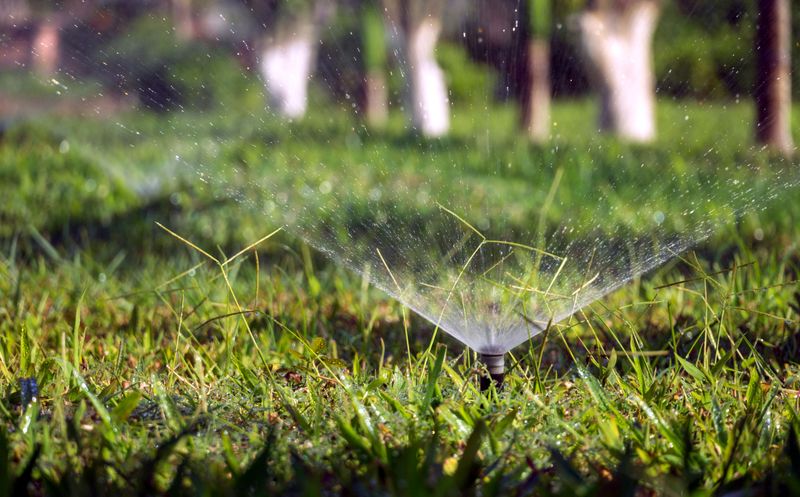
Stuck between two suspects? I lean on a simple experiment that costs little more than some water and patience.
Deep, regular watering for about two weeks often settles the debate.
Give the brown areas around 1 inch of water per week, including rain. Split it into one or two deep soakings early in the morning.
A tuna can or rain gauge placed on the lawn shows you exactly how much your sprinkler puts down.
Watch the base of the grass closely. If drought was the culprit, you should see fresh green shoots pushing up from the crowns within one to two weeks.
Dormant grass is resting, not gone, and it responds once moisture returns.
Grub damage tells a different story. Without roots, the grass can’t pull up water no matter how carefully you soak it.
Those patches stay brown and keep lifting easily when tugged.
Brown patch can also show up during this test if you water late in the day. Wet blades overnight give the fungus a boost, so stick with morning watering.
Evening sprinkling during humid weather is asking for trouble.
Keep a quick note or phone photo every few days. Side-by-side pictures make slow changes much easier to spot.
Skunks and Raccoons Tearing Up the Lawn Are Dropping a Hint
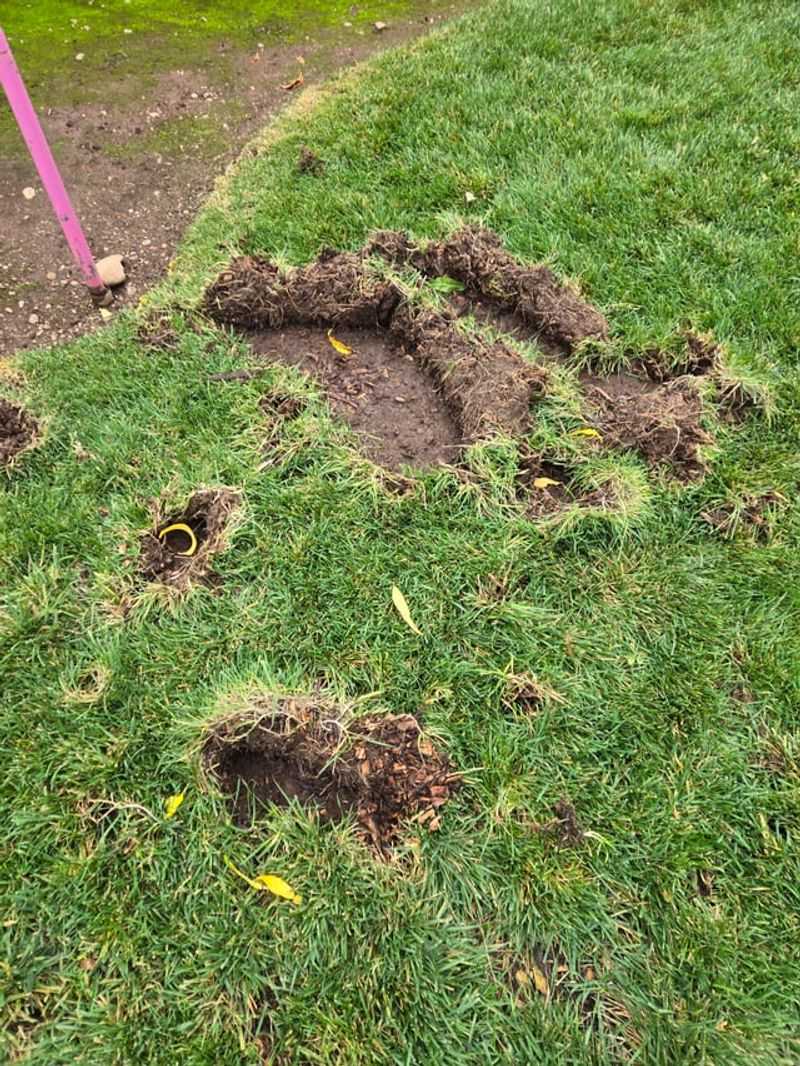
Nobody enjoys waking up to a lawn that looks like someone rolled it up overnight. Torn sod, small cone-shaped holes, and flipped chunks of turf are often the work of hungry wildlife.
Skunks, raccoons, armadillos in some southern states, and birds love a grub snack.
In Virginia, skunks usually leave small, neat holes about the size of your fist. Raccoons are messier and can flip back whole strips of loose turf like pancakes.
Crows and starlings poke around with their beaks during the day.
All that digging is a strong clue that food lives below. Still, it doesn’t prove you have a serious infestation.
Animals will forage for earthworms and smaller numbers of grubs too.
Pull back a section near the digging and count before treating anything. Fewer than five or so grubs per square foot usually doesn’t call for action.
A higher count matches the wildlife clue and points you toward grub control.
Fixing the grub problem tends to reduce the digging over time. Gently press flipped sod back into place and water it well.
Roots can sometimes reattach if the damage is fresh.
Moles are different visitors that leave raised tunnels. They mainly eat earthworms, so grub treatments rarely solve mole trouble.
Fertilizer and Watering Habits Can Feed Brown Patch on Fescue
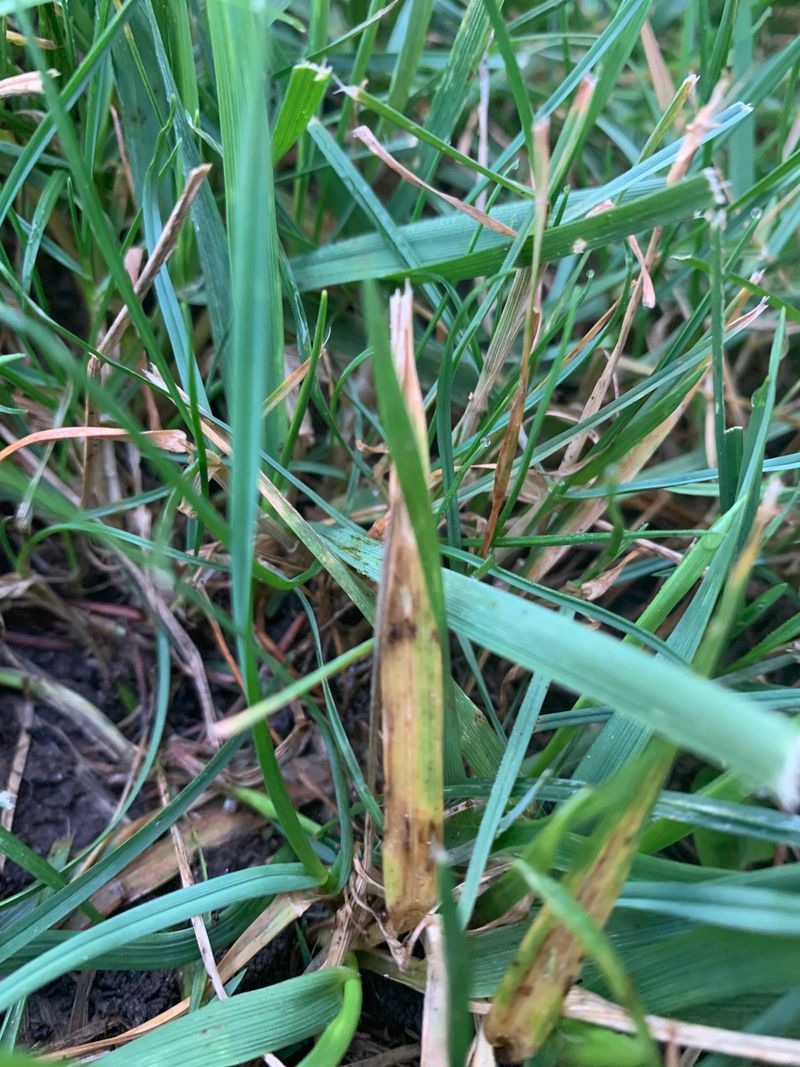
Funny thing about brown patch: we often invite it in ourselves. A big dose of nitrogen in late spring or summer produces lush, tender grass.
That soft growth is exactly what the fungus likes to chew through.
Virginia Tech turf specialists recommend fertilizing cool-season lawns like tall fescue mainly in the fall. September through November is the main feeding window.
Skip heavy summer feeding, and your fescue will be tougher when July humidity arrives.
Watering time matters as much as the amount. Morning watering lets blades dry before evening.
Grass that stays wet all night gives the fungus hours of perfect conditions.
Airflow helps more than people expect. Trim back dense shrubs and low tree limbs that block breezes and sunlight.
Lawns in shady, still corners often get hit first.
Mowing height is another easy win. Keep tall fescue around 3 to 4 inches and use a sharp blade so cuts heal cleanly.
Ragged tears from a dull mower give disease an easy entry point.
Fungicides can protect lawns with repeated severe outbreaks, but they work best as prevention before symptoms flare. Many brown patch lawns recover on their own once cooler weather returns, since the roots usually stay healthy.
Grub Control Works Best When Your Timing Is Right
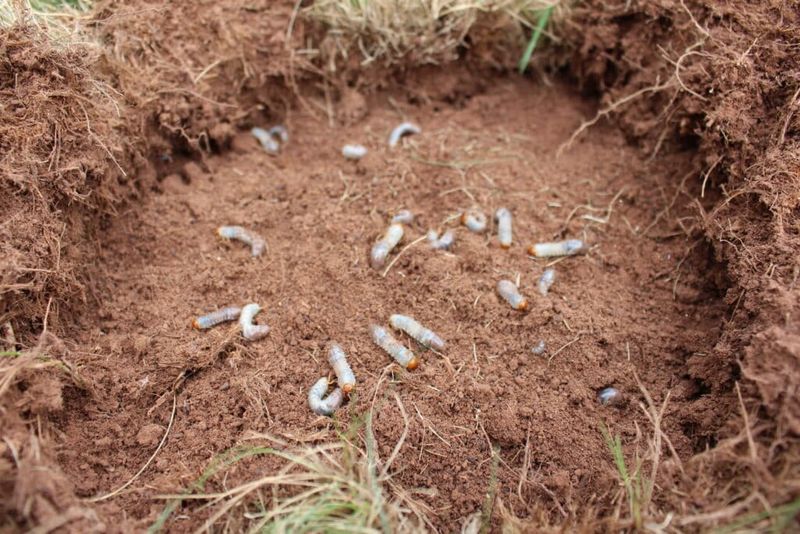
Japanese beetles munching your roses in June are more than a garden annoyance. Those shiny green-and-copper adults lay eggs in turf, and the eggs hatch into the grubs that chew roots later in summer.
Spotting lots of beetles is a heads-up for what may come.
Preventive grub products work best when applied in early to mid-summer, roughly June through July in most of the state. They target young grubs soon after hatching.
Water them in after application so they reach the root zone.
Only lawns with a history of grub trouble really need preventive treatment. Skipping it on a healthy lawn saves money and spares beneficial insects.
Pollinators also benefit when products aren’t applied to flowering weeds like clover.
Already seeing damage in late summer? Curative products are designed to act faster on larger grubs.
They work best in August through early October, while the grubs are still feeding near the surface.
Spring treatments rarely pay off. By then the grubs are big, close to becoming adults, and much harder to control.
Always read and follow the label exactly, since it is the legal guide for any pesticide.
Some gardeners try beneficial nematodes as a biological option. Results vary, so moist soil and careful timing matter.
Fall Aeration and Overseeding Help a Tired Lawn Bounce Back
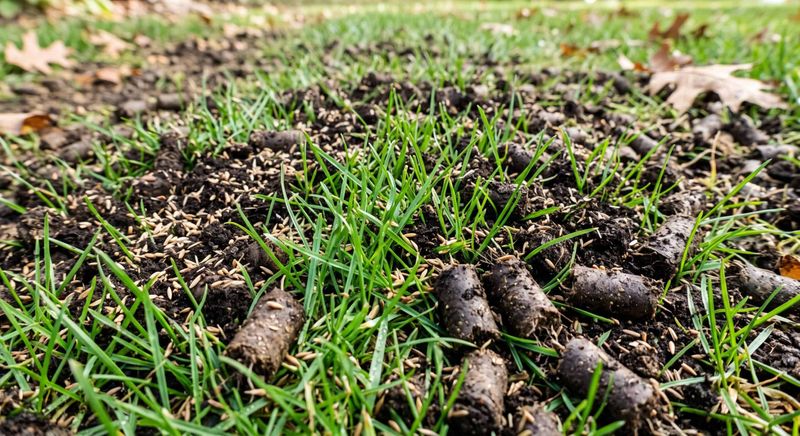
September feels like a fresh start for lawns across much of Virginia. Cooler nights and warm soil create the best window of the year for repairing cool-season grass.
Whatever caused your brown spots, fall is when the healing really happens.
Core aeration pulls small plugs of soil out of the ground. That loosens compacted soil, lets water and air reach the roots, and gives new seed a cozy place to sprout.
Leave the plugs on the surface, since they break down on their own.
Overseed thin or bare areas right after aerating. Choose a quality tall fescue blend for most of the state, as Virginia Tech evaluates varieties each year and shares recommended lists.
Keep the seedbed lightly moist until the new grass is up and growing.
Warm-season lawns like Bermuda and zoysia, common in the Tidewater and southern areas, follow a different calendar. Those grasses are best repaired in late spring and early summer.
Match your timing to your turf type.
A soil test through Virginia Cooperative Extension takes the guesswork out of feeding. It tells you exactly what your lawn needs.
Strong roots built this fall will help your grass handle heat, fungus, and hungry grubs next summer.