California Climbing Plants That Cover Fences Fast Without Damaging Foundations
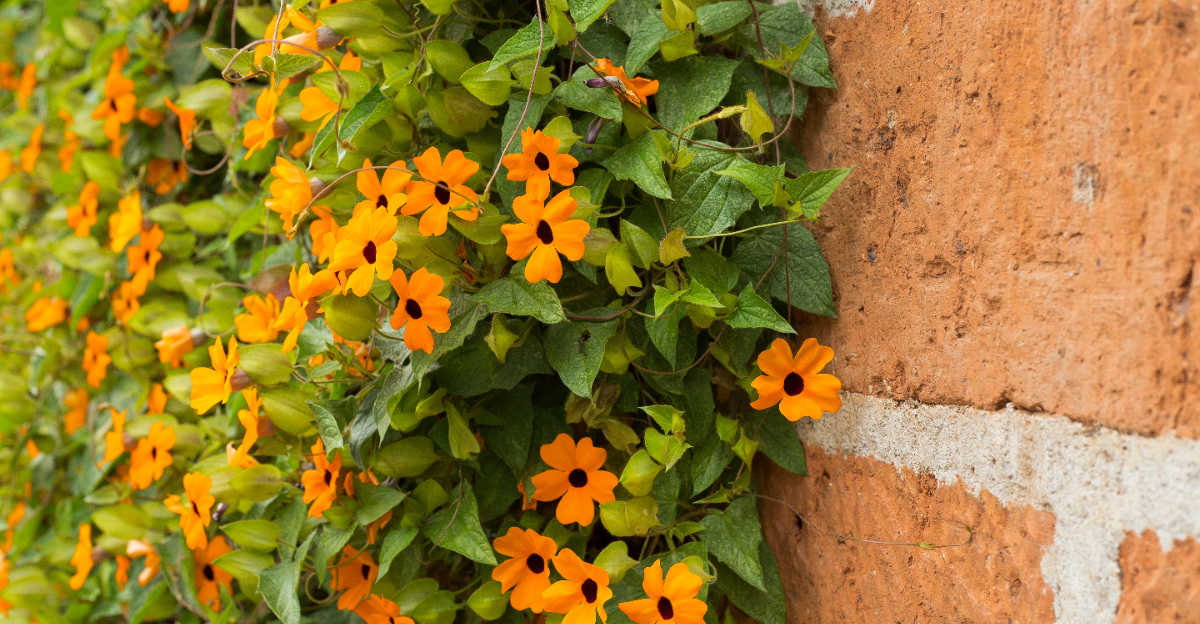
A bare fence is a missed opportunity in any California yard. The right climbing plant can transform it into a wall of green in a single season, and some varieties move so fast you will notice the difference week by week.
The trouble is that a lot of homeowners pick the wrong one.
Some climbers look beautiful but send roots into concrete, crack stucco, or work their way under siding over time. The damage shows up slowly and by then it can be expensive to fix.
California actually has some excellent options that grow fast, handle the heat well, and stay where you put them without causing problems.
Wood fences, block walls, and chain link borders all have great matches.
You just need to know which plants earn their spot and which ones you will regret planting a few years down the road.
1. Pink Jasmine
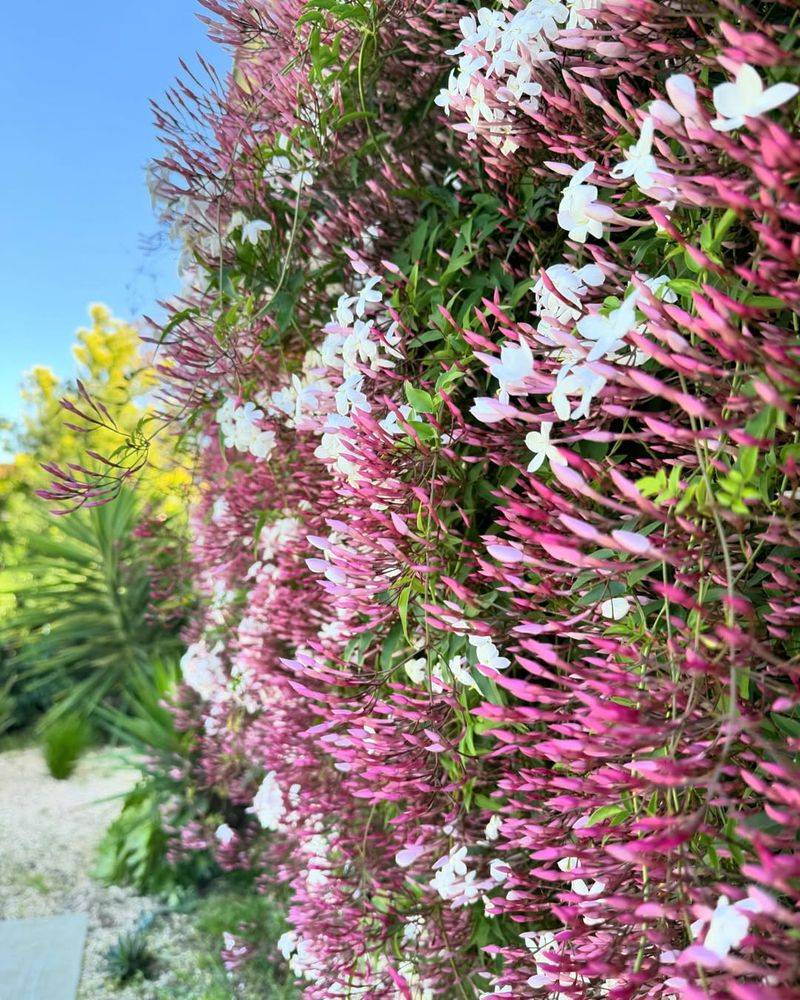
There is something undeniably cheerful about a fence covered in clusters of soft pink and white flowers each spring.
Pink jasmine is one of the most popular climbing plants in California because it blooms heavily, grows quickly, and fills outdoor spaces with a lovely, light fragrance.
It can grow up to 20 feet long and covers fences with dense, feathery foliage that stays green most of the year.
Unlike some aggressive vines, pink jasmine climbs by twining rather than by sending out roots that grip walls or crack foundations.
This makes it a safe and practical choice for wooden fences, chain-link fences, trellises, and pergolas.
The flower buds start out a deep rosy pink before opening into white blossoms, giving the plant a two-toned look that gardeners absolutely love.
It grows best in full sun but can handle some afternoon shade, especially in hotter inland areas of California.
Once established, it is fairly drought-tolerant, which is a big bonus for water-conscious gardeners.
Prune it after the spring bloom to control its size and encourage bushier growth. With just a little care, pink jasmine rewards you with stunning color and scent season after season.
2. Evergreen Clematis
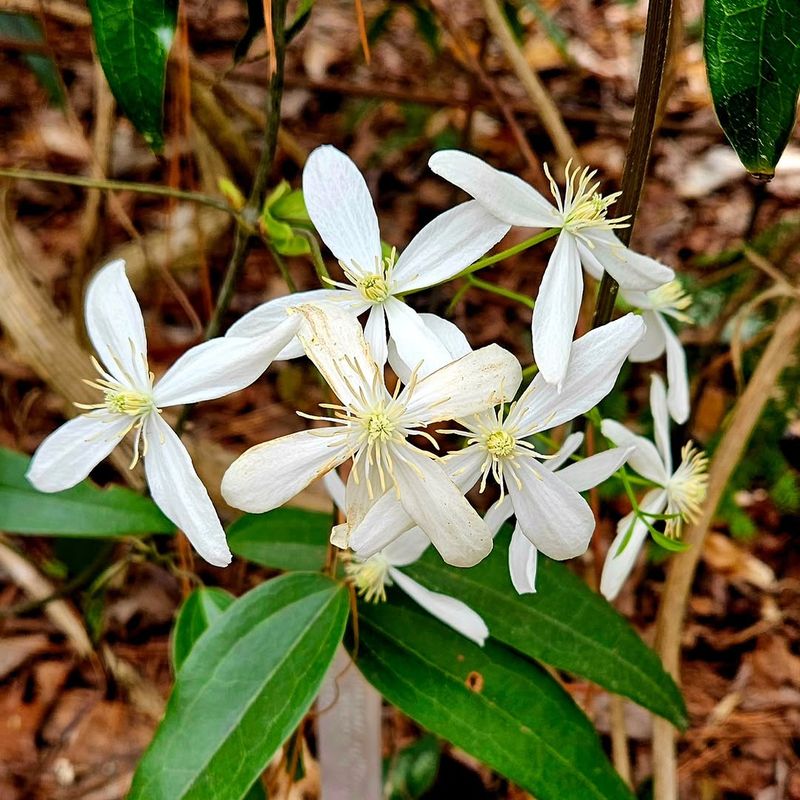
Not every clematis drops its leaves in winter, and evergreen clematis proves that beautifully.
This tough, fast-growing vine keeps its glossy, dark green leaves all year, making it one of the best options for maintaining fence privacy through every season.
In late winter to early spring, it bursts into bloom with masses of small, creamy white flowers that attract bees and butterflies.
Evergreen clematis can grow 20 to 30 feet long under good conditions, and it climbs by wrapping its leaf stems around wires, lattice, or fence rails.
Because it does not use clinging roots or adhesive pads, it will not damage fence materials or nearby foundations.
It is a smart pick for California gardens where year-round greenery matters. This vine loves full sun and well-drained soil.
Once it settles in, it handles dry spells reasonably well, though occasional deep watering during summer keeps it looking its best.
Pruning is very simple: cut it back after flowering to keep it from getting too heavy or tangled.
Your California Garden Changes Every Week. Your Plan Should Too.
Gardening in California changes quickly throughout the season. Every Friday you’ll receive a simple weekly plan showing exactly what to plant, prune, fertilize, harvest, and protect so you never miss the right timing.
One thing to keep in mind is that all parts of this plant are toxic if eaten, so keep it away from areas where pets or small children play regularly.
3. Clematis Hybrids
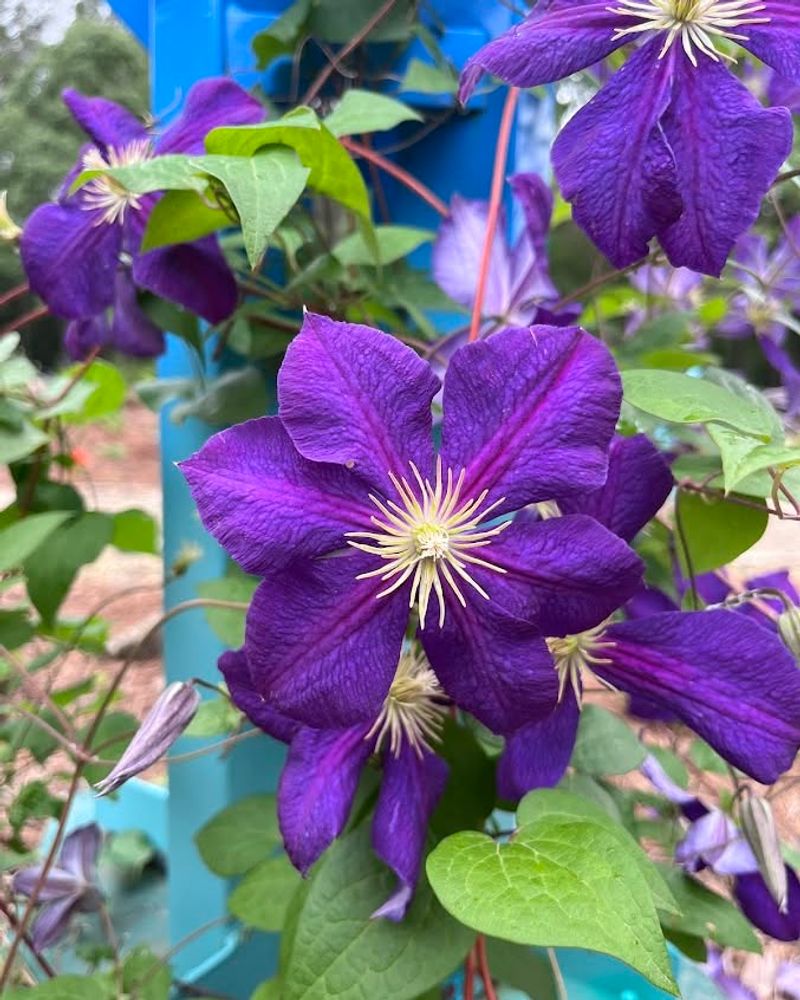
Bold, show-stopping flowers in shades of purple, pink, red, and white make clematis hybrids some of the most eye-catching climbing plants you can grow.
These are the big-flowered varieties you often see on garden center display fences, with blooms that can reach four to six inches across.
They add instant drama and color to any outdoor space. Hybrid clematis varieties climb by using their leaf stalks to grip onto thin supports like wire, string, or lattice.
They do not produce invasive roots, so foundations and fence structures stay completely safe.
Most varieties grow between 6 and 12 feet tall, which makes them easier to manage than some of the larger wild species.
California’s mild climate is ideal for many popular hybrids like Jackmanii, Nelly Moser, and The President.
Plant hybrid clematis with their roots in the shade and their tops in the sun for the best results.
This classic gardening tip helps keep the roots cool while the vine stretches upward toward the light. Water consistently during the growing season and feed with a balanced fertilizer in spring.
Pruning depends on the specific variety, so check the plant tag when you buy it. With a little attention, these vines deliver spectacular blooms year after year.
4. Carolina Jessamine
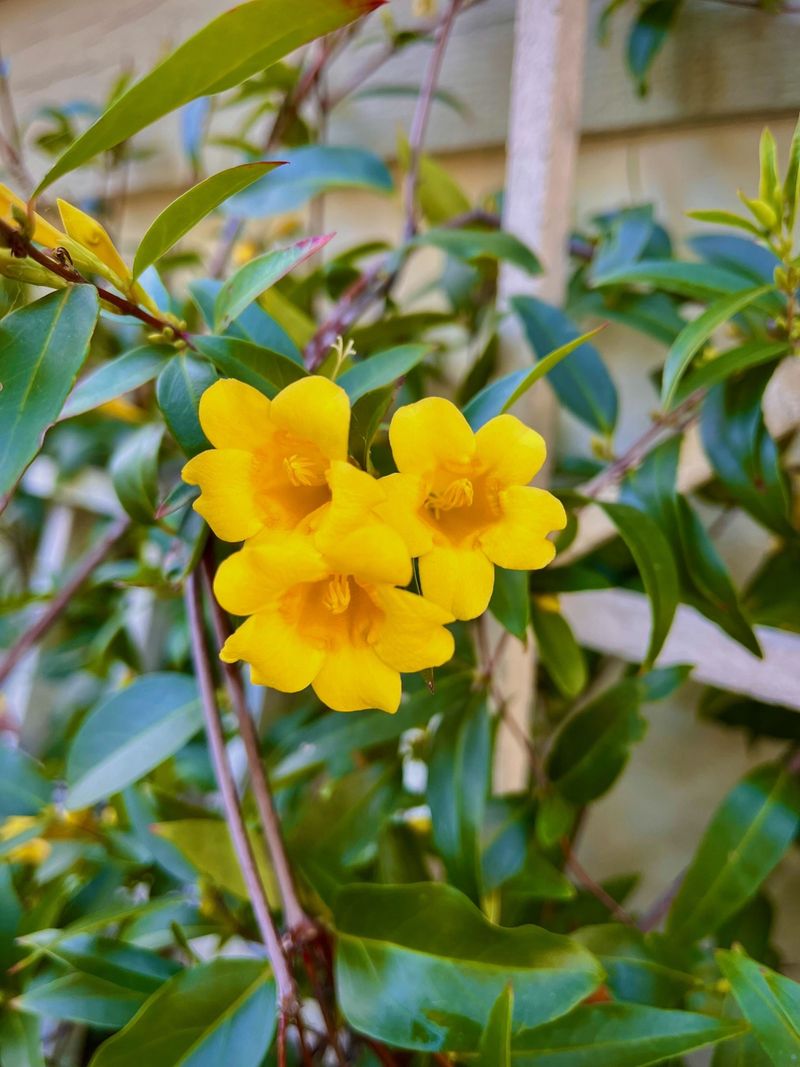
Bright yellow, trumpet-shaped flowers and a sweet honey-like fragrance make Carolina jessamine a standout choice for California fences.
This cheerful evergreen vine is one of the earliest bloomers of the year, often putting on a show in late winter or early spring when most other plants are still waking up.
That early color makes it especially welcome in the garden. Carolina jessamine twines its stems around supports to climb, so it works beautifully on chain-link fences, wooden trellises, and wire frames.
It does not cling to surfaces with roots or pads, which means no damage to walls, posts, or foundations.
It typically grows 12 to 20 feet long and fills in quickly once established, creating a thick, leafy screen that offers real privacy.
It thrives in full sun to partial shade and is quite adaptable to different soil types as long as drainage is decent.
Once established in a California garden, it handles heat and moderate drought without much trouble.
Trim it lightly after flowering to keep the shape neat and encourage more blooms the following season.
One important note: all parts of this plant are toxic if ingested, so plant it thoughtfully in yards with pets or curious young children nearby.
5. Star Jasmine
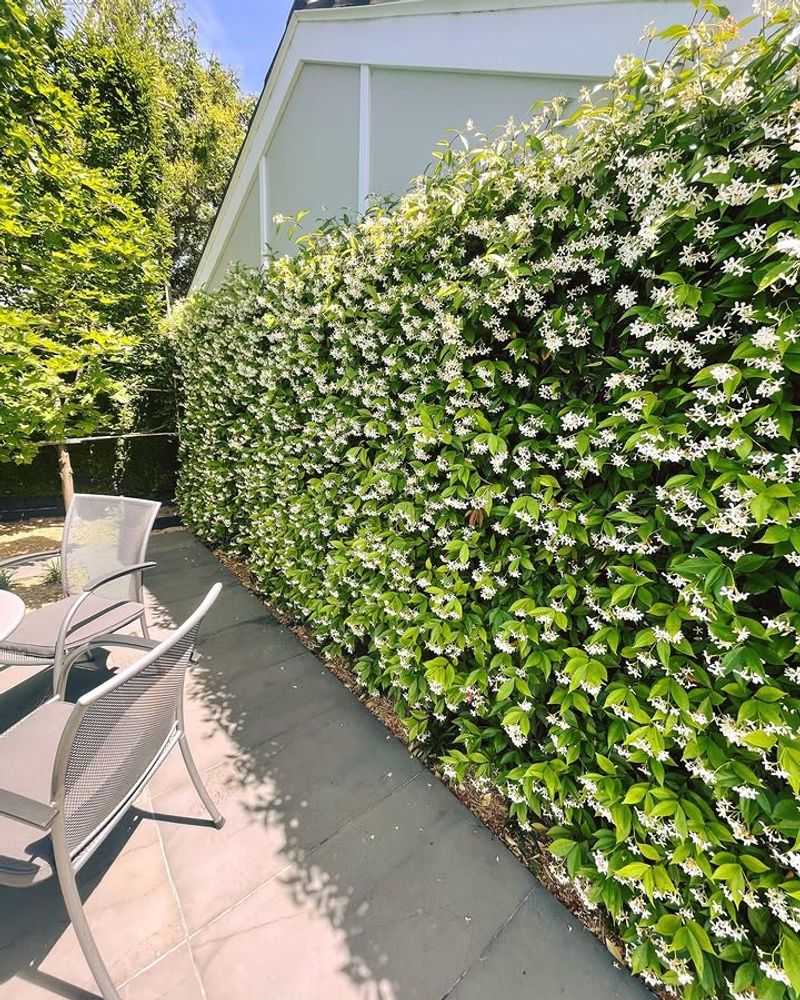
Few plants can match the sweet, intoxicating scent of star jasmine drifting through a warm California evening.
This evergreen vine is a top choice for homeowners who want fast coverage without any worry about root damage.
Star jasmine climbs by twining its stems around supports, so it holds onto fences gently rather than digging into wood or masonry.
It grows at a steady pace, typically reaching 20 feet or more when given proper support and regular watering.
The small, white, pinwheel-shaped flowers bloom in late spring and early summer, filling the air with a fragrance that rivals any perfume.
Even when not in bloom, the glossy dark green leaves keep fences looking full and attractive all year long.
Plant it in full sun to partial shade for the best results. Water it regularly during the first year to help it get established, then reduce watering as it matures.
Star jasmine tolerates a wide range of soil types and is not picky about fertilizer. Trim it back after flowering to keep it tidy and encourage fresh new growth.
It is also resistant to most common garden pests, making it a low-maintenance favorite across California.
6. California Pipevine
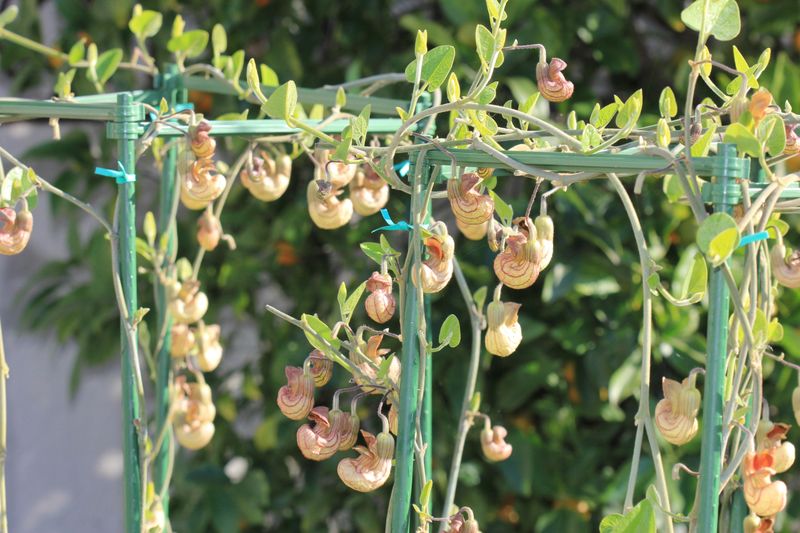
Going native has real rewards, and California pipevine is one of the most fascinating examples of that.
This vine is the sole food source for the pipevine swallowtail butterfly, one of the most beautiful butterflies found in California.
Planting it in your yard is like hanging out a welcome sign for these stunning black and blue-winged visitors.
The vine itself is vigorous and fast-growing, easily covering a fence within a season or two.
Its large, heart-shaped leaves create a lush, tropical-looking screen that stays attractive through most of the year.
The unusual pipe-shaped flowers are dark purple and oddly charming, adding a quirky botanical detail that garden visitors always notice and ask about.
California pipevine grows best in partial shade to full sun and prefers well-drained soil with some organic matter.
It climbs by twining and does not produce invasive roots, making it completely safe for fences and nearby structures.
Regular watering during the first year helps it establish quickly, after which it becomes fairly drought-tolerant. Cut it back in late winter to manage its size and encourage fresh spring growth.
Supporting local wildlife while beautifying your fence is a combination that is hard to beat in any California garden.
7. Passionflower Vine
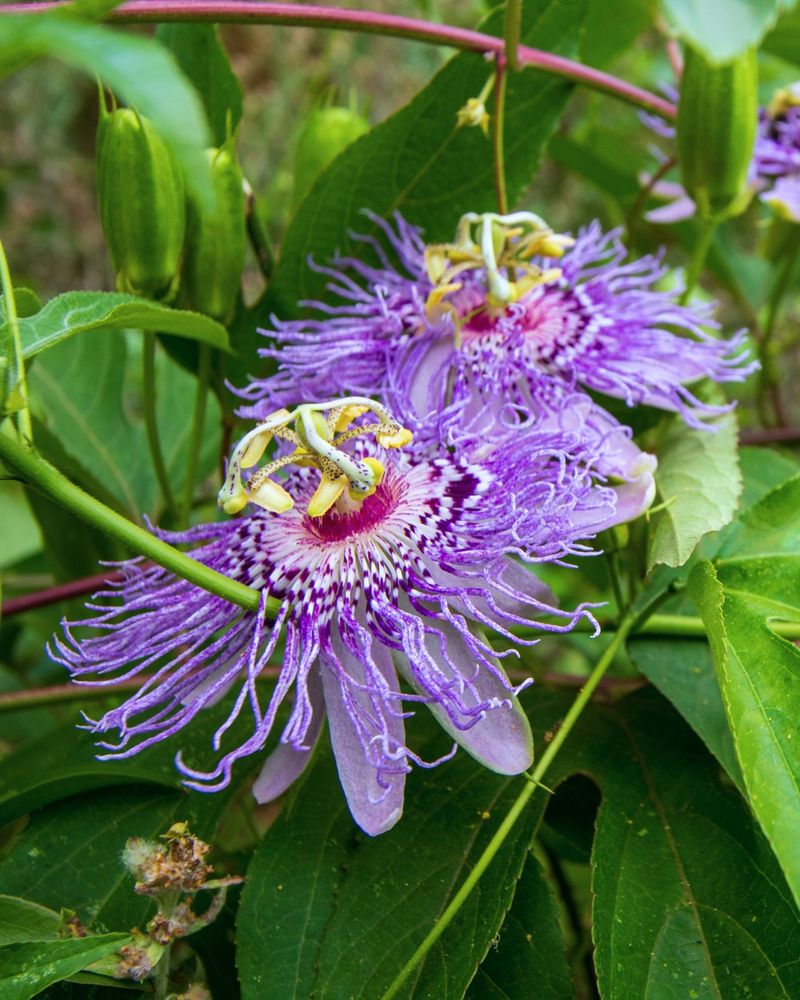
Few plants in the garden world look quite as exotic and otherworldly as passionflower. The blooms are intricate works of art, featuring layers of purple, white, and sometimes blue petals arranged in a perfectly symmetrical pattern.
When guests see this vine growing on your fence, they will want to stop and stare every single time.
Passionflower climbs using coiling tendrils that wrap around fence wire, lattice, or any thin support they can reach.
It grows quickly and vigorously, sometimes putting on several feet of growth in a single season.
Because it climbs with tendrils rather than clinging roots, it poses no threat to fence structures or nearby foundations. It is a safe and spectacular choice for California yards.
Most passionflower varieties grow well in full sun and tolerate a range of soil conditions as long as drainage is good.
They are fairly drought-tolerant once established, which suits California’s often dry summers well.
Some varieties also produce edible passion fruit, which is a fun bonus for adventurous gardeners. Trim the vine back in late winter to keep it from getting too heavy and woody.
8. Black Eyed Susan Vine
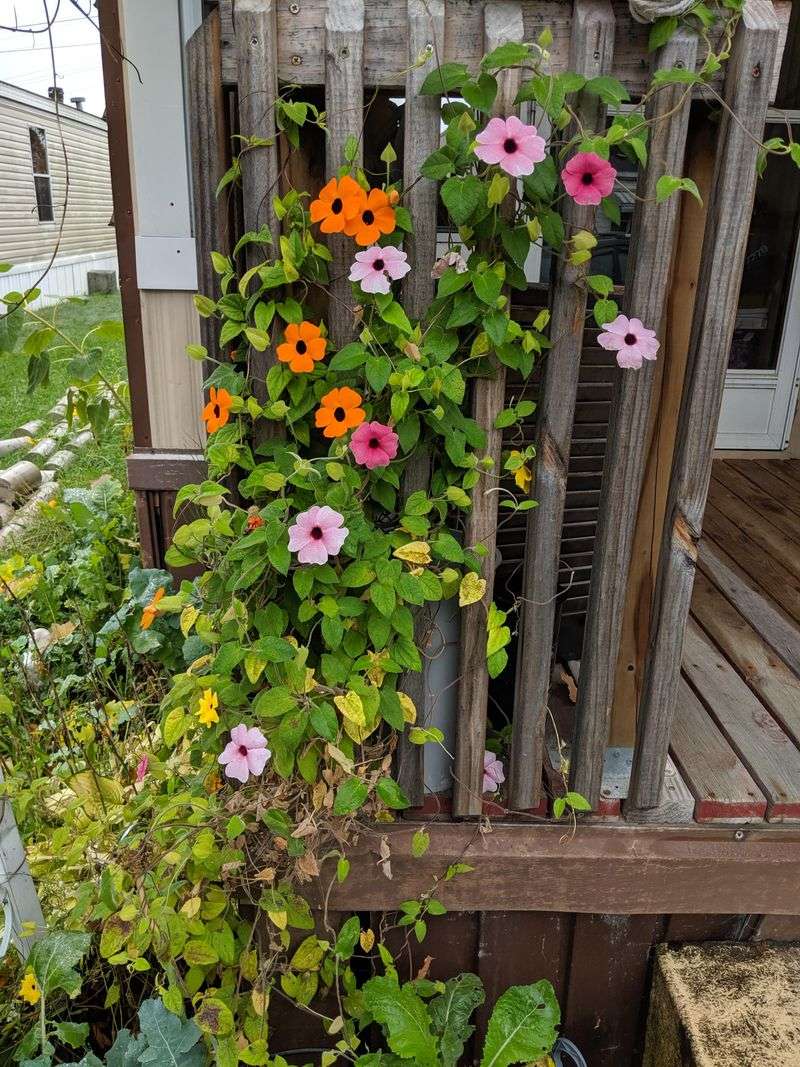
Cheerful and full of energy, black-eyed Susan vine is the kind of plant that makes a fence look like it is wearing a party outfit.
The bright orange, yellow, or white flowers with their distinctive dark centers bloom from summer through fall, bringing a burst of tropical color to California gardens.
It is one of those plants that practically radiates happiness. This vine is an annual or tender perennial in most climates, but in warmer parts of California it can come back year after year.
It climbs by twining its stems around supports and is perfectly suited for fences, trellises, and wire frames.
Because it uses no sticky pads or penetrating roots, it will not scratch, stain, or damage fence surfaces in any way.
Black-eyed Susan vine grows best in full sun and well-drained soil. It appreciates regular watering, especially during hot summer months, to keep the flowers coming strong.
Feed it with a balanced liquid fertilizer every few weeks during the growing season for the best bloom performance.
It is also relatively fast-growing, which means you can go from a small transplant to a fully covered fence section in just one season. For gardeners who want big color with minimal effort, this vine is a perfect match.
9. Scarlet Runner Bean
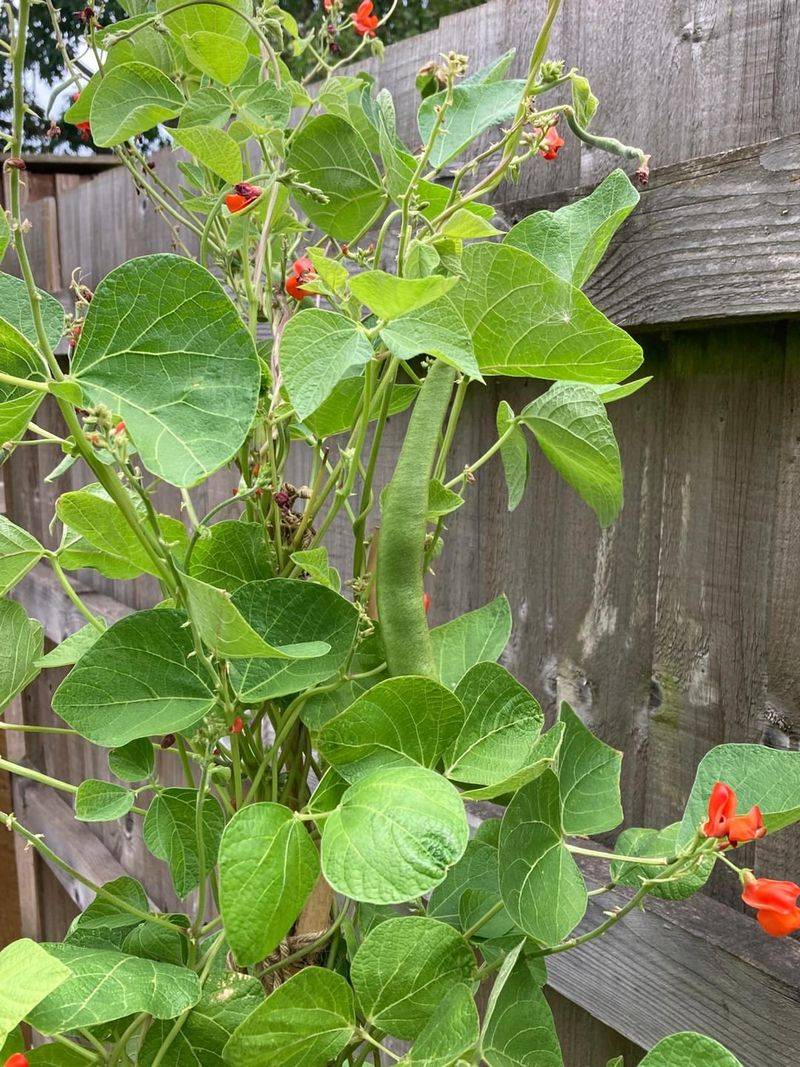
Combining beauty with practicality, scarlet runner bean is one of those rare plants that earns its place in the garden on multiple levels.
The vivid scarlet red flowers are stunning from a distance and up close, attracting hummingbirds and bees throughout the summer.
At the same time, the vine produces long, edible beans that you can harvest and cook just like regular green beans.
It grows incredibly fast, sometimes climbing six feet or more in just a few weeks during warm weather.
Scarlet runner bean uses tendrils to wrap around fence wires, stakes, and supports, so it never damages the structures it climbs on.
This makes it one of the most fence-friendly fast-growers available to California gardeners who want both speed and safety. Plant seeds directly in the ground after the last frost in a sunny spot with well-drained soil.
Water consistently throughout the growing season and give it a sturdy fence or trellis to grab onto. The more you harvest the beans, the more the plant produces flowers and new pods.
It is typically grown as an annual, but in frost-free parts of California it may return from the roots the following year. For edible beauty that covers fences fast, scarlet runner bean is truly in a class of its own.