8 Clues A Skunk Is Sneaking Through Your Virginia Yard At Night (And How To Stop It)
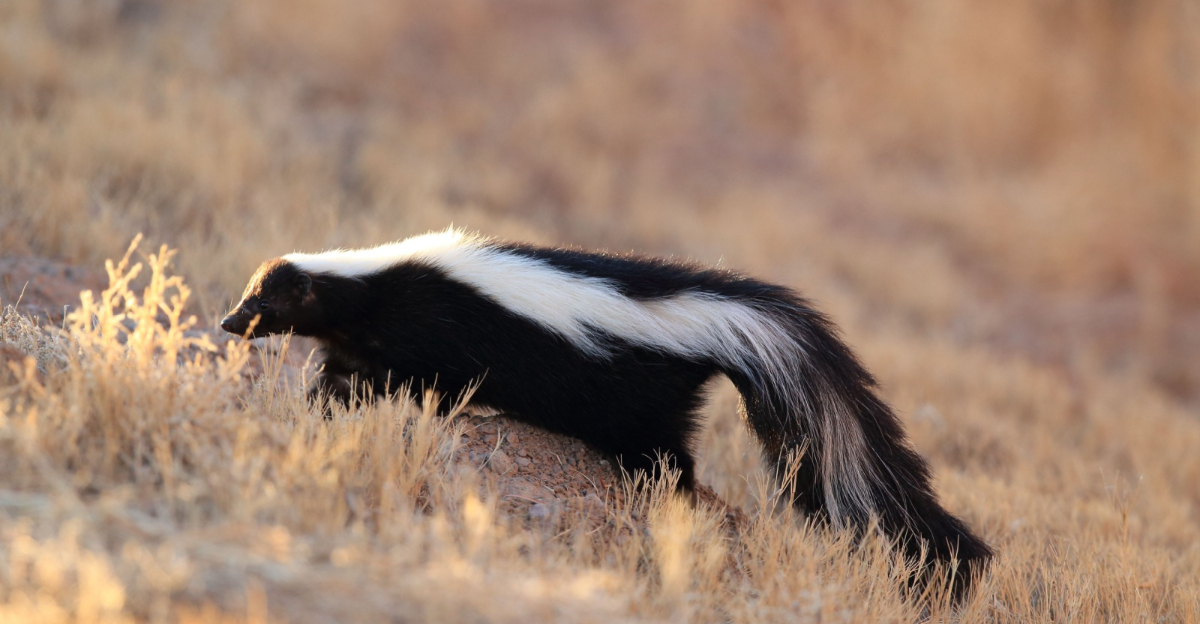
You did not leave anything rotting in the backyard.
The trash cans are sealed.
The dog has been inside all night.
So what is that smell?
If you live in Virginia, a skunk may have quietly added your yard to its nightly route, and trust me, it did not ask permission.
Skunks are remarkably stealthy for creatures with such a notorious reputation.
Skunks do their rounds between dusk and dawn.
By the time you wake up, they are gone, but their mess is not.
The good news is that skunks are not exactly subtle.
They dig, they scratch, they linger, and yes, sometimes they smell.
Once you know what to look for, spotting the signs early gives you a real shot at reclaiming your yard before things get out of hand, or out of nose.
1. Holes Dug In Your Lawn
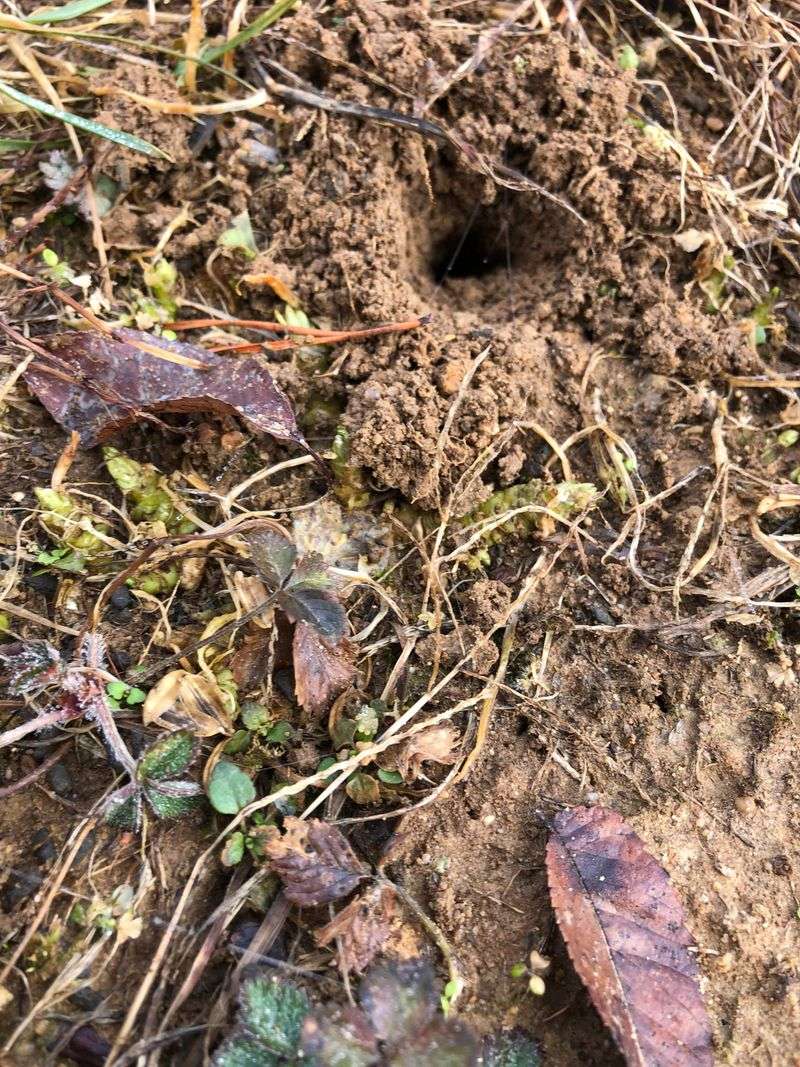
Your lawn looked perfect yesterday, and now it looks like a tiny bulldozer rolled through overnight.
Skunks are relentless diggers, and the holes they leave behind are one of the most common signs that a skunk is sneaking through your Virginia yard at night.
These holes are typically small, cone-shaped, and about three to four inches wide.
They show up in clusters across the grass, almost always in a random pattern that makes your lawn look like it lost a fight.
The reason skunks dig is simple: they are hunting for grubs, beetles, and other insects hiding just below the soil surface.
Your lawn is basically a buffet, and those fat white grubs are the main course.
To stop the digging, you need to eliminate the food source.
Apply a grub-control treatment to your lawn in late summer, which is when grub populations peak.
Milky spore powder and beneficial nematodes are both natural options that work well and will not harm your pets or garden.
You can also try spreading cayenne pepper or a commercial animal repellent around the damaged areas.
Motion-activated sprinklers are another solid option because skunks hate sudden bursts of water and will quickly learn to avoid the area.
Fix the grub problem first, and the nightly digging visits will likely stop on their own.
2. Knocked Over Trash Cans

Waking up to garbage all over your driveway is one of the most frustrating ways to start a morning.
Knocked-over or ransacked trash cans are a classic sign that a skunk has been prowling your property after dark.
Skunks have surprisingly strong front claws and a stubborn determination when food is involved.
Lightweight plastic lids are basically an open invitation for them.
They will tip a can over, pry off a loose lid, or squeeze through a gap without much effort at all.
Skunks tend to scatter food slowly and methodically.
They carefully work through whatever they find rather than grabbing something and running off into the dark.
The fix here is straightforward but requires a little investment.
Switch to heavy-duty trash cans with locking lids, which are widely available at hardware stores.
Bungee cords looped through the handles also work well as a cheap backup.
Your Virginia Garden Changes Every Week. Your Plan Should Too.
Gardening in Virginia changes quickly throughout the season. Every Friday you’ll receive a simple weekly plan showing exactly what to plant, prune, fertilize, harvest, and protect so you never miss the right timing.
Store your cans in a garage, shed, or enclosed bin whenever possible, especially between dusk and the following morning.
Spraying the outside of your cans with a diluted ammonia solution can also deter skunks because they find the scent offensive.
Keep in mind that ammonia can be irritating to humans and pets, so apply it carefully and keep children and animals away from treated areas.
Motion-activated lights near your trash area are an added bonus since sudden brightness startles nocturnal animals.
A little preparation at night can save you a messy cleanup every single morning.
3. Paw Prints In Mud Or Sand
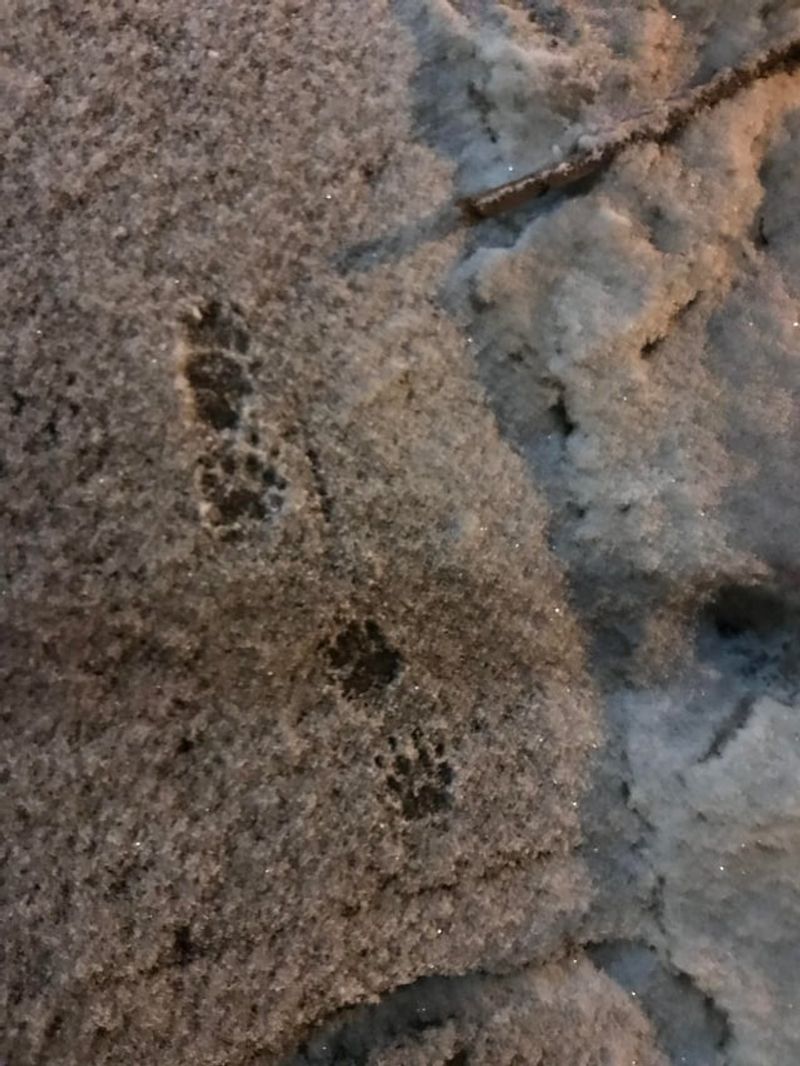
Soft mud near a garden bed or sandbox is basically a guest book for nighttime wildlife.
Skunk paw prints are one of the most definitive clues you can find, and they are pretty easy to identify once you know what to look for.
A skunk print shows five toes on both the front and back feet, which immediately separates it from a cat or small dog.
The front prints are smaller, roughly an inch and a half wide, and show noticeable claw marks extending out from each toe.
The back prints are slightly larger and longer, somewhat resembling a tiny human footprint in shape.
You will often find these prints in a waddling pattern, close together and slightly offset, because skunks move in a slow, rocking gait.
Check around garden beds, near downspouts, along fence lines, and anywhere the soil stays moist.
If you want to confirm what animal is visiting, try creating a simple tracking station.
Lay down a strip of damp sand or smooth soil near suspected entry points and check it the next morning.
Photographing the prints and comparing them to a wildlife identification guide online takes just a few minutes.
Once you confirm it is a skunk, you can focus your prevention efforts in exactly the right spots.
Knowing your visitor changes everything about how you respond.
4. A Faint Musky Odor In The Air
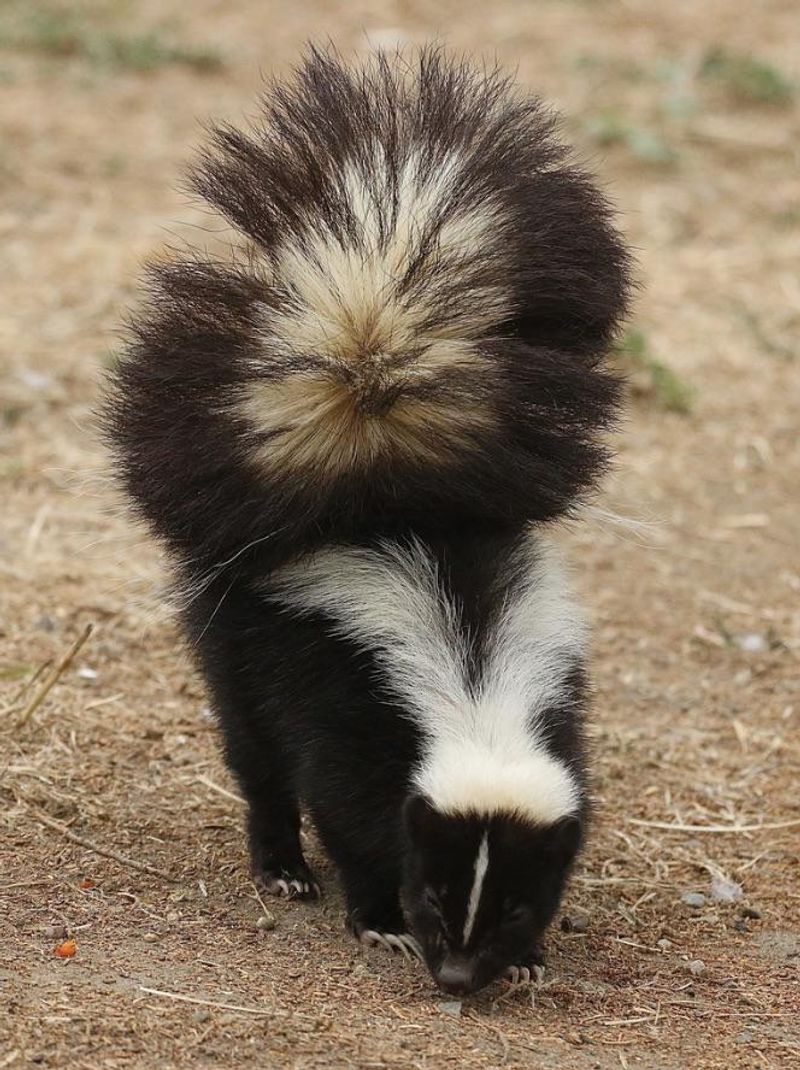
You step outside for some evening air and catch a smell that is earthy, sharp, and oddly familiar.
A faint musky odor drifting through your yard is one of the earliest and most telling signs that a skunk is sneaking through at night.
Skunks do not always spray when they pass through an area.
Even without a full defensive blast, their bodies naturally carry a low-level musky scent that lingers in the air and on surfaces they brush against.
This background smell is subtler than a full spray, more like a distant skunk encounter rather than a direct hit.
If you notice it repeatedly in the same area of your yard, especially near a deck, fence line, or garden, that spot is worth investigating.
The smell tends to be strongest right after the animal passes through, so late evening or early morning is when you are most likely to catch it.
To reduce the attraction, remove anything that might be drawing the skunk in, like fallen fruit, pet food left outside, or open compost bins.
Spreading predator urine granules, available at garden centers, around the perimeter of your yard can discourage return visits.
Your nose is actually one of the most reliable detection tools you have.
Trust it, and act quickly before the situation escalates into something far more pungent.
5. Scratches Around Your Home’s Foundation Or Deck
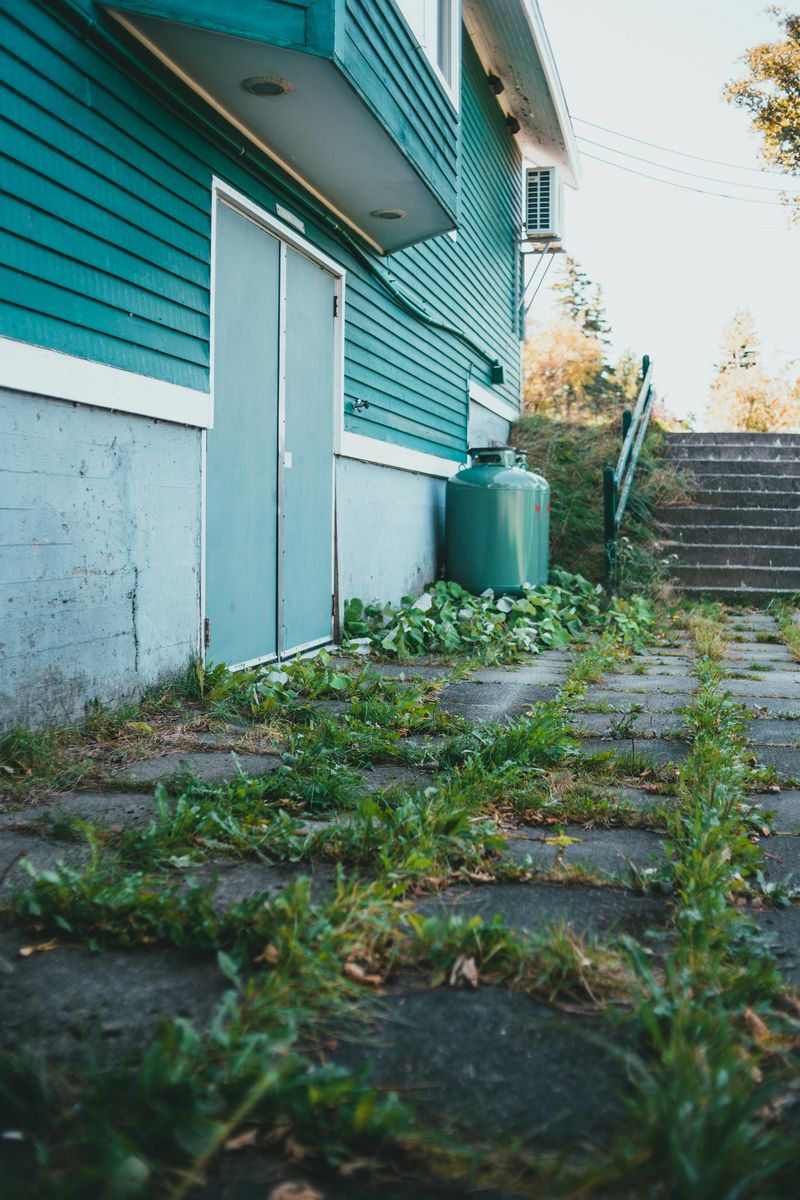
Scratches around your foundation or deck are not just cosmetic damage, they are a warning sign worth taking seriously.
Skunks actively search for sheltered spots to rest, especially during the colder months.
To them, the dark space under a deck or porch is basically a five-star hotel.
Check the edges of your concrete foundation and the wood around your deck.
Claw marks, disturbed soil, or small scrape patterns are all signs that an animal has been testing for weak entry points.
The scratches are usually low to the ground, within the first six inches, and may be accompanied by a small amount of displaced dirt.
Finding these marks early gives you a real advantage before the animal actually moves in.
The most effective solution is to install a physical barrier around the perimeter of your deck or porch.
Hardware cloth is a sturdy wire mesh that works extremely well for this.
Bury it several inches into the ground and bend it outward at the base to prevent skunks from tunneling underneath.
Make sure there are no animals already inside before you seal things up.
Check during daylight hours, when skunks are typically sleeping elsewhere.
Adding a motion-activated light near the foundation can also discourage nighttime sniffing and scratching.
A deck that is properly sealed is a deck that stays yours.
6. Destroyed Insect Nests Or Wasp Holes In The Ground
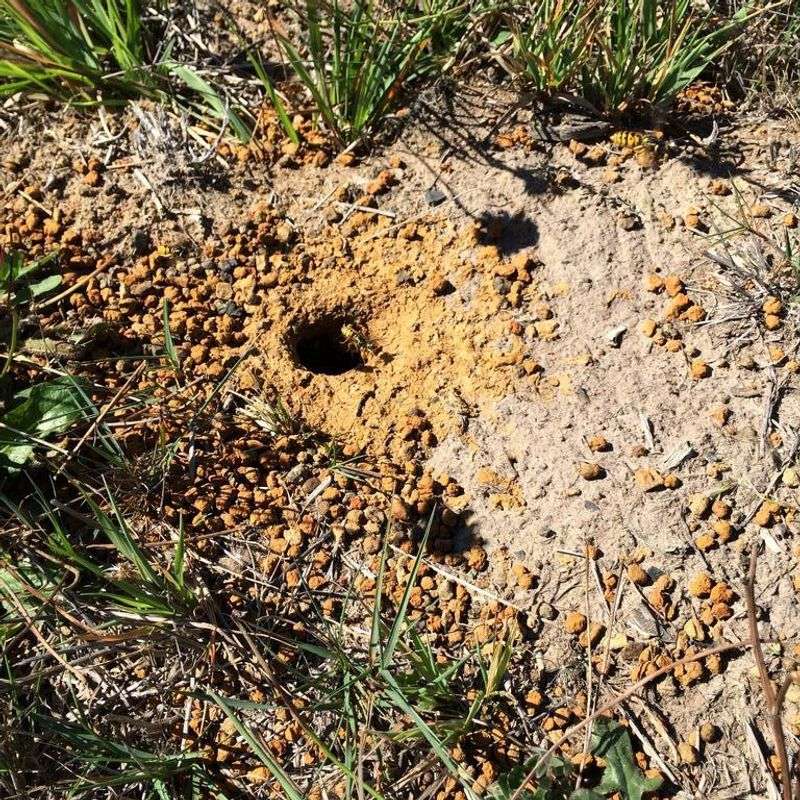
Finding a completely destroyed ground wasp nest is actually one of the more surprising clues that a skunk paid your yard a visit.
Most people assume a person or lawn equipment caused the damage, but skunks are one of the few animals bold enough to dig into an active insect colony for a meal.
Their thick fur protects them from most stings, which makes them fearless when it comes to raiding yellow jacket nests and similar ground-dwelling colonies.
The destruction is usually messy and thorough, with soil tossed aside and the nest itself completely ripped open.
You might also notice the surrounding grass is disturbed in a wide circle around the entry hole.
This type of damage tends to appear overnight, since skunks do most of their foraging after dark.
If you spot this in your yard, it is a strong signal that the animal has found a reliable food source and will likely return.
Use labeled products carefully or contact a pest professional.
Keeping grass trimmed short also makes it harder for ground-nesting insects to establish colonies.
The fewer insect nests your lawn hosts, the less reason a hungry skunk has to come back night after night.
Removing the food source is always the most powerful long-term solution.
7. Fur Or Hair Caught On Fencing

A tiny tuft of black and white fur snagged on your fence wire might be the most overlooked clue of all.
Skunks squeeze through gaps and under fences regularly, and their coarse fur catches easily on rough edges, wire mesh, and splintered wood.
Skunk fur is distinctive, typically a mix of black and white strands that are coarser than cat hair and have a slightly wiry texture.
Finding it along the bottom edge of a fence, near a gap, or caught on a low nail is a clear sign of a regular travel route.
Skunks are creatures of habit and tend to follow the same paths night after night.
That makes these fur clues especially useful for tracking exactly where they enter and exit your property
Once you identify the entry points, you have a targeted spot to focus your prevention efforts.
Seal gaps in fencing with hardware cloth or additional boards, paying close attention to areas near the ground.
Skunks can squeeze through surprisingly small openings, and they are persistent enough to find every weak spot along your fence line.
Any gap is worth sealing, no matter how minor it looks
Placing a strip of loose soil or sand along the fence line can also help you confirm ongoing activity through fresh prints.
Blocking access points is one of the fastest and most satisfying ways to reclaim your yard.
Patch the gaps, and the late-night commute through your property comes to a swift end.
8. Nighttime Sightings Between Dusk And Dawn
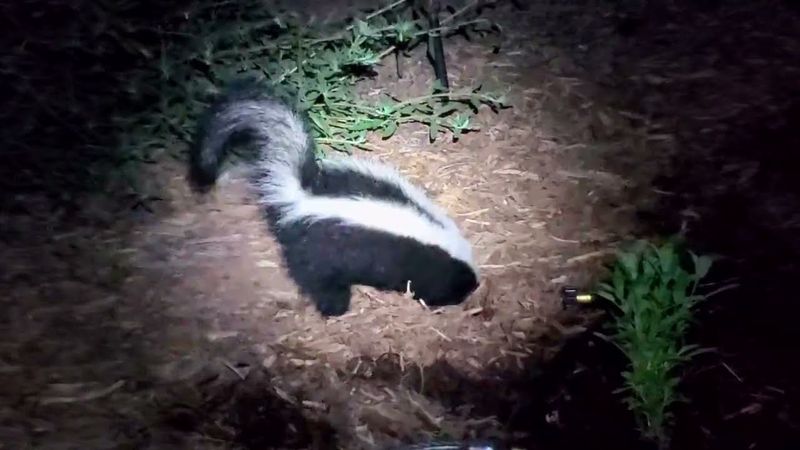
Spotting a slow-moving, black-and-white animal waddling across your yard at 2 a.m. is about as clear a confirmation as you are going to get.
Skunks are nocturnal by nature, and the window between dusk and dawn is when they are most active, and most likely to cause trouble in your yard.
If you catch one on a security camera or spot one while letting the dog out late at night, do not panic and do not approach it.
A skunk will only spray when it feels threatened, so staying calm and giving it space is always the right move.
Set up a motion-activated camera near areas where you have noticed other signs, such as holes, scratches, or disturbed trash.
Reviewing the footage can tell you exactly when the animal arrives, which path it takes, and how often it visits.
That information makes your prevention plan far more targeted and effective.
To discourage repeat nighttime visits, combine several deterrents at once.
Motion lights, sprinklers, and scent repellents placed along the animal’s known route work best when used together.
Removing outdoor food sources before dark takes away the main reason a skunk bothers entering your yard in the first place.
That means bringing in pet bowls, picking up fallen fruit, and clearing any bird seed left on the ground.
A skunk sneaking through your Virginia yard at night is a solvable problem, and now you have exactly what you need to handle it.