Could No Mow May Be Creating Tick Habitat In Your Virginia Yard
No Mow May sounds like a win. Skip the mowing, help the pollinators, feel good about your yard.
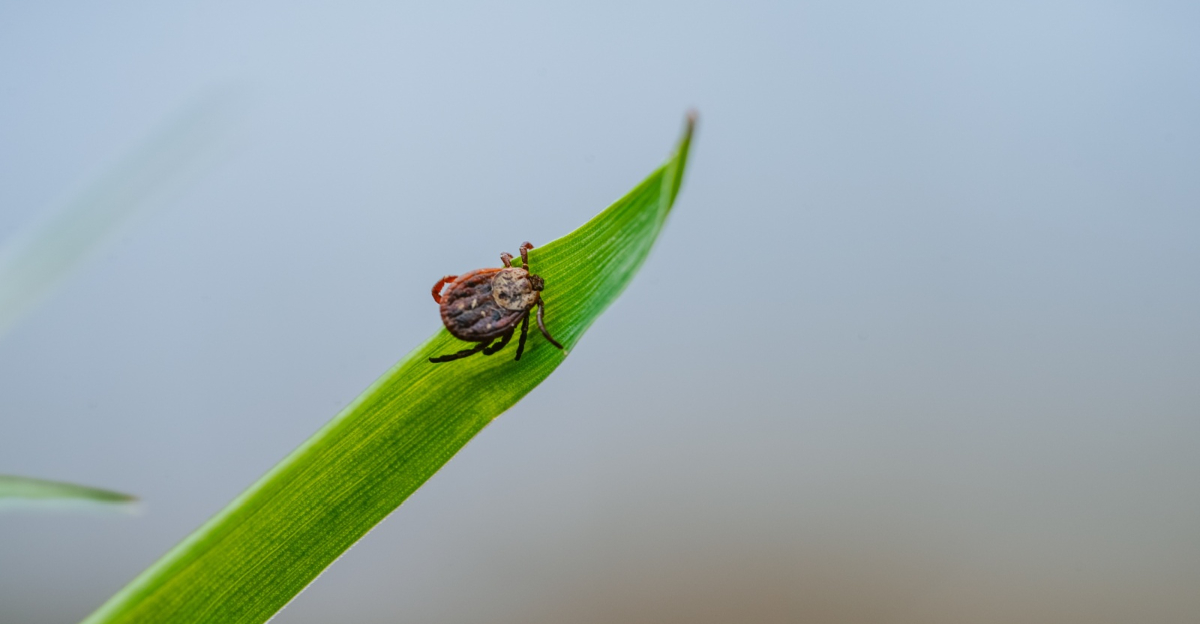
For Virginia homeowners, though, there may be a tradeoff hiding in that tall grass. Ticks love shady, moist, sheltered spots at ground level.
Letting your lawn grow all month long can create exactly that kind of environment. These tiny parasites are already active by mid-spring in most years.
They move through vegetation searching for a host, and that host could be your pet, your child, or you. That is not a reason to panic.
It is simply worth knowing before you put the mower away for the whole month. Supporting pollinators and reducing tick habitat are not opposing goals.
With some simple adjustments, you can work toward both. Understanding what is actually happening in your yard this May is the best place to start.
1. Tall Grass Holds Moisture And Shade Ticks Need To Thrive

Moisture is everything to a tick. Without enough of it, these small parasites struggle to stay active.
They can dry out within hours. Tall grass creates the exact conditions they need to avoid that fate.
The blades overlap and press together. They slow evaporation and trap water from rain, dew, and irrigation close to the soil surface.
Skip mowing through May and your lawn can quietly become one of the more tick-friendly environments on your property.
Ticks need relative humidity above 80 percent to stay active and healthy. Tall, uncut grass can regularly deliver that threshold.
But moisture alone is only part of the picture. Shade plays an equally important role.
Unmowed grass forms a low canopy that blocks sunlight from reaching the soil. It keeps the ground beneath cool and damp for hours longer than a trimmed lawn would.
Keeping your lawn trimmed short changes the equation. Sunlight reaches the soil.
Evaporation speeds up. The surface becomes far less hospitable.
Even dropping from eight inches to four can make a noticeable difference. It affects how long moisture lingers after a rainstorm.
Paired with clearing leaf litter from shaded corners, regular mowing is one of the more practical tools for reducing tick habitat without reaching for chemicals.
2. Your Lawn Has A Tick Entry Point

Where your lawn meets wooded areas, ticks find one of their easiest entry points onto your property. They do not travel far under their own power.
Instead, they hitch rides on animals moving between trees and open grass. Without something physical breaking up that transition zone, the movement happens quietly and repeatedly all season long.
A 3-foot strip of wood chips or gravel along that boundary can help interrupt the pattern. Ticks tend to avoid dry, sun-exposed surfaces because they lose moisture quickly without shade to protect them.
That simple strip of dry material can slow down how many make it from the woods into your lawn.
You do not need a contractor or a big budget to make it happen. A few bags of wood chips from your local garden center and a free afternoon are usually enough to get started.
Your Virginia Garden Changes Every Week. Your Plan Should Too.
Gardening in Virginia changes quickly throughout the season. Every Friday you’ll receive a simple weekly plan showing exactly what to plant, prune, fertilize, harvest, and protect so you never miss the right timing.
Keep the strip clear of leaves and creeping vegetation so it stays dry and keeps working through the warmer months. Top it off once or twice a year to maintain the depth.
Think of it as a quiet boundary your yard did not have before. Animals may still cross it, but fewer ticks are likely to come along for the ride.
Combined with regular mowing and keeping debris off the ground, a border barrier is one of the more practical and accessible tools available to Virginia homeowners who want to reduce tick pressure each spring without reaching for chemicals.
3. Dense Ground Cover Can Work Against You
Pennsylvania sedge and creeping phlox are practical choices for filling in bare patches in Virginia yards. They suppress weeds, require little maintenance once established, and work well in shaded or awkward corners.
Unlike English ivy and vinca, which are classified as invasive in Virginia, both are native or non-invasive options that do their job without spreading beyond your yard or crowding out surrounding plants.
That said, all dense low-growing ground cover creates conditions that ticks find favorable.
Dense plants form a canopy right at ground level that traps moisture and shuts out sunlight. Shaded spots near trees and fence lines already hold onto humidity naturally.
Layer thick ground cover on top and conditions get more comfortable for ticks looking for a place to wait out the day.
Small animals make things worse. Mice and chipmunks treat dense plantings like a built-in tunnel system, moving through your yard quietly and dropping ticks along the way.
Over time those planted areas can become reliable tick zones that slowly push outward into the rest of your lawn.
You do not have to pull everything up. In spots where ticks are already a concern, consider trading dense varieties for lower, more open plants that let air and light reach the soil.
Mulch or gravel works just as well visually in shaded areas and keeps conditions far less inviting. For ground cover you want to keep, trim it back on a regular schedule and watch the edges where it meets open grass.
Small changes to what grows closest to the ground can shift how welcoming your yard feels to ticks this spring, without giving up the look you actually want.
4. Leaf Litter And Debris Piles Create Hidden Tick Zones

Fallen leaves look harmless. In spring, though, last season’s leaf litter can still be sitting in corners, along fence lines, and under shrubs.
That decomposing layer holds moisture, blocks sunlight, and gives ticks a sheltered place to wait out dry or cool conditions. It is easy to overlook because it blends into the background of a yard that has not been fully tidied after winter.
Debris piles work the same way. Wood stacks, brush piles, and scattered garden waste all create the kind of dark, damp spots that ticks find favorable.
These areas often go unnoticed precisely because they sit at the edges of a yard rather than in the middle of it. Out of sight tends to mean out of mind until tick season is already underway.
Clearing leaf litter before tick season peaks is a low-effort step with a reasonable payoff. Rake out shaded corners, move wood piles away from the house, and bag or compost accumulated debris.
A single afternoon of tidying can remove several small habitat zones at once.
The edges and forgotten corners of your yard tend to matter more than the open lawn when it comes to where ticks actually spend most of their time. Starting there makes practical sense.
5. Ticks Quest More Effectively From Taller Grass Blades
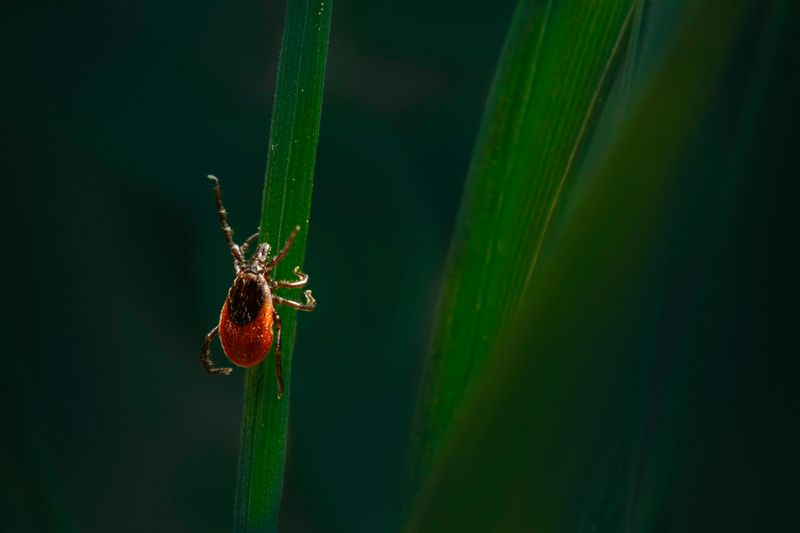
Questing is the term scientists use to describe how ticks hunt.
A tick climbs up a plant stem or grass blade, extends its front legs wide, and waits patiently for a warm body to brush past.
Taller grass gives ticks more climbing surface, more vertical range, and better odds of making contact with a host.
Short grass limits a tick’s reach significantly.
When blades only grow two or three inches tall, a questing tick has a much smaller window of opportunity.
But in a yard left unmowed through May, grass can easily reach eight, ten, or even twelve inches, multiplying the tick’s effective hunting range many times over.
Ticks are surprisingly patient hunters.
One study found that individual ticks can quest repeatedly over several days without feeding, conserving energy and waiting for the right moment.
Giving them tall grass to work with extends their reach and increases their odds of making contact with a passing host.
Reducing grass height cuts down on the number of ticks that successfully attach to humans and pets during yard time.
Combine regular mowing with tick checks after outdoor activities for a solid two-layer defense.
Awareness of how ticks actually hunt changes the way you think about lawn care during peak tick season in spring and early summer.
6. Wildlife And Tall Grass Make A Busy Tick Highway

White-footed mice play a quietly significant role in tick season.
They are the primary reservoir host for Lyme disease bacteria and are particularly efficient at passing infected ticks along to the next generation.
Overgrown grass gives mice perfect cover for nesting, foraging, and moving around your yard without being seen by predators.
Deer are the other major player in this story.
A single white-tailed deer can carry hundreds of ticks at once, dropping them across your property as it moves through.
Tall, dense grass is exactly the kind of habitat that attracts deer looking for cover and forage, especially in suburban Virginia neighborhoods near wooded edges.
When you skip mowing through May, you are not just growing grass. You may be making your lawn more attractive to the animals that carry ticks in from surrounding natural areas.
Mice and deer do not carry ticks on purpose, but the result is the same: more ticks deposited directly in your yard.
Creating a mowed buffer zone between your lawn and any wooded or natural areas nearby can reduce how many ticks migrate into your yard on animal hosts.
No Mow May has real benefits for pollinators, but understanding the tick trade-off lets you make a smarter, more informed choice about your Virginia yard this spring.
7. Tick Checks Are A Simple But Reliable Step After Any Time Outside
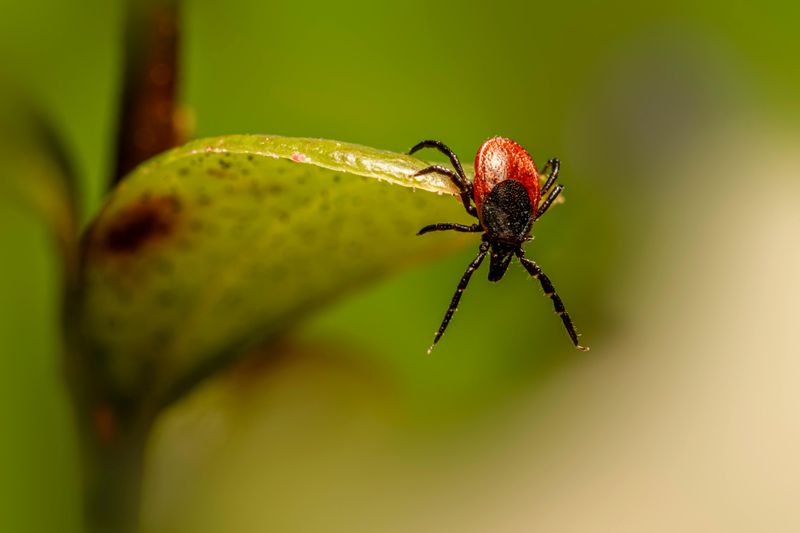
Yard management reduces tick habitat. It does not eliminate ticks entirely.
That gap is where personal protection comes in. No matter how well you maintain your lawn, some ticks will always find a way through.
Knowing what to do after time outside is just as important as what you do in the yard.
After spending time outside in spring or early summer, checking yourself, your children, and your pets is one of the most reliable ways to catch a tick before it has time to attach.
Ticks can be very small, particularly in the nymph stage, so a thorough check matters more than a quick glance.
Run your fingers along the hairline, behind the ears, under the arms, behind the knees, and around the waistband. Those are the spots ticks tend to migrate toward once they are on a host.
Showering within two hours of coming inside is also worth making a habit. Research suggests it can reduce the risk of tick-borne illness meaningfully.
For pets, a quick check after outdoor time is equally worthwhile. Ticks hitchhike indoors on dogs and cats and can transfer to people once inside the home.
Combining good yard habits with a consistent checking routine gives you two layers of protection rather than relying on one alone.