Michigan Groundcovers That Spread Fast Enough To Crowd Out Weeds Before Summer Ends
Slow ground covers are not solving a weed problem, they are just sharing space with one.
The varieties worth planting in Michigan are the ones that move with real purpose, filling in bare ground fast enough to take light and root space away from weeds before summer peaks.
Michigan’s growing season has a firm end point, which means a ground cover needs to establish and spread within a single season to make a visible difference the first year it goes in.
Several native and well-adapted options do exactly that, pushing outward aggressively once they settle in and creating the kind of dense coverage that leaves weeds with nowhere to get started.
These are the ground covers Michigan gardeners reach for when a problem area needs to be handled quickly rather than gradually over several seasons.
1. Wild Ginger
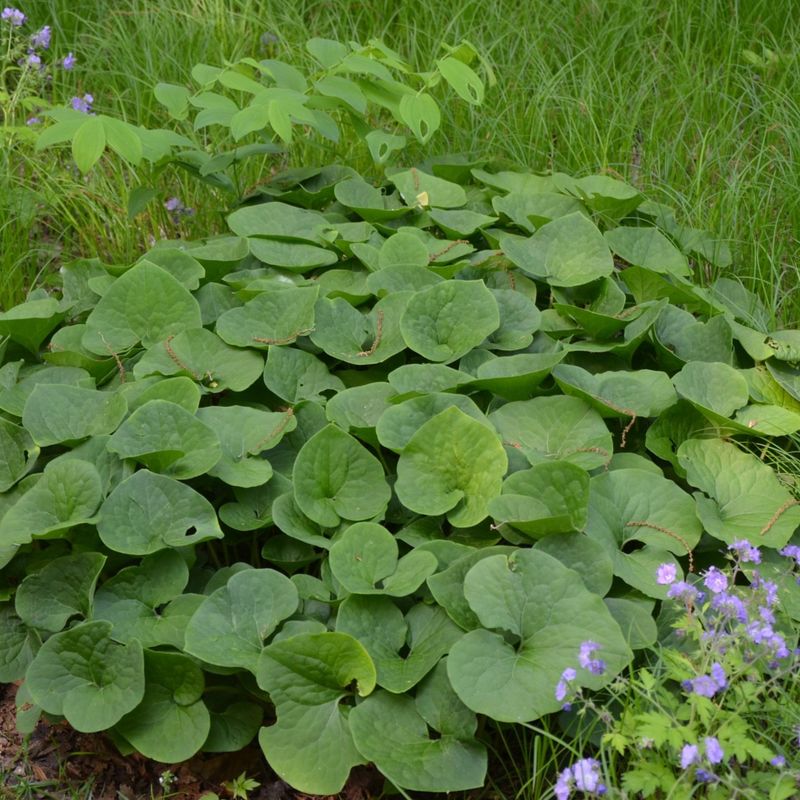
Few native plants feel as quietly powerful as Wild Ginger, known botanically as Asarum canadense.
Crawl beneath the canopy of any healthy Michigan woodland, and chances are you will spot its broad, heart-shaped leaves blanketing the ground in rich, overlapping layers.
It does not shout for attention, but once it settles in, it becomes one of the most reliable weed-suppressing groundcovers a shaded yard can have.
Wild Ginger spreads through underground rhizomes, slowly stitching together a tight colony that shades out weed seeds beneath its dense canopy of leaves. The key word here is slowly.
Most gardeners should expect a couple of years before the colony becomes thick enough to seriously reduce weed pressure. Patience pays off, though, because a well-established patch of Wild Ginger requires almost no maintenance.
Plant it in moist, humus-rich soil under trees or large shrubs, and let fallen leaves accumulate around it naturally. That leaf mulch mimics its native woodland habitat and gives the rhizomes exactly the cool, damp environment they love.
Avoid planting in dry or compacted soil, as those conditions slow its progress considerably.
Wildlife value is a quiet bonus here. The unusual brownish-purple flowers that bloom near the soil surface in spring are pollinated by ground-level insects, including early native flies and beetles.
Birds and small mammals also appreciate the dense cover Wild Ginger provides. For a shaded Michigan garden where weeds keep sneaking in, this native plant is a steady, trustworthy long-term solution.
2. Canada Anemone
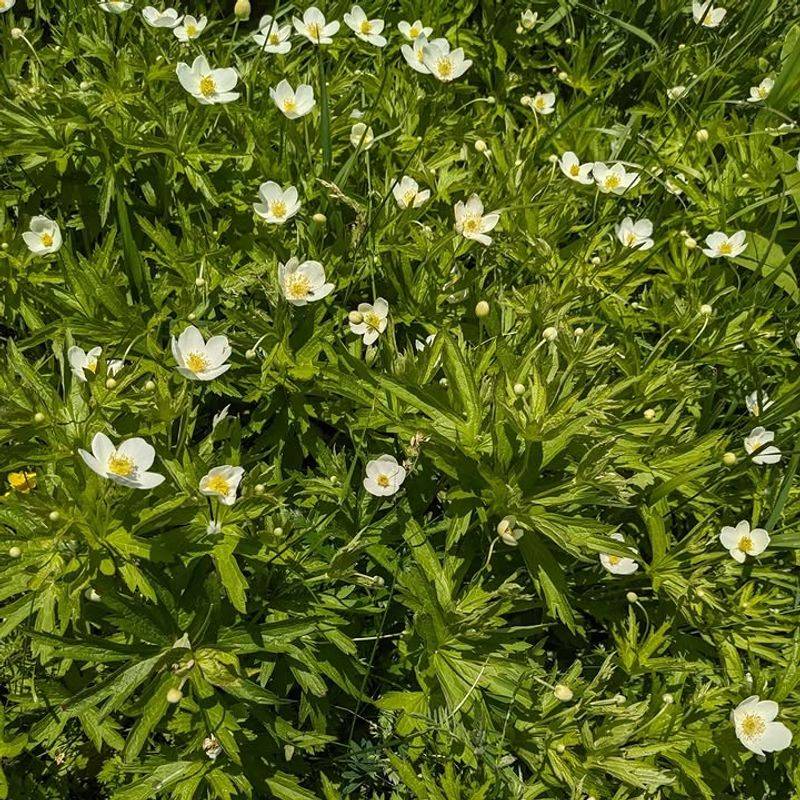
If you have a large, open area in your Michigan yard that weeds love to colonize every spring, Canada Anemone might be your most powerful ally.
Scientifically called Anemone canadensis, this vigorous native perennial spreads by rhizomes with genuine enthusiasm, filling moist soil quickly once it has had a season to settle in.
The cheerful white flowers that appear in late spring and early summer are a lovely bonus on top of its hard-working spreading habit.
Rain gardens, naturalized meadow edges, and large moist beds are where Canada Anemone truly shines. It moves through open ground faster than almost any other native groundcover on this list, which is exactly what you want when weeds are the competition.
Your Michigan Garden Changes Every Week. Your Plan Should Too.
Gardening in Michigan changes quickly throughout the season. Every Friday you’ll receive a simple weekly plan showing exactly what to plant, prune, fertilize, harvest, and protect so you never miss the right timing.
Within two or three growing seasons, a small planting can expand into a wide, weed-crowding colony that needs very little help from you.
That said, honesty matters here. Canada Anemone does not know when to stop, and in a small formal border or a mixed perennial bed, its spreading habit can become a real problem.
It will push into neighboring plants without hesitation, so give it space where boundaries do not matter much.
Pair it along a creek bank, at the edge of a woodland path, or in a rain garden where other plants can hold their own. In those settings, its aggressive spread becomes an asset rather than a headache.
Moist to average soil and full sun to part shade are all it needs to take off and run.
3. Barren Strawberry
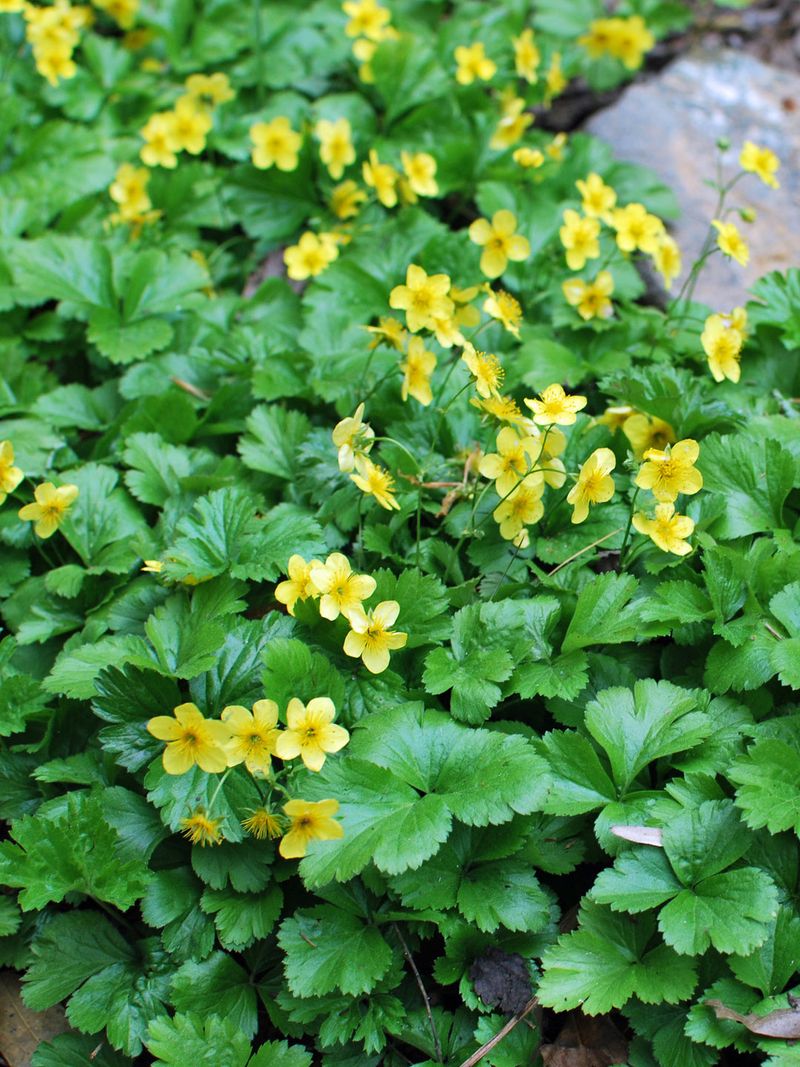
Do not let the name fool you. Barren Strawberry, known scientifically as Geum fragarioides and sometimes listed as Waldsteinia fragarioides, is anything but boring.
Its glossy, strawberry-like leaves form neat, low mats that stay attractive across multiple seasons, and the cheerful yellow flowers that pop up in spring add a welcome splash of color to shaded or partly shaded Michigan garden edges.
What makes this native perennial so useful for weed control is its steady, tidy spreading habit.
It creeps outward through short rhizomes and stolon-like stems, gradually knitting together a dense mat that shades the soil beneath it and makes it harder for weed seeds to find the light they need.
It is not the fastest spreader on this list, but its growth is consistent and its coverage is reliable once established.
Barren Strawberry performs best in well-drained soil with moderate moisture, making it a great fit for woodland edges, slopes under trees, or garden beds that dry out a bit between rains.
Heavy wet soil tends to slow it down and can cause problems over time, so good drainage is worth prioritizing when choosing a planting spot.
Its semi-evergreen to evergreen foliage is another standout feature, especially in Michigan where bare garden beds look bleak through much of winter.
The leaves often hold their color well into the cold months, giving the garden a finished look even when everything else has gone dormant.
For a low-fuss, attractive native mat-former, Barren Strawberry earns its place in any Michigan shade garden.
4. Creeping Phlox
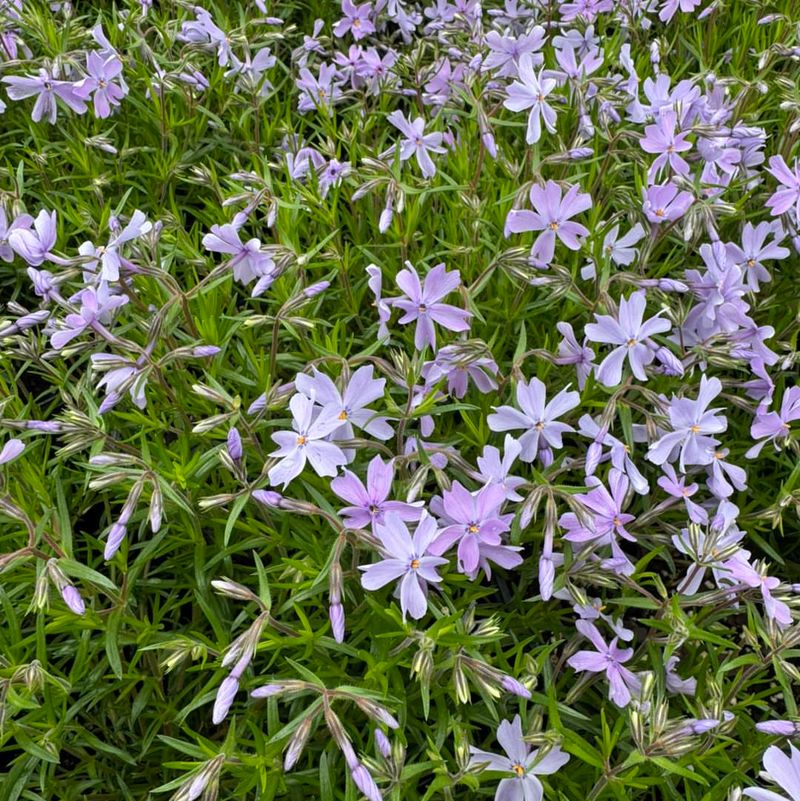
Walk past a Michigan garden in mid-spring and you might stop in your tracks at the sight of a slope completely blanketed in color. That vivid carpet effect almost always belongs to Creeping Phlox, botanically known as Phlox subulata.
This mat-forming native groundcover puts on one of the most spectacular spring flower shows of any low-growing plant, and once those blooms fade, the dense evergreen foliage keeps right on working to shade out weeds through summer and fall.
Creeping Phlox thrives in sunny, lean, well-drained spots where many other groundcovers struggle. Rock gardens, sloped banks, and dry garden edges are its natural territory.
The foliage forms a thick, needle-like mat that sits close to the ground, making it genuinely difficult for weed seeds to germinate beneath it. On a sunny slope where erosion and weeds are constant problems, this plant is a practical and beautiful fix.
Realistic expectations are worth setting here. Creeping Phlox is not a one-season miracle.
It spreads at a moderate pace, and a single planting season will not produce full weed suppression. Give it a full growing season to establish, and consider planting plugs close together to speed up coverage.
After the spring bloom, a light trim helps keep the mats tidy and encourages denser growth.
Wet soil or heavy shade will cause this plant to struggle, so placement really matters. Stick to sunny, well-drained spots and it will reward you with years of low-maintenance color and solid weed competition that improves every single season.
5. Foamflower
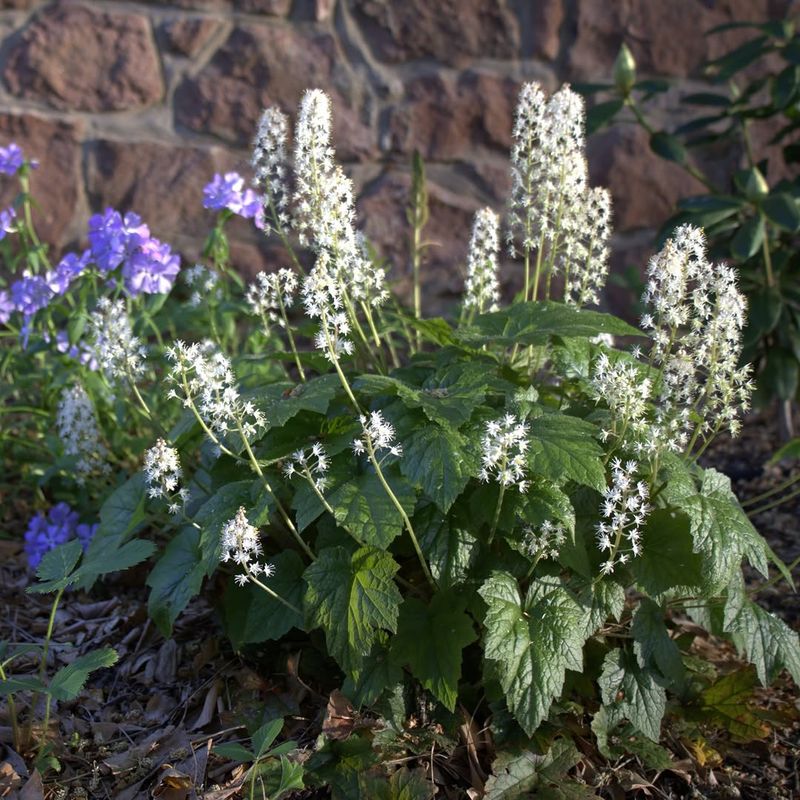
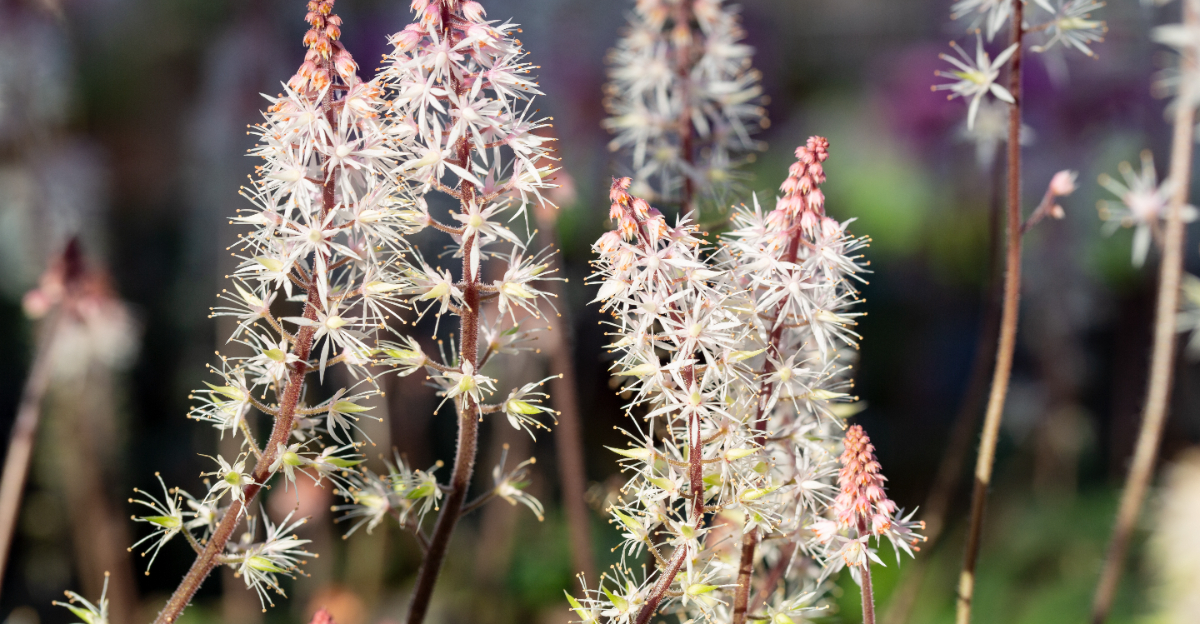
There is something almost magical about a patch of Foamflower in full spring bloom. The feathery white flower spikes rise above deeply textured, maple-like leaves, creating a soft, airy look that feels straight out of a fairy tale.
Botanically called Tiarella cordifolia, this Michigan native is one of the most attractive woodland groundcovers you can grow, and it earns its place in shady gardens through both beauty and practical weed-fighting ability.
Foamflower spreads gradually by stolons, forming expanding colonies in moist, humus-rich soil beneath trees and shrubs.
It is not the most aggressive spreader, but over two or three seasons it fills in reliably, creating a dense layer of foliage that shades the soil and reduces weed pressure in shaded spots where other plants rarely bother to grow.
Its preference for steady moisture and organic-rich soil means it performs best in woodland-style garden settings rather than dry or sunny beds.
Adding compost to the planting area before getting started gives Foamflower a meaningful head start. Mulching with shredded leaves around young plants helps hold moisture and mimics the natural forest floor conditions this plant loves.
During dry spells in its first season or two, some supplemental watering goes a long way toward keeping it healthy and spreading on schedule.
The textured foliage stays attractive well beyond the spring bloom, providing season-long interest in shaded corners that can feel hard to fill.
For Michigan gardeners working with deep shade and moist soil, Foamflower is one of the most rewarding native groundcovers available anywhere in the region.
6. Pennsylvania Sedge
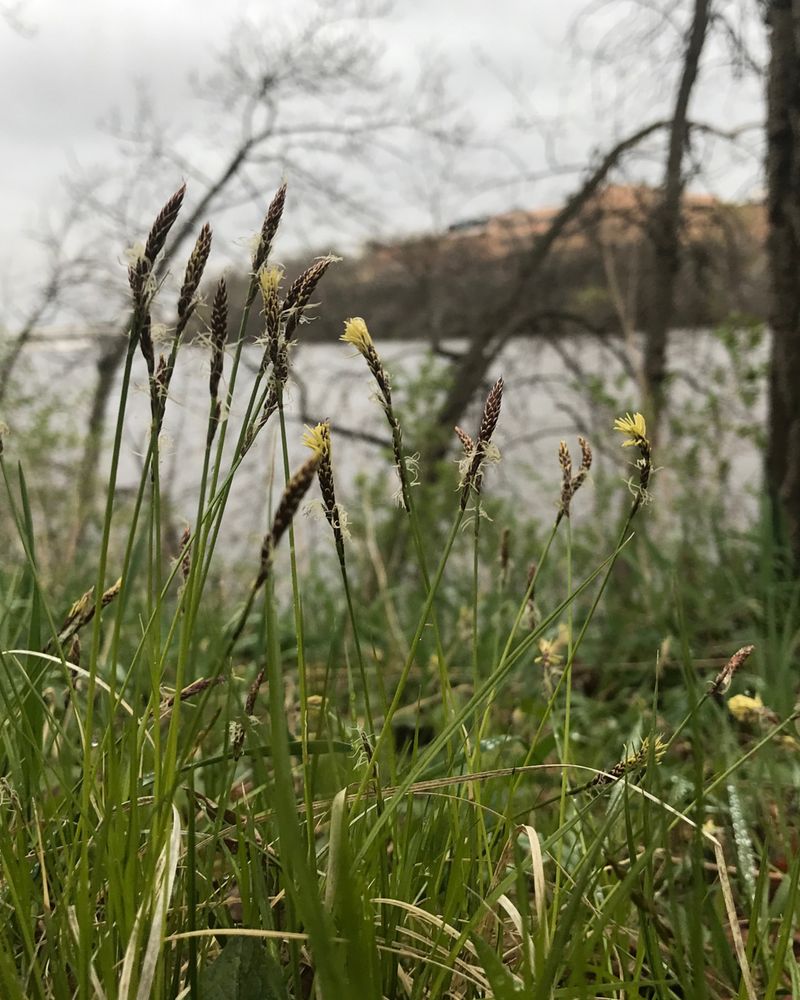
Most people walk past Pennsylvania Sedge without a second glance, but gardeners who know their natives recognize it as one of the most underrated groundcovers in the entire Michigan plant palette.
Carex pensylvanica is its botanical name, and beneath its modest, grass-like appearance is a surprisingly tough and adaptable plant that can slowly transform a bare, shaded area into a soft, weed-resistant colony over time.
This fine-textured sedge spreads through rhizomes at a measured pace, gradually building colonies that form a soft, low-growing layer beneath trees where lawn grass has long given up.
It handles dry to average shade with well-drained soil better than most native groundcovers, which makes it especially valuable under established oaks, maples, or other large shade trees where soil competition is fierce and moisture can be limited.
Patience is genuinely necessary with Pennsylvania Sedge. During its first season or two, weeding around young plants is still required because the colony has not yet grown dense enough to suppress weed competition on its own.
Spacing plants eight to twelve inches apart speeds up coverage without breaking the budget too much. Once the colony fills in, maintenance drops off significantly.
One of its most appealing qualities for low-maintenance gardeners is its flexibility. Pennsylvania Sedge can be left completely unmowed for a natural, slightly flowing look, or mowed lightly once or twice a year for a tidier appearance.
Either way, it provides a soft, attractive ground layer that quietly crowds out weeds season after season without demanding much in return.
7. Golden Ragwort
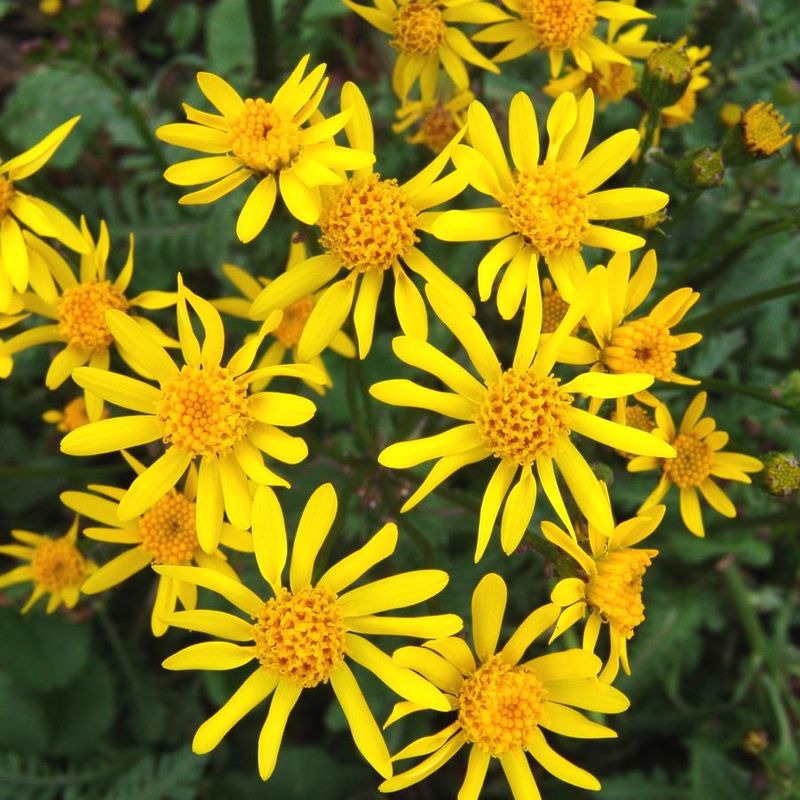
Bold yellow flowers rising above a dense carpet of deep green leaves in early spring, Golden Ragwort is one of those native plants that makes you stop and take a second look.
Packera aurea, as it is known botanically, brings genuine color to moist, shaded Michigan gardens at a time of year when most of the landscape is still waking up.
Pollinators, especially native bees and early butterflies, flock to those golden blooms before most other spring flowers have even opened.
What makes Golden Ragwort so effective as a weed-suppressing groundcover is its two-part spreading strategy. It spreads both by rhizomes and by self-seeding, which means it can fill in a moist, shaded area from multiple directions at once.
Once a colony establishes itself, the semi-evergreen basal foliage stays present through much of the year, covering the soil and blocking the light that weed seeds need to sprout.
In rain gardens, woodland beds, and naturalized areas with consistently moist to wet soil, it is genuinely one of the fastest-colonizing native groundcovers available in Michigan.
Part shade to full shade suits it well, and it tolerates periodic standing water better than most perennials. Those qualities make it a natural fit for low spots and drainage areas that other plants avoid entirely.
One honest note worth mentioning: in small, formal garden beds, Golden Ragwort can spread more than expected and may need occasional editing to stay in bounds.
Give it room to roam in a naturalized setting, and it will reward you with season after season of color, coverage, and real weed competition.