7 Cold-Hardy Vegetables Every Minnesota Gardener Should Plant This Month
Minnesota gardeners know the drill: one week you’re scraping ice off the windshield, the next you’re staring at bare dirt wondering if it’s finally safe to dig in. Here’s the secret nobody tells beginners: you don’t have to wait.
Some of the toughest, most rewarding vegetables actually want cold soil and a little frost bite to bring out their best flavor.
While everyone else is still dog-earing seed catalogs and second-guessing the calendar, you could already have rows sprouting in the yard. This isn’t about rushing things or gambling with a late freeze.
It’s about knowing which crops were basically built for a Minnesota spring, the ones that shrug off chilly nights and reward patient gardeners with crisp, sweet harvests weeks ahead of schedule.
Grab your trowel and a bag of seed, because these cold-hardy vegetables are ready to turn your empty bed into a working garden, frost warnings and all.
1. Carrots
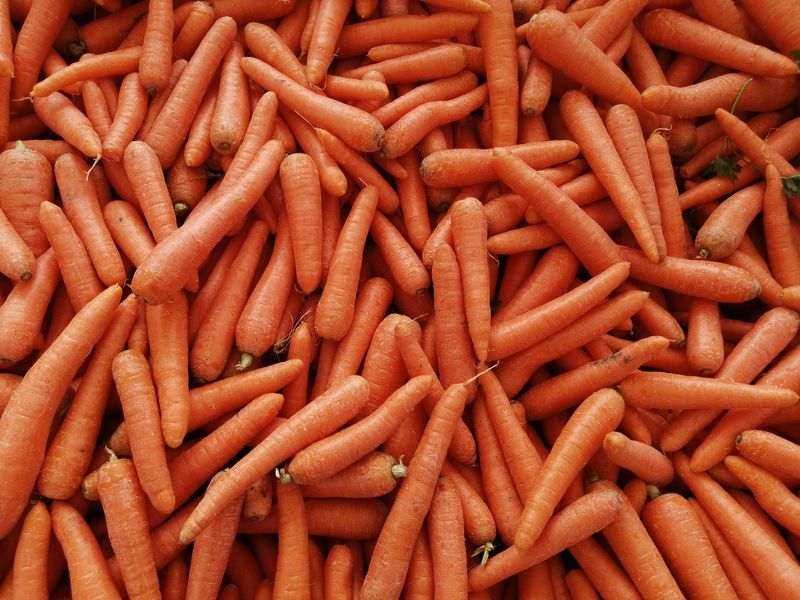
Pull a carrot straight from cold ground and taste something sweeter than anything you’ll find at the store. That sweetness is not an accident, it is science working in your favor.
Carrots convert their starches into sugars when temperatures drop, so cold soil actually makes them taste better. For northern gardeners, that is fantastic news hiding in plain sight.
Plant carrot seeds directly into loose, deep soil about three to four weeks before your last frost date. They need at least 12 inches of soft, workable earth to grow long and straight instead of twisted or stunted.
Rocky or compacted soil causes forked, stubby roots that are frustrating to harvest and awkward to peel. Break up clumps and pull out stones before you sow a single seed.
Carrot seeds are tiny and notoriously slow to germinate, so patience matters here. Keep the soil evenly damp for the first two weeks, because dry soil will stop the seeds before they even get a chance to sprout.
Once seedlings reach about one inch tall, thin them to roughly two inches apart. Crowded carrots compete for space underground and end up small, bent, or misshapen.
Varieties like Danvers 126 and Scarlet Nantes handle cold soil exceptionally well, producing crisp, sweet roots that store beautifully in a cool basement all winter long.
Carrots also pack in beta-carotene, fiber, and vitamin K, so eating what you grow feels even better knowing how nutritious it is.
If you plant nothing else this spring, let it be carrots. They reward patience with a harvest that genuinely tastes like pure springtime.
2. Beets
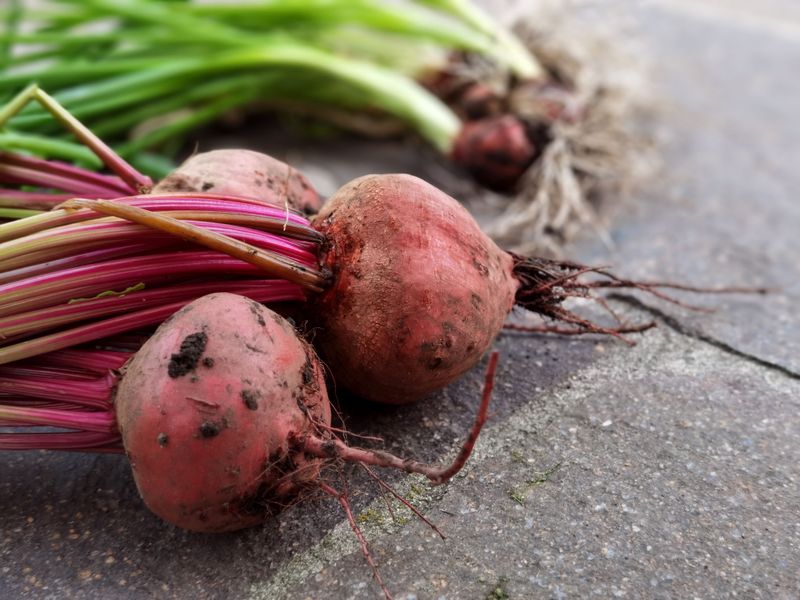
Beets are one of those vegetables that surprise people who swear they can’t stand them. Roast one fresh from your own garden and prepare to completely change your mind.
These root vegetables handle frost like champions, germinating in soil as cold as 40 degrees Fahrenheit. That resilience makes them ideal for early spring planting anywhere in the northern states.
Sow beet seeds about half an inch deep and two inches apart. Each seed is actually a small cluster, so expect multiple sprouts to emerge from a single planting spot.
Your Minnesota Garden Changes Every Week. Your Plan Should Too.
Gardening in Minnesota changes quickly throughout the season. Every Friday you’ll receive a simple weekly plan showing exactly what to plant, prune, fertilize, harvest, and protect so you never miss the right timing.
Thin the seedlings early so every plant has room to develop into a full, round root. Crowded beets stay small and never reach their full, earthy potential.
Beet greens are completely edible and bring a solid dose of iron and calcium to the table, so one seed packet quietly gives you two vegetables. Varieties like Detroit Dark Red and Chioggia are especially well-suited for cool climates.
Chioggia in particular has a stunning candy-stripe interior that turns a simple salad into something that looks like edible artwork.
Beets prefer slightly sandy, well-drained soil with a neutral pH. Work compost into the bed before planting to give roots the loose structure they need to expand freely.
Water consistently, but avoid soaking the soil, since uneven moisture causes beets to crack, ruining both their texture and their storage life.
Harvest beets once they reach golf ball size for the most tender flavor. Wait too long and the roots turn woody, losing much of what made them worth growing in the first place.
3. Kale
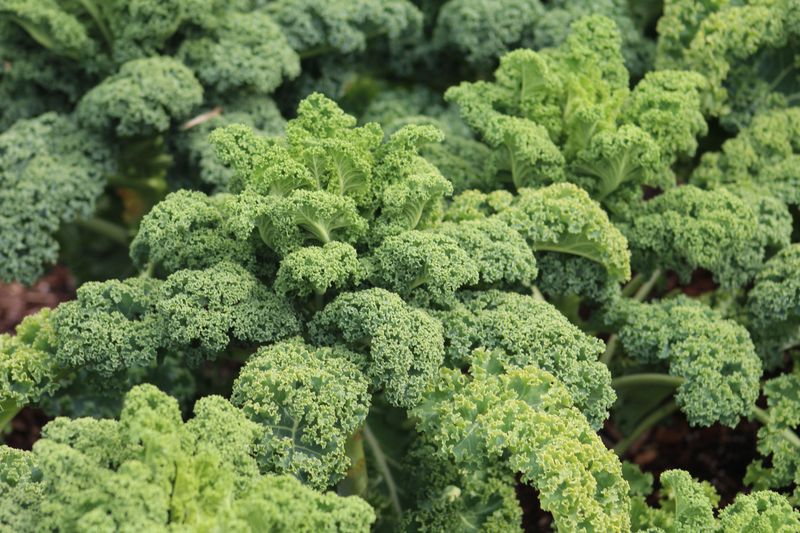
Kale laughs at frost. Seriously, a light freeze actually improves its flavor by triggering the plant to pump more sugar into its leaves.
Few leafy greens can take a beating like this one, shrugging off temperatures down to 10 degrees Fahrenheit without flinching.
Start kale seeds indoors four to six weeks before your last frost date. Transplant seedlings outdoors once they reach about four inches tall and nighttime temperatures stay above 20 degrees.
Choose varieties like Winterbor or Red Russian for the best cold performance, since both produce tender, flavorful leaves that hold up even through late-season chills.
Kale grows best in full sun but tolerates partial shade better than most garden vegetables. Give it six or more hours of light daily to keep growth strong and steady.
Space plants 18 inches apart so air can circulate freely between them. Good airflow reduces disease and keeps leaves dry, which helps prevent rot and mold from taking hold.
Harvest outer leaves first and leave the center of the plant intact. This approach keeps your kale producing fresh growth for weeks, sometimes even months, without missing a beat.
One cup of raw kale delivers more vitamin C than an orange, along with a solid dose of vitamin A, vitamin K, and antioxidants.
Few crops in a Minnesota garden work as hard for as long as kale does. Plant it once, and it just keeps on giving through the season, frost after frost after frost.s more vitamin C than an orange, along with a solid dose of vitamin A, vitamin K, and antioxidants.
Among cold-hardy vegetables every Minnesota gardener should plant, kale stands out for its sheer staying power. Plant it once, and it just keeps on giving through the season, frost after frost after frost.
4. Spinach
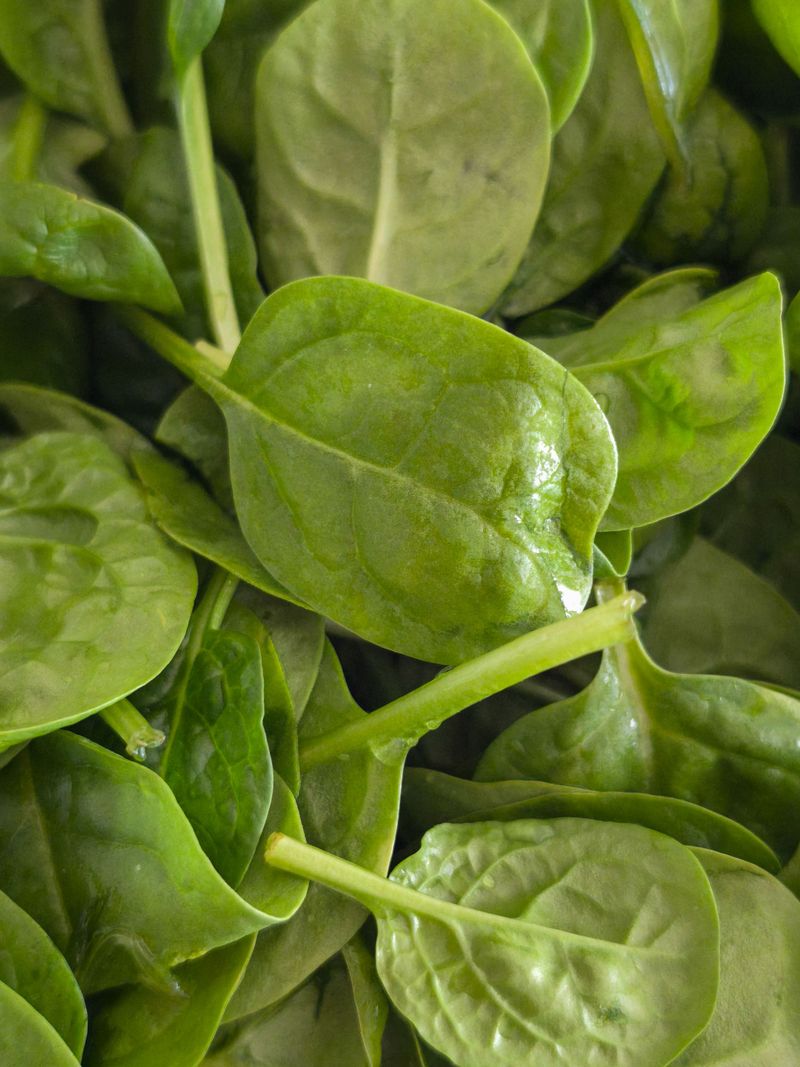
Spinach is the sprinter of the garden world. It grows fast, matures early, and rewards impatient gardeners with fresh greens in as little as 40 days.
Seeds germinate in soil as cold as 35 degrees Fahrenheit, meaning you can sow them almost the moment the ground thaws. That head start is a serious advantage when you’re working with a short growing season.
Scatter seeds about half an inch deep in rows spaced six inches apart. Cover lightly with soil and water gently so seeds do not wash away before they get the chance to root.
Spinach bolts quickly once summer heat arrives, so plan to harvest the entire crop before temperatures consistently climb past 75 degrees Fahrenheit.
To stretch your harvest window, plant new rows every two weeks starting in early spring. This succession planting keeps fresh spinach coming steadily instead of dumping one giant harvest on you all at once.
Bloomsdale Long Standing and Tyee are two varieties that resist bolting better than most, producing thick, crinkled leaves that hold up beautifully in salads and sautes.
Spinach prefers rich, moist soil with plenty of nitrogen, so mix aged compost into your bed before planting to give seedlings a strong nutritional foundation.
Keep the soil steadily hydrated but never soggy, since spinach roots are shallow and dry out faster than you’d expect on windy spring days.
Fresh spinach delivers a strong dose of iron, folate, and magnesium. Growing your own means eating it at peak nutrition, not after weeks riding in a refrigerated truck.
5. Daikon Radish
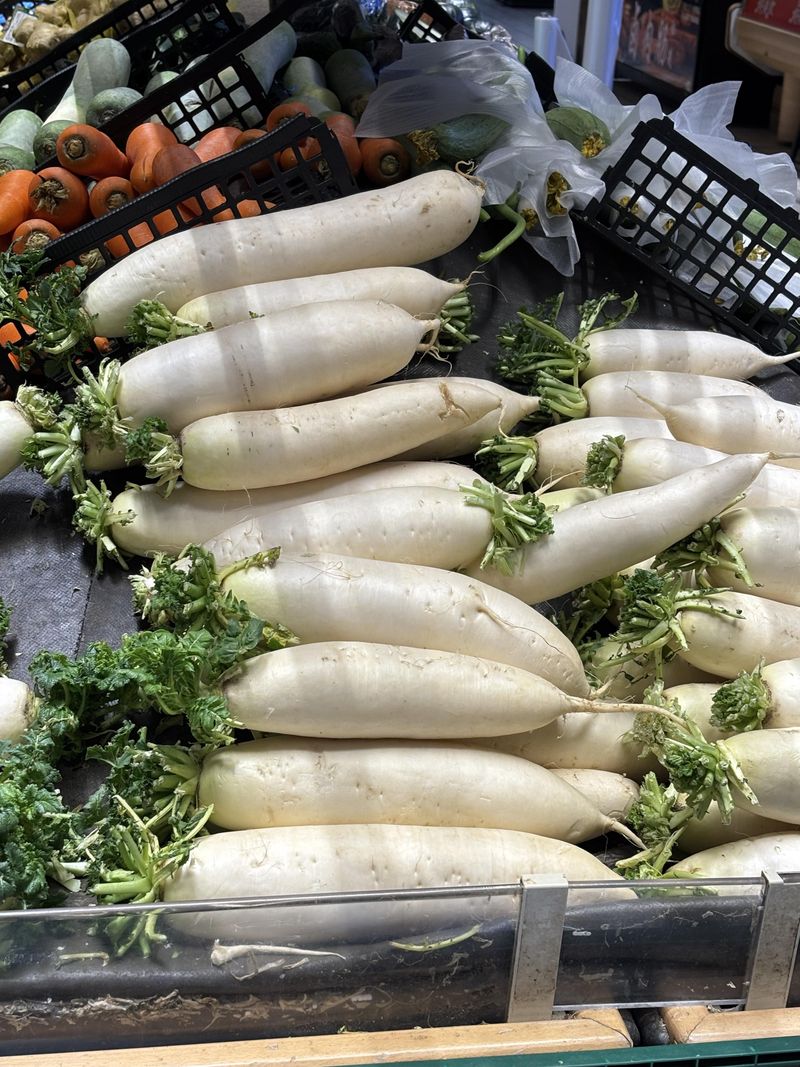
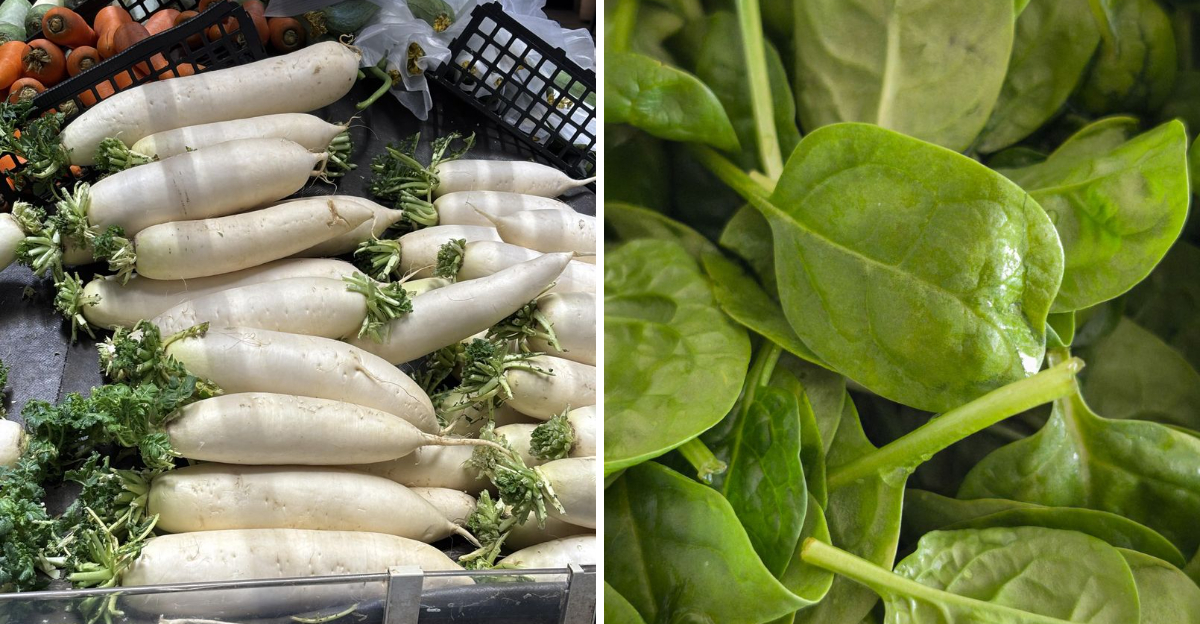
Most gardeners know the small red radish, but daikon is something else entirely. These long white roots grow up to 18 inches with a mild, crisp flavor that works its way into dozens of dishes.
Daikon is a powerhouse cover crop and a tasty vegetable at the same time, since its deep taproot breaks up compacted soil and improves drainage for every plant that follows.
Sow daikon seeds directly into the garden about four to six weeks before your last frost. Direct sowing matters here, because daikon does not transplant well from containers.
Plant seeds one inch deep and about six inches apart in loose, deeply tilled soil. Shallow soil causes stunted, bent roots that are frustrating to harvest cleanly.
Daikon grows fast, typically reaching harvest size in 45 to 70 days depending on the variety. Miyashige is a popular choice that handles cool northern conditions especially well.
Water deeply but infrequently to encourage roots to push downward, since shallow watering produces short, wide roots instead of that long, elegant shape you’re after.
The greens are edible too, tasting similar to turnip tops with a slightly peppery bite. Do not toss them out when you harvest, toss them into a stir-fry instead.
Daikon is rich in vitamin C and digestive enzymes, and many Asian culinary traditions prize it for both its flavor and its gut-health benefits.
Daikon rarely gets the credit it deserves in a northern garden, but it should. Give it one season and it earns a permanent spot in your rotation.
6. Turnips
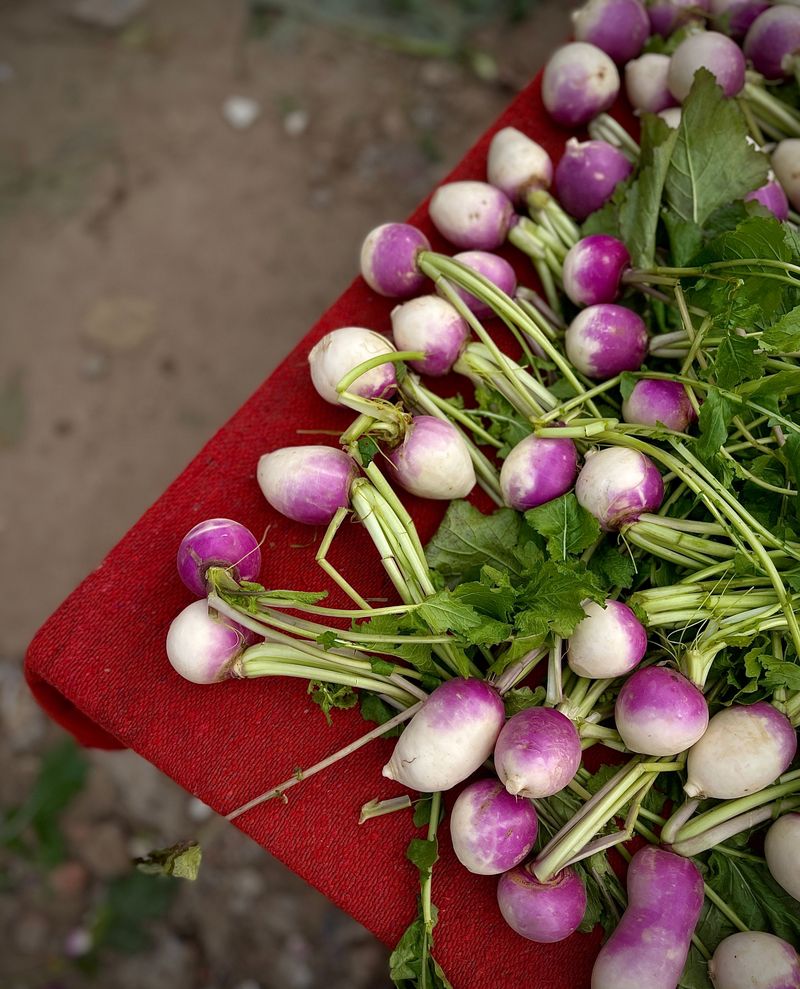
Turnips have a reputation problem. People remember bland, mushy turnips from childhood and swear them off forever, but fresh garden turnips are a completely different experience.
Harvested young and roasted at high heat, they develop a sweet, nutty flavor that converts skeptics fast. Growing your own means finally eating them at their absolute best.
Few cool-season crops move as quickly as turnips, with fast varieties like Hakurei hitting harvest size in as little as 35 days.
That speed makes them a perfect pick for impatient gardeners who want results now, not months from now.
Sow seeds directly into the ground about four weeks before your last frost date. Broadcast seeds lightly and rake them into the top quarter inch of soil.
Thin seedlings to four inches apart once they emerge, since crowded turnips produce small, stressed roots that lack the sweetness of properly spaced plants. Purple Top White Globe is the classic variety and handles cold soil beautifully.
Hakurei, a Japanese variety, offers a milder, almost fruity taste that tends to surprise first-time growers.
Turnip greens are nutritional gold, packing in vitamins A, C, and K. Southern cooks have known this for generations, braising the greens with a splash of vinegar for incredible depth of flavor.
Keep the soil reliably damp during germination, which takes five to seven days, since dry spells during this window cause patchy stands that cut into your overall harvest.
Turnips store well in a cool, dark place for several months after harvest. That long shelf life makes them one of the most practical crops for any northern garden.
7. Rutabaga
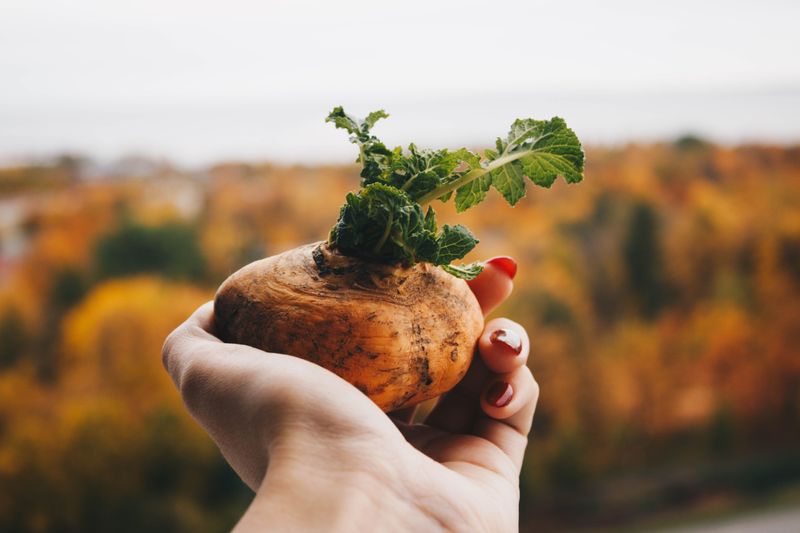
Rutabaga is the forgotten giant of the root vegetable world. Bigger, denser, and sweeter than a turnip, it deserves far more attention than it gets from home gardeners.
Believed to be a natural cross between a turnip and wild cabbage, this hybrid origin gives it a complex, mildly sweet flavor that deepens beautifully after frost exposure.
Rutabaga takes longer to mature than most cool-season crops, needing 90 to 100 days from seed to harvest. Plant it early so it has time to mature before hard autumn freezes arrive in full force.
Sow seeds a quarter inch deep in well-drained, fertile soil. Rutabaga prefers a slightly acidic pH between 5.5 and 7.0 for the strongest root development.
Thin plants to six inches apart once seedlings reach two inches tall. Wider spacing produces larger roots, so do not skip this step even if it feels wasteful at the time.
American Purple Top is the most widely grown variety and performs reliably in northern climates, its golden yellow flesh turning even sweeter after that first light frost of autumn.
Rutabaga is exceptionally rich in potassium, vitamin C, and dietary fiber. One cup provides well over a third of your daily recommended intake of vitamin C, which is a lot to ask from a root vegetable.
Harvest roots when they reach three to five inches in diameter for the best texture, since larger roots can turn pithy and lose the creamy consistency that makes them so satisfying.
No crop on this list asks for more patience than rutabaga, or pays it back better. Grow it once, and you will wonder why you waited so long.