How Oregon Gardeners Should Water Cucumbers In July To Prevent Bitter Fruit
There are few things more disappointing in a summer garden than slicing into a homegrown cucumber and discovering it tastes genuinely terrible.
Bitter cucumbers are one of those midsummer problems that catches Oregon gardeners off guard, especially when the vines looked so promising just a few weeks earlier.
Here is what is actually happening: cucumber plants produce a natural bitter compound that tends to build up when they are stressed, and July in Oregon is practically a stress delivery system for thirsty vines.
Soil that swings between bone dry and waterlogged, heat spikes, and inconsistent attention during the busiest weeks of summer all push cucumbers in the wrong direction.
Steady soil moisture is the biggest piece of the puzzle, but variety choice, nutrition, and harvest timing all factor in too. It is fixable, and it starts with understanding why it happens.
1. Water Consistently Through Dry July Weather
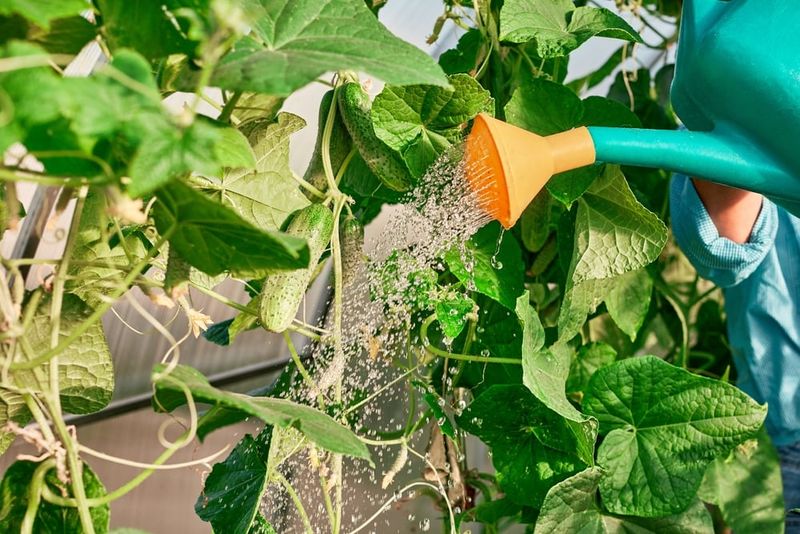
Dry soil one day, soaking wet the next, then dry again – that kind of uneven pattern is one of the most common mistakes Oregon cucumber growers make in July.
Cucumber vines are sensitive plants, and when they experience that stop-and-start moisture cycle during midsummer heat, the stress can trigger higher levels of cucurbitacin, the bitter compound naturally found in cucumber tissue.
In Oregon, July often brings stretches of warm, dry afternoons with very little rain to help out. That means watering falls entirely on the gardener, and skipping a day or two during a hot spell can set the vines back more than expected.
Once the stress response kicks in, the bitterness can work its way into the fruit even if conditions improve later.
Aiming for a consistent schedule – watering on the same days at roughly the same time – gives cucumber vines a steadier foundation to grow from. It does not need to be complicated.
Even a simple routine of checking the soil every day or two and watering when the top inch feels dry can make a noticeable difference in fruit quality by the end of the month.
2. Water Deeply Instead Of Sprinkling Lightly
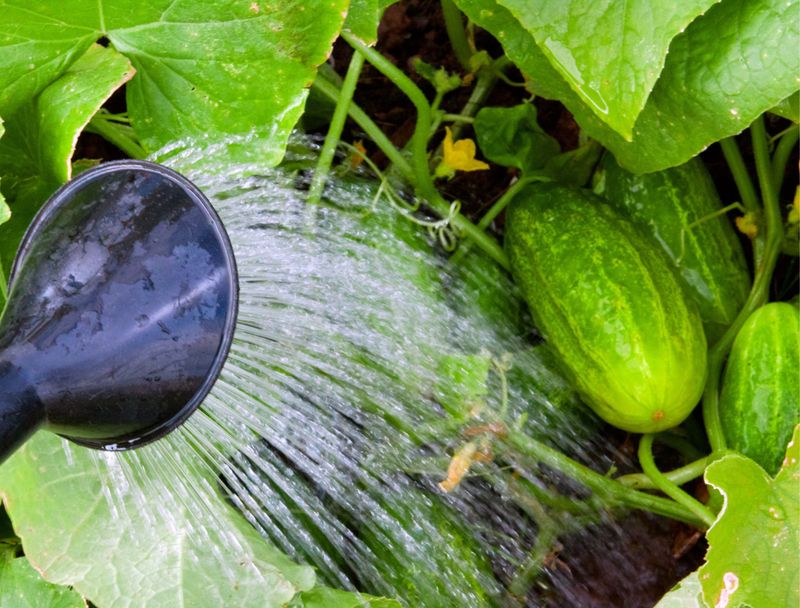
Light sprinkling might look helpful from the outside, but it rarely does much good for cucumber roots that are actively pushing several inches into the soil.
When only the top layer of soil gets wet, roots tend to stay shallow and the vine becomes more vulnerable to stress during Oregon’s hot July afternoons.
Watering deeply means letting moisture soak down into the root zone, which for established cucumber plants can be six inches or more below the surface.
A slow, steady flow at the base of the plant for several minutes is far more effective than a quick pass with the hose that barely dampens the top inch of soil.
One easy way to check whether water has reached deep enough is to push a finger or a wooden skewer a few inches into the soil about ten to fifteen minutes after watering. If the soil feels moist at that depth, the roots are getting what they need.
Your Oregon Garden Changes Every Week. Your Plan Should Too.
Gardening in Oregon changes quickly throughout the season. Every Friday you’ll receive a simple weekly plan showing exactly what to plant, prune, fertilize, harvest, and protect so you never miss the right timing.
If it still feels dry just below the surface, the plants likely need more water or a slower application rate to allow better absorption before it runs off.
3. Water Early Before Oregon Heat Builds
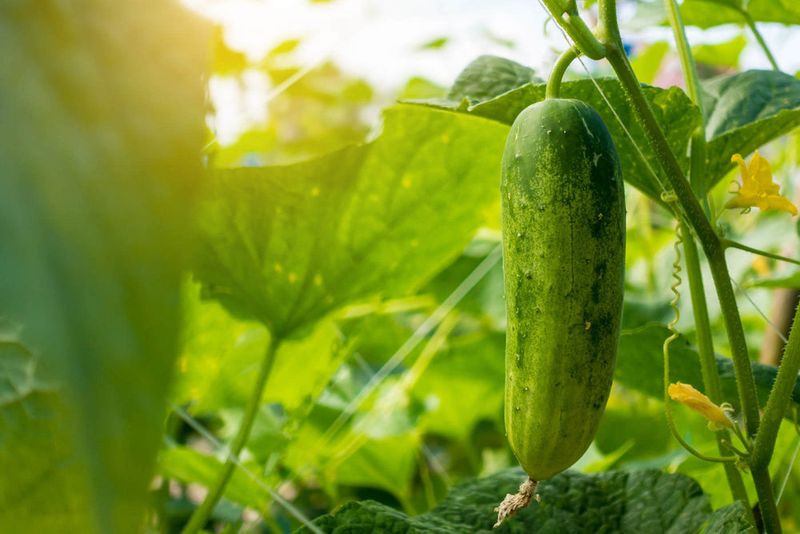
Morning hours in Oregon are a good friend to vegetable gardeners, especially in July when afternoon temperatures can climb quickly and dry out exposed soil within hours.
Watering early – before the heat of the day builds – gives moisture a chance to soak in before evaporation can pull it back out of the soil surface.
When cucumber vines enter the hottest part of the afternoon with good soil moisture already in place, they tend to handle the heat with less visible stress.
Leaves stay turgid longer, flowering stays on track, and the fruit developing on the vine has a more stable environment to grow in.
That stability matters a lot for flavor quality.
Watering in the evening is sometimes tempting when mornings feel rushed, but it can leave foliage wet overnight, which creates conditions that some fungal issues prefer.
Early morning watering sidesteps that concern while still delivering moisture when the plants need it most.
Even shifting the watering window from midday to early morning can help Oregon cucumber patches handle July heat more smoothly without requiring any extra water or equipment.
4. Keep Water On The Soil, Not The Leaves
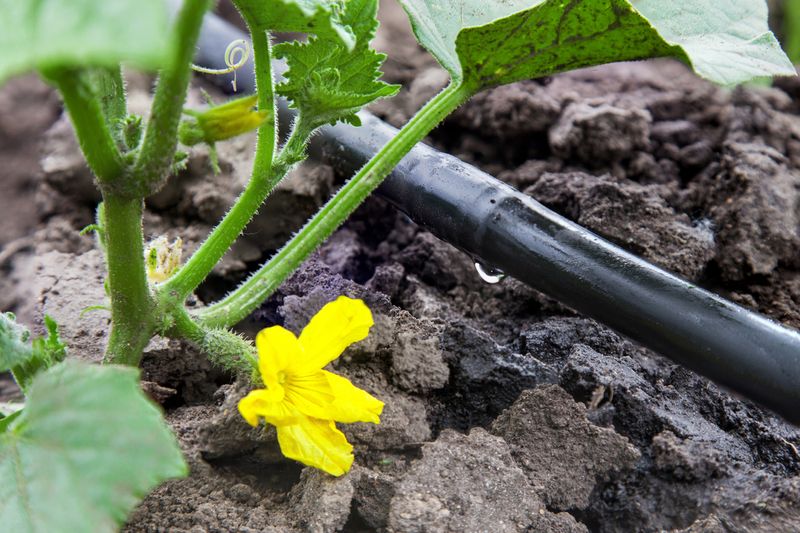
Splashing water across cucumber foliage might seem harmless, but directing moisture toward the leaves rather than the root zone wastes water and can create conditions that some foliar problems prefer during Oregon’s warm July nights.
The roots are where the water actually does its job, so that is where the focus should be.
Watering at the base of the plant rather than from overhead keeps the soil moist where it matters and reduces unnecessary leaf wetness.
For cucumber vines trained on a trellis, this is straightforward – just aim low and let the water work its way into the soil around the stem and root zone.
Some Oregon gardeners find that switching from an overhead sprinkler to a handheld wand or a drip system makes it much easier to target the right area without wetting the leaves at all.
The vines tend to respond well to this kind of focused watering, and the soil stays evenly moist for longer when water is not being scattered across a wide area.
Keeping moisture at the root zone is one of the simpler adjustments that can have a meaningful effect on both plant health and fruit flavor.
5. Use Drip Irrigation Or A Soaker Hose
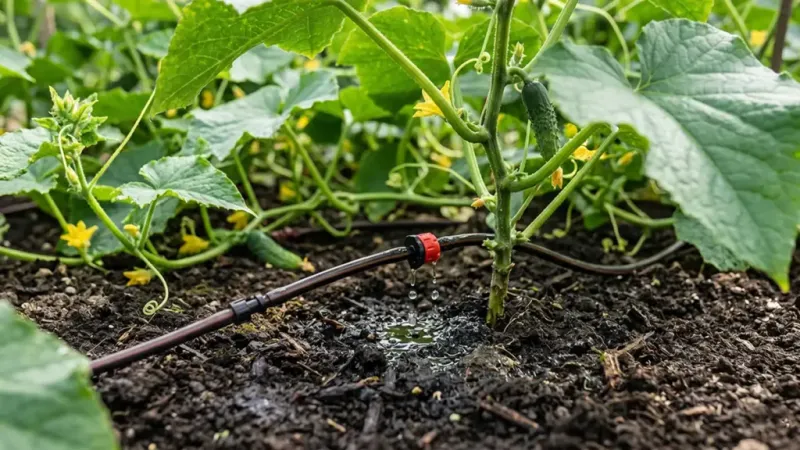
Few tools make consistent cucumber watering easier in July than a drip irrigation system or a soaker hose laid along the base of the plants.
Both methods deliver water slowly and directly to the root zone, which is exactly where cucumber vines need it most during Oregon’s dry midsummer weeks.
Soaker hoses are especially approachable for home gardeners because they are inexpensive, easy to set up, and require no complicated plumbing.
Laid along a row of cucumbers and connected to a timer, a soaker hose can deliver steady, low-pressure moisture while the gardener focuses on other parts of the garden.
Drip systems offer similar benefits with more precise control over flow rates and placement.
Both options reduce the chance of overwatering or underwatering on any given day, which is the kind of consistency that helps cucumber vines stay on an even keel through July heat.
They also reduce evaporation compared to overhead sprinklers, meaning more of the water actually reaches the roots.
For Oregon gardeners managing raised beds, in-ground rows, or community garden plots, setting up one of these systems before the hottest stretch of the month can be a practical investment in better fruit quality.
6. Mulch To Keep Cucumber Soil Evenly Moist
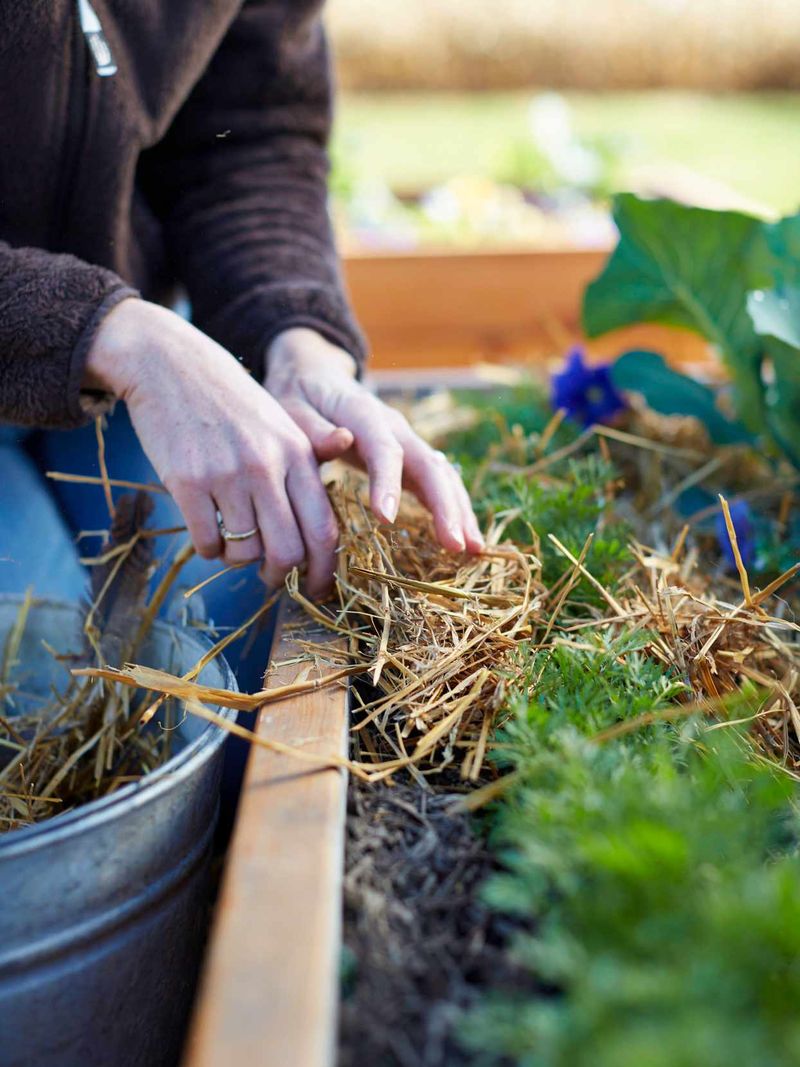
Bare soil in a July Oregon garden can lose moisture surprisingly fast.
Sun, wind, and afternoon heat all pull water out of exposed beds, and cucumber roots sitting in soil that swings between wet and dry are more likely to experience the kind of stress that shows up as bitter fruit at harvest time.
A layer of mulch – straw, shredded leaves, or wood chips – spread a few inches thick over the soil surface can slow that moisture loss considerably.
Mulch acts like a blanket over the soil, keeping conditions underneath more stable even when the air temperature rises.
That stability is something cucumber vines respond to positively, especially when July stretches on without any rain.
One thing to keep in mind is that mulch works best when it is kept a short distance from the main stem rather than piled right up against it.
Leaving a small gap of a few inches around the base of each plant allows air to circulate and avoids creating overly wet conditions at the stem.
Beyond that, mulching is one of the most low-effort ways Oregon gardeners can support their cucumber patches through the driest stretch of the summer.
7. Check Soil Before Adding More Water
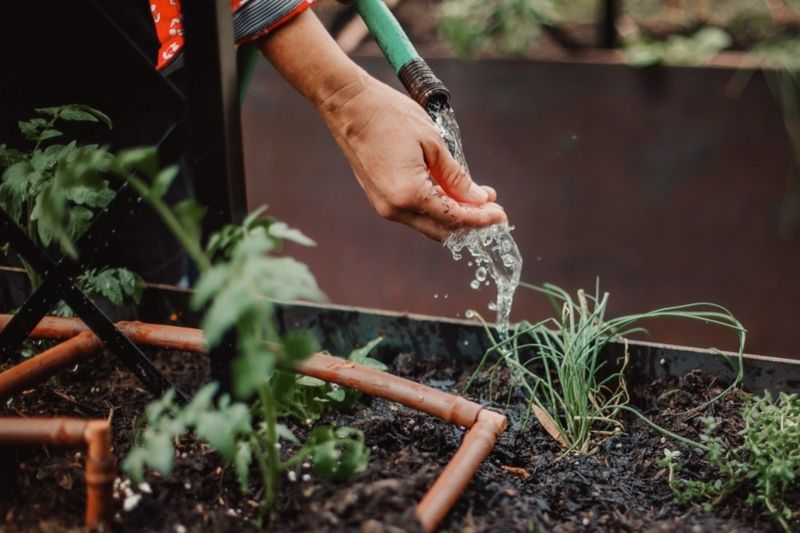
More water is not always better, and one of the most useful habits an Oregon cucumber grower can build in July is simply checking the soil before turning on the hose.
Overwatering can be just as stressful to cucumber vines as drought, and it can also promote root problems that affect plant health and fruit quality over time.
Checking soil moisture does not require any special tools. Pressing a finger about two inches into the soil near the base of a cucumber plant gives a good sense of what is happening below the surface.
If it feels moist at that depth, the plants likely do not need water yet. If it feels dry, it is time to water.
In heavier Oregon soils that hold moisture longer, or in beds with thick mulch, this check is especially helpful because the surface can look dry while the soil below is still adequately moist.
Raised beds and containers are the opposite – they tend to dry out faster and may need more frequent checks during warm July weather.
Building a quick soil check into a daily garden walkthrough takes almost no time and can prevent both overwatering and underwatering from becoming problems.
8. Watch Containers And Raised Beds Closely
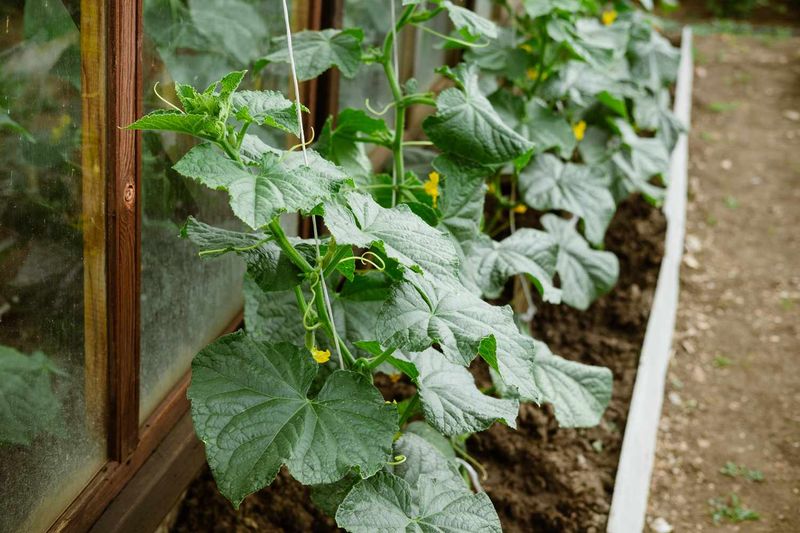
Raised beds and containers behave very differently from in-ground garden soil, and Oregon cucumber growers who use them in July need to adjust their watering approach accordingly.
Both setups drain faster than native soil, which is great for root health in wet seasons but can become a challenge during a dry Oregon summer.
On a hot July afternoon, a container planted with cucumbers can lose a surprising amount of moisture in just a few hours. The walls of the container are exposed to sun and air on all sides, which speeds up drying compared to ground-level beds.
Raised beds dry faster too, though not quite as dramatically as containers, since they have better insulation from surrounding soil.
Checking containers and raised beds at least once a day during the hottest part of July is a reasonable habit for Oregon gardeners.
Some gardeners find that watering twice a day becomes necessary for containers during heat spikes, especially if the plants are large and actively fruiting.
Adding mulch to the top of containers and raised beds can help slow moisture loss between waterings. Keeping a close eye on these setups rather than following a fixed schedule tends to produce better results.
9. Pick Cucumbers Before They Turn Yellow
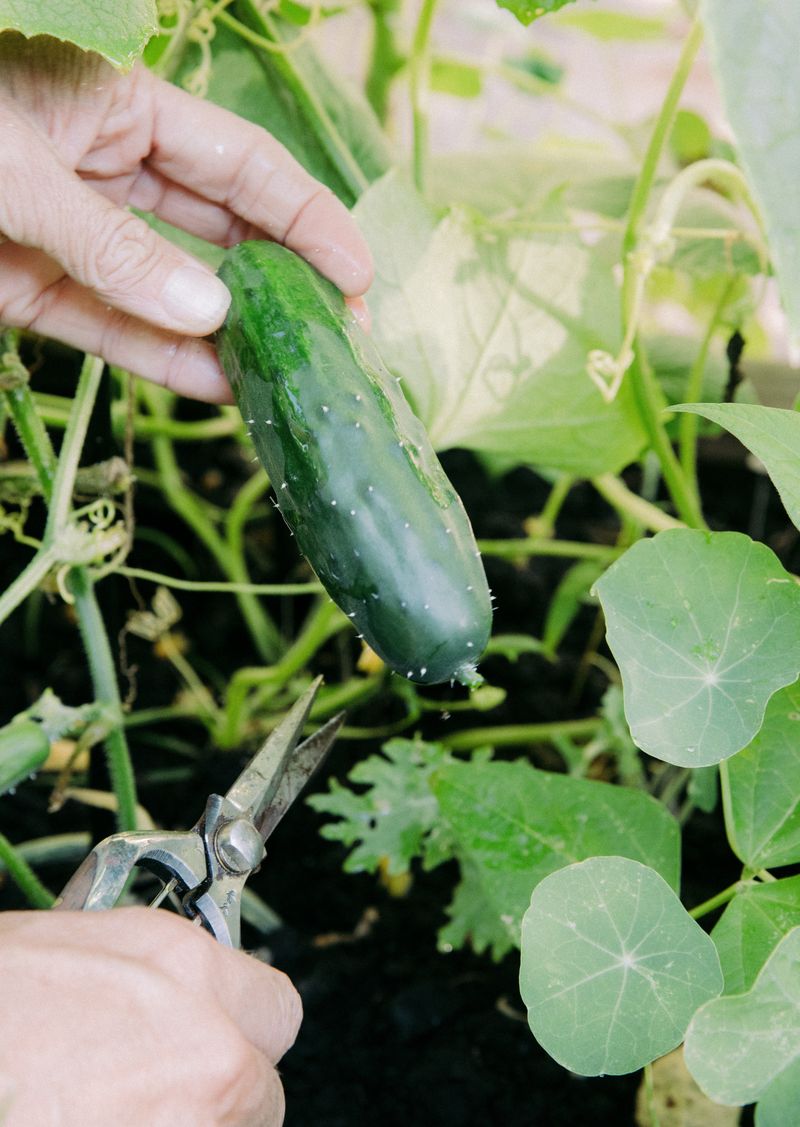
Leaving cucumbers on the vine past their peak is one of the most common reasons fruit quality drops in July Oregon gardens.
Once a cucumber starts to yellow, the seeds inside have hardened, the flesh has changed texture, and the eating quality is generally much lower than it would have been a few days earlier.
Overripe cucumbers also signal to the plant that it has successfully reproduced, which can slow down the production of new fruit.
Picking regularly – every day or two during peak season – encourages the vine to keep flowering and setting new cucumbers, which is exactly what most Oregon gardeners want through the summer.
For slicing cucumbers, picking when the fruit is firm, evenly green, and at the size recommended for the variety tends to give the best flavor. Pickling cucumbers are best harvested on the smaller side before the skin toughens.
The bitter compound in cucumbers is often more concentrated near the stem end and just under the skin, so harvesting at the right time and peeling when needed can help improve the eating experience even when some stress has occurred during the growing season.
10. Pair Steady Watering With Good Nutrition
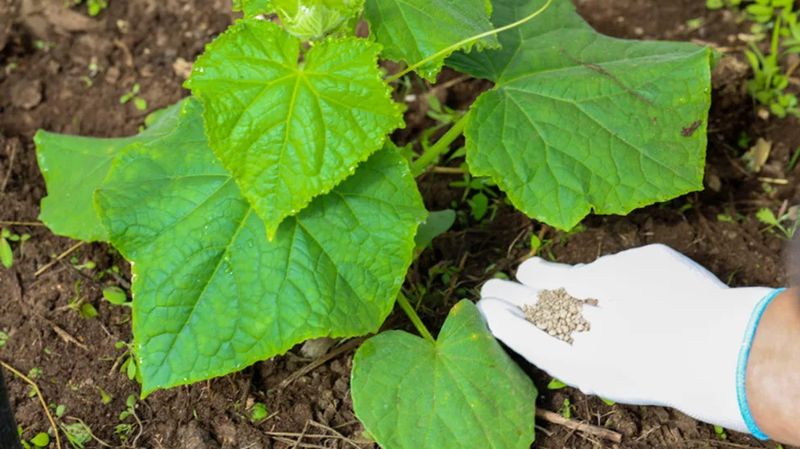
Steady watering is a strong foundation for healthy cucumbers in July, but it works best when the soil it is moving through actually has something to offer.
Nutrient-poor soil can leave cucumber vines under a different kind of stress that watering alone cannot address, and that stress can show up in fruit flavor just as drought stress can.
Cucumbers are moderate to heavy feeders, meaning they benefit from a reasonably fertile soil throughout the growing season.
A balanced approach – starting with compost-amended soil and following up with a light application of vegetable fertilizer during fruiting – can support steady growth without pushing the plants too hard.
Overfertilizing with nitrogen can cause lush leaf growth at the expense of fruit, so balance matters here.
Oregon gardeners who are already watering consistently and still noticing off-flavors or poor fruit development may want to take a closer look at their soil. A simple soil test can reveal whether nutrients or pH are contributing to the problem.
Good nutrition and steady moisture work together to support a less-stressed plant, and a less-stressed plant in an Oregon July garden is far more likely to produce cucumbers that taste the way they should.