Cold Weather Doesn’t Stop These Venomous New York Critters. Here’s Where They Hide
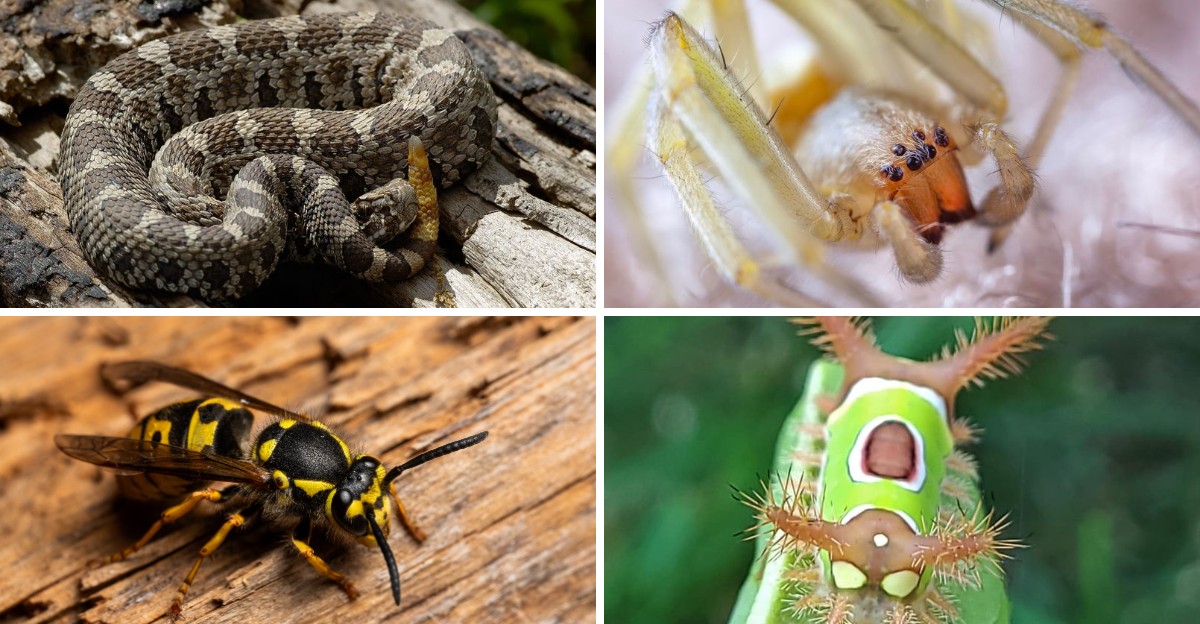
Certain New York reptiles crawl back to the exact same rocky winter den year after year for generations. Some of those dens sit on sunny ledges that warm up nicely, even when the garden looks frozen solid.
Spiders and stinging insects play their own winter games, tucking themselves under loose bark and inside cozy woodpiles. A few even sneak into garages and sheds, waiting out the cold right beside our stacked flowerpots.
Confession time: I once reached into a stack of winter firewood without gloves and felt something move. It turned out harmless that day, but my heart pounded long after I carried the logs inside.
You deserve to know which New York neighbors stay tucked nearby when the thermometer drops below freezing. So where exactly are they hiding while you rake leaves and stack wood for the long winter?
1. Timber Rattlesnakes Snooze In Sunny Rock Dens
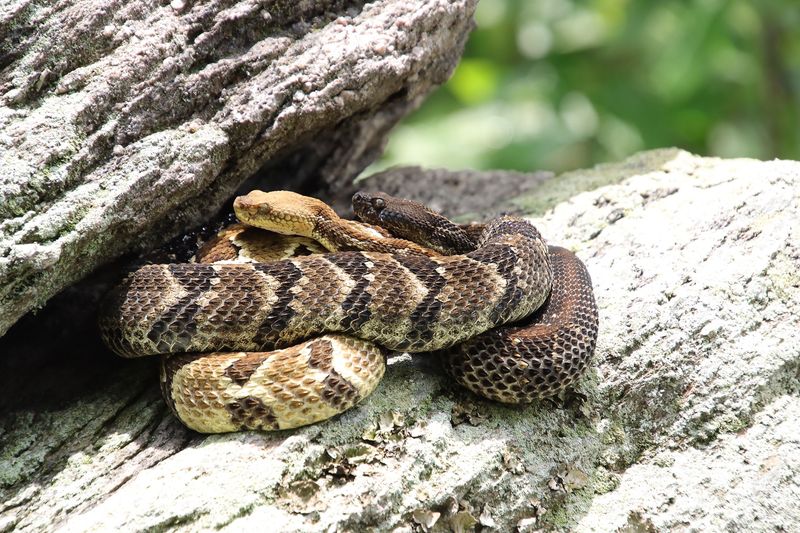
Few sounds stop a hiker faster than a dry buzz from a rocky ledge on a warm autumn afternoon. Timber rattlesnakes, known to scientists as Crotalus horridus, make that famous rattle when they feel cornered or bothered.
Winter finds them packed together in communal dens, often deep crevices on slopes facing south or west. Those sun-warmed exposures help the snakes heat up quickly when they emerge in late April or early May.
Den loyalty is their quirkiest habit, because many individuals return to the very same rocky hideout each year. Researchers believe some den sites have hosted rattlesnake families for many generations, which makes protecting them important.
Their venom is potent and acts on blood and tissue, so any bite deserves an immediate hospital visit. Serious outcomes are rare in this state, largely because these snakes prefer quiet retreat over confrontation.
Timber rattlesnakes are listed as threatened in New York, and harming or collecting them is against the law. If you spot one near your property, give it plenty of space and contact local wildlife officials.
In my own yard, I keep brush piles and stacked stone well away from the back door. Mice love those spots, and hungry snakes follow the mice, especially in hilly areas near rocky woods.
During winter, leave known ledges and talus slopes undisturbed, since sleeping snakes are sluggish and cannot move away. A sunny thaw might bring one out briefly to bask, so watch your step on rocky trails.
2. Eastern Massasaugas Curl Up In Crayfish Burrows
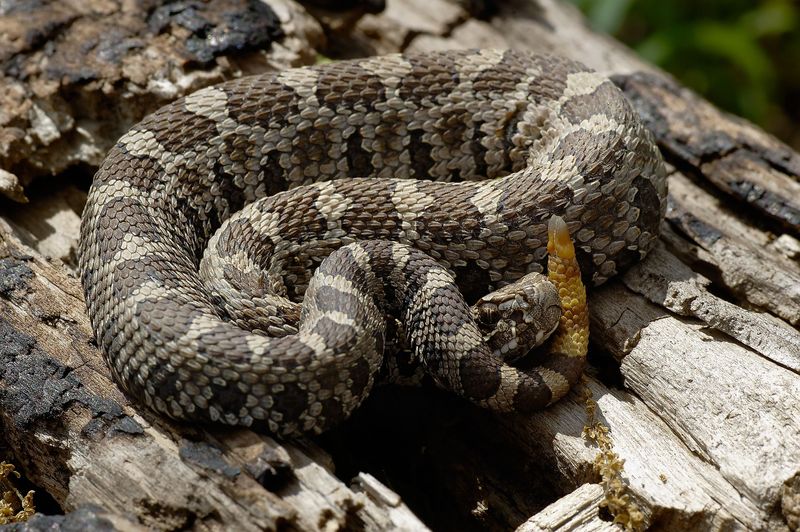
Smaller than most people expect, the eastern massasauga rarely grows longer than about two and a half feet. Its scientific name is Sistrurus catenatus, but old-timers often call it the swamp rattler for good reason.
Unlike its rocky-ledge cousin, this little rattlesnake prefers soggy wetlands and damp meadows bordered by shrubby edges. Only a couple of small populations remain in the state, making it one of our rarest reptiles.
Here comes the surprising part, because massasaugas usually hibernate alone rather than sharing a crowded communal den. Many slip into crayfish burrows, where water levels stay close by and the ground rarely freezes solid.
Others tuck beneath sphagnum moss hummocks or tree roots and old small mammal tunnels from late October onward. They usually stay underground until late April, waiting for the wetland soil to warm back up again.
Their venom is strong, yet these shy snakes generally strike only when stepped on or handled roughly. Any bite still calls for prompt medical care, so treat every rattling sound as a polite warning.
The eastern massasauga is listed as endangered in New York, and its habitat receives serious legal protection. Draining wet spots or collecting snakes can harm the few populations still hanging on in remote swamps.
Truth be told, I find it oddly charming that a crayfish hole doubles as a winter bedroom. If you live near a fen, wear sturdy boots and stick to marked trails during warmer months.
3. Copperheads Hide In Old Stone Walls
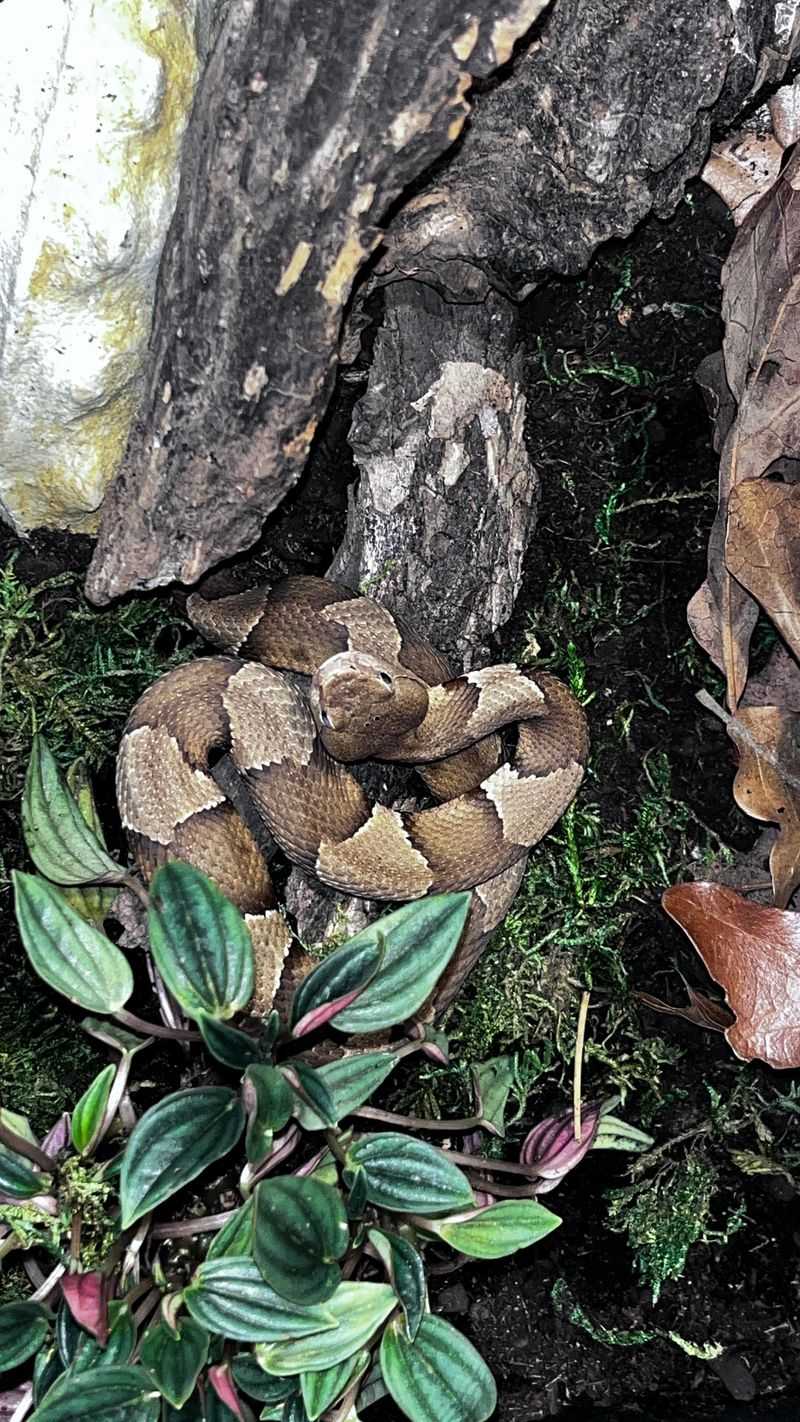
Fallen oak leaves and copperhead skin share nearly the same coppery tones, which makes this snake a camouflage champion. Agkistrodon contortrix wears dark hourglass-shaped bands that blend beautifully into autumn leaf litter along wooded rocky hillsides.
Here, copperheads mostly live in southeastern areas, including the lower Hudson Valley and nearby rocky ridges. Winter sends them into rock crevices facing south or west, often alongside rattlesnakes or black rat snakes.
Old stone walls and loose rock piles make tempting winter shelters, especially near rotting logs and woodland edges. Between you and me, that charming fieldstone border near your garden might be a cozier hotel than expected.
Hibernation usually runs from about November to April, though a warm winter afternoon can lure one out briefly. These short basking sessions are normal behavior, not a sign of trouble or an unusual outbreak.
Copperhead bites are painful and cause swelling, but they are rarely life-threatening for healthy adults who receive treatment. Still, head straight to a hospital after any bite rather than trying old remedies like cutting or sucking.
You can reduce surprise meetings by moving firewood away from the house and lifting it off the ground. Wear thick gloves when rebuilding stone walls, and lift each rock so it opens away from your body.
Young copperheads have bright yellow tail tips that they wiggle like worms to attract frogs and other prey. That clever trick is easier to admire from a distance, so enjoy the show with your camera.
4. Northern Black Widows Lurk In Woodpiles And Sheds
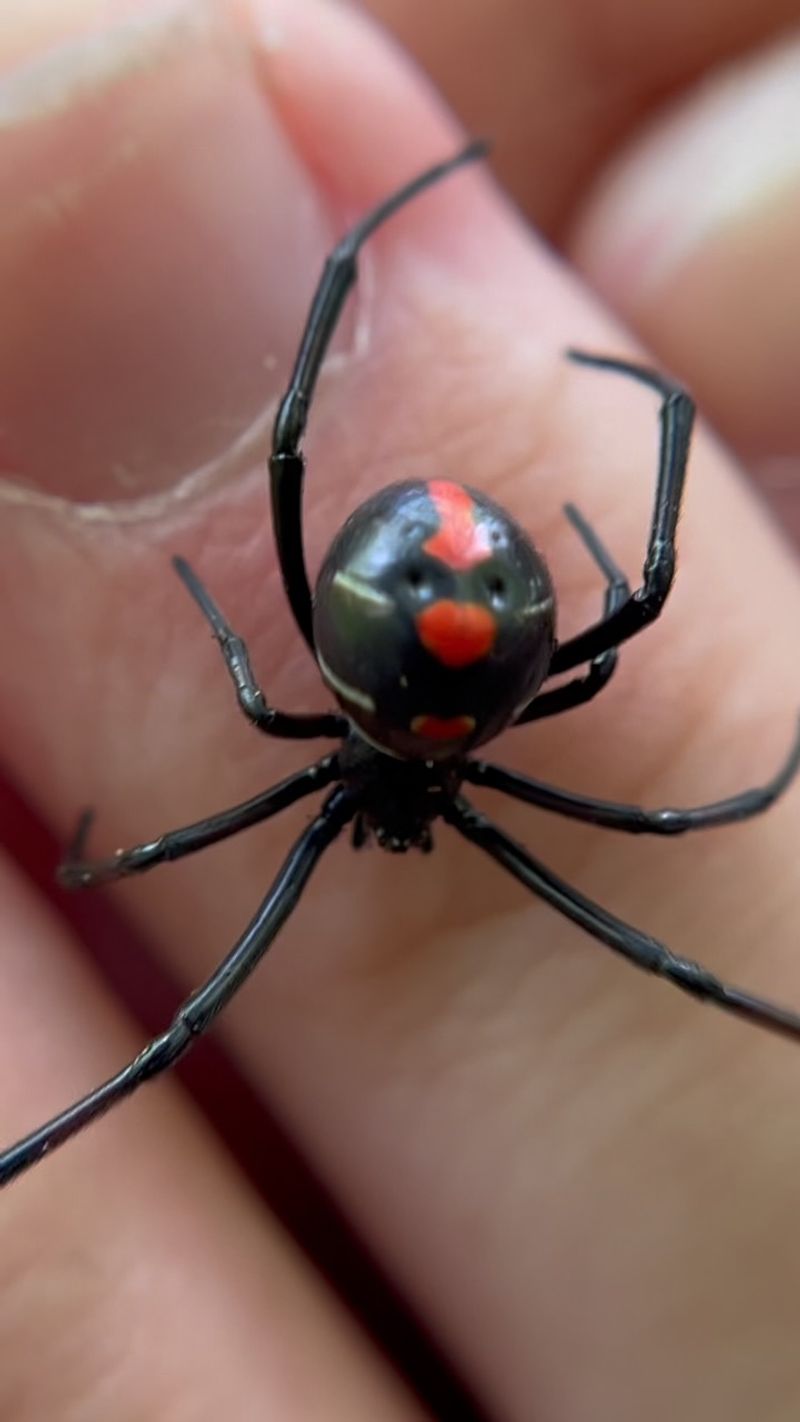
Glossy black with a red hourglass split into two pieces, the northern black widow is easy to recognize up close. Latrodectus variolus also carries a row of red spots along its back, unlike its southern relative.
Its venom acts on the nervous system and can cause painful muscle cramps that spread beyond the bite. Bites rarely become life-threatening, but anyone bitten should seek medical care quickly, especially children and older adults.
Cold weather slows these spiders down, and they settle into protected nooks to wait out the winter months. Outdoors, they favor hollow logs and stacked firewood that stays dry beneath a tarp or overhang.
Some wander into sheds and cluttered garages during autumn, seeking shelter from dropping temperatures in the chilly outdoors. Their messy, tangled webs usually sit low and close to the ground, often under shelves or stored pots.
Don’t make my mistake of grabbing a clay pot from the shed floor without checking underneath first. A quick glance with a flashlight takes seconds and can save you from a very unpleasant afternoon.
Wear leather gloves when moving firewood or lumber that has sat untouched in a corner since summer. Shake out boots and work gloves stored in garages before slipping your hands or feet inside them.
Reducing clutter is the easiest long-term fix, because fewer hiding spots mean fewer spiders settling in. Sealing gaps around shed doors also helps, and it keeps out the insects these spiders like to eat.
5. Yellow Sac Spiders Creep Along Ceiling Corners
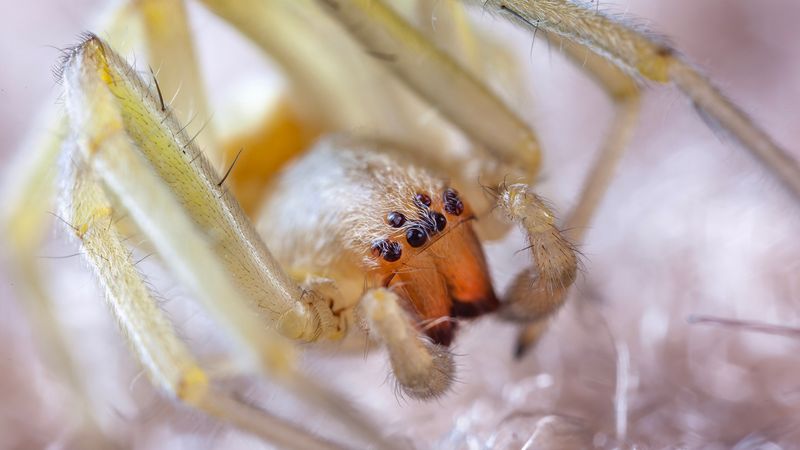
Pale and slightly see-through, the yellow sac spider looks harmless until it sprints across your kitchen ceiling at night. Two species, Cheiracanthium mildei and Cheiracanthium inclusum, are the ones most often reported in and around northeastern homes.
Instead of building webs to catch food, these spiders hunt actively after dark and rest during the day. Their daytime hideout is a small silk sac tucked into a corner, which explains the common name.
Outdoors, adults often overwinter inside silk sacs beneath loose bark or rocks and leaf litter in garden beds. When nights turn cold, many move indoors, so homeowners tend to notice more of them in fall.
Inside, look along upper wall corners, ceiling edges, window frames, and behind loose baseboards or picture frames. Indoor spiders may stay active through winter, since heated rooms feel like a mild autumn evening to them.
Their bites can sting and sometimes leave red, itchy sores that heal slowly over a week or two. Many bites blamed on brown recluses here likely come from sac spiders, since recluses are rarely established locally.
If you ask me, a clean sweep of ceiling corners each month is the simplest way to discourage them. Vacuuming up the silk sacs removes resting spiders without needing harsh sprays in your living space.
Shake out clothing and bedding that has been stored near walls, since bites often happen when spiders get trapped. Sealing cracks around windows before winter also limits the number of wandering spiders heading inside your cozy home.
6. Yellow Jacket Queens Hibernate Under Loose Bark
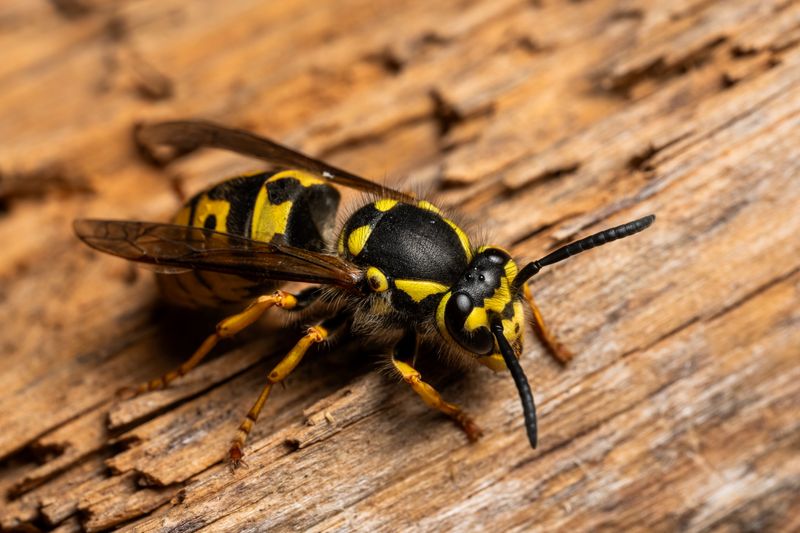
Late summer picnics in New York often attract uninvited yellow jackets that seem obsessed with your sweet lemonade. Those bold wasps, mostly Vespula species, can sting several times because their stingers lack large barbs.
Colonies peak in size during late summer, which explains why autumn foraging feels so aggressive and pushy. When freezing weather arrives, the workers and males perish, and the papery nest is abandoned for good.
Only newly mated queens survive the cold, and each one finds a sheltered spot to hibernate alone. Common hiding places include loose bark, hollow logs, rotting stumps, and leaf litter piled along woodland edges.
Some queens crawl into wall voids or attics, which is why one might buzz past your window in February. Warm indoor air fools them into waking early, and they usually wander toward light looking for an exit.
Looking back, I should have checked the old stump by my compost bin before swinging a shovel into it. Ground nests are common with these wasps, and disturbing one in summer brings a swarm of defenders quickly.
Each sting releases alarm chemicals that call more yellow jackets to the scene, so walking away calmly matters. Anyone with known insect allergies should carry prescribed medication and seek emergency help after a sting.
Winter is a smart time to inspect sheds and eaves, since old nests are empty and safe to remove. Old nests are rarely reused the following year, but clearing them helps you spot new activity next spring.
7. Bald-Faced Hornets Leave Paper Nests Behind
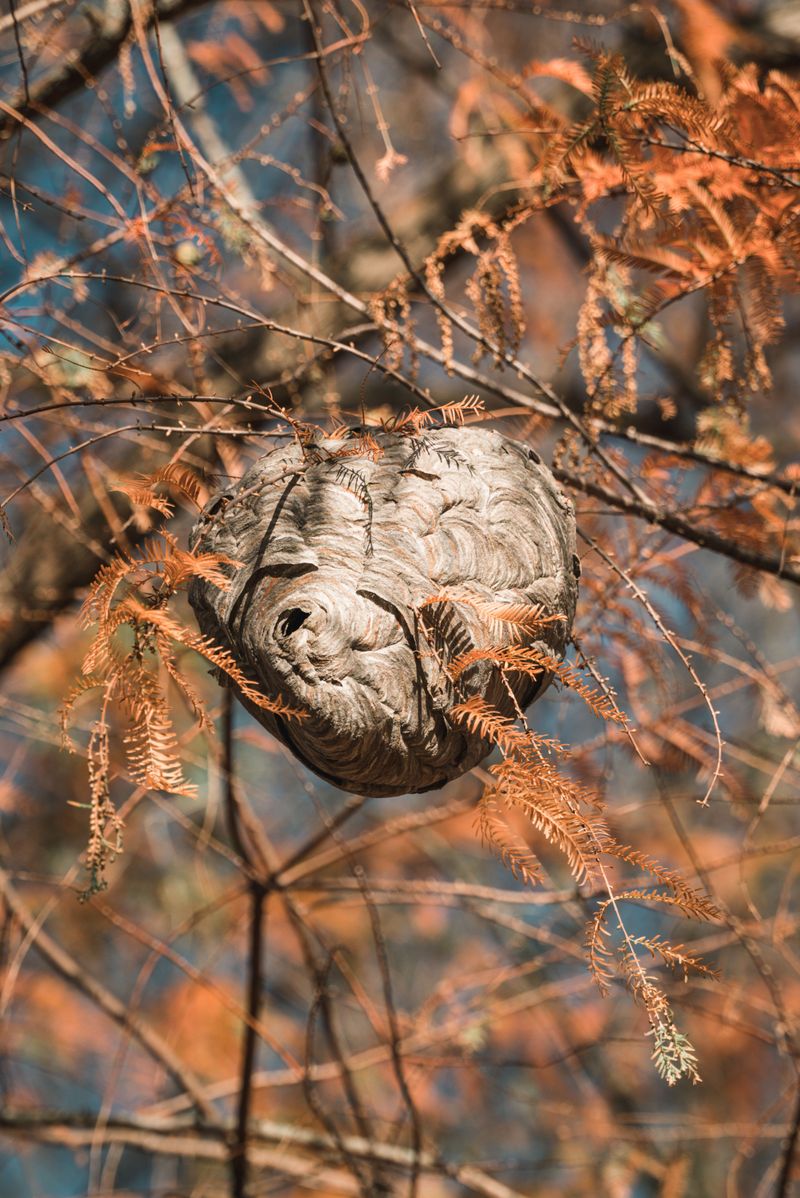
Football-sized paper nests hanging from bare winter branches often startle people who somehow missed them all summer long. Those gray papery lanterns belong to bald-faced hornets, a striking black-and-white wasp known scientifically as Dolichovespula maculata.
Despite the name, they are not true hornets at all, but rather a close cousin of yellow jackets. The pale markings on their faces earned them the nickname, and they stand out nicely against dark bodies.
Guarding the nest is serious business for this species, and workers will sting repeatedly when the nest is disturbed. Some even chase intruders for a surprising distance, so mowing near a low nest can quickly turn painful.
Cold weather ends the colony, leaving only freshly mated queens to hibernate under loose bark or tucked inside old stumps. A few queens also slip into attics or wall gaps, where they wait quietly for warmer spring days.
Here’s what caught my attention: the abandoned nest you see in winter is empty and will not be reused. Many gardeners take it down after a hard freeze, and some crafters even display them as natural decor.
In summer, bald-faced hornets help gardens by catching flies and soft-bodied caterpillars to feed their growing young. That makes them useful neighbors, as long as their nest hangs far from doorways and busy paths.
Check shrubs and eaves each spring when queens begin building small nests about the size of a golf ball. Early nests are easier for professionals to remove, and you avoid a summertime surprise near the garden gate.
8. Saddleback Caterpillars Overwinter In Tough Cocoons
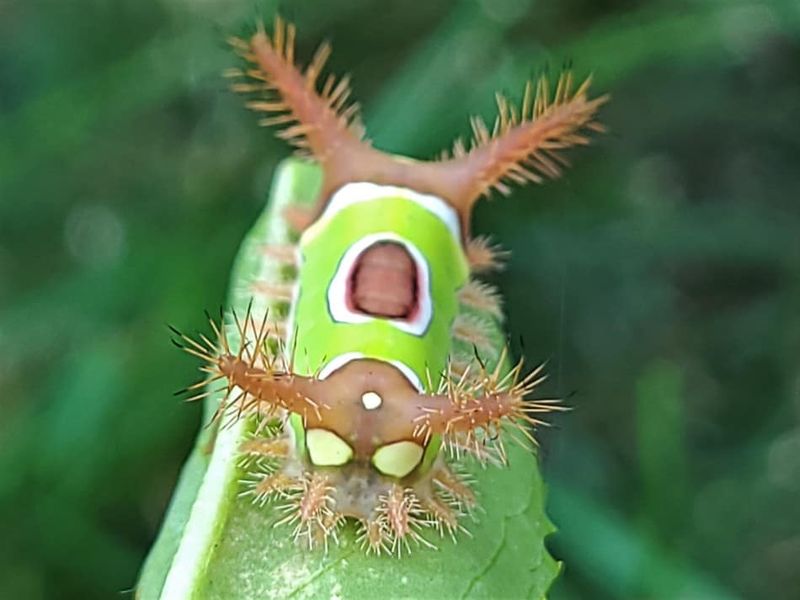
A bright green saddle with a brown spot makes this caterpillar look like a tiny pony wearing fancy gear. Acharia stimulea grows to about an inch long and carries fleshy horns covered in stiff, venomous spines.
Those hollow spines connect to venom glands, and brushing against them causes sharp pain almost instantly. Redness and swelling often follow, and some people also report nausea or a pounding headache afterward.
Saddlebacks feed on many plants, including oaks, maples, corn, and ornamental shrubs in late summer gardens. In New York, they appear mainly in the warmer southern parts of the state and remain fairly uncommon.
Once fall arrives, mature caterpillars spin tough, oval cocoons on leaves or bark to wait out the cold. They spend winter inside as prepupae, then transform and emerge as small brown moths the following year.
Some cocoons even have stinging spines woven into the silk, so handling them bare-handed is a bad idea. Fallen leaves raked in autumn might carry a few of these cocoons, especially near shrub borders.
Take it from someone who learned the hard way, gloves belong on your hands whenever you prune summer shrubs. If you get stung, press clear tape onto the area to lift spines, then gently wash with soap.
A cold pack helps ease the burning, and a doctor should check any strong reaction near the eyes. Spotting one is actually a treat, as long as you admire that tiny saddle without touching it.