Why Mulching Crape Myrtles Too Early Can Cause Rot In Pennsylvania
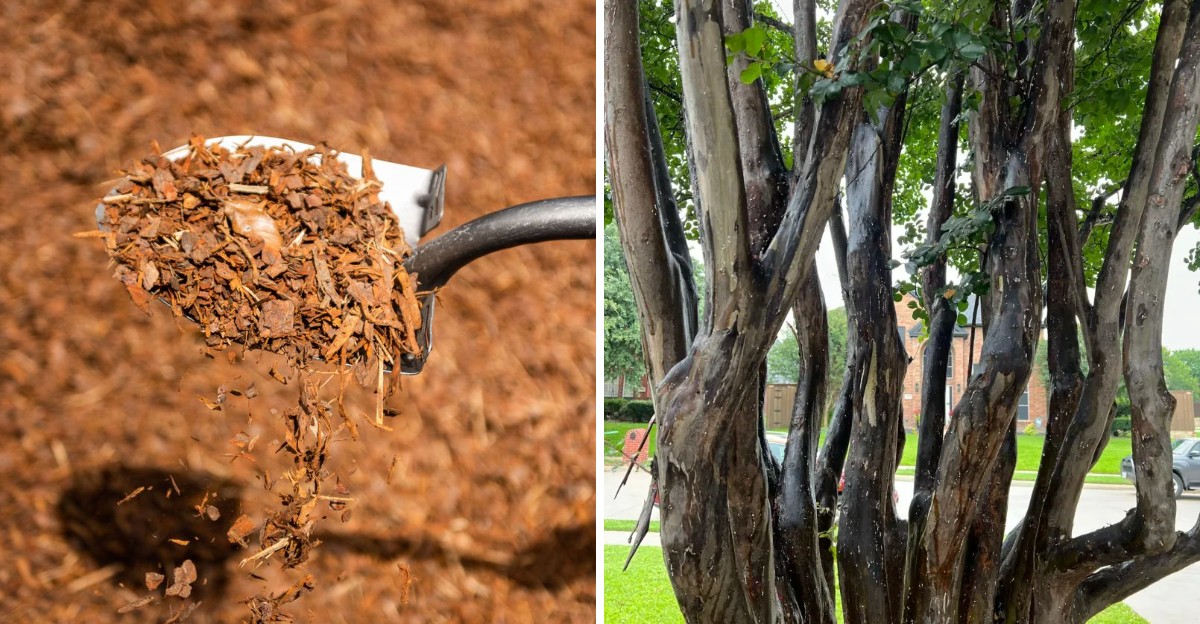
A fresh layer of mulch can keep cold soil chilly for days longer than bare ground nearby.
That surprised me the first time I pushed a soil thermometer into a mulched bed in early April. The bare patch next to it read noticeably warmer.
Now add one of the latest-waking shrubs in the garden. This summer bloomer often shows no green buds until May or even June in Pennsylvania, so plenty of gardeners assume it gave up over winter.
I used to mulch everything the first sunny weekend of spring. It felt tidy, responsible, and a little bit heroic.
Then I learned that wet, airless soil around a sleepy root system can invite fungi that love soggy conditions. The timing of that cozy blanket matters more than most of us realize.
1. That Neat Ring Of Spring Mulch Around Your Crape Myrtle Hides A Chilly Secret
Mulch works like insulation, and insulation does not care which direction the temperature is going. In summer it keeps roots cool. In early spring it does the same thing, which is exactly the problem.
Penn State Extension and Ohio State University both note that mulch slows soil warming in spring.
Soil under a thick layer can stay colder and wetter for days or even weeks longer than open ground. For most shrubs, that delay is a minor annoyance.
Crape myrtles are different. They are warm-season plants from Asia that wait for steady heat before pushing new leaves.
In Pennsylvania, many plants sit near the edge of their hardiness range, so their roots are already working hard to recover from winter.
When cold, soggy soil hangs around under that early blanket, roots stay sluggish. They take up less water, so the soil stays wet even longer. That cycle is what opens the door to trouble.
I like to think of it as tucking a blanket over someone who just came in from the rain. The intention is kind, but the result is a damp, shivering plant. Waiting a few weeks lets the sun do its job first.
2. Wait Until The Soil Warms Before Spreading Mulch Under Crape Myrtles
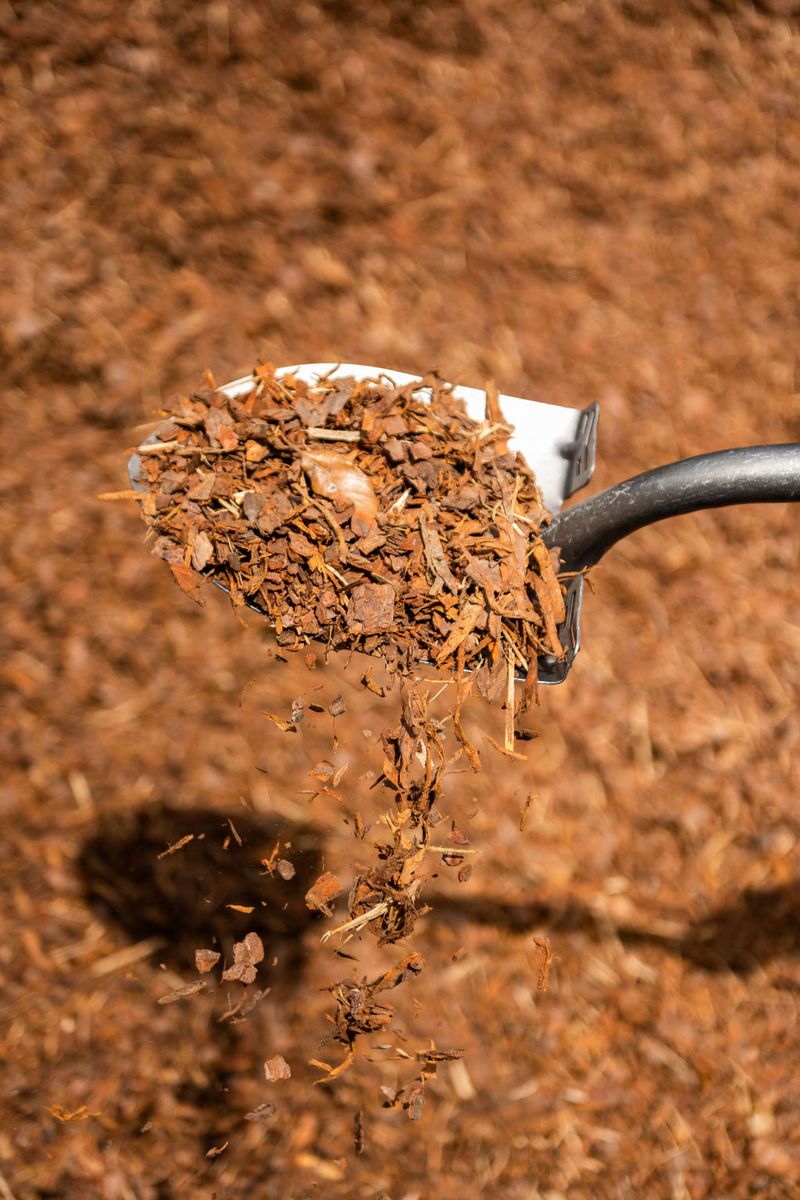
Here is the simple fix: hold off on mulching crape myrtles until mid to late spring. In most of Pennsylvania, that means sometime between early May and late May, depending on where you live.
Southeastern areas near Philadelphia usually warm up first. Gardeners in the Lehigh Valley and around Harrisburg can often mulch by mid-May.
Higher, colder spots in central and northern counties may need to wait until late May or even early June.
A soil thermometer takes the guesswork out of it. Many horticulturists suggest waiting until soil reaches roughly 55 to 60 degrees Fahrenheit a few inches down.
You can also watch your crape myrtle itself, since fresh leaf buds signal that roots are waking up.
Soil moisture matters as much as temperature. Squeeze a handful of dirt from the root zone. If it drips or forms a sticky ball, give it a few more dry days.
Personally, I set a phone reminder for mid-May and check the soil then. You still beat the summer weed rush, and your shrub gets that early warmth it craves. Patience here costs nothing and saves real headaches later.
3. Soggy Mulch Against Crape Myrtle Bark Is An Open Invitation For Rot
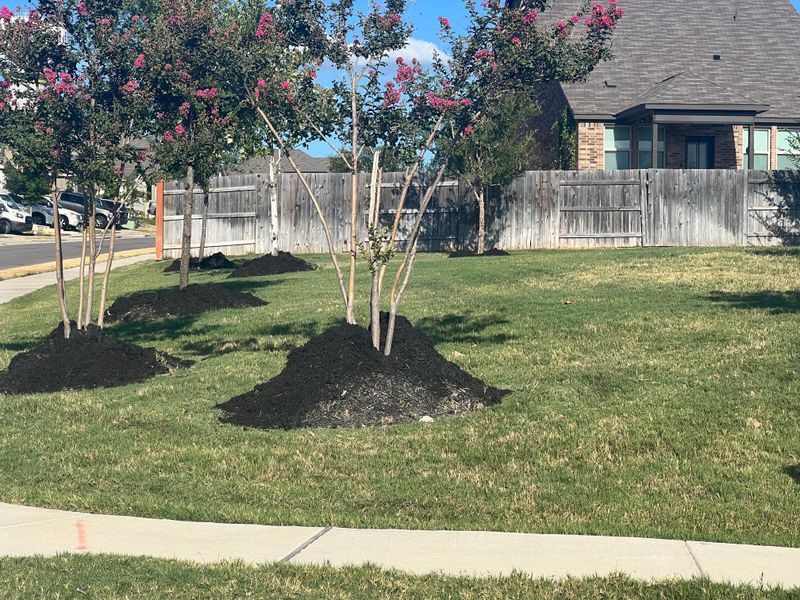
Bark is a tree’s raincoat, but it was not designed to stay wet around the clock. When damp mulch sits right against a crape myrtle’s trunk, the bark at the soil line softens over time.
Softened bark gives soil fungi an easy entry point. Organisms such as Phytophthora and Pythium, the water molds behind many root and crown rots, thrive in cool, waterlogged soil.
University extension services, including the University of Tennessee, point to excess moisture and poor drainage as the main triggers.
Early spring stacks the deck against you. Rain is frequent, evaporation is slow, and the plant is still mostly dormant. Add a thick mulch layer, and the crown may stay wet for weeks.
Crown rot is especially sneaky because it attacks where trunk meets roots. Damage there can girdle the plant slowly, cutting off the flow of water and nutrients. Quick check worth doing today:
Pull any mulch back from the trunk with your fingers. If the bark underneath looks dark, slimy, or peels easily, give it air and let it dry. Healthy crape myrtle bark should feel firm, even where it naturally flakes and peels in patches.
4. Wilting Crape Myrtle Leaves In Wet Soil Can Point To Root Rot
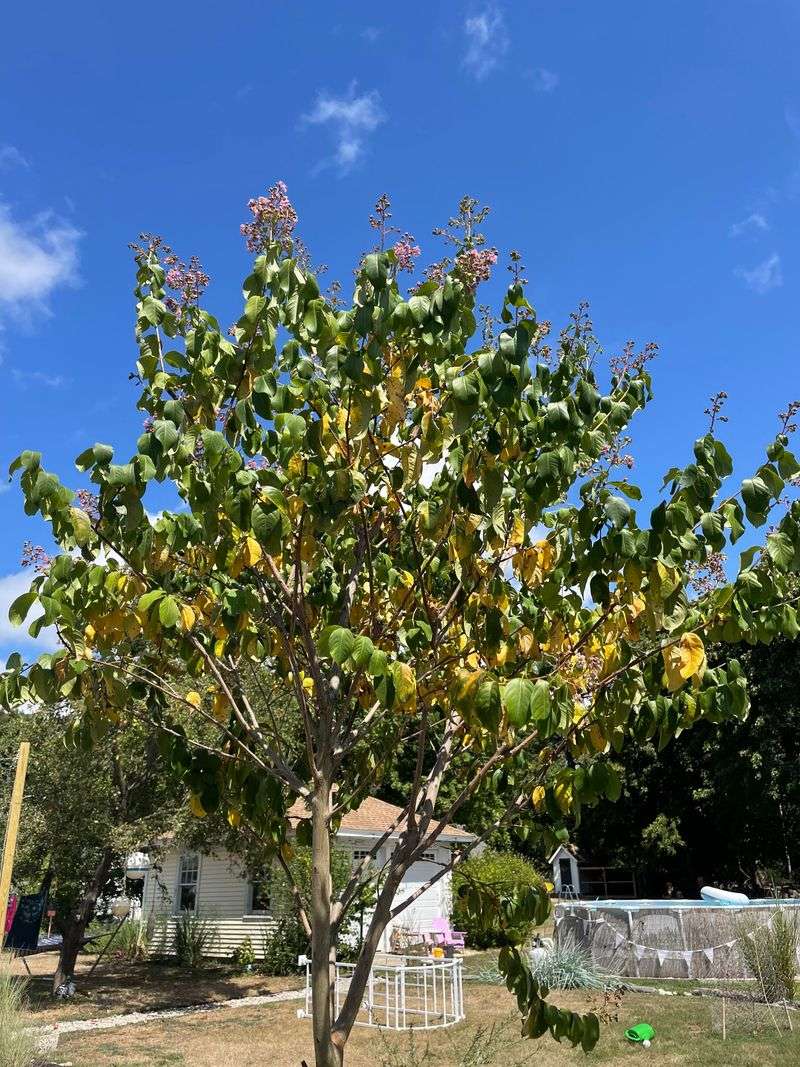
Wilting in soggy soil sounds backward, right? It confused me the first time too. Roots damaged by rot cannot move water up to the leaves, so the plant droops even while sitting in moisture.
Root rot rarely announces itself early. Signs usually show up gradually as the season moves along. Watch for these clues:
Leaves that yellow, wilt, or drop without an obvious reason. Thin, stunted new shoots and fewer flower clusters than usual. Branches that leaf out on one side but stay bare on the other.
Down at the base, you might notice dark, sunken bark or a sour smell from the soil. Healthy roots look firm and light-colored inside. Rotted roots turn brown or black and feel mushy, sometimes slipping apart when you tug them.
Keep one important point in mind, though. A crape myrtle that has no leaves in early May in Pennsylvania is often just late, not sick.
Scratch a twig gently with your thumbnail. Green tissue underneath means it is alive and simply waiting for warmer days.
If symptoms persist into summer, contact your county Penn State Extension office for a sample diagnosis.
5. Those Tall Mulch Volcanoes Around Crape Myrtle Trunks Need To Go
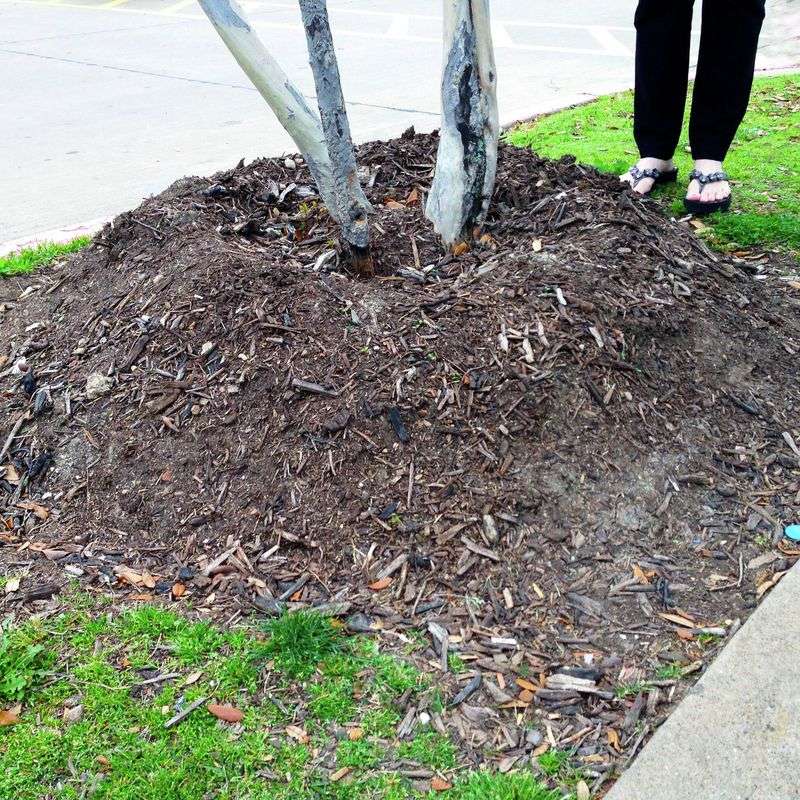
Drive through almost any neighborhood in spring and you will spot them. Tall cones of mulch piled halfway up tree trunks, like little brown volcanoes.
They look tidy, but arborists and extension experts warn against them for good reason. A mulch volcano holds water directly against the bark for long stretches. It also limits the oxygen that roots need to breathe.
The damage goes beyond rot. Roots sometimes grow up into the moist mulch instead of the soil below.
Those shallow roots dry out fast in summer and suffer in winter cold. Some can even wrap around the trunk and choke it over time.
Rodents enjoy volcanoes too. Voles and mice tunnel into thick mulch and chew on the tender bark, especially during winter. Those wounds give fungi another doorway.
Fixing a volcano takes about ten minutes. Rake the pile down and outward until you can see the root flare, the spot where the trunk widens into roots.
That flare should be visible above the soil line. If old mulch is matted and moldy, scoop it away and start fresh later in the season.
6. A Mulch Donut Keeps Crape Myrtle Roots Happy And Breathing
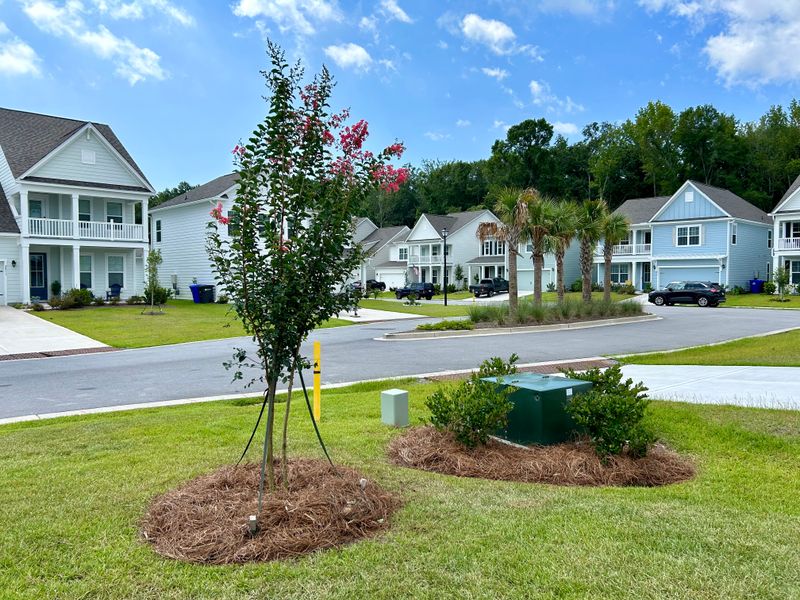
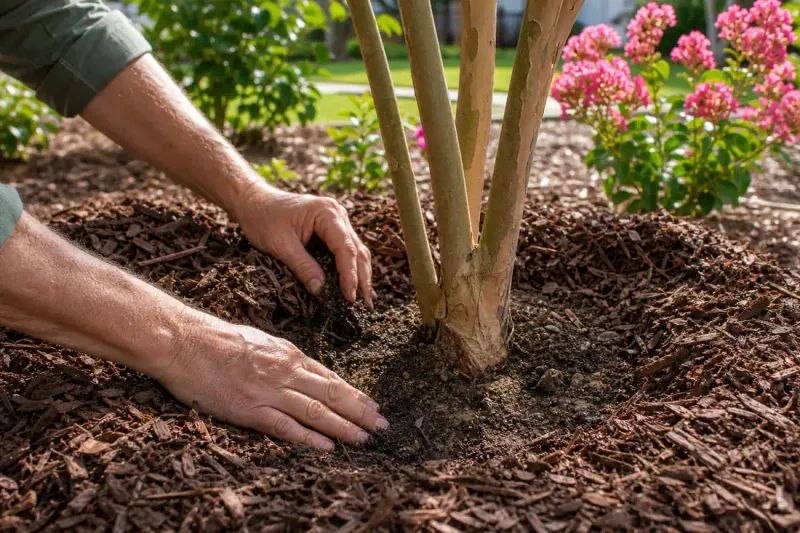
Once the soil has warmed, mulch becomes your crape myrtle’s best friend. It holds steady moisture through summer heat, keeps weeds down, and slowly feeds the soil as it breaks down.
The secret is shape. Think donut, not volcano. Spread mulch in a wide ring, leaving a gap of about 3 to 6 inches of bare ground around the trunk.
Depth matters as well. Penn State Extension recommends about 2 to 3 inches of organic mulch for most landscape plants. Going thicker rarely helps and can bring back the soggy conditions you are trying to avoid.
Good choices include shredded hardwood bark, pine bark nuggets, or aged wood chips. Coarse materials let air and water pass through more easily than fine, packed mulch.
Stretch the ring out toward the drip line if you can, since that is where many feeder roots grow. Before adding a new layer each year, check what is already there.
Fluff up old mulch with a rake, and only top it off if the layer has thinned. You will be amazed how much healthier a shrub looks with room to breathe at its base.
7. Heavy Clay Soil Makes Crape Myrtles Even More Prone To Rot
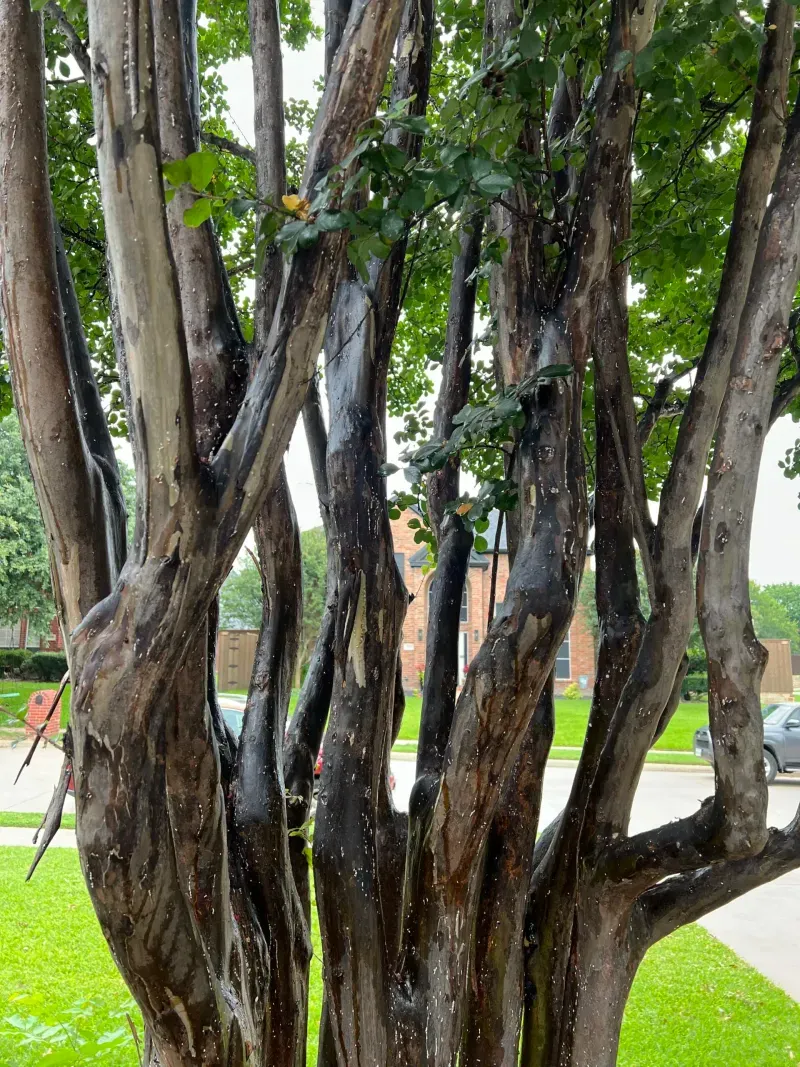
Plenty of Pennsylvania yards sit on heavy clay or compacted soil left behind by construction.
Clay holds water much longer than sandy or loamy ground. Pair that with early mulch, and roots may sit in wet conditions for a long stretch.
Crape myrtles want well-drained soil above all else. They handle summer dry spells surprisingly well once established, but constantly wet feet are a different story.
Try a simple drainage test. Dig a hole about a foot deep, fill it with water, and let it drain. Then fill it again and time it. If water lingers for many hours, drainage is poor.
For struggling spots, a few fixes help. Plant slightly high, with the root flare an inch or two above grade.
Work compost into a wide area rather than just the planting hole. Avoid placing crape myrtles in low spots where runoff collects.
Also check your downspouts and sprinklers. A gutter emptying near the shrub or an irrigation zone running daily in spring can keep the soil soggy without you noticing.
Small changes in water flow can make a huge difference for root health.
8. Cold-Hardy Crape Myrtle Varieties Give Pennsylvania Gardens A Head Start
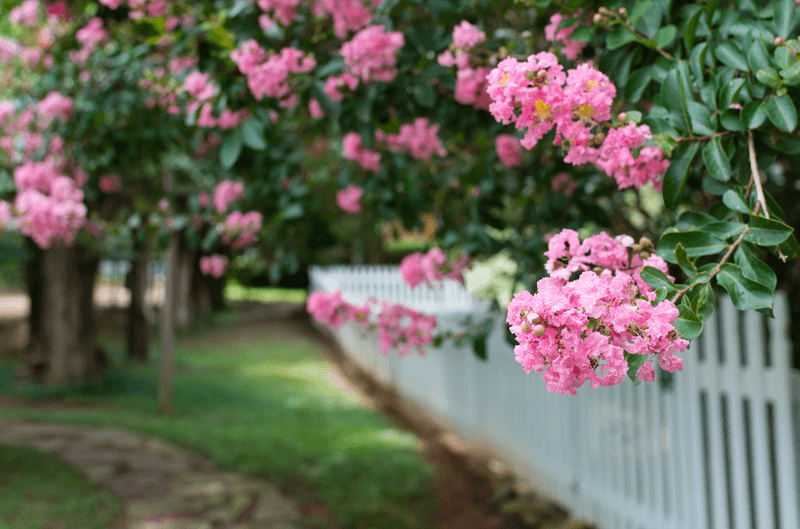
Smart mulching works best when it starts with the right plant. Most of Pennsylvania falls in USDA zones 5b through 7b, and crape myrtles grow most reliably in the warmer zone 6 and 7 areas.
Varieties bred by the U.S. National Arboretum with Native American tribal names, such as Natchez, Tuscarora, and Acoma, are often recommended for better hardiness and mildew resistance.
Smaller hybrids like the Pocomoke or several newer dwarf lines also do well in colder spots.
In zone 5 areas, plants may freeze to the ground in harsh winters and regrow from the roots, acting more like perennials.
That makes healthy roots even more valuable up north. A shrub that regrows from its base depends completely on a crown that stays sound through spring. So here is my seasonal game plan:
Leave the root zone open and uncovered in March and April. Check soil warmth and moisture in May. Spread a 2 to 3 inch donut once things dry out and warm up.
Follow that rhythm, and your crape myrtle can spend summer doing what it does best, filling your yard with clusters of ruffled blooms that last for weeks.