7 Compact Evergreen Shrubs That Bring Lasting Charm To Small Garden Spaces In Florida
Small Florida gardens do not have room for plants that throw their weight around. That is where compact evergreen shrubs really shine.
They keep their shape, hold onto their color, and give a space that polished, pulled-together look without swallowing the whole yard. For homeowners working with a petite front bed, a narrow side yard, or a cozy patio border, that kind of plant is worth its weight in gold.
A good compact shrub can soften hard edges, frame a walkway, and make even a small space feel rich with texture and life. Better yet, evergreen choices keep the garden from looking bare when other plants take a breather.
In Florida, that lasting structure matters. A tiny garden can still have plenty of charm, but it takes the right plants to pull it off.
Compact evergreen shrubs know how to keep things neat, attractive, and easy on the eyes all year long.
1. Dwarf Yaupon Holly Stays Neat Without Constant Pruning
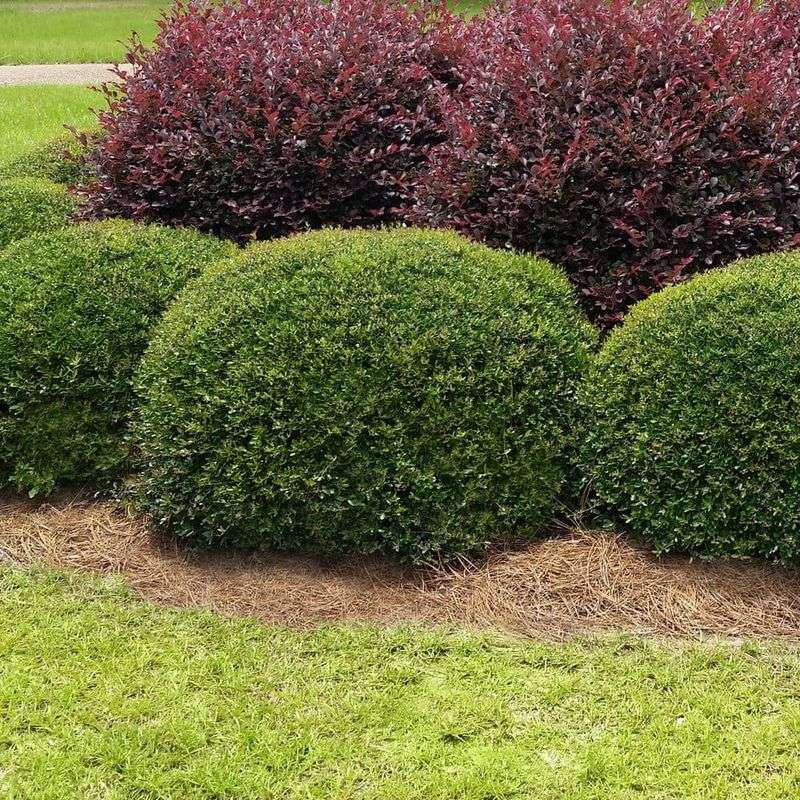
Picture a rounded, dense green mound sitting perfectly along a front walkway, looking neat and tidy without anyone touching it for weeks. That is exactly what Dwarf Yaupon Holly, botanically known as Ilex vomitoria ‘Nana’, naturally does in a Florida yard.
This compact native shrub grows slowly into a tidy ball shape on its own, which makes it a favorite for homeowners who want structure without spending every weekend with pruning shears.
Mature plants typically reach between two and four feet tall with a similar spread, making them ideal for small foundation beds, low borders, or tight corners where space is limited.
The dense, dark green foliage stays on the plant year-round, giving your garden a reliable, finished look no matter the season.
Female plants produce small red berries in fall and winter that birds absolutely love, adding a layer of wildlife interest to an already attractive shrub.
Care requirements are refreshingly simple for Florida conditions. Dwarf Yaupon Holly handles full sun to partial shade without complaint and adapts well to sandy, clay, or loamy soils.
Once established, it tolerates drought surprisingly well, which suits Florida’s unpredictable dry spells. Occasional deep watering during extended dry periods keeps growth healthy and the foliage looking its best.
One of the biggest advantages this shrub offers is its native status. As a Florida native, it supports local ecosystems and requires far fewer inputs than non-native alternatives.
For tight spaces, plant it about two to three feet from walls or edging to give the root system room to spread without crowding.
A light trim once or twice a year is all it needs to keep that naturally rounded shape looking polished and intentional in any small garden setting.
2. Carissa Holly Brings Structure Without Taking Over
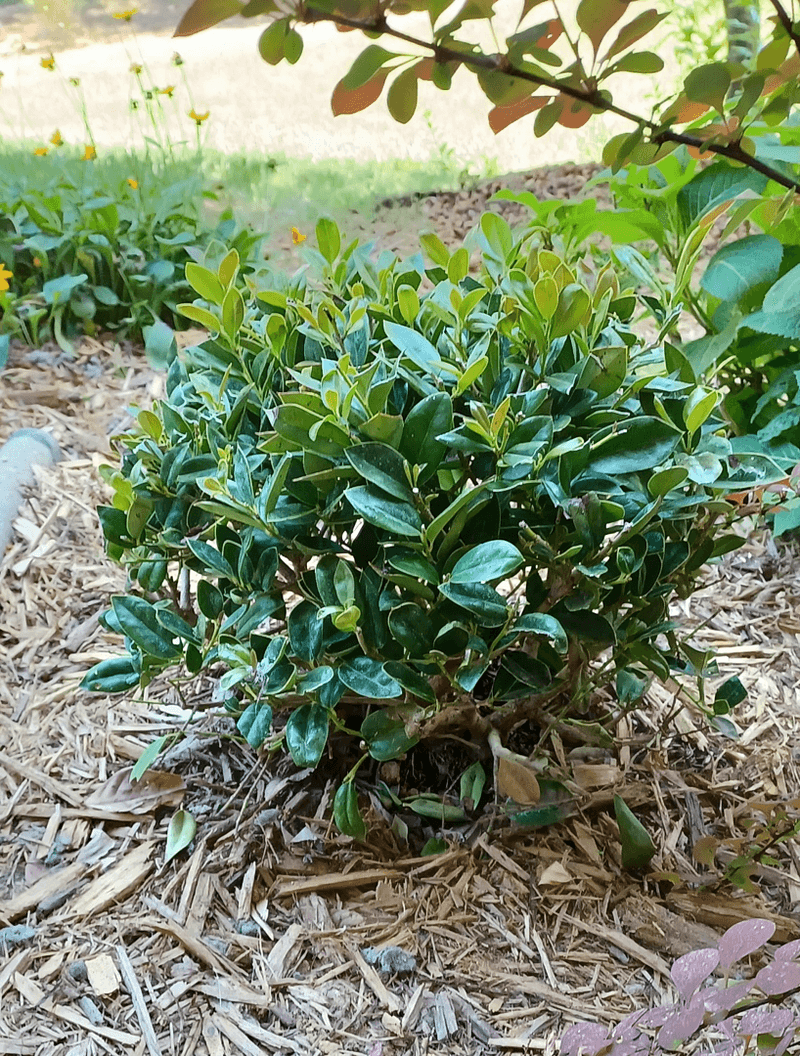
Some plants have a way of anchoring a garden bed without demanding all the attention, and Carissa Holly does exactly that.
Ilex cornuta ‘Carissa’ is a single-spined holly cultivar that grows into a naturally low, spreading mound, making it one of the most reliable choices for small Florida yards that need definition without bulk.
Your Florida Garden Changes Every Week. Your Plan Should Too.
Gardening in Florida changes quickly throughout the season. Every Friday you’ll receive a simple weekly plan showing exactly what to plant, prune, fertilize, harvest, and protect so you never miss the right timing.
Unlike larger holly varieties that can quickly outgrow a foundation bed, Carissa stays honest about its size.
Expect mature plants to reach about three to four feet in height with a spread of four to six feet over time. That wide, low profile makes it especially useful along walkways, in front of taller background plants, or as a low-maintenance border along driveways.
The glossy, dark green leaves are thick and leathery, giving the plant a rich texture that looks polished even when nothing is blooming nearby. Occasional red berries appear and add a seasonal bonus without requiring any extra effort from you.
Carissa Holly performs well across most of Florida, handling full sun to partial shade with equal ease. It is tolerant of a range of soil types, including the sandy, well-drained soils found in many Florida neighborhoods.
Watering needs are moderate, and once the plant is established after its first growing season, it handles dry stretches reasonably well. A slow-release fertilizer applied in spring keeps the foliage looking dense and healthy throughout the year.
For tight spaces, Carissa Holly is particularly forgiving because its natural spread is horizontal rather than vertical.
Planting it near a wall or under a window works beautifully since the height stays low while still filling the visual space effectively.
Light shaping once a year is usually enough to keep edges clean, though many gardeners skip pruning altogether and simply enjoy its naturally tidy form.
3. Walter’s Viburnum ‘Densa’ Fills Space Without Feeling Crowded
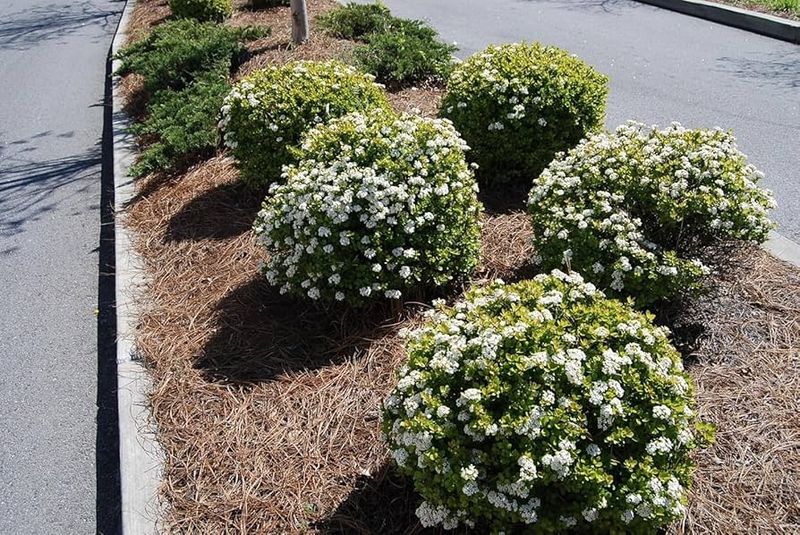
For gardeners who want a shrub that feels full and lush without swallowing up precious square footage, Walter’s Viburnum ‘Densa’ is a standout option.
This compact cultivar of Viburnum obovatum was selected specifically for its restrained growth habit, making it a much more practical choice for small spaces than the standard species, which can grow into a much larger multi-stemmed shrub.
‘Densa’ stays closer to three to four feet tall and wide, holding its shape with very little intervention.
What makes this plant particularly appealing in a Florida garden is its native status and the ecological value that comes with it. As a Florida native, it supports pollinators, small birds, and beneficial insects throughout the year.
In late winter to early spring, clusters of small white flowers cover the plant before most other shrubs have even started to wake up from cooler temperatures, giving your garden an early burst of brightness when it is needed most.
The foliage is small, semi-evergreen to fully evergreen depending on winter temperatures, and has a fine texture that layers well with bolder-leafed companions. In North Florida, plants may drop some leaves during colder winters, but they bounce back quickly.
Central and South Florida gardeners can expect near-complete evergreen performance throughout the year. The plant handles full sun to partial shade and prefers moist, well-drained soil, though it adapts to typical Florida landscape conditions without much fuss.
Placement works best in spots that get morning sun with some afternoon shade protection, especially in hotter parts of the state.
Mulching around the base helps retain soil moisture and keeps roots comfortable during Florida’s warmest months.
Minimal pruning is needed, but a light trim after the spring bloom period helps maintain a compact, tidy silhouette for the rest of the growing season.
4. Simpson’s Stopper Adds Charm With Very Little Effort
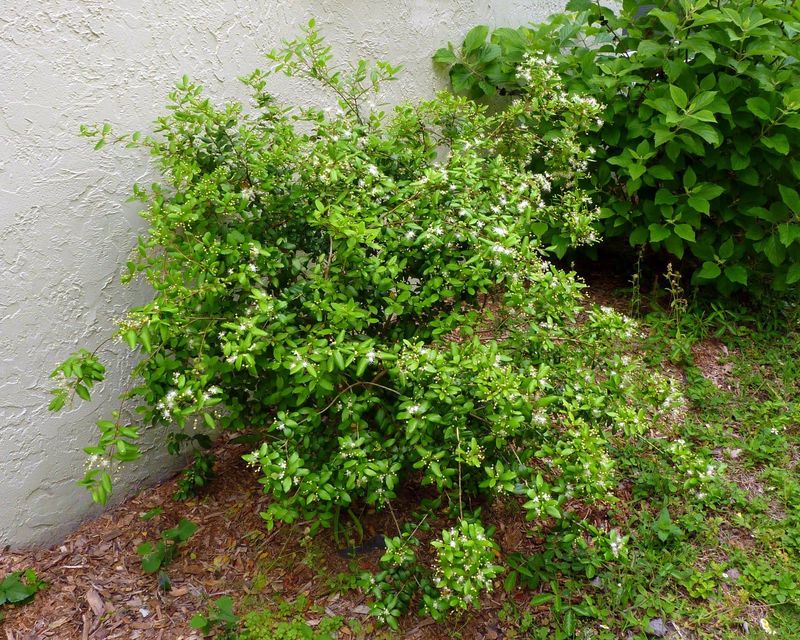
Few native Florida shrubs offer as much visual interest packed into such a manageable size as Simpson’s Stopper.
Myrcianthes fragrans is a plant that rewards patient gardeners with layers of charm: aromatic white flowers, bright orange-red berries, and a striking cinnamon-colored bark that peels in thin flakes to reveal warm tones underneath.
That combination of textures and seasonal interest is rare in a shrub that stays so naturally well-behaved in a small space.
In a typical Florida landscape setting, Simpson’s Stopper grows to about eight to fifteen feet at full maturity if left completely unmanaged, but it responds exceptionally well to light pruning and can easily be maintained at four to six feet in a smaller garden.
Its naturally upright, multi-stemmed form works beautifully as a specimen plant, a privacy screen along a fence line, or a softening element near a corner of the house.
The glossy dark green leaves stay on the plant year-round, keeping the garden looking full and finished even in the middle of winter.
This shrub is native to South Florida and the Florida Keys, which means it truly thrives in warm, humid conditions. It performs best in Central and South Florida, though it can be grown in protected spots in North Florida with some risk of cold damage during hard freezes.
Full sun to partial shade suits it well, and once established, it handles Florida’s dry periods with minimal supplemental watering needed.
The berries that appear in late summer and fall are not just decorative. They attract mockingbirds, catbirds, and other wildlife that make a garden feel alive.
For small yards, plant Simpson’s Stopper where its textured bark can be seen up close, near a pathway or patio edge, where visitors will naturally notice and appreciate those fine details.
5. Dwarf Podocarpus Fits Tight Spaces And Stays Tidy
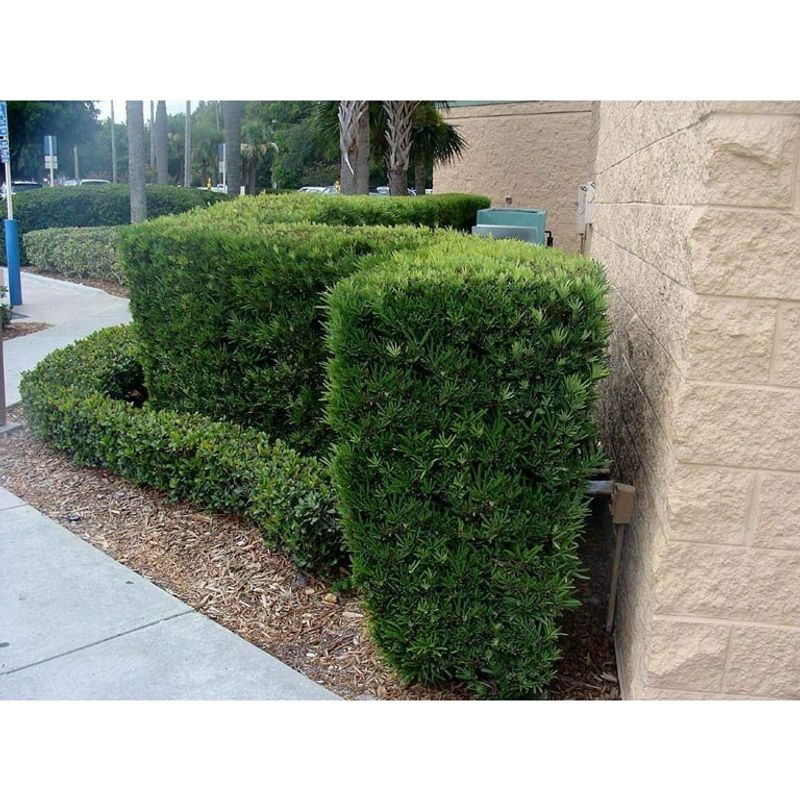
When a garden bed is narrow and every inch of horizontal space counts, a plant that grows more upward than outward becomes incredibly valuable. Dwarf Podocarpus, or Podocarpus macrophyllus ‘Pringles’, is exactly that kind of plant.
Unlike the full-sized Podocarpus tree that can shoot up to forty feet, this cultivar stays low and compact, typically reaching three to six feet tall with a naturally tidy, mounding habit that requires very little correction pruning to maintain.
The foliage is one of its most appealing features. Long, narrow, dark green leaves give this shrub a fine, almost feathery texture that contrasts beautifully with broader-leafed plants.
That texture makes it an excellent choice for layering in a mixed border, where it adds depth and visual interest without competing aggressively for space.
It also works well as a low hedge or foundation planting along the front of a home, providing a clean, structured look throughout every season.
Podocarpus ‘Pringles’ is a slow grower, which is both a practical advantage and a design benefit. Slow growth means less frequent pruning and a more predictable footprint over time.
For small Florida gardens, that kind of reliability is genuinely useful. The shrub performs well across all regions of Florida, tolerating full sun to partial shade and adapting to a range of well-drained soil types.
It is also reasonably salt-tolerant, which makes it a practical option for coastal yards where other plants sometimes struggle.
Watering needs are moderate, and the plant handles short dry spells once it is well established. Fertilize lightly in spring and summer with a balanced slow-release formula to encourage steady, healthy growth.
For the tightest spaces, position it close to a wall or fence where its upright habit fills vertical space without pushing outward into walkways or neighboring plants.
6. Loropetalum Adds Color Without Needing Much Attention
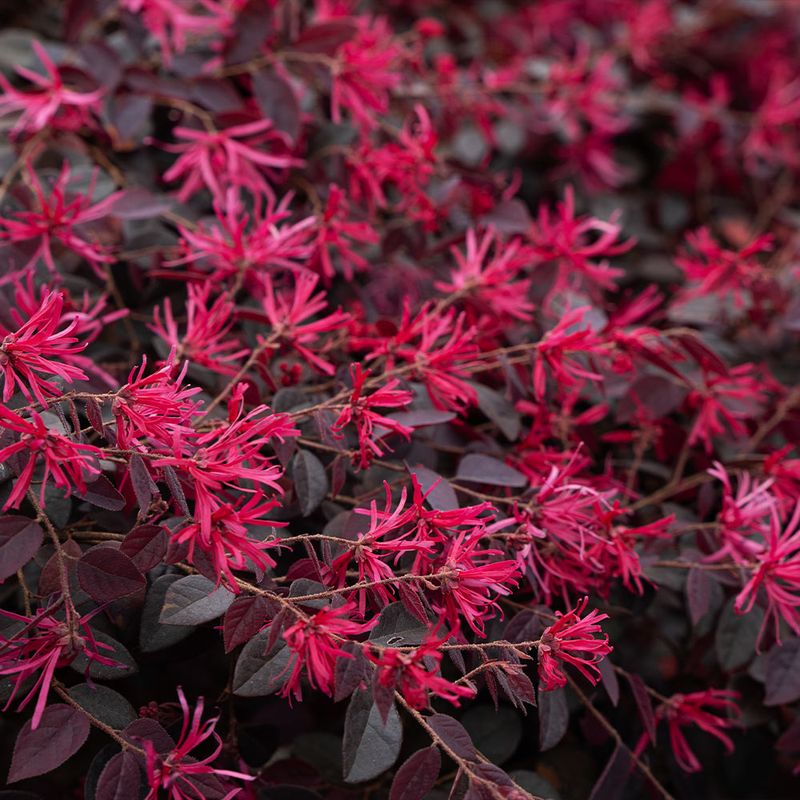
Most evergreen shrubs offer green foliage, which is perfectly fine, but sometimes a small garden needs a jolt of color to keep things visually interesting.
Loropetalum chinense, commonly called Chinese Fringe Flower, delivers that color in a way that few other compact shrubs can match.
The deep burgundy, plum, or reddish-purple foliage holds its rich tone throughout the year, making it a reliable source of contrast in a planting bed dominated by green neighbors.
Beyond the foliage, Loropetalum produces clusters of strap-like pink to magenta flowers that appear most heavily in late winter and spring, with lighter rebloom cycles through the warmer months.
That combination of colorful leaves and periodic blooms gives this shrub a level of visual dynamism that earns its place in any small Florida garden.
Several compact cultivars exist, including ‘Purple Pixie’, which stays low and weeping at about one to two feet tall, and ‘Crimson Fire’, which mounds to about three to four feet, both well-suited to tight spaces.
Care for Loropetalum in Florida is straightforward. It prefers full sun to partial shade and slightly acidic, well-drained soil, which aligns well with typical Florida landscape conditions.
In full sun, the foliage color tends to be most vibrant, while shadier spots may produce softer tones. Regular moisture during the establishment period is important, but once rooted in, the plant handles moderate dry periods without significant stress.
One practical tip for small gardens: choose the cultivar size intentionally based on your available space before planting.
Some Loropetalum varieties labeled as compact can still reach six to eight feet if left unpruned, so reading the plant tag carefully saves a lot of corrective work later.
A light shaping after the main spring bloom keeps the form tidy and encourages another round of flower production through summer.
7. Wild Coffee Thrives In Shade And Keeps A Lush Look
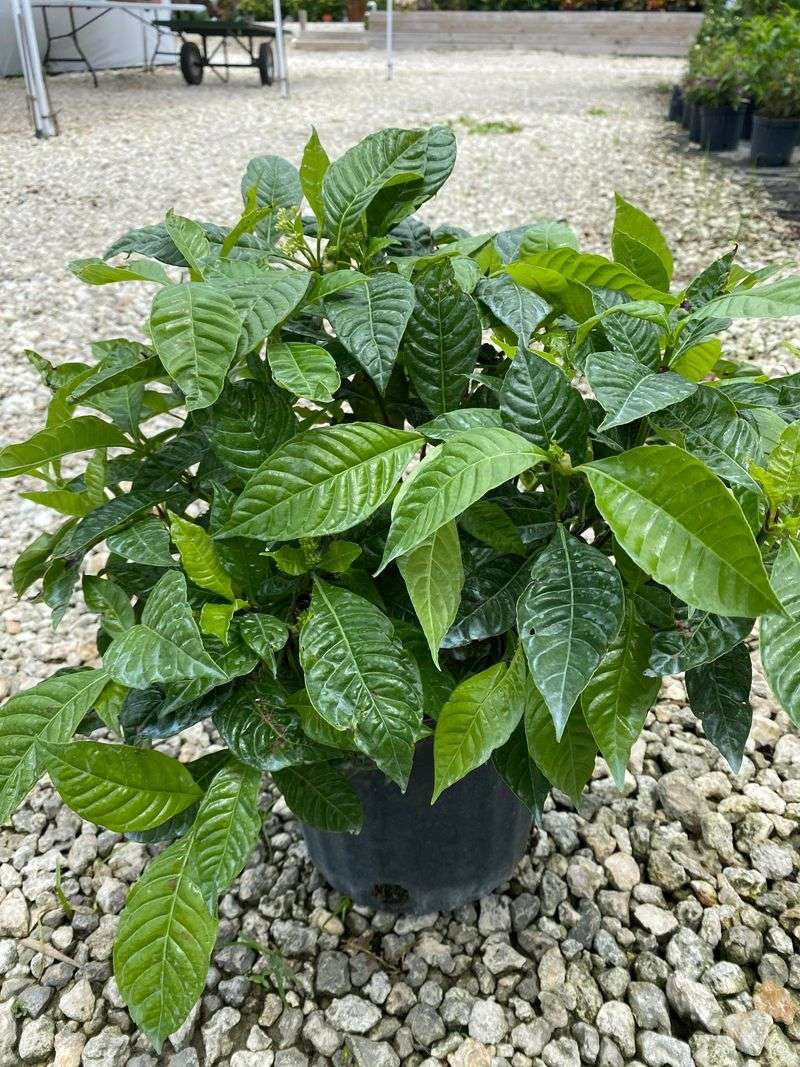
Shady spots in small Florida gardens are often the hardest areas to plant well. Many shrubs sulk in low light, producing sparse, stretched-out growth that looks nothing like the full, lush plant shown on the nursery tag.
Wild Coffee, known botanically as Psychotria nervosa, genuinely thrives in shade, making it one of the most practical solutions for those dim corners, covered patios, or spots under large canopy trees where most plants simply refuse to perform.
The foliage alone makes this plant worth growing. The leaves are glossy, deep green, and marked with distinctive impressed veins that give the surface a quilted, almost sculptural appearance.
That texture is eye-catching up close and holds its quality through every season without any special treatment. Small white flowers appear periodically, followed by clusters of bright red berries that attract birds and add a pop of seasonal color to an otherwise shaded space.
Wild Coffee is a Florida native, naturally found in the understory of hammock forests throughout Central and South Florida.
It grows comfortably to about four to six feet tall and wide in typical landscape conditions, making it suitable for small gardens where a medium-sized accent or informal hedge is needed.
In North Florida, it can be grown in protected, frost-free microclimates but may experience some cold damage during hard winters.
Moisture-retentive, organically rich soil suits this shrub best, and a layer of mulch helps maintain the cool, slightly moist root environment it prefers.
Supplemental watering during dry periods keeps the foliage looking its best, especially in the first year after planting.
Because it grows at a moderate pace, minimal pruning is needed. Simply remove any crossing branches or straggly stems once a year to keep the shape open and the plant looking its naturally lush, full self.