Did the Freeze Hurt Your Plants? How Virginians Can Tell What’s Gone For Good and What Will Bounce Back
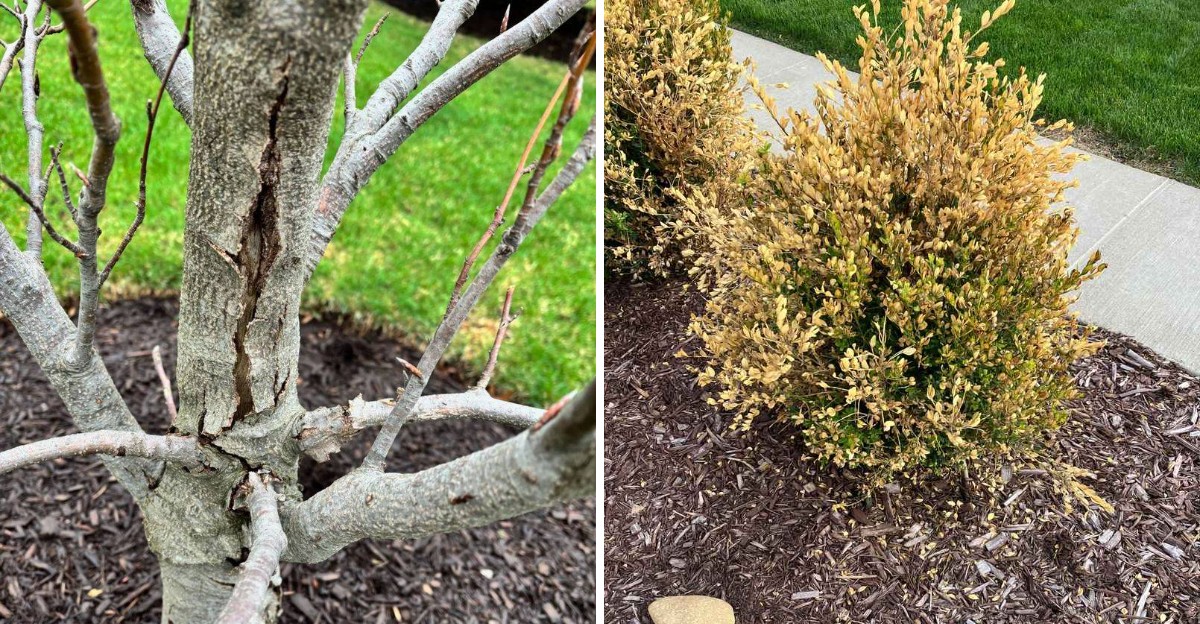
Ice can form between plant cells and quietly pull water out of them, leaving leaves limp by breakfast. I still remember staring at a crispy shrub one February morning and feeling my heart sink.
Plenty of plants handle cold just fine when they ease into it slowly. The trouble starts when a warm week tricks buds into opening, and then a hard freeze sweeps in overnight.
Virginia weather loves pulling that stunt, especially in late winter and early spring.
I believe the brown mess outside your window often looks worse than it really is. Living tissue can hide under ugly bark, and roots tucked in cold soil may be perfectly fine.
You need a little detective work before you grab the shovel.
The difference between a plant that can recover and one that has suffered serious damage isn’t always obvious. A thumbnail and some patience may tell you more than you expect.
1. A Thumbnail Scratch On The Stem Tells The Real Story
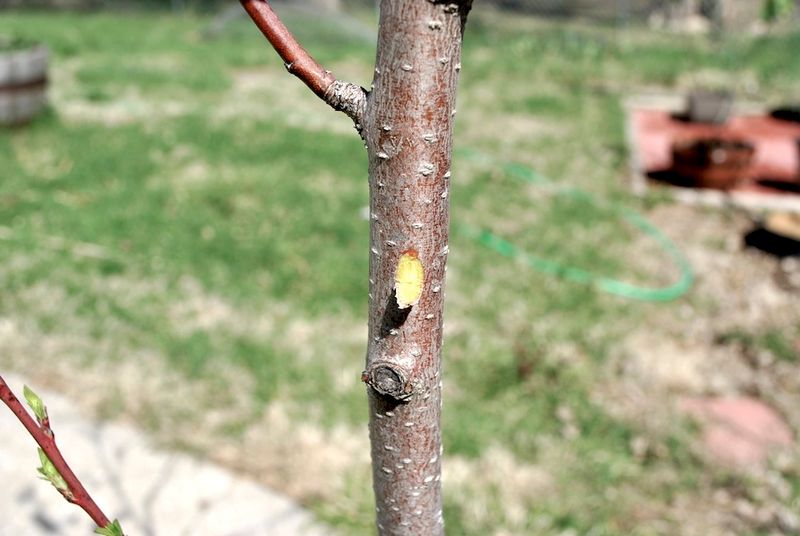
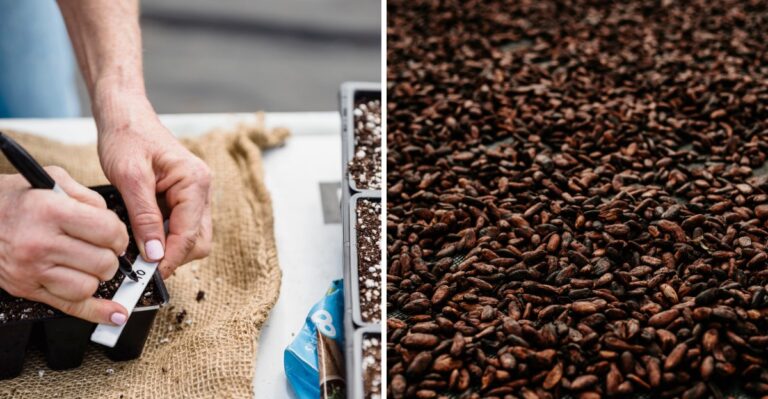
My favorite garden tool after a cold snap costs nothing at all. Your thumbnail can reveal more about freeze damage than any expensive gadget.
Gently scrape a tiny strip of bark on a twig or stem. Bright green, moist tissue underneath means that part is alive and working.
Brown, gray, or dry tissue tells you that section has failed.
Start near the tips and work your way down toward the base. Often the outer few inches are damaged while the lower wood is healthy.
Keep testing every few inches until you hit green.
Try several different branches, not just one. Cold damage can be patchy, especially on the side of a shrub that faces wind or open sky.
One brown branch rarely tells the whole story.
A pocketknife or clean pruner blade works too if your nails are short. Just keep the scrape small so you are not opening big wounds.
Virginia Cooperative Extension and other extension services recommend this simple check for woody plants like hollies, camellias, crape myrtles, and roses.
Write down what you find or tie a little ribbon where green begins. Later, when pruning time arrives, you will know exactly where to cut.
2. Wait For New Buds Before Reaching For The Pruners
Patience feels awful when your yard looks scorched. Still, holding off on pruning is one of the smartest moves you can make after a freeze.
Those brown leaves and stems act like a little blanket for the healthy tissue below. If another cold night arrives, that ragged layer helps buffer the living parts.
Cutting too soon removes that protection.
Early pruning can also nudge a plant into pushing tender new shoots. Fresh growth is soft and full of water, so a second frost can damage it fast.
That double hit drains a plant’s stored energy.
Most of Virginia sees its average last frost somewhere from early April along the coast to early May in the western mountains. Waiting until after that date is a safe rule for most shrubs and perennials.
Check your local frost date, since Norfolk and Blacksburg live on very different calendars.
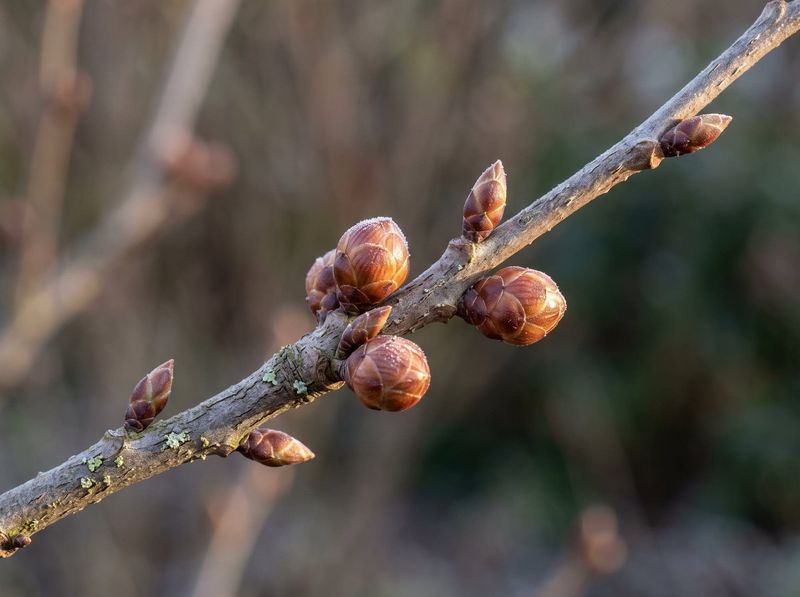
The best signal comes from the plant itself. Once you see buds swelling or new leaves unfolding, the line between living and damaged wood becomes easy to spot.
Then you can trim back to just above a healthy bud with confidence.
Honestly, a few weeks of messy looks is a small price for a stronger plant.
3. Mushy Elephant Ears And Succulents Need Quicker Cleanup
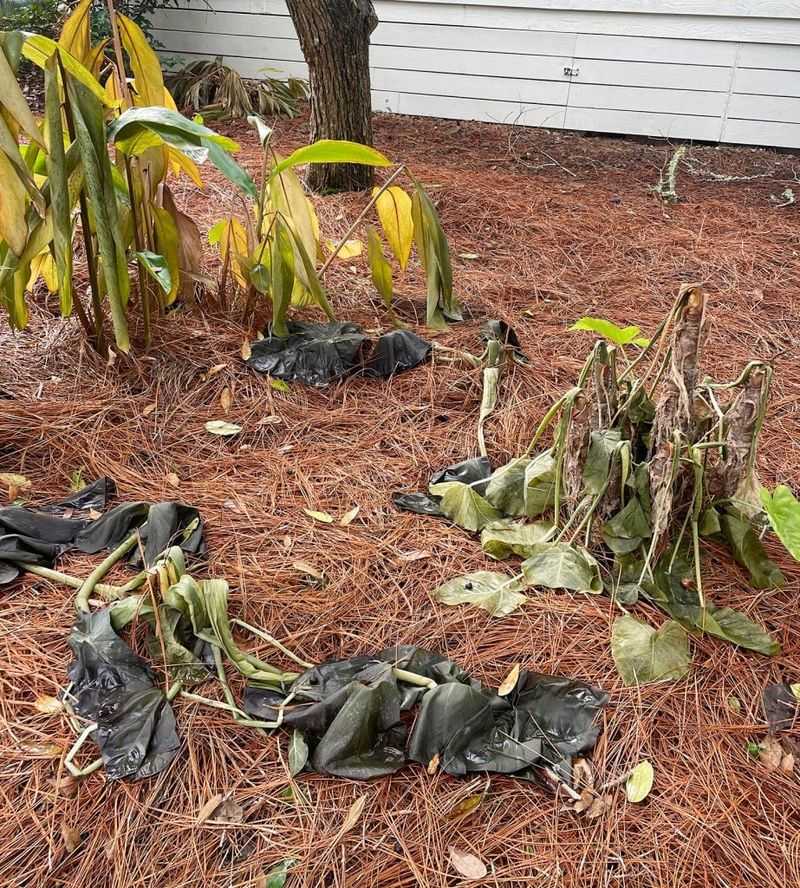
Some plants skip the crispy stage and go straight to slime. Elephant ears, cannas, aloe, jade, and other water-filled plants often turn soft and dark after a hard frost.
Soft, collapsed tissue is a different problem than dry brown leaves. That mush can invite rot and fungal trouble that spreads into healthy parts.
For these plants, cleanup should happen sooner rather than later.
Use clean, sharp pruners and cut away anything that feels squishy or smells sour. Clean your blades thoroughly between plants to avoid spreading disease.
Toss the debris instead of adding it to the compost pile.
Leave the firm parts alone, even if they look a bit pale. Succulents often bounce back from a healthy core.
Elephant ears and cannas grow from underground bulbs and rhizomes, which may still be fine below the soil line.
Gently press the base of the plant or dig a little to check. A firm bulb or rhizome is a hopeful sign.
A soft, hollow one usually means that plant has run out of chances.
In colder parts of the state, a layer of mulch over these roots next fall can make a big difference.
4. Hydrangea And Azalea Buds Show Damage In Sneaky Ways
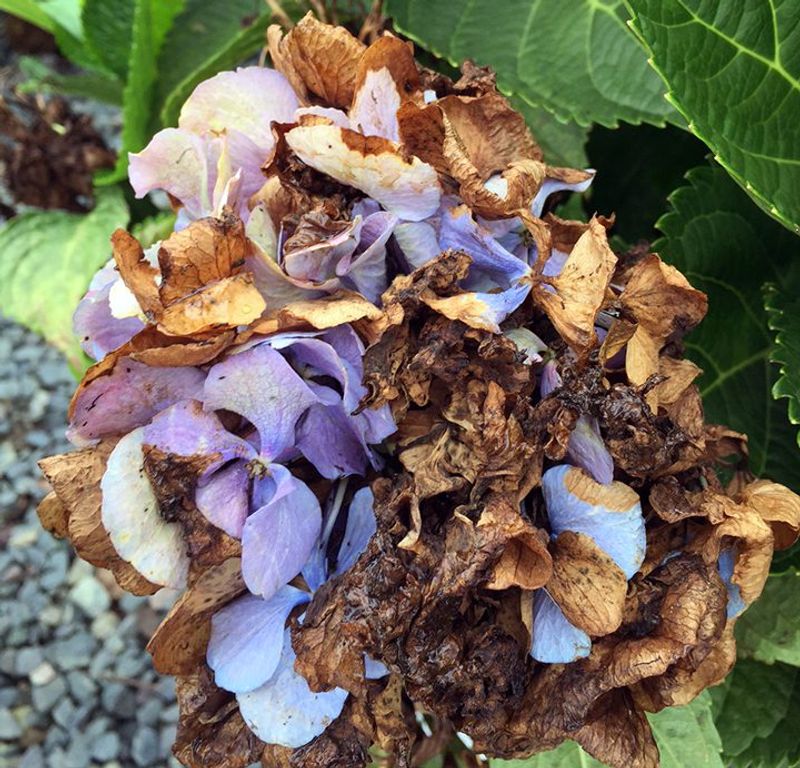
Flower buds are often the first casualty of a late freeze, even when the shrub itself is fine. You might get healthy leaves but few blooms this year.
Bigleaf hydrangeas are a classic example. Many older types form flower buds on last year’s stems, so a spring freeze can zap them.
Slice a fat bud in half, and a brown or black center means no flowers from that bud.
Azaleas, camellias, and magnolias can show browned petals or buds that fail to open. Fruit trees like peaches are even touchier.
Cut open a blossom and look at the tiny center, called the pistil, and a dark one means no fruit from that flower.
Losing blooms stings, but the plant usually carries on. It will put energy into leaves and roots instead.
Next year’s show can be just as pretty.
Resist the urge to cut hydrangea stems to the ground in frustration. Lower buds may still be alive and ready to flower.
Reblooming varieties such as Endless Summer types can also flower on new growth later in the season.
Personally, I count any green leaves as a quiet win.
5. Perennials With Brown Tops Often Return From Their Roots
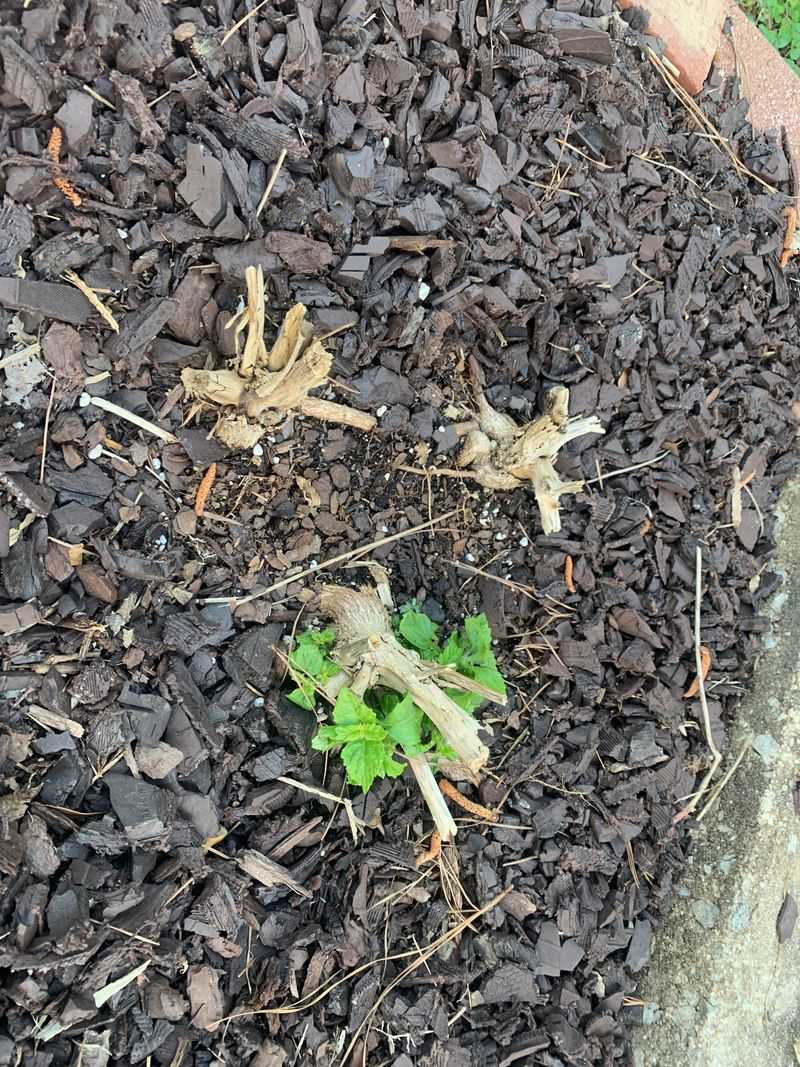
Plenty of garden favorites are tougher underground than they look above it. Lantana, salvias, and many ornamental grasses can lose every stem yet still send up new shoots.
Gardeners call these plants root hardy. The crown and roots sit insulated in the soil, which stays warmer than the air on a frosty night.
As long as that underground part survives, the plant can regrow.
Some of these late risers test your nerves. Lantana, hardy hibiscus, and crape myrtle are famous for waking up late, sometimes not until May or even early June.
Many a healthy plant has been yanked out by an impatient gardener.
Gently tug on the plant. If it feels anchored firmly, the roots are likely holding on.
A plant that lifts out easily with dry, brittle roots is a more worrying sign.
You can also scrape the crown right at soil level. A bit of green or white, firm tissue means life is still there.
Mark the spot with a stake so you do not accidentally dig into it.
Give root-hardy plants until early summer before you decide anything. That waiting game can save you money and a favorite plant.
6. Evergreen Leaves Turning Bronze After Winter Wind
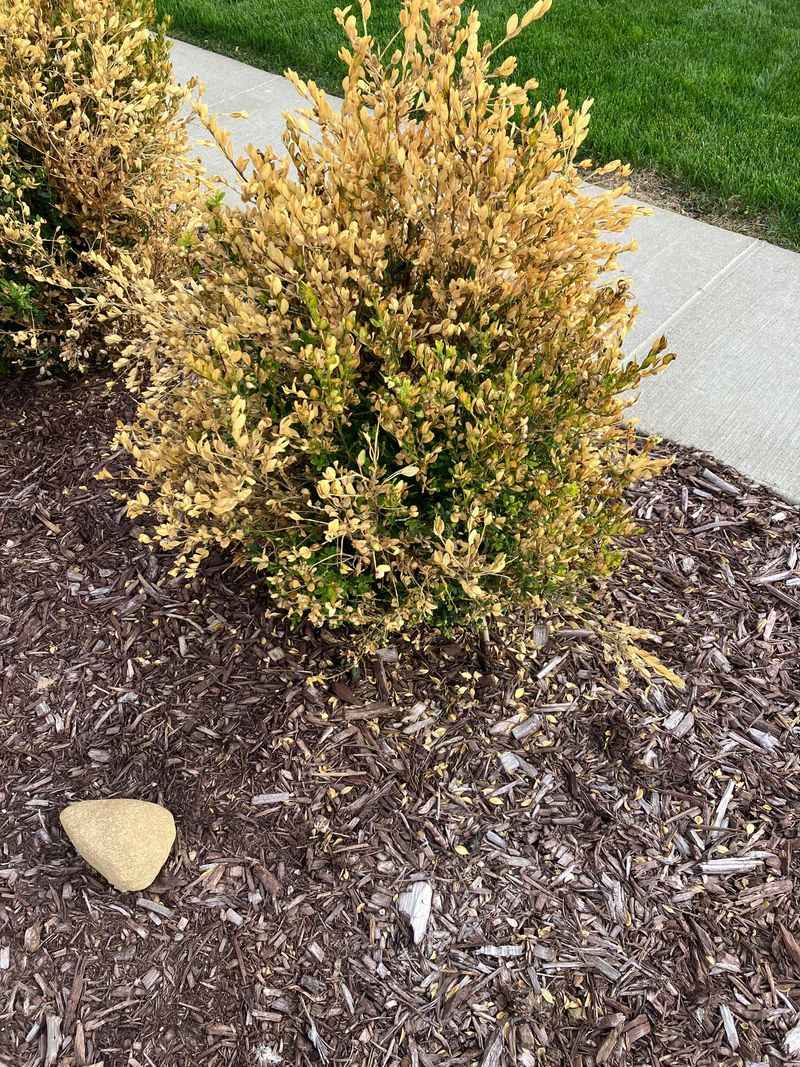
Brown leaves on an evergreen do not always mean frost hit the plant. Sometimes the real culprit is winter burn, a moisture problem that looks a lot like freeze damage.
On sunny, windy winter days, evergreen leaves lose water. If the ground is frozen, roots cannot replace it.
The leaves dry out and turn bronze, tan, or brown, often on the windy or sunny side.
Boxwoods, hollies, southern magnolias, cherry laurels, and some conifers show this often. The damaged leaves may drop in spring.
Underneath, buds and twigs are frequently still healthy.
Use the scratch test on the twigs before you panic. Then watch for new leaves to appear in April or May.
Most shrubs refill nicely by summer, even if they look patchy for a while.
Watering well in late fall before the ground freezes helps prevent winter burn next time. A good layer of mulch keeps the soil from freezing as deeply.
Burlap screens on the windy side can protect young or exposed shrubs.
Skip anti-desiccant sprays unless you follow the label carefully. Research on their benefits is mixed, and good watering often does more.
7. Split Bark And Peeling Trunks Deserve A Closer Look
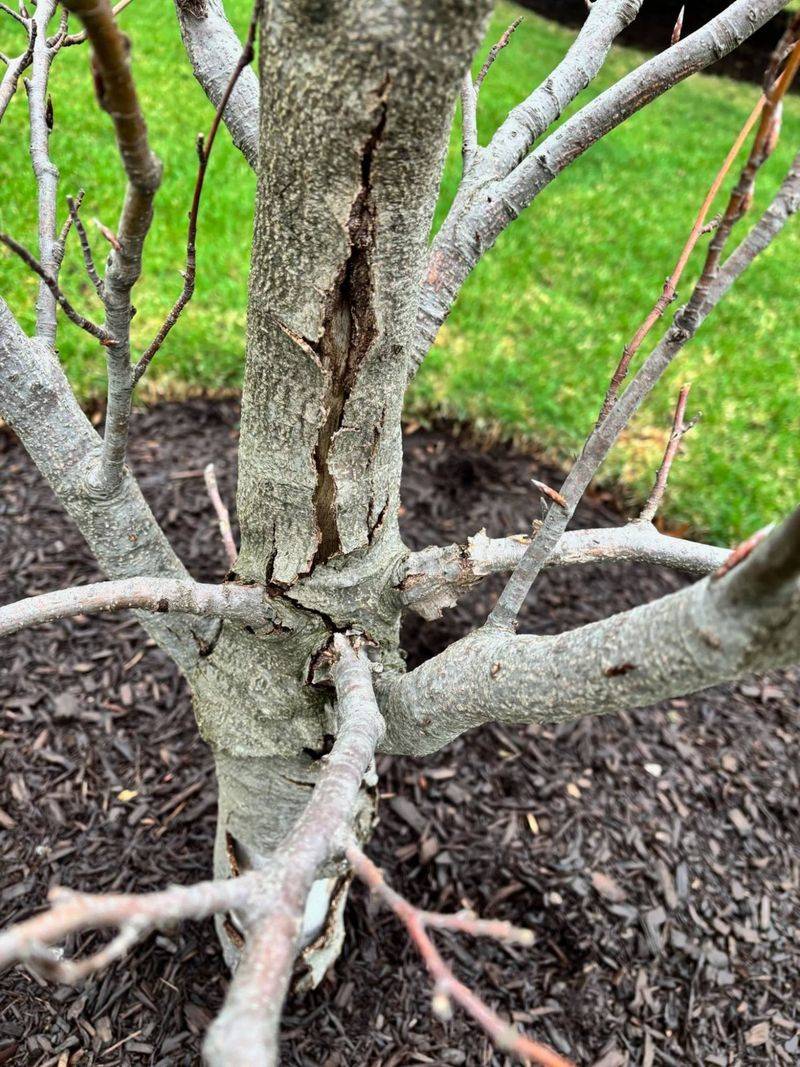
A loud crack on a frigid night can come from a tree trunk itself. Frost cracks happen when bark warms in afternoon sun and then cools quickly after sunset.
These long vertical splits often show up on the south or southwest side of thin-barked trees. Young maples, fruit trees, and lindens are common victims.
Sunscald, a related injury, leaves sunken or peeling patches of damaged bark.
Many trees seal small cracks on their own over time. You may see a ridge of new bark forming along the edges.
Do not paint the wound with tar or sealant, since extension experts say it can trap moisture and slow healing.
Bigger concerns appear when bark peels all the way around a trunk or when large sections stay loose. That kind of injury blocks water and food from moving through the tree.
Shrubs and young trees with heavy splits near the base sometimes fail later in the season.
For future winters, a light-colored tree wrap on young trunks can reduce sunscald. Remove it in spring so insects do not hide underneath.
If a large tree has deep cracks near a house or driveway, call a certified arborist for a safety check.
8. Gentle Water And Light Feeding Help Recovering Shrubs
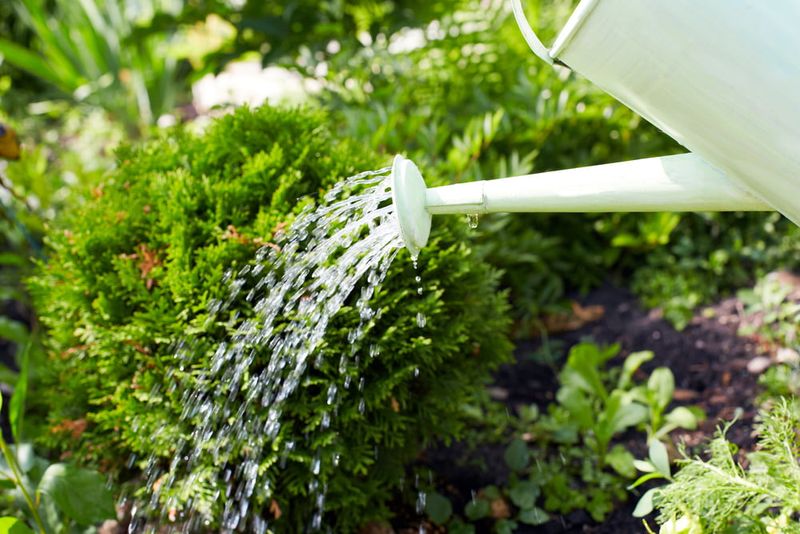
Recovery is a slow job, and your plants will appreciate a calm helper. Think of the weeks after a freeze as a gentle rest period rather than a rescue mission.
Water deeply when the soil feels dry an inch or two down. Damaged plants have fewer leaves, so they use less water than usual.
Soggy soil can lead to root rot, which is the last thing a stressed plant needs.
Hold off on fertilizer until you see steady new growth. Feeding too early can push weak, leggy shoots.
Once leaves are expanding, a light dose of balanced, slow-release fertilizer is plenty.
Refresh mulch to about two or three inches deep, keeping it a few inches away from stems. Mulch holds moisture and evens out soil temperatures.
A soil test through Virginia Cooperative Extension can show what your beds truly need.
Finally, take notes on what struggled and what shrugged off the cold. Plants rated for your hardiness zone, roughly 6a in the mountains to 8a near the coast, usually handle surprises better.
Native shrubs like inkberry, Virginia sweetspire, and oakleaf hydrangea are tough, lovely choices.
Every freeze teaches you something about your own little patch of ground.