Do These Things The Moment Your Texas Tomatoes Start Flowering
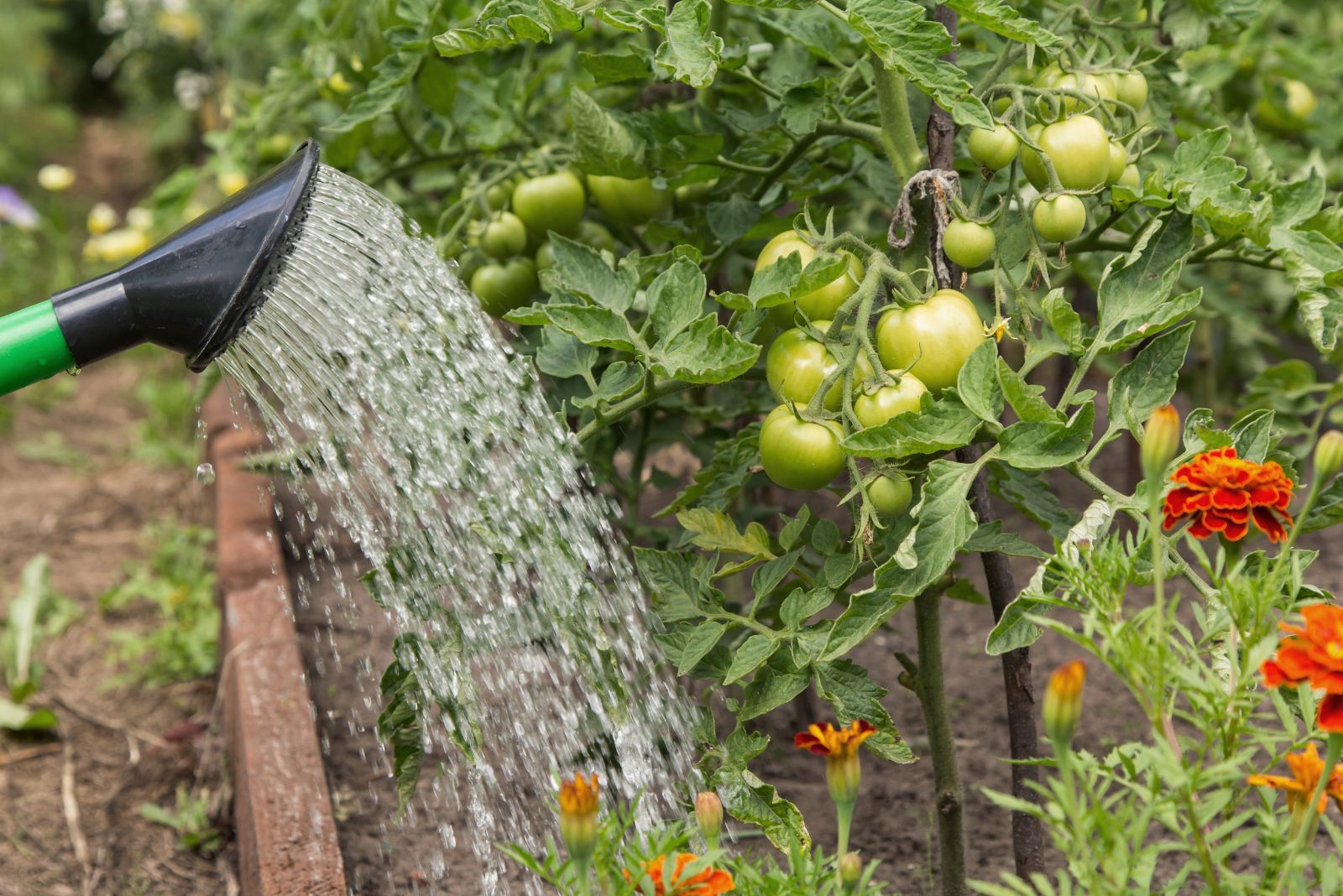
The moment your Texas tomato plants start showing flowers is one of the most critical points in the entire growing season, and it goes by faster than most gardeners expect.
That first flush of flowers represents the difference between a productive plant and one that sets little fruit, drops blooms early, or struggles through the summer without delivering much.
Texas growing conditions put tomatoes under a unique kind of pressure, with heat that builds quickly and a narrow window between the plant being ready to fruit and temperatures climbing too high for pollination to work properly.
What you do right now, in terms of watering, feeding, and a few targeted adjustments, can significantly extend that window and improve how much fruit actually sets.
Most of these steps are straightforward, but the timing matters more than almost anything else when your tomatoes are in this stage.
1. Switch To A Tomato Fertilizer Lower In Nitrogen
Most gardeners feed their tomatoes heavily during the early growth stage, and that makes sense. But once those flowers appear, the game completely changes.
Nitrogen is great for building leaves and stems, but too much of it during flowering pushes your plant to keep growing green instead of making fruit.
Think of it like this: your plant has a limited amount of energy. If it is busy growing new leaves, it is not putting that energy into setting fruit.
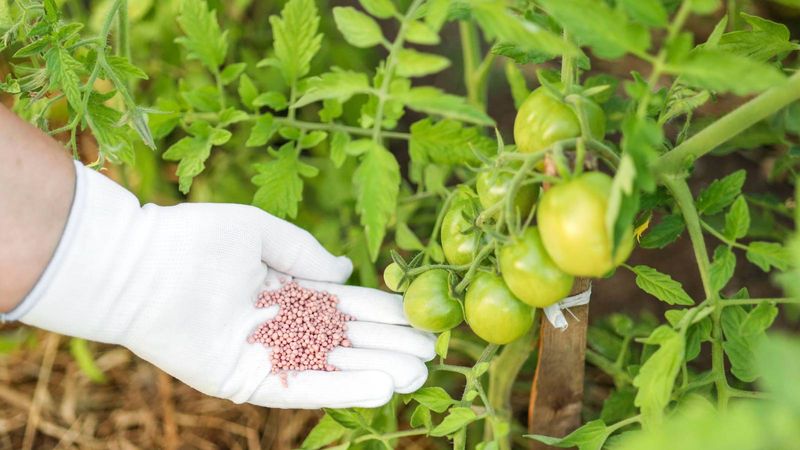
Switching to a fertilizer with a lower nitrogen number and a higher phosphorus and potassium ratio tells the plant it is time to focus on production.
Look for fertilizers labeled specifically for tomatoes or fruiting vegetables. These usually have numbers like 5-10-10 or 3-4-6 on the bag, meaning less nitrogen and more of the nutrients that help flowers turn into tomatoes.
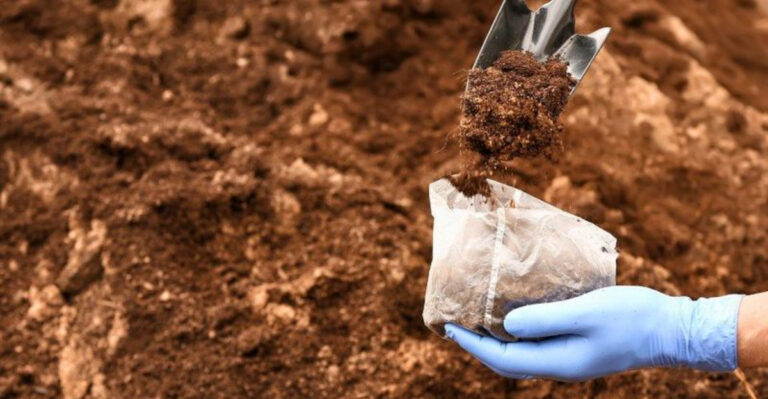
Organic options like bone meal and kelp meal work really well too. Apply your new fertilizer right after you spot the first flower cluster. Do not wait until you have a full set of blooms.
Getting ahead of the transition gives your plant time to adjust its energy focus before pollination begins.
Also, avoid over-fertilizing in general. More is not always better with tomatoes, especially in Texas heat.
Too much of any fertilizer can stress your plants or even burn the roots. Follow the label directions closely and keep a consistent feeding schedule every two to three weeks through the fruiting season.
2. Water Deeply And Consistently
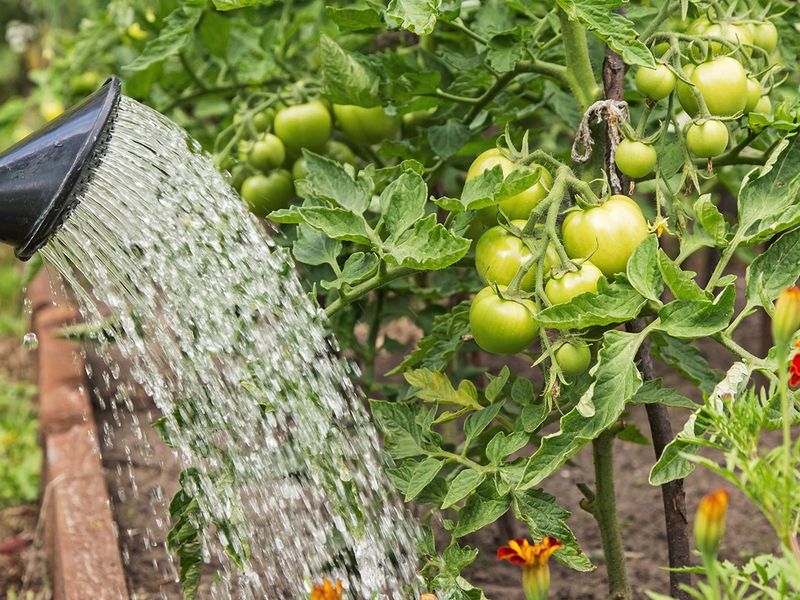
Watering your tomatoes might seem simple, but the way you water during flowering can make or break your harvest. Inconsistent moisture is one of the top reasons tomato blossoms drop before they ever become fruit.
When the soil goes from bone dry to soaking wet and back again, your plant gets stressed and drops its flowers as a survival response.
In Texas, the heat speeds up soil drying dramatically. A plant that was fine yesterday can be struggling by midday today.
That is why deep, consistent watering is so important once flowering starts. Shallow watering only wets the top few inches of soil, which means roots stay near the surface and dry out faster.
Your Texas Garden Changes Every Week. Your Plan Should Too.
Gardening in Texas changes quickly throughout the season. Every Friday you’ll receive a simple weekly plan showing exactly what to plant, prune, fertilize, harvest, and protect so you never miss the right timing.
Water deeply at least two to three times per week, depending on your soil type and the current temperatures. Sandy soils dry out faster and may need more frequent watering. Clay soils hold moisture longer but can crack and push roots if they dry out completely.
A soaker hose or drip irrigation system is the best tool for this job. These systems deliver water slowly right to the root zone, reducing evaporation and keeping moisture more even throughout the day.
They also keep water off the leaves and flowers, which helps prevent fungal issues. Try to water in the early morning so the soil stays moist through the hottest part of the day.
Watering at night can lead to fungal problems in humid conditions. Stick your finger two inches into the soil before watering to check if it truly needs it.
3. Mulch Around The Plants Immediately
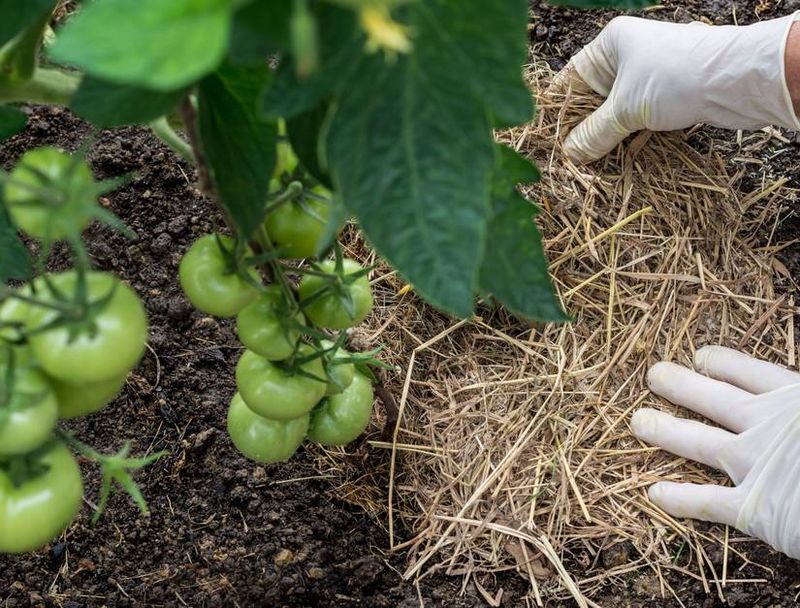
If you have not already put mulch around your tomato plants, now is the time to do it without delay. Texas summers are no joke, and soil temperatures can climb high enough to stress roots and throw off the entire fruiting process.
A good layer of mulch acts like a protective blanket that keeps the ground cooler and holds moisture in the soil longer.
Straw is one of the most popular mulch choices for tomatoes because it is light, easy to spread, and breaks down slowly. Wood chips and shredded leaves also work well.
Aim for a layer that is about three to four inches thick. Make sure you leave a small gap right around the stem so moisture does not sit directly against it, which can cause rot.
Beyond temperature control, mulch also plays a huge role in preventing soil-borne diseases. When it rains or when you water, soil splashes up onto the lower leaves and stems.
That splash can carry fungal spores and bacteria right onto your plant. A thick mulch barrier stops most of that splash from happening.
Mulch also suppresses weeds, which compete with your tomatoes for water and nutrients. Fewer weeds mean your plant gets more of what it needs, which directly supports better fruit production during the critical flowering period.
Reapply mulch as needed throughout the season. It breaks down over time, and a thin layer loses its effectiveness quickly in Texas heat.
Keeping it topped up is one of the easiest and most impactful things you can do for a strong tomato harvest.
4. Support Heavy Branches Early
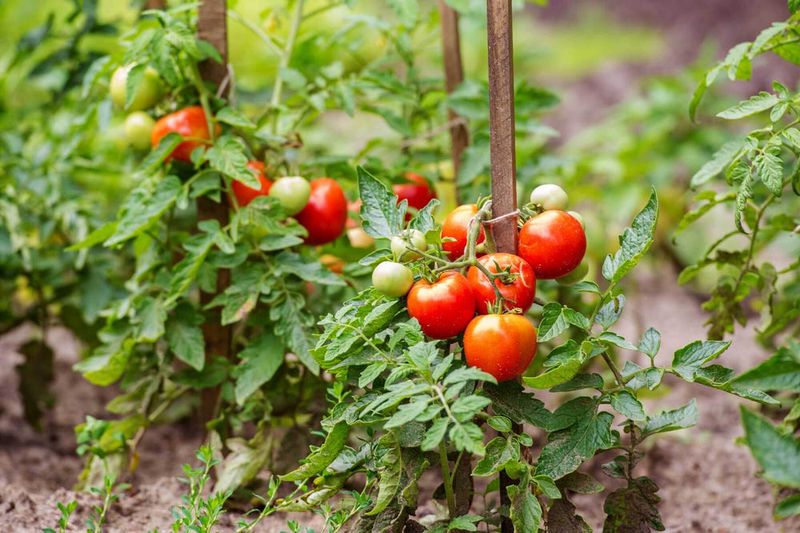
Here is something a lot of gardeners learn the hard way: waiting too long to add support to tomato plants can lead to broken branches and lost fruit. Once flowers start appearing, fruit is not far behind.
And fruit is heavy. A branch loaded with green tomatoes that is not properly supported can snap right off, taking weeks of growth with it.
Tomato cages are the most common support tool, and they work well if they are sturdy enough. Flimsy wire cages from discount stores often bend under the weight of a mature Texas tomato plant.
Heavy-duty cages made from thick wire or rebar are a much better investment, especially for indeterminate varieties that keep growing and producing all season long.
Stakes are another great option, especially for single-stem or pruned plants. Drive them at least a foot into the ground so they stay stable even in wind or after heavy watering.
Tie the main stem and heavy branches to the stake using soft garden ties, strips of fabric, or even old pantyhose. Avoid anything that cuts into the stem.
Walk through your garden right now and check every plant. Look for branches that are bending or leaning under the weight of new growth.
Add support where it is needed before the fruit starts to form. It is much easier to do this now than after the plant is fully loaded.
Properly supported plants also have better airflow around the leaves, which reduces the chance of fungal disease. Good structure throughout the season means healthier plants and a much bigger harvest in the end.
5. Watch Closely For Hornworms And Aphids
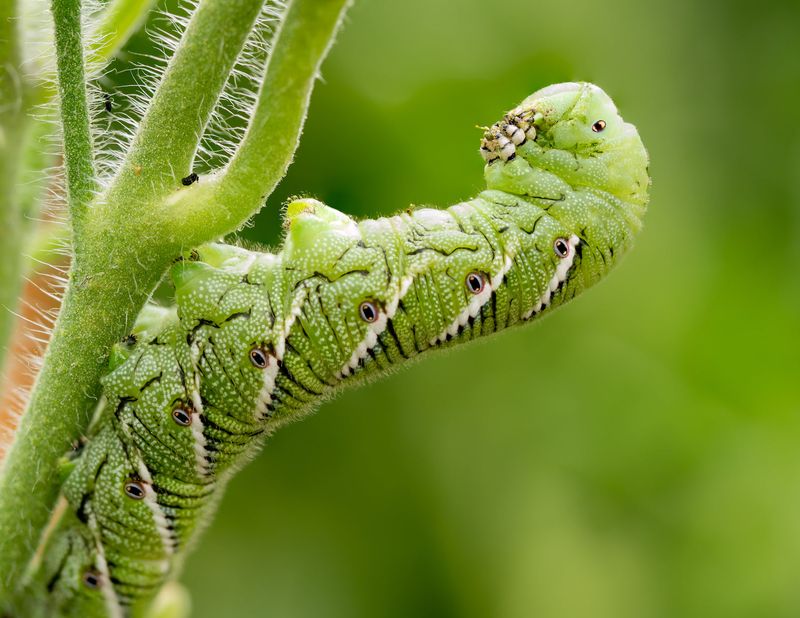
Pest pressure on tomatoes does not stay the same all season. Once your plants start flowering and producing fruit, the activity picks up fast.
Two of the biggest troublemakers in Texas gardens are tomato hornworms and aphids, and both can do serious damage in a very short amount of time if you are not paying attention.
Tomato hornworms are masters of camouflage. They are bright green and blend in almost perfectly with the stems and leaves of your plant.
A single hornworm can strip a branch bare overnight. Check the undersides of leaves and look for dark droppings on the soil below the plant as a clue that one is hiding nearby. Once you spot it, pick it off by hand and drop it into a bucket of soapy water.
Aphids are tiny but come in huge numbers. They cluster on new growth and flower buds, sucking out plant juices and leaving behind a sticky residue called honeydew.
That residue attracts other insects and can lead to a black sooty mold on your leaves. A strong spray of plain water from a hose is often enough to knock them off, but you may need to repeat it every few days.
Check your plants at least every other day during the flowering period. Early detection is your best tool against pests. Look at the tops and bottoms of leaves, along the stems, and around the flower clusters.
Encouraging beneficial insects like ladybugs and parasitic wasps also helps keep pest populations in check naturally without any extra work on your part.
6. Avoid Spraying Flowers During Peak Heat
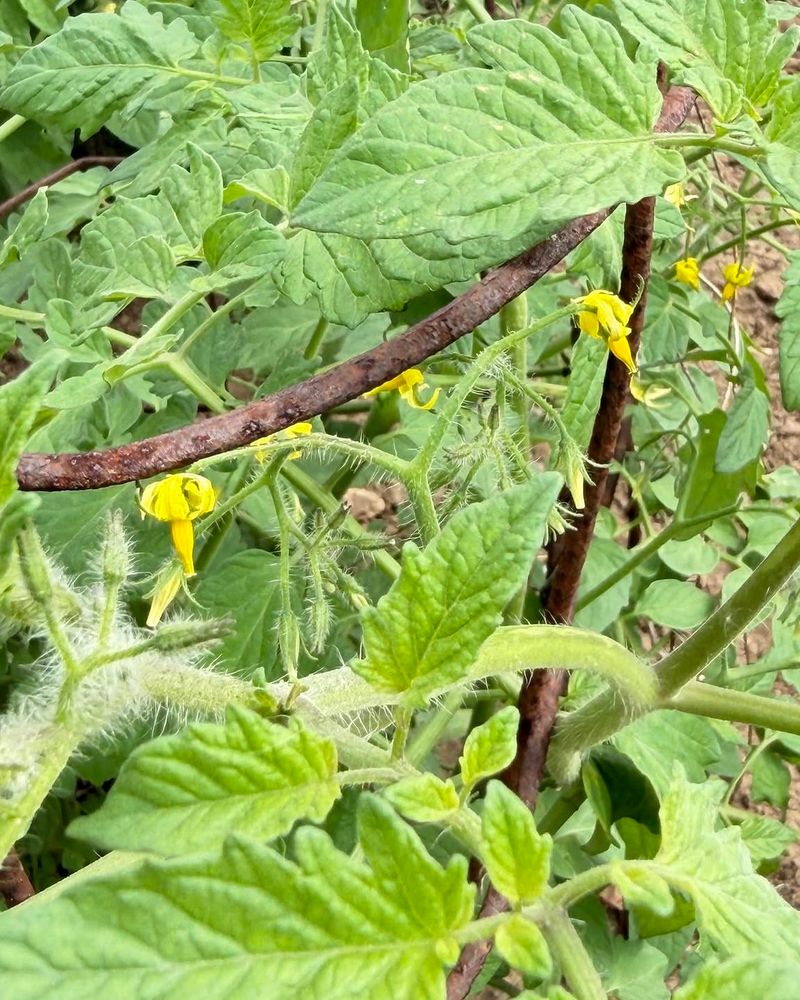
Spraying your tomato plants while they are in full bloom sounds harmless, but timing and technique actually matter a lot. Flowers are fragile, and the pollen inside them is even more sensitive.
When you spray anything directly onto open blooms during the hottest part of the day, you can accidentally wash away pollen or cause the flowers to drop before they ever get pollinated.
Texas afternoons can easily reach temperatures above 95 degrees Fahrenheit during tomato season. Spraying water or any kind of solution onto leaves and flowers at that time causes rapid evaporation, which can scorch the tissue and stress the plant.
Even plain water can act like a magnifying glass under intense sun and cause small burns on delicate flower petals.
If you need to apply any treatment, whether it is an insecticidal soap, neem oil, or a fungicide, do it in the early morning or in the evening after the sun has gone down.
Morning is usually the better choice because it allows the spray to dry before nightfall, which reduces the chance of fungal issues.
Always aim sprays at the leaves and stems rather than the flower clusters themselves. Tilt the nozzle to reach the undersides of leaves where pests like to hide.
You can protect the flowers by shielding them with your free hand while you spray nearby foliage.
Pollination is the single most important event during the flowering stage. Protecting that process by being thoughtful about when and how you spray gives your tomatoes the best possible chance of setting a full, healthy crop of fruit this season.