Do This To Your Florida Crape Myrtle In November Instead Of Pruning It
Put down the saw. Your Florida crape myrtle doesn’t need a haircut, and the pros know a better way to spend November.
Every winter, entire neighborhoods go through the same ritual. Branches get chopped to stubs, and the trees stand there looking like fists raised at the sky.
It’s so common that people assume it must be right. It isn’t, and the tree pays for it for years.
A few simple chores deserve your attention instead, and they take far less effort than hauling out loppers. Each one helps the tree bloom bigger next summer, with none of the damage a heavy cut leaves behind.
Some of the jobs fit in ten minutes. A couple need a weekend afternoon and a bit of planning.
Walk out to the tree with a notebook, not a saw. The to-do list is shorter than you think.
1. Inspect The Bark Instead Of Reaching For The Pruners
Picture a detective with a magnifying glass, only the crime scene is your favorite backyard tree. In November, that careful look matters more than any fresh haircut you could give it.
Florida gardeners first spotted a tricky bark pest in 2021. It has been spreading across yards and neighborhoods since then, often without anyone noticing at first.
Catching trouble early makes a huge difference. A small problem on one branch is easy to handle, while a tree covered from top to bottom takes much more work.
So set the pruners aside for now. Walk slowly around the tree and study every woody part you can reach, from the base of the trunk up to the thinner stems.
Good light helps a lot here. Late morning sun shows texture and color changes far better than the dim light of early evening.
Bring a small notebook or your phone. Snap photos of anything strange so you can compare them later or show them to your local extension office.
Pay attention to smell and touch too. Sticky spots or a sugary feel on the bark can hint that tiny sap-feeders are busy nearby.
This quick check takes about ten minutes. It also sets you up for every smart step that follows in this guide.
2. Black Sooty Mold Is Often The First Warning Sign
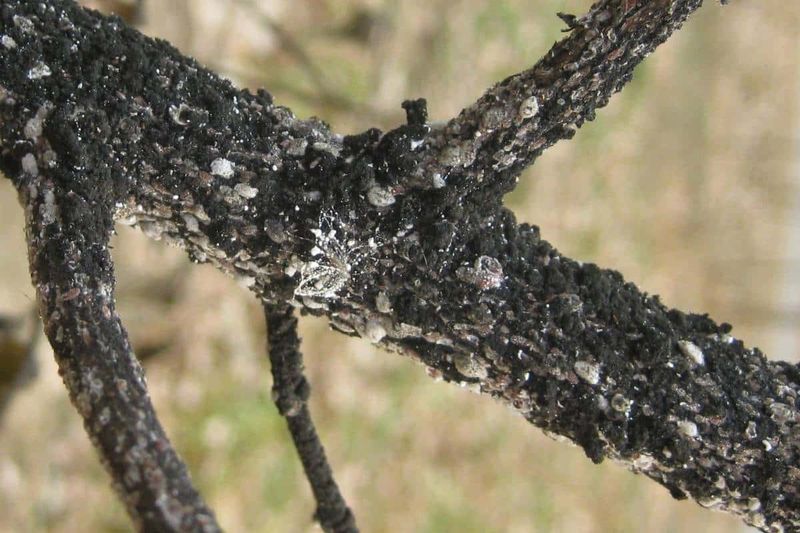
Ever notice a tree that looks like someone rubbed charcoal all over it? That dark, dusty coating has a name, and it is called sooty mold.
Here is the funny part. The mold is not the main villain, it is more like the messy sidekick that shows up after the real troublemaker.
Sap-sucking insects drink from the tree and leave behind a sweet, sticky liquid called honeydew. Sooty mold loves that sugar and grows right on top of it.
Aphids can cause this mess. On crape myrtles in Florida, though, bark scale is a very common reason for the black film.
By itself, the mold mostly hurts looks. Your lovely cinnamon-colored bark turns grimy, and nearby cars, benches, or patio furniture may get sticky too.
Your Florida Garden Changes Every Week. Your Plan Should Too.
Gardening in Florida changes quickly throughout the season. Every Friday you’ll receive a simple weekly plan showing exactly what to plant, prune, fertilize, harvest, and protect so you never miss the right timing.
A thick layer can cause bigger issues. It may block some sunlight from reaching the leaves, which can slow the tree’s growth a bit.
Think of the black coating as a smoke alarm. The beeping is annoying, but it points you toward a hidden problem that needs your attention.
So when you spot that sooty look, do not just shrug. Take it as a friendly nudge to look closer for the insects hiding underneath.
3. Look For White Or Gray Felt-Like Patches
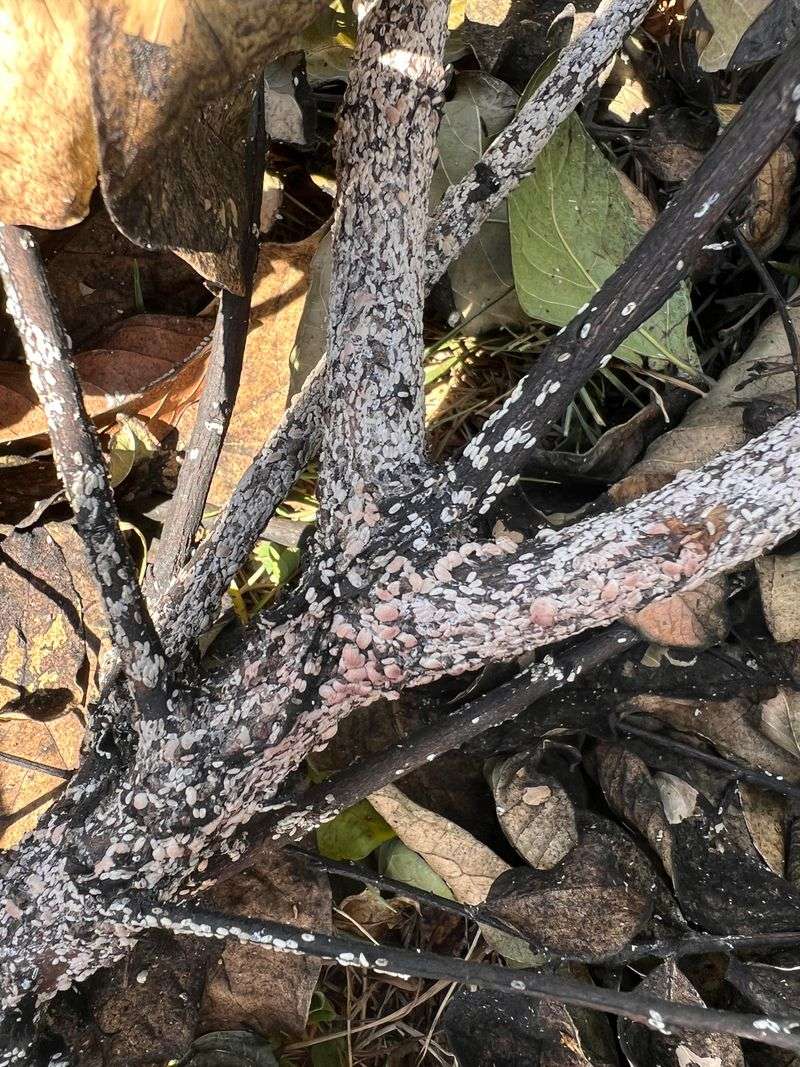
Some pests are loud and obvious. Crape myrtle bark scale is the quiet type that looks like tiny bits of lint stuck to the branches.
Look closely for small white or gray crusty spots. They have a soft, felt-like texture, almost like little patches of wool pressed into the bark.
Those fuzzy bits are not random fluff. They are waxy coverings made by adult female scales, and many of them hold egg sacs underneath.
A light infestation may show only a few scattered dots. A heavy one can coat whole branches and trunks so they look frosted on a warm day.
It is easy to confuse this pest with powdery mildew. Mildew is a fungus that mostly forms a grayish-white film on young leaves and new shoots.
Here is a handy trick to tell them apart. Scale sits on woody bark in raised crusty bumps, while mildew looks flat and dusty on soft green growth.
Run a fingertip gently over a suspicious spot. If it feels bumpy and waxy rather than powdery, you are probably looking at scale.
Fun fact: this insect was first found in the United States in Texas in 2004. It has been hitching rides across the South ever since.
4. Crush One And Watch For Pink Ooze
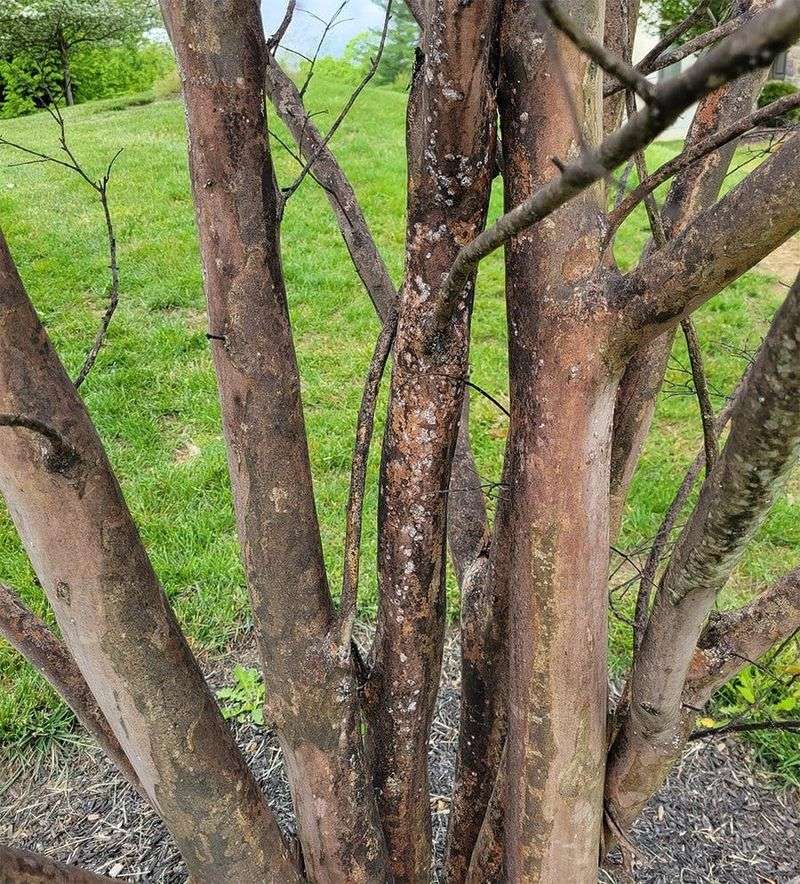
Okay, this part is a little gross, but kids tend to love it. You get to play scientist with nothing more than your fingernail.
Pick one of those white or gray felt patches. Press it gently with a fingernail, a toothpick, or a cotton swab if you would rather keep your hands clean.
Now watch closely. If a reddish-pink liquid oozes out, you have found a live crape myrtle bark scale.
That pink color is the giveaway. Few other look-alikes on crape myrtle bark produce this bright, berry-like smear.
If the patch is dry and crumbly with no color, the insect may be gone. Empty shells can stick around on bark for quite a while.
Test a few spots, not just one. Checking several patches on different branches gives you a better idea of how many live insects are present.
Write down what you find. Knowing whether the scale is active helps you and any local expert decide on the next steps.
Wash your hands or wipe your tools afterward. You do not want to carry tiny crawlers from this tree to other shrubs around your yard.
5. Check Branch Crotches And Old Pruning Cuts
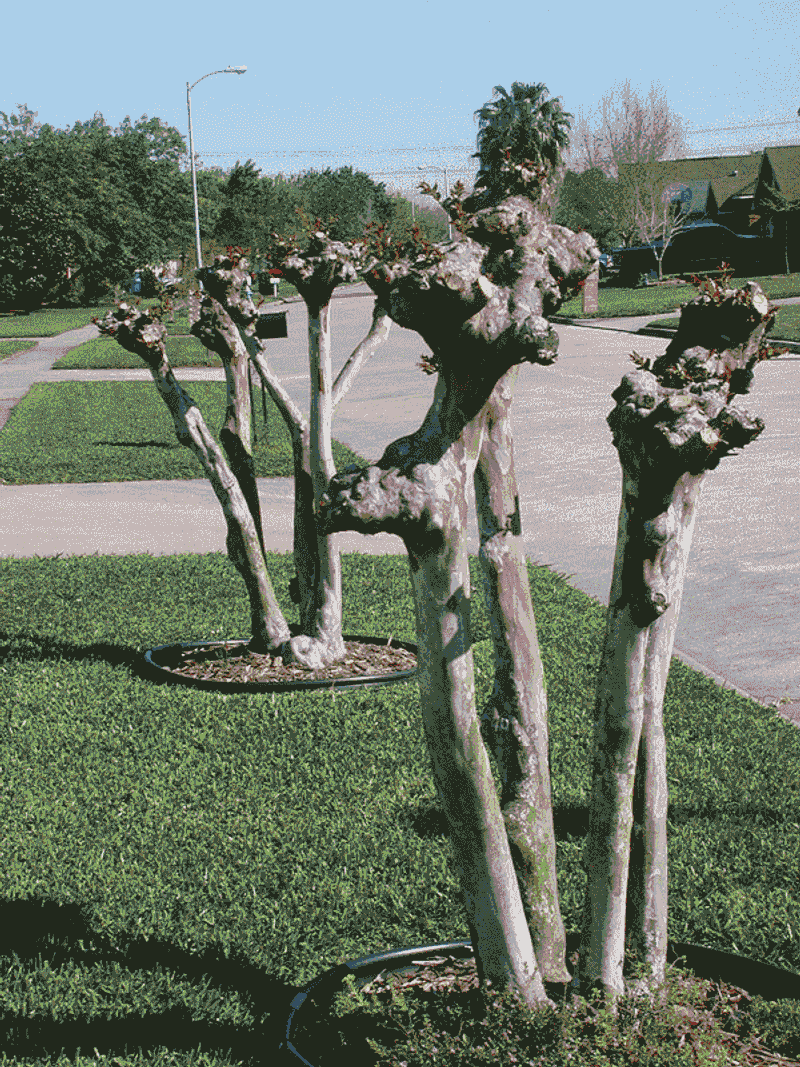
Bugs, like people, love a cozy hiding spot. Crape myrtle bark scale picks its favorite corners on the tree and settles in for the long haul.
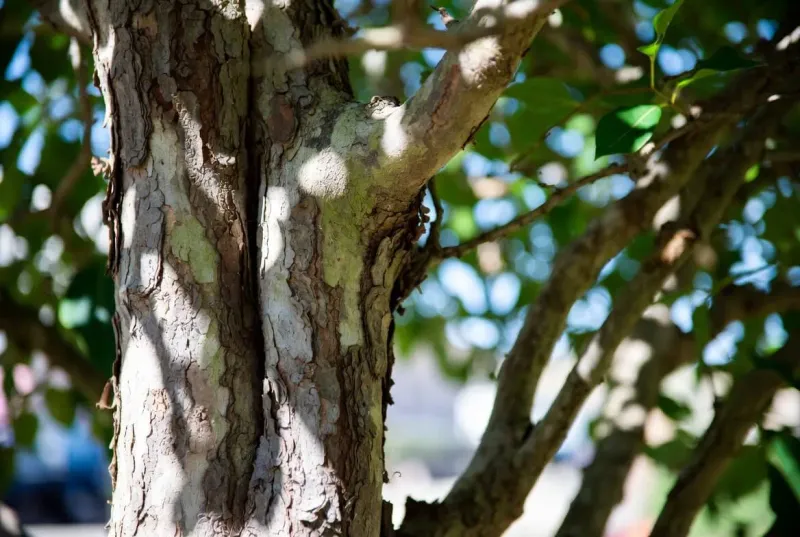
Start with the branch crotches. Those are the V-shaped spots where two limbs split apart, and they make snug little shelters.
Next, look at old pruning cuts. Knobby stubs and rough wounds give the insects plenty of cracks to tuck into and feed from.
Bark notches and crevices are popular too. Anywhere the surface is rough or uneven deserves a second, slower look.
Here is a sneaky twist. Those famous knuckle-shaped stubs from yearly heavy cutting, sometimes called crape murder, can become prime real estate for scale.
A flashlight helps even in daytime. Shine it into the deep crotches where shadows hide small white crusts.
Crouch down and check the lower trunk as well. Scale can gather near the base, close to where soil and mulch meet the bark.
Mark the busiest areas with a bit of garden twine. Then you will know right where to focus when it is time to clean the tree.
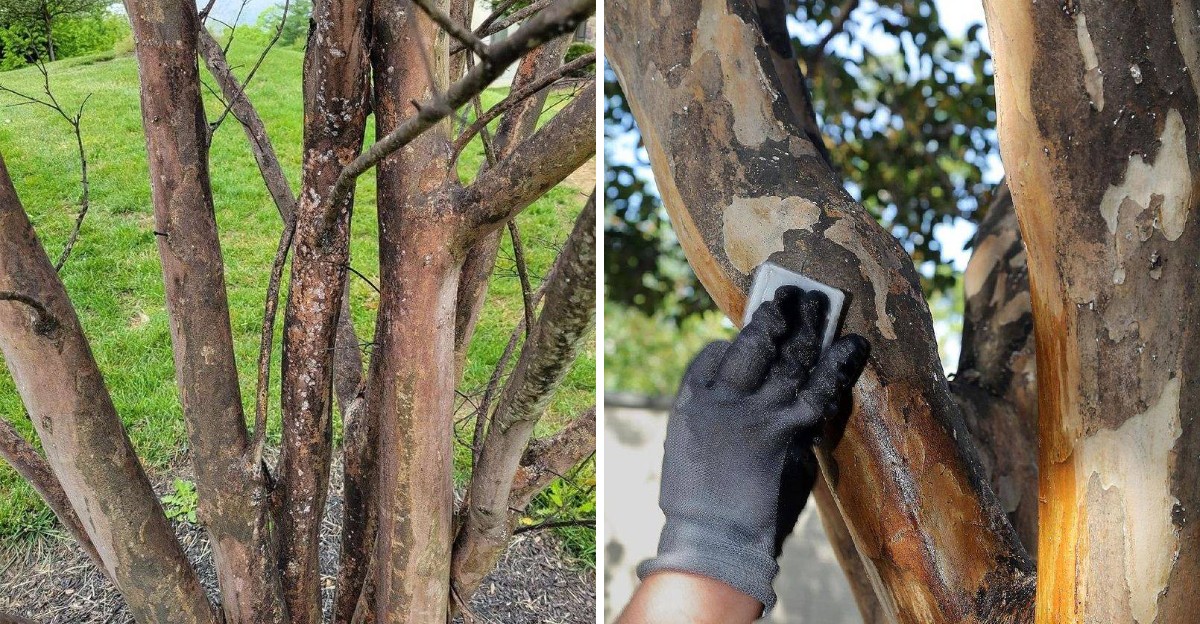
6. Scrub The Trunk With A Soft Brush And Mild Soapy Water
Remember giving the family dog a bath? Cleaning your crape myrtle is a lot like that, only the tree holds still and does not shake water on you.
Fill a bucket with one gallon of water. Stir in about two and a half tablespoons of plain liquid dish soap.
Grab a soft-bristle brush. An old dish brush, a car wash brush, or a long-handled deck brush all work nicely.
Dip the brush and scrub the trunk and branches using gentle, steady strokes. You will see black mold and white crusts start to wipe away.
Go easy on the bark. Crape myrtles have thin, peeling bark, so scrubbing too hard can scrape the living layer beneath it.
Skip the pressure washer, even if it looks faster. That strong blast can tear bark and leave open wounds on the tree.
Work from top to bottom so dirty water runs down instead of onto cleaned spots. Rinse with a garden hose on a soft setting when you finish.
The best part is that scrubbing can be done at any time of year. A cool, breezy November afternoon just makes the job more pleasant.
7. Scrubbing Makes Later Treatments Work Better
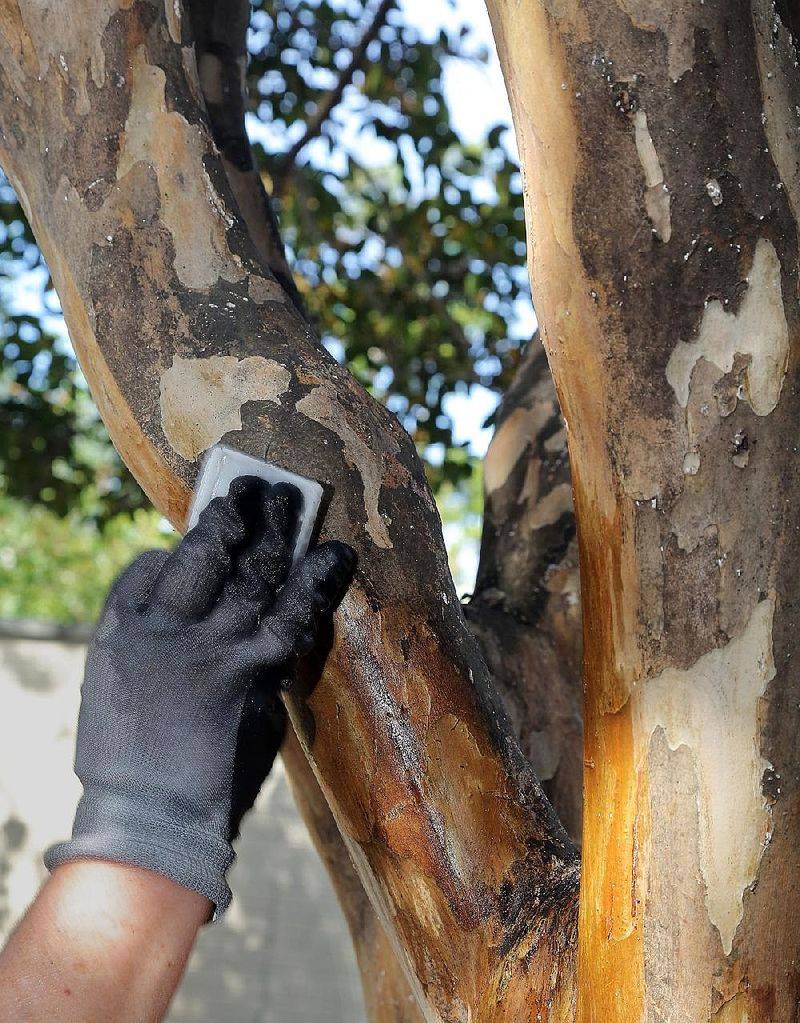
Painting a dirty wall rarely turns out well. The same idea applies to your tree, since a clean surface lets everything else do its job.
Scrubbing knocks off many adult scales and their egg masses. Fewer insects now means fewer babies hatching in spring.
It also clears away that black sooty layer. Your tree instantly looks brighter, and its pretty bark colors show through again.
Here is the bonus. Horticultural oils and other sprays reach the remaining pests more easily when they are not blocked by crusts and grime.
Systemic products, which the tree absorbs through its roots, can also work better. With fewer insects to battle, each treatment goes further.
Think of scrubbing as clearing the field before the big game. The players still matter, but a clean field helps them perform their best.
Read every product label before you spray or apply anything. Some treatments should be used only at certain times or temperatures.
Your local UF/IFAS extension office can guide you too. Those experts know what works best in your part of Florida and can answer tricky questions.
8. Rake Up Leaf Debris Around The Base
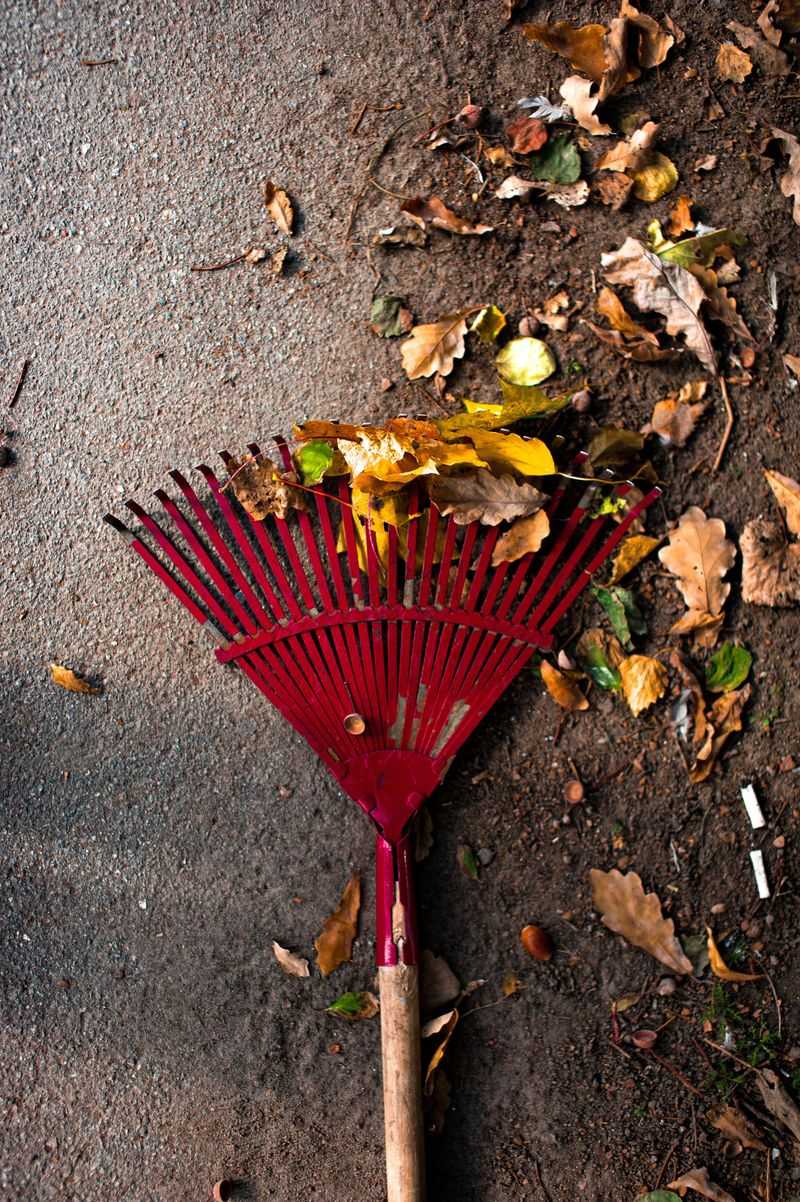
Raking leaves might sound like the most boring chore ever. In this case, though, your rake becomes a secret weapon against next spring’s bug troubles.
Crape myrtle bark scale can spend the cooler months hiding near the ground. Eggs may tuck into leaf litter and mulch right around the trunk.
When warm weather returns, those eggs hatch into tiny crawlers. They climb back up the tree and start a fresh round of trouble.
Clearing that debris breaks the cycle. Fewer hiding spots in winter can mean fewer pests waiting in spring.
Rake a wide circle around the base, about as far out as the branches reach. Pull old mulch back from the trunk so a few inches of bark stay bare.
Bag the leaves instead of tossing them on your compost pile. Home compost may not get hot enough to break down insect eggs.
Add fresh mulch later if you like. Just keep it a few inches away from the trunk to discourage pests and rot.
Turn it into a family job with a little reward at the end. Hot cocoa tastes even better after a yard project done right.
9. Save The Pruning For Late Winter
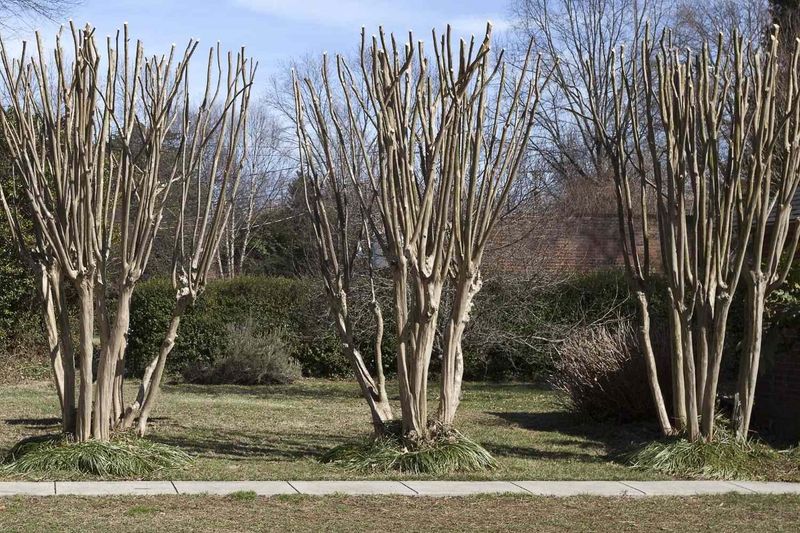
Patience pays off in the garden, and pruning is a perfect example. Your tree will thank you for waiting just a couple of months.
In Florida, the sweet spot is late winter. Most experts point to January through early March, right before new growth begins.
During this resting period, the leaves are gone. You can see every branch clearly and make smart, clean cuts.
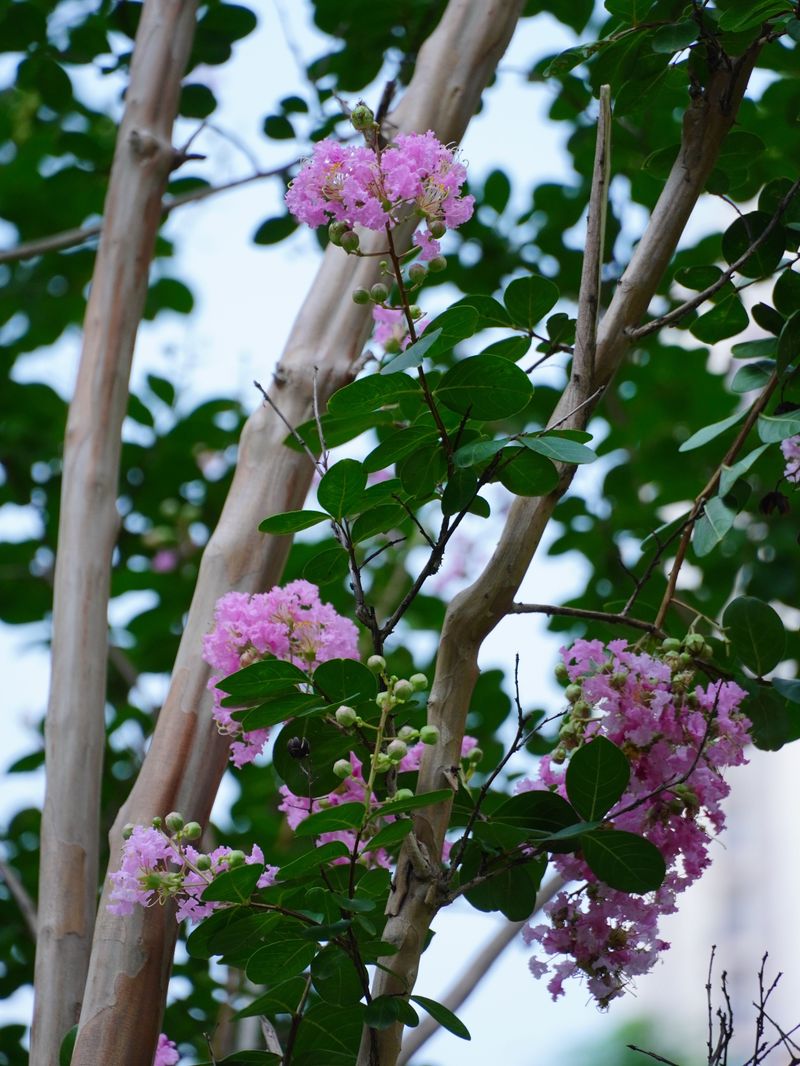
Crape myrtles bloom on new wood. Trimming in late winter pushes fresh shoots that will carry plenty of summer flowers.
Cutting in fall can backfire. It may wake up tender new growth that struggles when a surprise cold snap rolls through.
The current branches also act like a winter jacket. They help shield the inner parts of the tree from chilly nights.
When pruning time arrives, go light. Remove crossing limbs, weak twigs, and suckers instead of chopping the whole canopy down.
Clean your tools before and after each tree. That small habit helps stop scale from hitching a ride to your other plants.