Arizona Gardeners Who Sow These Wildflower Seeds in November Get the Best Spring Blooms
In the low desert, the best spring flowers are planted when most people are thinking about Thanksgiving, not gardening. November brings cool nights, softer sun, and the first winter rains, which is exactly what native wildflower seeds need to wake up and grow strong roots.
Sow them now, and by March your yard can be buzzing with bees, butterflies, and hummingbirds. Here are ten tough, water-wise wildflowers that turn a plain Phoenix or Tucson yard into living habitat.
1. Mexican Gold Poppy
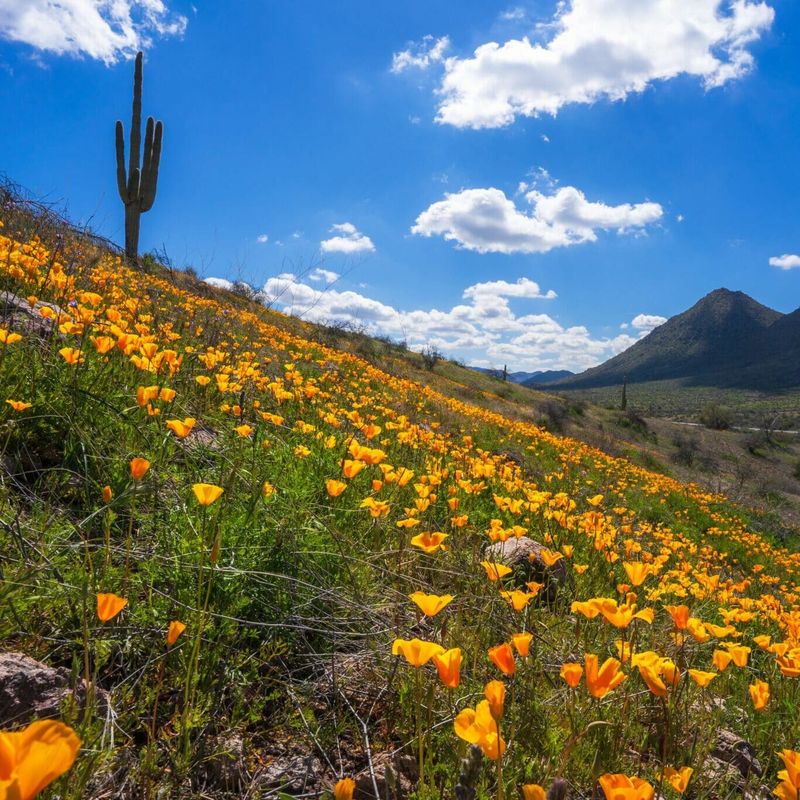
Picture Picacho Peak in a wet year, with hillsides glowing orange like someone spilled sunshine across the rocks. You can borrow a little of that magic for your own yard by scattering Mexican gold poppy seeds in November.
Eschscholzia californica mexicana is an annual that sprouts with the winter rains and races to bloom from late February through April. It handles alkaline soil without complaint, and once the seedlings are up, it needs very little extra water.
In a dry winter, a deep soaking every week or two keeps them going.
For best results, rake the soil lightly, toss the tiny seeds on top, and press them in with your foot or the back of a rake. Skip burying them deep, since they need contact with the soil more than a thick blanket.
The payoff goes beyond color. Native bees and early butterflies visit the cup-shaped flowers, giving pollinators a food source when little else is blooming.
After the show, let the plants dry and drop seed, and they may return on their own next fall.
Fun fact: the petals close up at night and on cloudy days, then open again when the sun returns.
2. Desert Marigold
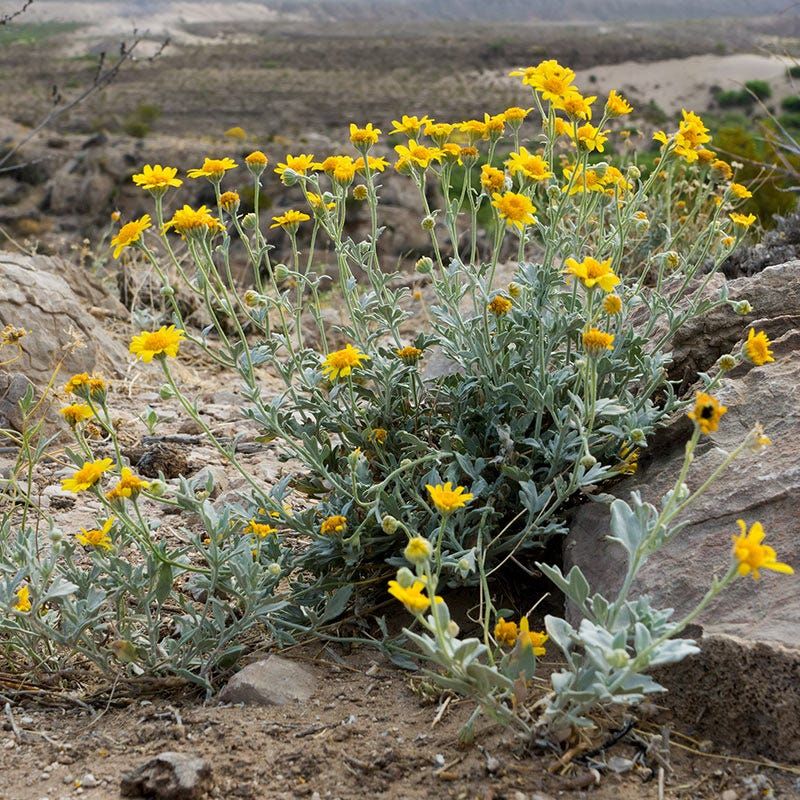
Some plants show up for a few weeks and leave. Desert marigold acts more like a loyal neighbor who waves at you nearly every month of the year.
Baileya multiradiata is a short-lived perennial with woolly silver leaves and lemon-yellow daisies held on slim stems. Seeds sown in November settle in over winter, then start blooming in spring and often keep going through fall with only occasional water.
Its fuzzy leaves reflect harsh sun, which is a big reason it shrugs off 110-degree afternoons.
Plant it where drainage is good, such as along a gravel path or near boulders. Heavy, soggy soil is the one thing it really dislikes, so go easy with the hose once it is established.
Many desert gardeners like it for more than looks. Native bees and small butterflies forage on the blooms, and some gardeners find that a diverse planting like this may help keep aphid populations in check by inviting the beneficial insects that eat them.
Desert marigold also reseeds politely, filling bare spots in a way that feels natural. Within a couple of seasons, you may have a soft golden drift that asks for almost nothing in return.
3. Globemallow
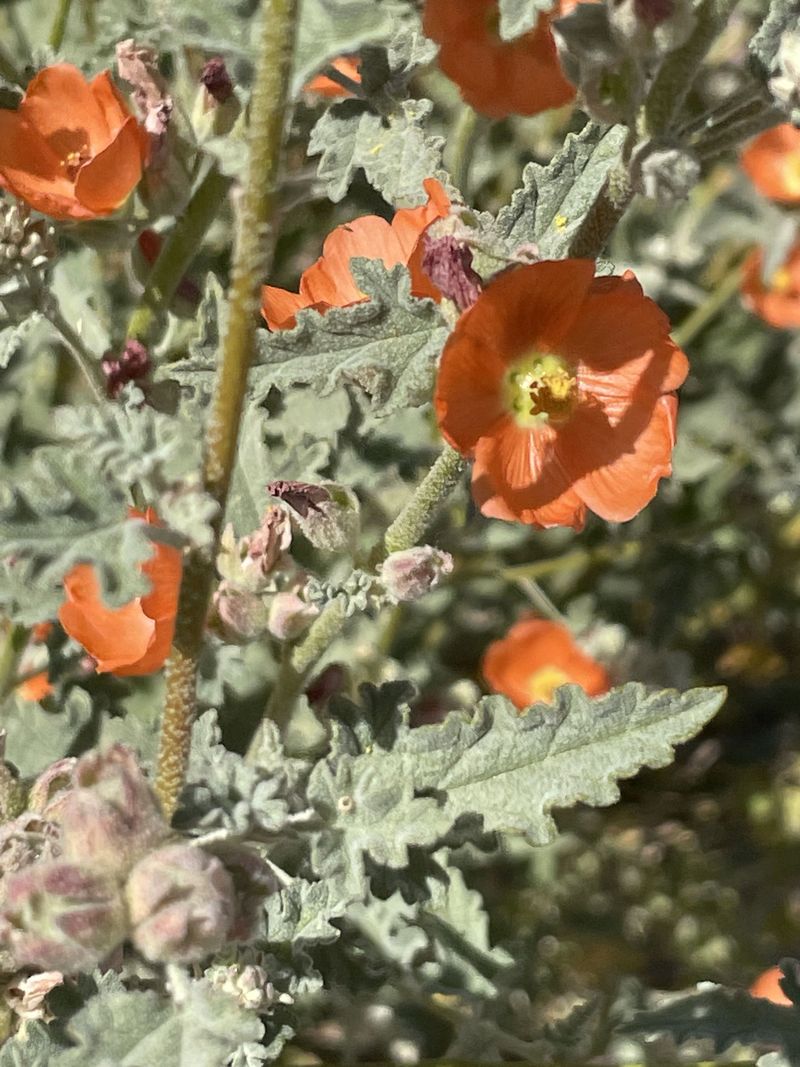
Ask a longtime Tucson gardener for a plant that never seems to quit, and globemallow will probably come up fast. It is the toughest bloomer on this list.
Your Arizona Garden Changes Every Week. Your Plan Should Too.
Gardening in Arizona changes quickly throughout the season. Every Friday you’ll receive a simple weekly plan showing exactly what to plant, prune, fertilize, harvest, and protect so you never miss the right timing.
Sphaeralcea ambigua grows into a mounded shrub covered in apricot-orange cups, though you can also find pink, lavender, red, and white forms. November-sown seed builds roots during the cool season, and established plants can flower in spring, again in fall, and even during mild winters.
Germination improves if you scuff the hard seed coat a bit with sandpaper or soak seeds overnight before sowing. After that, full sun and lean soil are all it wants.
Rich soil and frequent watering tend to make it floppy.
Wildlife love it. Specialist native bees called globemallow bees depend on these flowers, and birds pick at the seeds later in the season.
Quail may also tuck into the shelter of larger clumps.
A quick heads-up: the leaves have tiny hairs that can irritate skin, which is why some folks call it sore-eye poppy. Wear gloves when you cut it back in early summer to tidy its shape and encourage fresh growth for fall.
4. Desert Bluebells
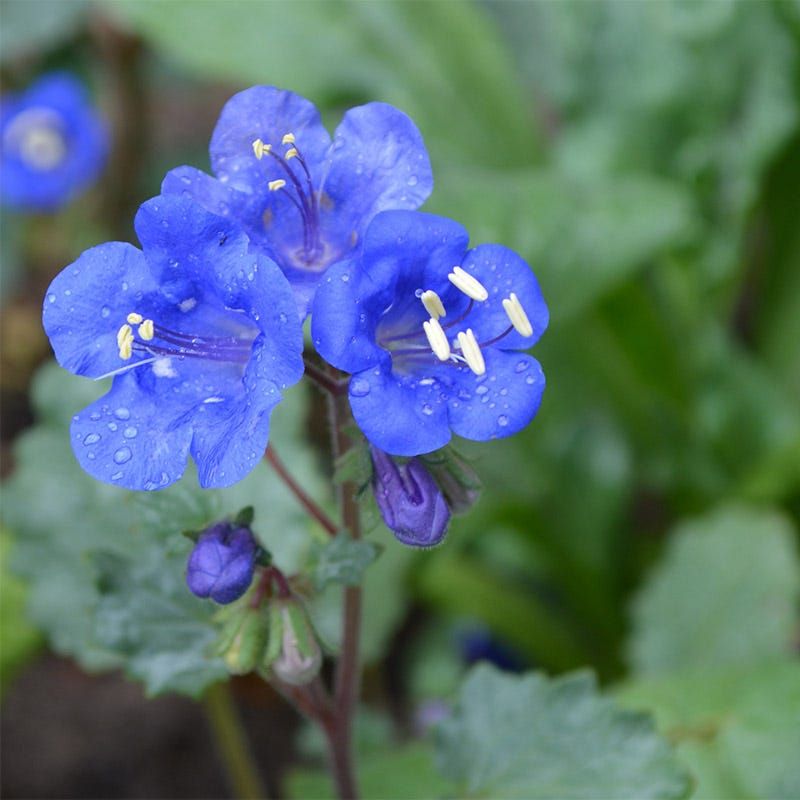
Blue is surprisingly rare in desert gardens. That is exactly why desert bluebells stop people mid-sidewalk when they open in March.
Phacelia campanularia is a low-growing annual with deep gentian-blue bells and rounded, slightly sticky leaves. It belongs to the low desert, so it is right at home with sandy or rocky soil and our hot, bright spring days.
Seeds sown in November sprout with the cool rains and usually flower from late winter into April.
Here is a tip that helps: these seeds germinate better in darkness, so cover them with about an eighth of an inch of soil. Water gently to keep the surface damp until seedlings appear, then back off as they grow.
Bees adore phacelia. In fact, many beekeepers consider the genus one of the best nectar sources around, and native solitary bees visit just as eagerly.
Planting a patch near a vegetable bed may help bring more pollinators to your squash and tomatoes later in spring.
Tuck bluebells in front of poppies for a striking orange-and-blue combo. Some people get a mild rash from the leaves, so a pair of gloves is a smart move when you weed nearby.
5. Parry’s Penstemon
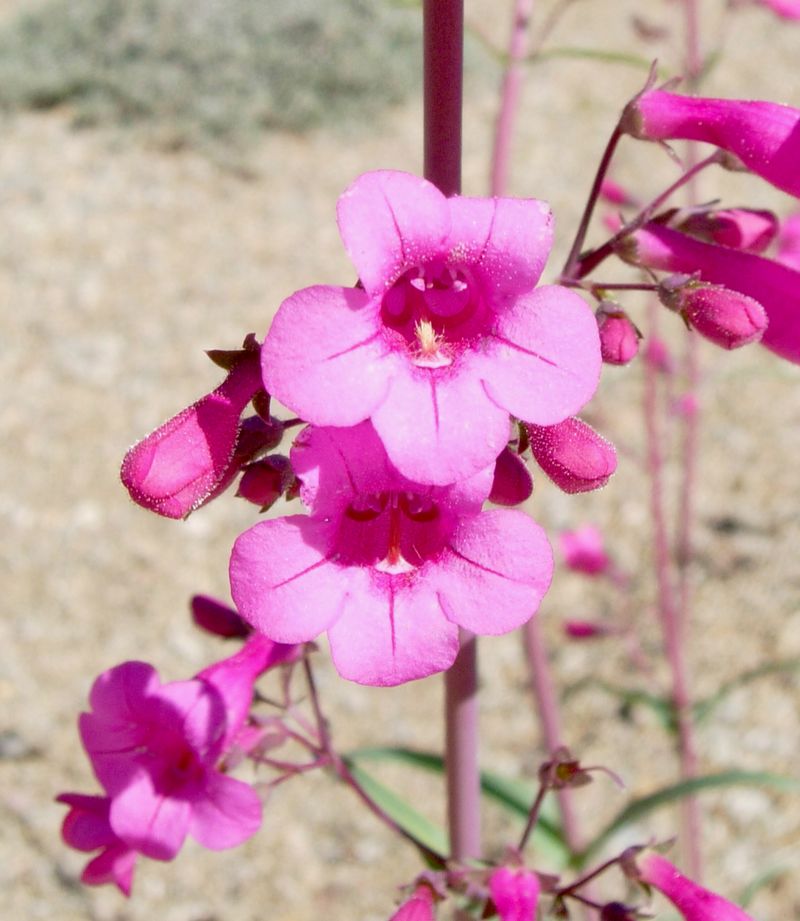
If hummingbirds had a favorite restaurant in the Sonoran Desert, Parry’s penstemon would have a long line out the door every spring.
Penstemon parryi sends up tall stalks packed with tubular rose-pink flowers, usually from late February into April. The shape of those blooms is a perfect fit for a hummingbird’s beak, and you will often spot Anna’s and Costa’s hummingbirds zipping between spikes all day.
November sowing is ideal because the seeds need a stretch of cool, moist weather before they sprout. Scatter them on the surface or barely cover them, and expect a basal rosette of leaves the first season.
Many plants bloom the first spring, while others wait until year two.
Once rooted, it is a true low-water perennial. Give it full sun or light afternoon shade, fast-draining soil, and an occasional deep drink in dry spells.
Overwatering is the most common mistake.
After flowering, leave a few stalks standing to drop seed. Volunteers will pop up in gravel and along edges, building a self-sustaining colony over time.
A cluster near a window gives you a front-row seat to the hummingbird traffic.
6. Arroyo Lupine
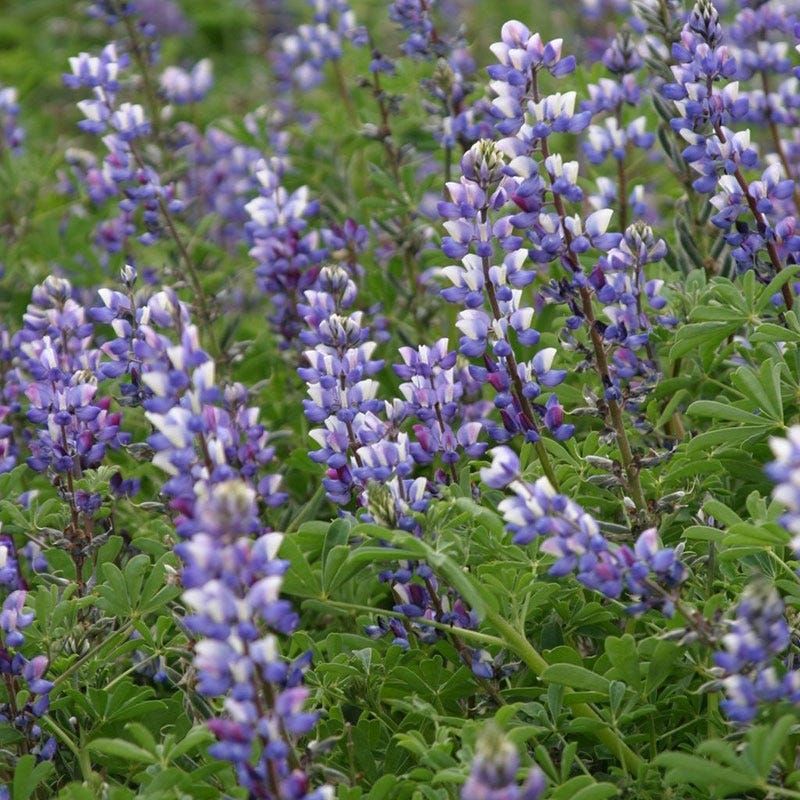
Lupines are the hard-working soil builders of the wildflower world. While they show off purple spikes above, they quietly improve the ground below.
Arroyo lupine, Lupinus succulentus, is a fast-growing annual with fan-shaped leaves and upright clusters of violet-blue pea flowers. Like other legumes, it partners with soil bacteria to pull nitrogen from the air, which can help enrich our notoriously poor desert soils for neighboring plants.
Lupine seeds wear a tough jacket. Soaking them overnight in warm water, or nicking them gently with a nail clipper, gives them a head start.
Sow them about a quarter inch deep in November, and they will grow steadily through winter before blooming in March and April.
Bumblebees and other large native bees are strong enough to pry open the flowers, making lupine a valuable pollinator plant. Later, quail and other ground birds may forage on fallen seeds.
Arroyo lupine grows a bit larger and lusher than desert lupine, so it appreciates a slightly lower spot where rainwater collects, such as a basin or swale. Pair it with poppies, and you get a classic desert color show that also does good work underground.
7. Indian Blanket
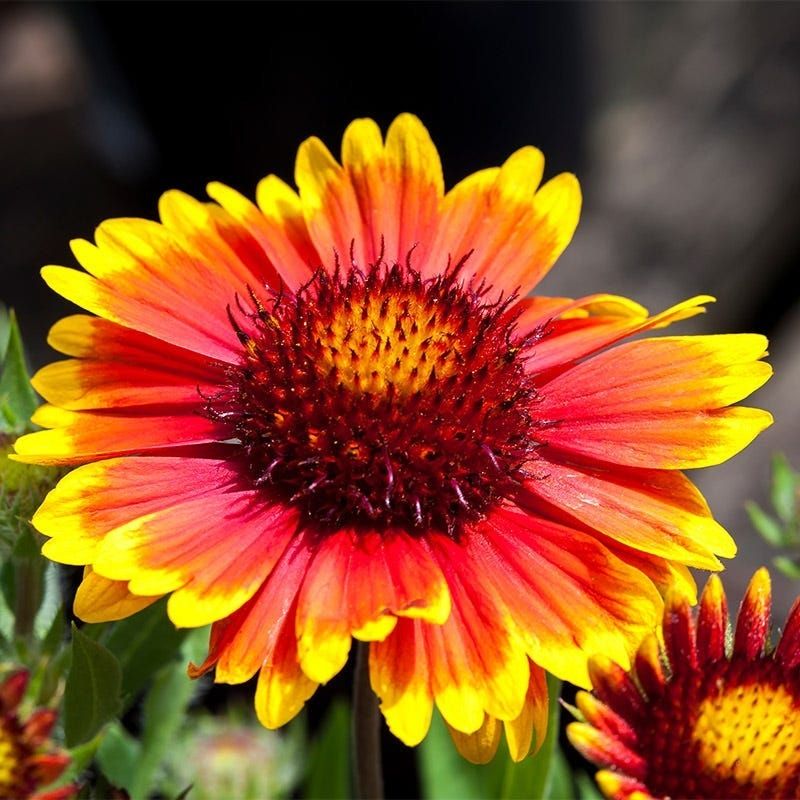
Bold, cheerful, and a little bit loud, Indian blanket brings the colors of a desert sunset right down to ground level.
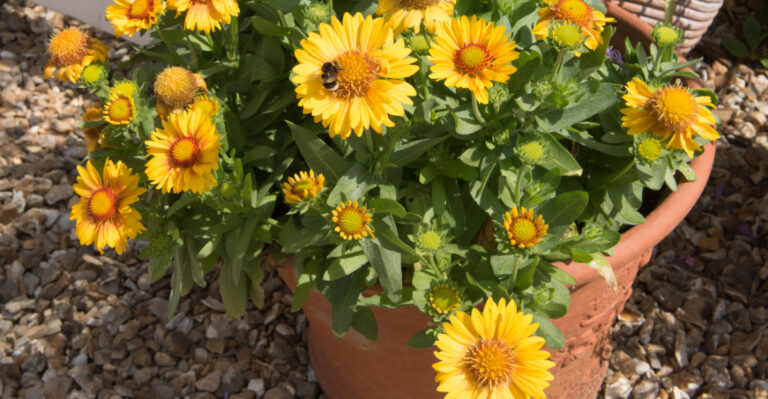
Gaillardia pulchella, also called Mexican blanket flower or firewheel, produces daisies with red centers fading to yellow tips. It is an annual, but it is a stretcher.
November seed gives you flowers by April, and with a little water it often keeps blooming into early summer, long after the poppies have faded.
That longer season matters. When spring annuals finish, many pollinators suddenly have fewer options, and Indian blanket helps bridge that gap.
Butterflies, native bees, and even small beetles visit the wide, landing-pad flowers.
Sow seeds on the surface and lightly press them in, since they need light to germinate. Full sun is a must, and average or sandy soil works fine.
Pinching off spent blooms encourages more flowers, but leave some heads at the end to ripen.
Goldfinches and other seed-eating birds enjoy picking at the dried seed heads in summer. Allowing that to happen turns your patch into a small bird feeder while also scattering seed for next year’s crop.
8. Owl’s Clover
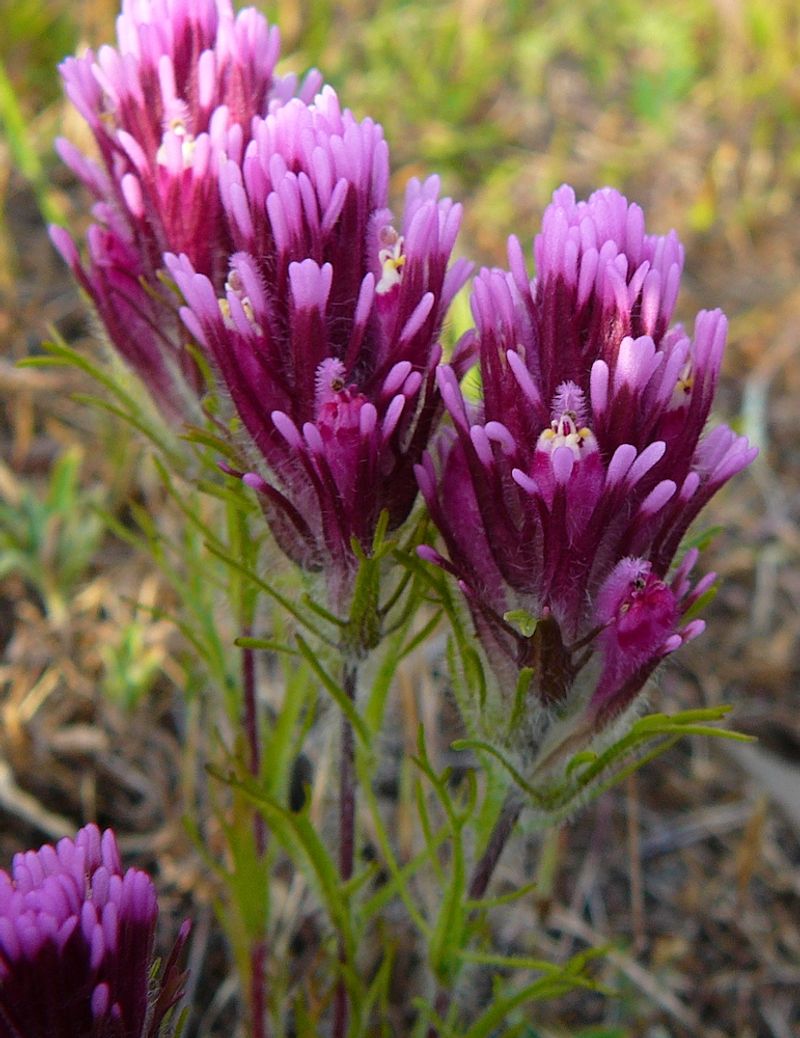
Here is a wildflower that looks like it was dipped in pink paint. Owl’s clover adds fuzzy magenta spikes that make yellow and orange flowers pop even brighter.
Castilleja exserta is a native annual and a cousin of Indian paintbrush. Its colorful parts are actually bracts tipped in rosy pink, with tiny flowers tucked inside.
In good rain years, it paints washes and flats around Tucson in thick patches during March.
The quirky fact: owl’s clover is partly parasitic. Its roots connect to nearby plants, especially grasses and other wildflowers, to share water and nutrients.
Because of this, it does best mixed into a seed blend instead of sown alone.
Scatter the dust-fine seed with poppies, lupines, and native grasses in November. Mixing seed with a handful of sand makes even spreading much easier.
Light watering through winter, if rains are skimpy, keeps the mix growing together.
Bees and butterflies visit the blooms, and the plant helps a mixed meadow look natural and layered. Think of it as the team player that makes everyone else look better while supporting pollinators along the way.
9. Desert Lupine
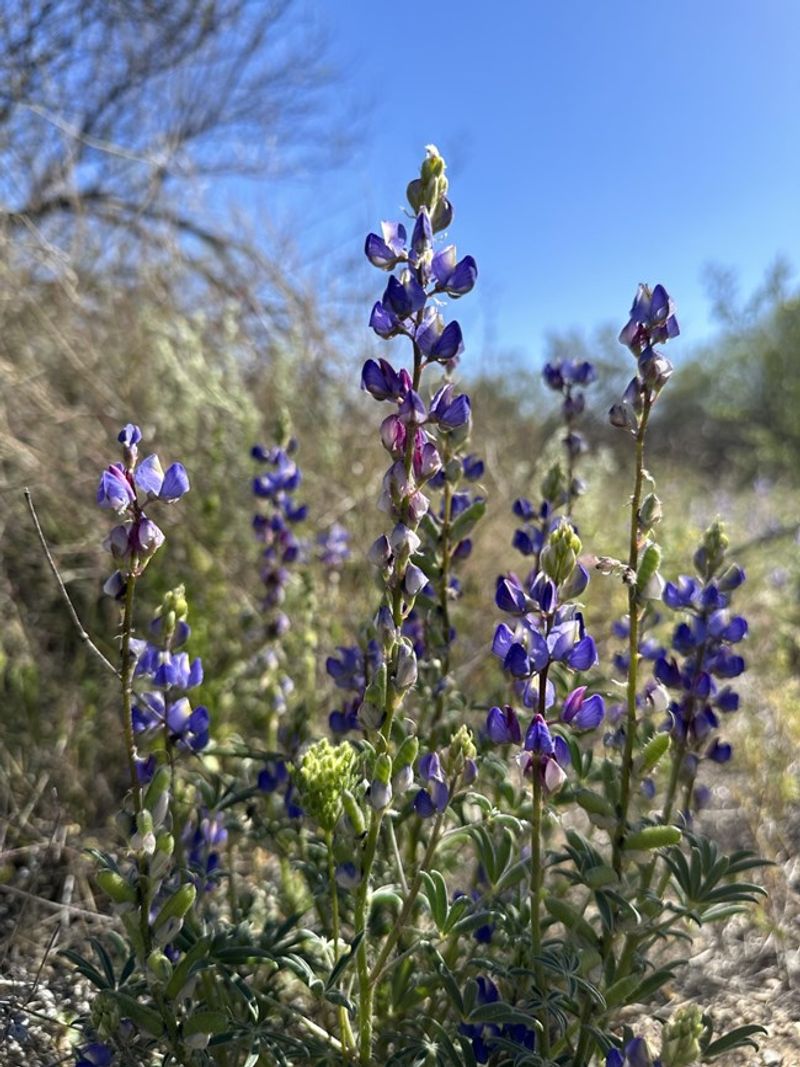
Smaller and scrappier than its arroyo cousin, desert lupine is built for the driest corners of your yard where little else wants to grow.
Lupinus sparsiflorus, sometimes called Coulter’s lupine, stays compact with slender spikes of blue-violet flowers marked with a white spot. That spot turns pinkish after a flower has been pollinated, a neat signal that tells bees to move on to fresher blooms.
It thrives in rocky, sandy, unamended soil, making it perfect for a front-yard strip by the street or the edges of a gravel landscape. Soak seed overnight before sowing in November, then let winter rains handle most of the work.
Extra water is only needed during long dry stretches.
Native bees are frequent visitors, and the plant fixes nitrogen just like other lupines. That means it can quietly help other wildflowers in a tough spot get established.
Desert lupine also blends beautifully with poppies, the pairing seen on many Arizona hillsides during big bloom years. If you want a low-effort patch that feels like a piece of the open desert moved into your yard, this is a smart, water-saving pick.
10. Desert Chicory
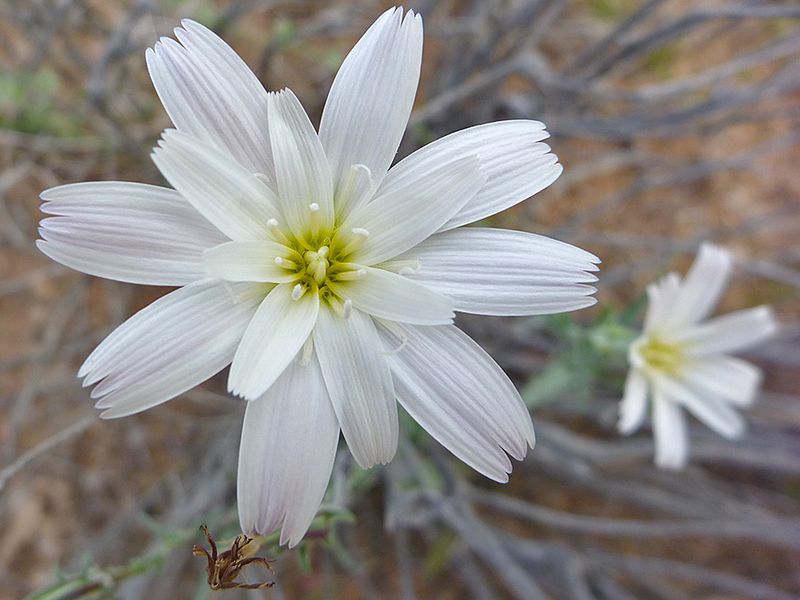
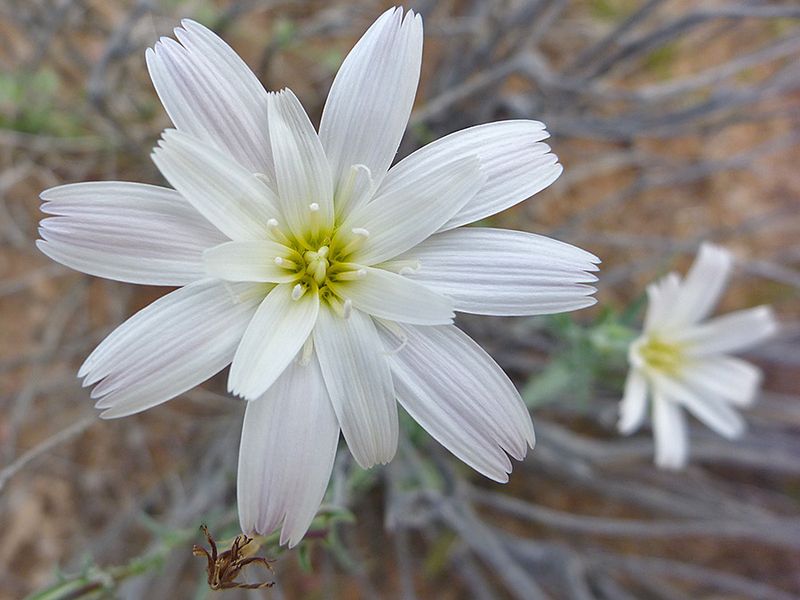
Not every garden star needs to be flashy. Desert chicory brings a crisp, clean white that cools down a yard full of hot colors and glows softly at dusk.
Rafinesquia neomexicana is a low-desert annual with dandelion-like flowers in bright white, often with purple streaks on the back of the petals. It blooms from late winter into spring and is perfectly happy in sandy soil and full sun.
Sow seed in November alongside your other wildflowers, barely covering it. Like most desert annuals, it grows with winter rain and needs only a little help if the season runs dry.
Once flowers fade, puffy seed heads appear and drift around on the breeze.
Those white blooms can be especially easy for evening and early morning insects to find, adding another layer to your pollinator habitat. Small native bees and flies are common visitors.
Plant drifts of chicory between orange poppies and blue bluebells to give the eye a place to rest. A moonlit wildflower bed with white flowers near a patio makes spring evenings outside extra pleasant, before the summer heat sends everyone indoors.