Don’t Confuse Porcelain Berry With Wild Grapes This September
September in Ohio has a way of making fence lines and woodland edges look genuinely stunning, and a big part of that is the sudden appearance of colorful berries climbing through the vegetation like nature decided to decorate.
Beautiful, right?
The catch is that not everything that looks like a grape actually is one, and this is exactly where things get interesting. Porcelain berry and wild grape are two vines that share enough in common to confuse even attentive gardeners.
Similar leaf shapes, similar climbing habits, similar settings: they practically set up the confusion on purpose. But they are very different plants with very different implications for your Ohio landscape, and telling them apart is genuinely worth the effort.
A few simple clues make the whole thing much easier than it sounds. Let’s sort this out before berry season gets away from you.
1. Porcelain Berry And Wild Grapes Can Look Similar At First Glance
Walking along a fence line in September, you might stop and stare at a climbing vine covered in clusters of small, colorful berries. At that moment, it can be genuinely hard to know whether you are looking at a wild grape or something else entirely.
Both porcelain berry and wild grapes are members of the grape family, Vitaceae, which means they share some real family resemblances that go beyond just appearance.
Both vines climb using tendrils, both can grow in similar Ohio habitats like woodland edges, roadsides, and disturbed areas, and both can produce berry-like fruits in late summer and fall.
These shared traits are what make identification feel tricky, especially for someone who has not studied these plants up close before.
Experienced botanists often remind us that no single feature should be used alone when trying to identify an unfamiliar vine.
Looking at the whole plant, including fruit color and texture, leaf shape, stem characteristics, and tendril patterns, gives a much more complete and reliable picture.
A quick glance at one feature can easily lead you in the wrong direction.
Taking a few extra moments to examine the vine can help prevent mistakes, especially when colorful fruits make every climbing plant look tempting.
In Ohio landscapes, careful identification is especially useful because some vines are valued for their fruit while others can become difficult to manage once established.
2. Colorful Porcelain Berries Are The Biggest Identification Clue In Fall
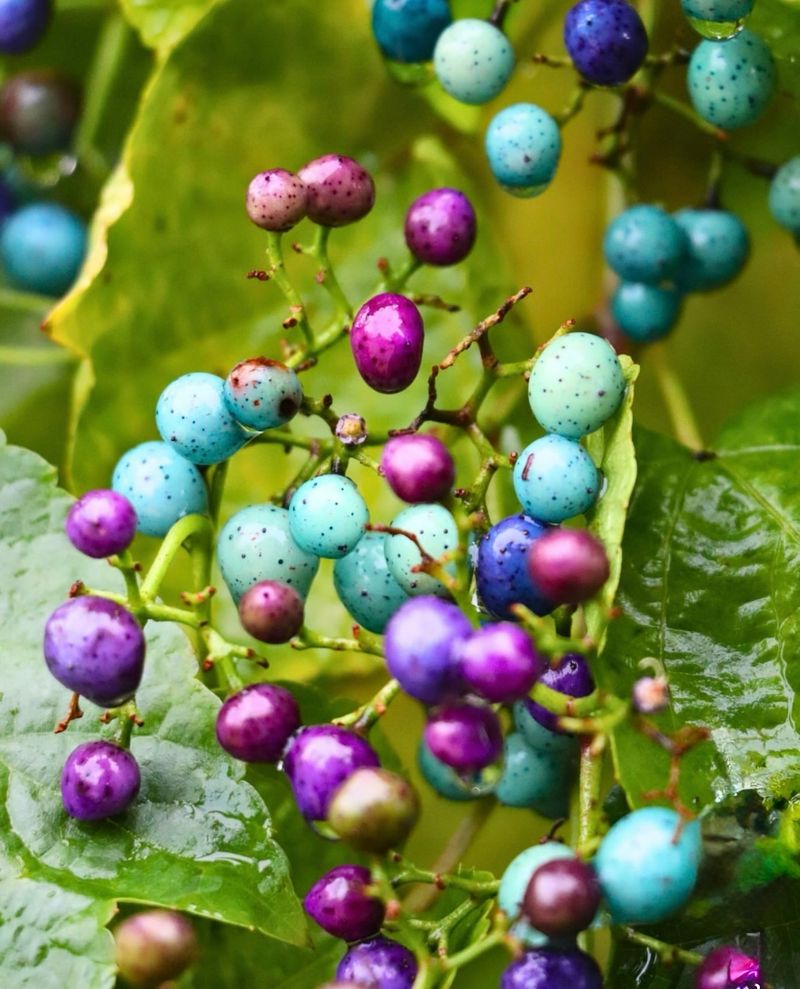
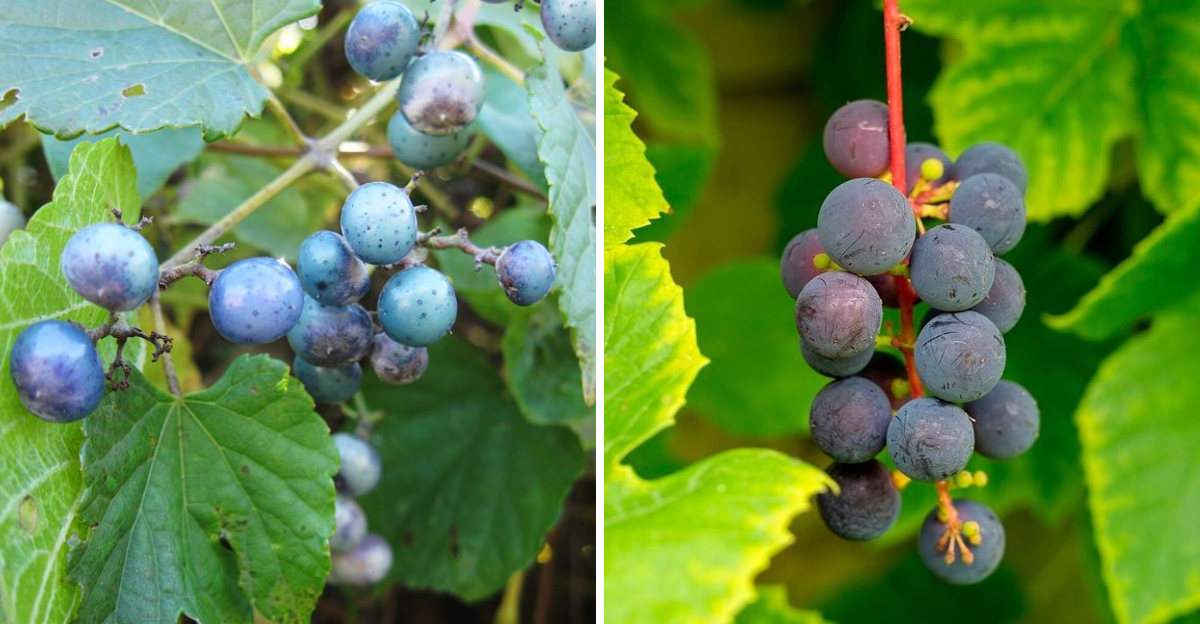
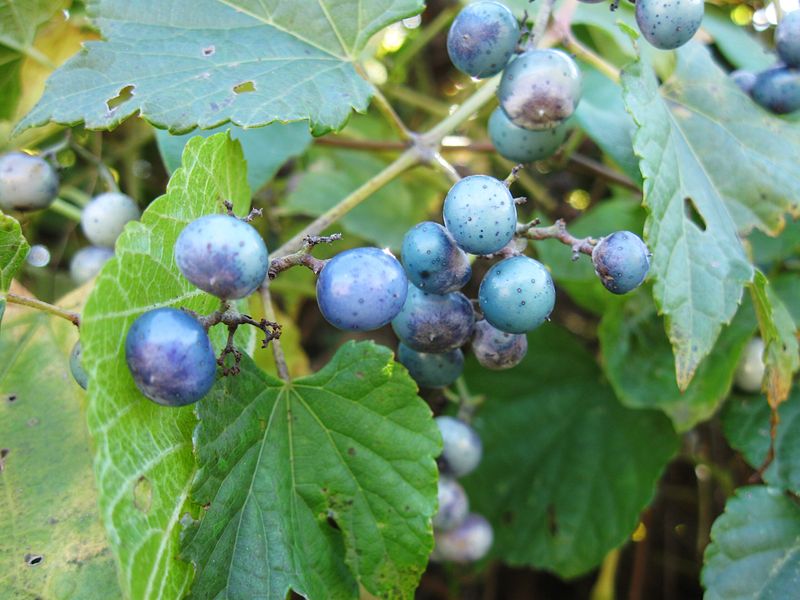
Few things in an Ohio garden are as visually striking as a cluster of porcelain berries in full color. The fruits on a single vine can display shades of green, white, pink, lavender, purple, and bright blue, sometimes all at the same time on the same cluster.
That unusual, almost jewel-like color range is one of the most reliable clues that you may be looking at porcelain berry rather than a wild grape.
Wild grape fruits generally ripen to a dark purple or blue-black color and tend to look much more uniform in a cluster.
They do not typically show the same multicolored, speckled, or spotted appearance that makes porcelain berry so visually distinctive in late summer and early fall.
Your Ohio Garden Changes Every Week. Your Plan Should Too.
Gardening in Ohio changes quickly throughout the season. Every Friday you’ll receive a simple weekly plan showing exactly what to plant, prune, fertilize, harvest, and protect so you never miss the right timing.
The spotted or speckled pattern on individual porcelain berries is another detail worth noting. Many berries will have small lighter-colored spots or streaks on their surface, which is not a common feature on wild grape fruits.
Paying attention to both the color range and the surface texture of the berries can help you make a more confident identification when exploring Ohio landscapes in September.
3. Wild Grapes Usually Have Different Fruit Clusters Than Porcelain Berry
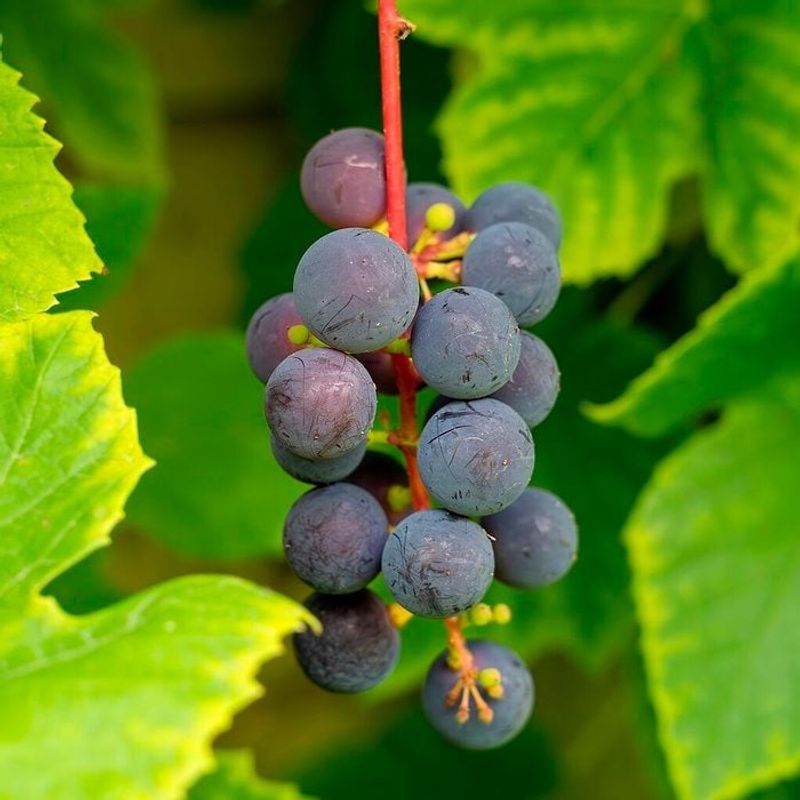
Spotting a vine loaded with small dark fruits hanging in grape-like clusters is a familiar sight along Ohio roadsides and wooded areas in September.
Several Vitis species, commonly called wild grapes, grow naturally in Ohio and can produce clusters of small fruits that many people recognize immediately as looking like miniature grapes.
Wild grape clusters tend to hang loosely and contain fruits that ripen to a consistent dark purple or blue-black color. The fruits may be small and tart, but they generally look uniform in color throughout the cluster.
This is quite different from the multicolored display that porcelain berry clusters often show at the same time of year.
Wild grape vines are also typically woodier and more substantial in structure than porcelain berry vines. Their tendrils, which they use to grip and climb, tend to grow opposite to the leaves and may have a forked or branched pattern.
It is worth noting that wild grapes are native vines in Ohio and can sometimes grow quite vigorously in certain landscape settings, so they are not without their own management considerations in some situations.
4. The Leaves Can Be Confusing Because Both Vines Have Similar Shapes
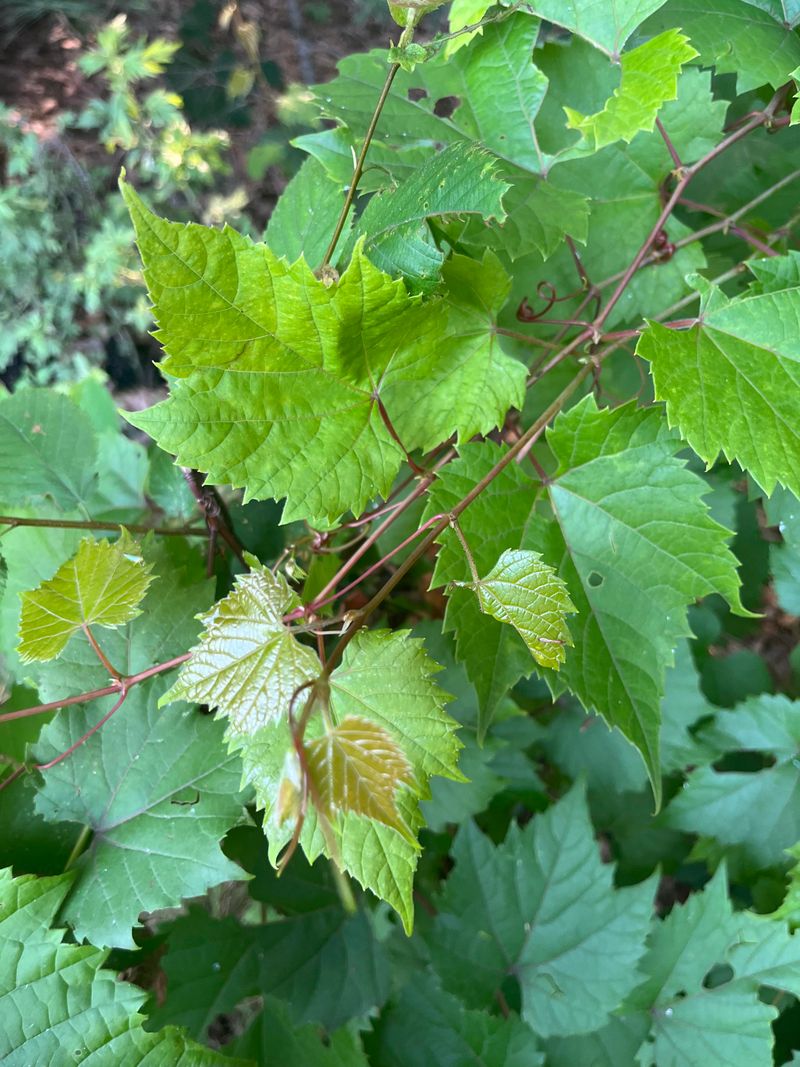
Leaf shape is often the first thing gardeners look at when trying to identify an unfamiliar vine, but with these two plants, that approach can lead to real confusion.
Porcelain berry leaves are highly variable, meaning they can look quite different from one plant to the next, or even from one part of the same plant to another.
Some porcelain berry leaves are deeply lobed and toothed in a way that closely resembles grape leaves.
Wild grape leaves also vary among species, with some showing deep lobes and others appearing more heart-shaped with toothed edges.
Because both vines can produce leaves that look broadly similar, relying only on leaf shape is not a reliable way to tell them apart in an Ohio landscape.
A few subtle differences may help when observing leaves more carefully. Porcelain berry leaves are often described as having a smoother texture and a slightly glossier surface compared to some wild grape leaves, which can feel rougher or more textured.
However, these differences can be subtle and may not be obvious to someone without experience handling both plants. Looking at the leaves alongside the fruit, stem, and tendril characteristics will give a much more complete identification picture.
5. Porcelain Berry Is A Fast-Growing Vine That Can Overrun Landscapes
Native to Asia, porcelain berry was introduced to North America as an ornamental plant, likely because of its attractive and colorful fruits.
Over time, it became clear that this vine is a vigorous grower that can establish itself quickly and spread into areas where it was not intended to grow.
In Ohio and other parts of the eastern United States, it has become recognized as a non-native invasive vine.
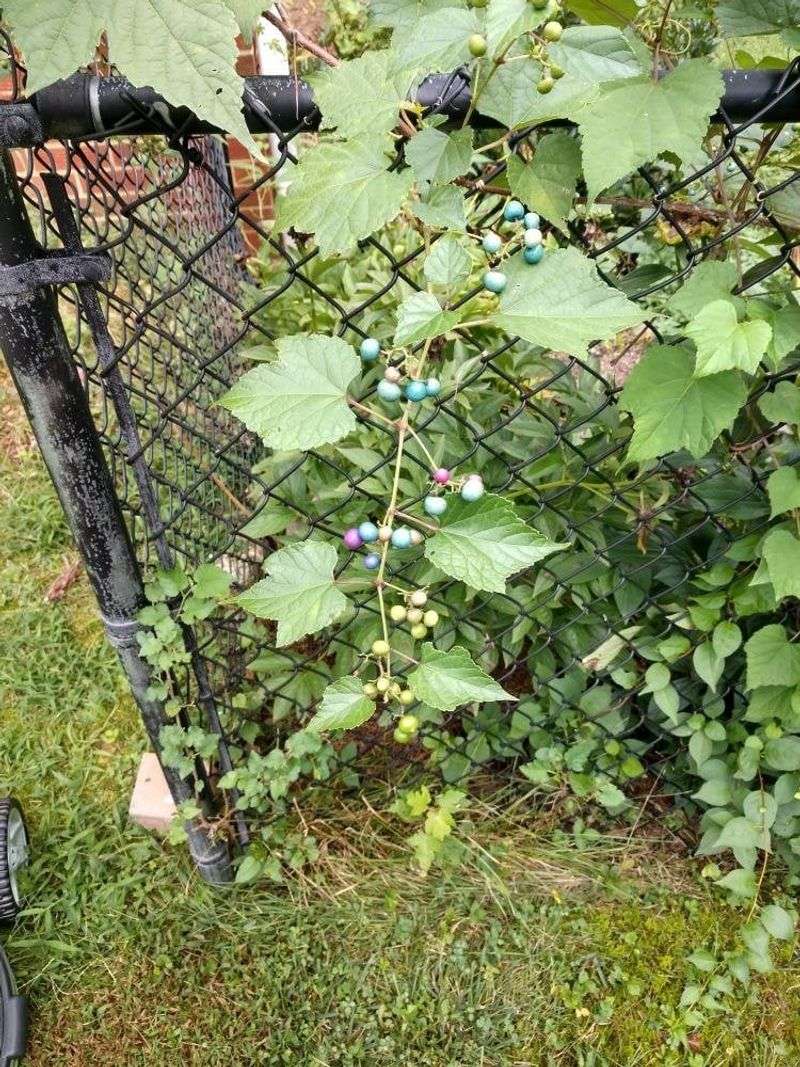
When porcelain berry finds a suitable spot, it can climb over shrubs, small trees, and other garden plants, spreading across structures and fences with impressive speed during the growing season.
Dense growth from an established porcelain berry vine can shade out plants growing beneath it, making it harder for those plants to get the sunlight they need to thrive.
Ohio gardeners who notice an unfamiliar climbing vine covering their fence, shrubs, or woodland edge in late summer may be looking at an established porcelain berry plant.
The vine does not automatically cause severe harm to every plant it touches, but its competitive and vigorous growth habit means that it can gradually become a management challenge in landscapes where it is allowed to spread unchecked over multiple seasons.
6. Birds Can Help Spread Porcelain Berry Seeds Across Ohio Landscapes
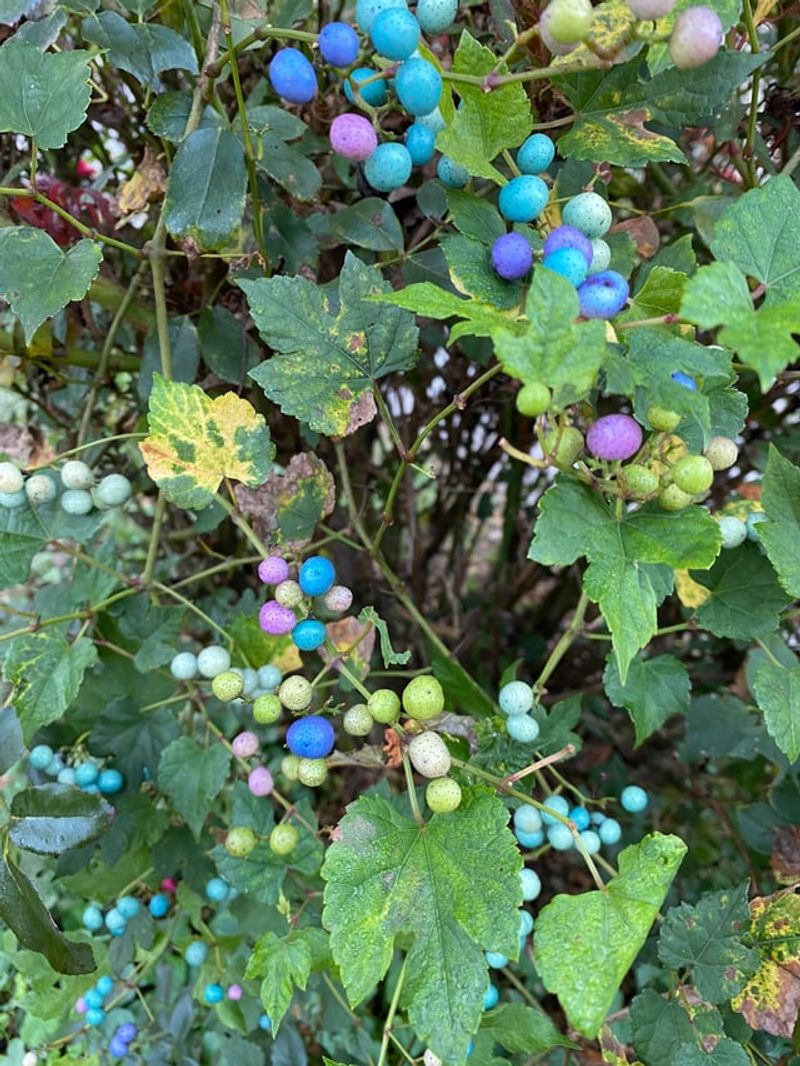
One reason porcelain berry can show up in unexpected places across Ohio is that birds find the fruits appealing. When birds eat the berries and then fly to other locations, they can deposit seeds in new areas through their droppings.
This kind of seed movement helps explain why porcelain berry may appear along fence lines, at woodland edges, or in landscape areas far from where it was originally planted.
Bird activity alone does not guarantee that every seed will sprout and grow into a new plant. Conditions like soil type, light availability, and moisture levels all play a role in whether a seed successfully establishes.
However, bird-assisted seed spread does contribute to the vine appearing in a wider range of Ohio habitats over time.
This is one reason why managing porcelain berry before it produces mature fruit can be a practical approach for gardeners who want to limit its spread. Fruits that are not allowed to ripen and disperse have fewer opportunities to establish new plants nearby.
Birds are not the only way porcelain berry can spread, but their role in moving seeds across the landscape is worth understanding when thinking about long-term management.
7. Late Summer And Fall Are Good Times To Check For Porcelain Berry
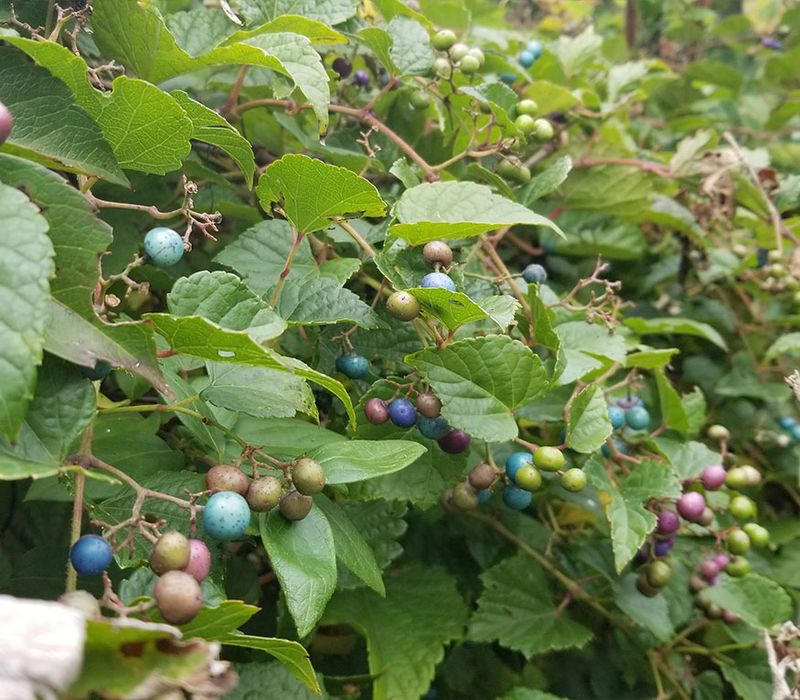
Finding porcelain berry earlier in the growing season can be genuinely difficult because the leaves and vine structure can blend in with other climbing plants in the landscape.
By late summer and early fall, however, the vine becomes much easier to spot because the unusual and colorful fruit display draws attention in a way that green foliage alone does not.
September is often a practical time for Ohio homeowners to walk their property and check fence lines, shrub borders, and woodland edges for unfamiliar vines.
The colorful berries on porcelain berry plants make the vine stand out at this time of year, even when it is growing among other dense vegetation.
Catching it during this window gives gardeners a useful opportunity to assess what they have and plan their response.
Using September as a scouting period does not mean that fall is the only time management can happen. It simply means that the vine is easier to identify with confidence when the fruit is present.
Gardeners who take note of where porcelain berry is growing during fall will be better prepared to address it during the following growing season when conditions may be more favorable for removal or control efforts.
8. Removing Porcelain Berry Early Can Make Control Easier
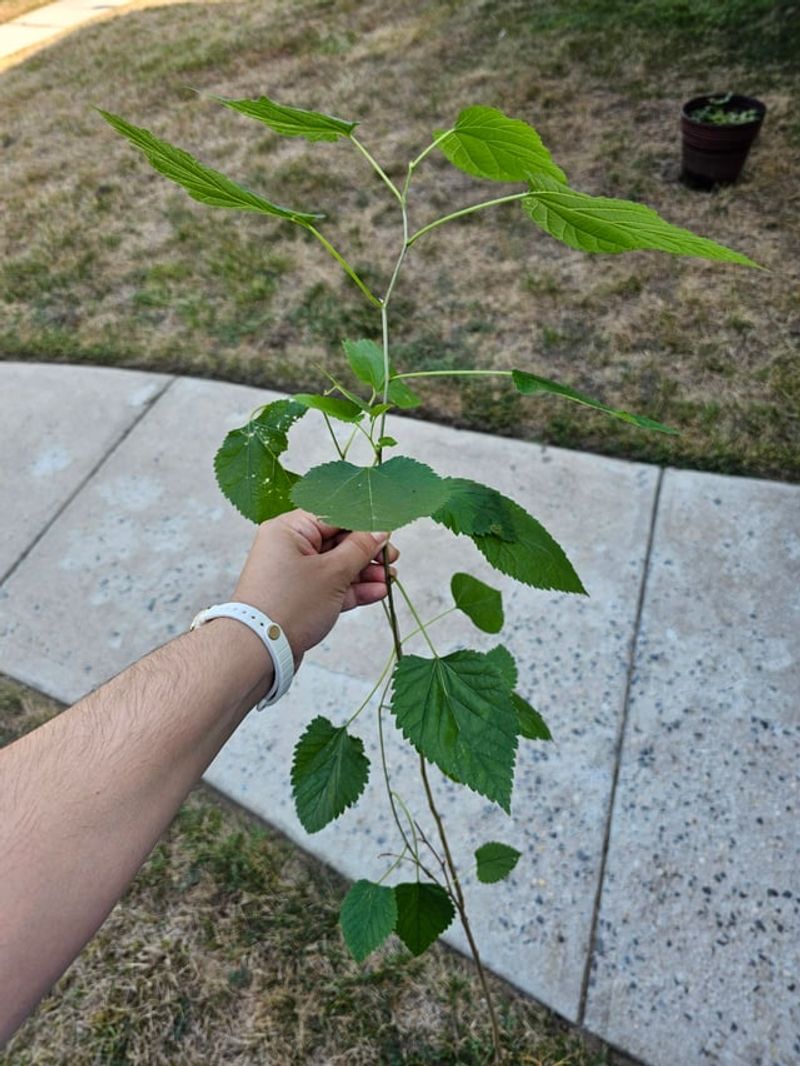
Catching porcelain berry when it is still a small, young plant can make a noticeable difference in how easy it is to manage.
Younger plants with shallower root systems are generally simpler to remove by hand than large, established vines that have had multiple seasons to develop strong, deep roots and extensive top growth.
For small infestations in accessible areas, careful hand-pulling or cutting vines at the base may be a reasonable starting point. Wearing gloves and removing as much of the root system as possible can improve results.
It is important to expect that follow-up will likely be needed, since porcelain berry can regrow from root fragments that remain in the soil after an initial removal attempt.
Larger or more established infestations may require repeated management over more than one season, and some situations may call for consultation with a local Ohio State University Extension office or a professional with experience managing invasive plants.
The approach that works best will depend on the size of the infestation, the location, and the surrounding plants that need to be protected.
Starting early, before the vine becomes deeply established, generally makes the overall process more manageable.
9. Do Not Assume Every Blue Berry On A Vine Is A Wild Grape
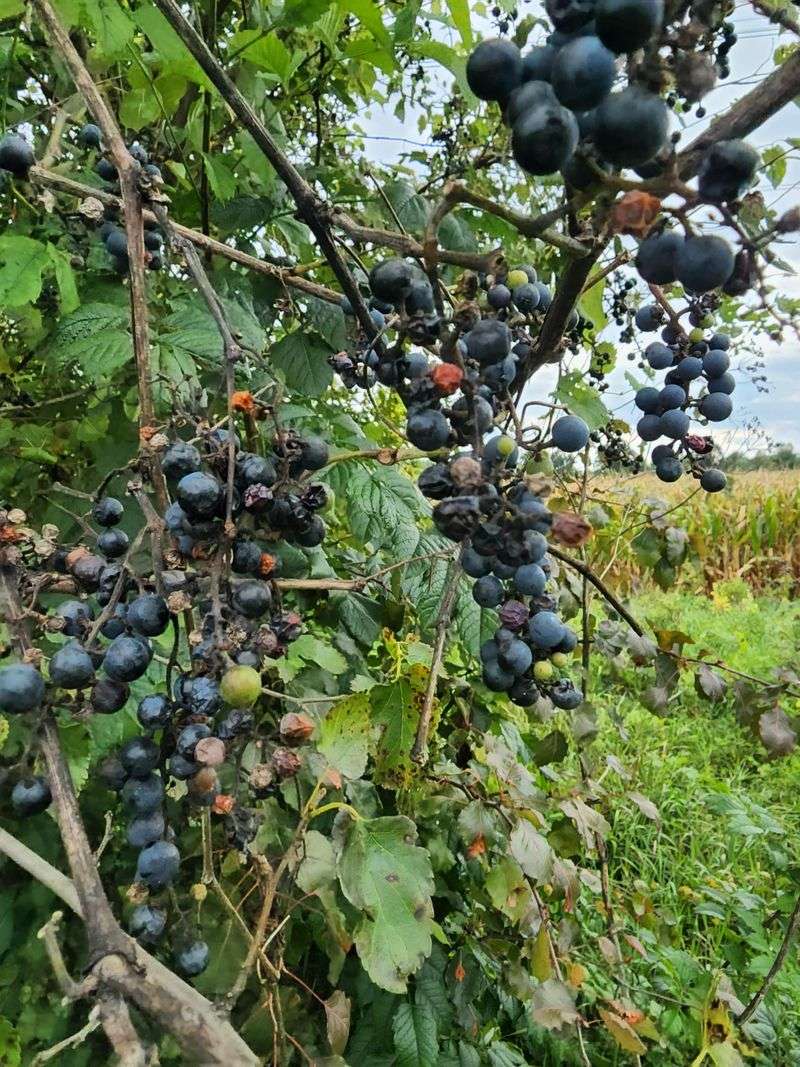
Coming across blue or dark-colored berries on a climbing vine in September might trigger an immediate assumption that wild grapes have been found. That assumption, while understandable, is worth pausing on before reaching out to pick or taste any fruit.
Porcelain berry can produce berries in shades of blue that may look grape-like to someone not familiar with the differences between the two plants.
Correct identification matters for more than just curiosity. Eating the wrong wild berry without proper identification is a risk that careful gardeners and foragers consistently try to avoid.
Even experienced foragers recommend confirming identification through multiple plant features rather than relying on a single visual cue like berry color.
Ohio gardeners who find an unfamiliar vine with blue or dark berries should take time to look at the full plant before drawing any conclusions.
Checking the fruit color pattern, surface texture, leaf shape, tendril structure, and overall vine habit together gives a much more reliable identification than berry color alone.
When there is genuine uncertainty about what a plant is, consulting a reliable plant identification resource or reaching out to a local Ohio State University Extension office can provide helpful guidance without the risks that come from guessing.