Don’t Ignore White Dust Spreading Across Your Kentucky Garden Beds
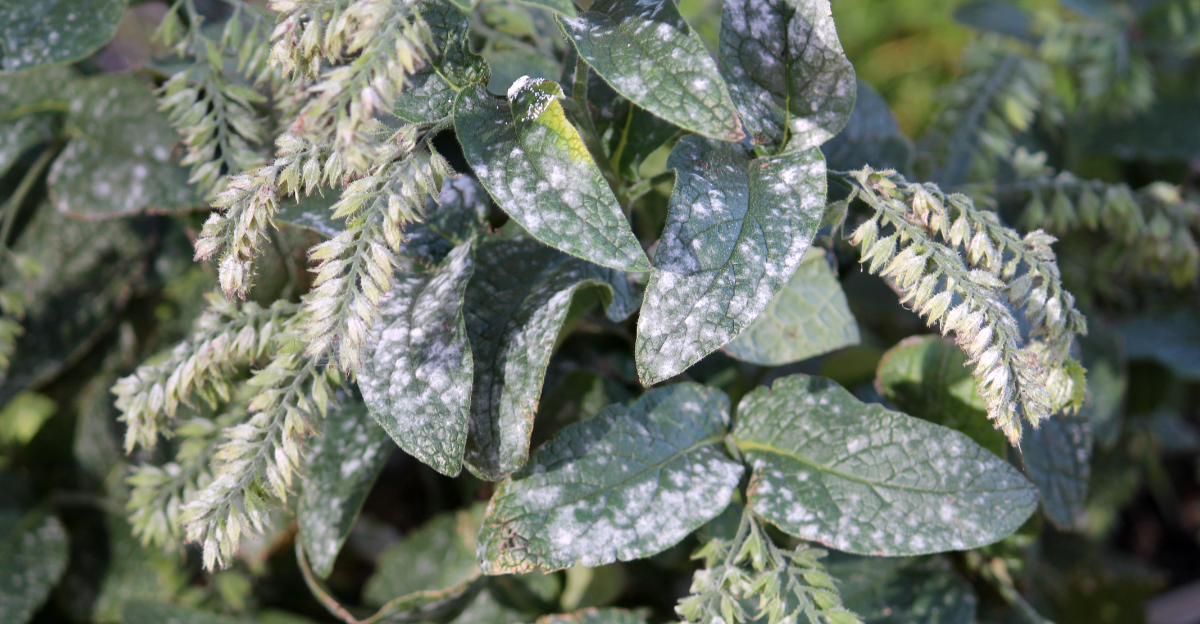
Overnight, something pale and fine settled across your flower beds. Nothing announced its quiet arrival, yet everything changed by morning light. Kentucky’s humid summer air seems built for this exact moment.
Suddenly you notice it, though you can’t quite name it. Roses, squash, and lilacs all look fragile and exposed now.
Whatever this coating is, it spreads without asking permission. Leaves curl inward while blooms refuse to fully open.
Many gardeners mistake this dust for pollen or scattered dirt. Ignoring it now only accelerates whatever comes next for you. Every untouched patch becomes fresh ground for further spreading.
Wind, tools, and even your own hands can carry it. Left unchecked, this problem can spread within days. Timing decides more here than effort ever truly could.
Gardens across Kentucky stand especially exposed this time of year. Prompt action improves your chances of controlling it.
Why White Dust Appears On Kentucky Garden Beds
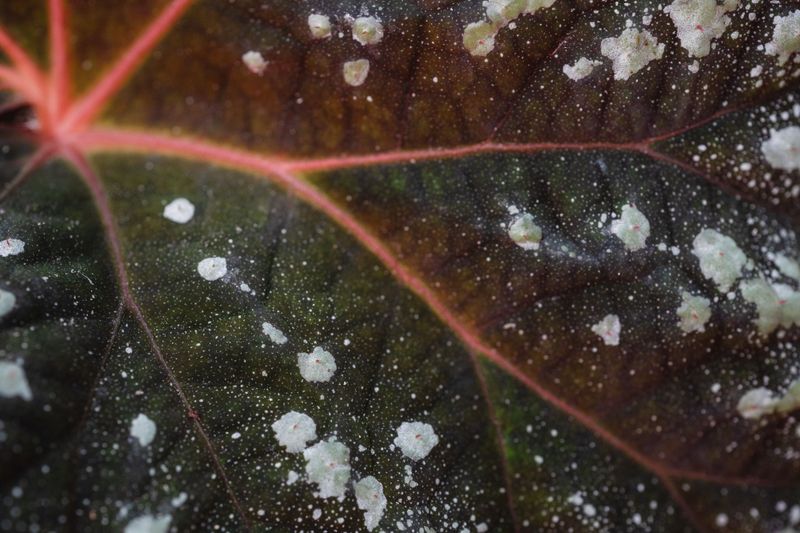
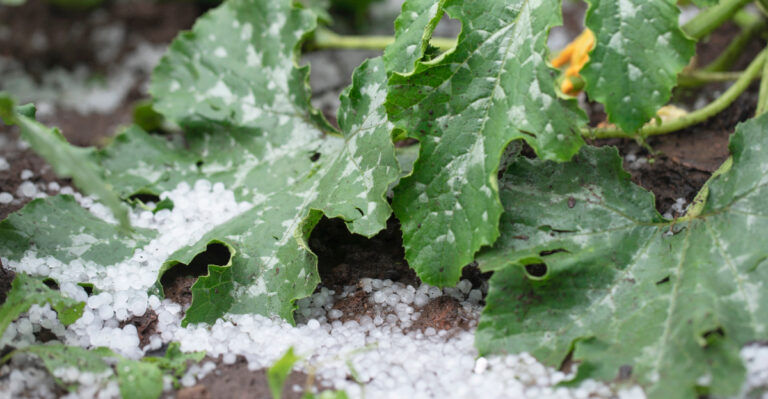
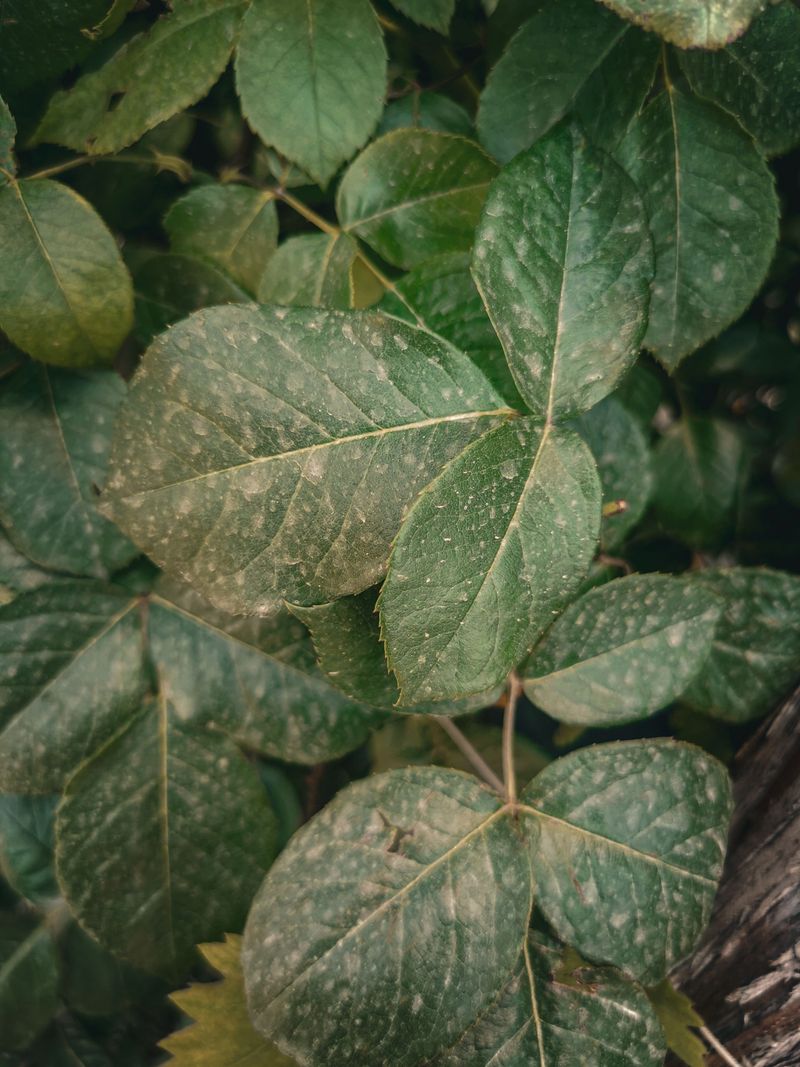
That chalky coating is not pollen or fertilizer residue. The white dust spreading across your Kentucky garden beds is almost always powdery mildew, a fungal disease caused by several related species.
Powdery mildew thrives when warm days meet cool nights, exactly the weather pattern that hits the Bluegrass State from late July through September. Humidity in the air encourages the fungal spores to settle onto leaves and multiply fast.
Unlike most fungi, powdery mildew does not need standing water to grow. Even dry leaves can get infected if the air carries enough moisture and spores are nearby.
Spores travel easily on the wind, moving from one plant to another across your entire yard. A single infected plant can spread the problem to nearby beds quickly if conditions are right.
The fungus feeds on the surface of the leaf, pulling nutrients away from the plant. Over time, infected leaves curl, yellow, and weaken the whole stem structure.
Gardens with poor air circulation are the most vulnerable spots. Crowded beds trap humidity close to leaves, giving spores the perfect environment to take hold and spread quickly.
Knowing what you are actually dealing with is the first step toward protecting your hard work. Once you recognize powdery mildew for what it is, you can act before it takes over your entire garden space.
Identifying Powdery Mildew On Your Plants
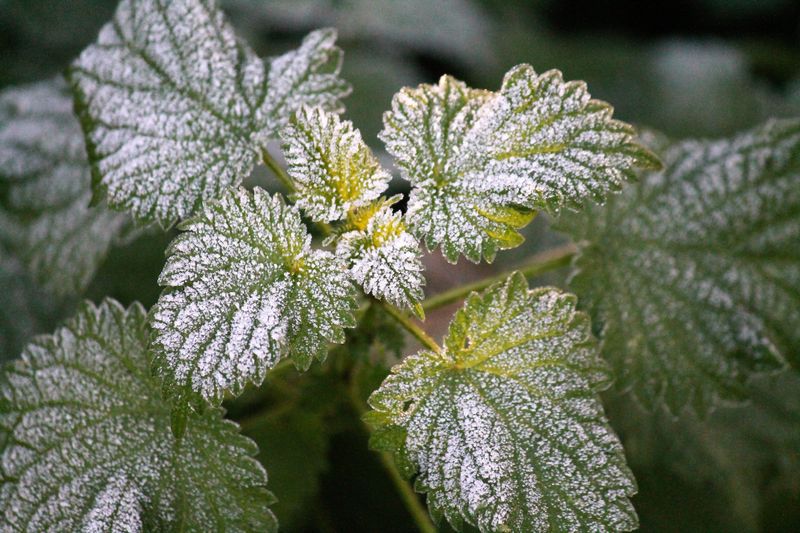
Spotting powdery mildew early gives you the best chance of stopping it. The first sign is usually a faint white or grayish powder on the upper surface of leaves.
Unlike dirt or dust, you cannot simply brush this coating away cleanly. It is actually a network of fungal threads growing directly into the leaf tissue.
As the infection spreads, the white patches merge and cover larger areas of each leaf. Stems, flower buds, and even young fruit can develop the same powdery coating over time.
Leaves that have been infected for a while start to look distorted. They may curl upward at the edges, turn yellowish, or develop brown patches where the tissue begins breaking down.
Your Kentucky Garden Changes Every Week. Your Plan Should Too.
Gardening in Kentucky changes quickly throughout the season. Every Friday you’ll receive a simple weekly plan showing exactly what to plant, prune, fertilize, harvest, and protect so you never miss the right timing.
One helpful clue is that powdery mildew usually appears on the top side of leaves first. Other fungal problems often start on the underside, so the location matters when making your identification.
Check your plants in the morning when light is soft and angled. The white coating catches the light and stands out clearly against healthy green tissue, making it easier to spot early infections.
Do not confuse powdery mildew with natural plant markings. Some plants like lungwort and certain bee balm varieties have silvery patterns on their leaves by design.
Accurate identification matters because the treatment approach changes depending on what you are actually fighting. Getting it right early saves time, money, and the health of your entire garden.
Which Plants Are Most At Risk In August
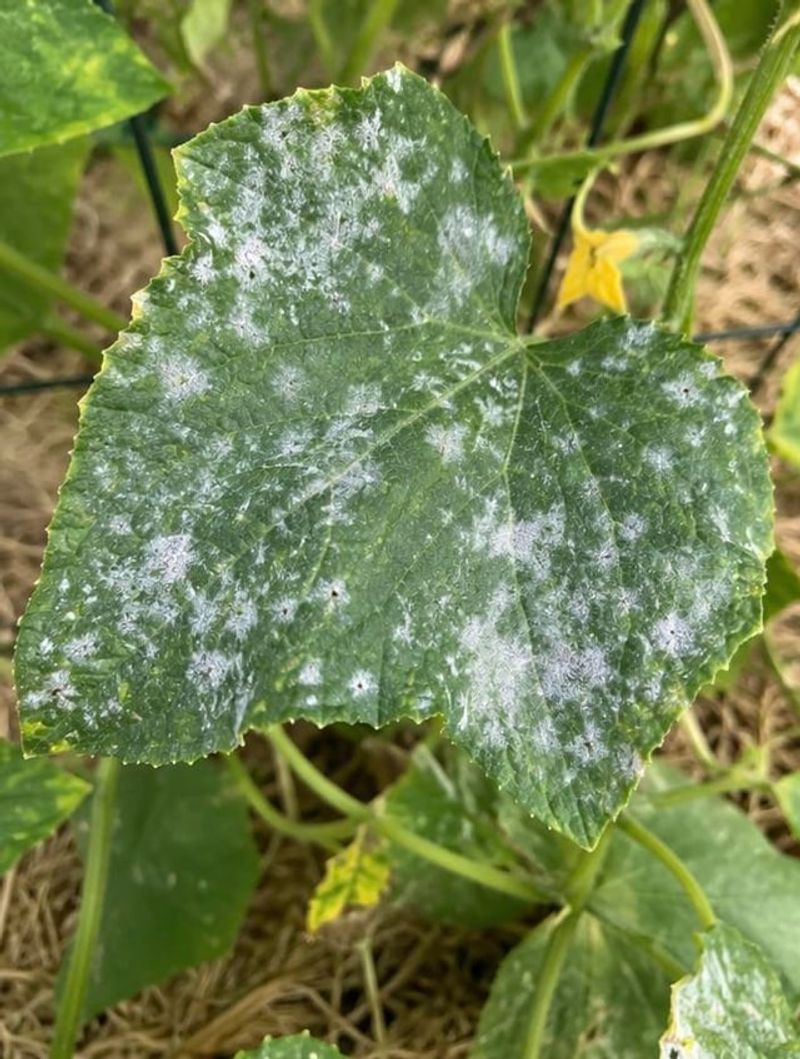
August is peak season for powdery mildew across mid-Atlantic and Southern gardens. Certain plants are practically magnets for this fungus, and knowing which ones helps you watch the right spots first.
Squash and cucumbers top the list every single summer. Their large, broad leaves trap humid air close to the surface, creating the exact conditions powdery mildew loves most.
Roses are another common target that surprises many gardeners. Even well-tended rose beds can develop heavy infections when temperatures swing sharply between day and night.
Bee balm, a popular native perennial, is practically guaranteed to show powdery mildew by late summer. Many gardeners accept it as a seasonal reality, but it does not have to be.
Phlox, lilac, and zinnia are also high on the vulnerability list. These plants have dense foliage that restricts airflow and holds moisture longer than open, airy varieties do.
Vegetable gardeners should also watch their peas, melons, and pumpkins closely. These crops develop faster infections because they are already under stress from heavy fruit production during August heat.
Fruit trees like apple and peach can show powdery mildew on new growth too. Young shoots are especially tender and absorb fungal spores more easily than mature, toughened bark.
Keeping a close eye on these high-risk plants through August gives you the fastest warning system possible. Catch it early on one plant, and you can protect the rest before the season turns.
What Happens If You Ignore It
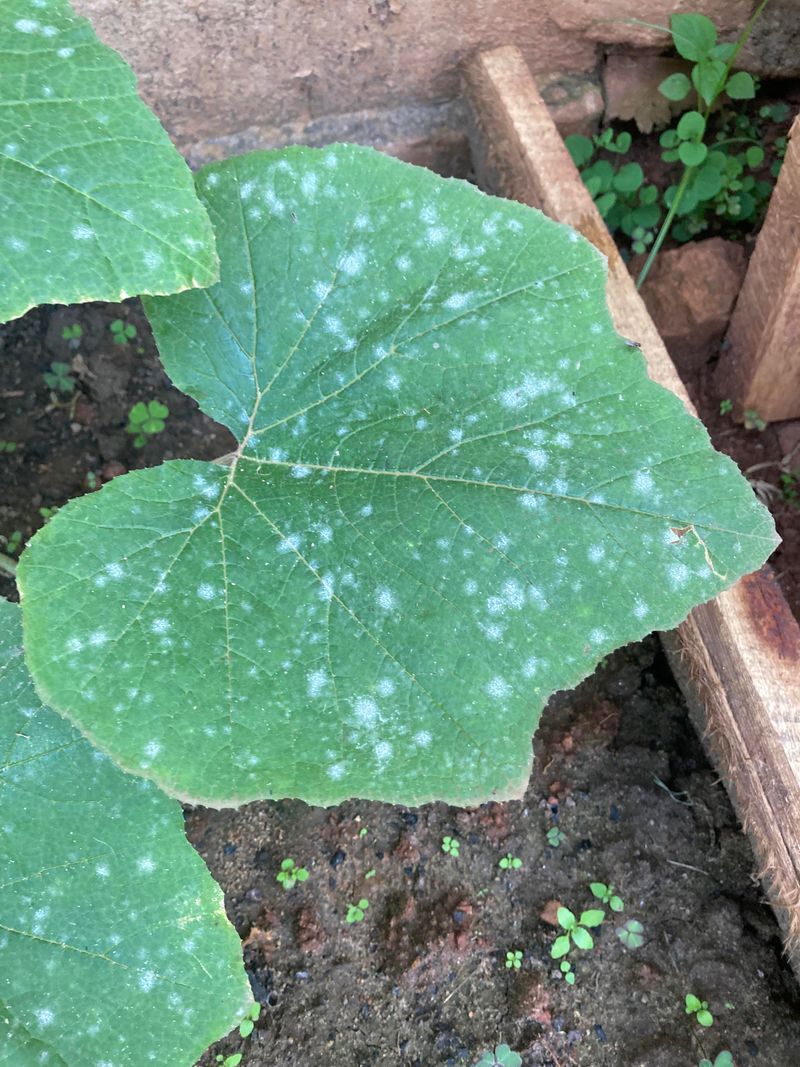
Delaying treatment allows the infection to spread further. A little white dust does not seem urgent, especially when your garden is otherwise thriving and full of color.
Within a short period, that light dusting can spread across entire plants depending on conditions. The fungal growth blocks sunlight from reaching the leaf surface, slowing down photosynthesis significantly.
When photosynthesis slows, the plant cannot produce enough energy to stay strong. Growth stalls, flower production drops, and fruit or vegetable yields shrink well below what you expected to harvest.
Leaves that stay infected long enough begin to collapse. They turn yellow, then brown, then fall off prematurely, leaving stems bare and plants looking ragged before the season is even close to ending.
Weakened plants become easy targets for secondary problems. Insects like aphids and spider mites actively seek out stressed plants, piling on damage that compounds the original fungal issue fast.
Spores also overwinter in fallen leaf debris and plant stems. If you leave infected material in the bed, next spring starts with a built-in fungal problem already waiting in the soil.
The cost of ignoring it adds up quickly. Replacement plants, lost harvests, and extra treatments the following season all cost far more than a simple early intervention would have required.
Your garden worked hard all season to reach this point. This can undo weeks of gardening effort if left untreated.
Treating And Stopping The Spread
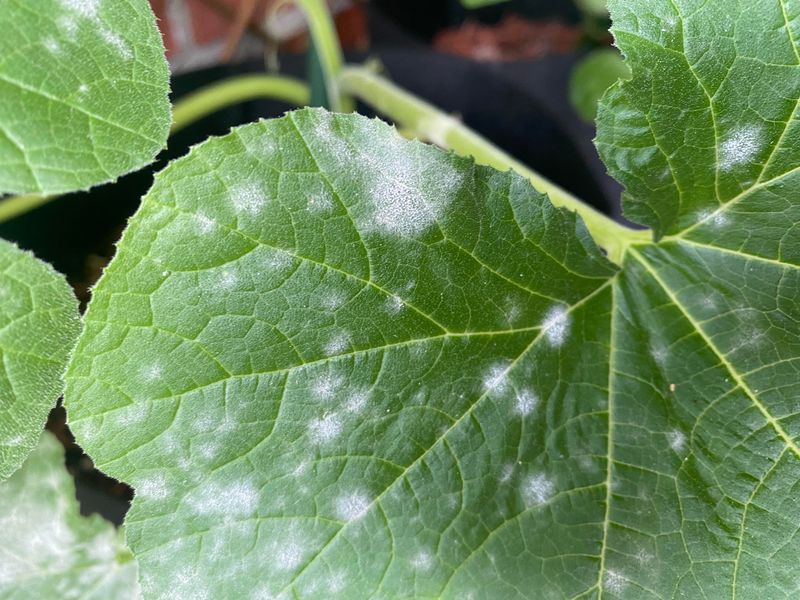
Powdery mildew is one of the more treatable garden fungal problems you will encounter. Acting quickly with the right approach can stop the spread and save most of your plants.
Start by removing heavily infected leaves immediately. Place them directly into a sealed bag and dispose of them in the trash, not the compost pile, to avoid spreading spores further.
Neem oil is one of the most effective organic treatments available. Mix it with water and a small amount of dish soap, then spray it thoroughly on all leaf surfaces, top and bottom.
Baking soda solutions may offer some benefit for mild infections, though scientific evidence on their effectiveness is mixed.
Mix one tablespoon of baking soda with a quart of water and a few drops of liquid soap for a simple homemade spray.
Apply any treatment in the early morning so leaves dry fully before evening. Wet foliage at night creates the exact humid conditions that encourage more fungal growth, undoing your hard work.
Repeat treatments every seven to ten days for best results. A single application rarely resolves the problem completely because new spores can settle on plants between spray sessions.
Some studies suggest potassium bicarbonate may be more effective than baking soda, though results vary. It is available at most garden centers and works as both a treatment and a short-term preventive barrier.
Consistency is what separates a garden that recovers from one that stays infected all season long. Stay on a regular spray schedule and your plants will bounce back strong.
Preventing Powdery Mildew Next Season
Prevention is always easier than treatment when it comes to fungal garden problems. A few smart habits started now can dramatically reduce your chances of seeing that white dust spreading across your garden beds again next year.
Spacing is the single most powerful prevention tool you have. Crowded plants trap moisture and limit airflow, so giving each plant more room to breathe cuts the risk significantly.
Choose mildew-resistant plant varieties whenever possible. Many seed companies now label cucumbers, squash, and roses with resistance ratings, so reading the tag before buying pays off at planting time.
Water at the base of plants instead of overhead. Wet leaves are more vulnerable to spore attachment, and drip irrigation keeps foliage dry while still delivering moisture directly to the roots.
Clean up your garden beds thoroughly each fall. Removing lifeless stems, fallen leaves, and old plant material removes the overwintering spots where fungal spores survive through cold months.
Apply a layer of fresh mulch in spring to create a barrier between soil and plant stems. Mulch also helps regulate moisture levels, reducing the humidity spikes that trigger outbreaks.
Start preventive neem oil sprays before conditions typically turn favorable for fungal growth, usually in early to mid summer.
A little planning now means more color, more harvests, and far less white dust spreading across your Kentucky garden beds when summer rolls around again. These habits reduce outbreaks next season.