The Gray Nests Appearing On Kentucky Tree Branches Right Now
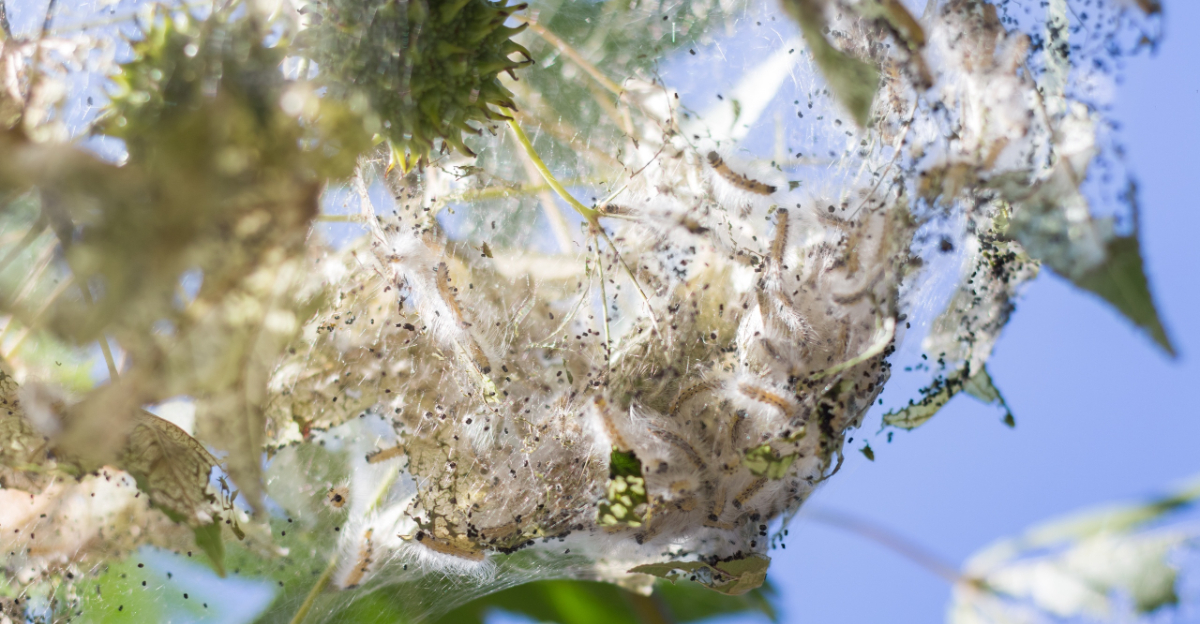
Take a slow walk down almost any Kentucky road this time of year and something odd catches your eye. High in the branches, pale gray bundles hang like forgotten tissue paper.
They seem to show up overnight, wrapped around branch tips in silky, messy layers. Some folks panic, others reach for a garden hose, and a few grab a ladder they probably should not be on.
The truth is far less scary than the internet suggests, and it has a lot to do with late summer heat and hungry little visitors. Knowing what you are looking at changes how you respond, and it can save you a weekend of unnecessary yard work.
So before you torch anything or call a tree service, here is what those grayish pouches really are. We will walk through what makes them, which trees they favor, and when action is worth your time.
Fall Webworms Are The Usual Culprits
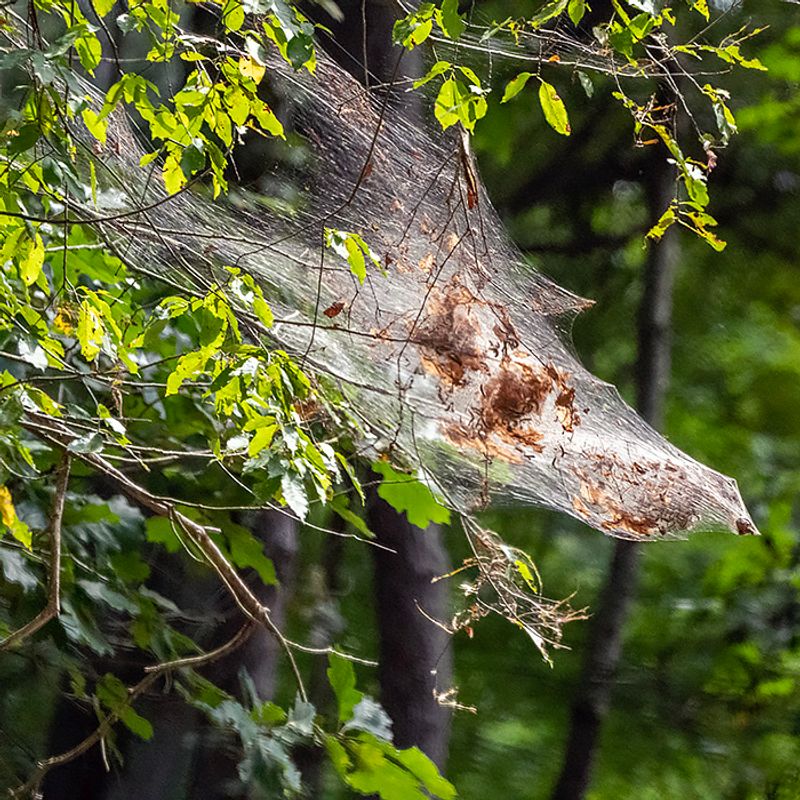
Most of the time, those pale gray bundles belong to fall webworm caterpillars. Adults are small snowy-white moths that lay egg masses on the undersides of leaves in early summer.
When the eggs hatch, hundreds of tiny caterpillars begin feeding side by side. As they eat, they spin silk over the leaves they are chewing, and the web grows outward with them.
By August and September in Kentucky, those webs can stretch two or three feet long. Inside you will find fuzzy caterpillars, chewed leaf skeletons, dark droppings, and shed skins, which is why the nests look so grimy.
The caterpillars vary quite a bit in color. Some are pale yellow with black dots, others are darker and covered in long white hairs, and both types can live in the same web.
Here is the reassuring part. Fall webworms feed on leaves that the tree is about to drop anyway, so the damage lands at the very end of the growing season.
A healthy shade tree can handle this year after year without real trouble. The nests are mostly a cosmetic problem, and Kentucky trees have been dealing with them since long before anyone worried about curb appeal.
Fun bit of history: fall webworm is native to North America, but it hitchhiked to Europe and Asia decades ago. Overseas it is treated as a serious invasive pest, while here at home it is just another end-of-summer regular.
Telling Webworms From Tent Caterpillars
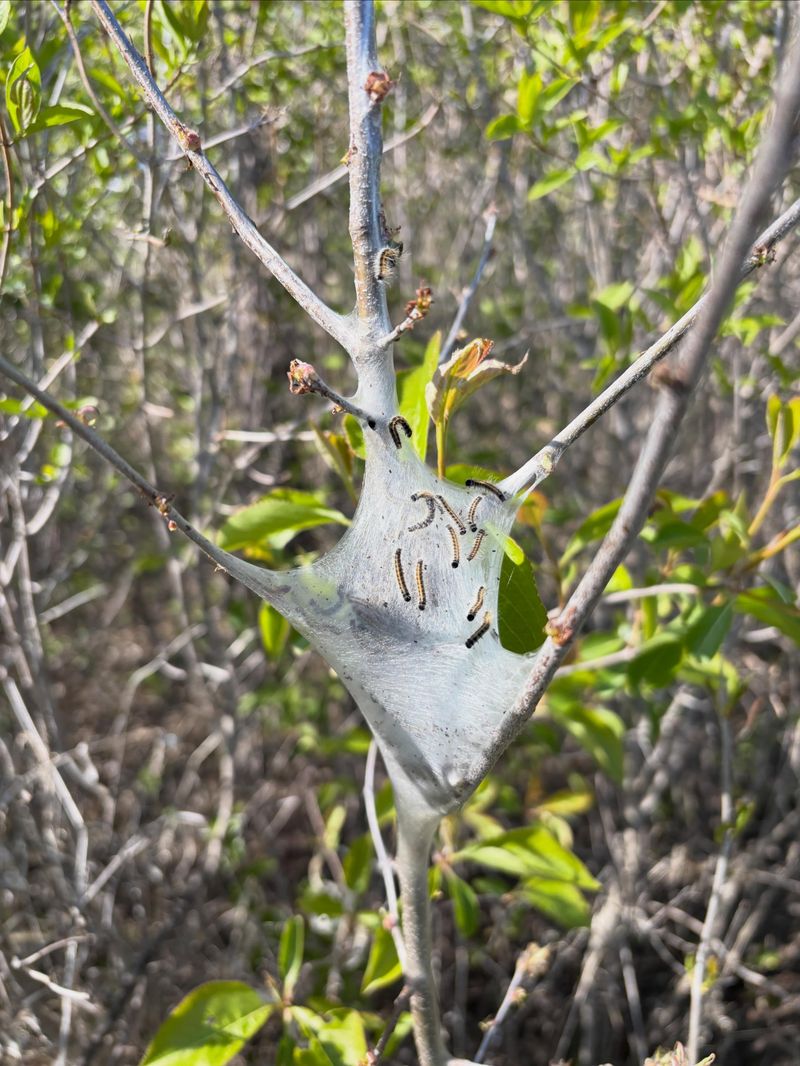
Timing tells you almost everything. Eastern tent caterpillars show up in early spring, right as the buds break, while fall webworms appear in the hot, humid stretch from July into October.
Location is the other giveaway. Tent caterpillars build their silk shelters in the crotch of a tree where two limbs meet, then crawl out to feed on nearby leaves.
Fall webworms do the opposite. Their web wraps directly around the leaves and branch tips, so the food is sealed inside with them.
Kentucky folks know tent caterpillars for another reason entirely. Back in the early 2000s, these caterpillars were linked to mare reproductive loss syndrome in the state’s horse country, which put them on every farm manager’s radar.
Your Kentucky Garden Changes Every Week. Your Plan Should Too.
Gardening in Kentucky changes quickly throughout the season. Every Friday you’ll receive a simple weekly plan showing exactly what to plant, prune, fertilize, harvest, and protect so you never miss the right timing.
Fall webworms carry no such baggage. They are not tied to livestock problems, and horses generally pay them no attention at all.
Then there is a third look-alike. Bagworms build small, tough, cone-shaped cases that hang like tiny pinecones on evergreens, and each case holds a single caterpillar rather than a crowd.
Learning to spot the difference matters because the response changes. Spring tent caterpillars on wild cherry trees near pastures may deserve attention, while a September webworm nest on a walnut tree usually deserves a shrug.
Grab a flashlight and look closely before deciding anything. The web’s shape, the season, and the tree species together will point you toward the right answer nearly every time.
Kentucky Trees That Attract The Most Nests
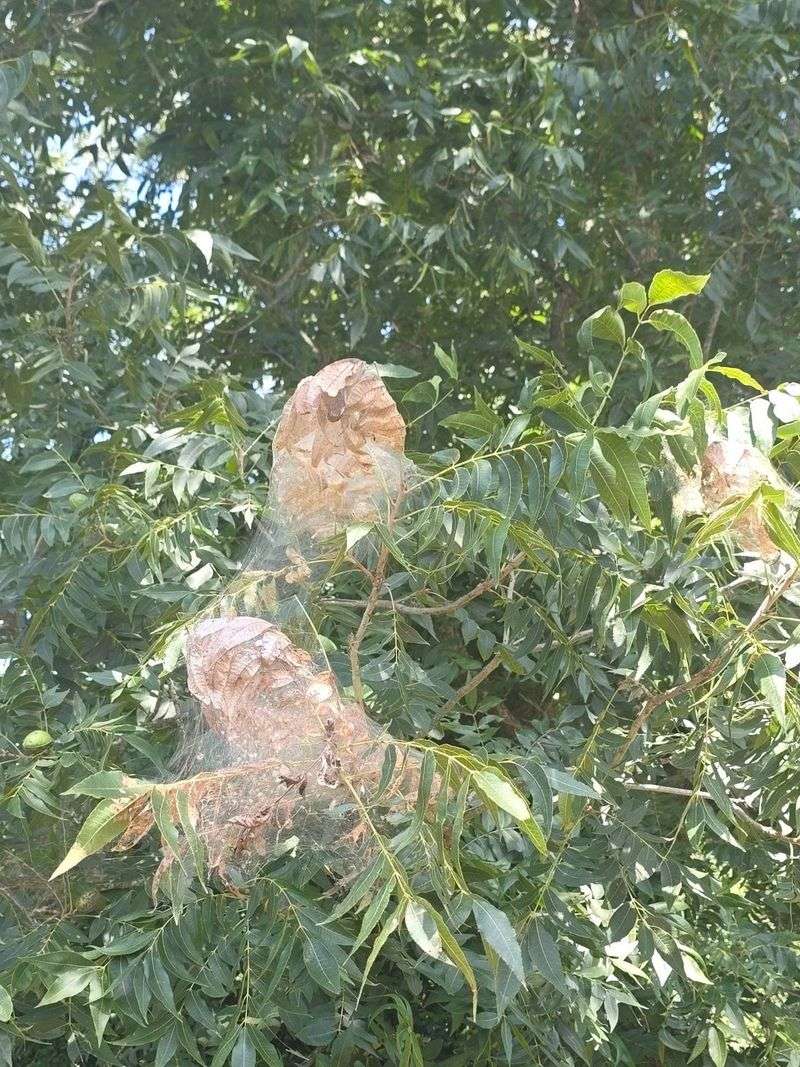
Black walnut trees are practically webworm magnets across Kentucky. Drive through walnut-lined fencerows almost anywhere in Kentucky come September, and the trees often look like they were decorated for a very sloppy party.
Persimmon runs a close second. Hickory, pecan, sourwood, sweetgum, mulberry, and river birch also make the list, and roadside trees seem to get hit hardest of all.
Wild cherry is another favorite, which is part of why people confuse webworms with tent caterpillars so often. Both insects like that same tree, just at opposite ends of the season.
Researchers have counted well over a hundred host plants for this caterpillar in North America. That flexible appetite is exactly why the nests seem to appear everywhere at once.
What they mostly skip is helpful to know too. Conifers are essentially left alone, while oaks and maples tend to see noticeably less webworm activity than walnut and persimmon.
If you are choosing shade trees for a new Kentucky yard, that pattern is worth keeping in mind. A young walnut planted by the driveway will likely host webs most summers, and that is simply part of owning one.
Trees in the open, along highways and field edges, catch more egg-laying moths than trees tucked inside dense woods. Light and exposure play a big role.
None of this means avoiding walnuts or persimmons. It just means the gray bundles are a predictable guest, not a mystery.
The Real Damage To Your Tree
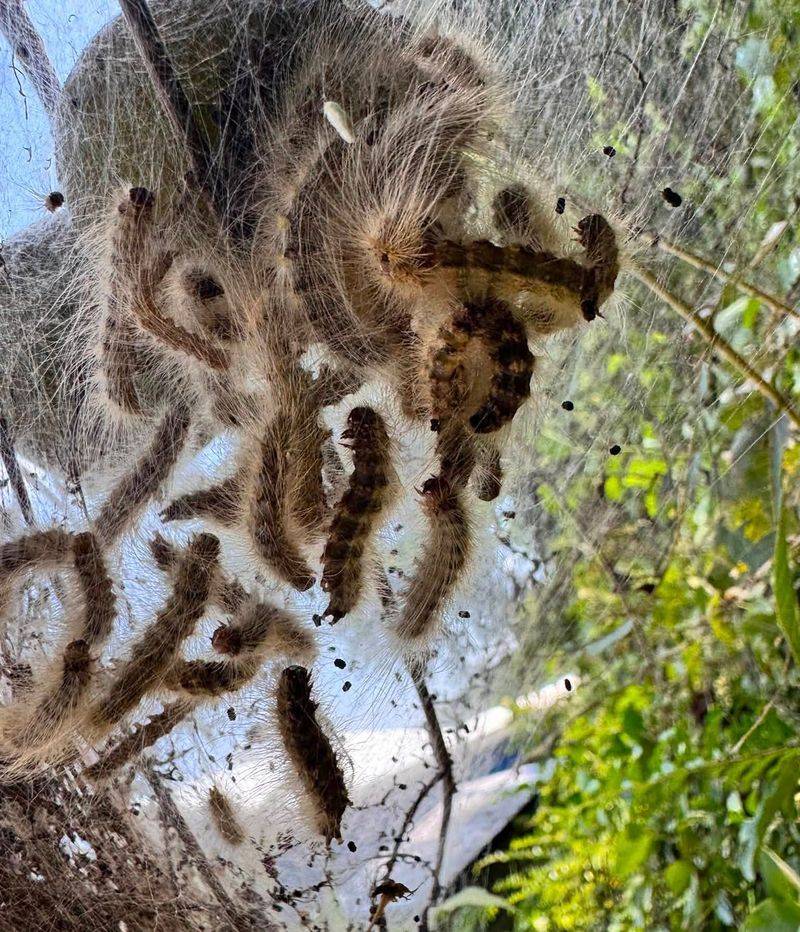
Picture a tree that has already spent five months building sugar and storing it in its roots. By late August, most of that year’s work is finished.
That is precisely when webworms arrive. They eat leaves the tree was preparing to shed in a few weeks anyway, so the loss barely registers.
University extension specialists across the region agree on this point. Established shade trees rarely suffer lasting harm from fall webworm feeding, even when several nests appear in the same canopy.
The visual damage does look rough. Inside the web, leaves get chewed down to their veins, turn brown, and stay tangled in the silk long after the caterpillars move on.
Those old webs can hang around through winter. Rain and wind eventually shred them, and spring growth hides whatever is left.
Young trees deserve a bit more attention. A newly planted sapling with only a modest set of leaves can be set back if a large share of its foliage disappears in one season.
Repeated heavy infestations on the same small tree, year after year, may slow its growth. That is the situation where stepping in makes sense.
Fruit and nut growers watch more closely as well, since defoliation near harvest can shrink yields. In a backyard, though, the trade-off usually favors patience.
Keep your tree watered during dry Kentucky spells and give it decent mulch. A well-cared-for tree shrugs off a webworm year without much drama.
Nature Already Sends In Plenty Of Helpers
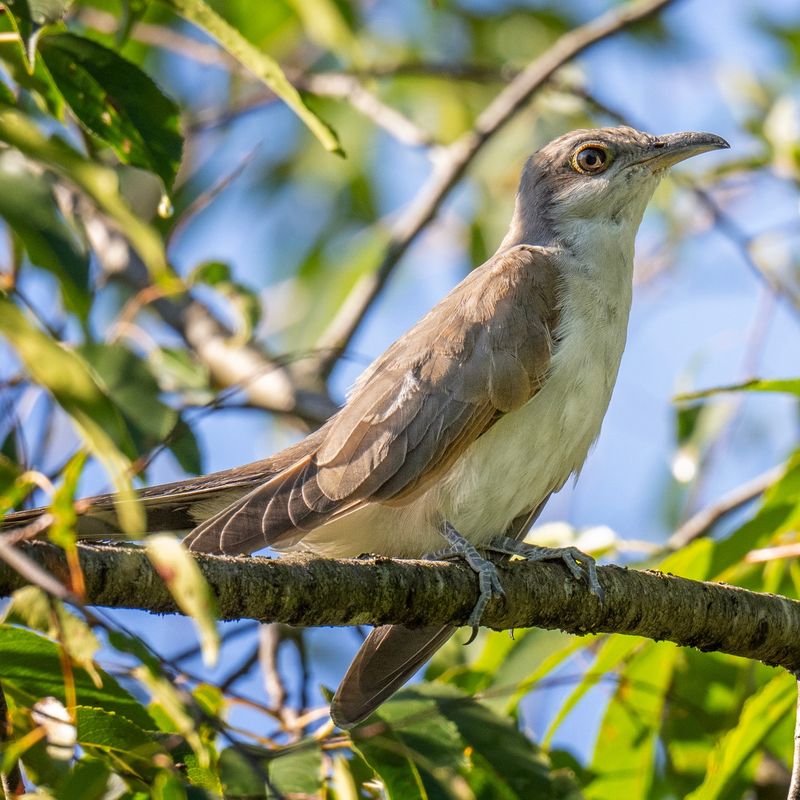
More than eighty different predators and parasites go after fall webworms. That is a serious lineup working on your behalf, free of charge.
Yellow-billed cuckoos are famous for it. Nicknamed rain crows in parts of Kentucky, these birds happily eat hairy caterpillars that most songbirds refuse.
Paper wasps and yellowjackets tear into the webs to carry caterpillars back to their own nests. Watching a wasp work through a webworm colony is oddly satisfying.
Then there are the parasitic wasps and flies. They lay eggs on or inside the caterpillars, and their young finish the job quietly from within.
Stink bugs, assassin bugs, and lacewing larvae join the effort. Even chickadees and vireos will pick at smaller webs.
Because of all this, populations swing wildly from year to year. A neighborhood swarming with nests one August might have almost none the next.
Broad-spectrum insecticide sprays can throw off that balance. Wipe out the wasps and predatory bugs, and the caterpillars gain an advantage the following season.
Leaving nests alone in the upper canopy lets these helpers do their thing. It also keeps you off a ladder you did not need.
Bats deserve a mention too, since they feed on the adult moths at night. Kentucky’s bat populations have taken hits in recent years, which quietly affects insects like this.
Supporting native shrubs and flowers around your yard gives beneficial insects a home base. That is pest management with zero effort.
Simple, Safe Ways To Remove A Nest
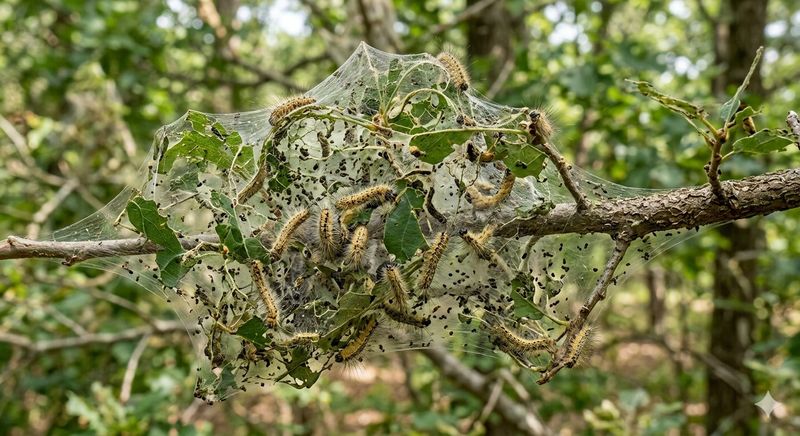
Reach for pruners before anything else. Snipping off the branch tip that holds the web is the fastest fix for nests within arm’s or pole’s reach.
Drop the clipped web into a bucket of soapy water. The caterpillars will not survive the soap, and you avoid scattering them across the lawn.
Another easy trick works even better on lower nests. Twist the web onto the end of a long stick or an old broom handle, then dunk the whole mess.
A strong jet from the garden hose breaks webs apart nicely. Exposed caterpillars become easy targets for birds and wasps within hours.
Skip the fire. Some homeowners try burning a nest off a branch, and it can just as easily end up scorching branches, siding, or worse.
Also skip the ladder for high nests. Extension specialists repeatedly point out that climbing risks outweigh the cosmetic benefit of a spotless canopy.
If spraying feels necessary, Bacillus thuringiensis, sold as Bt, targets young caterpillars and leaves bees and wasps alone. Timing matters, so apply it while the web is still small and the caterpillars are tiny.
Break open the web first with a rake or pole so the spray actually reaches inside. Silk sheds liquid remarkably well.
Insecticidal soap and horticultural oil can help on small, reachable nests too. For anything above head height on a mature tree, doing nothing is a perfectly respectable choice.