Eastern Red Bats In Georgia May Be Hiding Beneath Fallen Leaves This November
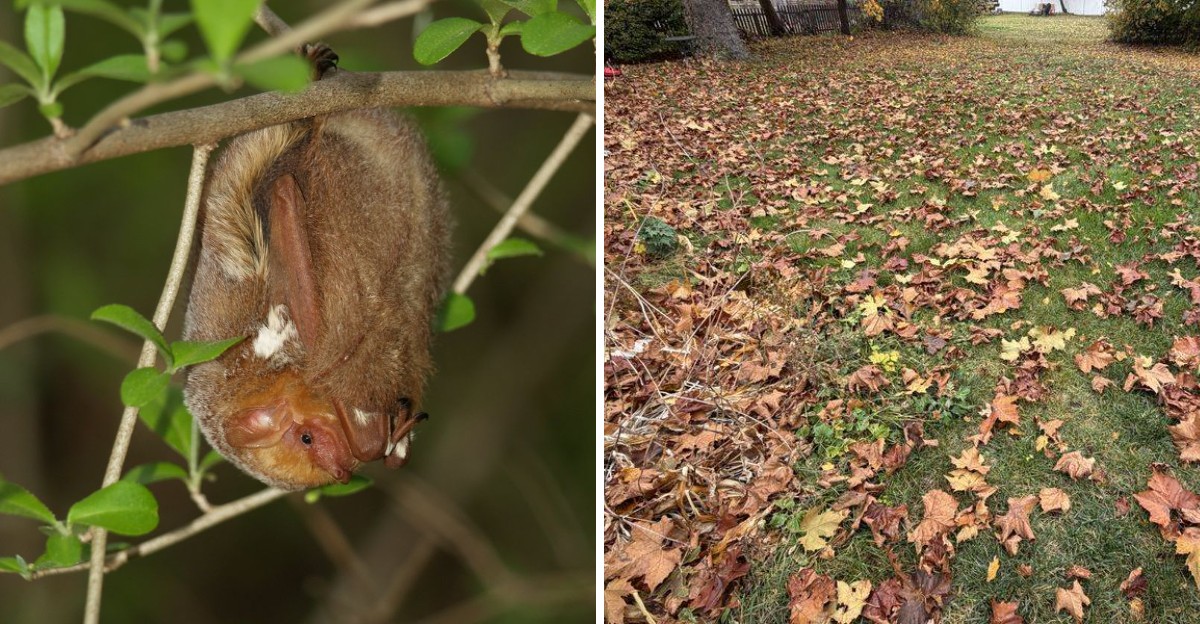
A furry mammal that weighs about as much as a few quarters may be sleeping inside the leaf pile you plan to rake this weekend. Researchers have found these tiny animals tucked under oak leaves on chilly days, curled up like rust-colored pinecones.
I love that something so wild can hide in such an ordinary spot. Their fur blends with autumn leaves so well that most people walk right past them.
Some have even been spotted by surprised folks clearing yards or burning brush.
Here in Georgia, November brings cold snaps that come and go. Warm afternoons can follow frosty mornings, and these small creatures adjust to every swing.
I find that kind of toughness pretty inspiring.
You may never look at a pile of brown leaves the same way again. Something unexpected could be curled up under that cozy blanket in your yard right now.
1. That Rusty Ball Of Leaves Might Have Tiny Wings
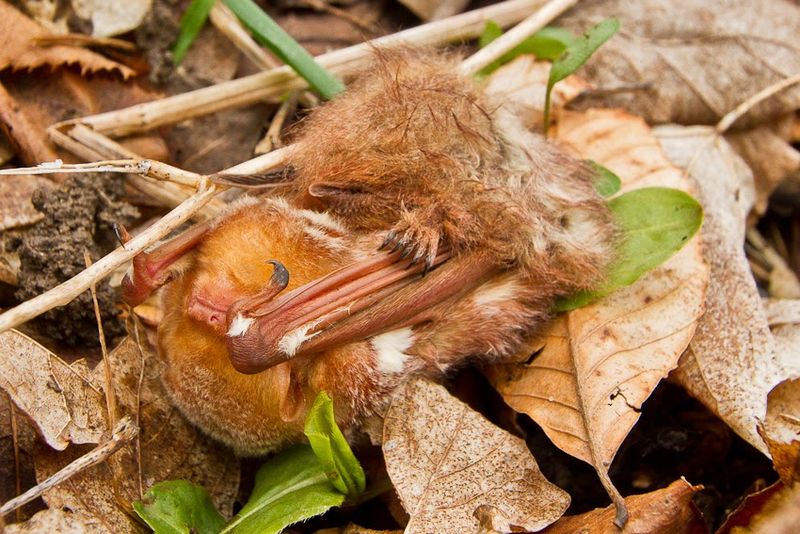
A few years back, I nearly mistook a curled oak leaf for, well, a curled oak leaf. Then it twitched.
That little moment taught me how good eastern red bats are at hiding in plain sight.
These bats usually roost alone in trees, hanging from leafy branches during warm months. As temperatures drop, things change.
Studies in the Southeast, including work in Missouri and the Carolinas, show they often move down to the forest floor when it gets cold.
Researchers tracking red bats with tiny radio transmitters found them tucked under leaf litter on chilly days. Many of these spots were in oak and hickory woods with a thick layer of fallen leaves.
The bats slip under the top layer and settle in for a rest.
So the title is not just a catchy idea. Leaf-litter roosting is a real, documented behavior, especially during cold snaps.
That said, not every red bat in your area will be under leaves. Some stay in trees on mild days, and some may move farther south.
Still, if you live near wooded areas, there is a fair chance one could be resting nearby on a frosty November morning.
2. Cold Snaps Send Red Bats From Tree Branches To The Ground
Temperature is the big trigger here. Research shows red bats tend to switch from tree roosts to leaf litter when air temperatures fall near or below freezing.
Why the move? The ground holds heat better than an open branch.
A layer of leaves acts like a quilt, keeping the bat out of biting wind and slowing heat loss. On sunny slopes, especially ones facing south, the leaves can warm up nicely by afternoon.
Once settled, the bat drops into torpor. Torpor is a short-term slowdown where body temperature, heart rate, and breathing all fall to save energy.
It is a lot like hitting a pause button.
In Georgia, November weather bounces around. North Georgia mountains can see hard frosts, while the coast stays milder much of the month.
So bats in the north may use leaf litter more often than bats near Savannah.
On warm evenings, red bats can wake up and fly out to catch insects. Then, when the next cold front rolls through, they may head back under the leaves.
It is a clever back-and-forth routine that helps them handle a season full of surprises.
3. Rake Your Leaves Gently Before You Fire Up The Blower
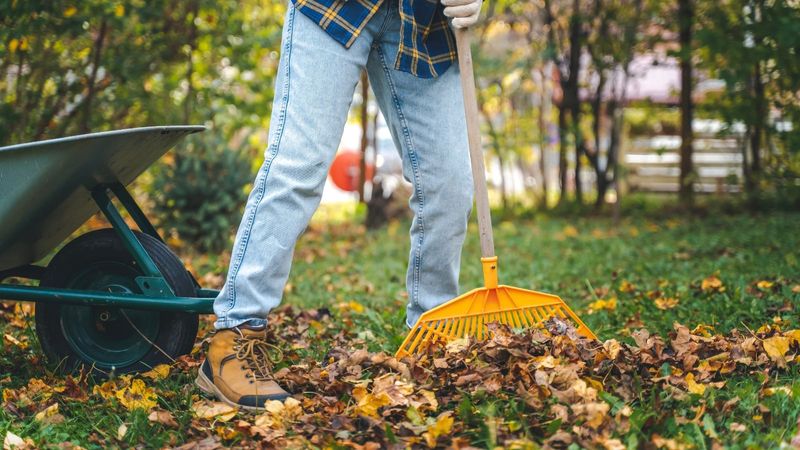
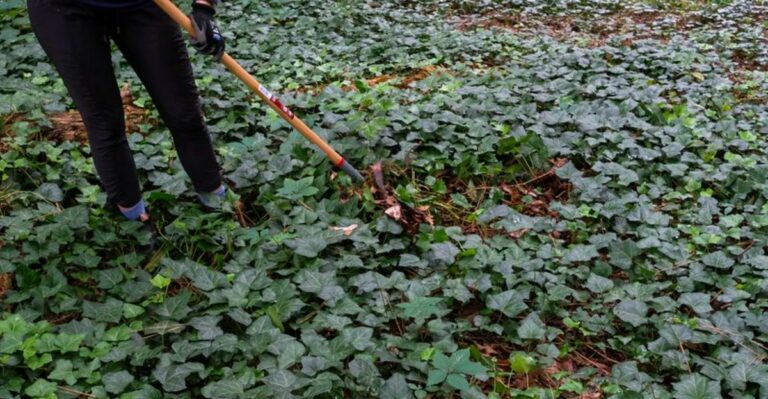
My best advice is simple. Slow down when you clean up leaves this month, especially near trees and woodland edges.
Leaf blowers, mowers, and mulchers move fast, and a sleeping bat cannot get out of the way quickly. A bat in torpor may need several minutes to warm up enough to fly.
Gentle hand-raking gives you a chance to spot one first.
Burning leaf piles is another concern. Researchers have reported red bats flushing out of leaves during prescribed burns in winter forests.
A backyard burn pile could pose a similar problem, so check local burn rules and consider skipping the fire.
Here are a few easy habits that help:
Leave a patch of leaves undisturbed under trees or along a fence line. Rake during the warmer part of the day when bats are more alert.
Look before you scoop, especially at clumps of reddish leaves.
If you do find a bat, do not touch it with bare hands. Bats can carry rabies, though most are healthy.
Gently cover it back with leaves and let it be. If it seems hurt, call a licensed wildlife rehabilitator or your local Georgia DNR office for help.
4. Those Fuzzy Red Coats Match Autumn Oak Leaves Perfectly
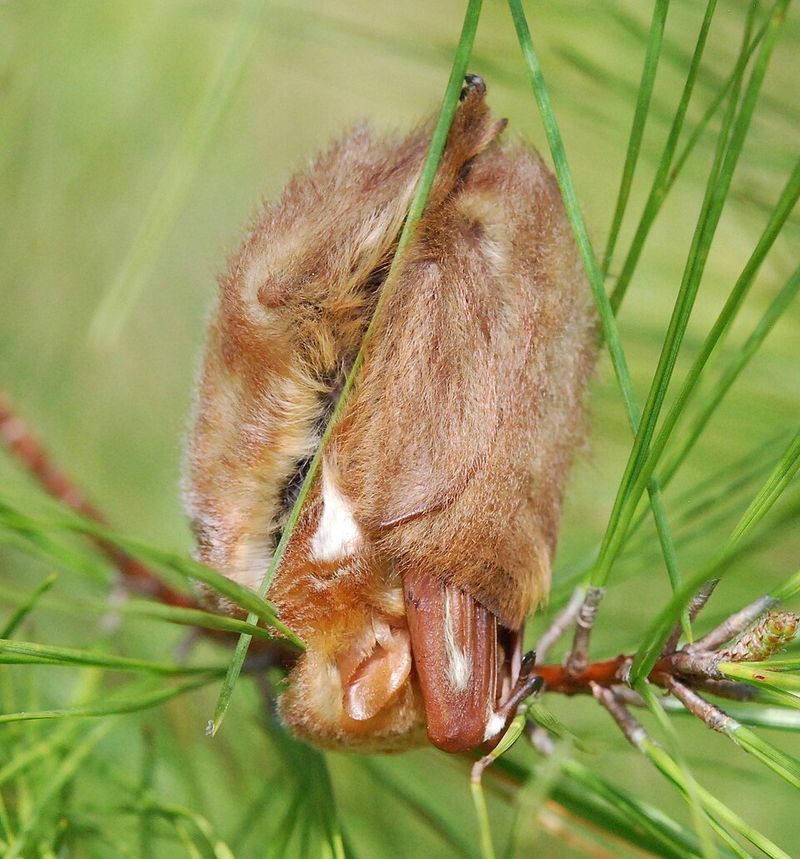
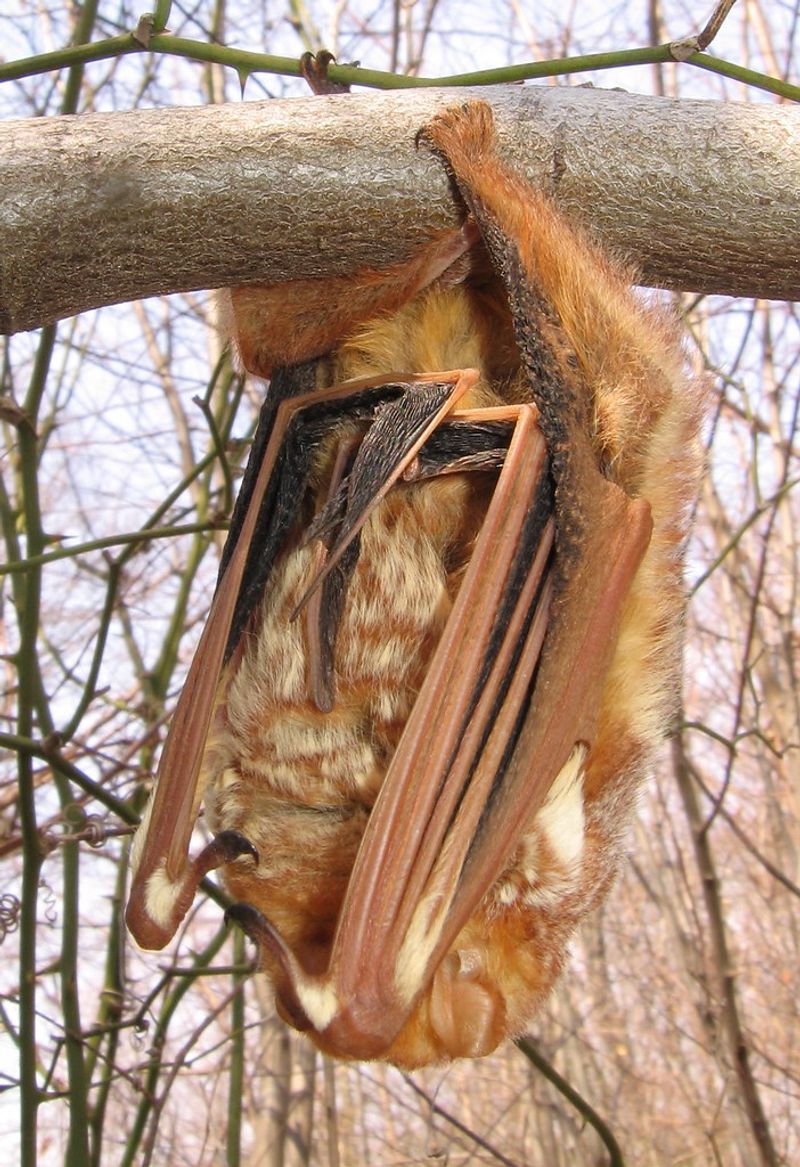
Honestly, nature could not have picked a better outfit. Eastern red bats wear fur in shades of brick red, orange, and rusty brown, often with frosted white tips on the hairs.
Males are usually brighter red, while females look a bit more muted and grayish. Both blend in beautifully with dried oak, maple, and sweetgum leaves.
In summer, that color helps them hide among branches, where they hang from a stem and look like a dried leaf twirling in the breeze. Hawks, owls, and blue jays are known predators, so staying hidden matters a lot.
On the ground in November, the same disguise still works. Curled into a ball, a red bat looks like one more crinkly leaf in the pile.
Most people could stare right at one and miss it.
Fun fact for you: red bats are one of the few bats in North America where moms often have three or four pups at once. Most bat species have just one pup a year.
Next time you notice a reddish clump on the ground, take a second look. That little bundle might be breathing.
5. A Built-In Furry Blanket Keeps This Little Bat Toasty
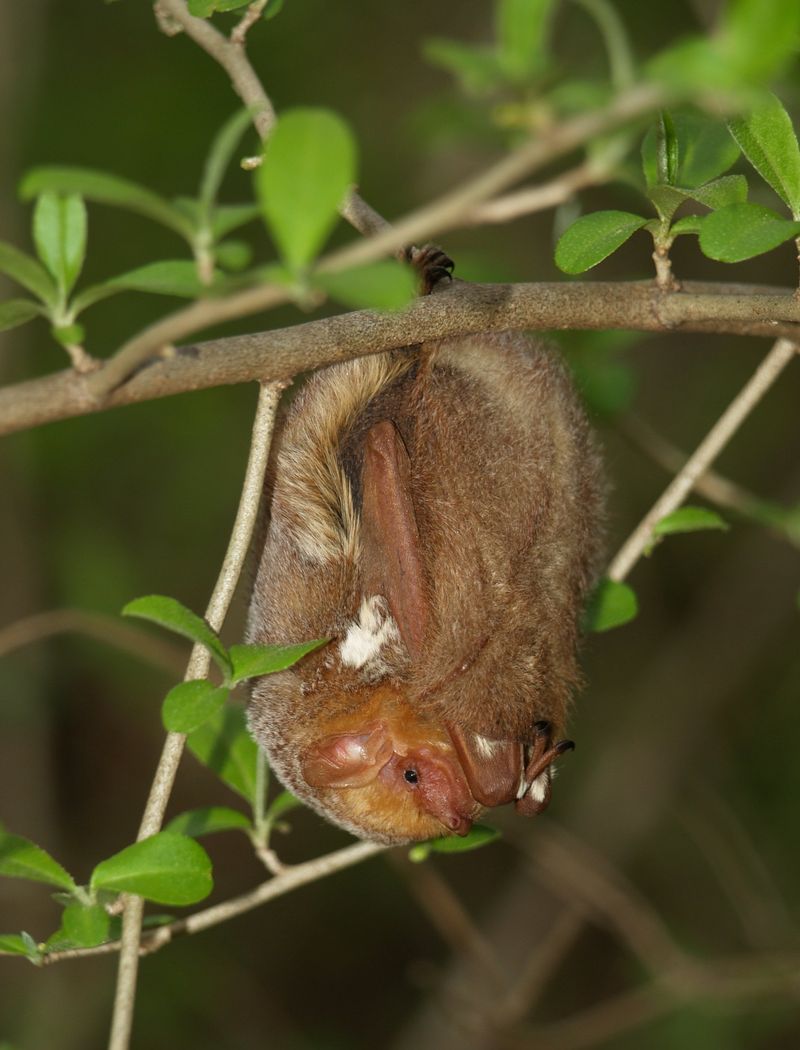
Think of a sleeping bag you never have to pack. Red bats carry one everywhere they go.
Their tail membrane, called the uropatagium, is covered in thick fur on the top side. Most bats have a bare tail membrane, so this is a pretty special feature.
When the bat rests, it can fold that furry membrane around its body like a cozy wrap.
Add their dense, silky body fur, and you get one of the best-insulated bats in the eastern United States. That is a big reason red bats can handle cold weather outside caves, where most hibernating bats spend the winter.
Scientists have recorded red bats surviving surprisingly low body temperatures during torpor. Their bodies cool down to save energy, then warm back up when conditions improve.
Of course, insulation only goes so far. In long freezes, leaf litter adds an extra layer of protection.
The combination of fur, tail wrap, and a blanket of leaves makes a winter shelter that is hard to beat.
I think it is kind of amazing. A creature smaller than your palm has its own heating plan, and it works without a thermostat.
6. Moth-Munching Red Bats Pay Back Your Yard In Spring
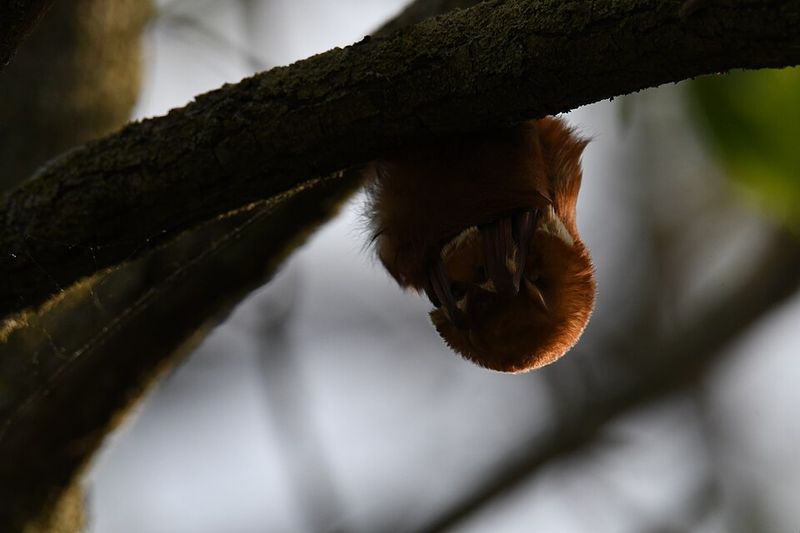
Ready for a fun bonus? The bat you protect this fall could be working for your garden next spring.
Eastern red bats eat insects, and moths are a big part of their menu. They also catch beetles, flying ants, leafhoppers, and other bugs.
Many of these insects can chew on garden plants or crops as caterpillars or adults.
Red bats often hunt along forest edges, over fields, and around streetlights where insects gather. A single bat can catch a lot of bugs in one night, which adds up over a whole summer.
Studies across the country have shown that bats save farmers huge amounts on pest control each year. Backyard gardeners benefit too, even if the savings are harder to measure.
Here is where your leaf patch matters. Bats that make it through the cold months healthy are ready to feed and raise pups once warm weather returns.
Fewer leaves blown away in November could mean fewer moths munching your tomatoes in June.
It is a fair trade. You give a bat a quiet spot to rest, and it helps keep your garden pests in check without any spraying.
7. Wind Turbines And Habitat Loss Are Putting Pressure On Red Bats
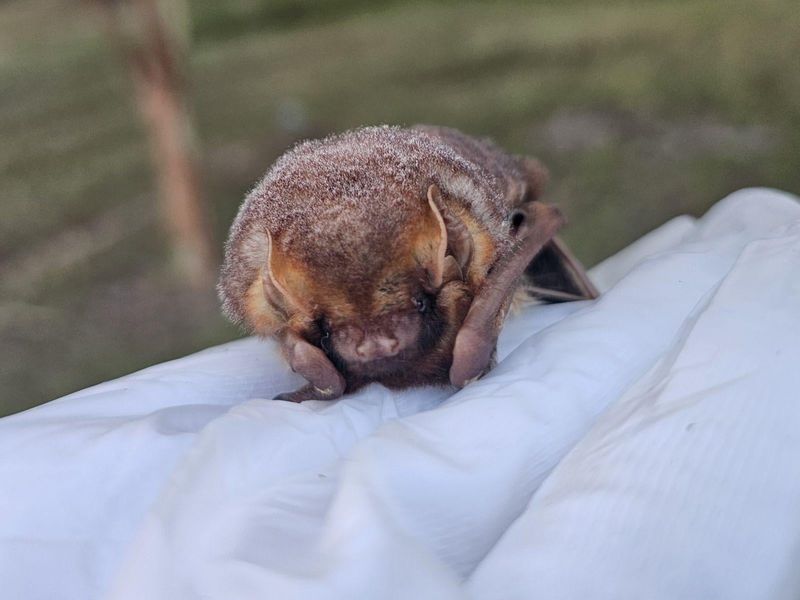
Red bats are still fairly common across Georgia, but they face real challenges. Knowing about them helps you understand why small actions at home count.
Wind turbines are one major concern. Tree-roosting bats like red bats, hoary bats, and silver-haired bats are among the species most often harmed at wind farms during fall migration.
Scientists are studying ways to reduce these losses, such as slowing turbines on low-wind nights.
Loss of forests and big trees is another issue. Red bats need leafy trees for summer roosts and healthy leaf layers for cold-weather shelter.
When woods get cleared, both options shrink.
Good news is a phrase I will skip, but here is something hopeful. Red bats are not affected by white-nose syndrome as heavily as cave-hibernating bats, since they rarely winter in caves.
Bat Conservation International and state wildlife agencies track these trends. The Georgia Department of Natural Resources lists bats as important parts of the state’s wildlife, and it shares tips on supporting them.
Your yard will not solve every problem. Still, mature trees, native plants, and a few untouched leaf piles give red bats a little extra breathing room.
8. Leave A Leafy Corner Under Your Oak Trees This Season
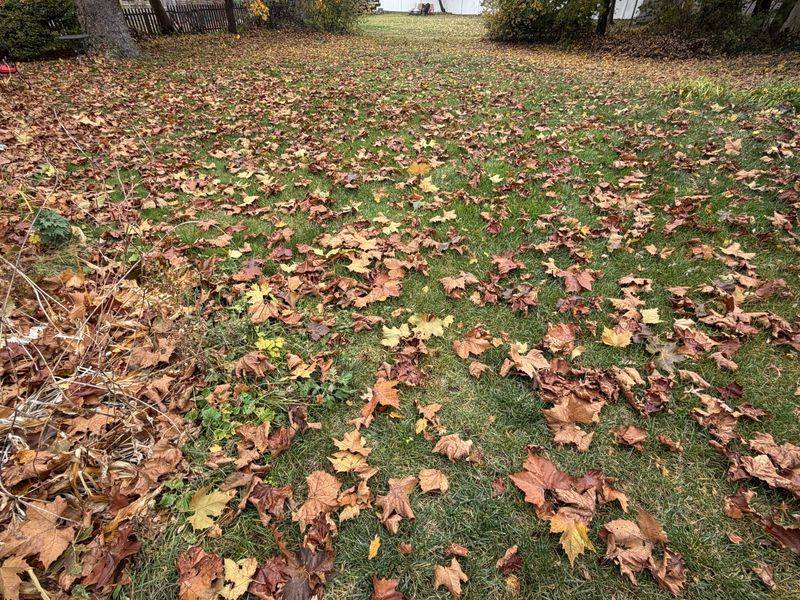
Here is my favorite takeaway. You do not need a big project to help red bats.
You just need to do a little less tidying.
Pick a corner of your yard, ideally under oaks or other hardwoods, and leave the leaves in place. A sunny, south-facing spot is a great choice since it warms up faster on cold days.
Even a small patch can make a difference.
Fallen leaves help more than bats. They shelter overwintering butterflies, moths, beetles, and spiders.
They also break down into rich soil that feeds your trees and shrubs.
A few other easy steps:
Keep mature trees when you can, since red bats roost in them during warmer months. Plant native trees like red maple, white oak, and sweetgum.
Skip pesticides that reduce the insects bats need to eat.
Across Georgia, more people are trying a leave-the-leaves approach, and it fits our mild winters well. You still get to rake paths and lawns, just not every square inch.
So grab your rake, slow down, and save a cozy spot. Somewhere in that pile, a small red neighbor might be glad you did.