Why October Is A Good Time To Deal With English Ivy In Georgia Yards
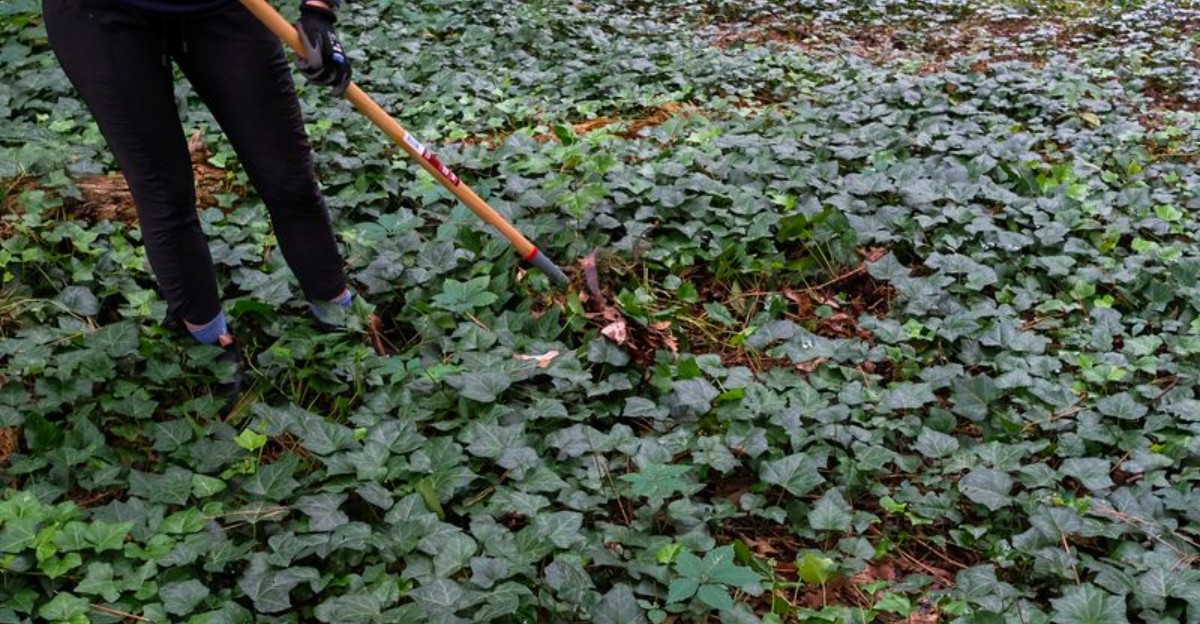
English ivy can stay green and look harmless while it quietly spreads beyond the place you intended. October gives you a chance to get ahead of it.
By then, the growing season is shifting, but the ivy remains easy to recognize among changing plants.
That visibility matters when vines have slipped beneath shrubs or stretched toward trees and property edges. In Georgia yards, cooler working weather can make a patch easier to tackle carefully.
Still, pulling at every vine you see is not always the smartest first move.
Take time to understand how established ivy responds before you start removing it. The right approach can save you from repeating the same frustrating job later.
Use October more wisely, and you can begin reclaiming space before another season gives the ivy room to spread.
1. October Gives You A Good Window To Tackle Established Ivy
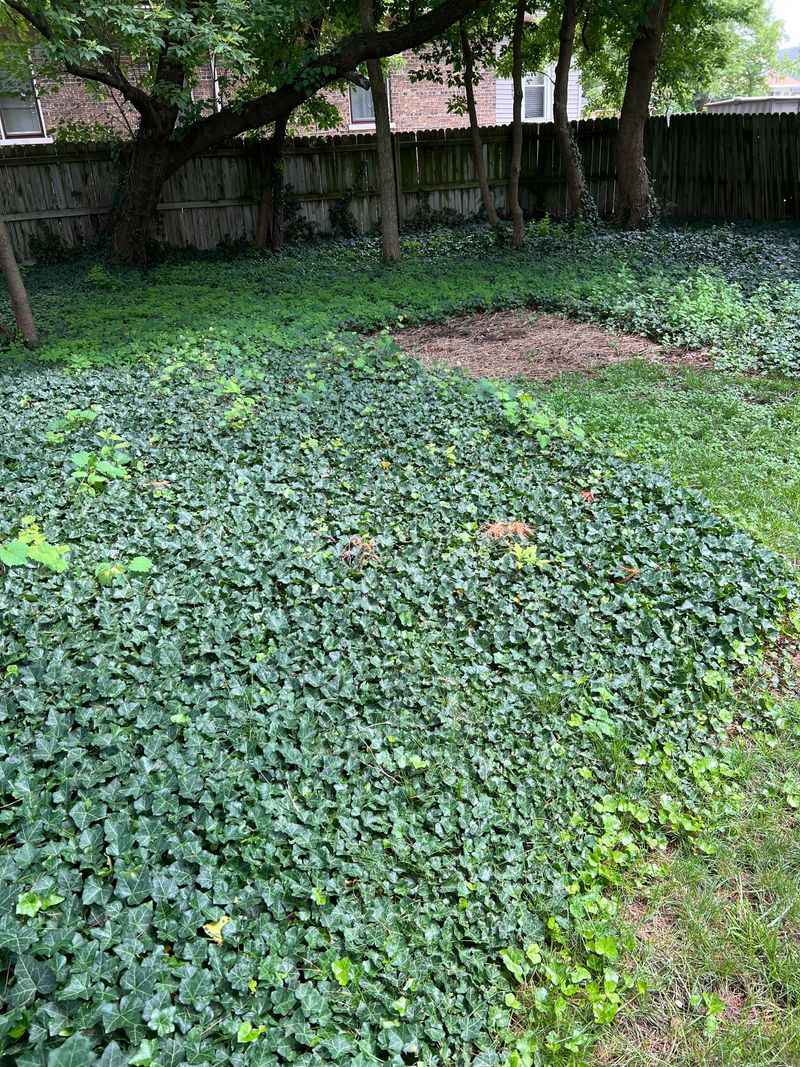
Cool mornings make a real difference when you are on your knees pulling vines. Summer ivy work in Georgia means humidity, ticks, and quitting after twenty minutes.
October usually brings mild days in the 60s and 70s across most of the state. That alone lets you stay out longer and actually finish a section.
Fall rain matters too, since damp soil releases roots instead of snapping them off.
Dry clay grips runners hard, and broken root pieces sprout again later. Waiting a day or two after a good soaking rain saves a lot of effort.
Visibility improves once nearby leaves start dropping.
Poison ivy has usually shed by mid to late October, which lowers the chance of grabbing something itchy by mistake. Snakes are also less active as temperatures fall, though they have not gone quiet yet.
Ivy itself stays green all winter, so it stands out against bare ground and brown leaf litter.
You can spot exactly where the mat ends and where new runners are heading. That kind of clarity is harder to get in June, when everything blends together.
Progress still takes repeat visits, and one October weekend will not settle an old patch.
What you gain is a comfortable stretch of weeks to work through it in pieces, section by section, without fighting the weather the whole time.
2. English Ivy Keeps Spreading Long After It Covers The Ground
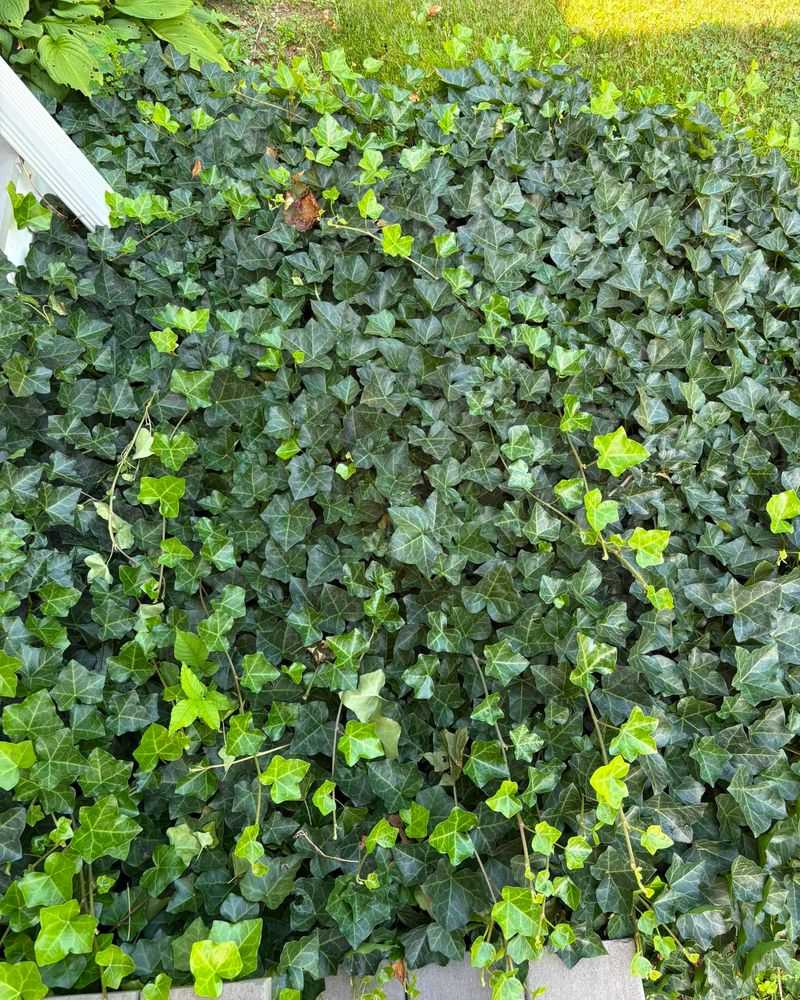
Ivy does not stop once it fills a bed. It keeps sending runners sideways, rooting at nodes wherever stems touch soil.
Each rooted point becomes a new anchor, which is why the edge of a patch creeps a little further every year.
Yards across north Georgia show this pattern clearly, especially on shaded slopes where nothing else competes well.
Ivy climbs fences, swallows shrubs, and slides under decks with no trouble. Neighbors often trade it back and forth without meaning to.
Birds move it further when vines mature and produce fruit.
Mature ivy that climbs high enough eventually flowers and sets berries, and seeds travel into woods and vacant lots. Ground-level ivy stays juvenile and rarely fruits, which is one reason climbing vines deserve priority.
Your Georgia Garden Changes Every Week. Your Plan Should Too.
Gardening in Georgia changes quickly throughout the season. Every Friday you’ll receive a simple weekly plan showing exactly what to plant, prune, fertilize, harvest, and protect so you never miss the right timing.
Edges are where you win or lose.
Cutting a clean border with a spade and checking it every few weeks keeps runners from sneaking back into the lawn. It sounds small, but that habit does more than one big pull.
Mulch piled thick along a trimmed edge slows regrowth somewhat, though it will not stop determined stems.
Think of ivy control as maintenance rather than a single project. Yards with steady edge patrol stay manageable, while ignored patches double in size faster than most people expect.
3. Vines Climbing Trees Need Attention Before They Spread Higher
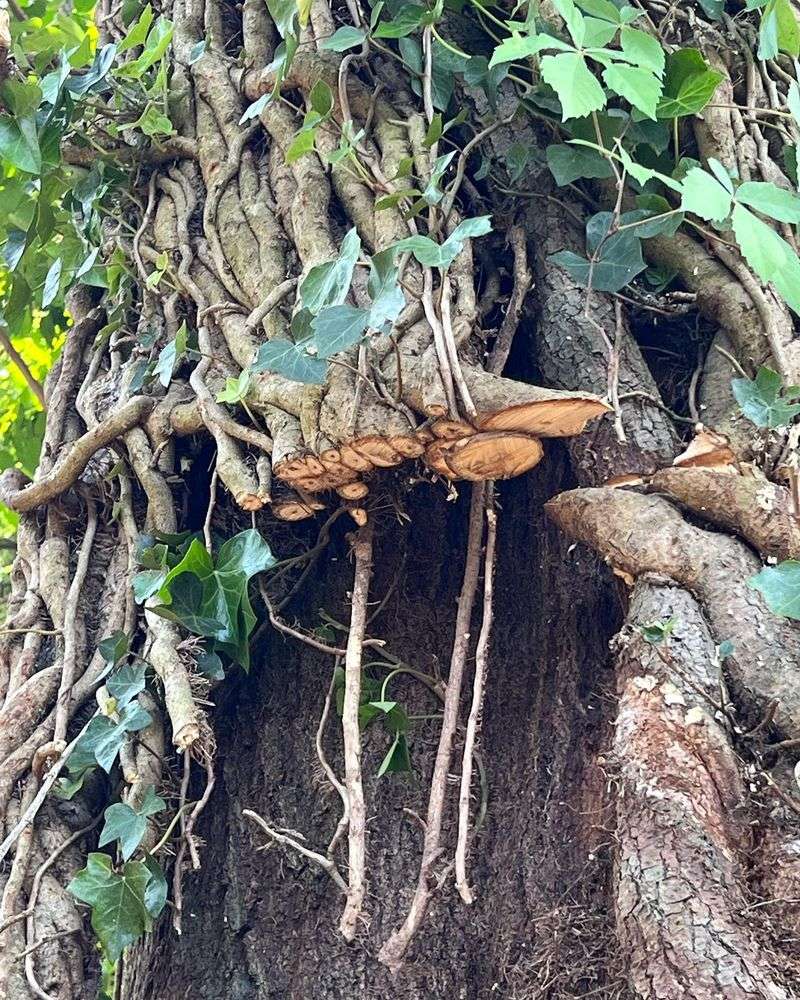
Ivy on a tree trunk is a bigger problem than ivy on the ground. Once it climbs, the vine changes behavior and starts branching outward into the canopy.
Leaves get larger, stems thicken, and the whole mass adds weight where a tree can least handle it.
Heavy ivy in the crown catches wind and ice, and that raises the risk of limb breakage during winter storms.
Georgia pines and older water oaks already lose branches in ice events. Adding a dense green sail up there does not help.
Shading is the other issue.
Ivy foliage layered over branches blocks light from the tree’s own leaves, which weakens growth over time. Trees under that kind of pressure decline slowly, so the damage is easy to miss until it is advanced.
Bark stays constantly damp under a thick ivy blanket, and that can hide wounds, cavities, and insect activity from view.
Arborists often mention this during inspections. Clearing the trunk simply lets you see what you own.
October is a practical time to walk your property and mark which trunks have vines on them.
Take photos, note the worst ones, and start with trees closest to the house or driveway. Priority matters when you have more ivy than weekends.
4. Cutting Tree Climbing Vines Stops Growth Above The Cut
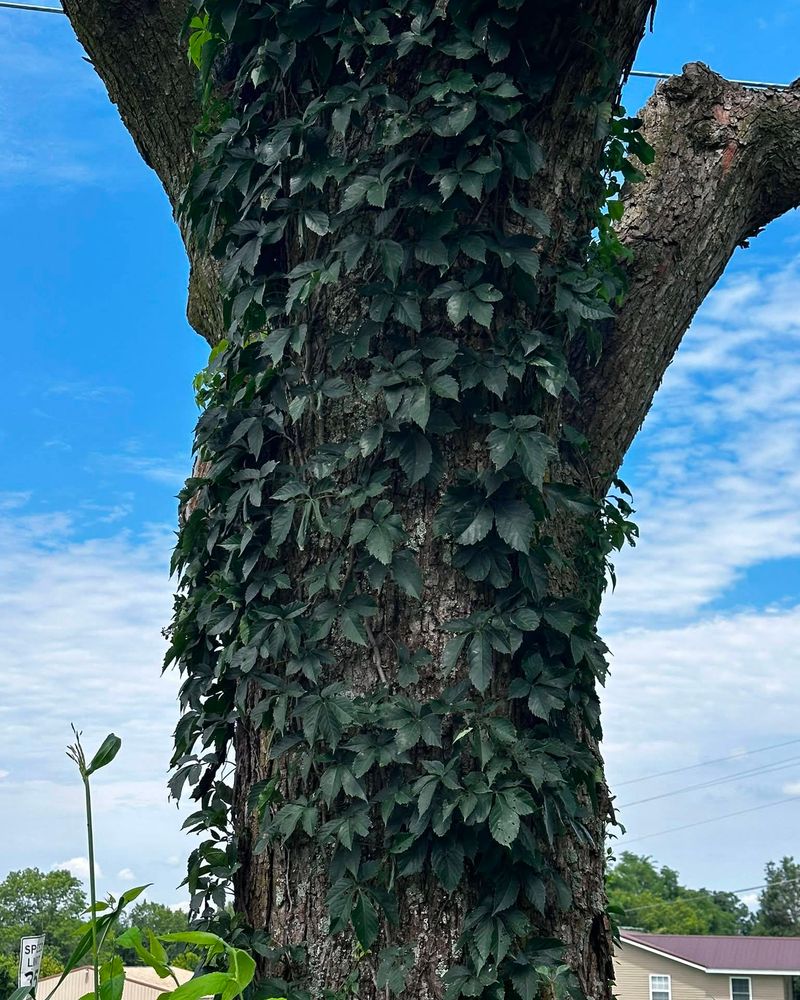
Here is the trick that surprises people: you do not have to pull ivy down from a tree. Cut it at the base and the upper growth loses its water supply.
Vines above the cut brown out over weeks or months, then break apart and fall on their own.
Arborists call the method a lifesaver ring, and the idea is simple.
Cut each vine at chest height, then cut again near the soil line, and remove that band of stem entirely. A gap of one to two feet keeps the pieces from grafting back together.
Loppers handle most vines, while a hand saw works on older ropes as thick as your wrist.
Leave the clinging rootlets alone on the bark. Prying them off tears bark and does more harm than the ivy did.
Then dig out the ivy roots in a circle around the trunk, a few feet wide if you can manage it.
That ring slows reclimbing and makes future checks quick. Ivy will try again from the surrounding mat, so expect follow-up.
Fall works well for this across Georgia because cooler weather makes the digging tolerable.
One caution: do not cut vines you cannot identify. Poison ivy climbs the same trunks, and hairy-looking aerial roots are a warning sign.
5. Ground Ivy Needs Roots Removed To Keep It From Returning
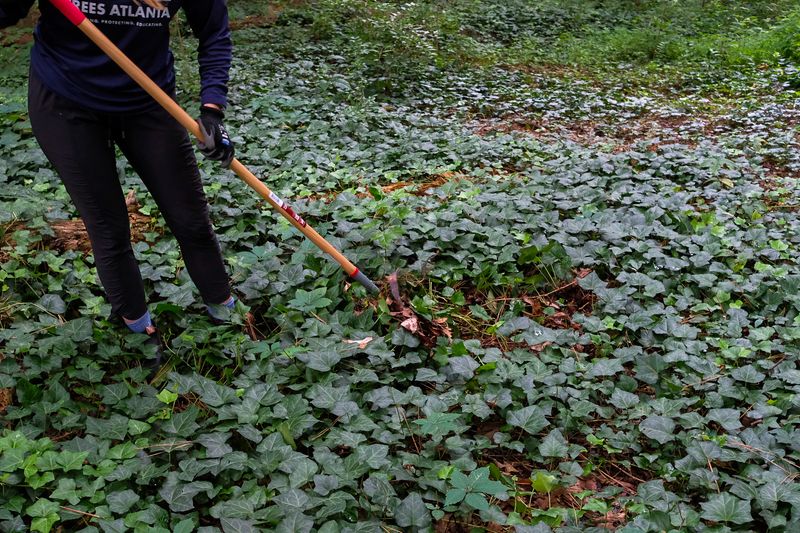
Snipping ivy at the surface accomplishes almost nothing. Roots left in the soil push new shoots within weeks, and you end up back where you started.
Rolling the mat is the better approach, and it works surprisingly well on flat ground.
Start at one edge, slide a spade under the runners, and peel the mat toward you like old carpet.
Thick patches come up in sections you can drag off. Shake loose soil back into the bed as you go.
Red clay in much of Georgia makes this easier after rain and miserable when baked dry.
Timing your work around a wet week saves your back and your tools. A digging fork helps break up compacted spots.
Watch for the woody crowns where multiple stems meet, since those regrow fastest if left behind.
Dig them out fully rather than chopping through them. Missing a few is normal, so plan to walk the area again.
Do not compost what you pull, because stem pieces can root in a pile.
Bag it, pile it on a tarp to dry out, or check local yard waste rules. Some counties accept it with regular collection.
Expect two or three passes over the following months, with quick hand-pulling of anything green that reappears.
6. Fall Treatment Can Help With Growth That Cannot Be Pulled
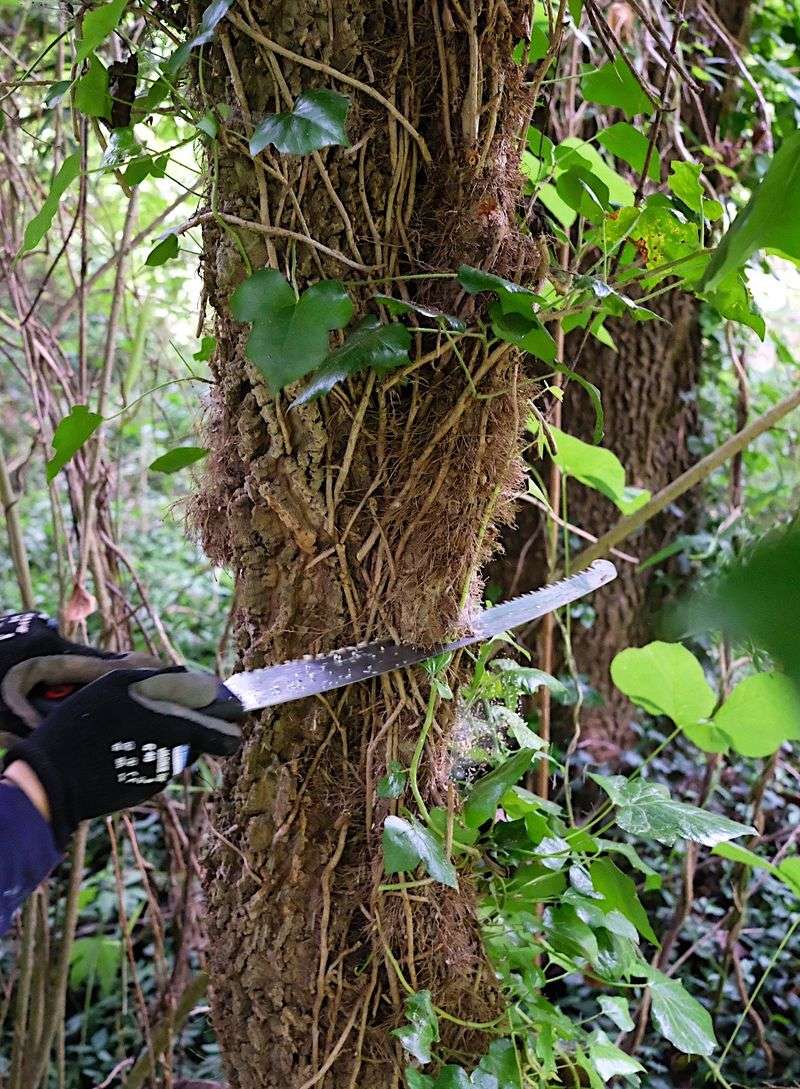
Some ivy sits where digging is not realistic. Steep banks, rocky ground, and areas laced with tree roots fall into that group.
Herbicide becomes an option there, and fall is generally a reasonable window while ivy still has active leaves.
Ivy leaves carry a waxy coating that repels spray, which is why results are often uneven.
Mowing or bruising the foliage first improves uptake somewhat. Products labeled with a surfactant tend to perform better on glossy leaves.
Cut-and-paint is usually the most targeted method for vines.
Sever the stem, then apply the product to the fresh cut surface right away. That approach keeps chemicals off surrounding plants, which matters in tight beds.
Read the label and follow it exactly, since rates, temperatures, and rain windows all affect outcomes.
Glyphosate and triclopyr products are commonly used for ivy in Georgia, and both carry restrictions worth reading twice. Avoid spraying near ponds, creeks, or wells.
Wind drift damages azaleas and hostas faster than you would guess.
Pick a calm morning, wear gloves and long sleeves, and keep pets away until everything dries. Repeat applications are typically needed, and even then some regrowth is likely.
Anyone uncomfortable with chemicals can stick with cutting and smothering, though that route takes longer.
7. Native Groundcovers Can Fill The Space After Ivy Is Gone
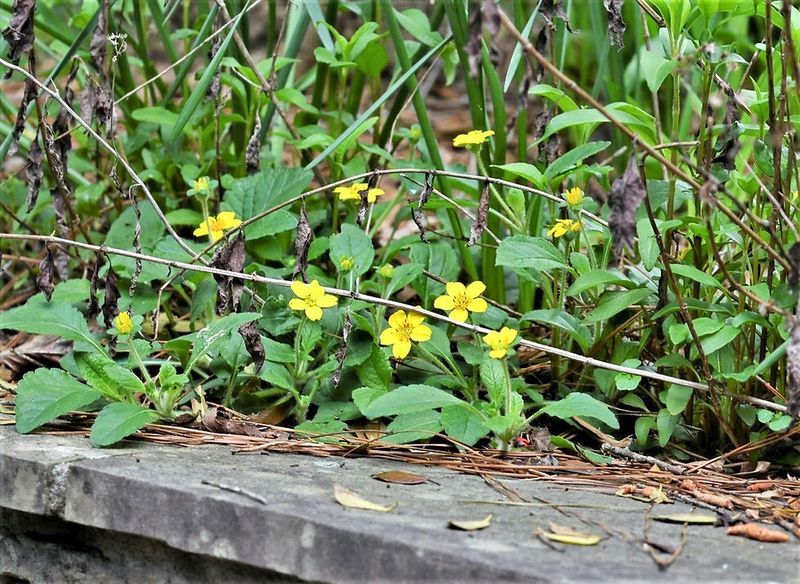
Bare soil after ivy removal is an invitation, and something will accept it. Better that something be a plant you chose.
Native groundcovers hold slopes, shade out weed seeds, and give pollinators a reason to visit.
Green and gold is a favorite for shady spots and blooms yellow in spring.
Creeping phlox handles sunnier edges and drapes nicely over retaining walls. Both spread at a pace you can actually control.
Ferns fit well under hardwoods where soil stays cool.
Christmas fern stays green through winter in most of the state and asks for very little once settled. Wild ginger and foamflower work in similar shade.
Late fall planting suits Georgia gardens because roots keep growing while the soil is still warm.
Winter rain does the watering for you in a normal year. Dry spells still happen, so check new plants during warm stretches.
Mulch with pine straw or shredded leaves between plants until they knit together.
Two to three inches is plenty, and keep it off plant crowns. Refresh it once a year.
Keep watching the old ivy zone while your new plants establish.
Stray runners will appear, and pulling them early is far easier than fighting a comeback. Fill the space, patrol the edges, and the yard gradually starts working with you.