10 Easy Ways To Revive Your Struggling Clematis In North Carolina
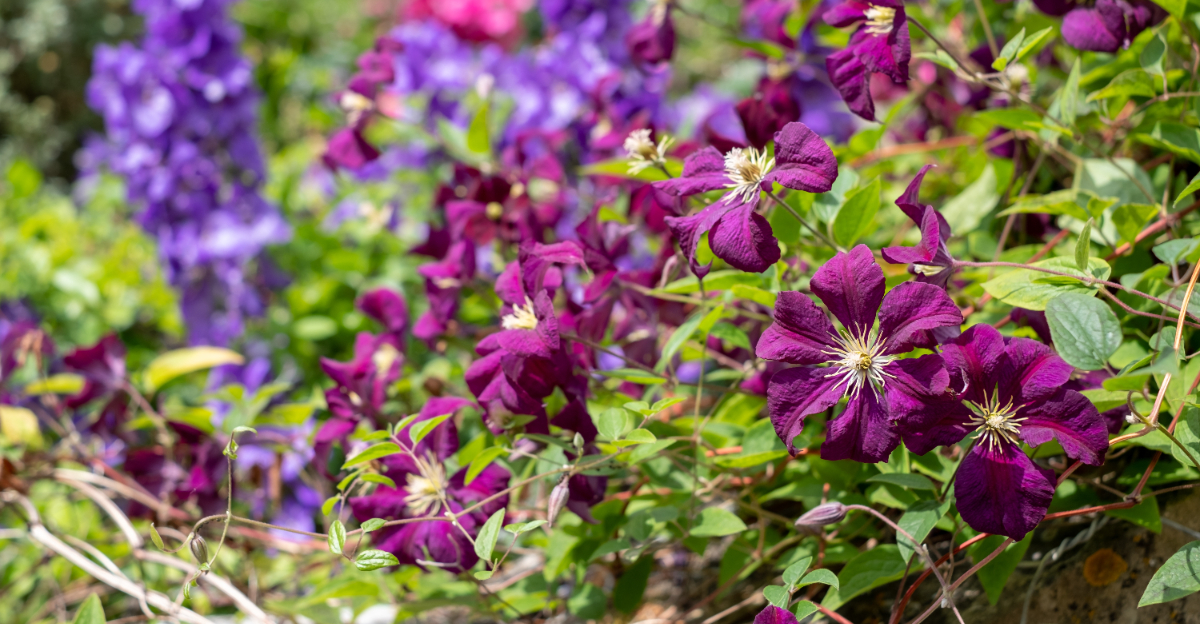
Clematis has a reputation for being temperamental, and North Carolina’s combination of summer heat, humidity, and clay soil gives that reputation plenty of opportunity to prove itself.
A clematis that was thriving in spring and is now wilting, producing sparse foliage, or simply sitting without any visible growth is not necessarily a lost cause.
Most struggling clematis in this state are responding to one or two fixable problems rather than declining beyond recovery.
These approaches address the most common causes of clematis failure in North Carolina gardens specifically, not generic advice borrowed from cooler climates where these vines face an entirely different set of challenges through the growing season.
1. Move Your Clematis Out Of Harsh Afternoon Sun
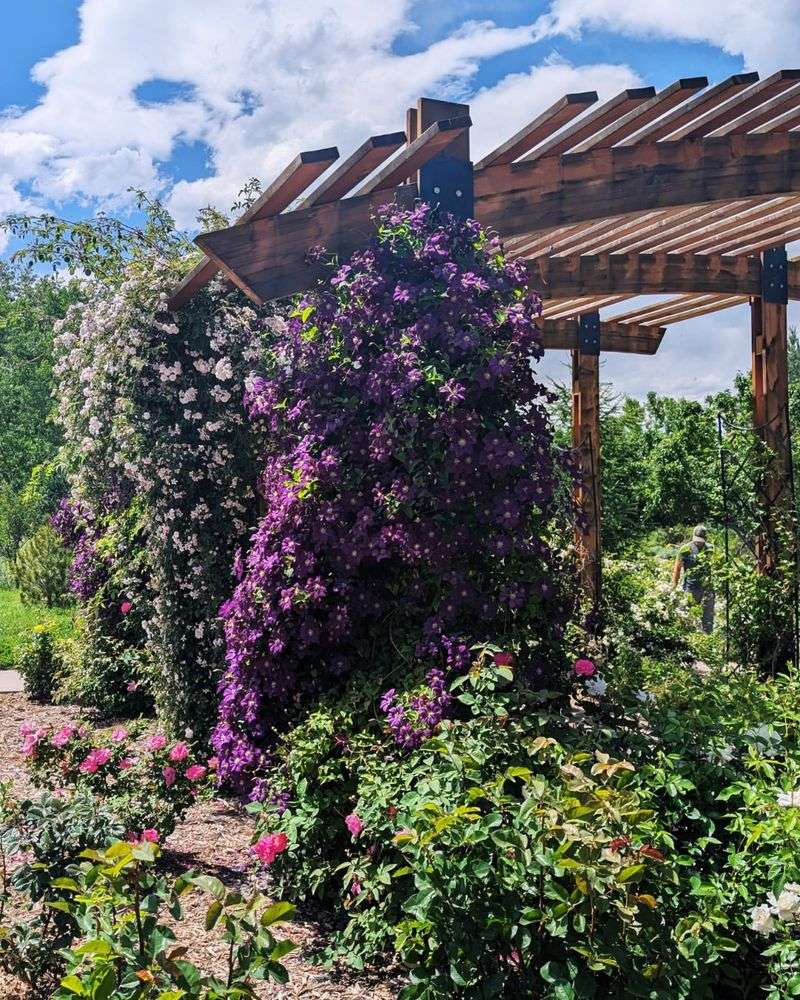
North Carolina summers are no joke. Afternoon temperatures can push well past 90 degrees Fahrenheit, and that kind of heat can absolutely fry a clematis vine that is planted in full western sun exposure.
Most clematis varieties actually prefer morning sun with some afternoon shade, and ignoring that preference is one of the most common reasons these plants struggle in the South.
If your clematis is planted against a west-facing wall or fence, it may be baking in reflected heat for hours every day. Moving it to a spot that gets bright morning light but is shaded from about 2 p.m. onward can make a huge difference.
East-facing walls and north-facing fences near taller shrubs or trees often work beautifully for this purpose.
You do not have to dig up the whole plant right away. Start by adding a shade cloth temporarily to see how the vine responds before committing to a full transplant.
Many gardeners in Charlotte and Raleigh have saved struggling clematis simply by blocking that brutal afternoon sun. Give your plant some relief, and you will likely notice new growth within just a few weeks of making the change.
2. Cool The Roots With Mulch Or Low Groundcover
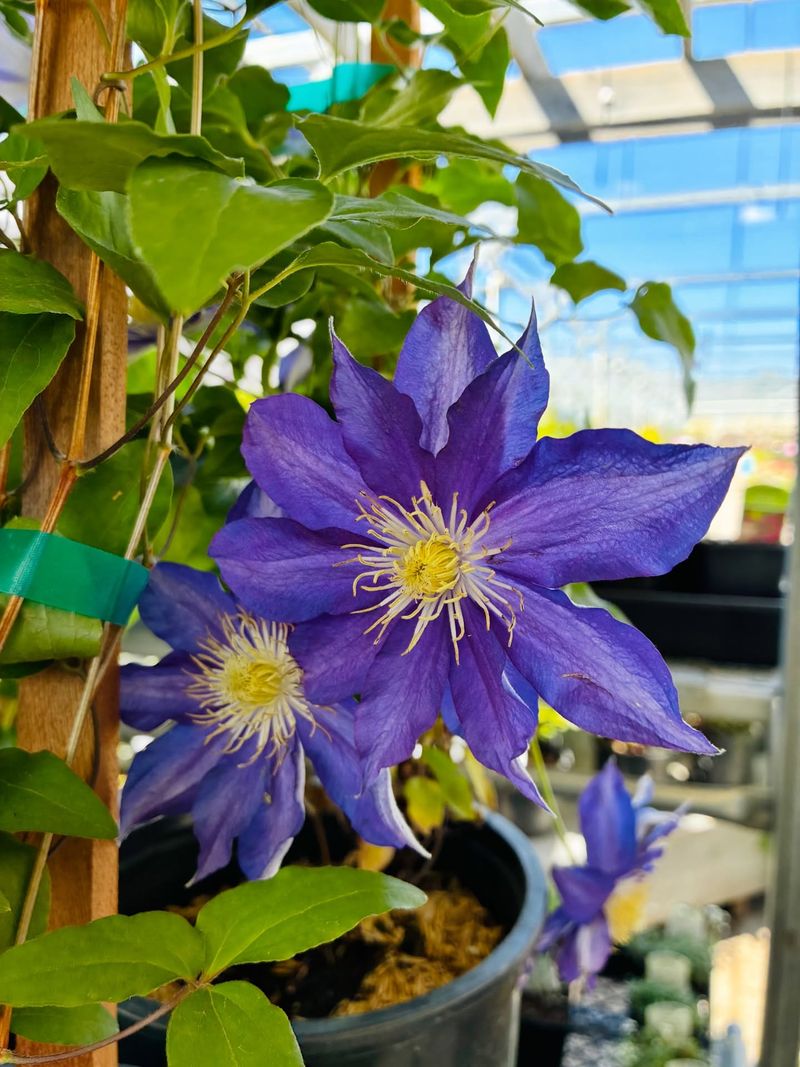
Here is something many gardeners do not realize: clematis vines love having their heads in the sun but their roots in the cool.
Hot soil is one of the biggest stressors for clematis in North Carolina, especially during July and August when the ground can feel like a frying pan. Keeping the root zone cool is a simple fix that pays off fast.
Spreading a 2 to 3 inch layer of organic mulch around the base of your clematis works wonders. Pine bark, shredded hardwood, or even pine straw are all great options that are easy to find at any garden center in the state.
Mulch keeps soil moisture from evaporating too quickly and prevents the roots from getting overheated during those sweltering Southern afternoons.
Another clever trick is planting low-growing groundcovers around the base of the vine. Creeping thyme, sweet alyssum, or even hostas can shade the soil naturally while adding some extra beauty to the garden bed.
Just be sure whatever you plant is not competing too aggressively for water or nutrients. A well-mulched, cool root zone gives your clematis the stable foundation it needs to push out strong new growth all season long.
Your North Carolina Garden Changes Every Week. Your Plan Should Too.
Gardening in North Carolina changes quickly throughout the season. Every Friday you’ll receive a simple weekly plan showing exactly what to plant, prune, fertilize, harvest, and protect so you never miss the right timing.
3. Water Deeply Instead Of Giving It Quick Sprinkles
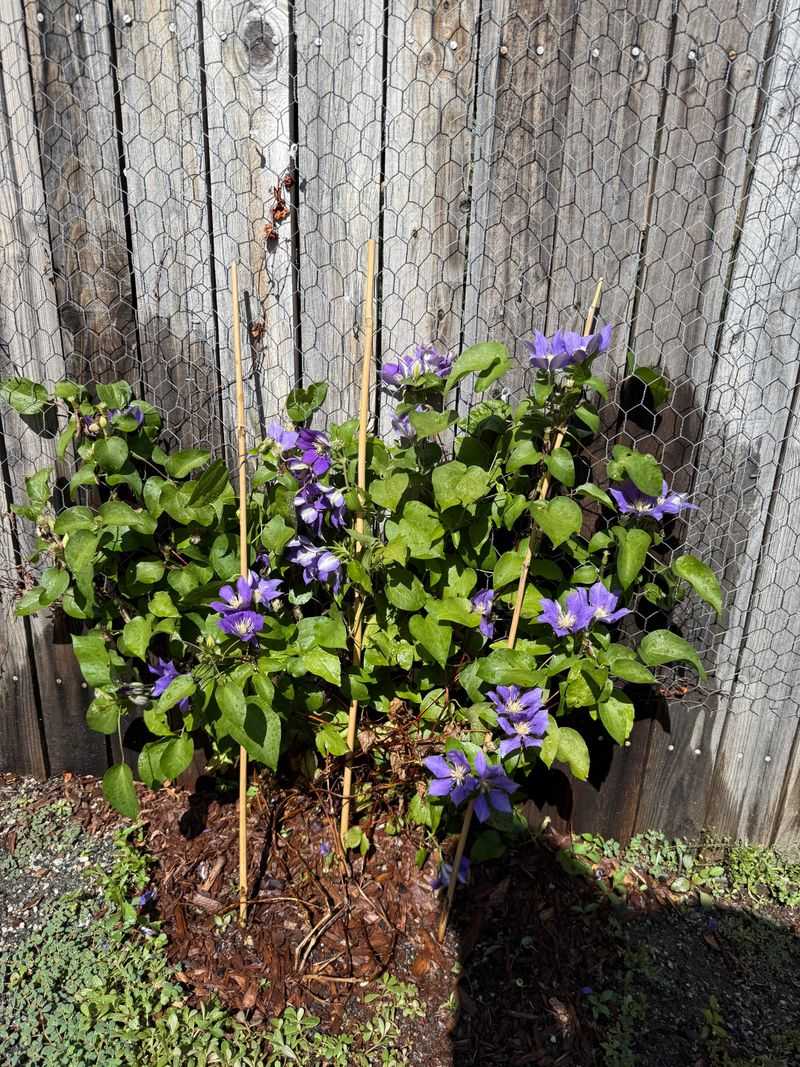
Frequent shallow watering is one of the sneakiest ways to weaken a clematis over time. When you only wet the top inch or two of soil, the roots stay near the surface where they are vulnerable to heat and drought.
Deep watering trains the roots to grow down into cooler, more stable soil layers, which makes the whole plant far more resilient.
Clematis generally needs about one inch of water per week during the growing season, but that number goes up during North Carolina’s brutal summer stretches. Instead of sprinkling a little water every day, try watering deeply two or three times per week.
Let the water soak in slowly so it reaches 6 to 8 inches below the surface. A soaker hose laid near the base of the plant is one of the most efficient tools you can use for this.
One easy way to check if you are watering enough is to stick your finger 2 inches into the soil near the roots. If it feels dry at that depth, it is time to water again.
Avoid wetting the foliage when you can, since wet leaves in humid North Carolina weather can invite fungal problems. Consistent, deep watering is one of the simplest changes you can make to see a real improvement in your clematis health.
4. Check That The Soil Drains Well After North Carolina Storms
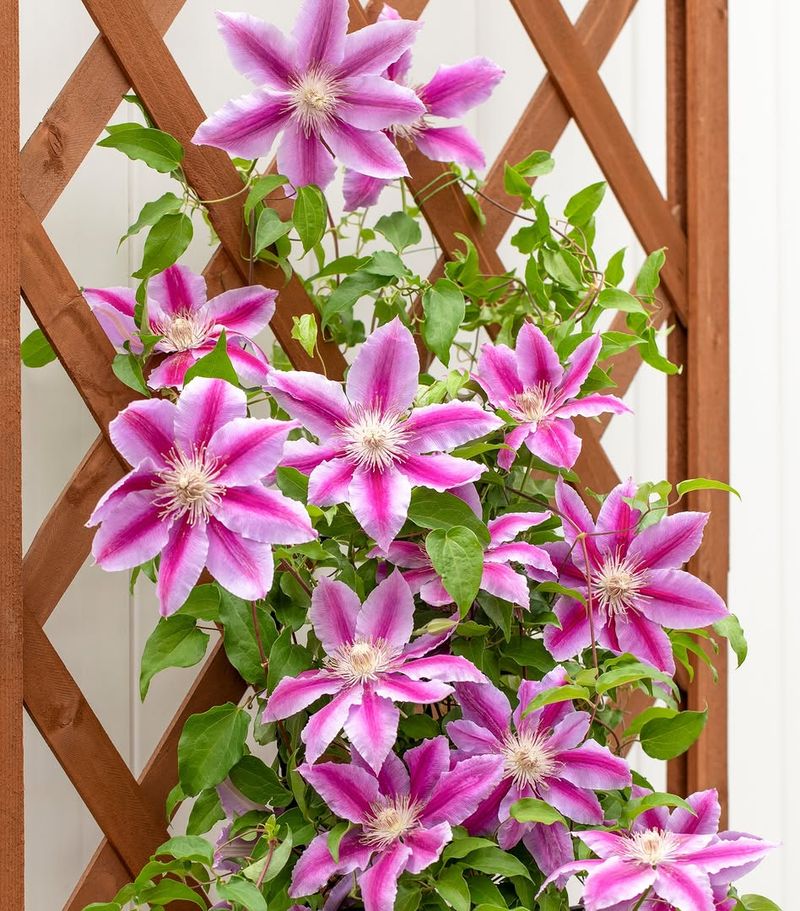
North Carolina is no stranger to heavy rain. Whether it is a summer thunderstorm rolling through the Piedmont or a slow-moving front soaking the mountains, the state gets plenty of precipitation that can pool around plant roots.
Clematis absolutely cannot tolerate soggy feet, and waterlogged soil is a fast track to root rot and a plant that simply refuses to thrive.
Clay soil, which is extremely common across much of North Carolina, is especially problematic because it holds water for a long time after a storm.
A quick test you can do at home is to dig a hole about 12 inches deep near your clematis, fill it with water, and see how long it takes to drain.
If water is still sitting there after an hour, your drainage situation needs some serious attention before your vine can recover.
Improving drainage does not have to be complicated. Mixing in generous amounts of coarse sand, perlite, or aged compost helps break up clay and allows water to move through more freely.
Raised beds are another excellent solution for gardeners dealing with persistently wet spots. Some North Carolina gardeners also plant clematis on gentle slopes to take natural advantage of gravity-assisted drainage.
Getting the drainage right is foundational, and without it, almost every other fix you try will fall short.
5. Feed It With A Low-Nitrogen Fertilizer During The Growing Season
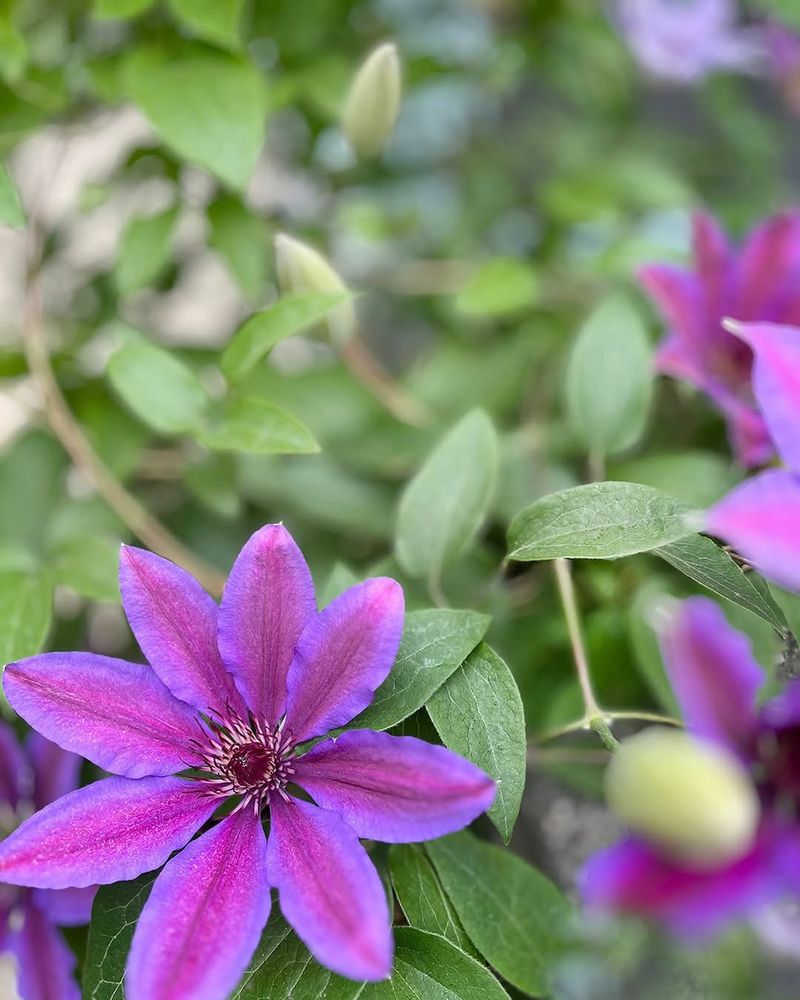
Fertilizing clematis sounds simple, but choosing the wrong type of fertilizer is surprisingly easy to do. Many gardeners reach for a general-purpose fertilizer that is high in nitrogen, thinking more nutrients means better growth.
With clematis, that logic backfires. Too much nitrogen pushes the plant to produce loads of leafy green growth at the expense of flowers, and it can actually make the vine more vulnerable to stress.
What clematis needs during the growing season is a fertilizer with a higher ratio of phosphorus and potassium compared to nitrogen. Look for products labeled for flowering vines or tomatoes, as those tend to have the right balance.
Something in the range of 5-10-10 or 4-12-12 works well. Apply it in early spring when new growth starts and then again in midsummer to support continued blooming through the warmer months.
Always water your clematis thoroughly before applying any fertilizer to avoid burning the roots. Granular slow-release formulas are a great option because they feed the plant gradually over several weeks rather than all at once.
Liquid fertilizers work too, but they require more frequent applications.
Feeding your clematis the right way gives it the energy it needs to produce those spectacular blooms North Carolina gardeners love, without pushing it into a cycle of weak, floppy growth that never quite delivers on its promise.
6. Find Out Which Pruning Group Your Clematis Belongs To
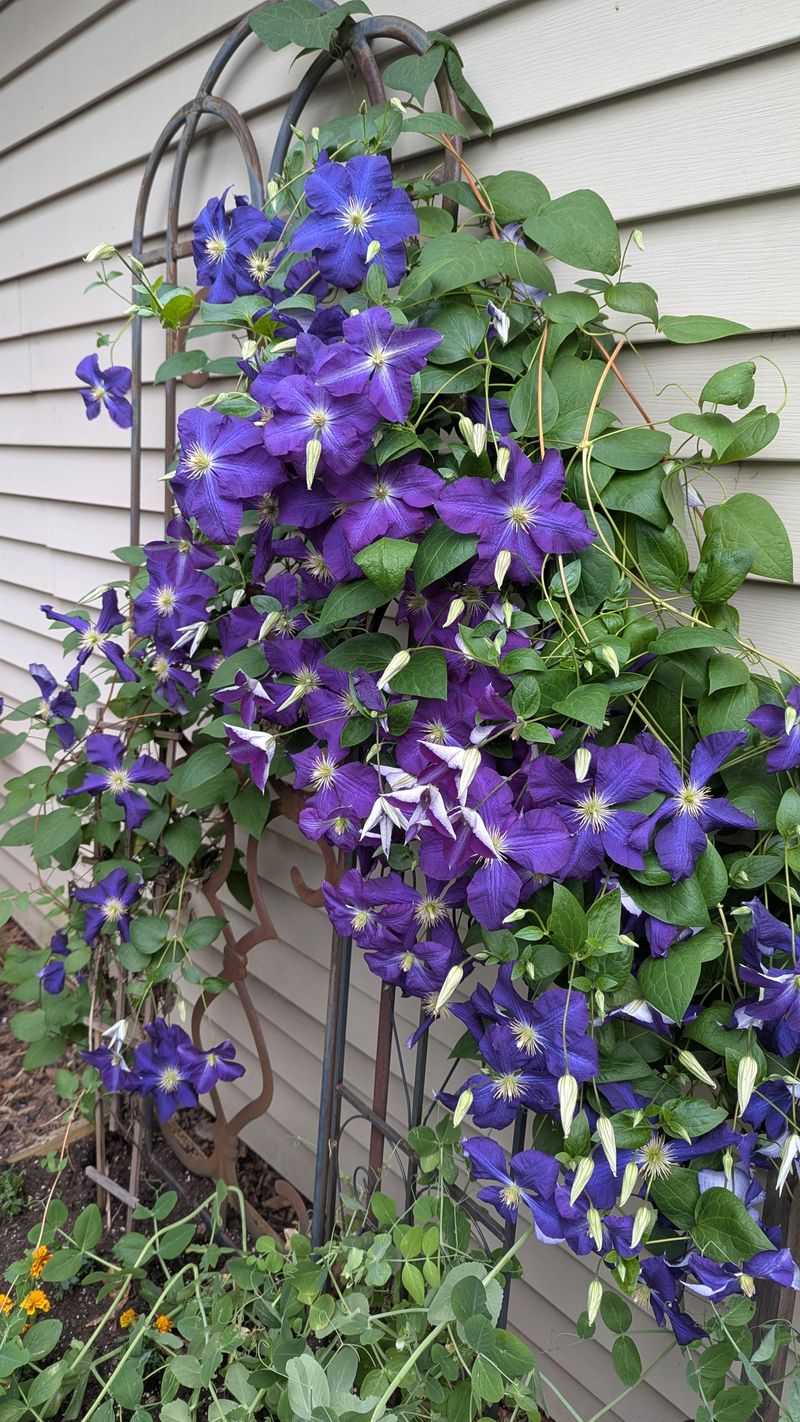
Pruning clematis wrong is one of the most common reasons these vines stop blooming or look scraggly year after year. The tricky part is that not all clematis are pruned the same way.
There are three main pruning groups, and cutting your vine at the wrong time or in the wrong way can remove the very buds that would have produced your best flowers of the season.
Group 1 clematis bloom on old wood, meaning they flower on stems that grew the previous year. These should only be lightly trimmed right after they finish blooming in late winter or early spring.
Group 2 clematis bloom on both old and new wood, so they need a light tidy-up in early spring.
Group 3 clematis, which includes popular varieties like Jackmanii and many sweet autumn types, bloom entirely on new growth and can be cut back hard in late winter without any negative effects.
The easiest way to figure out your pruning group is to check the plant tag you saved when you bought it, or look up the variety name online. If you have no idea what you have, a safe approach is to wait and watch when it blooms.
Early spring bloomers are usually Group 1, while summer and fall bloomers tend to be Group 3. Getting this right is a total game-changer for clematis performance in your North Carolina garden.
7. Cut Away Dry, Weak, Or Wilted Stems The Right Way
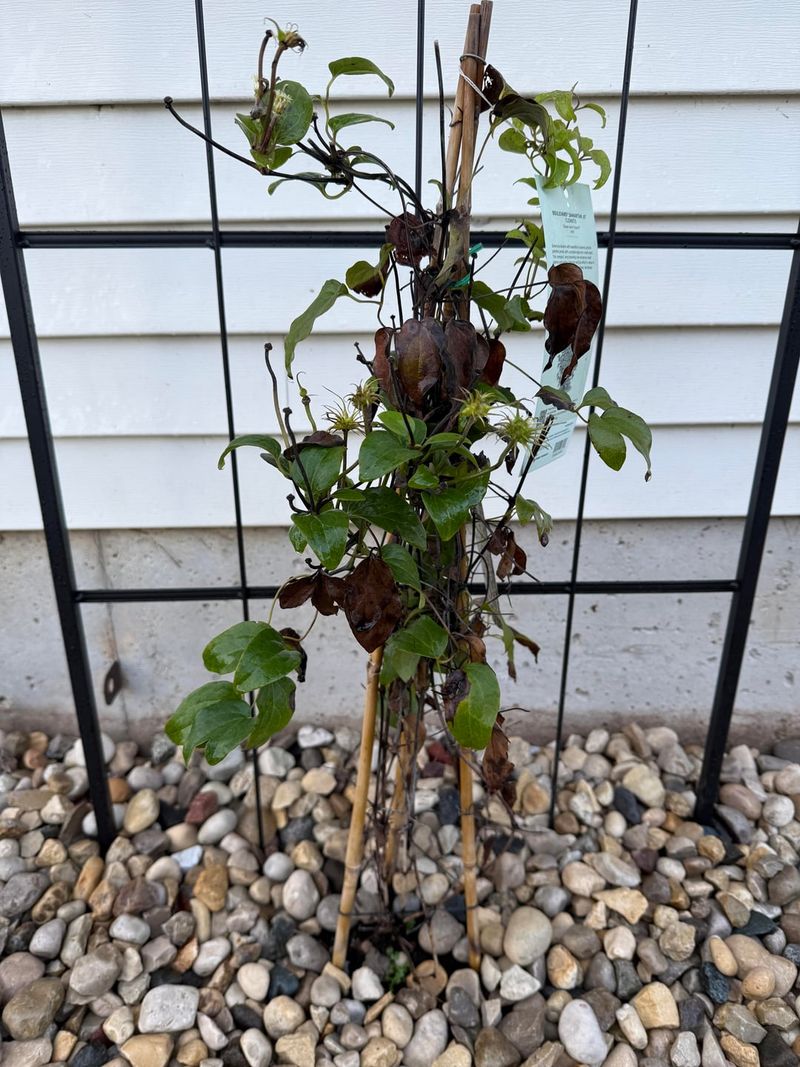
Spotting a brown, limp, or wilted stem on your clematis can feel discouraging, but it is actually your plant sending you a signal that it needs a little hands-on help.
Removing those struggling stems promptly is one of the best things you can do for the overall health of the vine.
Left in place, weak or wilted stems can invite disease and drain energy from the parts of the plant that are still growing strong.
Always use clean, sharp pruning shears when cutting clematis stems. Dull blades crush rather than cut cleanly, which creates rough wounds that are harder for the plant to heal.
Wipe your blades with rubbing alcohol between cuts, especially if you suspect any fungal issues like clematis wilt, which is a real problem in North Carolina’s humid climate.
Cut just above a healthy set of leaf nodes, and you give the plant the best chance of pushing out fresh new growth.
Do not panic if you have to remove a large portion of the vine. Clematis are remarkably resilient, and a well-established plant with healthy roots will almost always bounce back after a good cleanup.
In fact, many gardeners are amazed at how quickly a properly trimmed clematis fills back in once the weak material is gone. Think of it less as cutting and more as giving your vine a fresh start.
8. Give The Vine A Thin Trellis It Can Actually Grip
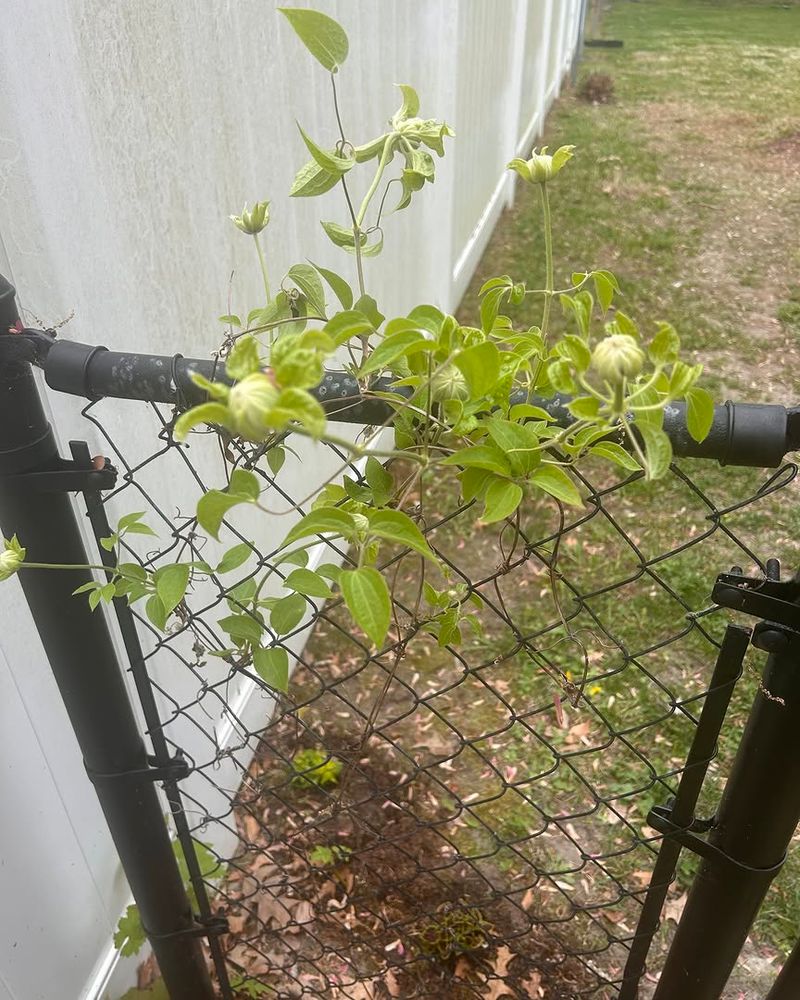
Clematis climbs by wrapping its leaf stems around whatever support it can find, and the key word there is wrapping. Unlike wisteria or Virginia creeper, clematis cannot grip thick posts or wide wooden boards on its own.
It needs something narrow enough for those delicate petioles to curl around, usually no more than half an inch in diameter. Give it a chunky post and it will just sit there, flopping around in the breeze and never reaching its potential.
The best trellises for clematis are made of thin wire, narrow wooden dowels, or mesh with small openings. Many gardeners in North Carolina use simple wire panels or cattle fencing, which provides a lightweight grid the vine can grab onto easily.
Even twine strung between two posts works surprisingly well for smaller varieties. The goal is to give the plant a structure it can interact with naturally without needing to be tied up constantly.
Placement of the trellis matters too. Position it a few inches away from walls or fences to allow good air circulation around the foliage, which helps prevent the fungal issues that thrive in North Carolina’s humid summers.
If your clematis has been struggling to climb and looks tangled or unsupported, switching to a thinner, more grip-friendly trellis might be the simple fix you have been overlooking all along.
9. Protect The Crown By Keeping It Slightly Below Soil Level
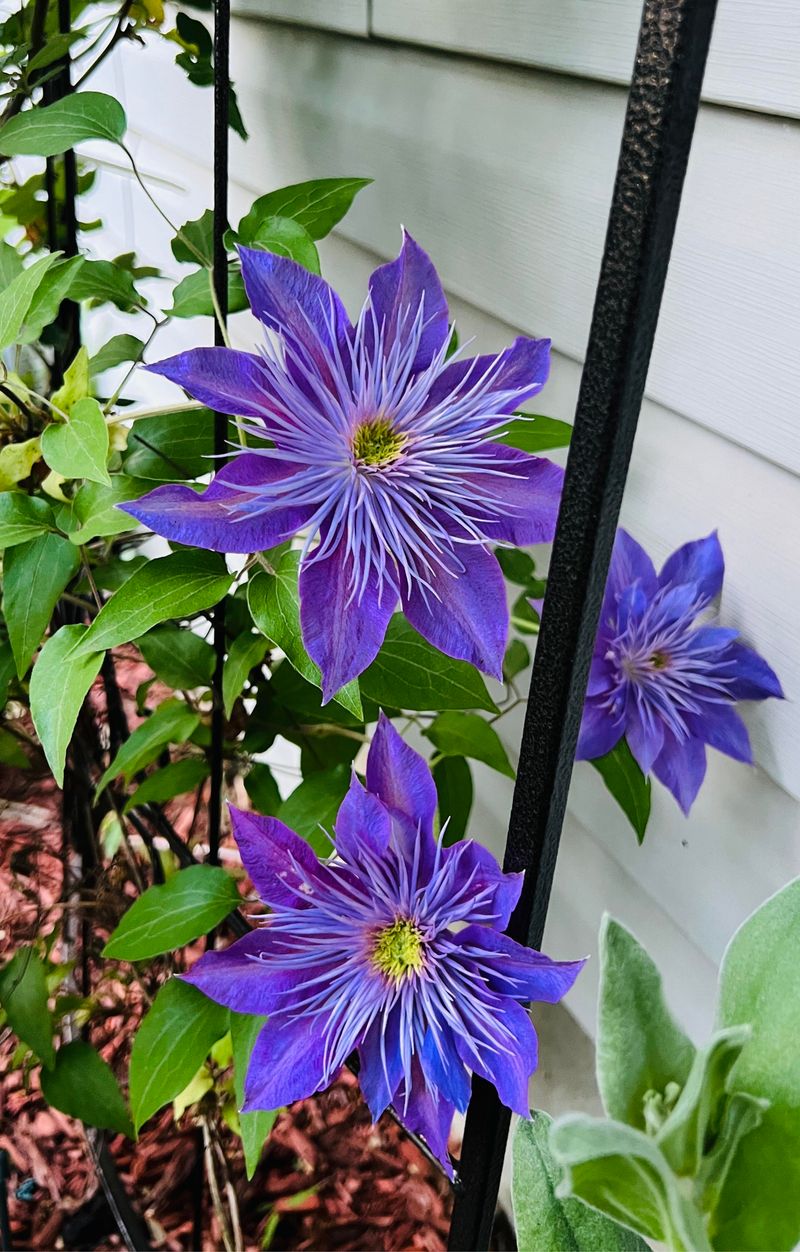
There is a little-known secret about planting clematis that experienced growers swear by: plant the crown about 2 to 3 inches below the soil surface.
The crown is the point where the stems meet the roots, and burying it just slightly gives the plant a remarkable advantage.
If the top growth ever gets damaged by frost, heat stress, or disease, the plant can still regenerate from those buried buds safely tucked below ground.
This technique is especially valuable in North Carolina, where late spring frosts can occasionally catch gardeners off guard, particularly in the mountains and Piedmont regions.
A clematis planted at the correct depth has a much better survival rate when unexpected weather events hit.
It also helps protect the crown from temperature swings that can stress the plant during transitional seasons like early spring and late fall.
If your current clematis was planted at or above soil level, you can carefully mound a couple of inches of amended soil or compost around the base without fully replanting.
Do this gradually over a season rather than all at once to avoid stressing the plant further.
Pairing this technique with a good layer of mulch on top creates a protective buffer that keeps the crown stable and healthy year-round. It is a small adjustment with surprisingly big results for long-term clematis health in Southern gardens.
10. Try A Tougher Native Or Small-Flowered Clematis If Wilt Keeps Coming Back
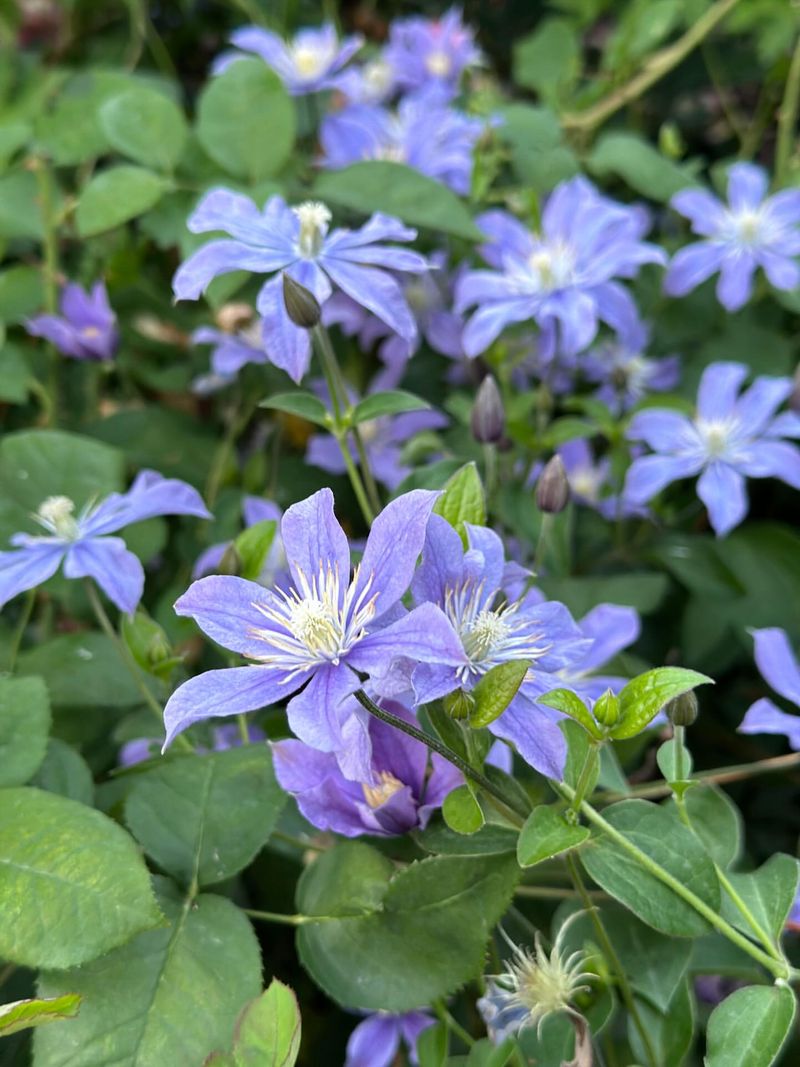
Sometimes, no matter how carefully you water, prune, and feed your clematis, the same problems keep showing up season after season.
Clematis wilt, a fungal condition that causes stems to collapse suddenly, is a particular headache in the humid Southeast.
If you have tried everything and your large-flowered hybrid still struggles every year, it might simply be the wrong plant for your specific conditions.
North Carolina actually has several native clematis species that are naturally adapted to the local climate and soil. Clematis virginiana, sometimes called virgin’s bower, is a vigorous native that handles heat, humidity, and clay soil without much fuss at all.
Clematis viorna, known as leatherflower, is another native option with charming bell-shaped blooms that pollinators absolutely adore.
These plants have evolved alongside North Carolina’s weather patterns for thousands of years, which gives them a serious advantage over imported hybrid varieties.
Small-flowered types like Clematis texensis and Clematis integrifolia are also worth considering. They tend to be far more resistant to wilt than the big showy hybrids, and many of them still produce gorgeous blooms that rival their larger cousins.
Swapping out a repeatedly struggling plant for one of these tougher alternatives is not giving up. It is smart gardening.
Working with your local climate instead of fighting against it is always the path to a garden that truly thrives.