7 Fall Container Plants Virginia Front Porches Need This Season
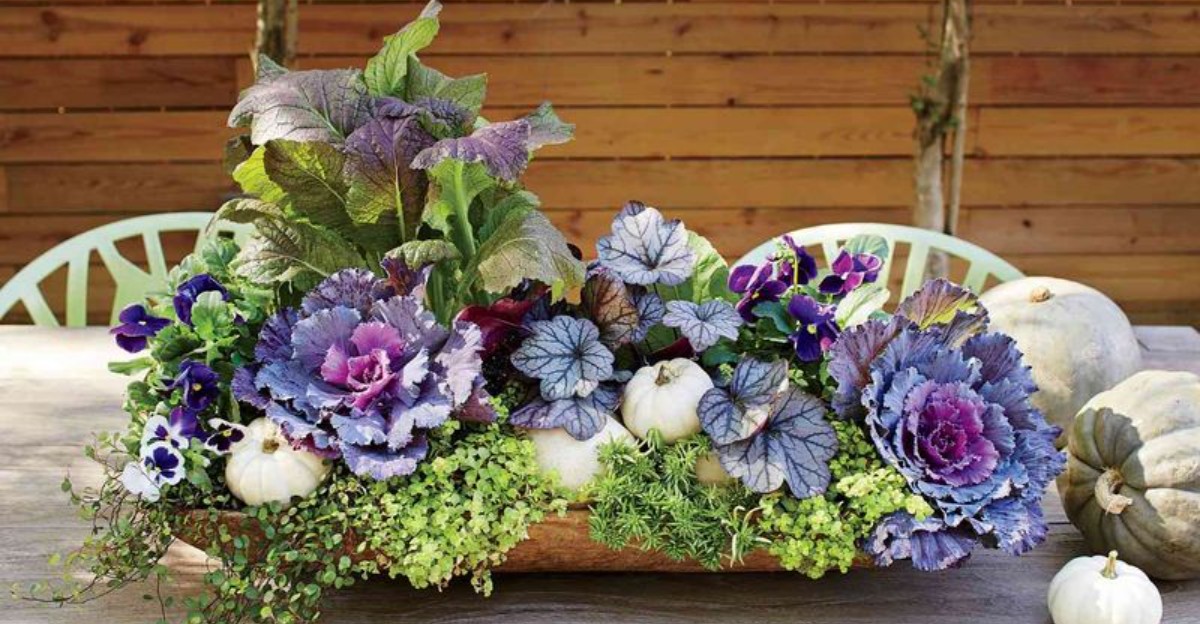
Virginia porches change quickly when summer fades. One day the pots are full of flowers. The next, they look tired beside the fall leaves.
Cooler weather brings a new round of container plants. Many fall favorites handle chilly nights, add bold color, and keep porches looking lively.
Pansies, ornamental kale, grasses, and other cold-tolerant plants create easy seasonal displays. The right mix can keep containers colorful through Thanksgiving and beyond.
Fall pots also let gardeners play with texture and shape. Combine different leaves, heights, and colors to make displays that feel full and fresh.
Whether you garden in the mountains, suburbs, or along the coast, these container plants fit fall weather. Grab your potting mix and start planning your autumn display.
1. Pansies Bring Reliable Color Through Cool Weather
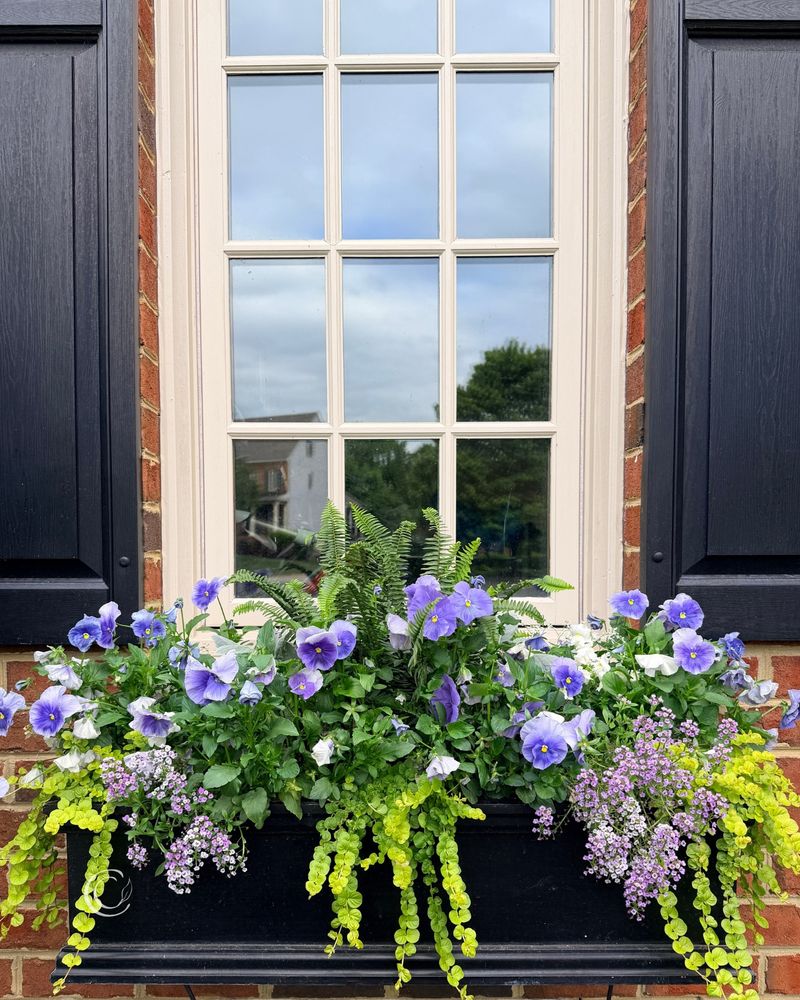
Few flowers work as hard for as little fuss as the pansy. Those cheerful little faces keep smiling when most summer annuals have already packed it in.
In Central Virginia, pansies count as cool-season annuals, and the planting window runs from late August until roughly Thanksgiving. Getting them in the ground early matters because roots need time to settle before real cold arrives.
Give them a sunny spot with excellent drainage, and let the soil dry out a bit between waterings. Soggy roots cause more trouble for pansies than any cold snap ever will.
Feed lightly at planting time, then offer a second small dose in late February or early March. That spring boost is what pushes them into a big second flush of blooms.
Container choice deserves real thought here. Terra cotta looks lovely but can crack when water inside it freezes, so plastic, synthetic resin, or glazed ceramic pots hold up far better through winter.
Trimming is the secret weapon. Pinch off each faded flower along with its whole stem, and the plant redirects energy into fresh buds instead of seed making.
Frost usually does not bother pansies, and they often recover after a cold snap once temperatures rise again.
Mix colors for a cottage look, or plant one bold shade for a modern, graphic punch by your front door. Either way, pansies give you months of payoff from a single flat.
2. Ornamental Kale Adds Bold Leafy Texture
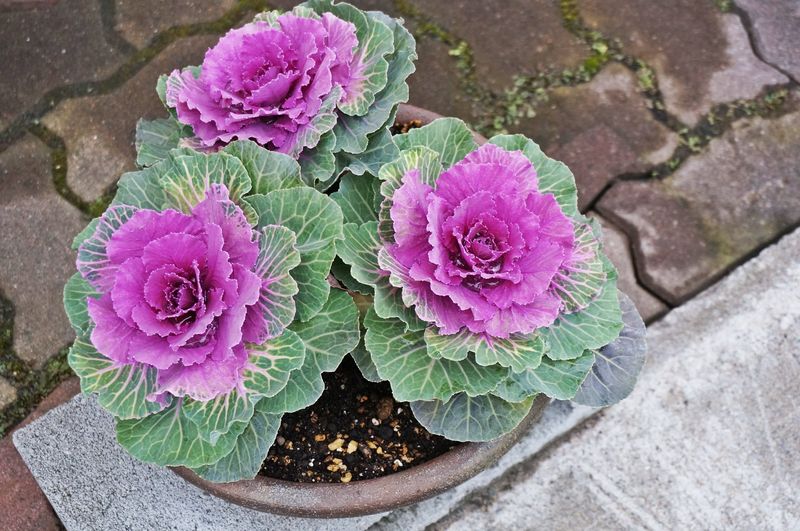
Think of ornamental kale as the plant that gets better when the weather gets worse. A light frost actually deepens its purple, pink, and creamy white centers.
Those ruffled rosettes look almost like giant roses made of cabbage leaves. The texture alone fills a pot beautifully, no flowers required.
Ornamental kale can hold its good looks through much of fall and into winter, especially during milder weather. That is an impressively long run for a single purchase.
Shopping tip worth knowing: buy mature plants rather than tiny starts. Kale colors up based on cold and maturity, so a full-sized plant delivers instant impact.
When potting, set each one deeper than it sat in the nursery container. Burying part of the stem hides that awkward bare neck and helps the plant stay upright.
Your Virginia Garden Changes Every Week. Your Plan Should Too.
Gardening in Virginia changes quickly throughout the season. Every Friday you’ll receive a simple weekly plan showing exactly what to plant, prune, fertilize, harvest, and protect so you never miss the right timing.
Loose, fertile potting mix keeps roots happy. Full sun brings out the strongest color once temperatures cool, though partial shade is tolerated without much complaint.
Water to keep the mix evenly moist, never swampy. As autumn nights get colder, back off the watering can, since pots dry out much more slowly.
Design-wise, kale plays well with others. Tuck three plants around the edge of a big pot with mums in the middle, or line a porch step with matching pots for a tidy, repeating rhythm.
Bonus points: deer and rabbits sometimes nibble, so a raised porch pot keeps them safer.
3. Mums Create Classic Fall Porch Displays
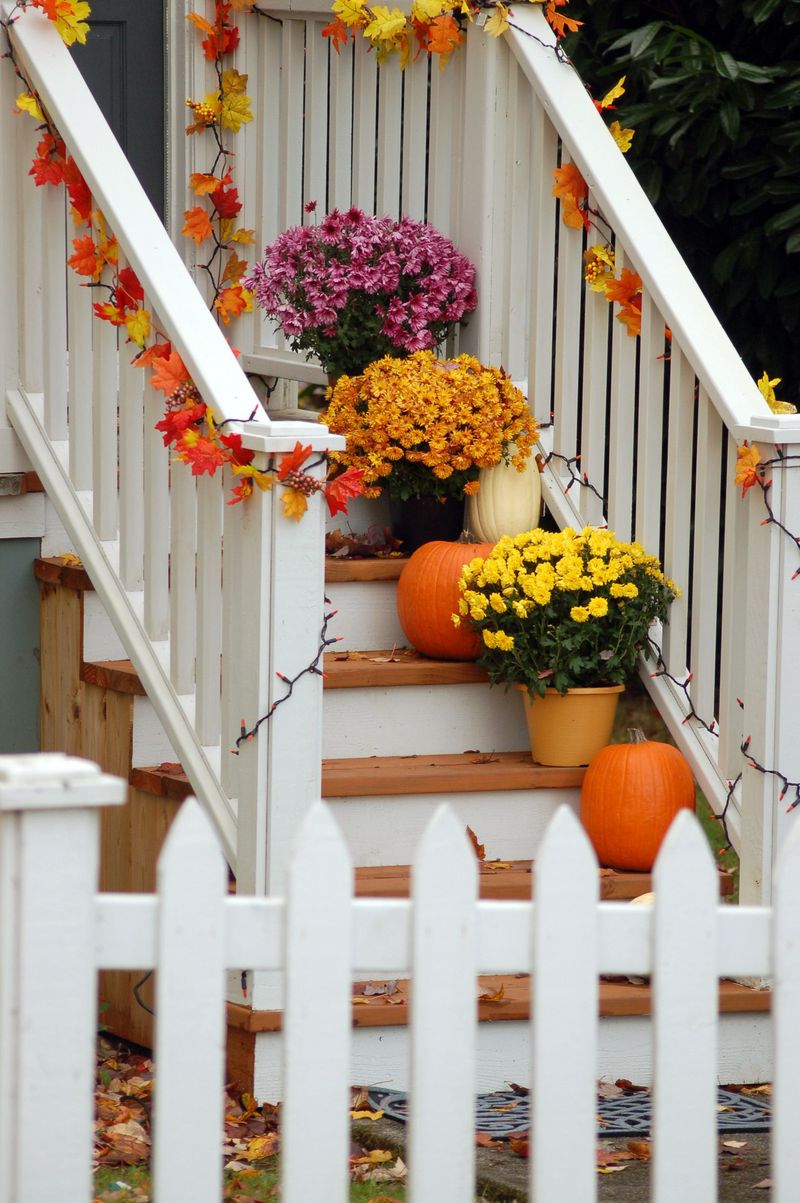
No plant says autumn quite like a fat mound of mums beside the front steps. They show up at every roadside stand and garden center the second September hits.
Chrysanthemums earn that popularity honestly. They bloom hard, come in rich rust, bronze, gold, burgundy, and white, and cost very little for the color they deliver.
Sunlight is the main requirement. Six or more hours of direct sun each day keeps buds opening instead of stalling out.
Give mums well-draining soil and steady moisture, but skip soggy conditions. Their thirst surprises people, so check pots often during warm, breezy October afternoons.
Trimming stretches the show considerably. Snip spent blooms as they fade and the plant keeps pushing new buds rather than winding down early.
Here is a trick many gardeners miss. If you want mums to return next year, planting them in late August or early September gives roots more time to establish before winter.
Smaller plants that have not fully flowered yet actually establish roots better than the giant blooming globes. Those big ones look great on the porch but put everything into flowers instead of roots.
For pure decoration, drop the nursery pot straight into a basket or cachepot. Swap it out when it fades and your display stays fresh with almost no effort.
Pair them with pumpkins, cornstalks, and a few gourds for the full Virginia farmstand look.
4. Heuchera Adds Colorful Foliage All Season
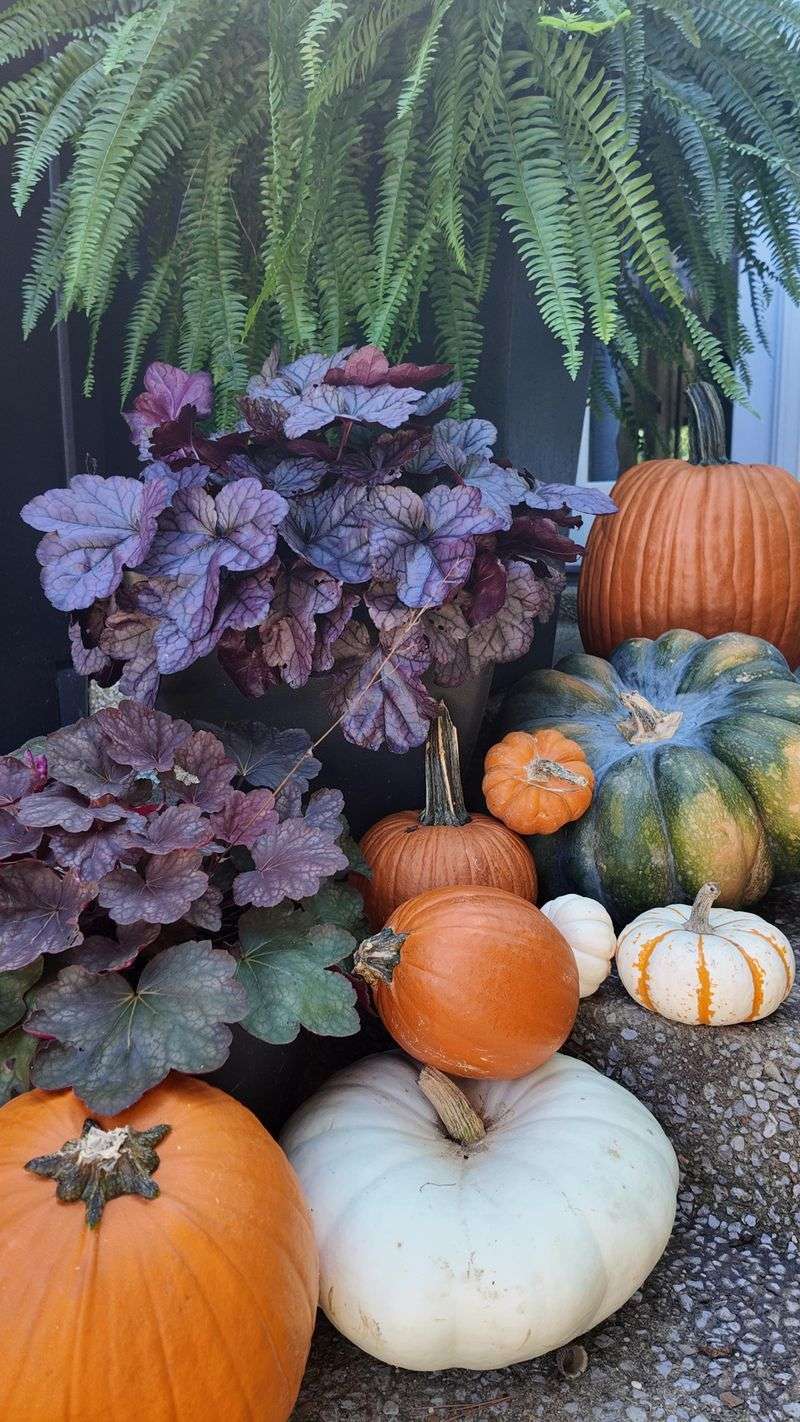
Coral bells are the quiet overachievers of the container world. Their leaves do the heavy lifting, so you get color without waiting on a single bloom.
Heuchera foliage comes in caramel, lime, peach, silver, near black, and ruffled plum. Some varieties even show veining that looks hand painted.
Because they are hardy perennials, they hold their color through the cooler months instead of checking out in November. That makes them a smart long-term buy for a porch pot.
Light needs vary by variety. Many prefer partial to full shade, while darker-leaved cultivars handle more sun without fading.
In the Mid-Atlantic, shielding heuchera from blazing afternoon sun is the safer bet. Too much direct heat leads to scorched leaf edges and sluggish growth.
Soil should drain freely and hold plenty of organic matter. Water regularly enough to keep moisture even, and avoid letting the pot sit in standing water.
Feeding is simple. A light dose of balanced slow-release fertilizer in spring, or a water-soluble feed for container plants, keeps them vigorous.
Design note: heuchera makes a fantastic middle layer. Tuck it between tall grass and trailing violas and it bridges the two beautifully.
Once the holidays pass, move the pot to a sheltered corner of your Virginia yard or plant it in a shady bed. It will reward you again next season, which is a rare thing for porch plants.
5. Violas Keep Blooming Through Chilly Days
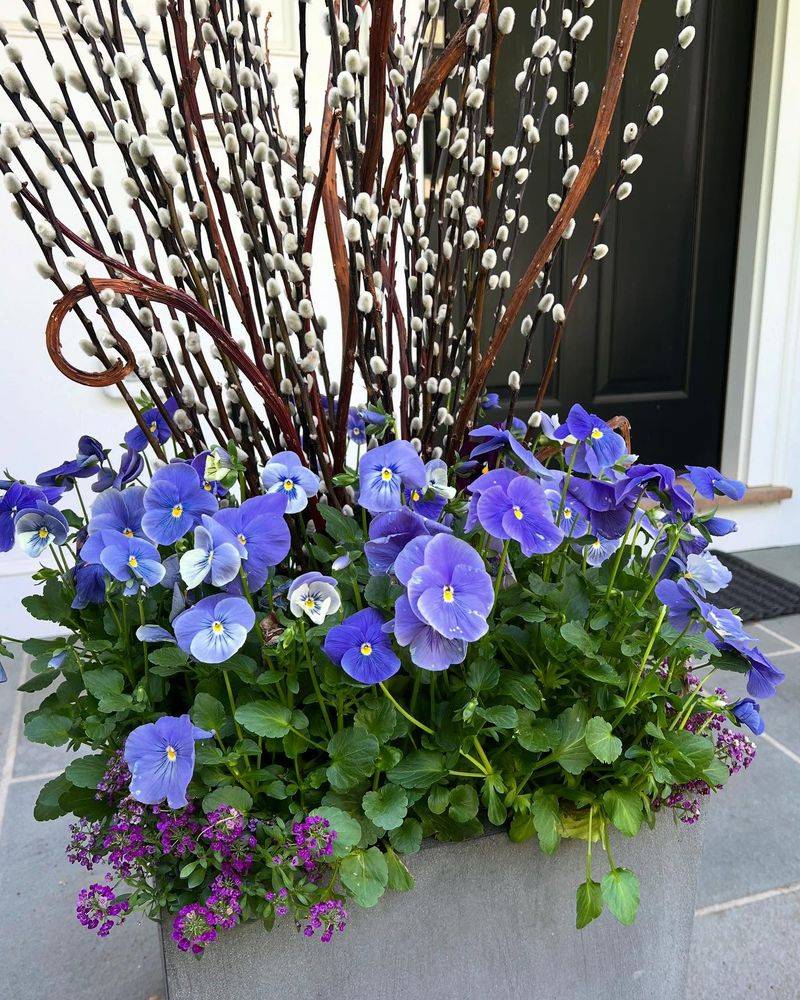
Violas are the pansy’s smaller cousin, and honestly, they often flower even harder. What they lack in bloom size they make up for in sheer quantity.
Those little blossoms cover the plant like confetti. Purple, butter yellow, white, apricot, and bicolor combinations all show up at garden centers by early fall.
Timing helps a lot. Plant in September or October so roots get established before the serious cold settles in.
Six hours of sunlight daily keeps them blooming through cool weather. They shrug off chilly nights that would finish off most summer annuals.
Drainage holes are not optional. Violas dislike soggy soil, so check that every container can shed extra water freely.
Keep the mix consistently moist right after planting, when roots are still small and vulnerable. Even during winter, container soil needs occasional water, since dry roots suffer more freeze damage than moist ones.
Pinching off faded flowers stretches the bloom season noticeably. It takes two minutes with your morning coffee and pays off for weeks.
In milder parts of Virginia, violas frequently reappear in spring for a second act. Some even reseed themselves in nearby beds, popping up in charming, unplanned spots.
Use them as the spiller and filler in mixed pots, tucked around kale or grass. A window box packed with nothing but violas also looks wonderfully old fashioned, like something from a Williamsburg garden.
6. Purple Fountain Grass Adds Height And Movement
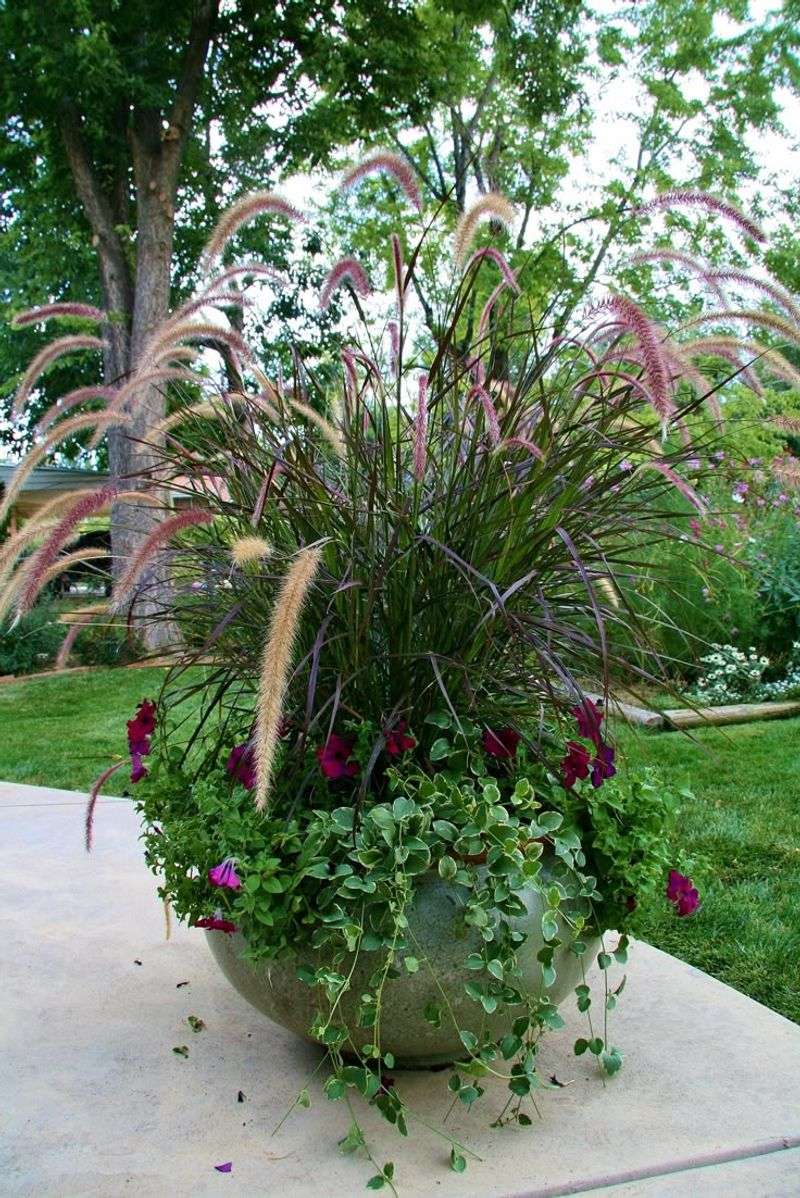
Every great container needs something tall enough to catch the wind. Purple fountain grass does exactly that, arching and swaying with every autumn breeze.
Deep burgundy blades rise in upright clumps, topped by fuzzy bottlebrush plumes. Those plumes start reddish and mellow to soft tan as the weeks go by.
Fall actually improves the color. Foliage darkens toward a rich red as temperatures drop, which looks stunning against gray porch boards or white siding.
Size matters when planning. Expect roughly four feet of height and about three feet of spread, so give it a generous pot with room to arch.
Gardeners call plants like this the thriller, meaning the centerpiece. Surround it with mums, kale, or violas and the arrangement instantly looks professionally designed.
Full sun is the one firm requirement. Shade makes the color muddy and the form floppy.
Watering is refreshingly flexible. Dry spells or moist conditions both work, though standing water is a problem it will not tolerate.
One honest note for gardeners: purple fountain grass is often grown as an annual because winter survival can be unreliable.
Even so, the seasonal payoff is worth it. A single plant carries a big container from late summer through the first hard frosts, and the dried plumes can be cut and brought inside for arrangements afterward.
7. Ornamental Peppers Add Bright Fall Accents
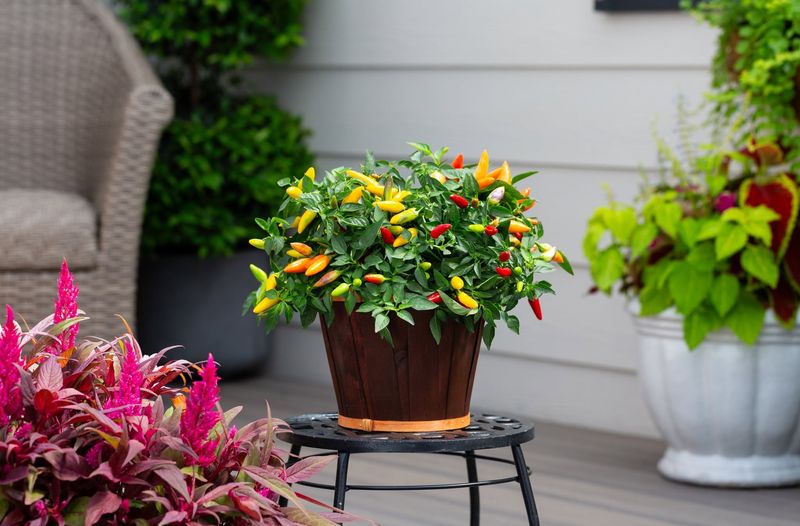
Here is a plant that swaps flowers for fireworks. Ornamental peppers load themselves with tiny upright fruits in red, orange, yellow, and deep purple, often all at once.
The effect is almost cartoonish in the best way. Those glossy little peppers look polished, and they hold their color for weeks on end.
Low maintenance is part of the appeal. They handle drought well, shrug off most pests, and keep going from summer straight into late fall until the first hard frost.
Sunshine drives the show. Six or more hours of direct light daily keeps fruit production heavy and colors saturated.
Well-drained soil suits them best. Water deeply, then let the top of the mix dry slightly before watering again so roots never sit wet.
A word of caution for households with curious kids or pets. Many ornamental varieties are seriously spicy, so handle the fruits carefully and wash your hands afterward.
If heat worries you, look for milder options. Varieties like Chilly Chili produce all the color without the fiery bite.
Fun fact: they are true peppers, closely related to the ones in your kitchen, just bred for looks instead of flavor.
On a porch, they shine in small pots grouped along a railing or clustered near a doorway where you notice the detail. Pair them with ornamental kale and the contrast of bold leaves against tiny bright fruit is hard to beat.