9 Fire Pit Area Ideas That Keep New York Backyards Cozy Into Winter
Wood-burning backyard fires are banned across all five boroughs of New York City, yet upstate neighbors can legally light one. That same small recreational fire stays allowed even during the yearly spring burn ban from March to May.
Rules also cap these fires at three feet tall and four feet wide, which surprises plenty of folks. Burning leaves, brush, or treated lumber is off limits too, since those materials release harmful chemicals into the air.
Take it from someone who once dragged a flimsy metal bowl onto soggy grass in late November. My guests lasted twenty minutes before the wind chased everyone back inside, clutching cold mugs of cocoa.
Looking back, a little planning would have turned that chilly flop into a favorite winter hangout. So what separates a shivering circle of lawn chairs from a glowing New York retreat that people refuse to leave?
1. Sheltered Paver Patio Corners Beat The Winter Wind
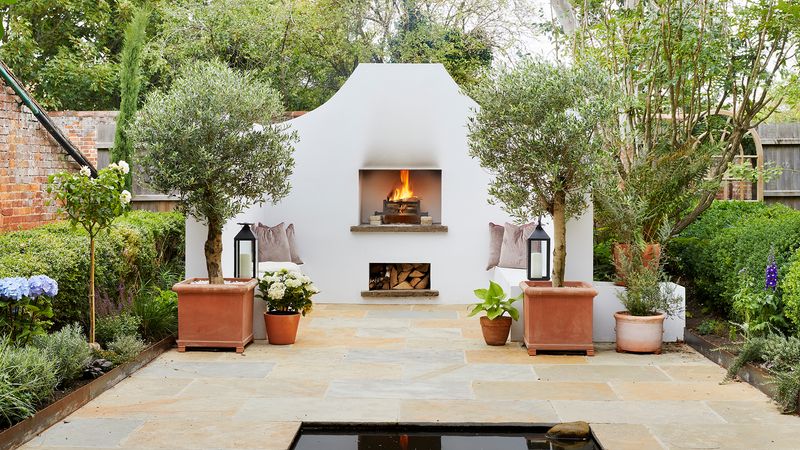
Location matters more than the fancy bowl you buy, and I learned that lesson with chattering teeth. A fire pit tucked into a protected corner holds warmth far better than one sitting alone in open lawn.
Start by watching which way the winter wind usually blows across your yard on chilly afternoons. Place the pit where a fence, garage wall, or dense hedge blocks those gusts without trapping smoke near the house.
Distance rules deserve careful attention, because towns set their own clearance requirements for structures nearby. Amherst, for example, requires twenty-five feet from buildings for stone fire pits and fifteen feet for metal stands with spark arrestors.
Check your own town code before digging, since numbers vary between villages and suburbs across the region. Calling 811 before any excavation is a smart free step that helps you avoid buried gas or electric lines.
Paver patios make a sturdy base that handles freeze and thaw cycles better than bare soil. A compacted layer of crushed gravel and paver base keeps everything level when the ground heaves during cold snaps.
If you want a pretty view, consider facing the seating toward a pond or garden bed. Flames reflecting on water look magical, and you still keep the back of the circle shielded from biting breezes.
Leave enough open space around the pit so people can walk safely without squeezing past hot stones. Comfortable movement matters even more in winter, when bulky coats and boots make everyone a little clumsier than usual.
2. Fire Brick Lined Stone Pits Built To Last
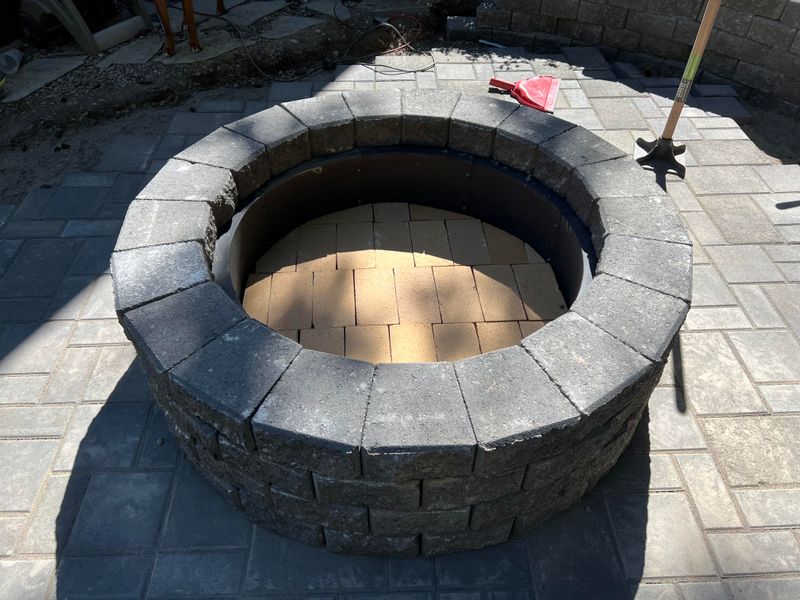
Ordinary rocks can actually crack or even burst apart when wet and heated too quickly by flames. That surprising fact changed how I think about every stone that touches my backyard fire pit.
River rocks and pea gravel tend to hold moisture inside, which turns to steam when the fire roars. Skip them inside the pit and choose materials designed to handle intense heat without splitting.
Fire bricks make the smartest lining for the inner ring of a wood-burning pit. They are made for high temperatures, so they hold up season after season while regular concrete blocks may struggle.
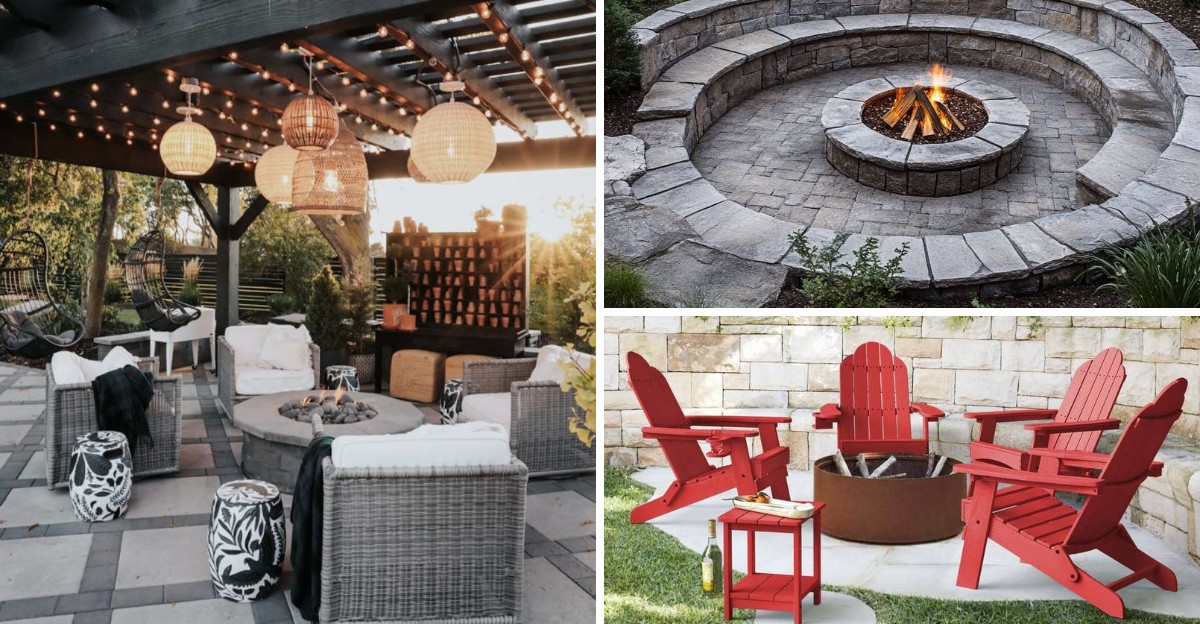
On the outside, heat-resistant retaining wall blocks give a tidy finished look that matches most patios. Stone, brick, or concrete pavers all work nicely, and you can pick colors that suit your house.
Glass fiber reinforced concrete, often called GFRC, offers another modern option for sleek pre-made fire bowls. It resists cracking and weighs less than solid concrete, which makes moving it around much easier for most homeowners.
If you build on an existing patio, add a layer of sand at the bottom of the pit. That sand helps protect the surrounding stones from direct heat and gives ashes a soft landing.
For what it is worth, spending a bit more on proper materials saves headaches later in cold weather. A well-built pit shrugs off snow and ice, while a cheap version can crumble after one rough winter.
3. Curved Stone Seat Walls Wrap Around The Flames
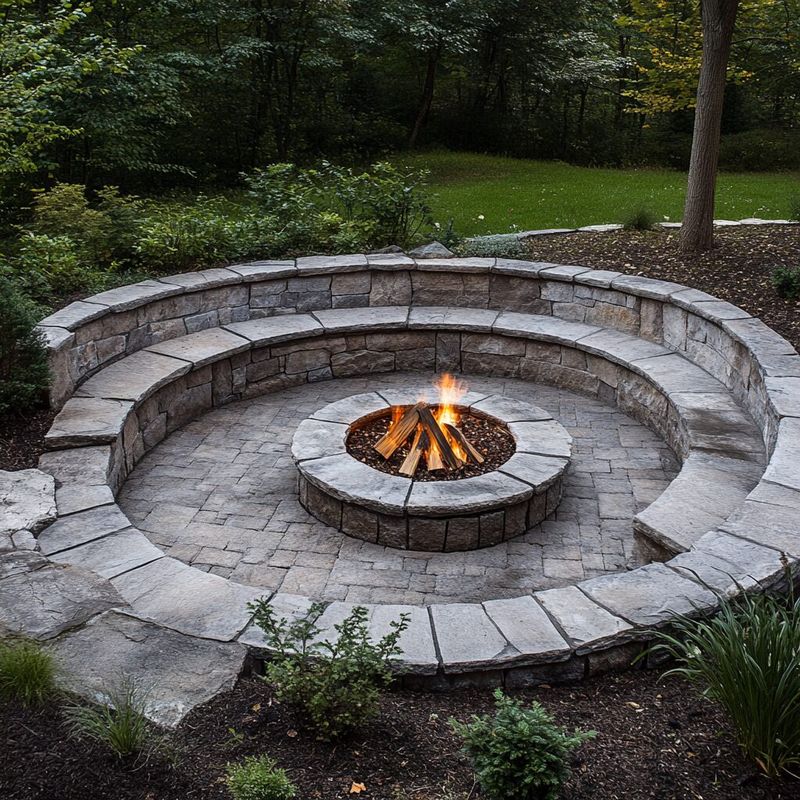
Built-in seat walls feel like a giant stone hug wrapped around your fire on a frosty night. Between you and me, they solve the endless problem of hauling chairs out of the garage every weekend.
Natural stone or concrete units create sturdy walls that will not blow over or soak up rain. Bullnose coping across the top rounds off the edge, so sitting there feels softer and friendlier on your legs.
A curved wall that follows the round pit shape encourages easy conversation, with everyone facing the warmth. L-shaped designs suit rectangular pits and larger yards, almost like an outdoor sectional sofa made of solid stone.
Spacing makes a real difference for comfort and safety around the flames. Many designers suggest at least twenty-two inches between the pit edge and seating so guests stay warm while moving around easily.
Stone gets cold fast in winter, so plan on adding weather-resistant cushions and a few pillows. Bring them inside or into a storage bench after use, and they will stay fresh for many seasons.
Adding pillars or tall planters into the wall design gives extra height and a sense of privacy. Those pillars also make handy spots for small built-in lights, which help people find their seats after dark.
In my own yard, the seat wall became the spot where kids roast marshmallows and grownups linger. Permanent seating seems to invite people to stay longer, which is really the whole point of a winter fire.
4. Recycled Plastic Adirondack Chairs Circle The Glow
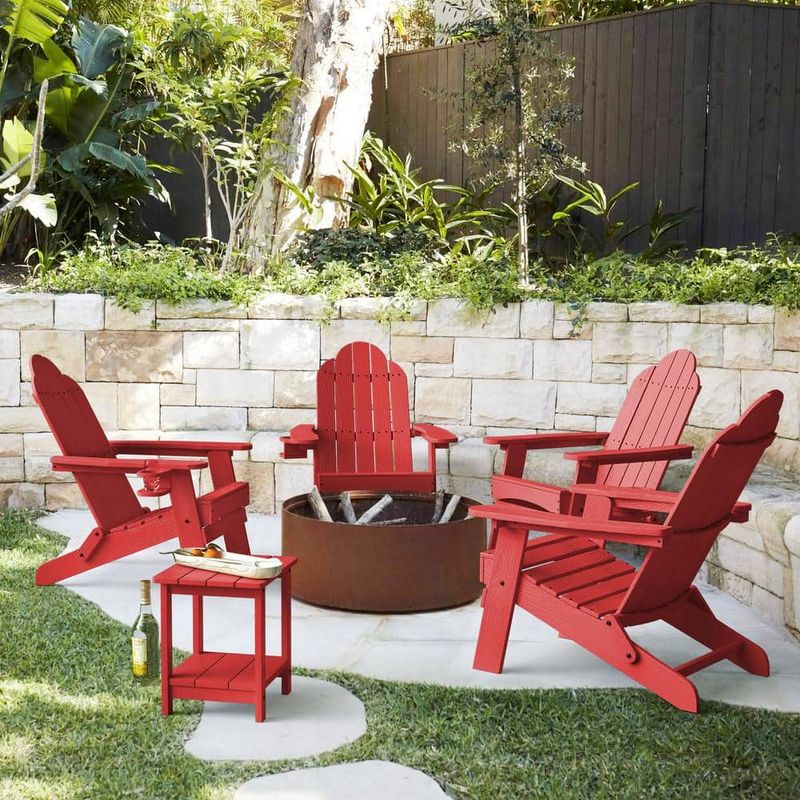
Few chairs say campfire quite like the classic Adirondack, which fittingly takes its name from New York mountains. Those reclined backs and wide armrests practically beg you to settle in with a warm mug.
Material choice decides how well these chairs survive months of snow, sleet, and freezing rain outdoors. Recycled plastic versions handle moisture beautifully, and they rarely need painting or sealing like traditional wooden chairs do.
Cedar and teak also look lovely and resist rot better than many other woods available today. Just know they may need occasional oiling or sealing to keep their color and protect them through winter.
If you prefer a lounge feel, outdoor sectional sofas create a living room vibe around the fire. They work well for larger families, though bulky cushions should be stored away when storms roll through.
Resin wicker chairs offer a lighter option that you can rearrange quickly for different group sizes. Iron chairs feel heavy and sturdy, which helps them stay put on blustery evenings near open flames.
Don’t make my mistake of buying chairs that sit too low for older relatives to rise from easily. Test the height and depth in the store, especially if grandparents plan to join your winter gatherings.
Keep chairs at a comfortable distance from the flames, since plastic can soften near intense heat. Sliding them back a bit still keeps everyone toasty while protecting your investment from warping.
5. Tempered Glass Wind Guards Keep Gas Flames Steady
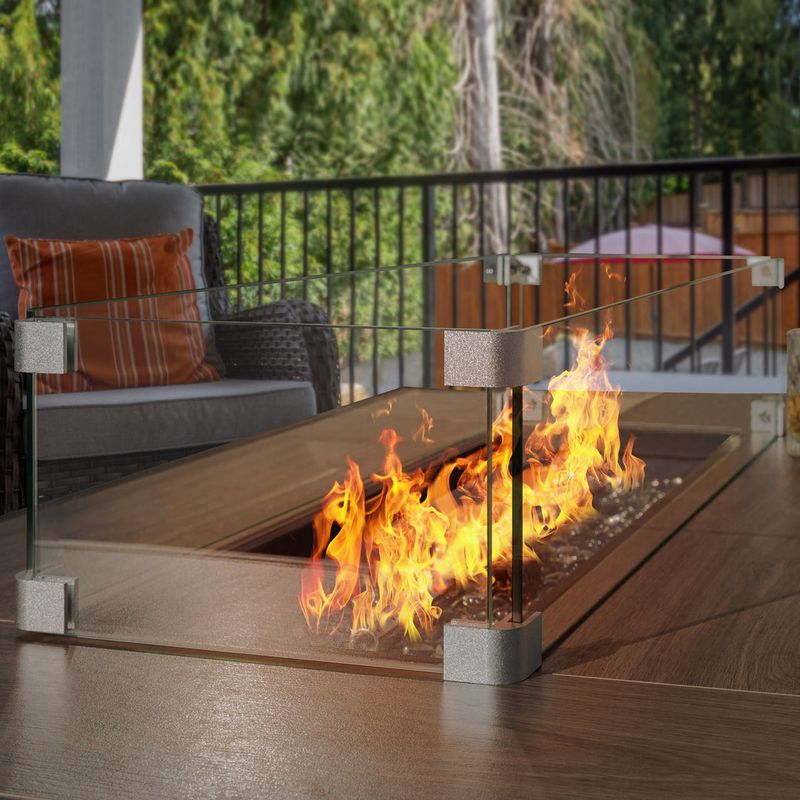
Gas flames can look sadly limp when a winter breeze keeps knocking them sideways all evening. A clear glass wind guard fixes that problem while letting you enjoy the full dancing glow.
Look for shatterproof tempered glass, since it is made to handle serious heat and sudden temperature changes. Many guards are rated for conditions from forty below zero up to five hundred degrees Fahrenheit.
Sizing matters more than people expect when shopping for these handy barriers. Experts recommend leaving one to two inches between the glass and the burner edge, so air can still feed the flames properly.
Guards also create a helpful barrier that keeps curious kids and pets from reaching toward the fire. That added safety gives me more peace of mind when my nephews come over for winter treats.
One quick note for city dwellers helps avoid surprise fines from local inspectors. In New York City, natural gas fire tables or hardwired electric fireplaces with proper permits are the allowed options for outdoor flames.
Propane tanks larger than twenty pounds are also banned on city roofs, balconies, and terraces. Always check building rules and permits before installing any gas feature in an urban space.
Wipe the glass gently with a soft cloth to remove soot and water spots after use. Clean glass sparkles beautifully at night and reflects the flames in a way that makes small spaces feel warmer.
6. Warm String Lights Glow Over A Pergola
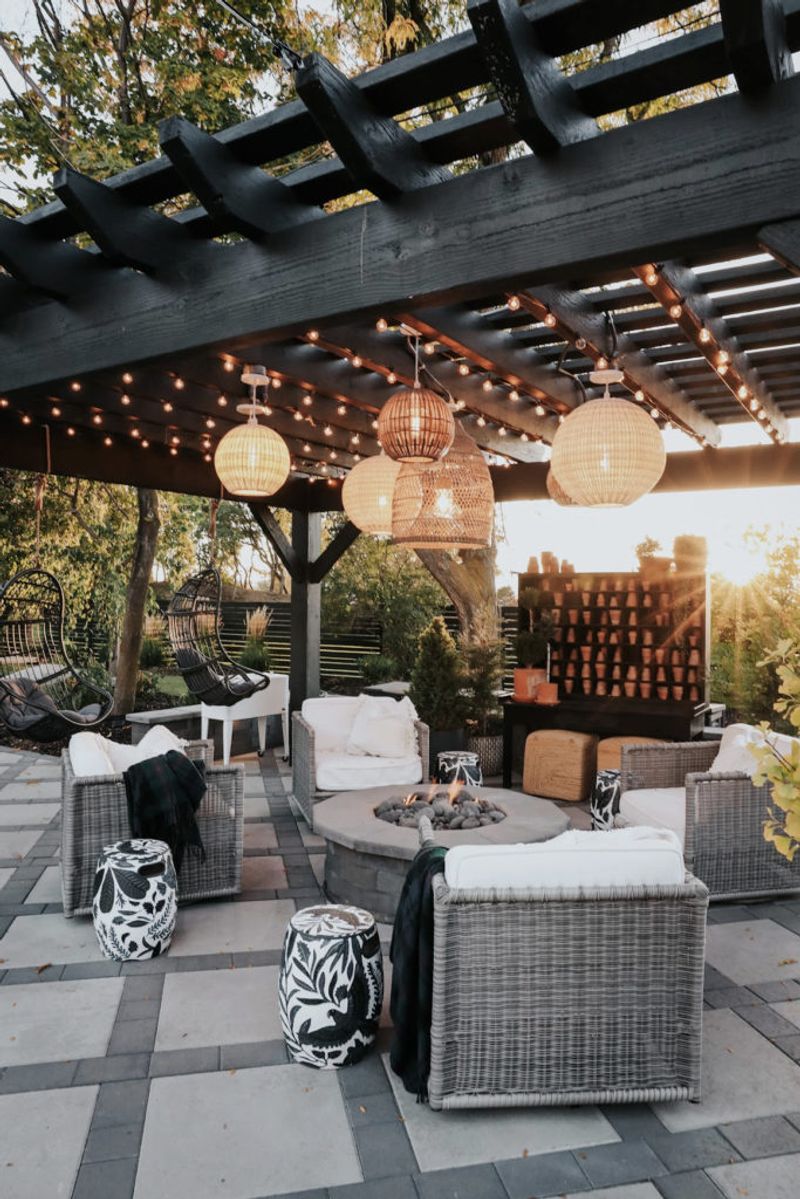
Winter darkness arrives before many of us finish dinner, so lighting turns into a real comfort upgrade. A soft golden glow overhead makes a fire pit area feel welcoming long after sunset.
Color temperature makes a surprising difference in how cozy your space feels after dark. Bulbs between 2700K and 3000K give off a warm, candle-like tone that blends nicely with real firelight.
String lights draped across a pergola create a cozy ceiling effect that feels almost magical. Wrapping strands around nearby tree trunks adds sparkle without taking up any extra room on the ground.
Lanterns bring a timeless flicker, whether you hang them from hooks or mount them on walls. Battery candles inside lanterns are a safer choice in windy spots, since real flames can tip unexpectedly.
Path lights help guests walk safely from the back door across icy steps and patios. Recessed lights built into seat walls also make it easier to spot cushions, mugs, and stray marshmallow sticks.
Choose fixtures made from stainless steel, brass, or aluminum because they handle snow and moisture well. Outdoor-rated cords and plugs matter too, especially when temperatures swing wildly between thaw and freeze.
If you ask me, dimmable fixtures are worth the small extra cost every single time. Turning the brightness down lets the fire become the star, while still keeping everyone safe on the walkway.
7. Holly And Red Twig Dogwood Add Winter Color

Bare backyards can look bleak in January, but the right shrubs make your fire circle feel alive. My garden taught me that plants around the pit matter as much as the seating itself.
American holly, known as Ilex opaca, offers glossy evergreen leaves and bright red berries on female plants. It grows well in much of the downstate region, and birds appreciate the berries during lean months.
Winterberry holly, or Ilex verticillata, is a native shrub that drops its leaves but keeps showy berries. Plant a male nearby so the females produce fruit, and you will enjoy cheerful color all winter.
Red twig dogwood, Cornus sericea, is a native shrub with bright red stems that pop against snow. Pruning some older stems in early spring encourages fresh growth, since younger branches show the brightest color.
Dwarf conifers and boxwood add year-round structure without growing too tall for small spaces. Taller evergreens like native eastern red cedar can also form a living windbreak along the colder side.
Keep plants at a safe distance from the fire, especially resin-rich evergreens that catch flames easily. Leave a buffer of gravel or pavers between planting beds and the pit itself for extra peace of mind.
Plan new planting for spring or early fall, when the ground is workable and roots can settle. Winter is perfect for sketching ideas while watching which spots catch snow and wind the most.
8. Plush Throws And Outdoor Rugs Warm The Seating

Let’s just say a basket of blankets near the fire has saved more than one chilly evening. Soft layers turn a patio into something that feels like an outdoor family room.
Outdoor rugs help define the fire pit zone and make bare pavers feel friendlier underfoot. Choose ones made for outdoor use, and bring them inside after heavy snow so they dry properly.
Weather-resistant cushions and pillows add both comfort and color to stone walls or chairs. A waterproof storage bench nearby keeps them dry between uses, which helps them last longer each season.
Cooking turns any fire night into a bigger event, especially for kids and hungry guests. Grill inserts transform a wood-burning pit into a s’mores station or a place to toast sandwiches and hot dogs.
Decorative fire media like lava rocks or ceramic fireballs work in gas pits designed for them. They add texture and interest even when the burner is off and snow falls quietly around the patio.
Infrared outdoor heaters can extend comfort on bitter nights when the fire alone feels too small. Place them according to the maker’s instructions, and keep fabrics a safe distance from their heating surfaces.
Here’s what caught my attention after a few winters outside: people stay longer when their hands stay warm. A thermos of cocoa and a pile of mittens can be just as important as the fire.
9. Snug Fire Pit Covers Shield Against Snow
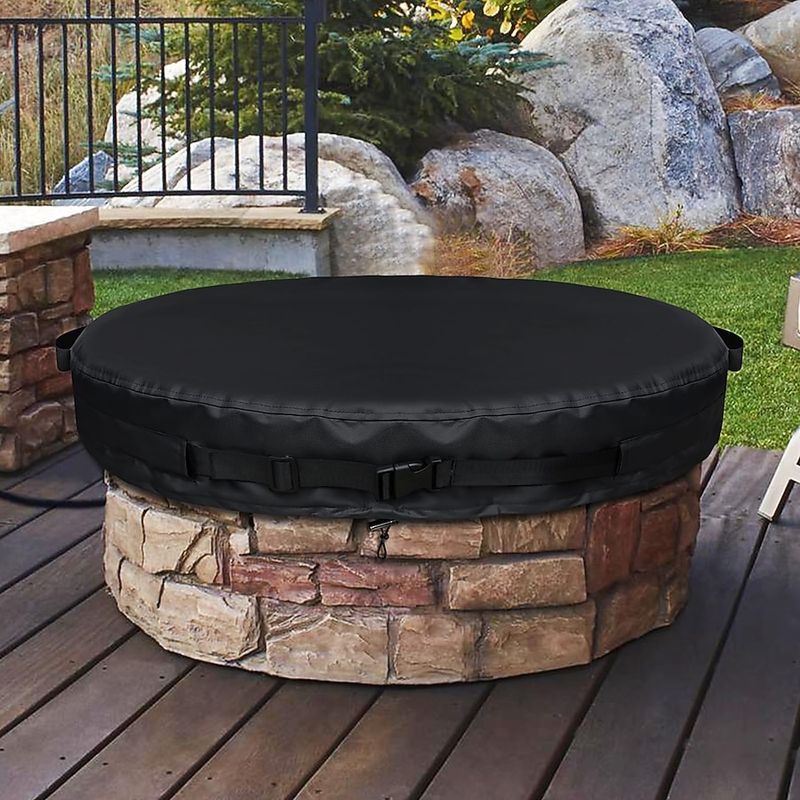
Snow, sleet, and melting ice can quietly wear down a fire pit when nobody is watching. A little care before storms arrive helps your setup look great when friends return for the next gathering.
Start by scooping out all ash and debris once everything has cooled for a full day. Wet ash turns into a heavy paste that holds moisture against metal and speeds up rust.
Inspect stone, concrete, and metal parts closely for cracks, rust spots, or loose blocks. Small repairs done early prevent bigger problems once freezing water sneaks into gaps and expands.
Gas fire pits need a bit more attention before deep cold settles across the region. Clean burners with a soft brush or compressed air, then dry them well to prevent blockages and corrosion.
Shut off the gas supply and disconnect any propane tanks when you finish using the pit for a while. Store tanks outdoors in a level spot away from heat sources, never inside a garage or basement.
Electronic ignition systems often have small plug-in transformers that do not like freezing temperatures. Unplug them and bring them indoors, so they stay safe until warmer weather arrives.
A snug, high-quality cover makes the final layer of protection against rain, snow, and blowing leaves. Keep a hose or a five-pound ABC extinguisher nearby whenever you light a fire, since constant attention is required.