9 Rare “What Is That Plant?” Shrubs That Thrive in New York Gardens
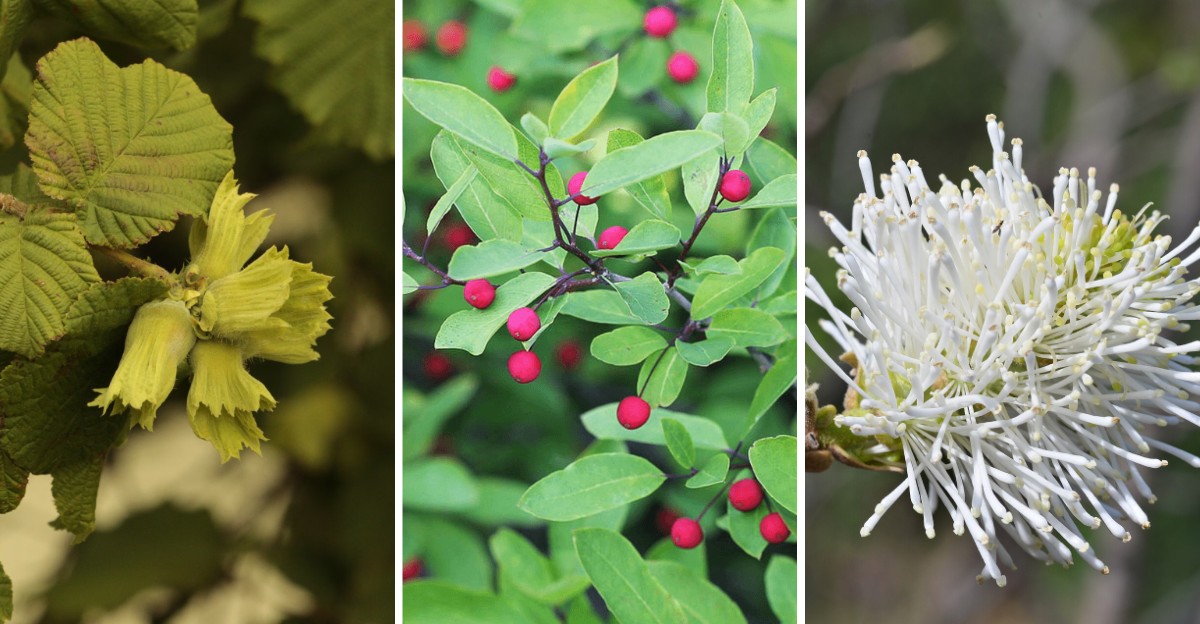
One native shrub has bark so stretchy that you can tie its young twigs in a loose knot. Indigenous people once twisted that tough bark into cords, and many gardeners still have no idea it exists.
Another garden beauty wears berries that look like tiny purple beads glued along its stems. A third one waits until late summer to bloom, filling sticky August afternoons with a sweet, spicy scent.
I love how these oddballs make visitors stop on the garden path and squint with honest confusion. Most of them are native to the Northeast, so they handle our cold winters better than fussy imports.
You won’t find most of them at big box stores, which only adds to the fun of hunting them down. So which curious mystery shrub will earn a spot in your New York yard this year?
1. Leatherwood
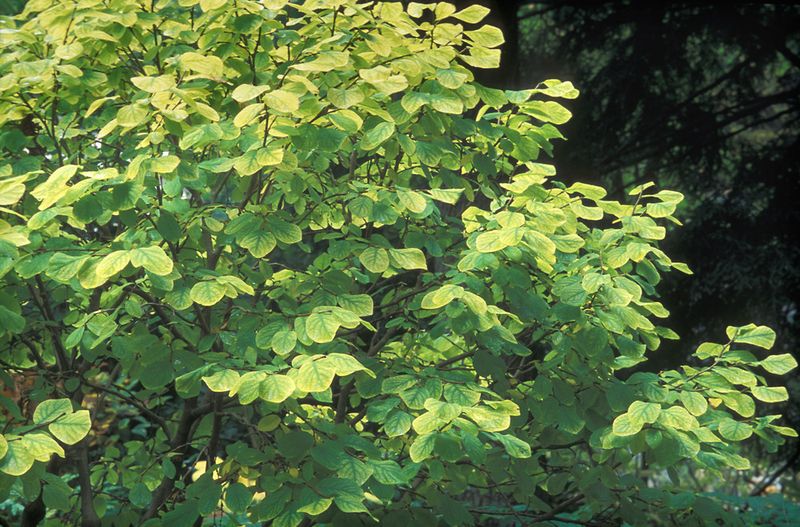
Bend a young leatherwood twig into a loop, and it flexes like a shoelace instead of snapping in your hand. I have to admit that party trick won me over the first time I tried it on a spring hike.
Pale yellow bell flowers dangle from bare branches in early spring, often weeks before most shrubs wake up. Early bees and flies visit those tiny bells when hardly anything else is open for business.
Leatherwood grows slowly into a neat rounded shrub, usually reaching about three to six feet tall over many years. Its smooth bark and jointed twigs give it a tidy, almost sculpted look even in the middle of winter.
You need a shady spot with moist soil that stays rich with leaf litter, much like a woodland floor. Morning sun is fine, but hot afternoon rays and dry ground will leave the plant looking stressed and sulky.
Nurseries rarely carry it because it grows slowly from seed and resists easy propagation from cuttings. Native plant sales and specialty growers are your best bet, so start asking around before the spring rush.
Handle the bark with gloves, since it can irritate sensitive skin, and keep the berries away from curious kids. Pets should skip snacking on it too, because all parts of the shrub are considered mildly toxic.
Once settled, leatherwood asks for very little beyond mulch and the occasional deep drink during summer dry spells. Personally, I think it belongs under tall oaks or maples, where its soft yellow fall color can glow.
2. Mountain Holly
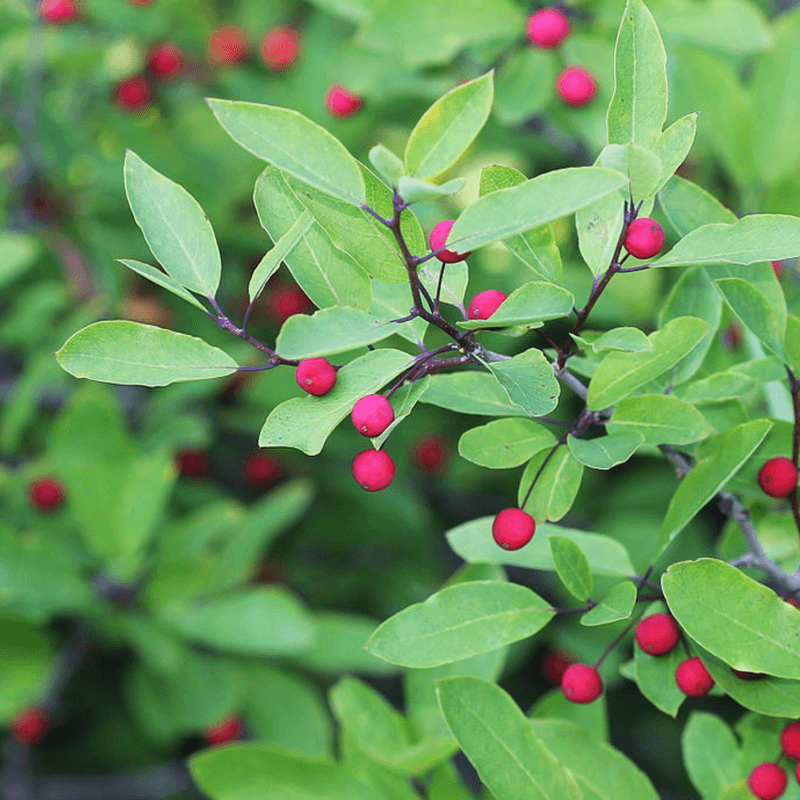
Hollies usually bring to mind prickly Christmas leaves, yet mountain holly has soft, smooth foliage with no spines at all. Botanists even moved it into the holly genus in 2000 after DNA showed it belonged there all along.
Each leaf ends in a tiny sharp point, which explains the species name mucronata if you enjoy plant trivia. The leaf stalks often carry a purplish tint that adds quiet charm up close on a summer stroll.
Its real showstopper arrives in late summer, when velvety red berries swell on long, slender stalks below the branches. Birds pick them off quickly, so enjoy the display while it lasts instead of waiting for a holiday wreath.
Mountain holly grows wild in bogs and damp woods across New York, often hiding among blueberries and ferns. It loves acidic soil that stays moist, so a soggy corner or rain garden suits it beautifully.
You will need both male and female plants, because only the females produce those bright summer berries. One male planted nearby can usually pollinate several females, which keeps your shopping list nice and short.
Expect a loose, airy shrub that eventually stands around six to ten feet tall in sun or light shade. Give it room near the back of a border, where its gray stems look natural and unfussy.
Finding one takes some effort, since few garden centers stock it, but native plant nurseries sometimes offer seedlings. I love how it rewards patient gardeners with something almost nobody else on the block is growing.
3. Roundleaf Dogwood
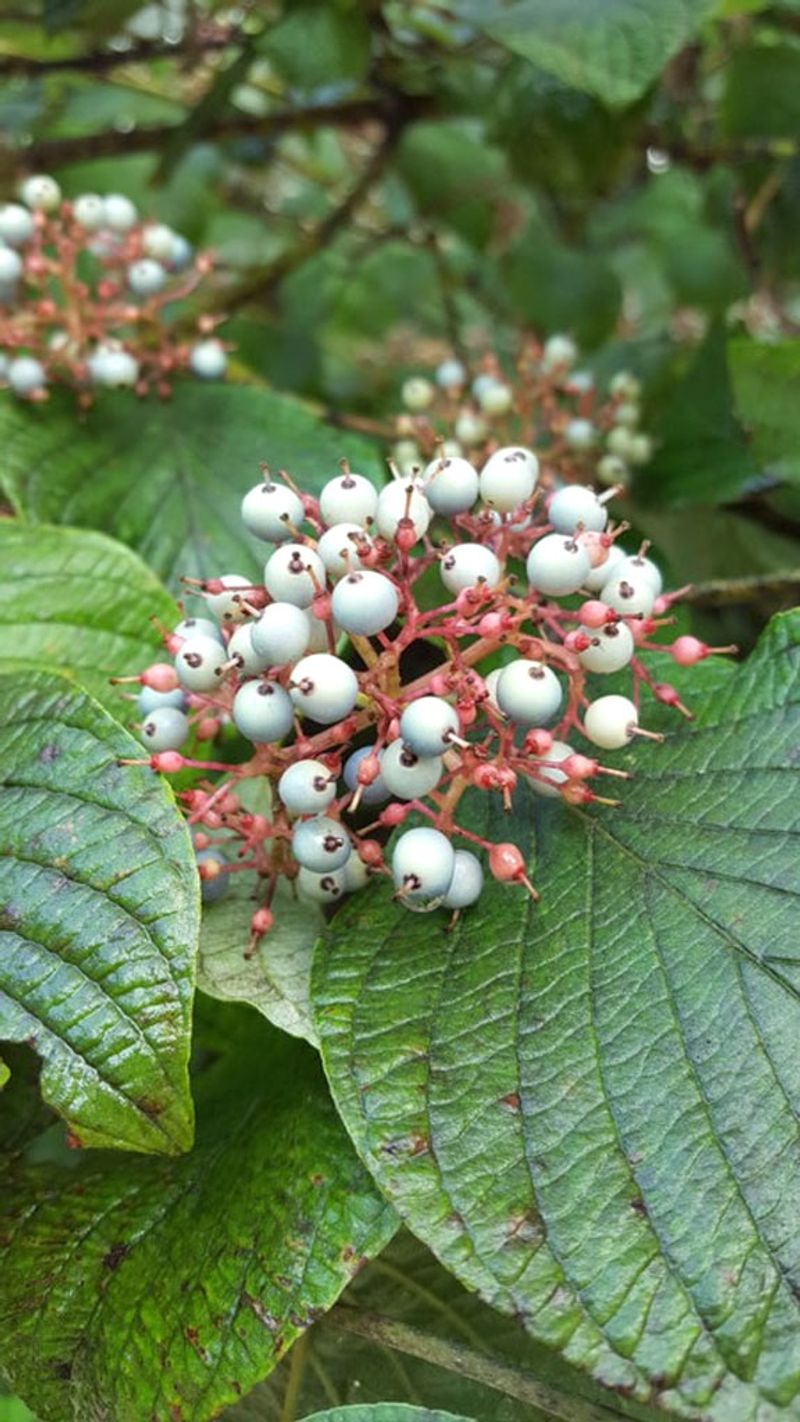
Hold a roundleaf dogwood leaf next to your palm, and you might find it nearly as wide as your hand. Those broad, nearly circular leaves look so unlike other dogwoods that many hikers walk right past it.
Flat clusters of creamy white flowers open in late spring and early summer, drawing bees and small butterflies. By late summer, pale blue berries sit on reddish stalks, and the color contrast feels like fancy jewelry.
Songbirds gobble those berries quickly, which makes this shrub a handy snack bar during fall migration. I believe watching a catbird raid the branches is half the fun of growing it near a window.
Unlike many dogwoods that crave wet ground, this native often grows on rocky, well-drained slopes and woodland edges. Average garden soil works fine, as long as water drains away instead of puddling around the roots.
Partial shade suits it best, although it handles full sun if you keep the soil from baking dry. Expect a multi-stemmed shrub around six to ten feet tall, with an open shape that fits informal plantings.
Fall brings another treat, as the leaves often shift toward reddish purple before dropping for the season. Its greenish twigs, sometimes streaked with purple, keep the plant interesting after the leaves are gone.
Roundleaf dogwood grows naturally across New York, yet it rarely shows up in home landscapes or nursery catalogs. You might need to request it from a native plant specialist, but the hunt is well worth it.
4. Spicebush
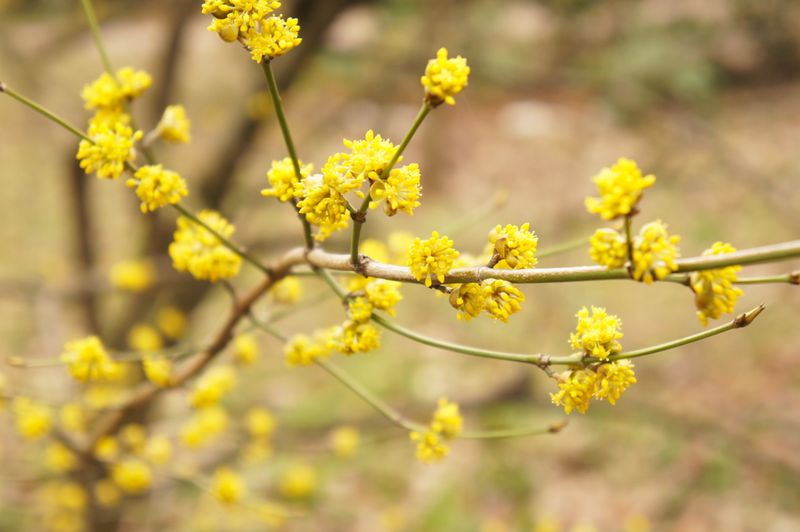
Scratch a spicebush twig with your thumbnail, and a bright, lemony spice scent jumps right off the bark. Kids love this trick, and honestly, I still do it every time I walk past mine in the yard.
In early spring, tiny chartreuse flowers fuzz up the bare branches before the leaves even think about appearing. From a distance, the shrub seems wrapped in a soft yellow-green haze that brightens gloomy woodland corners.
Spicebush swallowtail butterflies lay eggs on the leaves, and their caterpillars look hilariously like tiny green snakes. Those fake eyespots help scare off hungry birds, so you may spot one curled inside a folded leaf.
Female plants produce glossy red berries in fall, packed with fat that migrating thrushes and other songbirds need. Plant at least one male nearby, since the flowers on separate plants must share pollen for fruit.
This adaptable native handles shade well and prefers moist soil, though it copes with occasional dry spells once established. It typically grows six to twelve feet tall, with a loose, rounded shape that fills gaps under trees.
Deer usually leave spicebush alone, which feels like a small miracle in many suburban and rural neighborhoods. Autumn leaves turn a clear golden yellow that lights up shady spots after most flowers have faded.
Spicebush grows wild in moist woods, yet it remains surprisingly uncommon in home gardens and front yards. You need to try one near a path, where brushing past releases that cheerful scent all season.
5. Summersweet
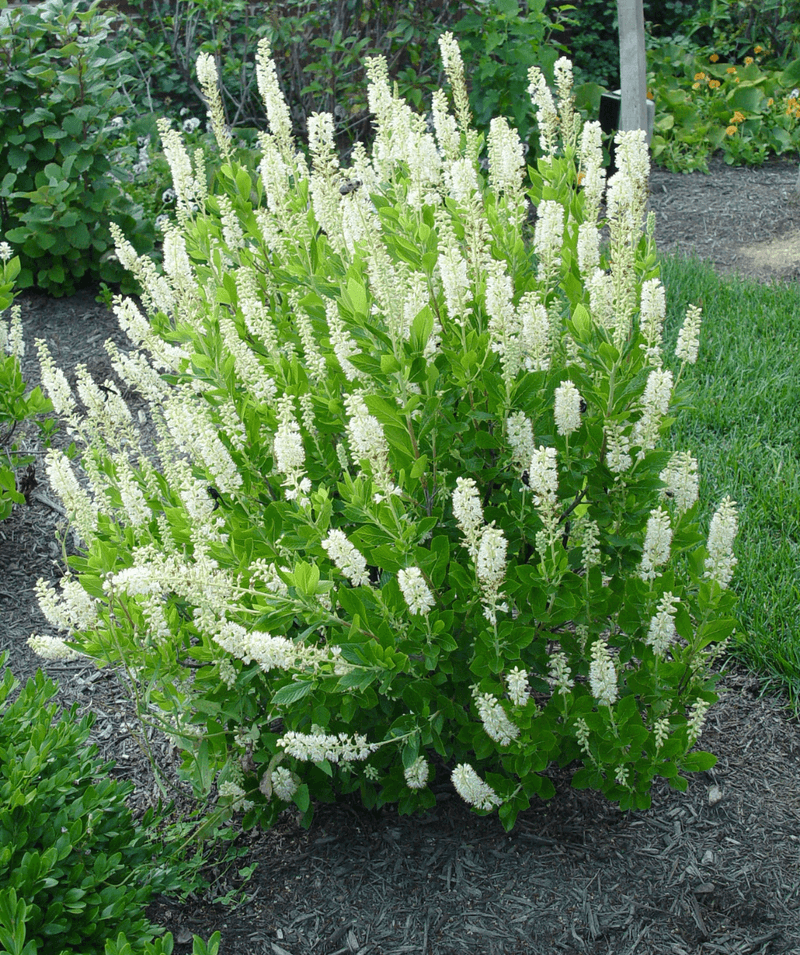
Walk past a summersweet in late July, and the honey-spice perfume might stop you right in your tracks. Bees seem just as smitten, buzzing around the white flower spikes from morning until the evening shadows stretch.
Bloom time is its secret weapon, since it flowers in midsummer when most spring shrubs look plain and green. I like how it fills that quiet gap in the garden calendar with color and fragrance at once.
Summersweet grows naturally in coastal swamps and damp woods, including spots on Long Island and nearby shorelines. It tolerates wet feet and some salt spray, so seaside gardens and soggy low spots suit it well.
Most plants reach three to eight feet tall, spreading slowly by suckers into a full, rounded clump. Compact cultivars like Hummingbird stay smaller, while Ruby Spice offers rosy pink flowers instead of the usual white.
Give it acidic soil that stays moist, along with full sun or partial shade for the best blooms. More sunlight usually means more flowers, but the plant still performs nicely beneath tall, high-branched trees.
Spring can feel nerve-racking, because summersweet leafs out late and may look bare after neighbors turn green. Be patient instead of pruning in a panic, since the buds simply wait for warmer weather before opening.
Fall adds a bonus show, as the glossy leaves turn buttery yellow to golden brown before dropping. Brown seed capsules hang on through winter, giving curious visitors one more reason to ask about it.
6. Bottlebrush Buckeye
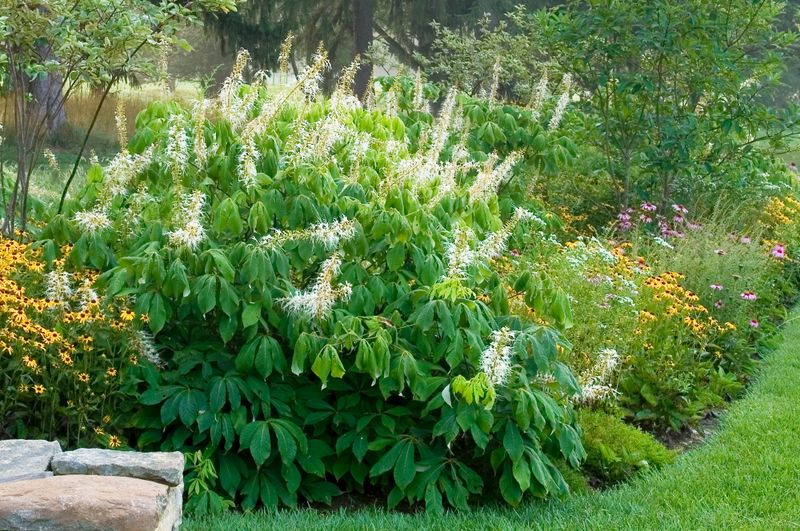
Fluffy white flower spikes up to a foot long shoot above bottlebrush buckeye in early summer like fireworks. Long thread-like stamens tipped with pinkish anthers give each spike a soft, feathery look up close.
Butterflies swarm these blooms, and hummingbirds sometimes stop by when the flowers open in June and July. I can’t imagine a better shady spot for watching swallowtails float around on a warm afternoon.
Although native to the Southeast, this shrub handles cold well and grows reliably across most of New York. It spreads slowly by suckers, forming a wide mound that can stretch fifteen feet across over time.
Plan ahead and give it plenty of elbow room, because squeezing it near a walkway leads to headaches later. Height usually lands between eight and twelve feet, so it works beautifully as a living screen or border backdrop.
Partial shade and rich, moist soil keep it happiest, though it adapts to full sun with steady watering. The large leaves, divided like fingers on a hand, turn a soft yellow color before they drop each fall.
Keep curious children and pets away from the shiny brown nuts, since buckeye seeds are toxic if eaten. Squirrels may carry some off, but you should still rake up stray nuts if little ones play nearby.
Pests and diseases rarely bother it much, which makes it a fairly easygoing choice for busy gardeners. You might notice it blooms a bit later and stronger once it settles in for a few seasons.
7. Dwarf Fothergilla
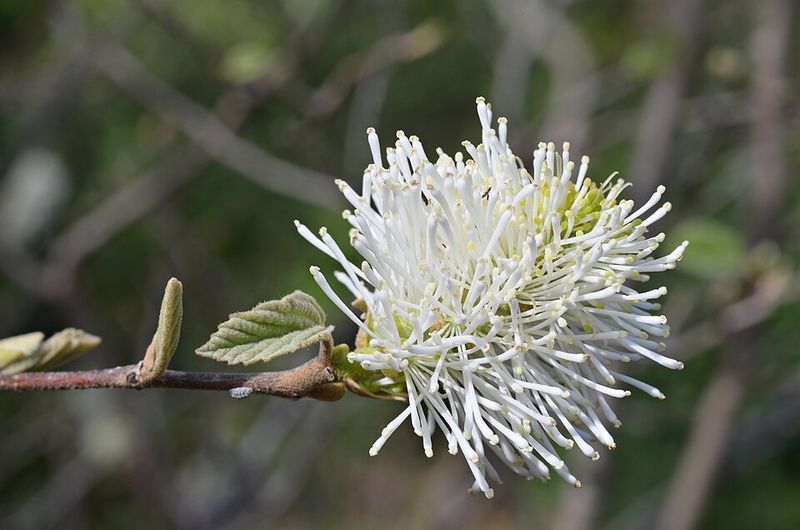
Lean close to a dwarf fothergilla in spring, and the fuzzy white blooms smell faintly of sweet honey. Each flower is actually a cluster of stamens with no petals, which explains that soft, brushy shape.
This compact shrub belongs to the witch hazel family and is named after John Fothergill, an English physician. He grew many American plants in his London garden during the 1700s, long before they became popular here.
Most plants stay around two to three feet tall, so they tuck neatly into foundation beds and small yards. Blue-green summer leaves look tidy and calm, giving nearby flowers a pleasant, cool backdrop to shine against.
Autumn is when fothergilla really shows off, with leaves blending fiery red and glowing orange, sometimes on one leaf. Friends who visit in October usually ask what it is, which might be my favorite part of growing it.
Acidic soil that stays moist but drains well suits it best, much like conditions azaleas and blueberries enjoy. Full sun brings the brightest fall color, though partial shade works fine for lighter, softer autumn tones.
Native to the southeastern coastal plain, it grows best in zones five through eight around the state. Gardeners in the coldest northern regions may want a sheltered spot with good snow cover for extra protection.
Pruning is rarely necessary, since the shrub naturally keeps a neat, mounded form without much help from you. Just add a layer of mulch and water during dry spells while the young roots settle in.
8. American Hazelnut
Tiny magenta threads poke out of hazelnut buds in early spring, and they are actually the female flowers. Most people miss them, because they are smaller than a grain of rice and easy to overlook.
Dangling yellowish-brown catkins, the male flowers, sway nearby and release puffs of pollen on breezy late winter days. I love how those catkins add motion and gentle color when the rest of the garden still looks asleep.
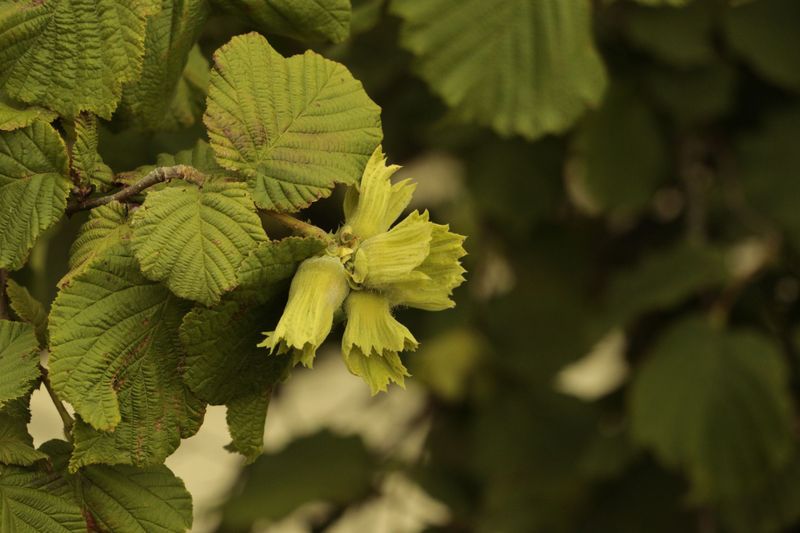
By late summer, small nuts form inside ruffled, leafy husks that look a bit like frilly green collars. Squirrels and blue jays will compete fiercely for them, so harvest promptly if you want a handful yourself.
Plant at least two shrubs for better pollination, because a lone hazelnut usually produces few nuts on its own. American hazelnut grows wild in New York thickets and woodland edges, so it handles local winters with ease.
Expect a multi-stemmed shrub around eight to sixteen feet tall, often spreading by suckers into a dense clump. Those thickets offer great cover for nesting birds, which makes this shrub a smart pick for wildlife gardens.
Full sun gives the biggest crop, but partial shade works well if you mainly want natural screening. It tolerates many soil types, including clay, as long as water does not sit around the roots for long.
Fall leaves can glow in warm shades of orange and soft red, adding a cozy finish to the season. The native species also shows good tolerance of eastern filbert blight, a disease that troubles European hazelnuts badly.
9. American Beautyberry
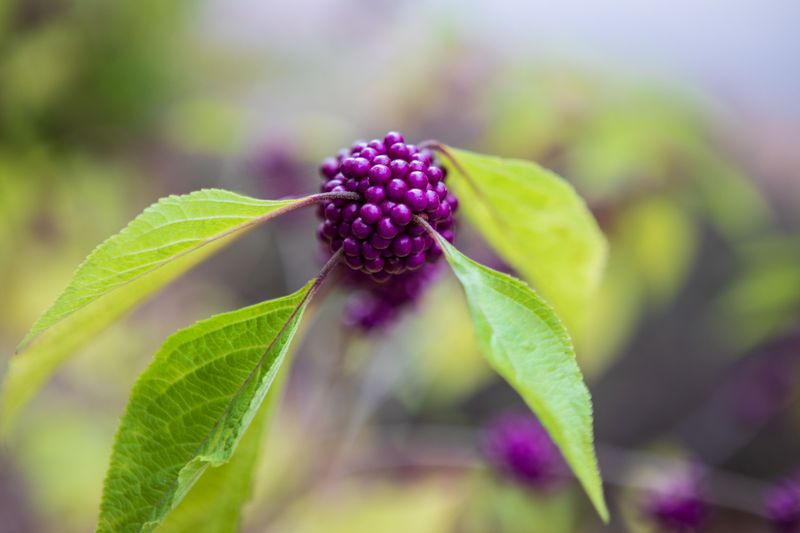
Clusters of glossy magenta-purple berries ring the stems of American beautyberry in fall, looking almost too bright to be real. Neighbors have asked me if mine was plastic, which still makes me laugh every single autumn.
Small pink flowers appear along the branches in summer, and the berries ripen from late summer into fall. Birds like mockingbirds and robins eventually eat them, though the fruit often lingers after the leaves drop.
This shrub is native to the Southeast, so it fits best in milder parts of the state. Long Island, New York City, and the lower Hudson Valley offer the zone six warmth it typically needs.
In colder winters, stems may freeze back to the ground, but the roots usually send up fresh shoots. Since berries form on new growth, a hard winter rarely spoils the fall show as long as roots survive.
Many gardeners cut the stems back to about a foot tall in late winter for a fuller, tidier shape. That trim encourages vigorous new branches, which means more flowers and plenty more berries come autumn.
Plant it in full sun or partial shade, using well-drained soil that stays moderately moist through summer. Expect a loose, arching shrub around three to six feet tall, which fits nicely in mixed borders.
USDA scientists have studied a compound in the crushed leaves that showed mosquito-repelling properties in lab tests. Folks in the South have rubbed the leaves on their skin for generations, though I prefer simply admiring the berries.