9 Florida Entry Path Plants That Look Expensive But Need Little Water
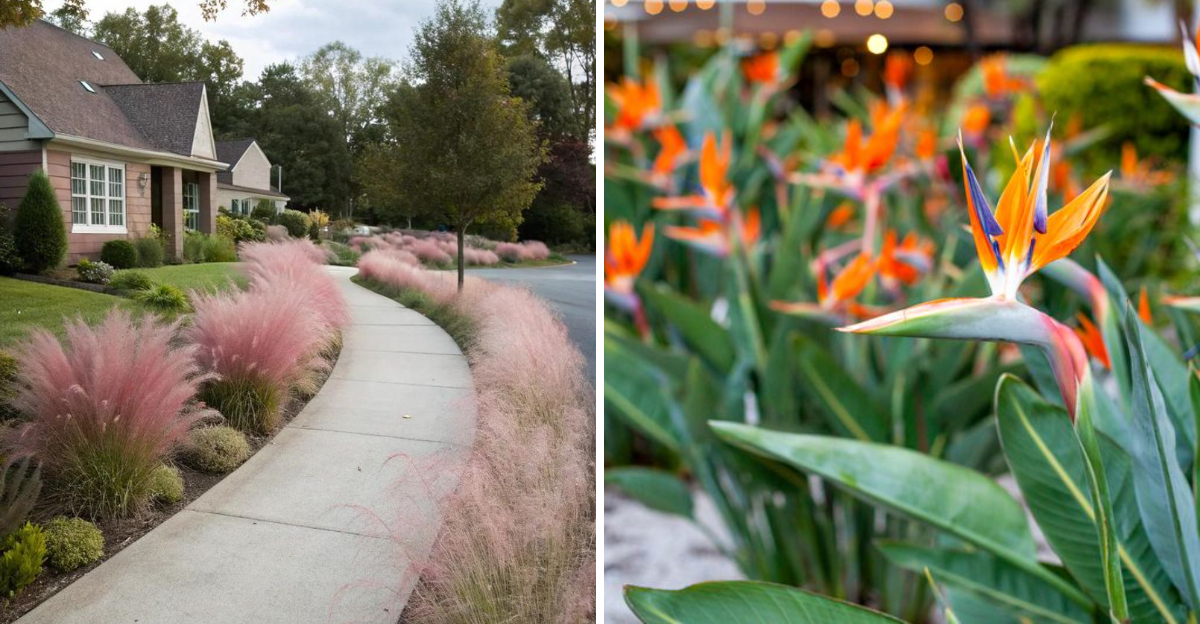
Your entry path sets the tone before anyone even reaches the front door, and in Florida, that space can either look polished and inviting or tired a whole lot faster than you expected.
The tricky part is finding plants that give that lush, upscale look without turning into constant work once the heat settles in and dry stretches show up.
Thankfully, some plants really do pull off both. They bring structure, color, texture, and that pulled-together feel people usually associate with high-end landscaping, yet they ask for surprisingly little water once established.
That makes them especially appealing for Florida homeowners who want curb appeal that looks thoughtful, elegant, and far more expensive than it actually is. A well-planted entry path does not need to feel fussy to make a strong impression.
Sometimes the smartest choices are also the ones that look the most luxurious from the street.
1. Muhly Grass Brings Soft Drama Without Looking Fussy
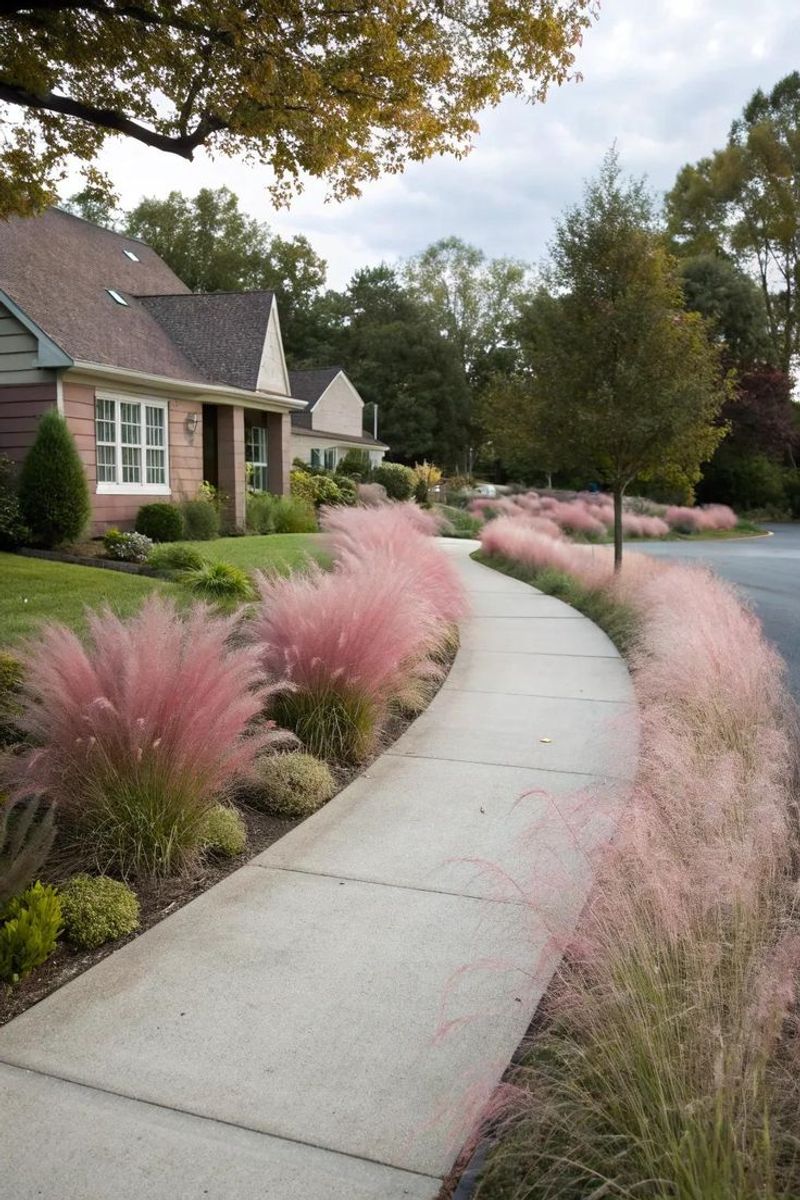
Few plants pull off effortless elegance quite like muhly grass. When fall rolls around in Florida, this native grass erupts into a cloud of soft pink and purple plumes that catch afternoon light in a way that genuinely stops people in their tracks.
Planted along an entry path, it creates that layered, designed look you see in high-end landscape photography.
Muhly grass thrives in full sun and grows well in Florida’s sandy, well-drained soils. According to the University of Florida IFAS, it is highly drought tolerant once established and requires very little supplemental irrigation after its first growing season.
During establishment, water it regularly for the first few months to help the root system settle in.
The texture here is what makes it feel expensive. It does not look stiff or blocky like many shrubs.
Instead, it moves with the breeze, adding life and dimension to what could otherwise be a flat planting bed. It typically reaches two to three feet tall with plumes extending even higher, making it a strong visual anchor without overwhelming smaller spaces.
Low fertilizer needs and easy care round out why this grass earns a spot near any Florida front door.
2. Dwarf Yaupon Holly Looks Neat Without Constant Upkeep
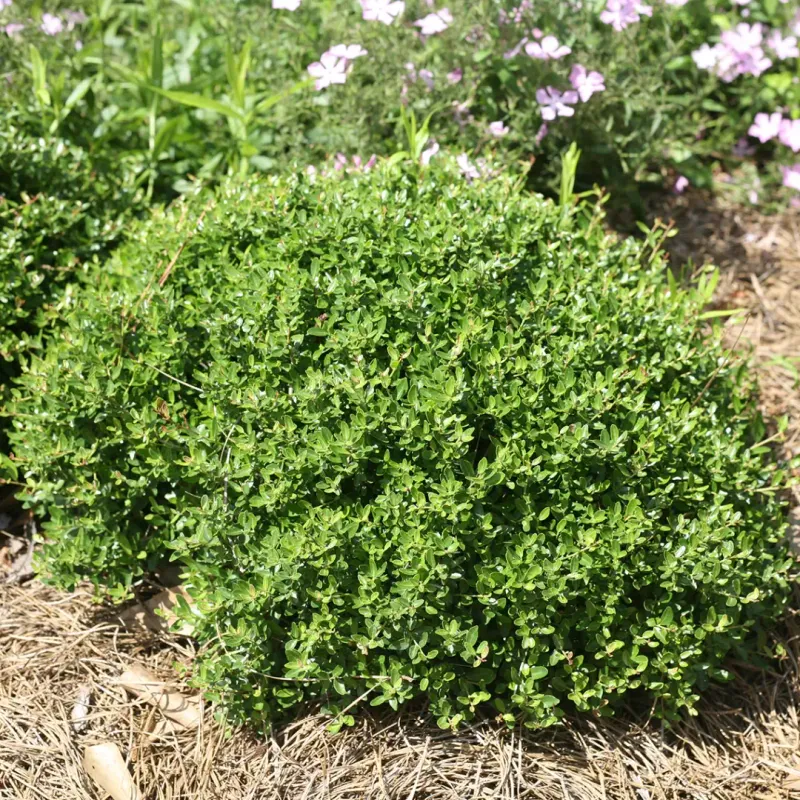
Homeowners who want that crisp, well-maintained look near the front door without spending every weekend pruning will appreciate dwarf yaupon holly more than almost any other plant.
Its naturally compact, rounded form stays tidy with very minimal trimming, and its dense dark green foliage reads as polished and intentional from the street.
Dwarf yaupon holly (Ilex vomitoria ‘Nana’) is one of Florida’s most adaptable native shrubs.
University of Florida IFAS extension notes that it tolerates full sun to partial shade, handles both wet and dry conditions, and holds up well in coastal environments where salt spray can challenge other plants.
Once established, it is quite drought tolerant, though consistent watering during the first season helps it develop a strong root system.
The small, evergreen leaves stay bright year-round, which means your entry path never looks bare or tired between seasons. This plant also provides a reliable backdrop for more colorful companion plantings nearby.
Your Florida Garden Changes Every Week. Your Plan Should Too.
Gardening in Florida changes quickly throughout the season. Every Friday you’ll receive a simple weekly plan showing exactly what to plant, prune, fertilize, harvest, and protect so you never miss the right timing.
Female plants produce small red berries in winter that add a subtle decorative touch and attract birds. Reaching roughly three to four feet tall and wide at maturity, it fits comfortably in most entry path settings without crowding the walkway or blocking sightlines.
3. Walter’s Viburnum Has That Clean, Finished Look
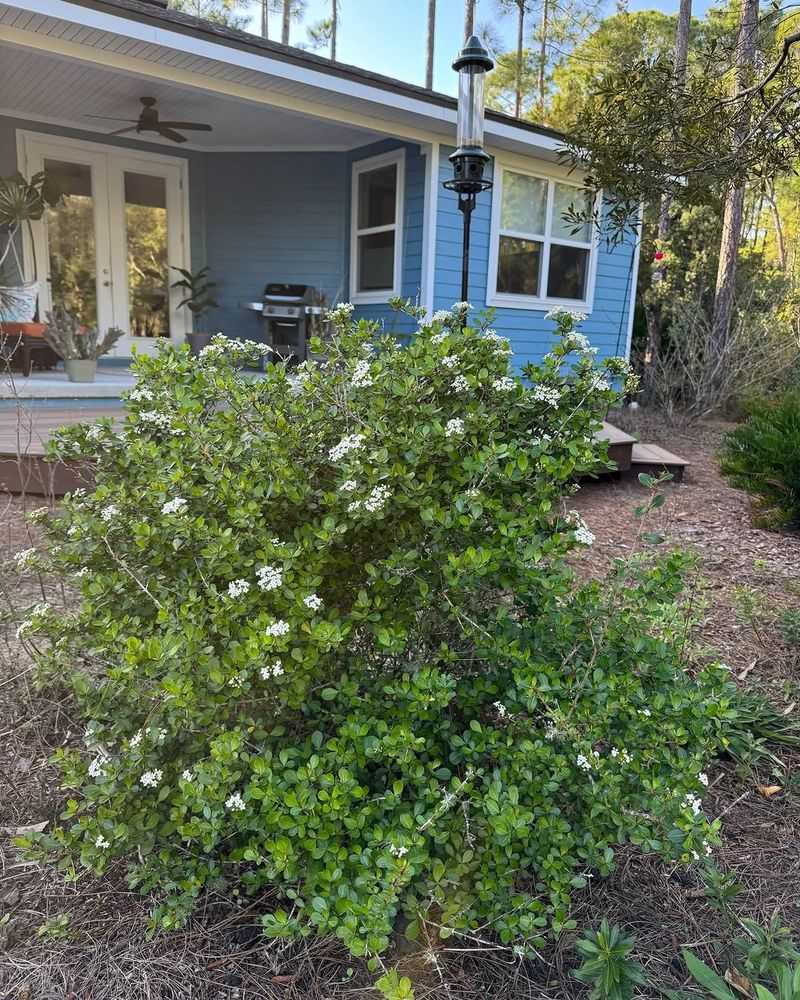
There is something about a well-placed native shrub that makes a landscape feel considered rather than thrown together. Walter’s viburnum (Viburnum obovatum) has that quality in abundance.
Its small, glossy leaves and dense branching habit give it a refined, almost formal appearance that suits entry paths perfectly, whether used as a low hedge, a foundation plant, or a structured border.
This Florida native is tough in a quiet, dependable way. According to University of Florida IFAS, Walter’s viburnum tolerates a wide range of soil types, handles occasional drought once established, and performs well in both full sun and partial shade.
It is evergreen in most of Florida, meaning it holds its structure and color through the cooler months when other plants may look tired.
Small white flowers appear in late winter to early spring, adding a brief but lovely seasonal moment to the entry area. The plant can be left to grow naturally into a soft, rounded shrub or trained into a tighter hedge form depending on the look you are going for.
Either way, it delivers a sense of order and intention that makes the whole front of the house feel more pulled together. It rewards patience because it looks even better as it matures.
4. Pentas Keep The Entry Bright Through Florida Heat
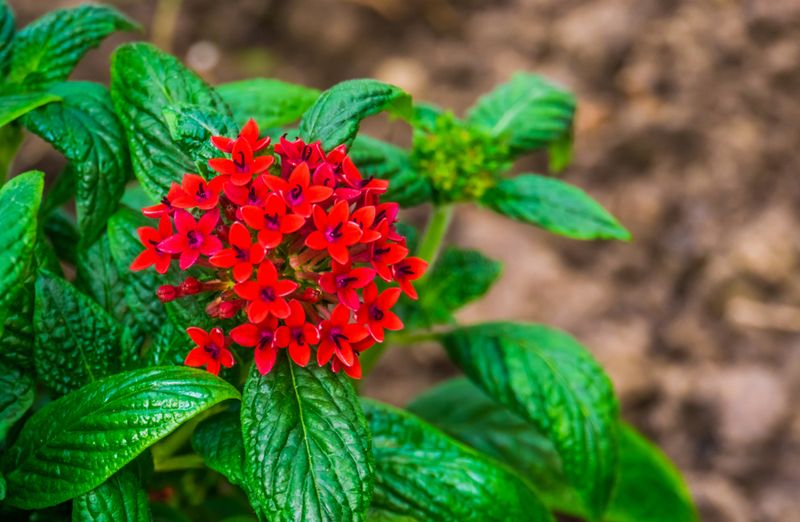
Walk past a well-planted pentas bed on a hot August afternoon and the burst of color feels almost defiant given the brutal Florida summer conditions.
Pentas (Pentas lanceolata) bloom in clusters of star-shaped flowers in shades of red, pink, white, and lavender, and they keep going through the kind of heat that wilts lesser plants without complaint.
Pentas perform best in full sun and well-drained soil. While they appreciate consistent moisture, especially when young, established plants hold up well during dry stretches and do not demand constant irrigation.
University of Florida IFAS recommends pentas as a warm-season annual or short-lived perennial in Florida, depending on the region, and notes their strong performance in high-heat, high-humidity conditions.
Beyond their staying power, pentas are genuinely attractive plants that read as lively and welcoming near an entry path. Butterflies and hummingbirds are drawn to the flowers regularly, which adds a dynamic, living quality to the space that no hardscape element can replicate.
They typically grow one to two feet tall, making them a great mid-border option. Pair them with taller structural plants for a layered entry planting that feels both designed and full of personality throughout the warm months.
5. Society Garlic Adds Style With Hardly Any Fuss
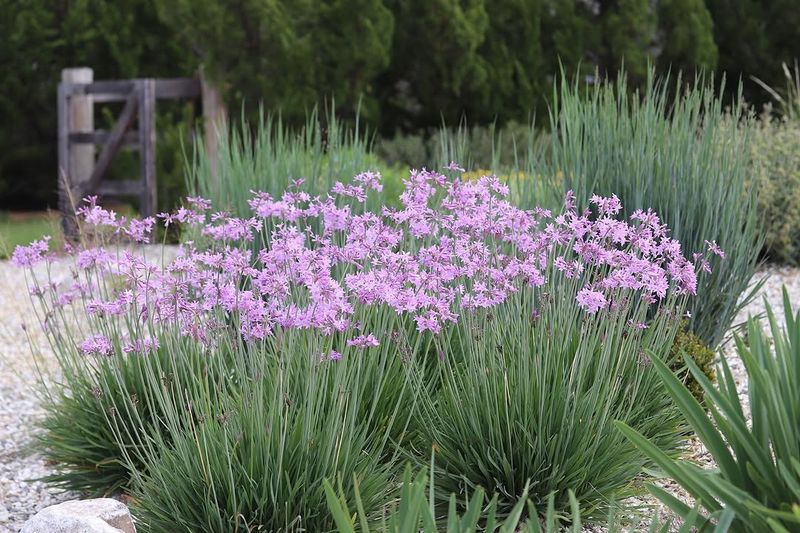
Society garlic has a quiet confidence about it.
The slender, blue-green foliage forms tidy clumps that look intentional and structured along an entry path, and when the lavender-purple flowers appear on tall stems, the whole planting takes on a more refined, almost Mediterranean character that feels genuinely elevated.
Tulbaghia violacea is a South African native that has found a very comfortable home in Florida landscapes. It thrives in full sun and well-drained soil and is notably drought tolerant once its root system is established.
During the first few months after planting, regular watering helps it settle in, but after that it handles dry periods with minimal stress. University of Florida IFAS recognizes it as a low-maintenance, heat-tolerant option suited to Florida conditions.
The flowers bloom repeatedly throughout the warm season, offering long-lasting color without the need for deadheading or complicated fertilizing routines.
One fun detail worth mentioning: the foliage has a mild garlic scent when brushed or cut, but it does not affect the appearance or appeal of the planting from a distance.
The clumping habit stays tidy on its own, rarely sprawling or getting out of bounds. For homeowners who want a border plant that delivers color, texture, and structure without demanding much attention, society garlic consistently delivers.
6. Perennial Peanut Creates A Rich Look Close To The Ground
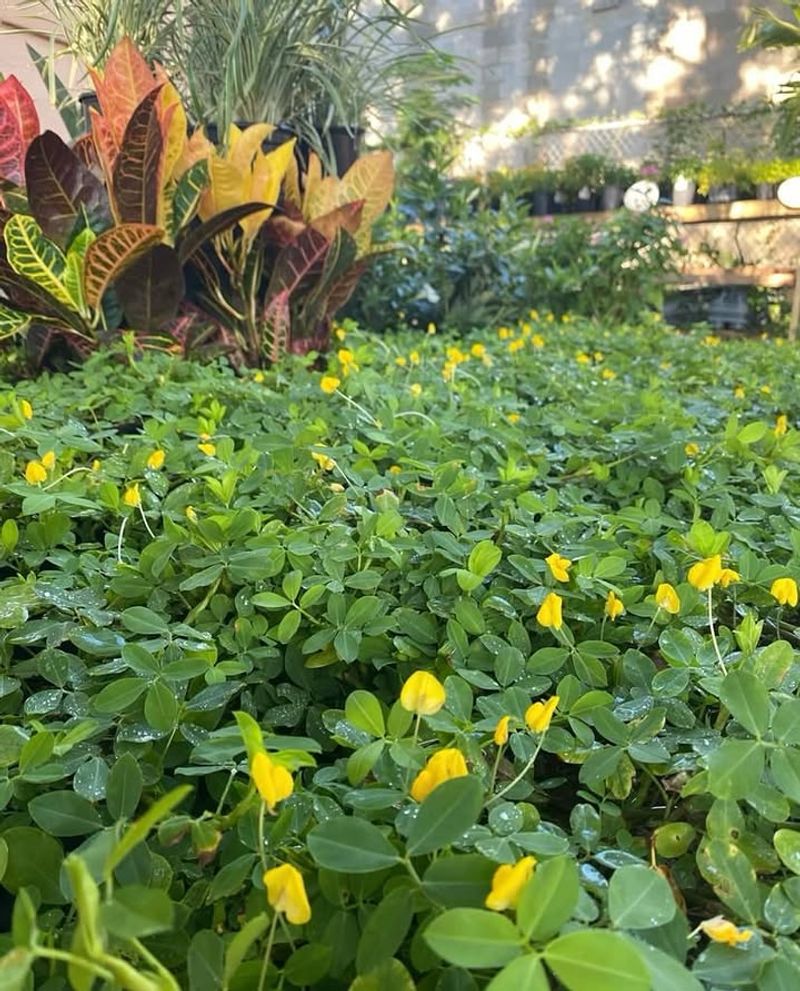
Ground-level planting is often where a landscape either pulls together or falls apart. Perennial peanut (Arachis glabrata) is one of those groundcovers that makes the edges of an entry path look lush and intentional rather than bare or neglected.
Its small, bright yellow flowers pop against the dense green foliage, creating a cheerful, finished look that costs far less effort than it appears.
University of Florida IFAS has studied and promoted perennial peanut extensively as a low-maintenance, drought-tolerant groundcover suited to Florida’s climate. Once established, it spreads to fill open areas and requires little to no supplemental irrigation in most parts of the state.
It also fixes nitrogen in the soil, which reduces fertilizer needs over time, a practical bonus for budget-conscious homeowners.
The texture of perennial peanut is noticeably softer and more natural-looking than many ornamental groundcovers. It softens hard edges along pavers or concrete paths in a way that feels organic rather than forced.
It does best in full sun and well-drained soil, making it a natural fit for most Florida entry path settings. Mowing is optional and infrequent.
For anyone who wants a groundcover that looks rich and well-kept without constant maintenance, this one earns its spot at the front of the house consistently.
7. Bird Of Paradise Makes The Whole Entry Feel More Upscale
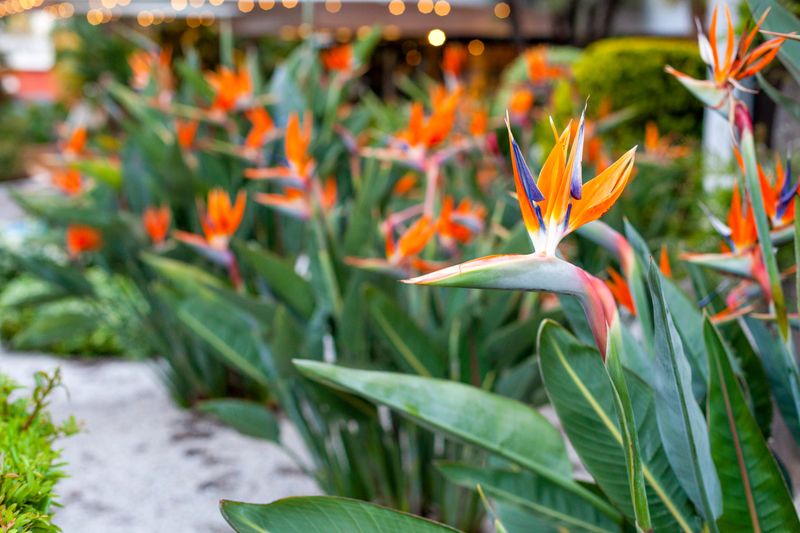
Some plants just look expensive. Bird of paradise (Strelitzia reginae) is one of them.
The bold, paddle-shaped leaves alone give an entry path a sculptural, resort-style quality, and when those iconic orange and blue flowers appear, the whole front of the house takes on a tropical sophistication that is genuinely hard to achieve with smaller, softer plants.
Despite its dramatic appearance, bird of paradise is a surprisingly tough plant once established in Florida. It thrives in full sun, tolerates sandy and well-drained soils, and handles drought conditions well after its root system matures.
The University of Florida IFAS notes that it performs best with occasional deep watering rather than frequent shallow irrigation, making it a practical choice for water-conscious homeowners in the state.
Placement near an entry path works especially well because the plant’s bold, upright form creates a strong visual anchor without spreading aggressively into the walkway.
It grows slowly, which actually works in its favor near high-traffic areas since it stays in bounds for years without needing to be cut back.
The flowers typically appear in late fall through spring, giving the entry a spectacular seasonal highlight. Pair it with lower-growing plants to take full advantage of its height and structural presence at the front door.
8. Sunshine Mimosa Softens Hard Edges In A Smart Way
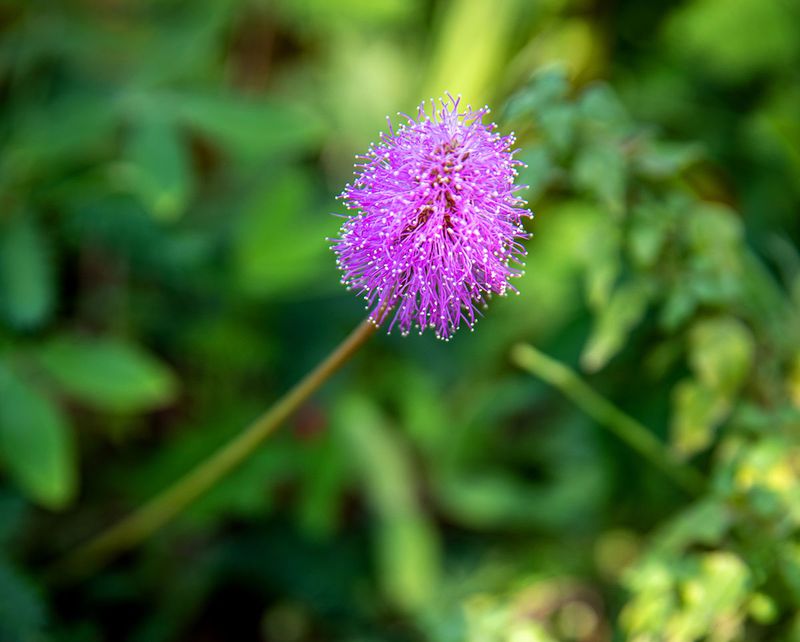
Hard lines along a paved entry path can make a landscape feel rigid and unwelcoming. Sunshine mimosa (Mimosa strigillosa) fixes that problem in the most charming way possible.
This Florida native groundcover spreads low along the ground, softening the border between pavers and planting beds with a feathery texture that moves naturally in a breeze.
The small pink powderpuff flowers that appear throughout the warm season add a playful, delicate quality to the entry area that feels far more interesting than a plain mulch border.
Beyond the visual appeal, sunshine mimosa is a native plant that University of Florida IFAS recognizes as drought tolerant once established and well-suited to Florida’s sandy soils and full-sun conditions.
It handles dry spells without looking stressed once the roots are settled in.
One thing that surprises many homeowners is how the leaves fold gently when touched, a natural response that adds a fun, interactive quality to the planting near a walkway.
It stays low, typically just a few inches tall, so it never blocks sightlines or crowds neighboring plants.
Sunshine mimosa also benefits pollinators, making it a thoughtful choice for anyone who wants their entry path to support local wildlife while still looking polished and purposeful from the street.
9. Firebush Brings Bold Color Without A Big Water Bill
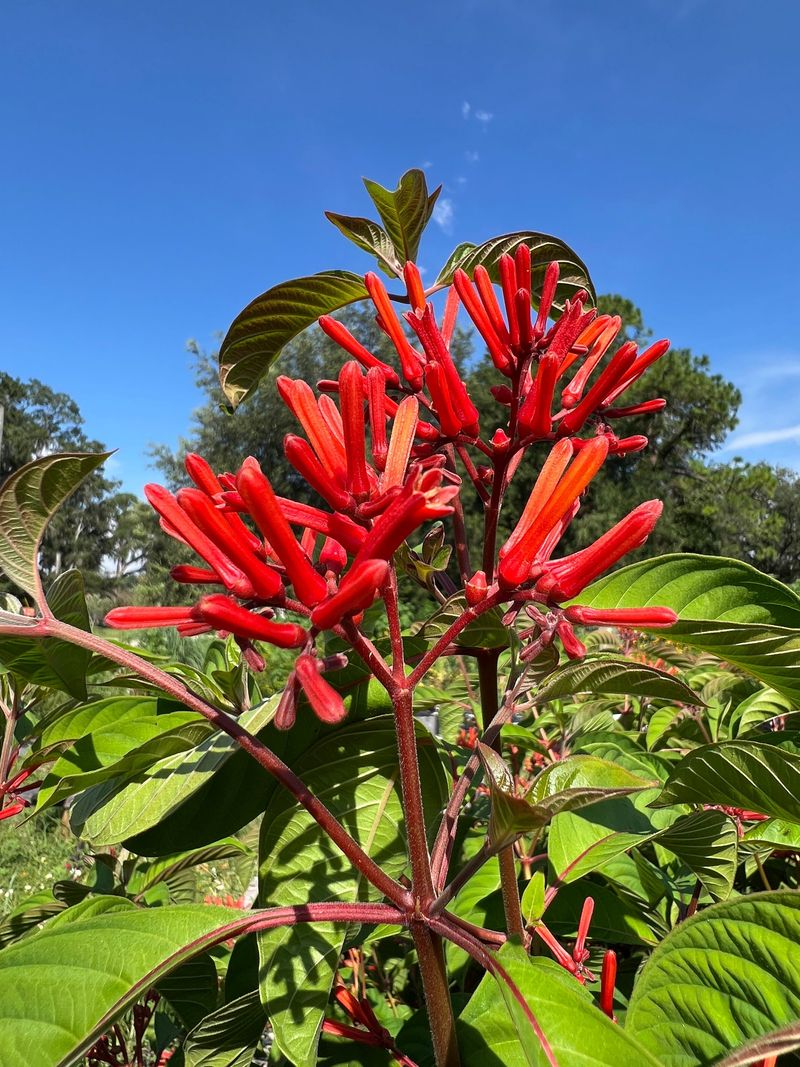
If the goal is color that commands attention from the street, firebush delivers without apology.
Hamelia patens is a Florida native shrub that produces clusters of tubular red-orange flowers nearly nonstop through the warm season, creating a vivid, layered look near an entry path that feels bold and deliberately designed rather than accidental.
University of Florida IFAS highlights firebush as an outstanding Florida-friendly plant with strong drought tolerance once established, excellent heat resistance, and significant value for pollinators.
Hummingbirds, butterflies, and native bees visit the flowers regularly, which means your entry path becomes a living, dynamic space rather than just a static planting.
After establishment, it handles dry periods well and does not demand constant irrigation to maintain its appearance.
Firebush can grow quite large in South Florida, sometimes reaching six to eight feet or more, so homeowners in warmer zones may want to plant it with some space from the walkway or opt for compact cultivars.
In Central and North Florida it tends to stay more manageable and may go dormant in winter before returning vigorously in spring.
The foliage also takes on rich red and orange tones as temperatures cool, adding a seasonal dimension that keeps the entry path looking interesting well beyond the peak bloom period.