Florida Gardeners Keep Making This Coral Honeysuckle Mistake In August
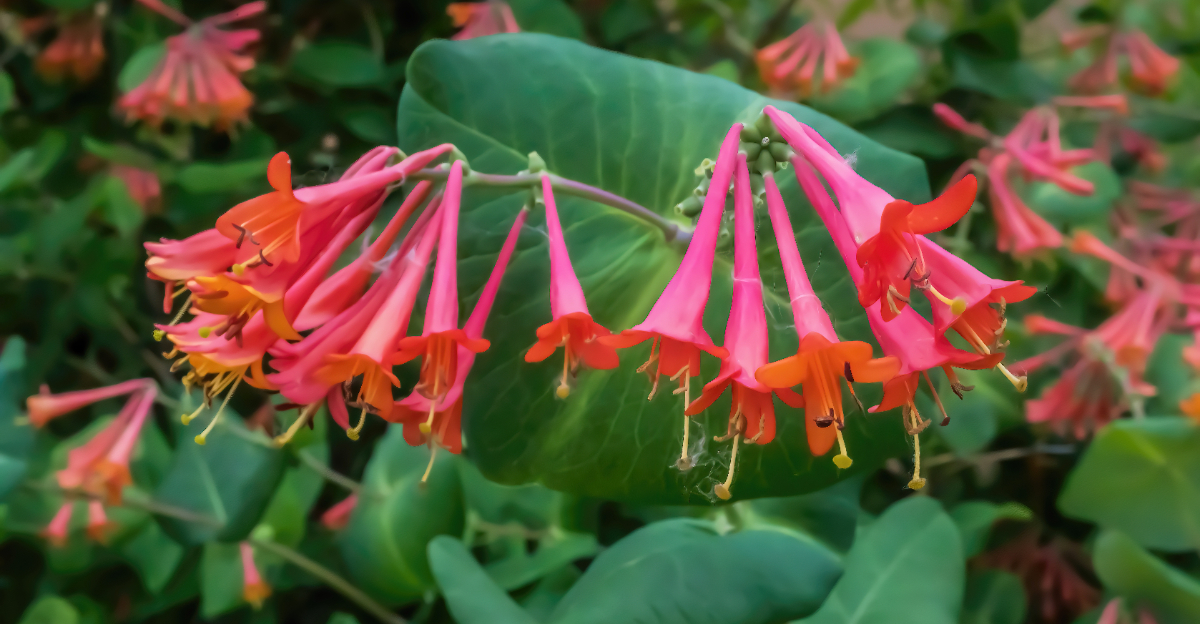
Coral honeysuckle in August looks like it can handle whatever comes next.
The hummingbirds have been working it all summer, the vine has established itself with confidence, and nothing about it signals that anything needs doing before the season closes out.
That confidence is exactly what makes one specific August mistake so easy to make and so costly once the consequences show up.
Coral honeysuckle has a narrow window in late summer where one care decision determines how well it performs through fall and into the following bloom season.
Miss it and the vine that looked so promising in July arrives at spring with noticeably less to show than it was capable of delivering. The mistake is not dramatic.
It does not look like neglect. It looks like leaving a healthy plant alone to do what healthy plants do.
That assumption is what keeps costing the bloom season that coral honeysuckle was always capable of producing in Florida gardens.
1. Put Down The Pruners
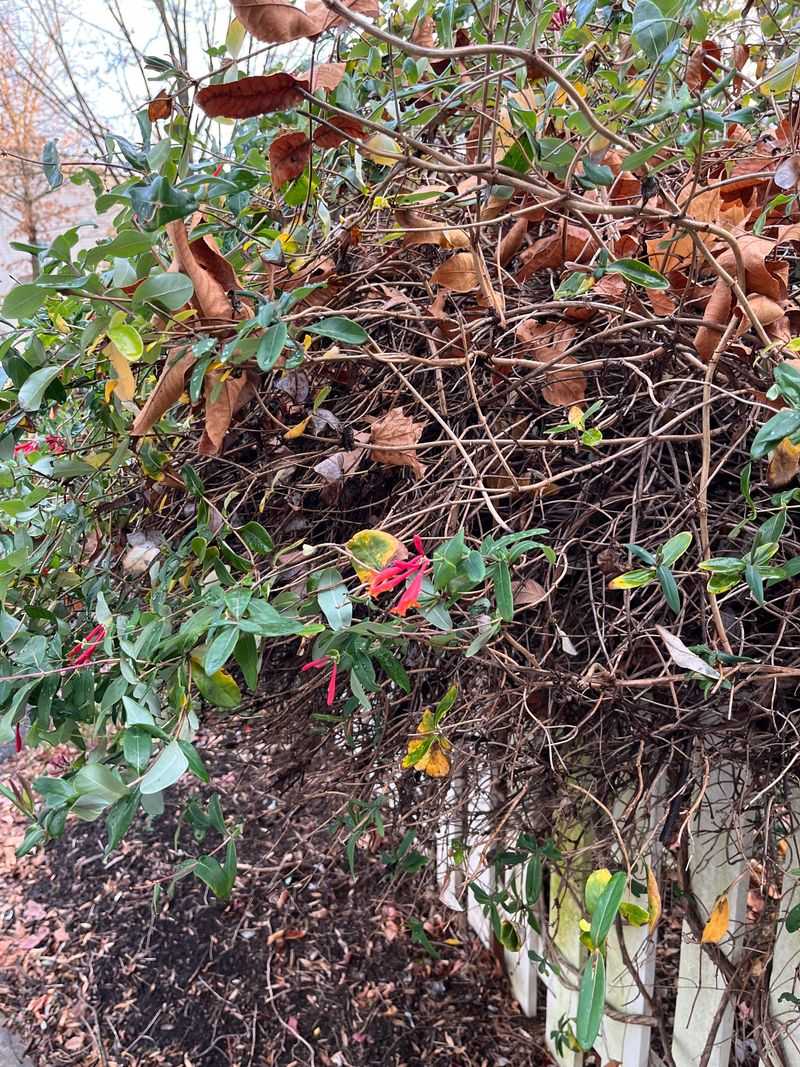
Reaching for the pruners when a vine looks scraggly is one of the most instinctive moves a gardener makes. Coral honeysuckle is a vigorous twining vine, and by August it can look like it has completely outgrown its space.
Long stems drape over fences, reach into nearby shrubs, and generally give the impression that the whole plant needs to be reined in immediately.
The impulse makes sense, but the follow-through can go too far. Lonicera sempervirens is a native Florida vine that provides real ornamental and wildlife value during late summer.
Cutting the whole plant back hard in August can remove flowering stems, developing growth, and cover that small animals use.
There is a meaningful difference between removing one truly problematic stem and slashing the vine back by half. Snipping a branch that has grown into a walkway or tangled into a shrub you want to protect is reasonable corrective pruning.
Shearing the entire vine to a manageable stub is a different action with different consequences.
No one is suggesting that coral honeysuckle should never be pruned. The point is that August heavy cutbacks are often done out of frustration with the plant’s size rather than any real need.
Taking a closer look before cutting can save flowers and growth that the vine spent the whole season building.
2. August Cuts Can Remove Blooms
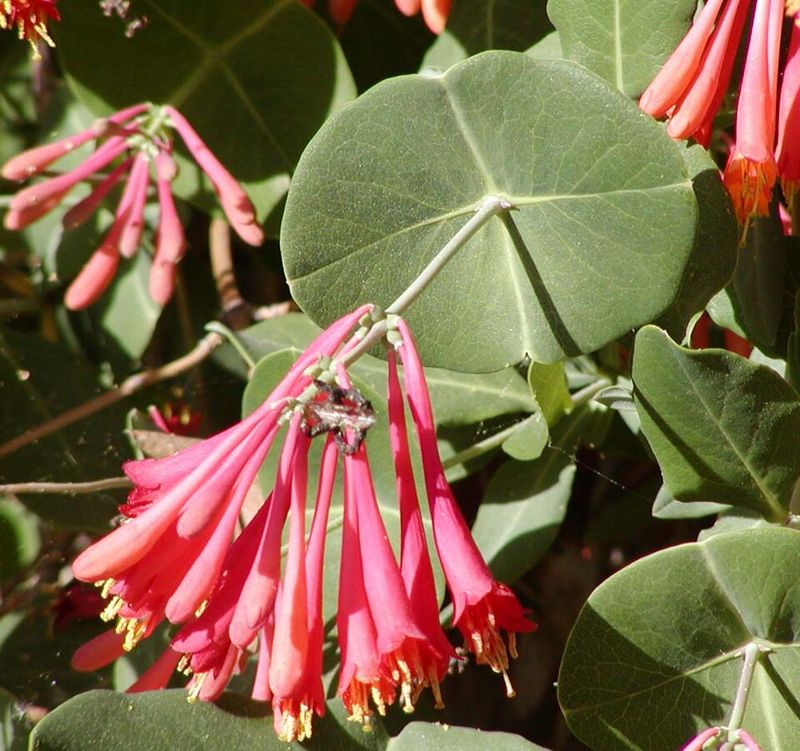
Coral honeysuckle earns attention partly because of its long bloom window. According to UF/IFAS, Lonicera sempervirens can flower from spring through fall in Florida’s warm climate.
That extended season means flowering stems may still be active in August, even when the vine looks a bit ragged around the edges.
Cutting back stems that are still carrying flower buds or open blooms shortens that display. Gardeners sometimes assume that the main show is over by midsummer, but that is not always accurate in Florida’s growing conditions.
Some stems may be finishing a flush while others are beginning a new one.
Your Florida Garden Changes Every Week. Your Plan Should Too.
Gardening in Florida changes quickly throughout the season. Every Friday you’ll receive a simple weekly plan showing exactly what to plant, prune, fertilize, harvest, and protect so you never miss the right timing.
The tubular red-orange flowers of coral honeysuckle are well documented as a food source for ruby-throated hummingbirds, which migrate through Florida during fall. The University of Florida has noted this relationship in its native plant resources.
Removing late-season blooms reduces the floral resource available during that migration window.
None of this means every stem must be protected at all costs. A stem that has clearly finished blooming and shows no new bud development is a reasonable candidate for a light trim.
The goal is to avoid cutting stems that are still contributing to the flower display. In warmer parts of the state, those blooms may continue into September and beyond.
3. Faded Flowers Become Bird Food
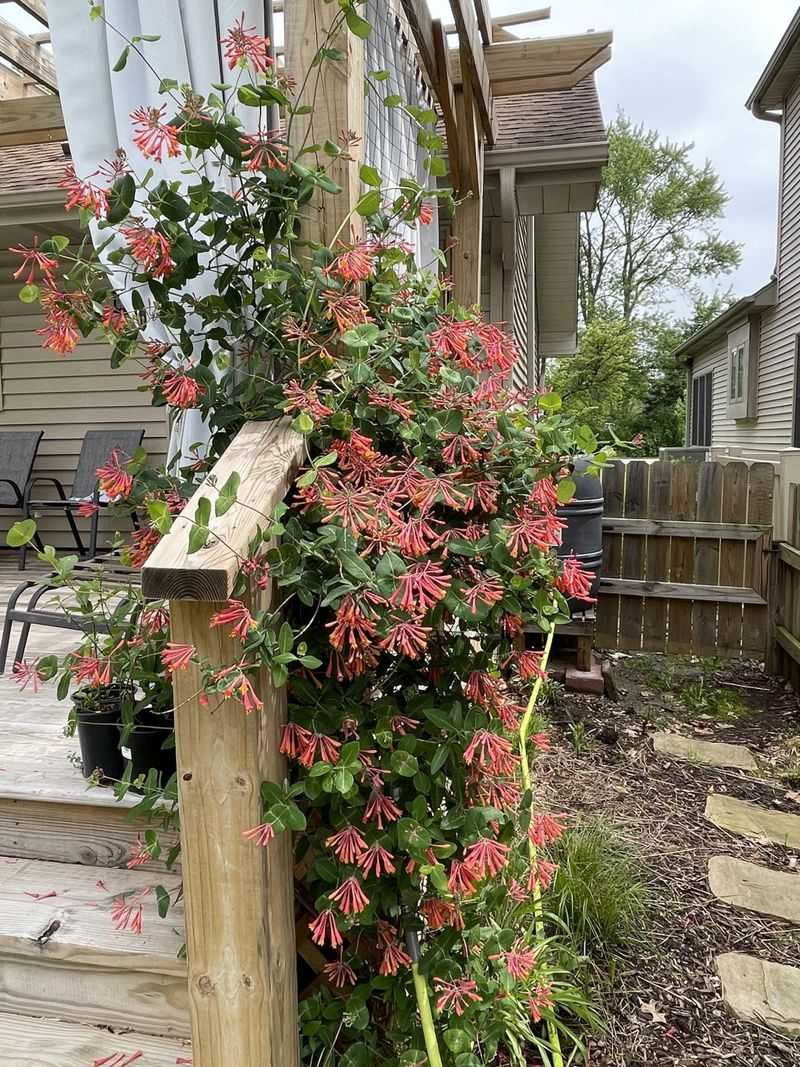
After the flowers fade, something useful can take their place. Lonicera sempervirens produces small red berries following bloom, and those berries have documented wildlife value.
According to the Florida Native Plant Society and UF/IFAS resources, coral honeysuckle fruit attracts birds. That includes species that pass through Florida during fall migration.
Gardeners who remove every faded flower stem immediately after bloom may be cutting off that next stage before it begins. Not every flower will develop into fruit, and no source suggests that fruiting is guaranteed across all stems.
Still, leaving some spent flower clusters on the vine gives the plant the chance to complete that cycle.
The berries are not considered edible for people. The wildlife value is the relevant point here, and it applies specifically to birds rather than to human use.
Gardeners who value native plant habitat may find that allowing some stems to fruit adds another layer of seasonal interest to the planting.
Timing matters in this context. Heavy pruning in August removes stems that might otherwise carry developing fruit into fall.
A lighter approach, removing only stems that are clearly done and showing no fruit development, keeps more of that potential intact.
Watching the vine for a week before cutting can reveal which stems are still progressing and which ones have genuinely finished their season.
4. Train Stems Instead Of Chopping
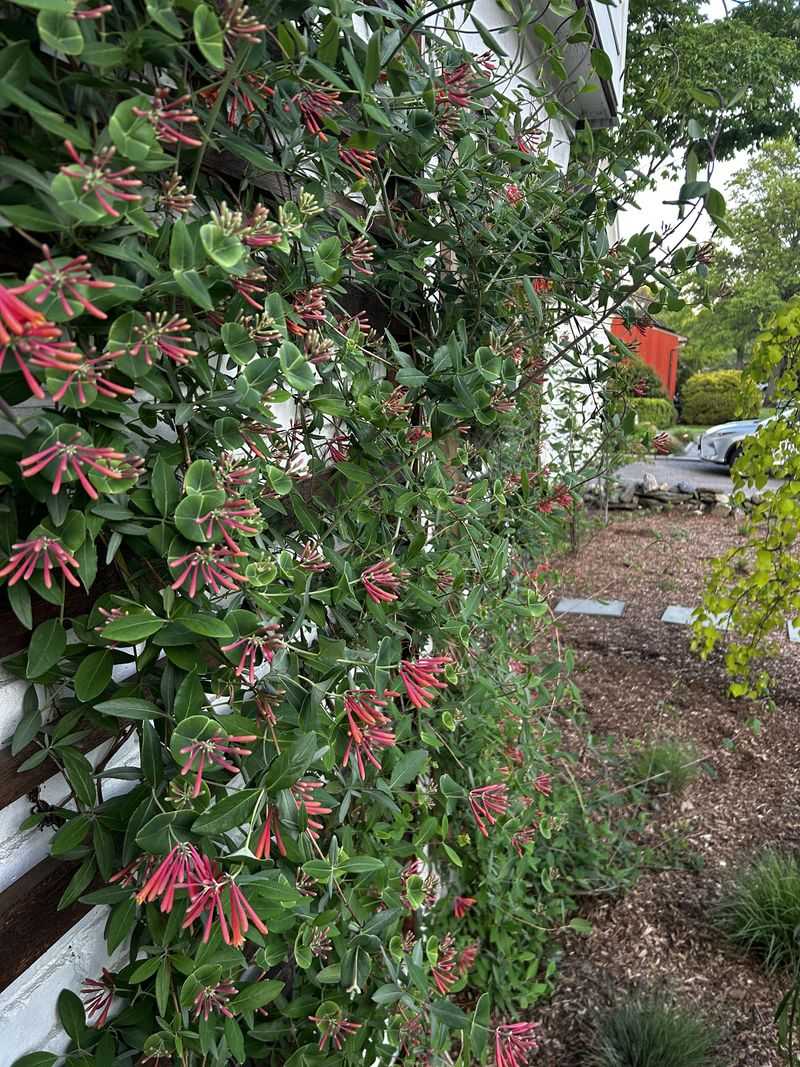
A long, wandering stem does not have to be removed to be managed. One of the most practical alternatives to heavy pruning is training, which means guiding stems where you want them to go rather than simply cutting them off.
Coral honeysuckle twines by wrapping around supports, so it responds well to being redirected with soft ties or garden clips.
Stems that have grown past their support can often be looped back and secured to the trellis or fence rather than snipped at the base. Stems reaching into a neighboring plant can be gently unwound and redirected to an open section of the structure.
This approach keeps the plant’s growth intact while solving the visual problem that prompted the urge to prune.
Training also helps the vine fill its support more evenly over time. A plant that gets cut back repeatedly may produce dense regrowth in one spot while leaving other sections bare.
Redirecting stems distributes growth more naturally across the structure.
Clemson Cooperative Extension and similar university sources note that training and tying are useful tools for managing climbing vines without heavy cutting. The technique works especially well during active growing periods when the stems are still flexible.
August is a reasonable time to train coral honeysuckle rather than cut it, since the stems are green, pliable, and easier to guide than older woody growth.
5. Give The Vine Strong Support
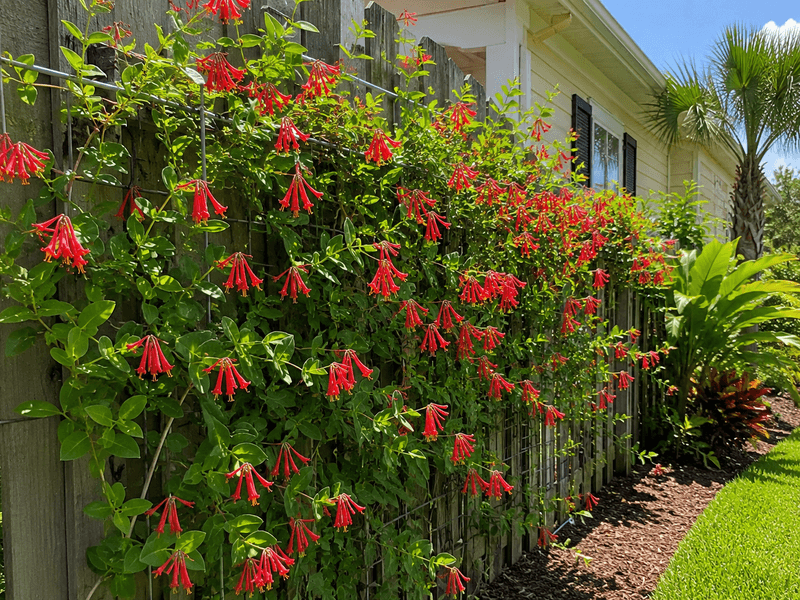
A vine with nowhere appropriate to climb tends to sprawl in every direction, which is often what triggers the urge to prune in the first place. Giving coral honeysuckle a solid, well-sized support from the start helps manage its growth more naturally.
Trellises, arbors, fences, and sturdy pergolas all work well as climbing structures for this vine.
UF/IFAS notes that Lonicera sempervirens is a vigorous grower that can reach significant lengths at maturity.
A support that is too small or too flimsy will be outgrown quickly, leading to the same overgrown appearance that sends gardeners to the pruning drawer every August.
Choosing a structure that can handle the vine’s mature size makes a practical difference over the long term.
Placement matters as much as structure size. A vine planted too close to a wall with no support may search for something to grip and end up climbing into gutters or window frames.
Positioning the plant near a freestanding trellis or fence gives it a clear climbing path from the beginning.
Coral honeysuckle does not produce the clinging aerial rootlets that some vines use to attach directly to masonry or wood. It twines around structures rather than gripping them, which means it is unlikely to cause damage to fences or arbors simply by climbing.
Choosing the right support reduces the need for aggressive pruning later because the vine has room to grow in a useful direction from the start.
6. More Sun Brings More Flowers
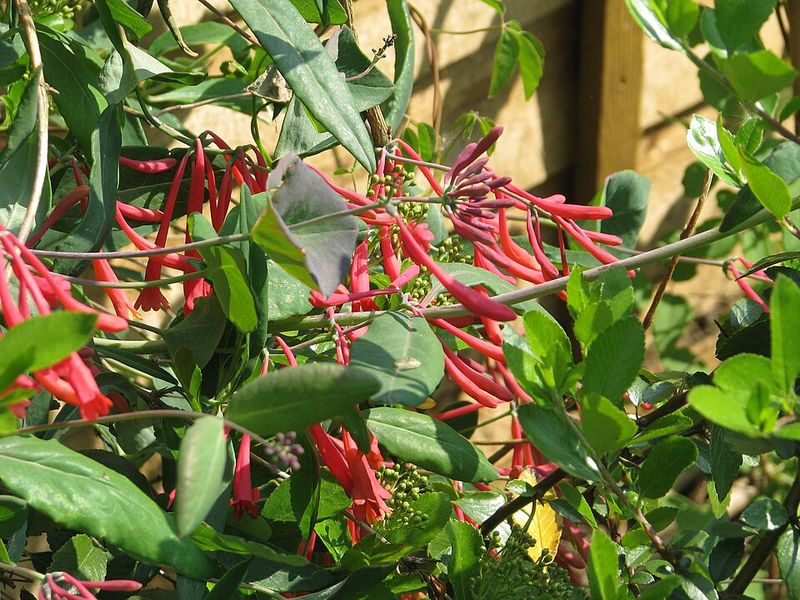
A coral honeysuckle vine that produces few flowers despite healthy green growth may have a light problem rather than a pruning problem.
UF/IFAS recommends full sun to partial shade for Lonicera sempervirens, noting that the strongest flowering typically occurs in full sun conditions.
Partial shade allows the plant to survive and grow, but it may reduce the flower display noticeably.
Gardeners sometimes respond to a sparse-blooming vine by cutting it back, hoping that fresh growth will produce more flowers. If the underlying issue is insufficient light, pruning will not solve it.
The new growth that emerges after cutting will face the same light limitation and may flower just as sparingly.
Before deciding that a vine needs heavy pruning to refresh its blooming, it is worth evaluating the light conditions it is growing in. Has a nearby tree grown larger and cast more shade over the past few seasons?
Has a fence or structure been added that now blocks morning sun? These changes can shift a full-sun planting into a partial-shade situation without the gardener noticing gradually.
Florida’s summer sun is intense, and some afternoon shade can help the plant in the hottest months. Full morning sun with some afternoon relief is a reasonable balance in many parts of the state.
If the vine is receiving mostly shade throughout the day, relocating it or trimming the shade source may do more for flowering than any amount of pruning the vine itself.
7. Established Vines Need Less Fuss
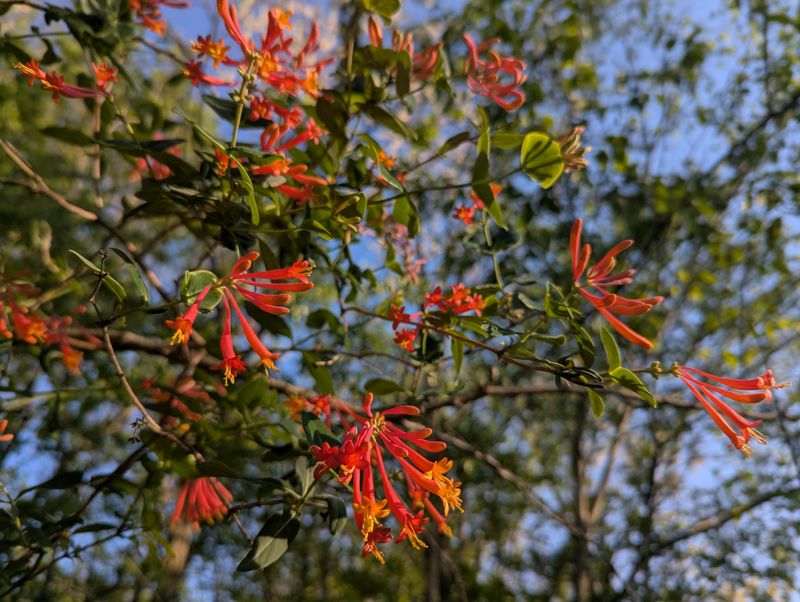
Once coral honeysuckle has settled in and grown through its first season or two, it tends to become a relatively self-sufficient plant in the right conditions. UF/IFAS notes that Lonicera sempervirens has good drought tolerance once established.
In Florida’s climate, it typically does not need regular irrigation beyond what rainfall provides.
Fertilizing is another area where less is often enough. Heavy nitrogen applications can push leafy growth at the expense of flowers, and most well-established native vines do not need routine feeding.
UF/IFAS guidance on native plants generally cautions against over-fertilizing. Excess fertilizer can increase pest pressure and produce soft, fast growth that is more susceptible to problems.
Pest issues with coral honeysuckle are generally minor. Aphids can appear on new growth, but natural predators often manage the population without intervention.
Routine spraying is not recommended unless a specific, confirmed problem requires it.
The broader point is that an established vine in a good location does not need constant attention to stay healthy. Gardeners who intervene heavily in August may create more disruption than the plant needs.
That includes hard pruning, heavy feeding, and aggressive pest treatments. Watch the vine through the season and respond only to genuine problems.
That is more effective long term than treating every moment of untidy growth as an emergency requiring immediate action.