Florida Groundcovers That Can Help Replace Patchy Grass Before Summer Storms Hit
Let’s be honest, patchy grass is basically Florida’s most common yard complaint and also one of the most stubborn. You reseed, you water, you hope, and then summer shows up with its heavy rains and sandy soil and washes all that effort away.
Sound familiar? The truth is, some spots in a Florida yard just are not meant for turf grass, and fighting that reality season after season gets old fast.
Groundcovers are kind of the unsung heroes of Florida landscaping. They fill in those tricky bare spots, hold soil in place when the storms roll through, and honestly make a yard look more intentional.
The catch is they do need a little time to settle in, so May is actually a great time to get them started.
1. Frogfruit Handles Wet Lawn Trouble
Wet spots in a Florida yard can be some of the hardest areas to keep looking good. Turf grass often thins out where water collects after heavy rain, leaving behind muddy patches that just get worse as summer storm season approaches.
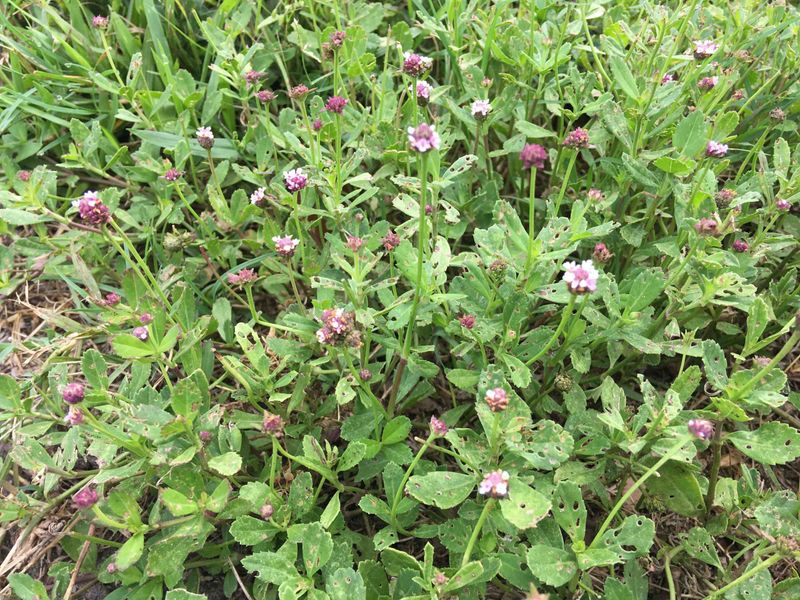
Frogfruit is a low-growing native plant that can handle both soggy conditions and dry spells once it gets settled in, making it a practical choice for areas where grass keeps struggling.
This plant spreads along the ground, forming a dense mat of small green leaves dotted with tiny white and lavender flowers that pollinators tend to enjoy.
It works well in sunny to partly shaded spots and can be mowed at a higher mower setting to keep it tidy if you want a more lawn-like appearance.
Frogfruit is not the best option for areas that get heavy foot traffic regularly, so it fits better in low-traffic zones, garden borders, or yard sections that mainly need visual coverage.
Because Frogfruit is a Florida native, it is already adapted to the state’s sandy soils and unpredictable rainfall patterns.
It does need time to spread and fill in before it can protect bare soil from storm runoff, so planting it ahead of the rainy season gives it the best chance to establish.
Starting with plugs or small transplants spaced evenly can help speed up coverage in problem areas.
2. Sunshine Mimosa Spreads Soft Pink Blooms
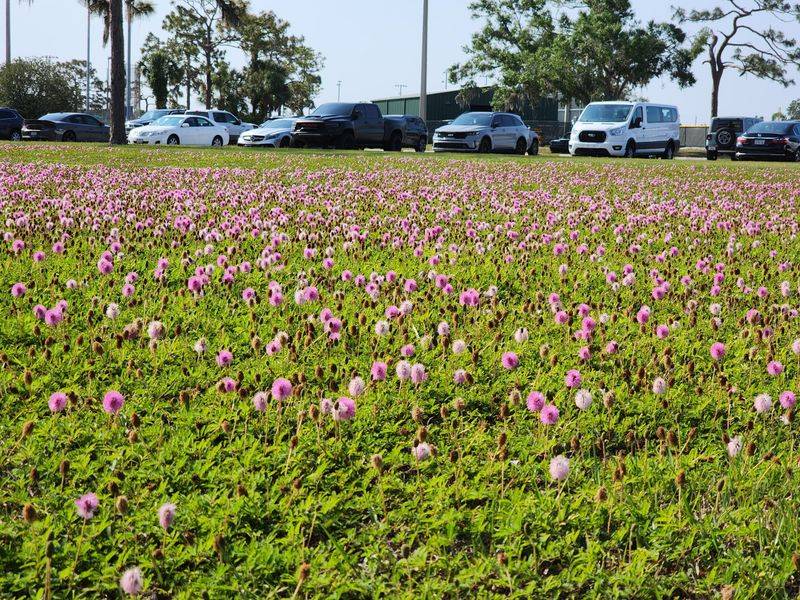
Few groundcovers in Florida can match the visual payoff of Sunshine Mimosa when it is in full bloom.
The plant produces soft, powderpuff-style pink flowers that sit just above a carpet of feathery green leaves, giving a yard section a lush and finished look that bare or patchy turf simply cannot deliver.
Beyond the appearance, this native plant brings real practical value to yards where grass keeps thinning out in sunny spots.
Sunshine Mimosa spreads by runners and can fill in open areas reasonably well over time, though it takes a full growing season or more to develop meaningful coverage.
It can be mowed at a higher setting, which makes it a flexible option for homeowners who still want a somewhat maintained appearance.
Your Florida Garden Changes Every Week. Your Plan Should Too.
Gardening in Florida changes quickly throughout the season. Every Friday you’ll receive a simple weekly plan showing exactly what to plant, prune, fertilize, harvest, and protect so you never miss the right timing.
One thing to keep in mind is that it can spread beyond where you want it, so installing a simple edging barrier around the planting area helps keep it contained.
This plant performs best in sunny to partly sunny locations and handles Florida’s sandy, well-drained soils without much fuss. It is not well suited for shady yards or spots that stay wet for extended periods.
Because it needs time to root and spread before summer storms arrive, getting it in the ground during spring gives it a reasonable head start. Once established, it can help stabilize loose soil and reduce bare spots that tend to wash out during heavy rains.
3. Perennial Peanut Covers Sunny Bare Spots
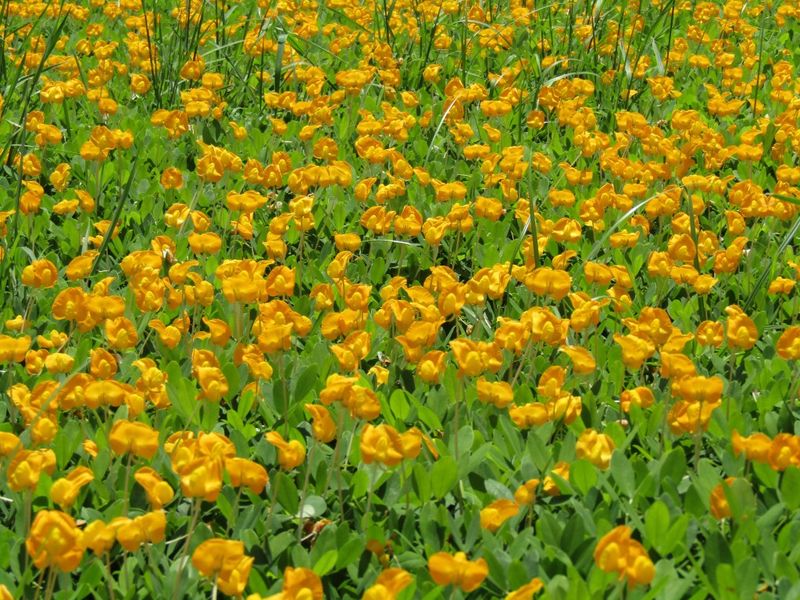
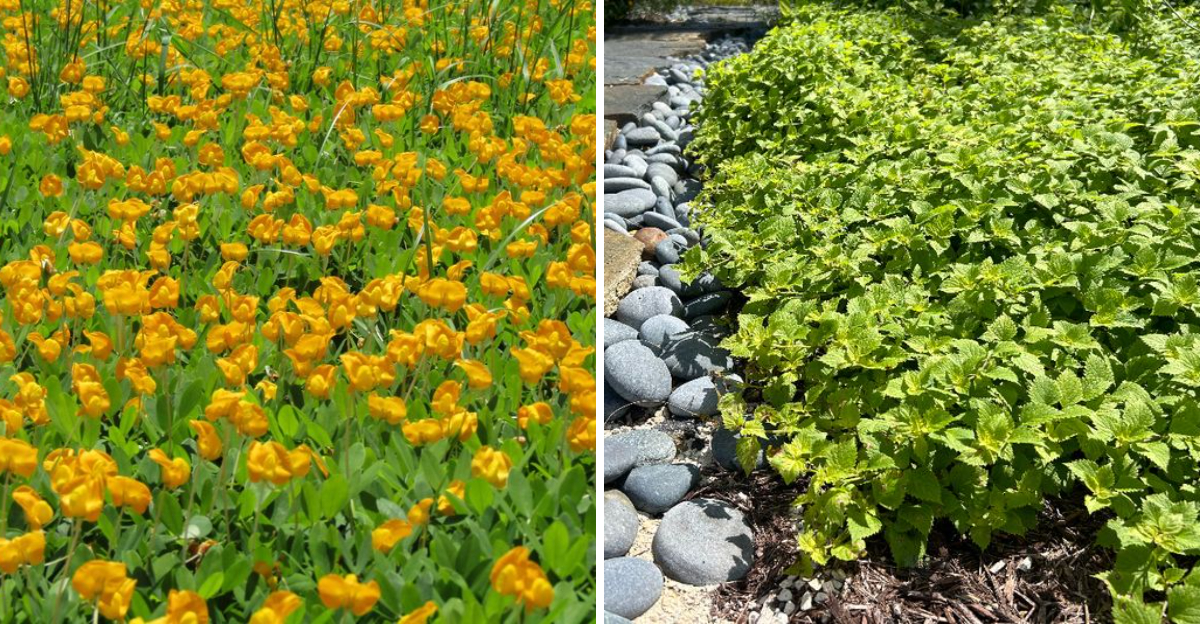
Bright yellow flowers popping up across a once-bare patch of yard are one of the more cheerful surprises a homeowner can discover after planting Perennial Peanut.
This low-growing groundcover has been used across Florida for decades as a turf alternative in sunny, low-traffic areas, and it earns that reputation by staying green, filling in steadily, and asking for very little once it gets established.
One of its standout qualities is that it fixes nitrogen from the air into the soil, which means it can improve soil health over time without needing much fertilizer.
It handles Florida’s sandy soils and warm temperatures well, and it can be mowed at a higher setting to maintain a tidy, lawn-like appearance in the areas where it grows.
Keep in mind that it is not a great fit for high-traffic zones, since regular heavy foot traffic can set it back considerably.
Perennial Peanut does best in full sun and well-drained locations, so spots that stay soggy after rain are not ideal for it. It spreads through underground rhizomes, which means coverage builds gradually rather than quickly.
Planting it a few months before the summer rainy season begins gives it time to root and start spreading, so it can begin protecting bare soil from storm runoff before the heaviest rains arrive.
Patience is part of the process with this groundcover, but the results tend to be worth the wait.
4. Basketgrass Fills Shady Yard Spaces
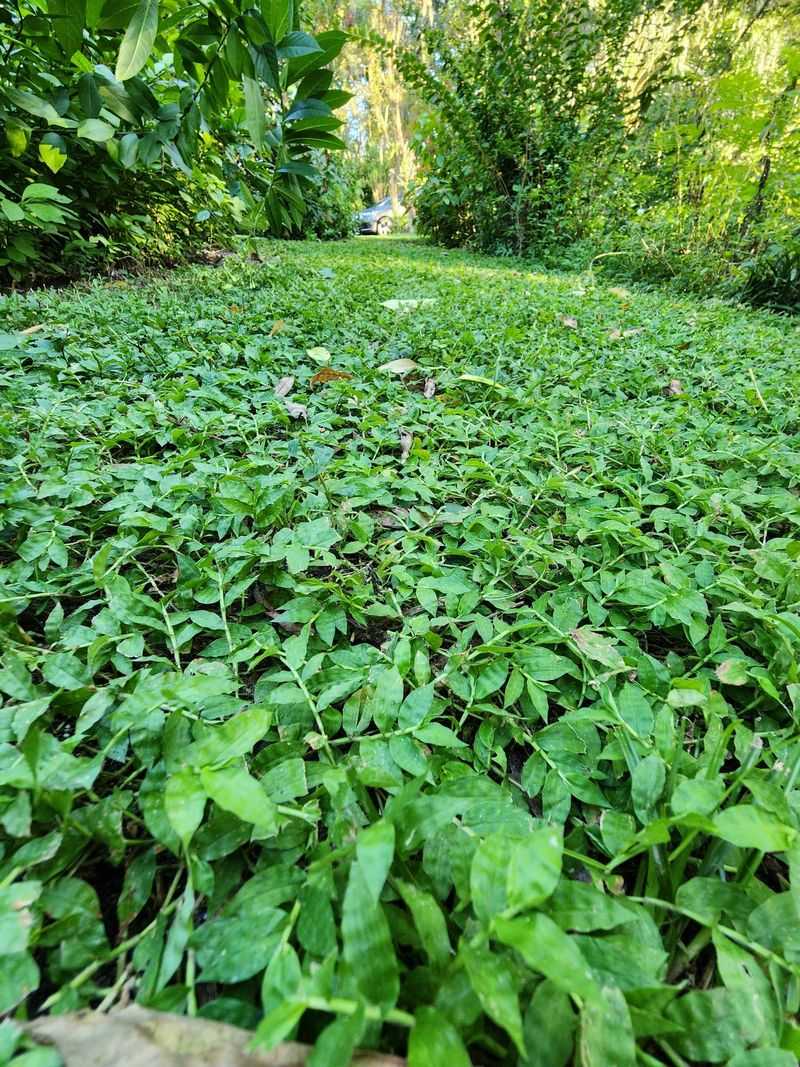
Shady spots under large trees are some of the most reliably difficult areas to grow turf grass in a Florida yard. Grass thins out, bare soil appears, and every summer storm that follows tends to wash a little more of that exposed dirt away.
Basketgrass is a low-growing option that can genuinely thrive in deep shade where most turf varieties simply cannot compete.
The plant forms a broad-leaved, spreading mat that covers ground relatively well once it gets going. It can tolerate some foot traffic, which gives it a slight edge over some other shade groundcovers that need to be kept completely undisturbed.
Basketgrass can also be mowed, though it tends to look most natural when left to grow at its own relaxed height in shaded garden spaces or naturalized areas beneath tree canopies.
One limitation worth knowing is that Basketgrass may go dormant during cooler winters, which means it can look sparse for a period before bouncing back as temperatures warm up again.
It is not a year-round evergreen solution in all parts of the state, so homeowners in northern Florida especially should keep that in mind.
Planting it in spring gives it time to spread through the summer before cooler months arrive.
For shady yards where turf keeps failing in the same spots every year, Basketgrass offers a low-maintenance way to get some reliable green coverage back into those problem areas.
5. Creeping Sage Covers Tough Dry Spots
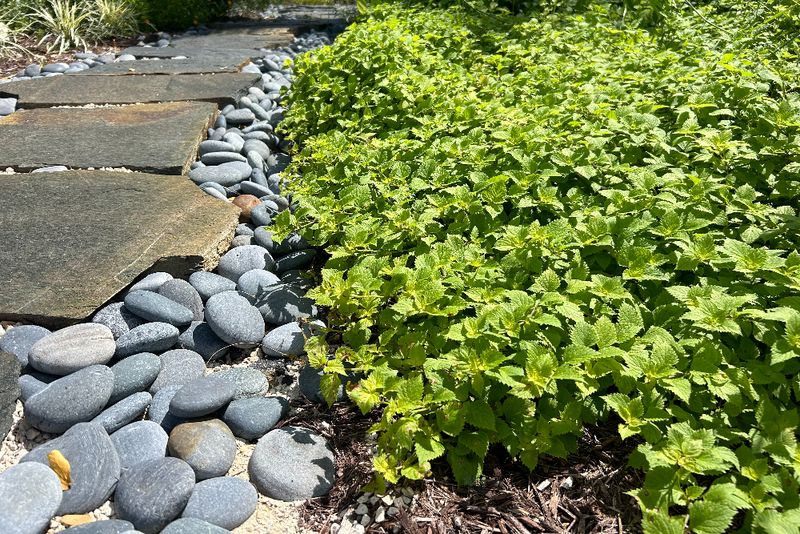
Dry, sandy patches that seem to resist every attempt at growing grass are a familiar frustration for many Florida homeowners.
Some areas of a yard simply drain too fast or receive too much reflected heat to support turf, and those are often the spots that look worst heading into summer.
Creeping Sage is a native groundcover that can settle into those tough, dry locations and provide low coverage without needing much water or attention once it is established.
It works across a range of light conditions, from full sun to partial shade, which makes it somewhat flexible compared to groundcovers that need a very specific environment.
The plant produces small blue-purple flowers that attract pollinators, adding a bit of seasonal color to areas that might otherwise just look dry and neglected.
It spreads at a moderate pace and stays relatively low to the ground, making it a fitting choice for garden borders, slopes, or dry ornamental beds.
Creeping Sage should be thought of as a groundcover for low-traffic areas rather than a replacement for a walkable lawn. It is not built to handle regular foot traffic and works best in spots that are mainly viewed rather than walked across.
Like most groundcovers, it needs time to root and spread before it can meaningfully protect soil from erosion during Florida’s heavy summer rains.
Getting it planted in early spring gives it the best chance to develop a stable root system before the storm season gets fully underway.
6. Twinflower Adds Low Native Coverage
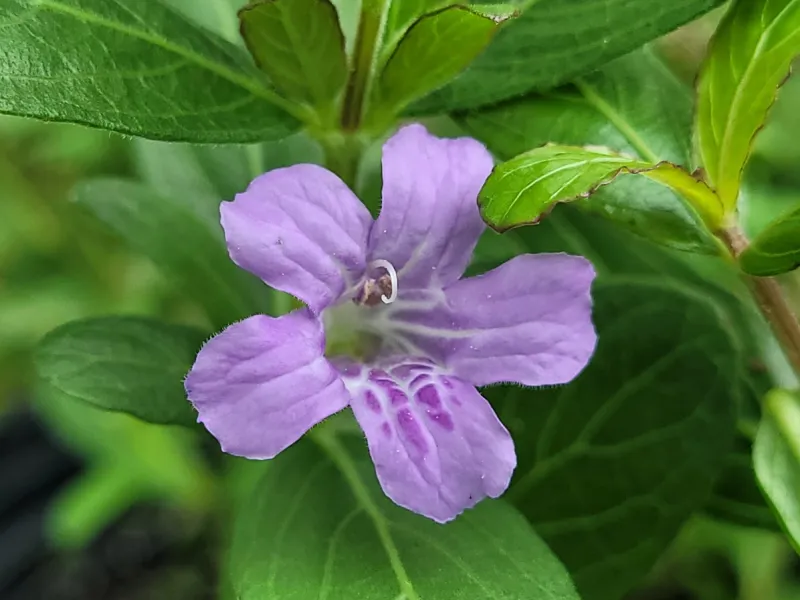
Not every groundcover needs to completely replace a lawn to be useful, and Twinflower is a good example of a plant that can blend into an existing landscape rather than dominate it.
This low-growing Florida native can fill gaps in thin turf areas or naturalized yard sections, adding soft green coverage in spots where grass has worn away or never quite filled in properly.
Twinflower produces small, paired blooms that sit close to the ground, giving it a delicate appearance that suits informal or naturalized planting styles well.
It tends to work best when left to spread naturally through mixed lawn areas or low-traffic garden sections rather than being managed as a formal, mowable turf substitute.
If mowing is desired, it should be done at a high mower setting to avoid cutting the plant back too severely.
Because it is a Florida native, Twinflower is adapted to the state’s sandy soils and seasonal rainfall patterns, which gives it a natural resilience that non-native plants sometimes lack.
It is not a quick-spreading groundcover, so expecting it to cover large bare areas rapidly before summer storms arrive would be unrealistic.
Planting it early in the season and giving it consistent moisture during the establishment period helps it spread more reliably.
For homeowners looking to add native coverage to naturalized yard sections or mixed plantings without a lot of ongoing maintenance, Twinflower brings quiet, low-key value to the landscape.
7. Asiatic Jasmine Covers Shady Turf Gaps
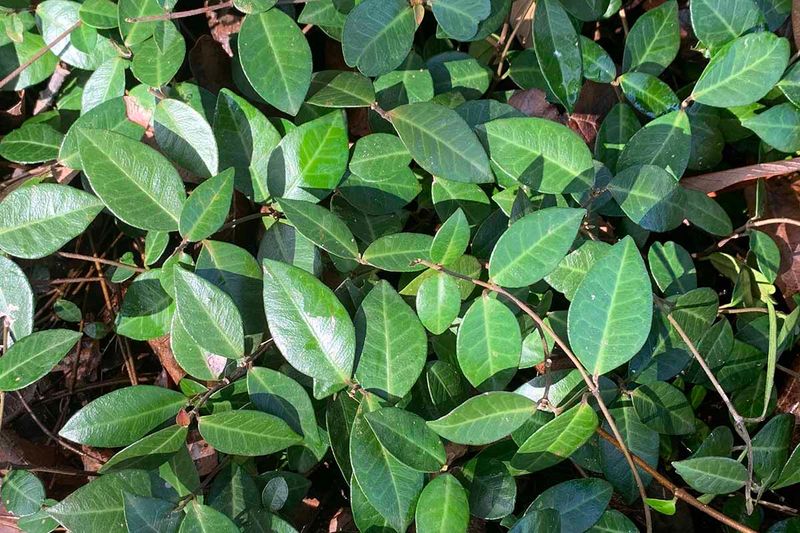
Some shady spots in a Florida yard seem to defeat every turf option thrown at them. Grass thins, bare soil spreads, and storm runoff does the rest.
Asiatic Jasmine has earned a steady following among homeowners dealing with exactly those kinds of stubborn shady gaps, largely because it forms a dense, evergreen mat that can stay green through most of the year in central and south Florida.
The plant spreads through vining stems that root as they travel across the ground, gradually building a thick layer of small, glossy leaves that covers soil quite well once established.
It is well suited for shaded or low-traffic areas where turf consistently struggles, including spots beneath large tree canopies, along shaded fence lines, or in ornamental beds that do not receive much direct sun.
Because it vines rather than growing upright, it should be trimmed with a string trimmer or hedge shears rather than mowed like a lawn.
Asiatic Jasmine is not a plant to walk across regularly, so it fits best in areas that are mainly decorative rather than functional pathways.
It can take a full season or two to develop truly dense coverage, which means it should not be counted on as an immediate fix for bare areas before the first summer storms.
Planting it in spring and keeping it watered during the early weeks gives it the best chance to root and spread before Florida’s heavy rainy season arrives in full force.