Florida Native Privacy Trees And Shrubs That Also Support Birds And Pollinators
Privacy plantings in Florida have a reputation for being purely functional. A wall of arborvitae here, a row of clusia there, something tall and dense that blocks the view and asks nothing of you.
That approach works on one level and completely misses an opportunity on every other. A privacy planting built from Florida natives does the same screening job while quietly becoming one of the most active spots in your yard.
Birds move through it. Pollinators work it all season.
The structure that hides your neighbor’s fence also feeds and shelters the wildlife that makes a yard worth spending time in. None of that requires sacrificing density or height.
Florida has native trees and shrubs that grow full, grow tall, and grow fast enough to do a real job. The fact that they support an entire ecosystem on top of that is not a compromise.
It is just a better choice.
1. Walter’s Viburnum Builds Privacy With Spring Pollinator Blooms
Side yards and property lines can be tricky to screen well, especially when you want something that looks natural rather than clipped into submission.
Walter’s viburnum, known botanically as Viburnum obovatum, is a native shrub or small tree that handles that challenge with quiet confidence.
It grows along stream banks and woodland edges across much of this state, so it already knows how to thrive here.
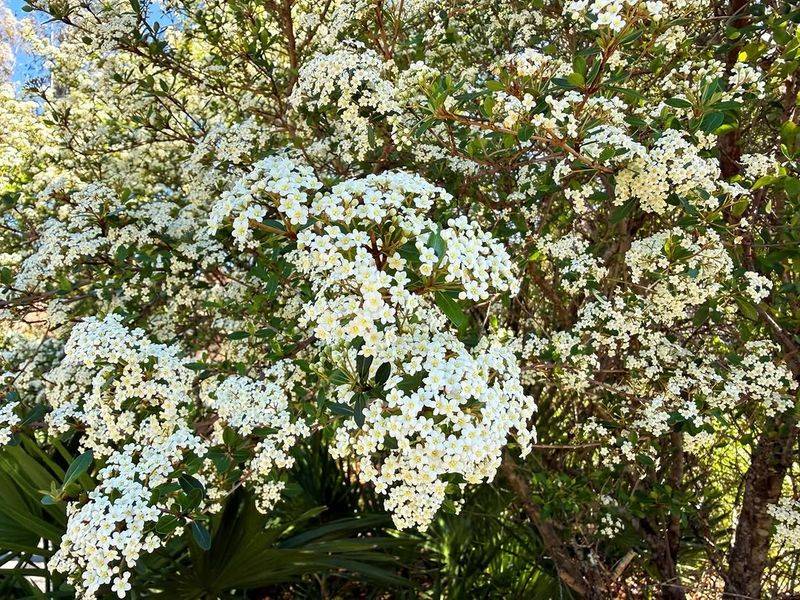
In spring, the branches get covered in flat-topped clusters of small white flowers that attract native bees, butterflies, and other pollinators. The blooms are not showy in a tropical sense, but they are reliable and genuinely useful to wildlife.
After flowering, small dark fruits develop and draw in birds looking for a quick meal along a hedge line.
As a privacy plant, Walter’s viburnum works best when given room to grow naturally or when pruned selectively rather than sheared hard.
Cultivars like ‘Densa’ stay more compact, while the straight species can reach fifteen to twenty feet without much interference.
Matching the cultivar to the site makes a real difference. It handles part shade and tolerates occasional wet feet, making it flexible for mixed screens.
Allow a few feet of buffer from fences and structures so air can circulate. Establishment takes patience and consistent watering through the first dry season, but once rooted in, it fills a screen reliably over time.
2. Simpson’s Stopper Screens Small Yards And Feeds Birds
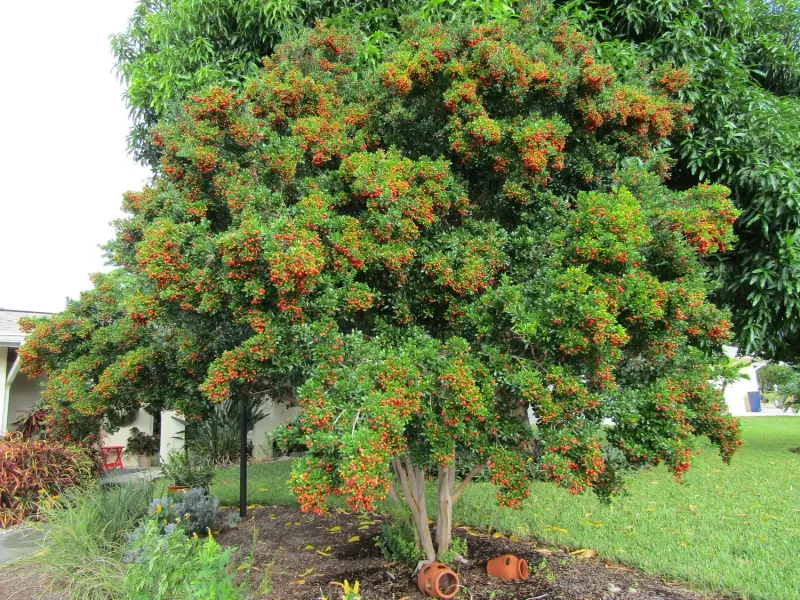
Not every yard has room for a towering hedge, and small patios, side passages, and tight urban lots need plants that stay tidy without constant fighting. Simpson’s stopper, Myrcianthes fragrans, fits that need with real grace.
It is a slow-growing native shrub or small tree found naturally in hammocks and coastal scrub across warm regions of this state.
The foliage is glossy and dense, giving it a polished look even without pruning. Small white flowers appear in clusters and carry a light fragrance that draws in native bees and other beneficial insects.
After flowering, the plant produces small fruits that shift from orange to red as they ripen. Birds visit regularly when the fruit is ready, making it genuinely useful in a wildlife-friendly yard.
Your Florida Garden Changes Every Week. Your Plan Should Too.
Gardening in Florida changes quickly throughout the season. Every Friday you’ll receive a simple weekly plan showing exactly what to plant, prune, fertilize, harvest, and protect so you never miss the right timing.
Mature plants typically reach ten to fifteen feet, though growth is slow enough that size rarely becomes a sudden problem. It performs best in full sun to part shade and prefers well-drained soils, which suits the sandy conditions common across much of the state.
Salt tolerance makes it a practical choice near coastal properties. Because it holds its shape naturally, heavy shearing is rarely needed.
Use it as a standalone screen, tuck it into a mixed native hedge, or plant it along a fence line. A tidy, bird-friendly shrub can serve the space better than an overgrown exotic.
Consistent watering during establishment sets the foundation for long-term success.
3. Wax Myrtle Gives Fast Cover With Wildlife Value
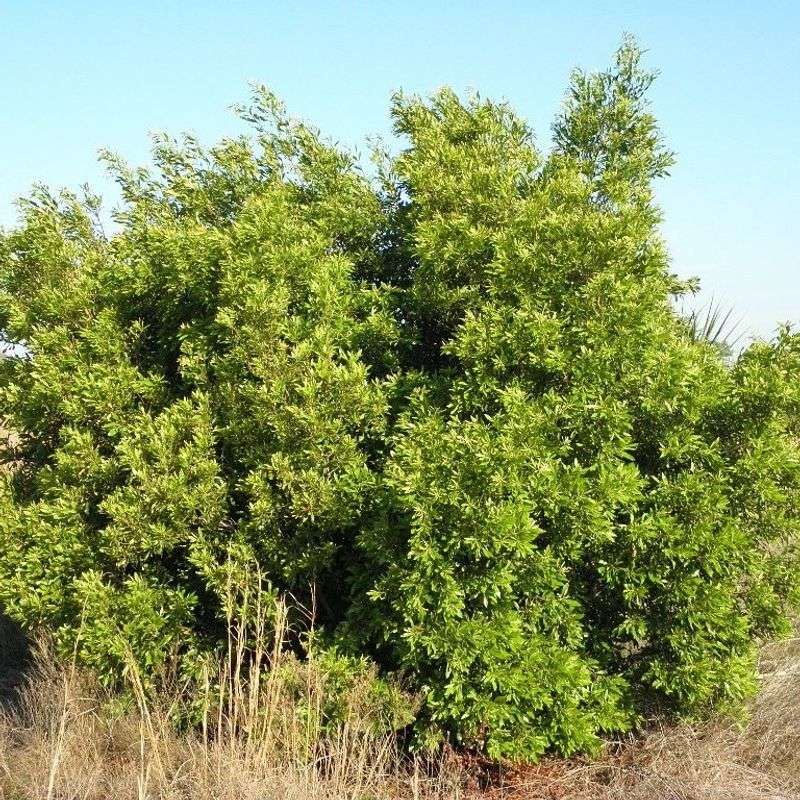
When a fence line needs coverage sooner rather than later, wax myrtle steps up in a way that few other natives can match.
Morella cerifera, commonly called southern wax myrtle, grows quickly, tolerates a wide range of conditions, and starts offering real wildlife value almost from the start.
It is one of the most adaptable native shrubs available to gardeners across this state.
The aromatic, gray-green foliage stays on the plant year-round, giving consistent screening even through winter. Small waxy berries coat the branches from late summer into winter.
They are a well-documented food source for yellow-rumped warblers, tree swallows, and other migratory and resident birds. The plant also supports native insects and provides nesting cover in dense plantings.
Wax myrtle can reach ten to fifteen feet tall and nearly as wide, so it needs honest space. Left unpruned, it becomes a loose, arching screen that feels natural and layered.
Selective pruning can manage size without destroying the plant’s character, but hard shearing into a flat wall rarely looks right and reduces wildlife value.
It tolerates wet soil, drought once established, and moderate salt exposure, making it useful across many site types.
One honest note: it can sucker from the base and spread gradually, which is worth knowing before planting near tight borders. Given room, though, it fills a screen with genuine speed and keeps delivering for birds season after season.
4. Dahoon Holly Adds Evergreen Privacy And Winter Berries
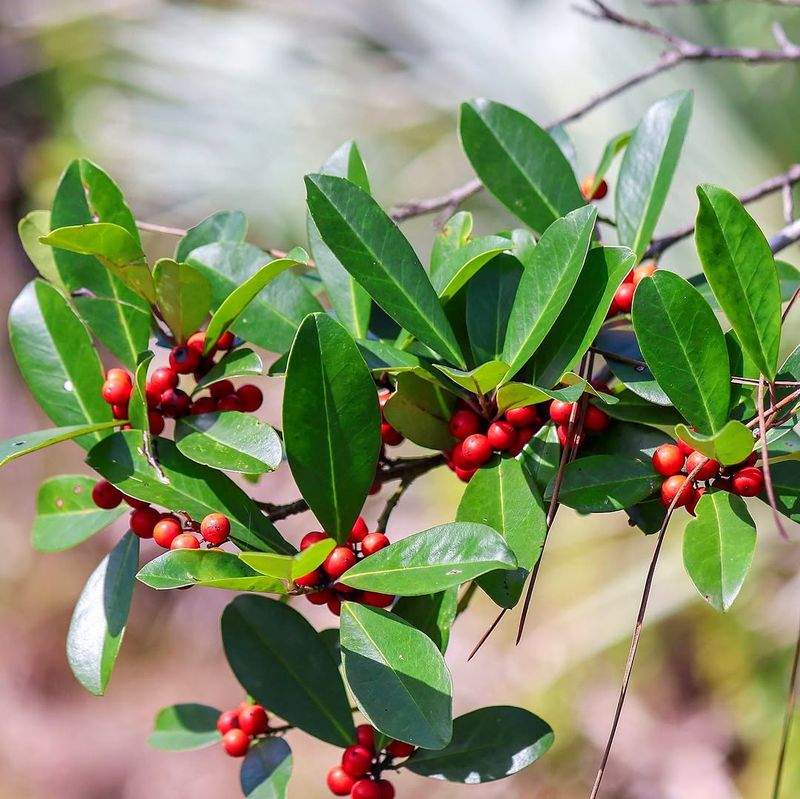
A fence line that stays green through winter while feeding birds at the same time is not a fantasy. Dahoon holly, Ilex cassine, is a native evergreen tree that delivers exactly that kind of layered value in the right setting.
It grows naturally along stream banks, pond edges, and moist flatwoods across much of this state, so wet or periodically damp sites suit it well.
The foliage is dense and persistent, providing solid year-round screening when plants are spaced thoughtfully along a property line. Small white flowers appear in spring and offer nectar to native bees and other pollinators.
By fall and into winter, clusters of red berries ripen on female plants and attract cedar waxwings, robins, mockingbirds, and other fruit-eating birds. The color against green foliage is genuinely striking in the cooler months.
Planning ahead matters with dahoon holly. Berry production depends on planting at least one male plant near the females, since the species is dioecious, meaning male and female flowers grow on separate plants.
Without a compatible male nearby, female plants produce little to no fruit. Mature trees can reach twenty to thirty feet, so this one suits larger screens and property-line plantings where height is welcome.
It tolerates seasonal flooding better than most landscape trees. Sandy, dry sites are not a natural fit.
Match it to a moist or irrigated spot and give it room, and it becomes a reliable, wildlife-rich privacy tree over time.
5. Firebush Brings Color, Nectar, And Loose Screening
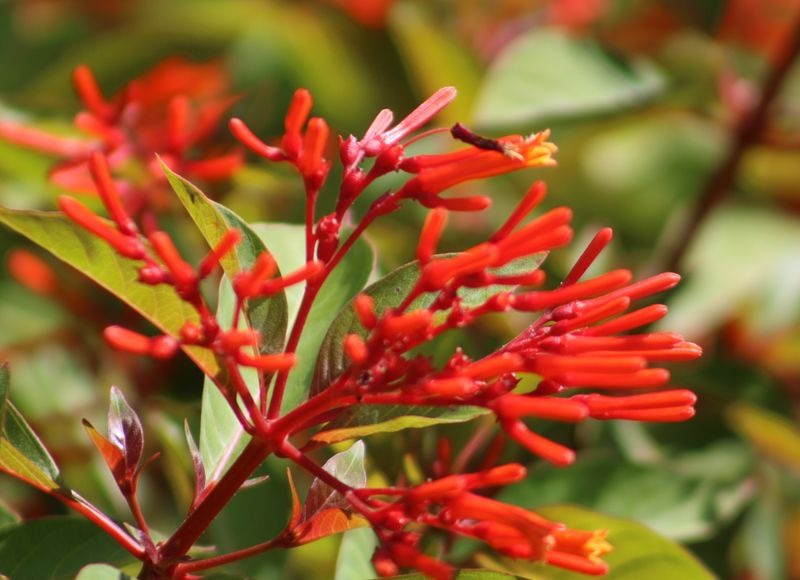
Some privacy plantings do not need to be solid walls. A loose, colorful buffer along a patio edge or a sunny property line can define space while keeping the yard feeling open and alive.
Firebush, Hamelia patens, was practically built for that role. It grows fast in warm weather, pumps out tubular orange-red flowers from spring through fall, and attracts hummingbirds and butterflies with reliable consistency.
The flowers are long and narrow, shaped perfectly for hummingbird bills and the tongues of large butterflies like swallowtails and gulf fritillaries. Small dark berries follow the blooms and provide food for birds.
The foliage turns reddish in cooler months, adding a seasonal color shift that most privacy shrubs simply do not offer.
Firebush grows quickly and can reach six to ten feet or more in a single season in warm regions. That fast growth makes it useful for seasonal screening, though it should be understood as a loose, informal buffer rather than a clipped hedge.
In northern regions of this state, cold winters may cut it back to the ground. It typically regrows from the roots in spring, but the loss of winter screening is worth factoring into the plan.
Full sun brings the best flowering. Well-drained soil suits it well.
Native firebush, the straight species, is preferred over non-native cultivars for supporting local wildlife. Give it space, enjoy the color, and let it do its natural thing.
6. Marlberry Screens Shady Yards With Bird Friendly Fruit
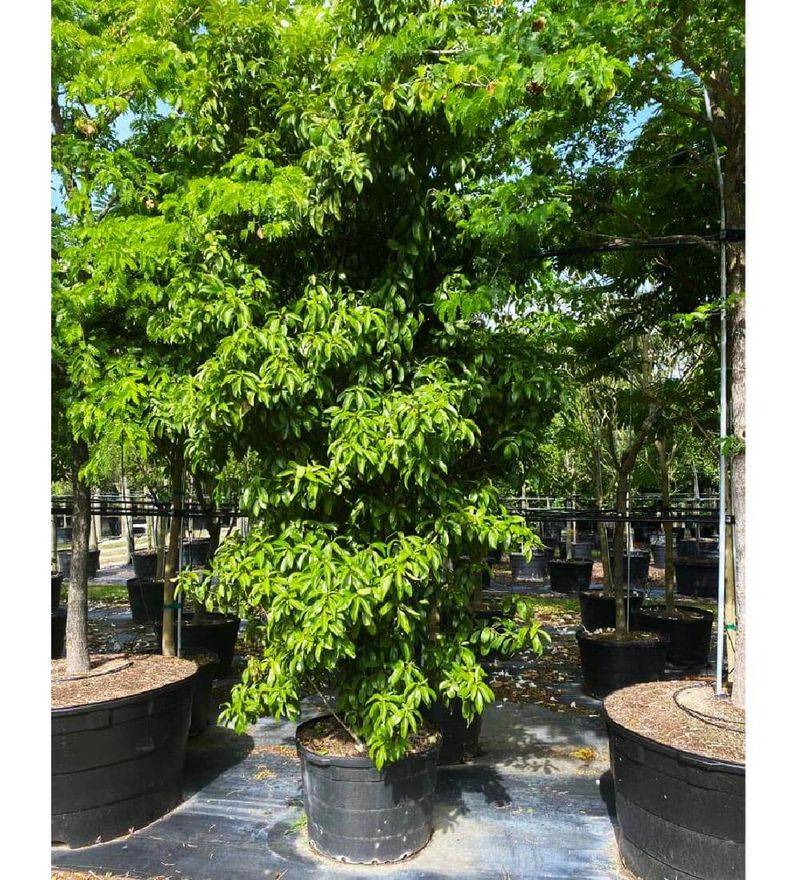
Shady side yards and tree-canopied property lines often stump gardeners who assume every privacy shrub demands full sun. Marlberry, Ardisia escallonioides, is one of the few native shrubs that genuinely prefers the shade and still delivers real privacy value.
Marlberry is found naturally in coastal hammocks and shaded woodland edges across warm regions of this state. It is well-adapted to low-light conditions where many other screening plants simply struggle.
The foliage is glossy, deep green, and dense enough to create a layered visual barrier in mixed understory plantings. Clusters of small white to pinkish flowers appear and attract pollinators, followed by dark purple to black fruit that birds find appealing.
Migratory and resident fruit-eating species visit marlberry plantings when the berries are ripe, adding wildlife activity to an otherwise quiet shaded corner.
Marlberry typically grows eight to fifteen feet tall, though pace is slow and steady rather than aggressive. That gradual growth means it holds its shape without constant intervention.
It is not suited for open, sunny fence lines or dry, sandy exposures. This is a plant for the right microclimate, specifically a shaded or partly shaded site with reasonable moisture and protection from harsh afternoon sun.
Southern regions of this state are where it performs most reliably. Use it in mixed native hedges under existing tree canopy, along shaded fences, or as an understory layer beneath larger privacy trees.
Patience during the first year or two pays off once it settles in.
7. Buttonbush Turns Wet Edges Into Pollinator Habitat
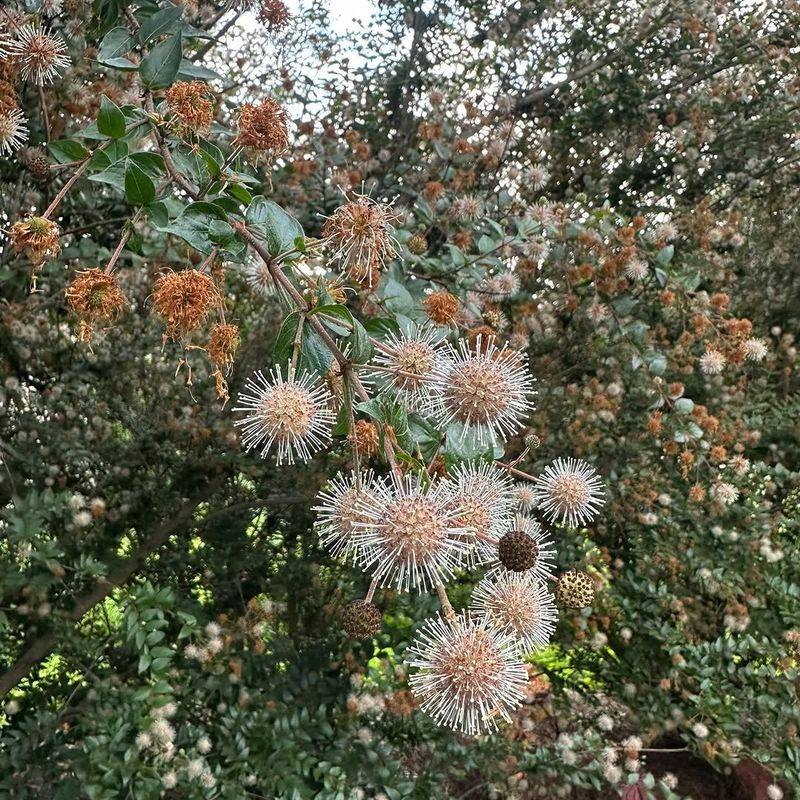
That soggy corner near the back fence, the low spot that holds water after every summer storm, or the edge of a retention pond can all suit buttonbush. These are the places where it thrives and most other privacy plants struggle.
Cephalanthus occidentalis is a native Florida shrub found naturally along stream banks, pond margins, and wet flatwoods across this state. It turns a drainage problem into a habitat opportunity.
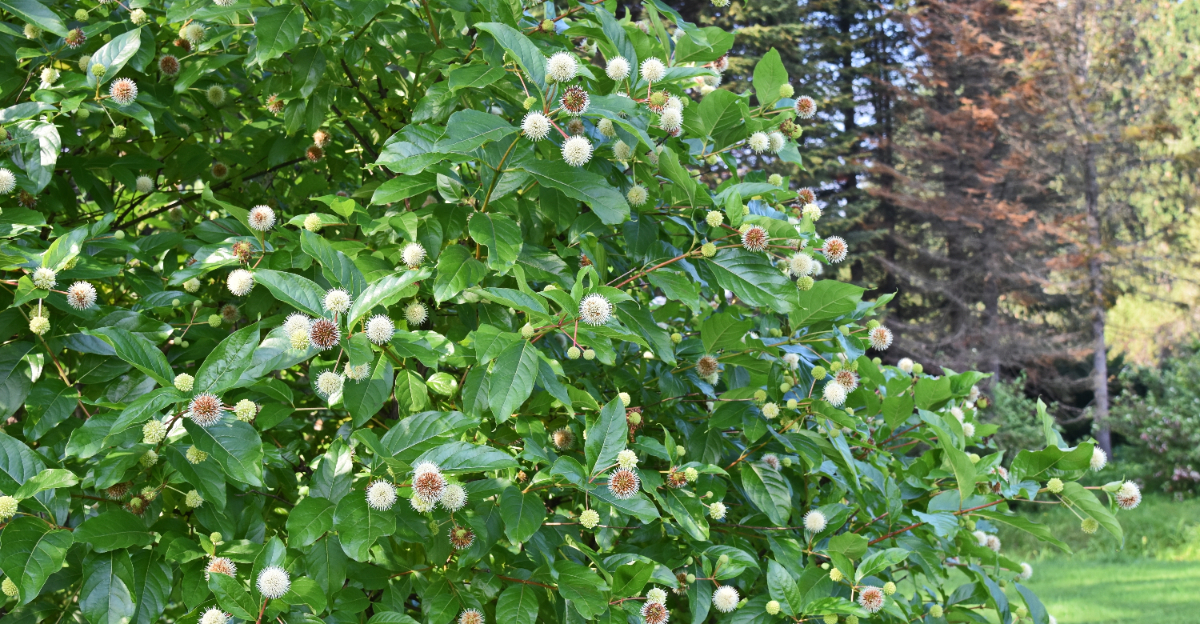
The flowers are the real showstopper. Round, creamy-white spherical blooms appear in summer and draw an impressive variety of pollinators, including native bees, butterflies, and skippers.
The visual effect of those globe-shaped flowers covered in buzzing insects on a warm afternoon is genuinely memorable. Waterfowl, wood ducks, and shorebirds use buttonbush for cover and foraging near water.
As a privacy plant, buttonbush works best in informal, naturalistic settings rather than clipped hedges. It can reach six to twelve feet tall and spreads over time, making it better suited to larger wet edges than tight urban borders.
Seasonal flooding does not slow it down, which is a real advantage along swales and rain gardens where standing water is common. Dry, sandy sites without reliable moisture are not a good match.
In the right wet or moist location, a row of buttonbush along a property edge creates a layered, flowering buffer. It serves pollinators, birds, and the landscape all at once.
Establishment is straightforward when moisture is consistent.
8. Fiddlewood Creates Dense Cover With Fragrant Blooms
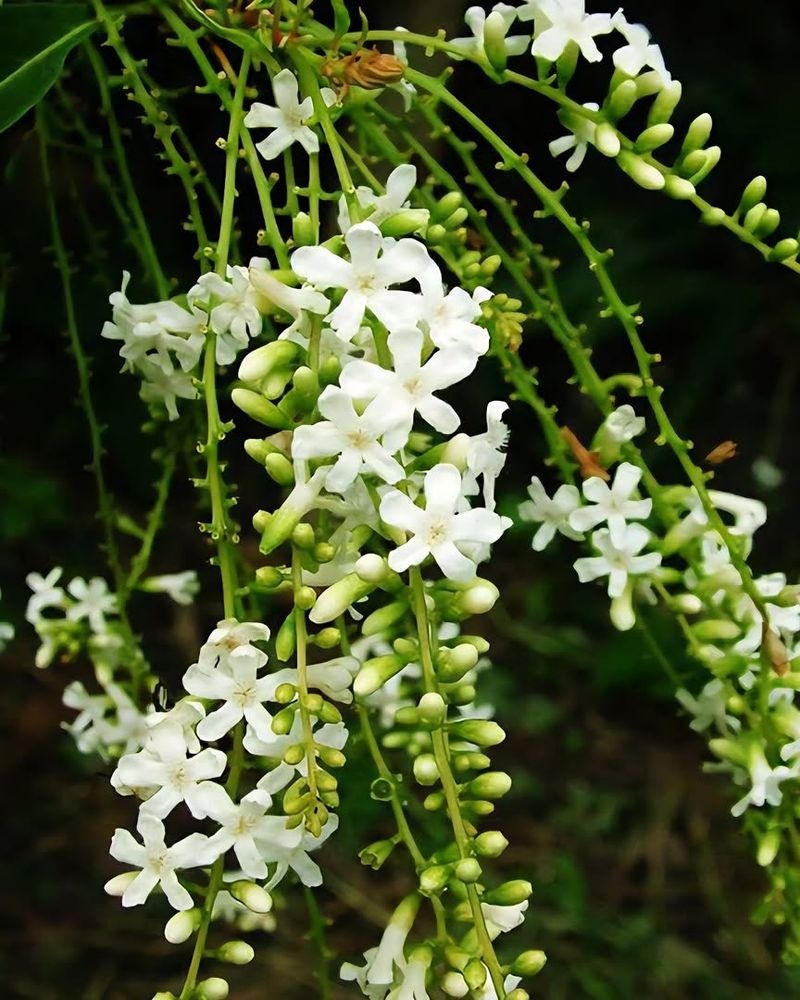
Florida coastal yards and warm inland gardens in southern regions of this state often need a privacy plant that handles heat, humidity, and occasional salt without complaint.
Fiddlewood, Citharexylum spinosum, fits that profile with a bonus that most screening plants skip entirely: fragrant flowers.
The small white blooms appear in elongated clusters and carry a sweet scent that carries on warm evenings, making the hedge line feel like more than just a barrier.
Pollinators respond well to those flowers. The fruit that follows attracts birds including warblers, vireos, and other species that move through coastal landscapes during migration.
The foliage is thick and persistent in warm regions, giving solid year-round cover when plants are spaced appropriately. The overall structure is upright and dense, which makes it more useful as a privacy screen than many looser native shrubs.
Fiddlewood can grow into a small tree reaching twenty to thirty feet if left unpruned, so honest space planning matters before planting. In smaller yards, regular selective pruning keeps it at a manageable shrub size without harming the plant’s health or flowering.
It performs best in full sun to light shade and prefers well-drained soil. Cold sensitivity limits its reliable use to central and southern regions of this state.
In those warmer zones, it earns its space with dense cover, fragrant seasonal blooms, and bird-friendly fruit. Its structure also works along fence lines, property edges, and mixed coastal screens.
Allow room and it will fill the space well over several growing seasons.