Native Florida Trees To Plant Instead Of Leyland Cypress
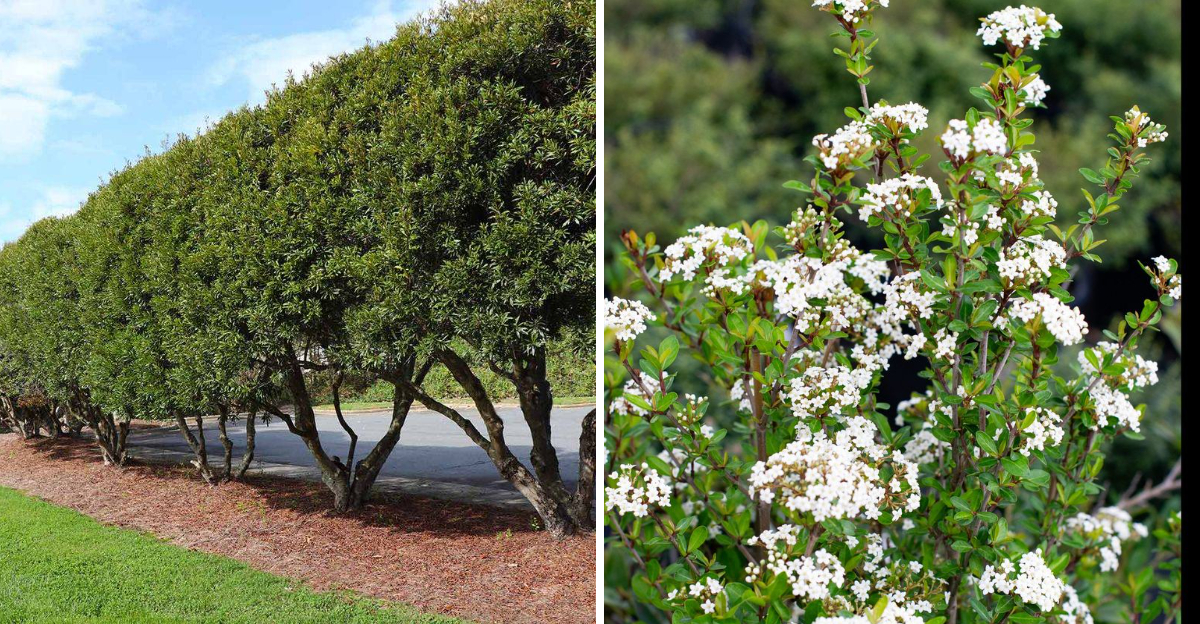
Leyland Cypress looked like the perfect solution. Fast-growing, tall, dense enough to block a neighbor’s view or muffle road noise in a matter of years.
Across Florida, homeowners planted rows of them with confidence. Then reality set in.
Root problems, disease pressure, storm vulnerability, and a lifespan that rarely lives up to the promise. A tree that looked like a long-term investment started feeling like a short-term gamble.
Florida has no shortage of native trees that solve the same problems without the baggage. Privacy, shade, wind resistance, habitat for local wildlife, native species deliver all of it while actually belonging to this landscape.
They evolved here. They know the soil, the rain patterns, the heat.
So before another row of Leyland Cypress goes in the ground, it’s worth asking what was growing here long before that variety ever showed up.
1. Southern Red Cedar Creates The Closest Native Cypress-Like Screen
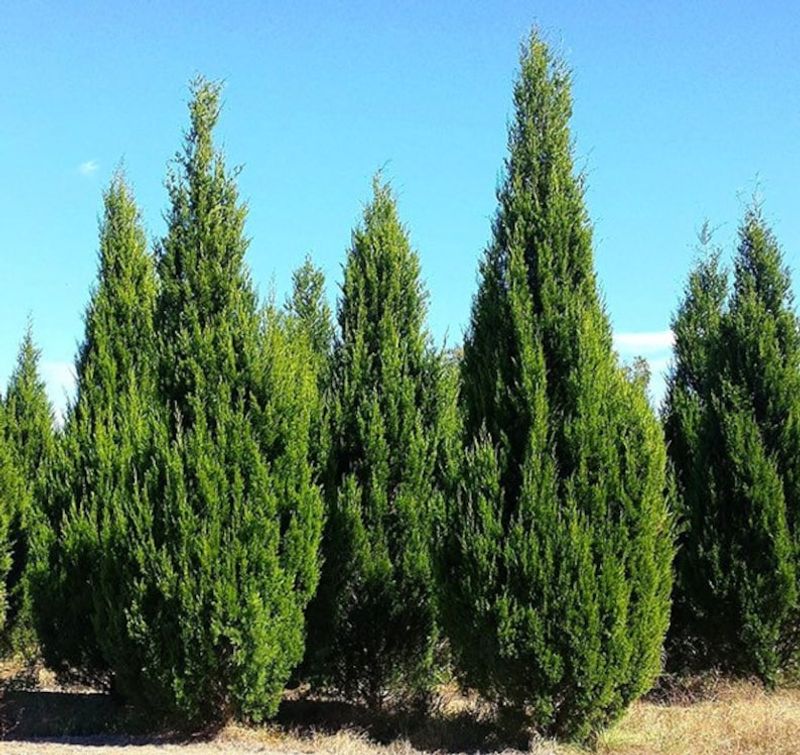
The closest visual match to Leyland cypress in the native plant world is southern red cedar. It has the upright, columnar evergreen look that many gardeners are searching for when they reach for Leyland cypress, and it actually belongs here.
You may see southern red cedar listed as Juniperus silicicola or treated as a close relative or variety of eastern red cedar, Juniperus virginiana.
Because common names overlap, confirm with your nursery that you are buying a Florida-appropriate red cedar for your region.
Southern red cedar thrives in full sun and handles sandy, well-drained soils very well. It is a strong performer in coastal and inland areas across northern and central parts of the state.
Mature height can range widely depending on the site, but many trees reach 30 to 40 feet or more over time, so give it room to grow upward and outward.
Spacing matters for screening. Planting trees about 6 to 10 feet apart can help create a denser visual barrier as they mature.
The foliage stays evergreen year-round, which is the main reason it earns its spot at the top of this list.
One thing to keep in mind is that not every red cedar sold at a nursery is the same species. Because red cedar common names are used inconsistently, ask for the specific species or form recommended for Florida landscapes.
Always ask for the Florida native form to get the best results in local soils and humidity.
Birds love the small blue berries, which adds real wildlife value. This tree is tough, long-lived, and genuinely suited for landscapes that need a structured native screen.
2. Dahoon Holly Adds Evergreen Privacy With Berries
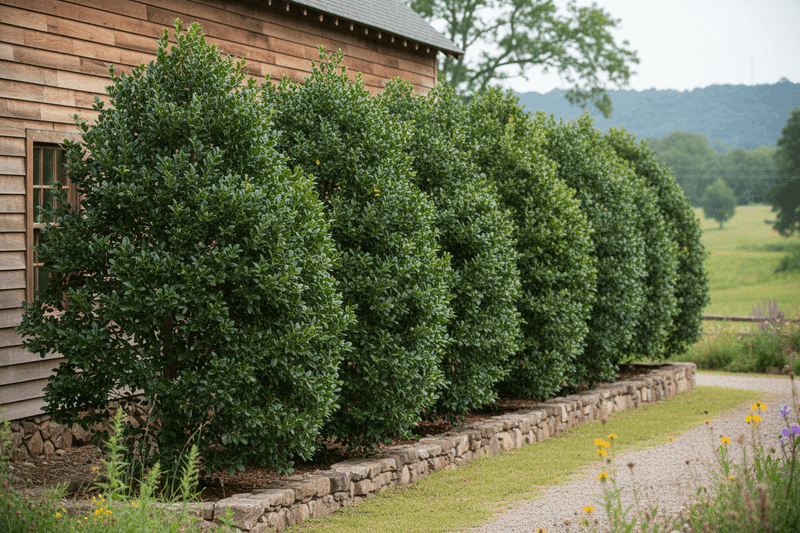
A softer screen can still give a yard real privacy, and dahoon holly is one of the best native options for doing exactly that. Ilex cassine is native to Florida and much of the Southeast.
It brings something to the yard that Leyland cypress never could: clusters of bright red or orange berries that attract birds and other wildlife through fall and winter.
This tree is naturally at home in moist to wet conditions. It thrives near pond edges, low-lying areas, and spots that stay damp after rain.
Your Florida Garden Changes Every Week. Your Plan Should Too.
Gardening in Florida changes quickly throughout the season. Every Friday you’ll receive a simple weekly plan showing exactly what to plant, prune, fertilize, harvest, and protect so you never miss the right timing.
If your yard has a wet corner that most plants avoid, dahoon holly may be exactly what that space needs. Full sun to part shade works well, giving you some flexibility with placement.
Mature trees can reach 20 to 30 feet tall with a spread of around 10 to 15 feet, though size varies by site and growing conditions.
The evergreen foliage stays dense enough to provide a visual buffer, especially when trees are planted in a row with moderate spacing.
Keep in mind that dahoon holly has a more open, natural shape compared to the tight conical form of Leyland cypress. Gardeners who want a relaxed, layered screen will appreciate it.
Those who want a clipped formal hedge may need to manage expectations.
Only female trees produce berries, so planting at least one male nearby can improve fruit production. Check with your nursery about the sex of the trees you buy.
Overall, dahoon holly rewards low-maintenance gardeners who want native structure, wildlife habitat, and year-round greenery in a moist landscape setting.
3. Yaupon Holly Makes A Tough Native Screening Tree
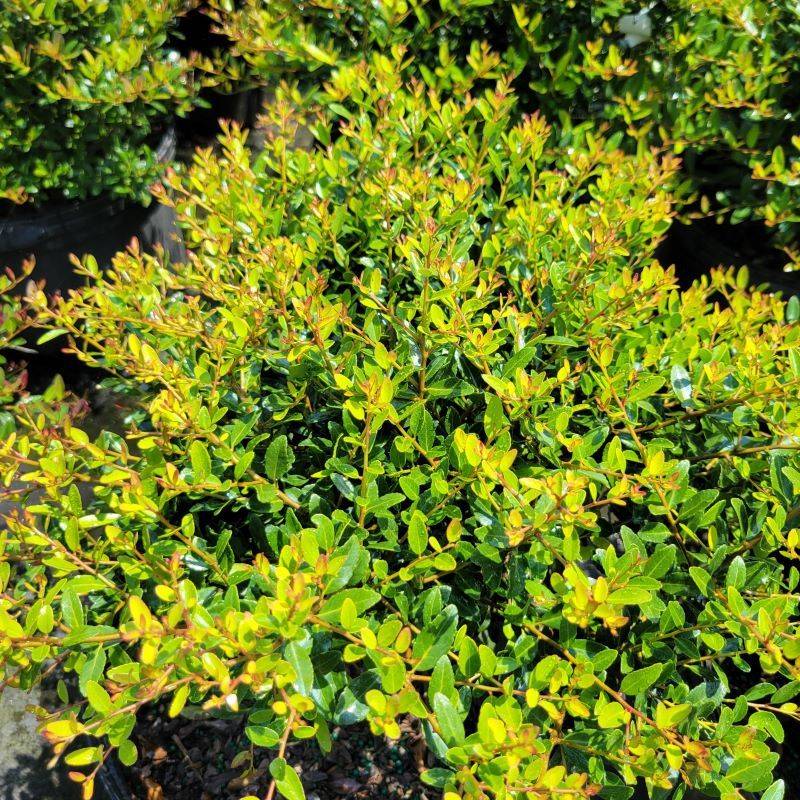
Tough screening does not always need a conifer shape, and yaupon holly proves that point better than almost any other native plant. Ilex vomitoria is one of the most adaptable native shrubs and small trees in this state.
It handles drought, poor soils, salt spray, and full sun without much complaint, which makes it a reliable workhorse for difficult spots in the yard.
Yaupon is not going to mimic the tall, narrow silhouette of Leyland cypress. Its natural form is more rounded and multi-stemmed.
With the right cultivar or some selective pruning, it can be shaped into a dense screen or trained into a small single-trunk tree.
Compact cultivars stay smaller and work well for tighter spaces, while standard forms can reach 15 to 25 feet in height and spread.
Spacing yaupon plants about 4 to 6 feet apart allows them to fill in over time and form a solid visual barrier. The evergreen foliage stays on year-round, and female plants produce small red berries that birds find irresistible through the colder months.
Planting a mix of male and female plants in a row can boost berry production.
Pruning is straightforward. Yaupon responds well to shaping and can be maintained at a manageable size if needed.
It does not require heavy fertilization or irrigation once established, which keeps maintenance simple.
For gardeners dealing with coastal exposure, dry sandy soil, or a yard that has challenged other plants, yaupon holly is often worth a serious look. Its toughness and native status make it a dependable long-term choice for privacy and structure.
4. Sweetbay Magnolia Gives Softer Shade And Fragrance
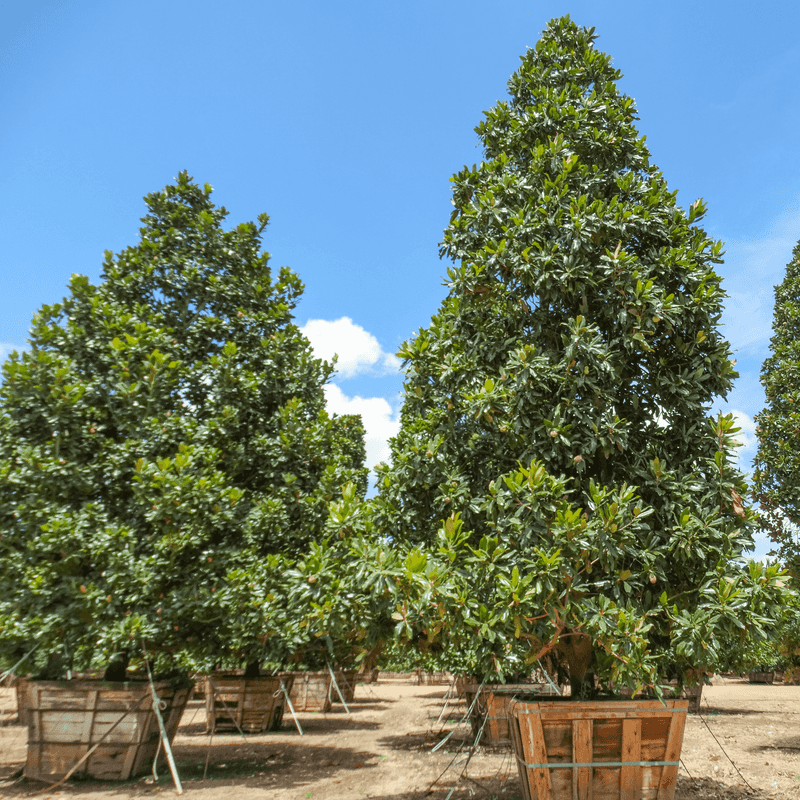
Fragrance changes the feel of a privacy planting entirely, and sweetbay magnolia brings that quality to the yard in a way that no conifer ever could. Magnolia virginiana is native across much of the state and the Southeast.
In late spring and early summer, it produces creamy white flowers with a light, sweet scent that carries on a warm breeze.
This is not a tight privacy wall. Sweetbay magnolia has a more open, airy canopy that works better as a soft backdrop or layered screen than as a solid visual barrier.
The leaves are semi-evergreen in northern parts of the state and nearly evergreen in central and southern regions, so coverage can vary depending on where you garden.
Moisture is a key factor for this tree. It naturally grows in wet flatwoods, swampy edges, and stream banks, so it performs best in sites that hold some moisture or receive regular water.
Full sun to part shade both work well, but it tends to stay more compact in shadier spots.
Mature size varies widely. Many landscape trees stay around 20 to 30 feet.
But sweetbay magnolia can grow taller, even 40 to 60 feet in favorable sites, so give it more room than a small shrub screen. In wetter areas with good sun, trees often grow taller and fuller.
Give each tree enough space to spread naturally without crowding.
The berries that follow the flowers attract birds, adding wildlife value beyond just the visual screen. Sweetbay magnolia works best when paired with denser shrubs in front if a solid screen is the goal.
On its own, it creates a graceful, fragrant, native backdrop that adds real character to a landscape without demanding much in return.
5. Wax Myrtle Forms A Fast Native Privacy Wall
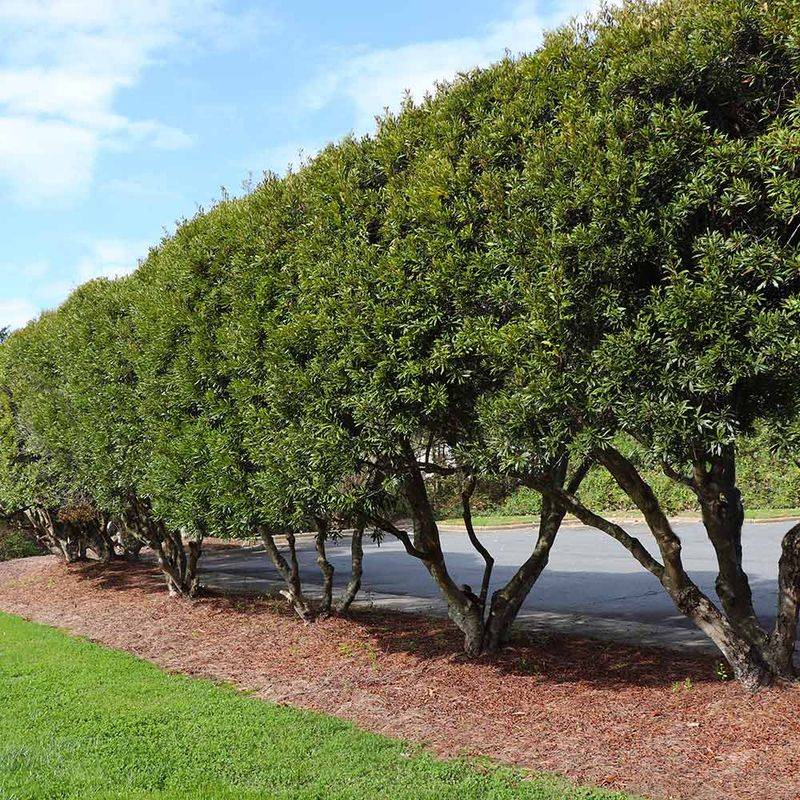
Fast privacy works best when there is room to spread, and wax myrtle delivers on that promise better than almost any other native plant in the state.
Morella cerifera is a tough, fast-growing native shrub and small tree that can form a dense, informal privacy screen in a relatively short period of time.
It is a common sight in natural areas across the state, from coastal scrub to wet flatwoods.
The aromatic foliage is one of its most appealing features. Crush a leaf and you get a pleasant, spicy fragrance that sets it apart from most other screening plants.
The waxy blue-gray berries that appear on female plants are a major food source for yellow-rumped warblers and other birds, making it a standout for wildlife gardeners.
Growth can be vigorous. Wax myrtle may reach 10 to 15 feet or more in height, and it can spread through suckering in some settings.
This means it needs room and occasional management to stay in bounds. It is not the right choice for a narrow planting strip or a spot where spreading is a problem.
Pruning wax myrtle into a more tree-like form is possible with some effort. Removing lower branches and suckers can open up the base and give it a cleaner look.
For an informal screen or a naturalistic hedge, though, letting it grow with minimal intervention often produces the best results.
Full sun is ideal, and it tolerates a range of soils from dry to moist. Wax myrtle establishes quickly and needs little care once settled in, making it one of the most practical fast-screening natives available to gardeners in this state.
6. Walter’s Viburnum Works As A Small Tree Or Tall Screen
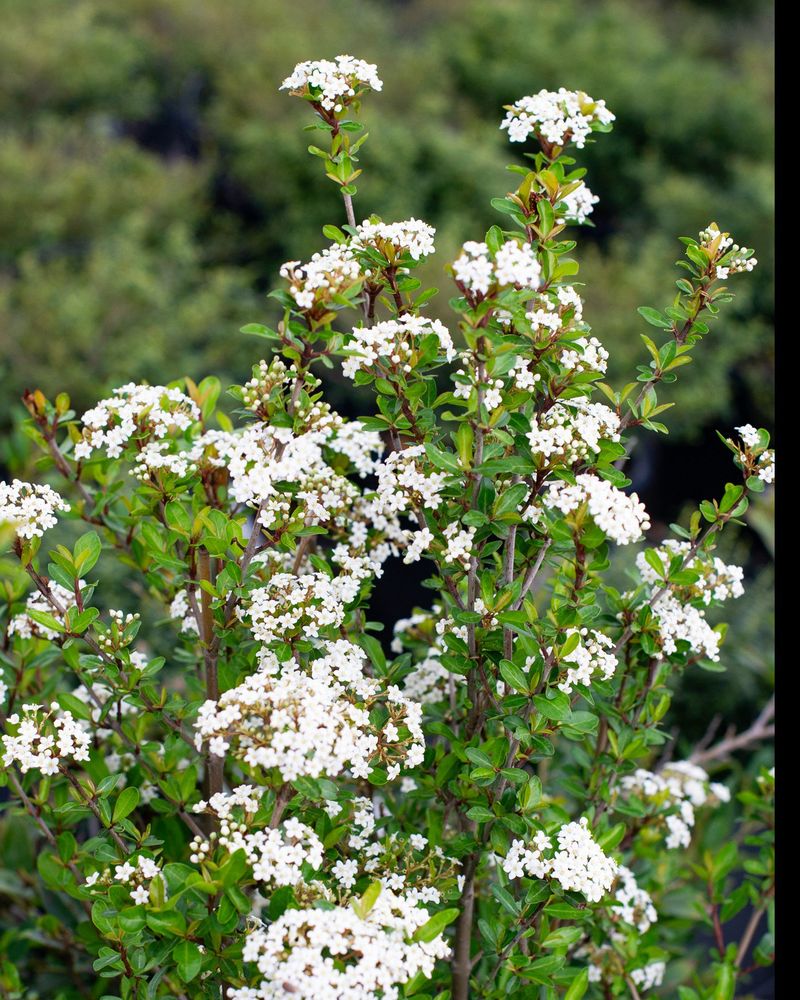
A small tree can screen without feeling like a wall, and Walter’s viburnum is one of the most underused native plants for exactly that purpose. Viburnum obovatum is native to Florida and parts of the Southeast.
It can be grown as a large shrub, a clipped hedge, or a small multi-trunk tree depending on how you manage it. That flexibility makes it useful in a wide range of landscape situations.
In late winter to early spring, Walter’s viburnum covers itself in small white flowers that attract pollinators before most other plants have woken up for the season.
The show is brief but genuinely beautiful, and it gives the plant a seasonal personality that a plain conifer hedge simply cannot offer.
After flowering, small dark berries appear and are eaten by birds.
Compact cultivars like ‘Mrs. Schiller’s Delight’ stay quite small and work well for low hedges or foundation plantings. Taller standard forms can reach 10 to 15 feet or more, and those are the selections to seek out when screening height is the goal.
Always check the mature size of the specific cultivar before planting.
Spacing depends on the desired effect. Planting taller forms about 4 to 6 feet apart and allowing them to grow together can create a natural screen with good density.
The foliage is evergreen in our region, giving it year-round value as a screen or hedge.
Walter’s viburnum handles full sun to part shade and adapts to a range of soil types. It is a reliable, wildlife-friendly native that rewards gardeners who take the time to choose the right form for the right spot.
7. Sabal Palm Adds Native Structure Where A Wall Is Not Needed
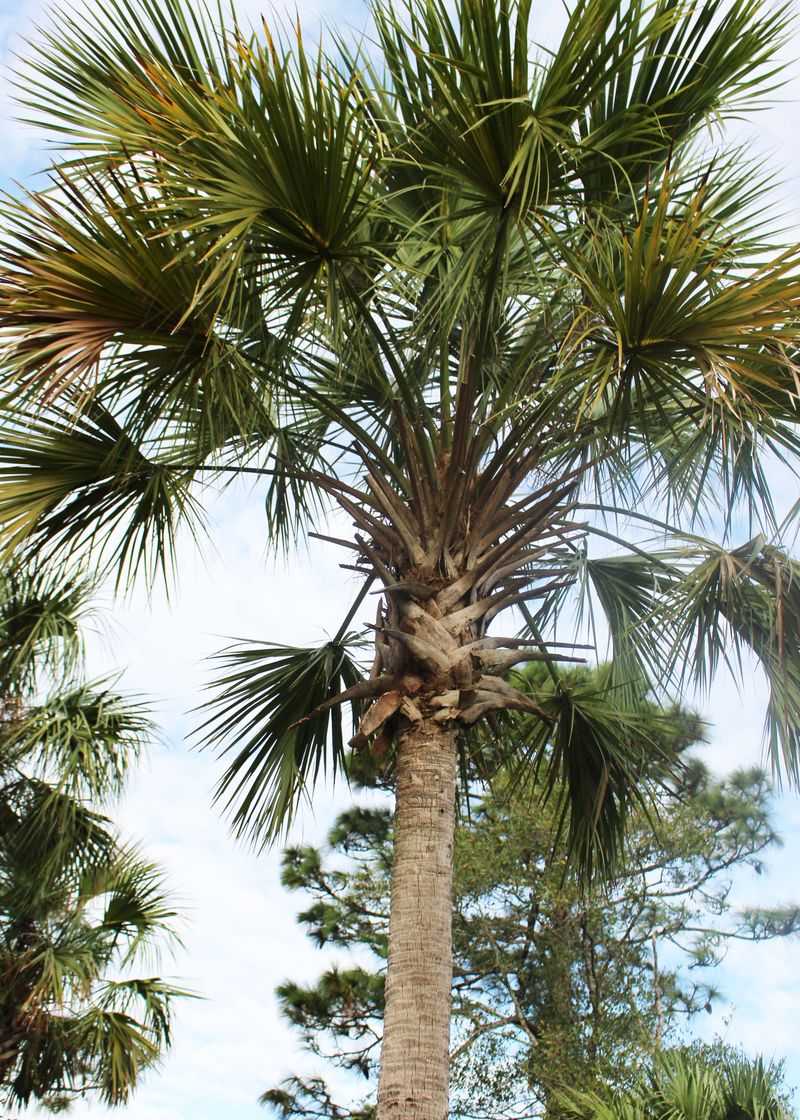
Vertical structure can solve a different backyard problem than a solid privacy wall. Sabal palm is the native plant that does it with the most unmistakable sense of place.
Sabal palmetto is the state tree of Florida, and it brings a strong, upright presence to any landscape. It will not block the view of a neighboring roofline the way a row of Leyland cypress would.
But it can add height, canopy, and a distinctly local character that no imported conifer can replicate.
Sabal palm is incredibly tough. It handles salt spray, flooding, drought, and hurricane-force winds better than most trees in this state.
Full sun is ideal, and it grows well in a wide range of soils including sandy coastal soils that challenge many other plants. Mature trees can reach 40 to 50 feet or more in height, though growth is slow in the early years after planting.
For gardeners who want privacy rather than just height, the key is pairing sabal palm with lower-growing native shrubs. Planting a row of wax myrtle, yaupon holly, or Walter’s viburnum underneath or in front of sabal palms can create a layered screen.
It handles different levels of the view at once. The palms provide the upper canopy while the shrubs handle the eye-level screening.
Spacing sabal palms about 8 to 10 feet apart in a row gives them room to develop their full canopy without crowding. Maintenance is minimal once they are established.
Old fronds fall on their own over time, and the tree rarely needs much intervention.
Sabal palm is not a replacement for Leyland cypress in the traditional sense. It is a better fit for gardeners who want native presence, wildlife value, and a landscape that feels genuinely rooted in this part of the world.