The Most Underrated North Carolina Native Tree That Helps Deter Ticks While Providing Summer Shade
Shade trees earn their place in a North Carolina yard through one primary contribution, and most homeowners stop evaluating them there.
A tree that delivers genuine summer shade while simultaneously modifying the conditions ticks depend on along yard edges and beneath its canopy is a fundamentally different kind of investment.
This native tree does both without any compromise in either direction. It grows large enough to shade patios and outdoor spaces while easily handling North Carolina’s heat and humidity.
Unlike many common shade trees, it resists diseases and naturally keeps ticks away from your yard.
For properties dealing with both summer heat and tick pressure, this tree solves two serious problems with one planting decision.
1. Eastern Red Cedar
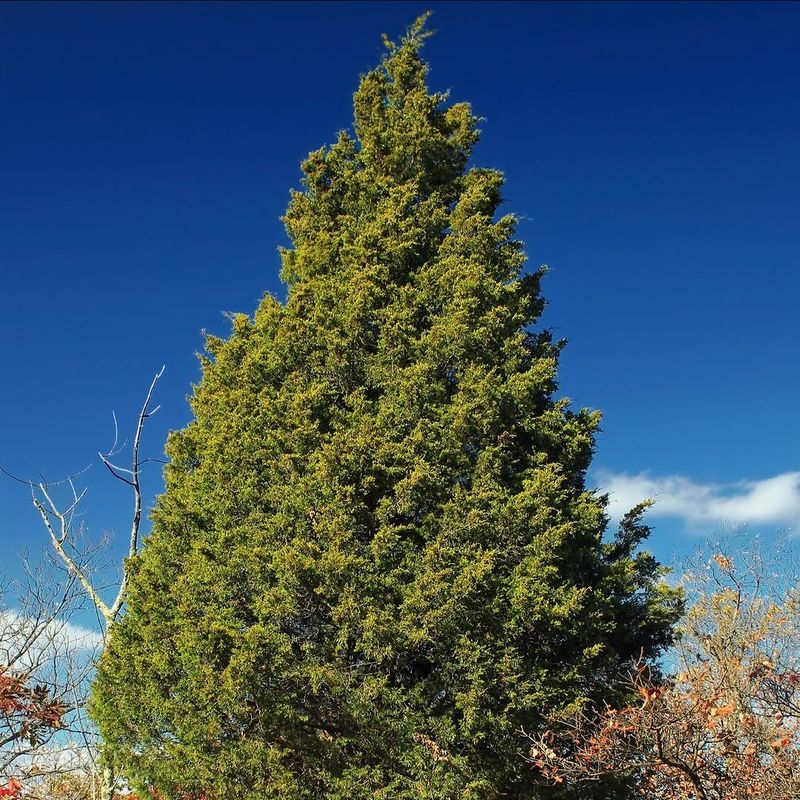
Not every tree earns the title of most underrated, but Eastern Red Cedar makes a strong case. Juniperus virginiana, its scientific name, is native to North Carolina and grows throughout the state in fields, roadsides, and home landscapes alike.
Unlike many ornamental trees that need extra care to survive the Piedmont heat or coastal wind, this one thrives with surprisingly little help once it gets established.
Eastern Red Cedar is a true evergreen, meaning it holds its blue-green, scale-like foliage all year long.
That steady coverage is what makes it so useful for shade and screening, especially during the long, hot North Carolina summers when homeowners most want relief from the sun.
The tree can grow anywhere from 20 to 40 feet tall depending on the site, giving it real presence in the yard.
The heartwood of Eastern Red Cedar is where things get especially interesting. That reddish, aromatic inner wood contains natural oils that have drawn the attention of researchers looking at tick-related plant compounds.
Scientists have studied cedarwood oil derived from this tree species and found it shows activity against certain tick species in laboratory settings.
Planting one tree alone will not guarantee a tick-free yard, but it absolutely fits into a smarter, more thoughtful approach to outdoor living in North Carolina.
2. The Tick Connection Comes From Cedarwood Oil
Cedarwood oil has been generating real scientific buzz, and Eastern Red Cedar is right at the center of it.
The heartwood of Juniperus virginiana contains natural volatile compounds, particularly cedrol and cedrene, that researchers have tested for their effects on ticks.
Several laboratory studies have shown that these compounds can repel or affect certain tick species, including the black-legged tick that spreads Lyme disease.
Here is where it is important to stay honest with gardeners: this research focuses on concentrated cedarwood oil, not on the passive presence of a living tree in your yard.
A single Eastern Red Cedar growing in your garden will release some aromatic compounds into the surrounding air, but that is very different from applying a refined oil-based product directly to surfaces or skin.
The science is promising, but it does not mean your tree becomes a force field against ticks.
What the research does tell us is that Eastern Red Cedar belongs in the conversation about tick-smart landscaping.
Your North Carolina Garden Changes Every Week. Your Plan Should Too.
Gardening in North Carolina changes quickly throughout the season. Every Friday you’ll receive a simple weekly plan showing exactly what to plant, prune, fertilize, harvest, and protect so you never miss the right timing.
Its aromatic wood has a real biological basis for the claims people make about cedar and ticks, unlike many folk remedies that have no scientific backing at all.
Combining this tree with smart yard maintenance gives North Carolina homeowners a layered, nature-friendly strategy for reducing tick habitat, which is far more effective than relying on any single solution alone.
3. It Helps Most When The Area Around It Stays Clean And Dry
Ticks are experts at finding shelter, and the spots they love most are moist, shaded, and cluttered with leaf litter or overgrown brush. That means the way you maintain the ground around your Eastern Red Cedar matters just as much as the tree itself.
A poorly maintained planting area can actually create more tick habitat than it reduces, which is the opposite of what any gardener wants.
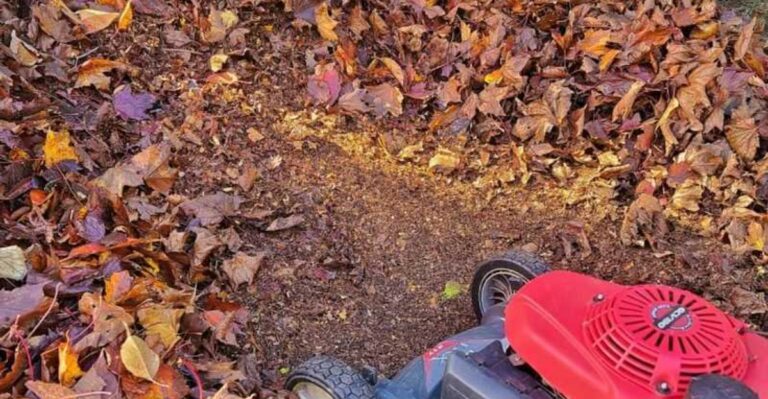
Keeping the base of the tree clean is the first priority. Rake away fallen needles and leaf litter regularly, and avoid letting brush or debris pile up beneath the branches.
Ticks move from wooded edges into lawn areas, so trimming nearby grass short and maintaining a clear boundary between the tree and any wild or overgrown zones makes a meaningful difference in how tick-friendly your yard feels.
A wood chip or gravel border around the base of the tree can also help. These dry materials create an environment that ticks find much less appealing than moist soil or thick mulch.
Pair that with consistent mowing and you have a setup that works with the tree rather than against it.
Eastern Red Cedar genuinely supports a tick-smart yard plan, but it performs best when gardeners treat it as one piece of a bigger, well-maintained landscape strategy rather than a standalone fix.
4. Evergreen Shade Makes It Useful In Hot North Carolina Yards
North Carolina summers are no joke. From June through September, temperatures regularly climb into the upper 90s, and finding a shaded spot in the yard becomes a real priority for families who want to spend time outdoors.
Eastern Red Cedar delivers that shade reliably, and because it is evergreen, it does not leave you exposed during shoulder seasons the way a deciduous tree would.
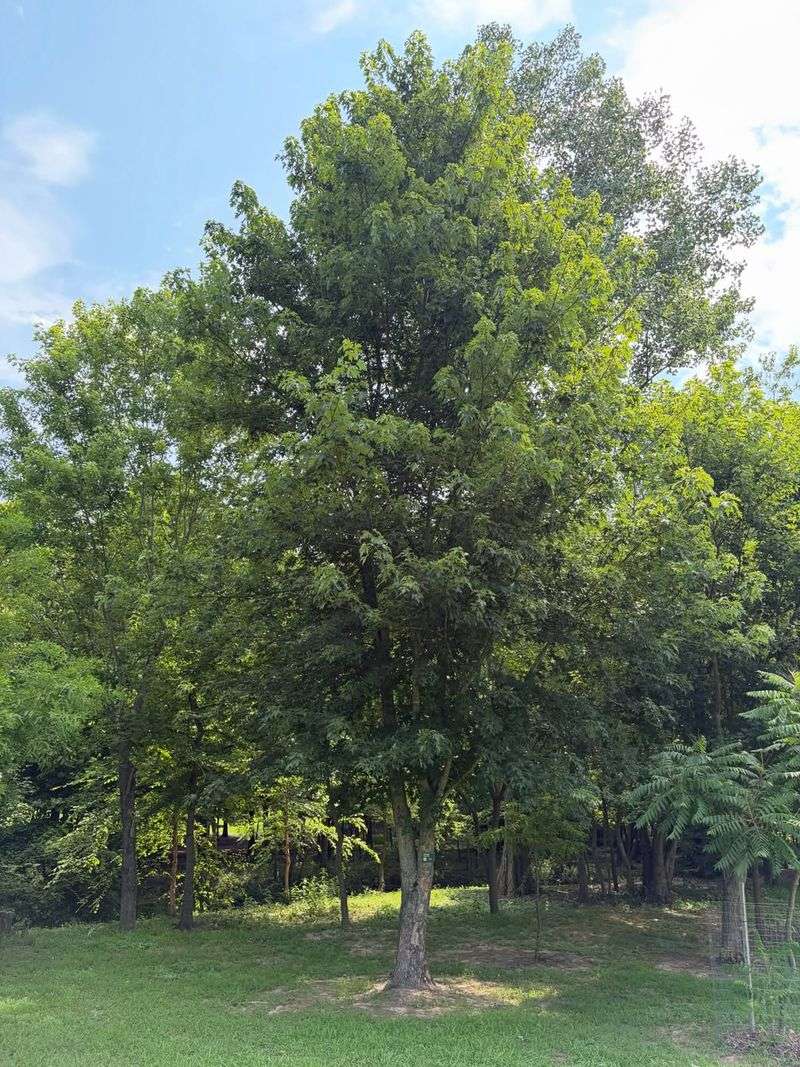
The tree grows with a dense, conical to columnar shape that blocks sunlight effectively throughout the day.
Planted on the west or southwest side of a patio or play area, it can significantly reduce afternoon heat and make outdoor spaces far more comfortable.
Homeowners who have struggled to find a tough native tree that provides consistent year-round coverage often find that Eastern Red Cedar is exactly what they needed.
Full sun is actually where this tree performs best, which makes it ideal for the open, sunny spots that are hardest to shade. It does not compete well in heavy shade, so give it room and light and it will reward you with strong, steady growth.
Mature trees develop a character that feels both wild and structured, with textured reddish-brown bark and layered foliage that looks attractive in every season.
For North Carolina gardeners seeking a no-fuss native that genuinely cools a yard down, this tree is one of the best choices available.
5. It Works As A Native Privacy Screen
Privacy in the yard is something most homeowners want but many struggle to achieve without resorting to fences or non-native hedge plants. Eastern Red Cedar solves that problem naturally and beautifully.
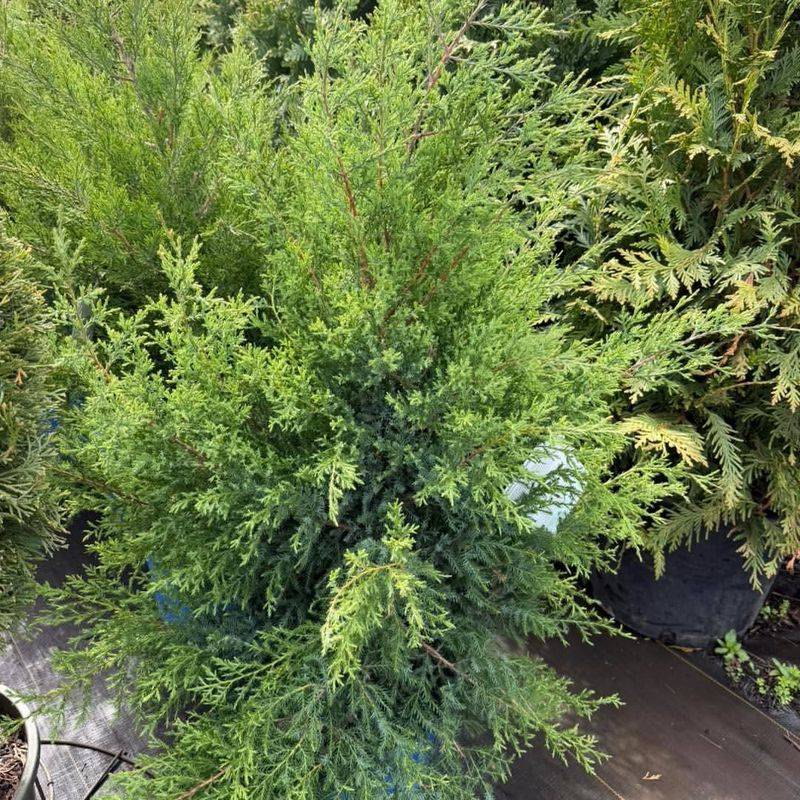
Planted in a row with spacing of about 6 to 8 feet apart, a grouping of these trees creates a dense, year-round green wall that blocks sightlines and muffles road noise at the same time.
Unlike Leyland cypress, which is one of the most popular privacy trees in North Carolina but not native to the region, Eastern Red Cedar supports local wildlife, pollinators, and birds throughout the year.
Choosing a native option means your privacy screen does double duty, looking good while also giving back to the local ecosystem. That is a win most gardeners appreciate once they understand the difference.
As a windbreak, Eastern Red Cedar is equally impressive. Its dense foliage holds up well in coastal winds and the blustery conditions that come with North Carolina storms.
Planting it along a property edge or between a yard and a busy road gives the landscape a sense of enclosure and calm that feels intentional and polished.
Homeowners who want structure, privacy, and native value all in one planting often find that a row of Eastern Red Cedars outperforms just about any other option in this state.
6. Birds Benefit From The Cover And Blue Cones
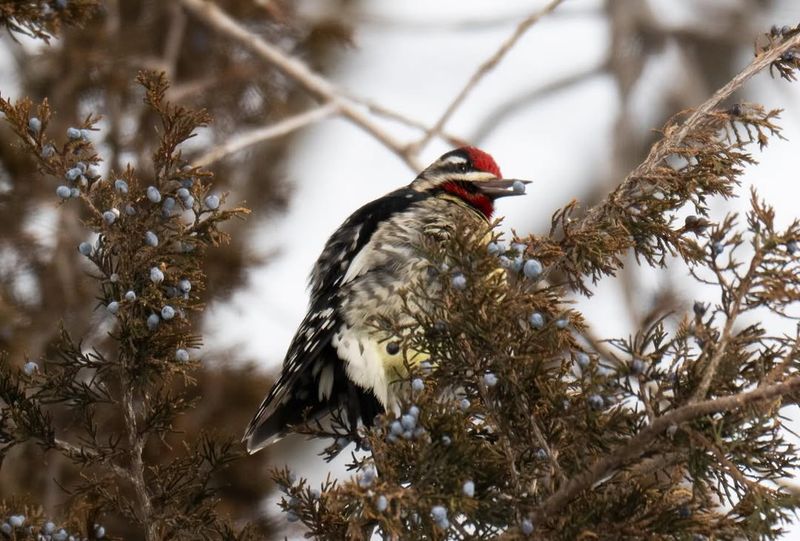
Ask any birder in North Carolina about Eastern Red Cedar and you will likely get an enthusiastic response.
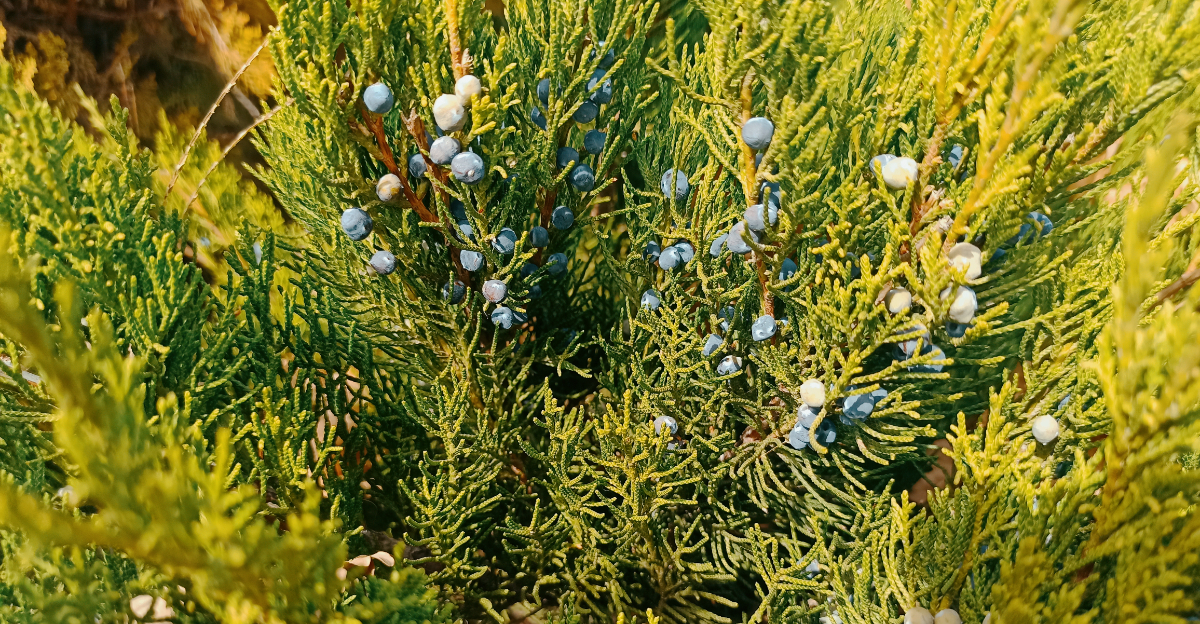
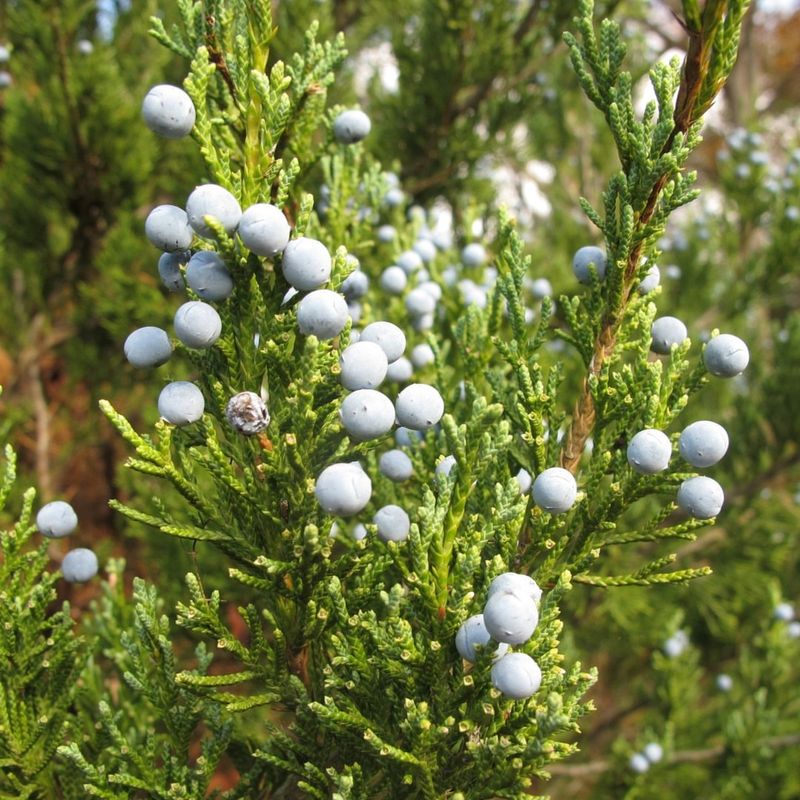
Female trees produce small, round, blue-gray berry-like cones that are a favorite food source for cedar waxwings, a bird that is literally named after this tree.
American robins, bluebirds, yellow-rumped warblers, and mockingbirds also visit regularly to eat the cones and find shelter in the dense branches.
The evergreen foliage provides cover that birds rely on during cold snaps and storms, offering a safe place to roost when the weather turns rough.
For gardeners trying to create a yard that attracts and supports native wildlife, few trees deliver as consistently as Eastern Red Cedar does across all four seasons.
It is a living bird feeder and nesting habitat wrapped into one rugged, low-maintenance package.
One thing to keep in mind before planting for birds: mature Eastern Red Cedars can spread 8 to 20 feet wide depending on the variety, so they need adequate space to develop properly.
Crowding them against structures or other trees limits their natural shape and reduces the open branching that birds prefer for nesting.
Give them room to grow, and within a few years you will have a yard that feels genuinely alive with bird activity. That kind of backyard energy is something no purchased bird feeder can fully replicate.
7. It Handles Tough Sites Better Than Many Shade Trees
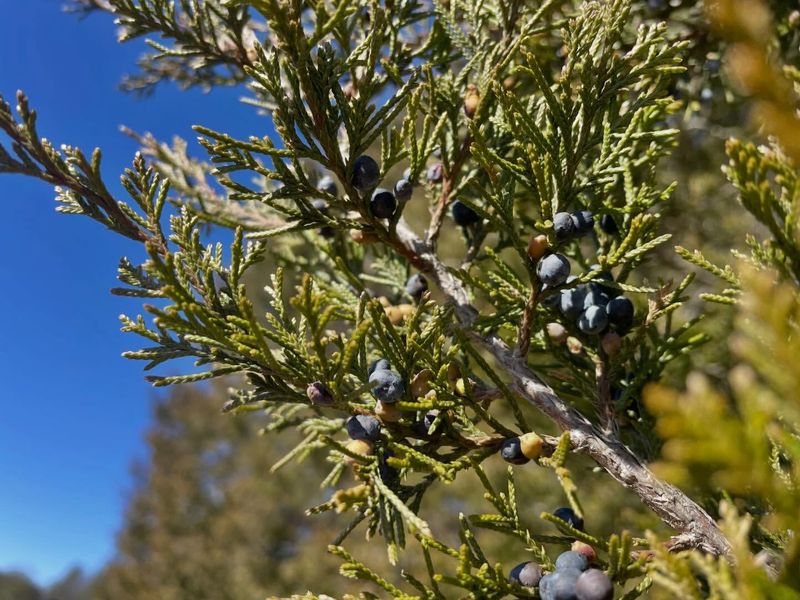
Some yards have spots where nothing seems to want to grow. Rocky slopes, compacted clay, sandy patches near driveways, or areas baked by reflected heat from pavement are the kinds of challenging sites that frustrate gardeners season after season.
Eastern Red Cedar is one of the few native trees that genuinely thrives in these difficult conditions rather than just surviving them.
Once established, which typically takes one to two growing seasons, this tree handles drought with impressive ease.
It has a deep root system that seeks out moisture well below the surface, which is why you often see Eastern Red Cedars growing in old fields and along roadsides where no one ever waters them.
Salt tolerance is another standout quality, making it a smart pick for properties near roads that receive winter salt applications or for coastal North Carolina landscapes exposed to salt spray.
Poor soil is not a dealbreaker for this tree either. While most large shade trees demand rich, well-drained soil to perform well, Eastern Red Cedar adapts to nutrient-poor conditions without significant decline in appearance or growth.
The one situation it does not handle well is standing water or consistently saturated soil, so avoid low spots that collect runoff after rain.
Outside of that limitation, this tree is about as tough and adaptable as a native North Carolina tree gets, making it a top candidate for problem areas in the yard.
8. It Should Not Be Planted Right Beside Apples
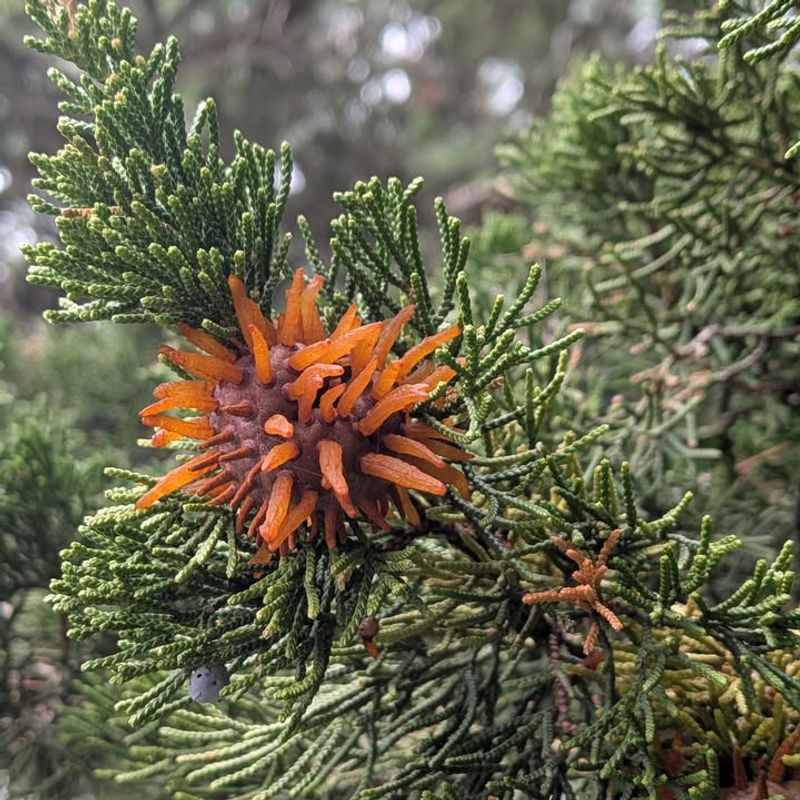
Every great plant comes with at least one caution, and for Eastern Red Cedar, the big one involves apple trees and their close relatives.
Cedar apple rust is a fungal disease that requires two different host plants to complete its life cycle: a juniper species like Eastern Red Cedar and a member of the rose family, most commonly apples, crabapples, hawthorns, or serviceberries.
When both hosts are growing near each other, the fungus can cycle back and forth between them.
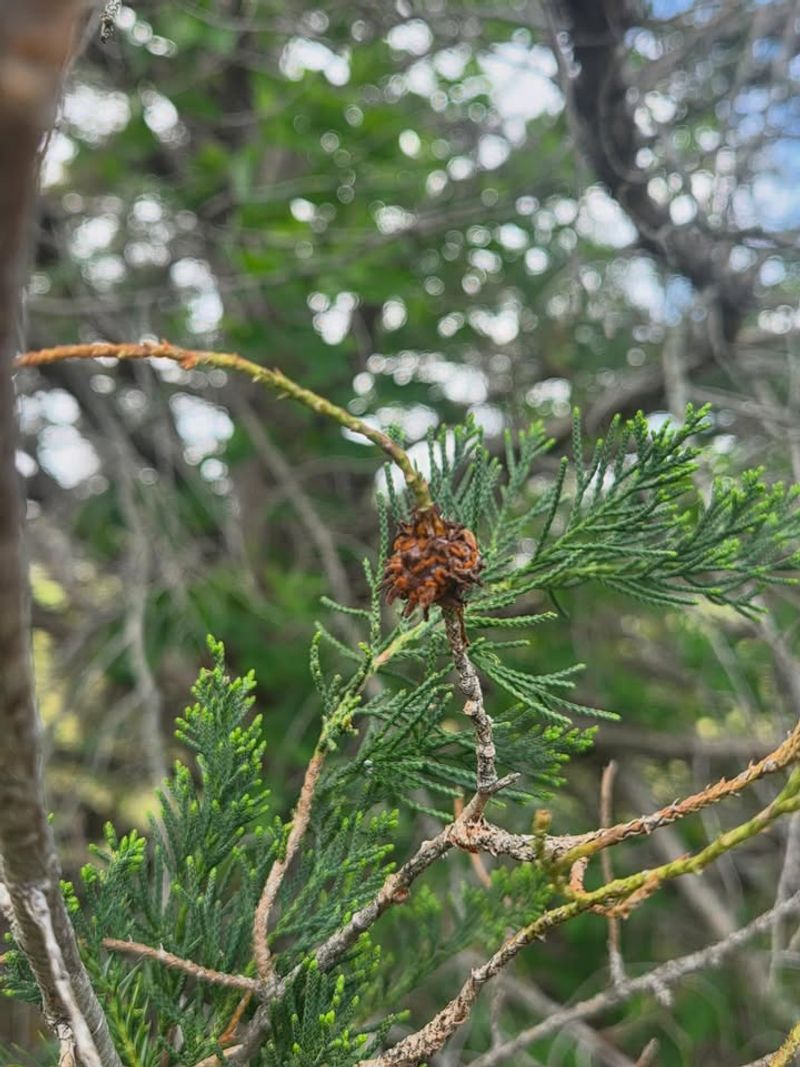
On Eastern Red Cedar, the disease shows up as brownish galls on the branches that swell and produce bright orange, jellylike tendrils in spring during wet weather.
While the tree itself usually tolerates this without serious long-term harm, the apple or crabapple on the other side of the cycle can suffer significant leaf and fruit damage.
For home orchardists or gardeners who love flowering crabapples, this is a real concern worth addressing before planting.
The good news is that distance helps. Keeping Eastern Red Cedar at least a few hundred feet away from susceptible apple family trees reduces the risk considerably, though it does not eliminate it entirely since fungal spores travel on wind.
Gardeners with only one or two crabapples in a large yard may find the risk manageable, especially with resistant apple varieties.
Just do your research before planting, and talk to your local cooperative extension office if you are unsure about your specific situation.
9. The Best Tick Smart Setup Around This Tree
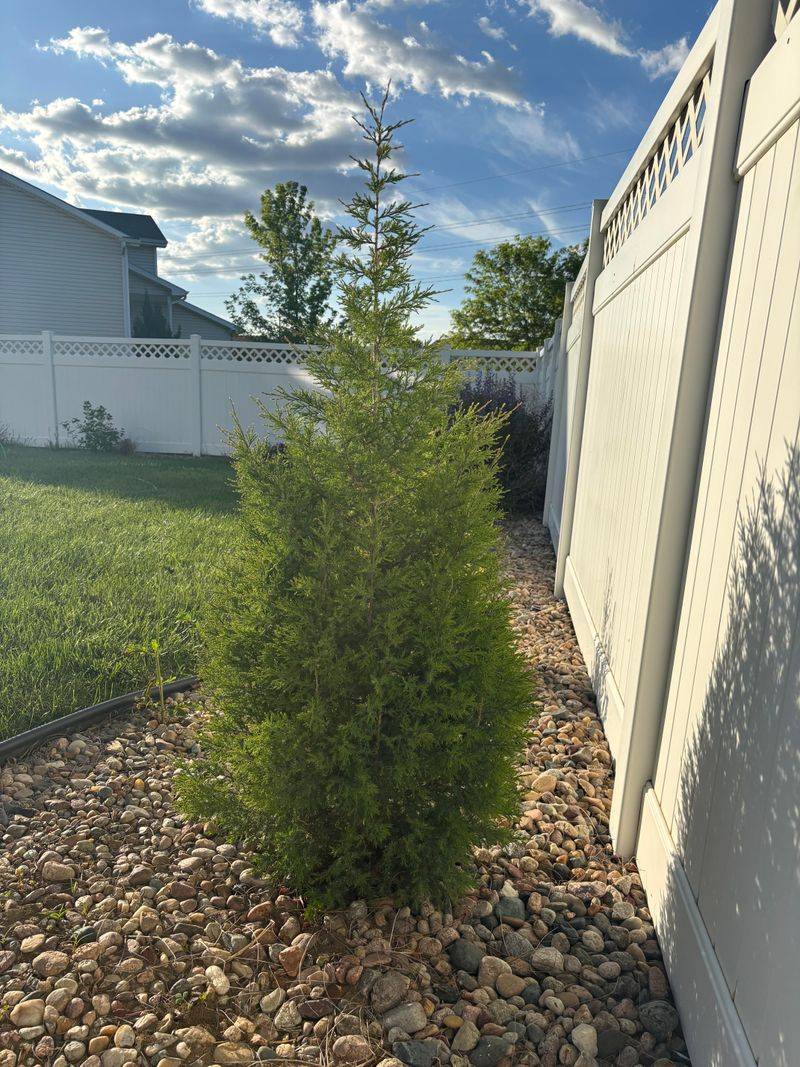
Getting the most out of Eastern Red Cedar in a tick-smart yard starts with thoughtful placement and consistent maintenance.
The goal is to use the tree as an anchor in a landscape that is deliberately designed to be less hospitable to ticks, rather than expecting the tree to do all the work on its own.
A few simple habits around the planting area make a significant difference.
Start by keeping the ground beneath the tree as dry and open as possible. A border of coarse wood chips or gravel around the base creates a dry zone that ticks avoid when moving from wooded areas into lawn spaces.
Trim grass near the tree regularly and never let brush or debris accumulate along the edges of the planting.
Ticks congregate at the boundary between maintained lawn and unmaintained areas, so keeping that transition zone clean and clear is one of the most effective things any homeowner can do.
Avoid planting groundcovers or dense low shrubs directly beneath or adjacent to the cedar if tick management is a priority.
These plants create exactly the moist, shaded, sheltered microhabitat that ticks seek out during hot weather. Instead, keep the understory open, sunny, and well-ventilated.
Pair this approach with periodic checks on clothing and skin after time outdoors, and Eastern Red Cedar becomes a genuinely valuable part of a layered, practical strategy for enjoying your North Carolina yard with greater peace of mind all summer long.