Florida Patio Container Plants That Actually Look Better In July Than They Did In April
April is the easy month for Florida patio containers. Everything looks good in April.
The temperatures are reasonable, the humidity has not fully committed yet, and even mediocre plant choices can pull off a decent display. July is where the truth comes out.
Most Florida patio containers that looked stunning in spring are limping by midsummer. Bleached out color, crispy edges, a general look of resignation that no amount of watering seems to fix.
Homeowners start replacing plants, questioning their choices, and wondering why container gardening feels so much harder than it looks. Some plants genuinely hit their stride in July heat.
Not just survivors, plants that respond to the intensity of midsummer with more color, more fullness, and more presence than they showed in the mild months. Building a patio container around those plants changes the whole experience of a Florida summer.
Your patio deserves to peak in July, not apologize for it.
1. Pentas Hit Their Stride When Patio Heat Builds
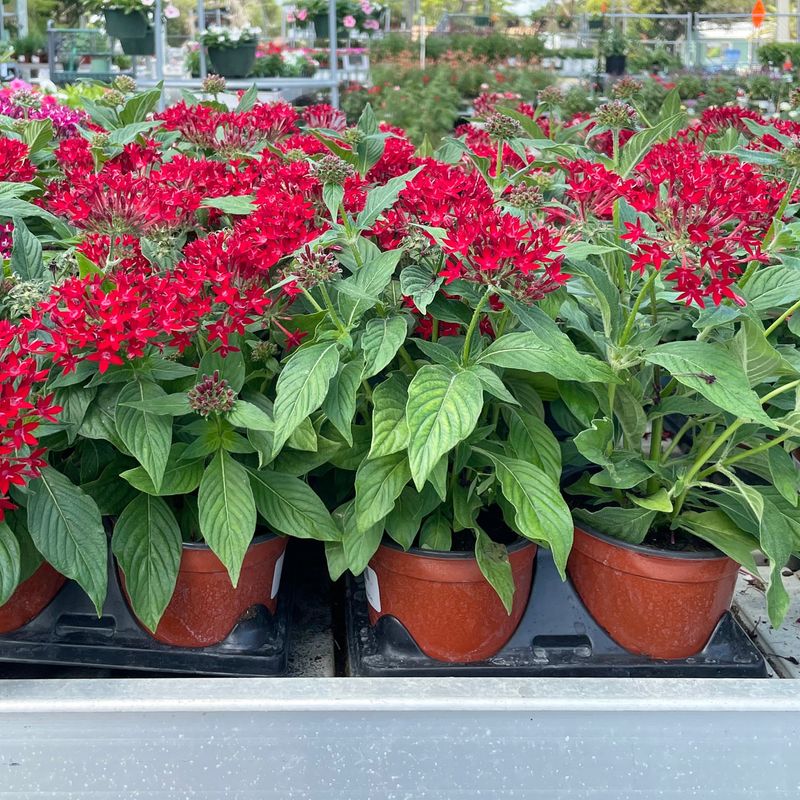
By the time a spring petunia pot starts looking ragged, a well-placed pentas container is just warming up. Pentas lanceolata, sometimes called Egyptian star cluster, is a warm-season bloomer that genuinely responds to summer heat.
The more the temperature climbs, the more those dense clusters of tiny star-shaped flowers push out. Colors range from red and pink to white and lavender, and the blooms hold up through humidity without wilting or dropping.
Pollinators love pentas. Butterflies visit the flower clusters regularly, and the plant earns its place on any patio that welcomes wildlife.
In a sunny container with good drainage, pentas can stay in active bloom from late spring through fall. It performs best in at least six hours of direct sun and appreciates a container with drainage holes so roots do not sit in standing water after heavy afternoon rain.
Regular moisture checks matter more in containers than in ground plantings. Pots dry out faster on hot concrete, especially in reflected heat near walls or pool decks.
Water when the top inch of potting mix feels dry. Pentas can slow down temporarily if roots dry out too hard, so consistent care keeps the blooms coming.
Trimming is not required, but a light trim after a heavy flush encourages fresh growth and keeps the plant looking tidy through the hottest weeks.
2. Angelonia Stands Taller As Summer Containers Fade
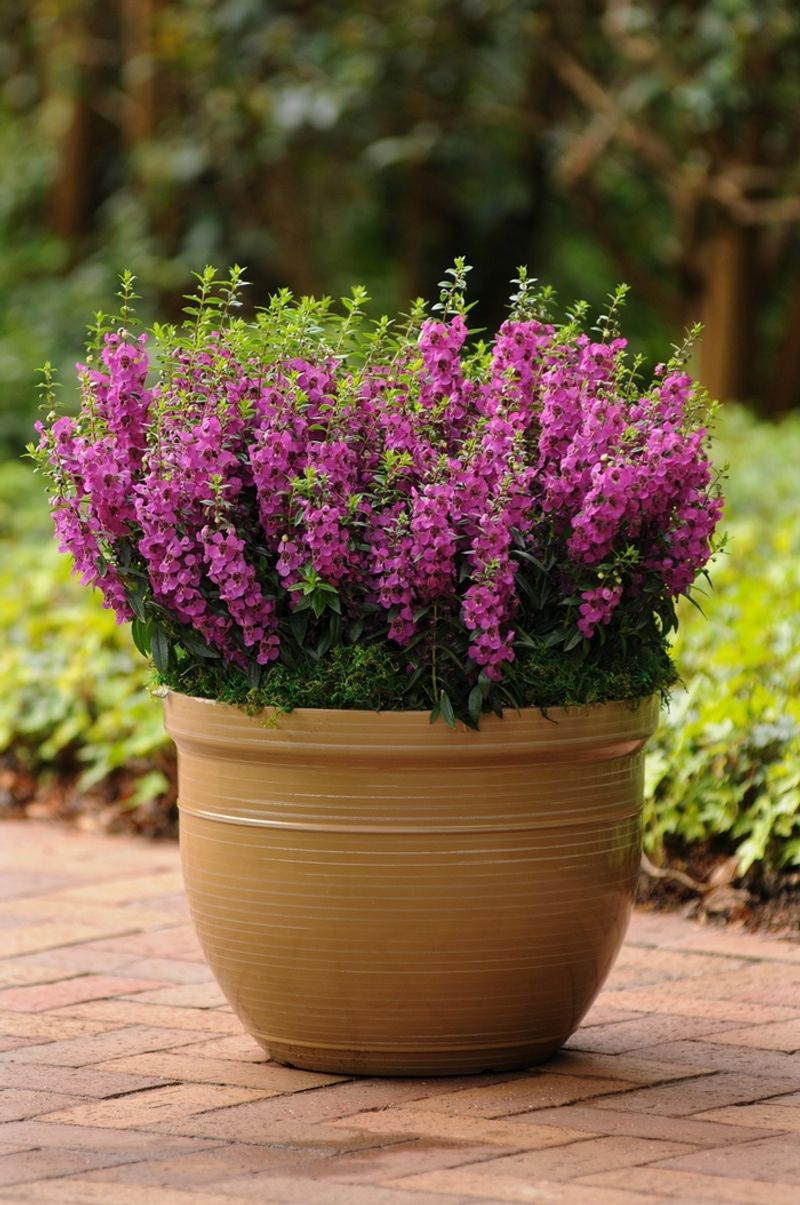
When spring flowers start fading on the porch, angelonia steps in with upright color that holds through summer heat. Angelonia angustifolia, sometimes called summer snapdragon, produces slender spikes of small blooms in purple, white, pink, or bicolor patterns.
Unlike true snapdragons, it does not give up when temperatures rise. It actually performs more consistently once warm weather settles in and spring-season plants begin to decline.
The plant has a naturally tidy, upright habit that works well in mixed containers or as a single-variety focal point. It fits nicely in the thriller role in a combination pot, adding vertical interest without flopping or sprawling.
Full sun is where it performs best. Partial shade can reduce bloom density, so a spot with at least five to six hours of direct light gives the best results on a patio or pool deck.
Your Florida Garden Changes Every Week. Your Plan Should Too.
Gardening in Florida changes quickly throughout the season. Every Friday you’ll receive a simple weekly plan showing exactly what to plant, prune, fertilize, harvest, and protect so you never miss the right timing.
Drainage is non-negotiable for container angelonia. Potting mix that holds too much moisture can cause root problems, especially during the rainy season when pots may receive more water than expected.
Make sure containers have drainage holes and that saucers do not collect standing water. Root space also matters.
A pot that is too small can limit growth and cause stress during dry spells between rains. Trim back leggy stems mid-summer to encourage a fresh flush of blooms and keep the plant looking full rather than stretched and sparse.
3. Tropical Sage Keeps Color Moving Through July
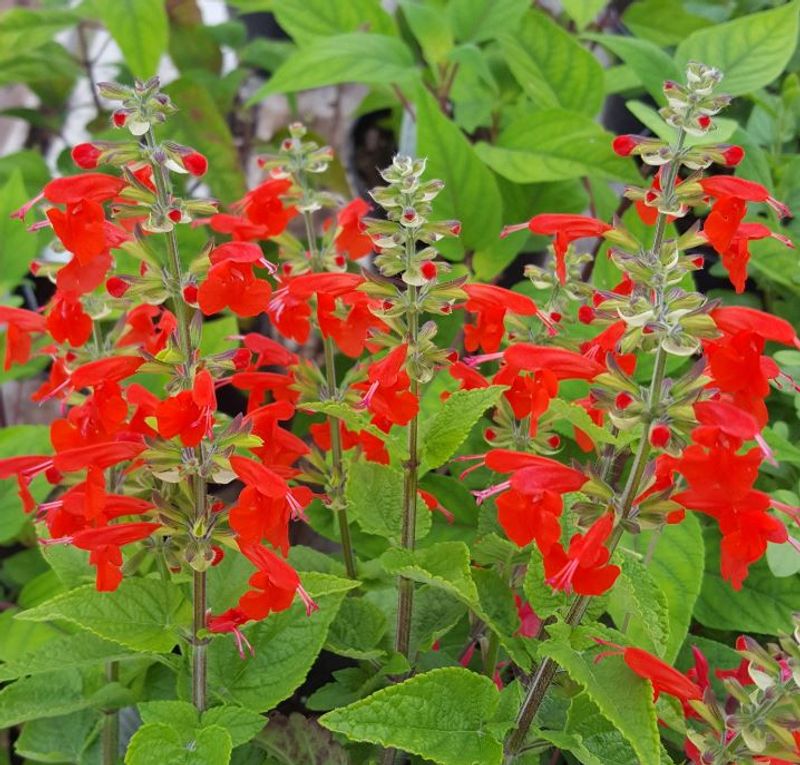
A hummingbird hovering at a patio container is a good sign that tropical sage is doing its job. Salvia coccinea is a Florida native wildflower that brings loose, natural charm to sunny or lightly shaded patio pots through the summer months.
Red is the most common flower color, but pink and white selections are also widely available. The tubular blooms attract hummingbirds and a range of native pollinators, adding movement and life to a warm-season container display.
Unlike some annuals that push hard in spring and slow by July, tropical sage tends to keep producing blooms through summer heat and humidity. It has a relaxed, upright form that looks more natural than manicured.
Gardeners who prefer a polished, tight look may find it informal, but in the right setting it adds genuine character. A light trim when stems get leggy helps maintain a fuller shape without removing too many potential blooms.
Reseeding is one of this plant’s more useful traits. In a patio container, that can mean seedlings appearing in nearby pots or garden beds, which is worth planning for.
Drainage matters, as with any container plant. Tropical sage does not like soggy roots, so a well-draining potting mix and a pot with good holes keep it healthier through the rainy season.
It can handle some afternoon shade, which makes it more flexible than strictly sun-only options on covered patios or screened porches.
4. Firebush Turns Hot Patio Corners Into A Nectar Show
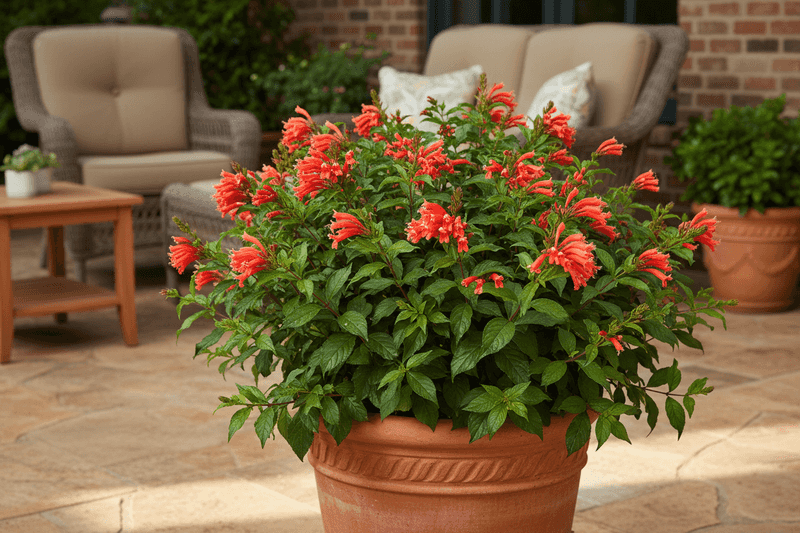
Few plants command a hot patio corner the way firebush does in July. Hamelia patens is a Florida native shrub that thrives in warm weather.
When grown in a large container with enough sun, it can deliver a steady show of tubular orange-red flowers through the hottest months.
Hummingbirds and butterflies are drawn to the blooms, making a well-placed firebush container one of the most active wildlife spots on a summer patio.
Warm temperatures push firebush into its strongest growth phase. What may have been a modest plant in April can become a bold, full specimen by July when heat and sun are at their peak.
The foliage also takes on richer tones in warm weather, adding color even between bloom flushes. In a large pot on a sunny pool deck or open porch, firebush becomes a true focal point rather than a background filler.
Container size is not optional with firebush. A small pot limits root space and stresses the plant during dry spells between rains.
A large container, at least fifteen to eighteen inches wide, gives roots room to support vigorous summer growth. Watering needs increase as the plant fills out and temperatures rise.
Gardeners in northern regions should plan for cold sensitivity. Firebush can be damaged by frost, so container growing actually offers an advantage since pots can be moved or protected when cold nights arrive.
5. Blue Daze Brings Cool Color To Blazing Containers
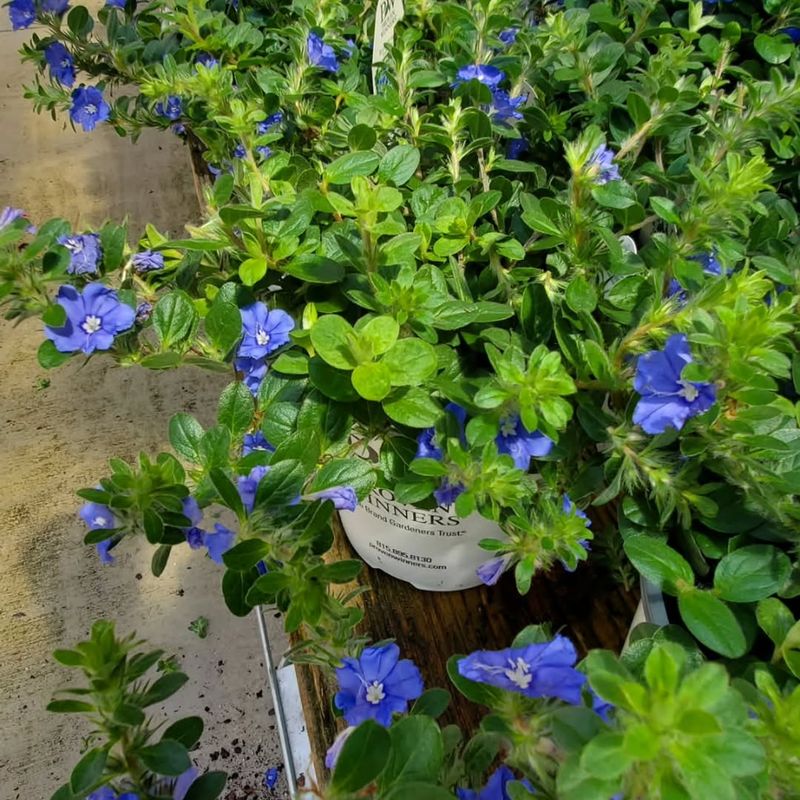
There is something quietly striking about true blue flowers on a blazing summer patio, and blue daze delivers that color reliably in full sun.
Evolvulus glomeratus is not a Florida native, but it has earned a place in warm-climate container gardens because of its heat tolerance and soft trailing habit.
The small, vivid blue flowers open each morning against silvery-green foliage, creating a cool visual contrast even when the temperature is anything but cool.
Blue daze works especially well in hanging baskets, window boxes, and the spiller role in combination containers. Its trailing stems soften the edges of pots and add texture without overwhelming neighboring plants.
Full sun is where it performs best. In too much shade, bloom production drops and stems can stretch.
On a sunny balcony, pool deck, or open porch facing south or west, blue daze tends to look its best through the peak of summer.
Drainage is critical for this plant. Soggy potting mix causes root problems quickly, particularly during the rainy season when containers can receive more water than expected.
Use a well-draining potting mix and check that saucers are not holding standing water. Between rains, the mix should be allowed to dry slightly before watering again.
Blue daze is not drought-tolerant in containers the way it might be in the ground, so check moisture levels regularly during dry stretches. A healthy, well-drained plant will reward the effort with steady color through summer.
6. Lemongrass Looks Bolder Once April Growth Fills In
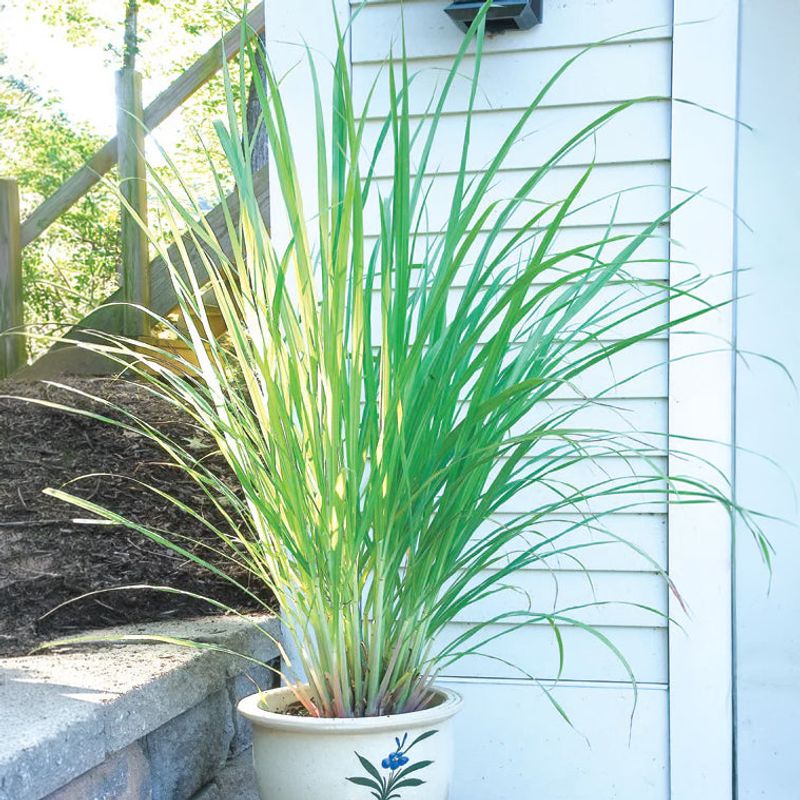
What looks like a modest clump of grass in April can become a dramatic tropical statement by July. Cymbopogon citratus, commonly known as lemongrass, is not a Florida native.
But it grows vigorously in warm climates and fills a large container with bold, upright form once summer heat arrives. The tall, arching blades create a fountain-like silhouette.
They add height and movement to a patio, pool deck, or screened porch without the fussiness of flowering annuals.
Beyond its looks, lemongrass has practical appeal. The foliage carries a fresh citrus scent that releases when brushed or trimmed, which is a pleasant bonus on a summer patio.
Culinary gardeners also harvest the lower stalks for cooking, making it one of the more useful container accent plants available. That combination of visual impact and function makes it worth the space it takes up.
Container size matters significantly. Lemongrass grows large and fast, so a small pot quickly becomes inadequate.
A container at least fifteen to eighteen inches wide and deep gives roots room to support full summer growth. Sun is non-negotiable.
Without at least six hours of direct light, growth slows and the clump stays thin. Moisture needs increase as the plant fills out, so check containers more frequently during dry spells.
Trim outer blades that turn brown or dry to keep the clump looking clean. On a small balcony, one large lemongrass pot can easily dominate the space, so placement planning matters.
7. Society Garlic Keeps Sunny Pots Sharp And Blooming
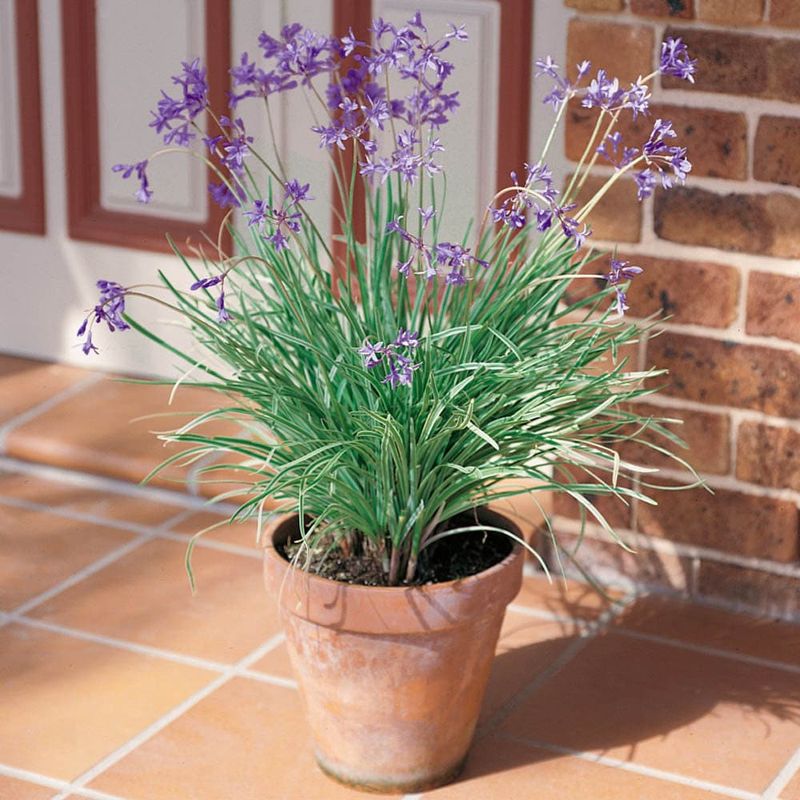
Not every summer container needs bold tropical foliage or oversized blooms to make an impression. Society garlic, Tulbaghia violacea, makes a case for understated elegance with its narrow, upright leaves.
It also produces steady clusters of small lavender flowers that keep appearing through heat and humidity. It is not a Florida native and originates in South Africa.
But it has proven itself as a reliable warm-season container plant in sunny spots across warm regions of this state.
The plant stays tidy without much intervention. Leaves are narrow and strap-like, giving containers a clean, structured look that holds up even when neighboring plants start looking ragged in July.
Lavender flower clusters rise above the foliage on slender stems, adding soft color without overwhelming the overall arrangement. The foliage carries a mild onion-garlic scent that releases when touched or brushed.
Some gardeners appreciate it, while others may find it worth noting before planting near a seating area.
Society garlic develops reasonable drought tolerance once established in the ground, but container plants rely entirely on the gardener for water. Pots dry out faster than garden beds, especially on hot concrete or in reflected heat near walls.
Check moisture regularly and water when the top inch of mix feels dry. Good drainage is still essential.
A pot without drainage holes will cause root problems during the rainy season. Trim spent flower stems to encourage fresh blooms and keep the container looking sharp through the rest of summer.
8. Croton Makes July Heat Look Like A Design Choice
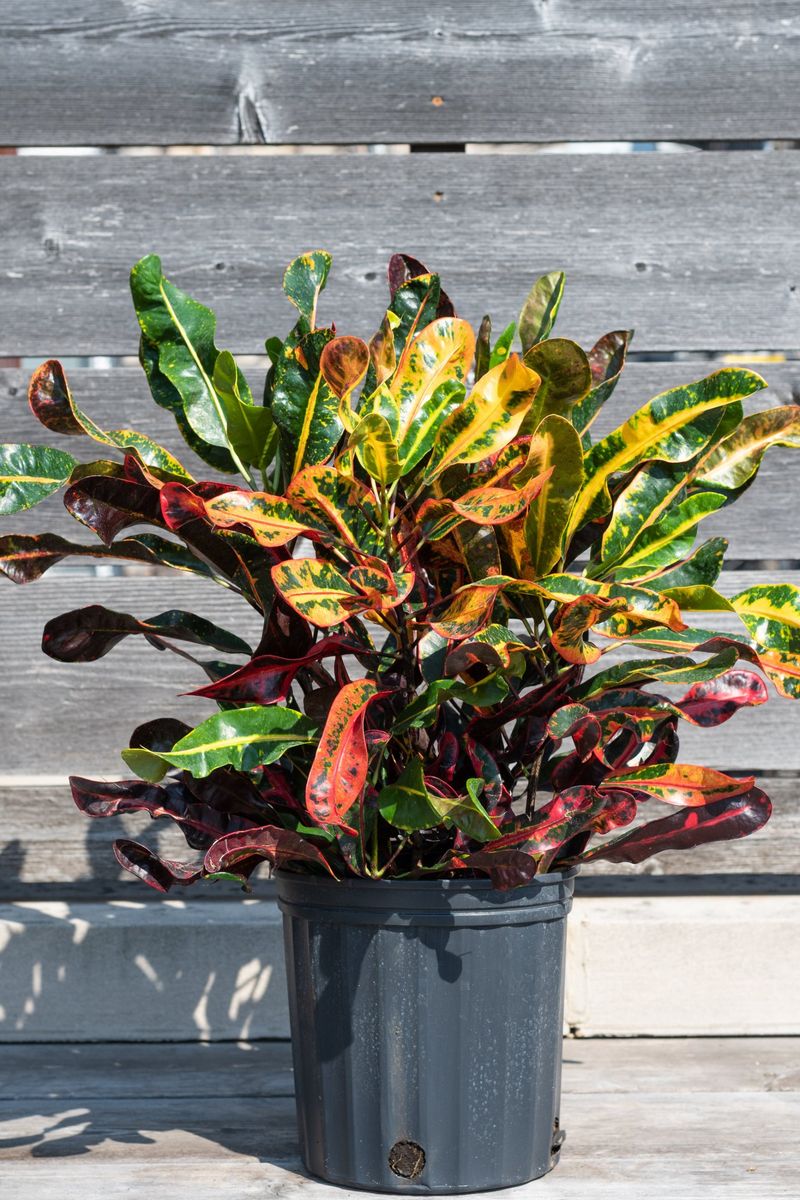
Some plants bloom in summer. Croton just glows.
Codiaeum variegatum is not a Florida native. But in warm patio containers, it produces some of the most striking foliage color available when flowering annuals start to fade.
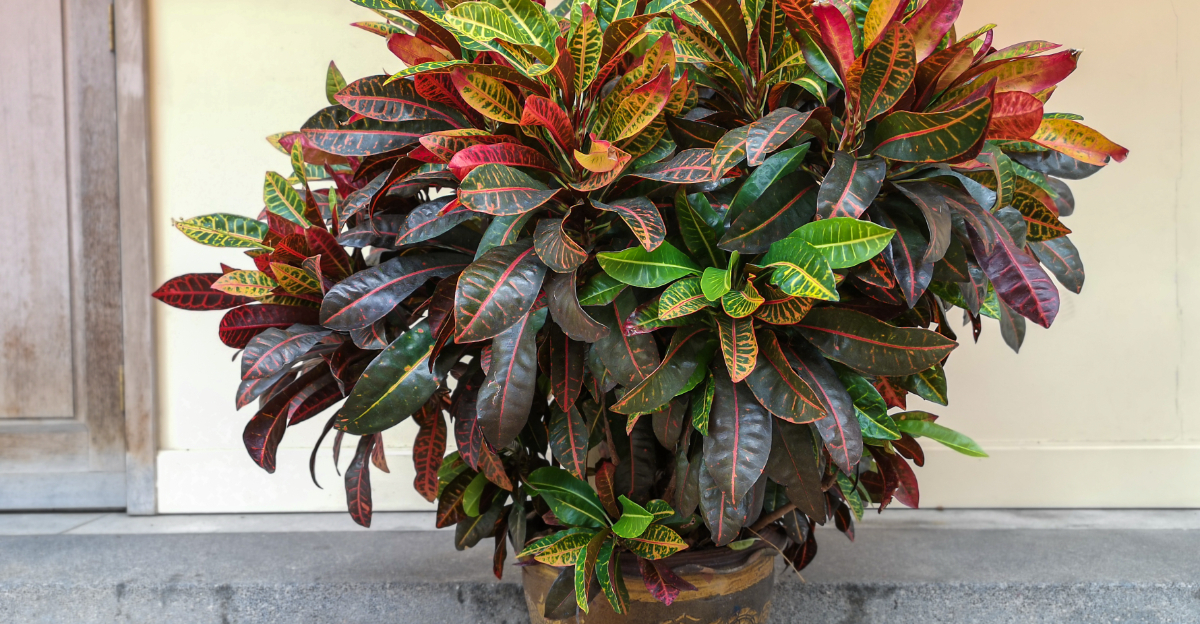
Leaves come in combinations of red, orange, yellow, green, and near-black, with patterns that range from spotted to striped to broadly splashed.
Bright light and warm temperatures actually intensify those colors, meaning a well-placed croton in July can look bolder and richer than it did in April.
Container croton works well in spots where flowering plants have given up. A pool deck, a sunny entryway, or a covered porch with strong indirect light can all support a healthy croton pot.
Consistent warmth is key. Croton is cold-sensitive and can lose leaves or suffer damage when temperatures drop.
Container growing makes sense because pots can be moved when cold nights arrive in northern regions.
Balance is the word to keep in mind with container croton. Too little light produces dull, mostly green foliage.
Too much direct afternoon sun in a hot, dry container can stress the plant and cause leaf scorch. Bright light with some protection from the harshest afternoon rays often works best.
Water when the top inch of potting mix feels dry, but do not let the pot sit in standing water. Good drainage keeps roots healthy through the rainy season and supports the bold color display that makes this plant worth the effort.