Florida’s Most Dangerous Venomous Species To Watch For This Fall
Florida’s cooler fall days bring people outdoors, but they can also mean unexpected encounters with some of the state’s venomous wildlife.
A walk through tall grass, a reach beneath a pile of leaves, or a glance inside an old shed can put you closer to trouble than you realize.
From snakes tucked along garden edges to creatures hiding in damp corners, some of Florida’s most dangerous species are remarkably good at staying out of sight. You may never spot one until you’re standing a few feet away.
The key is knowing which animals deserve your attention, where they tend to hide, and what signs should make you keep your distance.
Not every encounter ends badly, but a little awareness can go a long way when you share the landscape with wildlife that packs a potent bite or sting.
Some of these fall visitors may surprise you, especially in places you least expect.
1. Southern Black Widow, The Classic Red Hourglass Spider
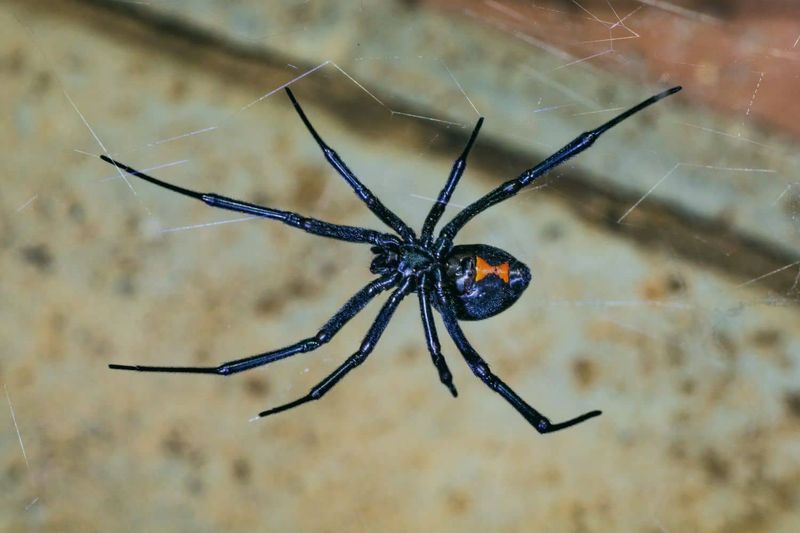
Picture a shiny black bead hanging upside down in a messy web. Flip it over, and a bright red hourglass shines like a warning sign.
The Southern black widow occurs throughout the state. Females have a shiny, rounded black abdomen with a distinctive red marking underneath, while males are much smaller and usually lighter in color.
Bites are uncommon, but a bite from a female can cause significant symptoms and may require medical care.
These spiders love dark, quiet places. Woodpiles, rock piles, sheds, garages, and the undersides of patio chairs are favorite spots.
Their webs look tangled and sloppy, but the silk is surprisingly strong.
Fall is a busy time for them. The state stays warm enough for year-round activity, and breeding runs from late spring through autumn.
That means more spiders tucked into the places you finally decide to clean.
Bites are rare and happen mostly when a spider gets pressed or trapped. The first feeling is often a sharp pinprick.
Later, muscle cramps can spread to the chest or belly.
Other signs include nausea, sweating, headache, and higher blood pressure. Serious cases are uncommon, but medical care helps a lot with the pain.
Call a doctor or poison control if you think you were bitten.
A few easy habits lower your risk. Wear thick gloves when moving firewood or boxes.
Shake out shoes, garden gloves, and jackets left in the garage.
Use a flashlight to peek under outdoor furniture before sitting down. Clearing clutter also gives these spiders fewer hiding spots.
Fun fact: the hourglass is on the belly, so the spider shows its warning while hanging in the web.
2. Eastern Diamondback Rattlesnake, Florida’s Largest Venomous Snake
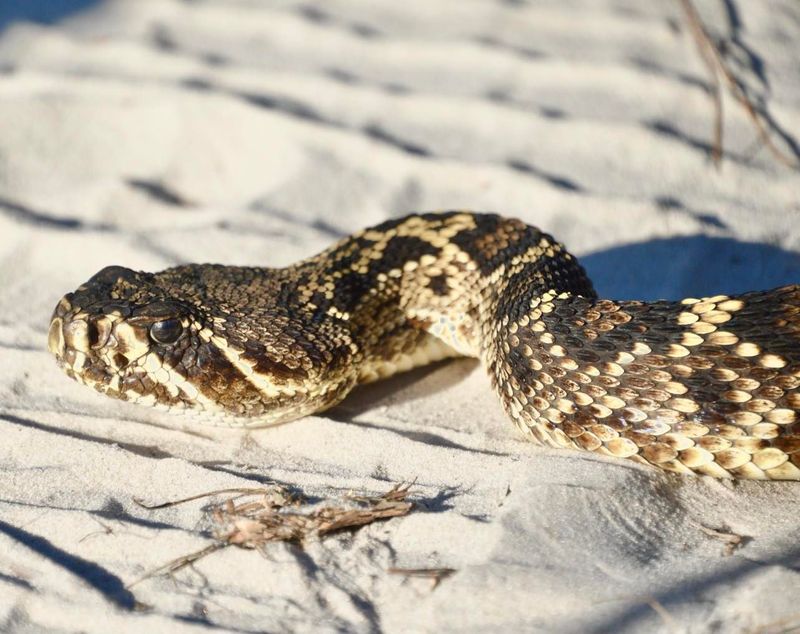
Hikers in the state tell the same story again and again. They hear a dry, buzzing sound, freeze, and spot a thick snake covered in diamonds.
Meet the Eastern diamondback rattlesnake, the biggest venomous snake in the state. Adults often reach four to five feet, and some grow even longer.
Their dark diamonds are outlined in cream, making a pattern that looks almost hand-painted.
Your Florida Garden Changes Every Week. Your Plan Should Too.
Gardening in Florida changes quickly throughout the season. Every Friday you’ll receive a simple weekly plan showing exactly what to plant, prune, fertilize, harvest, and protect so you never miss the right timing.
You can find them in pine flatwoods, palmetto thickets, sandy hills, and even the edges of neighborhoods. They often rest near gopher tortoise burrows.
In fall, they may move around more as they hunt and look for winter shelter.
Their venom is powerful and can harm blood and tissue. A bite is a medical emergency, so get to a hospital right away.
Stay calm, keep still, and remove rings or tight items near the bite.
Skip the old movie tricks. Do not cut the wound, suck out venom, or use ice.
Let doctors handle treatment with antivenom.
These snakes generally prefer to avoid people, and rattling can serve as a warning when they feel threatened. If you spot one, do not approach it or try to move it.
Give it plenty of room, calmly back away, and let it move off on its own.
Stick to clear trails and watch where you step. Wear boots and long pants when walking through brush.
Use a flashlight on evening walks, since they hunt more in cooler hours.
Fun fact: a rattlesnake adds a new rattle segment each time it sheds. That means counting rattles does not tell its age.
3. Cottonmouth, The Venomous Snake Of Florida’s Waters
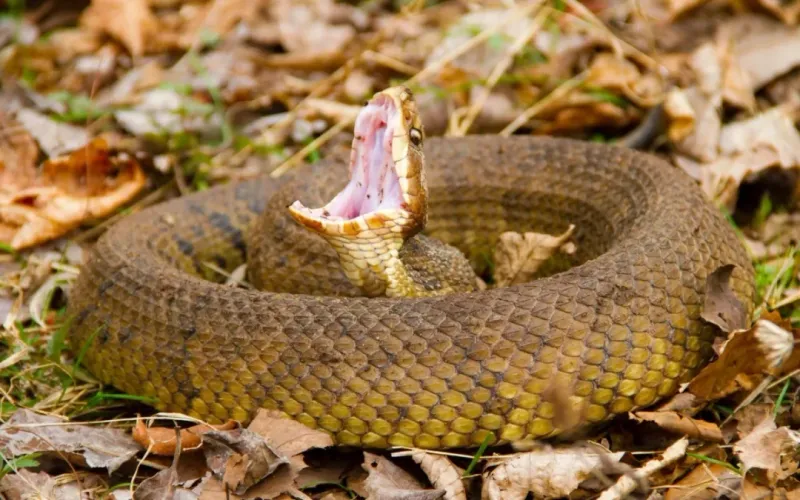
Ever seen a snake open its mouth wide like it is yawning at you? If the inside looks bright white, like cotton, you have met a cottonmouth.
Also called the water moccasin, this snake lives across the state near lakes, ponds, swamps, ditches, and slow streams. Adults are thick and heavy, usually dark brown, olive, or nearly black.
Younger ones show bold bands and a yellow tail tip.
That white mouth display is a warning, not an attack. Cottonmouths would rather bluff than bite.
Still, they stand their ground more than many snakes, so do not test them.
Fall fishing trips and kayak outings bring people close to their homes. These snakes bask on logs, banks, and docks during cooler sunny days.
Look before you grab a branch or step over a fallen tree.
Their venom damages tissue and can cause strong swelling and pain. Any bite needs emergency care right away.
Keep the person calm and the bitten limb still while getting help.
Many harmless water snakes look similar to cottonmouths, making identification tricky. Swimming position alone is not a dependable way to tell them apart.
Because several nonvenomous water snakes share the same habitats, keep your distance from any unidentified snake near the water and let it pass without disturbing it.
Wear sturdy shoes near the water’s edge, and skip wading in murky spots. Keep pets on a leash near ponds and canals.
If you spot one, back away calmly and let it go about its day.
Fun fact: cottonmouths eat fish, frogs, and even other snakes.
4. Brown Widow, The Invasive Cousin Hiding Under Patio Furniture
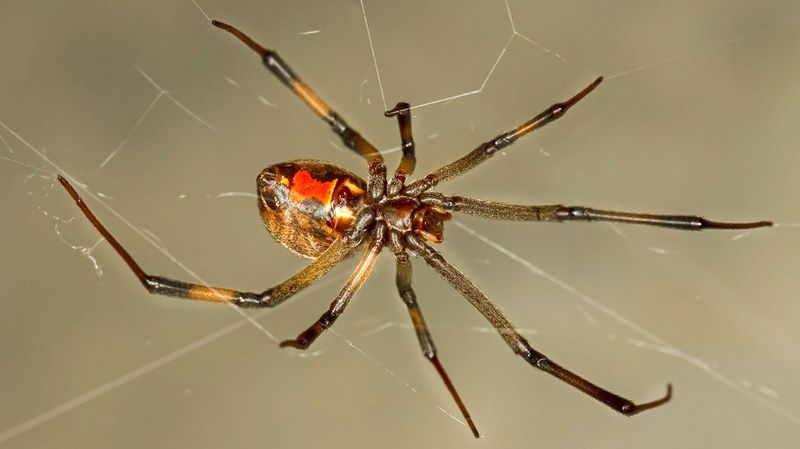
Flip over a plastic patio chair in Florida, and you might find a tiny surprise. A tan spider with an orange hourglass could be guarding a spiky little ball.
That spider may be a brown widow, a relative of the black widow. Brown widows are established in the state and are often found around buildings, patio furniture, and other sheltered outdoor spots.
Their numbers can vary by location, so it is best not to assume which widow species is more common in a particular yard.
Brown widows are mottled tan, brown, or gray with an orange or yellow hourglass underneath. The easiest clue is the egg sac.
It looks like a small ball covered in pointy bumps, almost like a tiny sea mine.
These spiders love human spaces. Check under chairs, inside mailboxes, around grills, behind shutters, and inside kids’ outdoor toys.
Fall cleanup is a great time to spot them.
Their venom is similar to the black widow’s, but they release much less in a bite. Most bites cause local pain and redness.
Still, watch for cramps or sickness, and call a doctor if symptoms grow.
Brown widows are shy and tend to curl up rather than bite. Trouble happens when a hand presses one by accident.
That is why gloves matter when you reach into hidden spots.
Scrape away webs and spiky egg sacs with a stick or brush. Store toys and cushions indoors or in sealed bins.
Wipe down outdoor furniture often to keep new webs from settling in.
Fun fact: each spiky egg sac can hold over one hundred baby spiders.
5. Pygmy Rattlesnake, The Small Snake Hiding In Garden Beds
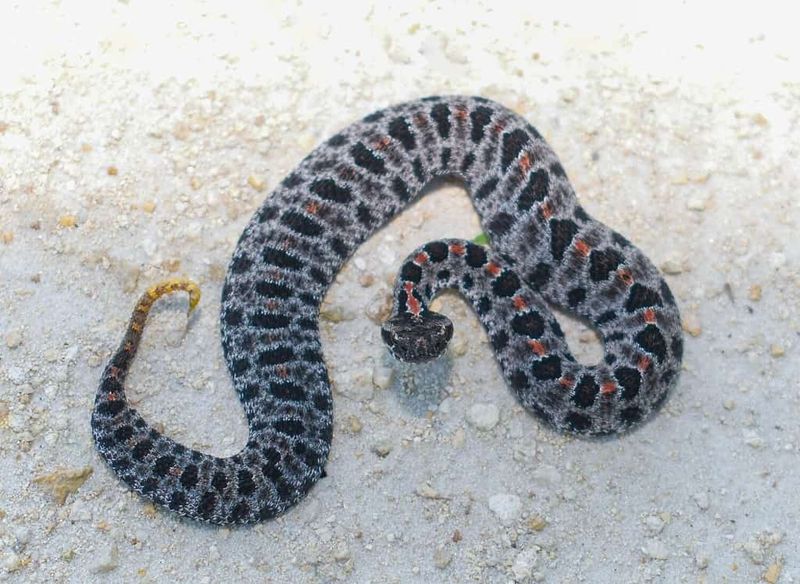
Small but feisty, the pygmy rattlesnake is the snake gardeners bump into most. You could be pulling weeds and find one coiled like a cinnamon roll in the mulch.
The dusky pygmy rattlesnake usually stays under two feet long. Its body is gray with dark blotches, and many have a reddish stripe down the back.
Its rattle is so tiny that it sounds more like a buzzing insect.
That quiet rattle is the tricky part. You might not hear any warning before getting close.
Garden beds, pine straw, leaf piles, and lawn edges make perfect hideouts.
Fall chores put hands right where these snakes rest. Raking leaves and spreading mulch can bring you face to face with one.
They also hunt frogs, lizards, and mice around homes.
A pygmy rattlesnake bite can cause pain and swelling and may lead to serious complications. Treat any suspected bite as a medical emergency and call 911.
Children and pets need urgent professional attention, too. Never assume a bite is minor because the snake is small.
Here are smart garden habits. Wear thick gloves and closed shoes while working outside.
Use a rake to move leaves before reaching in with your hands.
Keep grass trimmed and woodpiles away from the house. Fewer hiding spots means fewer surprise meetings.
Teach kids to look, step back, and call an adult when they spot any snake.
Fun fact: pygmy rattlers sometimes wiggle their tail tips to lure frogs closer. It is a sneaky fishing trick from a very small hunter.
6. Timber Rattlesnake, A North Florida Resident
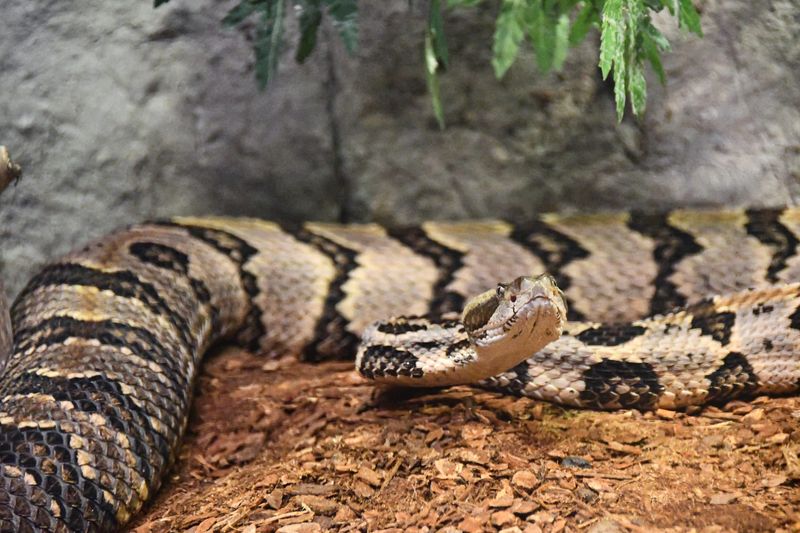
Most Floridians have never seen one, and that makes this snake a bit of a mystery. The timber rattlesnake lives only in the northern part of the state.
Locals often call it the canebrake rattlesnake. It hangs out in hardwood forests, river bottoms, and swampy thickets across North Florida.
Fallen leaves give it great camouflage, which makes autumn sightings extra tricky.
Look for a tan or pinkish body with dark zigzag bands across the back. The tail is solid black, like it was dipped in ink.
Many also have a rusty stripe down the middle of the back.
Adults can grow four to five feet long. They are calm snakes that often stay still and trust their camouflage.
Some will rest for days in one spot, waiting for a squirrel or mouse.
A timber rattlesnake bite requires emergency medical care. Call 911, keep the person calm and as still as possible, and remove rings or other tight items before swelling begins.
Do not cut the wound, try to remove venom, apply ice, or use a tourniquet. Follow emergency responders’ instructions.
Fall hikers and hunters should be extra alert in North Florida woods. Watch the ground ahead, especially near logs and leaf piles.
Step on top of logs, not over them, so you can see the other side.
Snake-proof boots or gaiters are a smart buy for regular woods walkers. Bring a buddy and a phone on longer hikes.
Give any rattler lots of room.
Fun fact: timber rattlesnakes have a limited range in the state and are most associated with the northern part of the state. If you spot one, observe it from a safe distance and leave it undisturbed.
7. Eastern Coral Snake, Florida’s Only Non-Pit Viper Venomous Snake
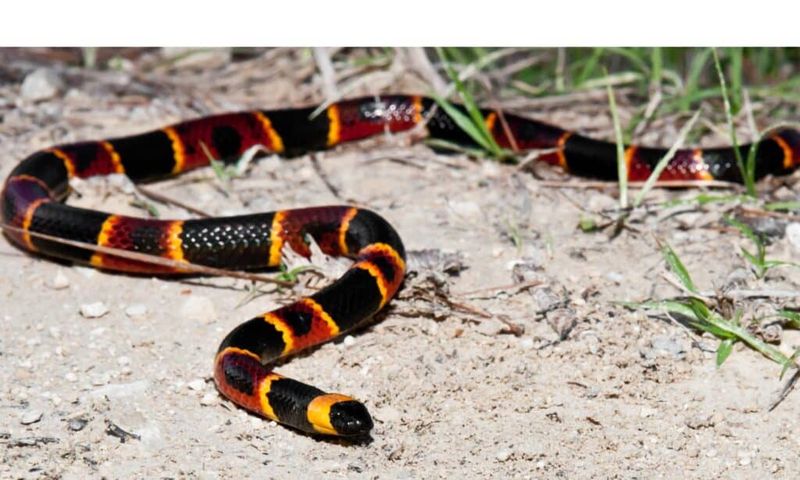
Many people learn a rhyme to help distinguish coral snakes from similar-looking harmless species. In the state, coral snakes typically have red bands touching yellow bands and a black snout.
However, color patterns can be confusing, so never handle a snake or approach it to check its markings.
Bright red, yellow, and black bands wrap around this slender snake. On a coral snake, the red bands touch the yellow ones, and the snout is black.
Harmless look-alikes, like the scarlet kingsnake, have red touching black instead.
Coral snakes are not pit vipers, unlike Florida’s other venomous snakes. They have no heat-sensing pits, no rattles, and small fixed fangs.
Their venom acts on the nerves and can be very serious.
Symptoms may take hours to show up. A person can feel fine at first, then have trouble speaking, swallowing, or breathing later.
Treat every coral snake bite as an emergency, even if it seems minor.
The good news is that bites are rare. These snakes are shy and spend most of their time hiding under leaves, logs, and loose soil.
Most bites happen when someone picks one up.
Fall yard work can turn them up in leaf piles and garden beds. Wear gloves, and never handle any brightly banded snake.
Teach children to admire colorful snakes with their eyes only.
Color-pattern rhymes are not a substitute for safe identification, and patterns vary among snake species. If you see a brightly banded snake, keep your distance and let it move away.
If someone is bitten, seek emergency medical care immediately, even if no symptoms appear at first.