8 Flowers That Survive Arizona’s Fiercest West Facing Garden Spots
There is a corner of the Arizona yard that many gardeners give up on.
The west-facing side. The spot where afternoon sun builds for hours against the wall, where reflected heat turns the air into something almost visible, where gravel gets too hot to touch by two in the afternoon.
Most plants placed there look fine for a few weeks. Then they start to struggle. Then they look worse. Then they get replaced with something new that follows the same pattern.
Have you ever stood in that part of your yard in July and genuinely wondered what could possibly survive there?
The answer exists. A specific group of flowers evolved for or adapted to exactly this kind of place. Full afternoon exposure. Reflected heat off walls and concrete. Bone-dry soil between waterings. No shade buffer of any kind.
Several of them produce color that rivals anything in the easier parts of the yard. Here they are.
1. Desert Marigold
Few flowers in the Sonoran Desert are as unapologetically cheerful as desert marigold.
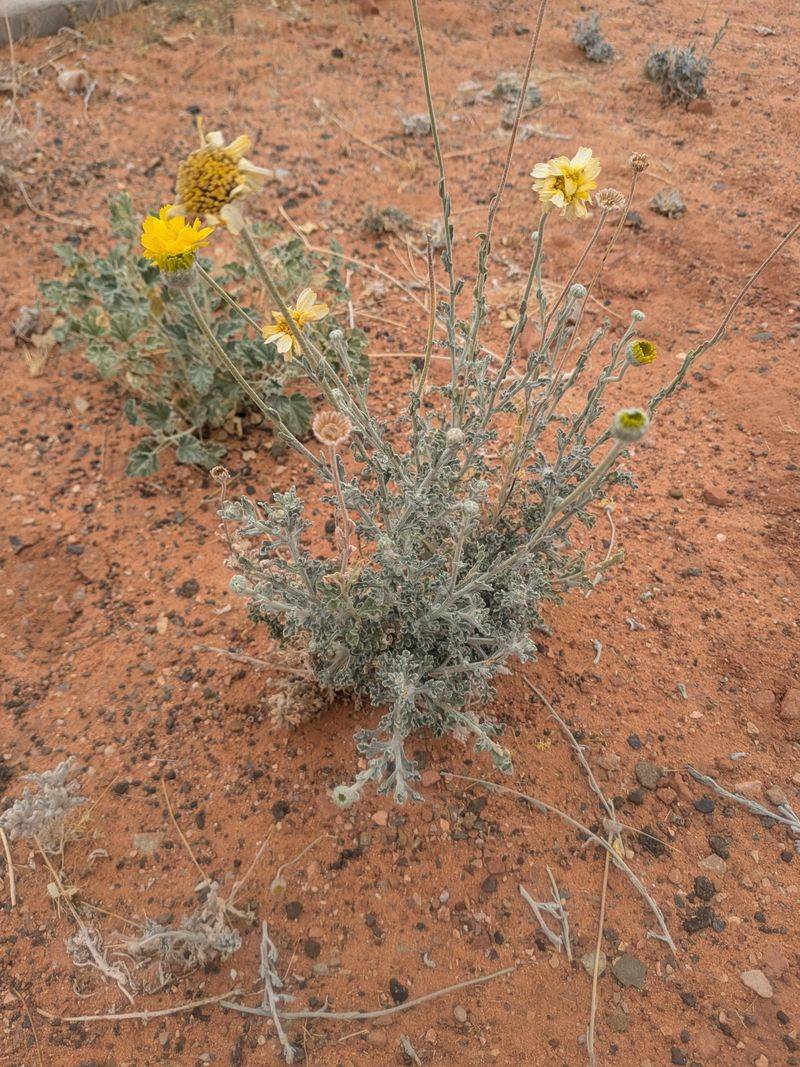
Baileya multiradiata lights up west-facing beds with vivid yellow blooms from spring all the way through fall, handling triple-digit temperatures and bone-dry soil like it was designed for exactly that job.
It was. This plant is native to the Chihuahuan and Sonoran deserts and has been thriving in Arizona long before anyone thought to put it in a garden bed.
Desert marigold grows about one to two feet tall and wide, producing a constant rotation of bright yellow daisy-like flowers that attract native bees and butterflies throughout the growing season.
Plant it in a west-facing gravel bed, along a sun-baked driveway edge, or in any spot that gets zero afternoon shade.
Dry soil is genuinely preferred here. Desert marigold struggles in clay or heavily amended soil that retains moisture after rain or irrigation. Decomposed granite or sandy native soil with excellent drainage is the practical home for this plant.
Overwatering during establishment is the most common mistake, and during monsoon season supplemental irrigation is often unnecessary.
Trim spent blooms to encourage continuous flowering through the season. Cut plants back by about one-third in late fall to prepare for a strong spring flush.
One practical note: the foliage can cause mild skin irritation, so gloves are worthwhile when trimming.
Desert marigold blooms through conditions that discourage almost everything else. It is essentially the botanical equivalent of showing up to work every day regardless of what the weather is doing.
2. Angelita Daisy
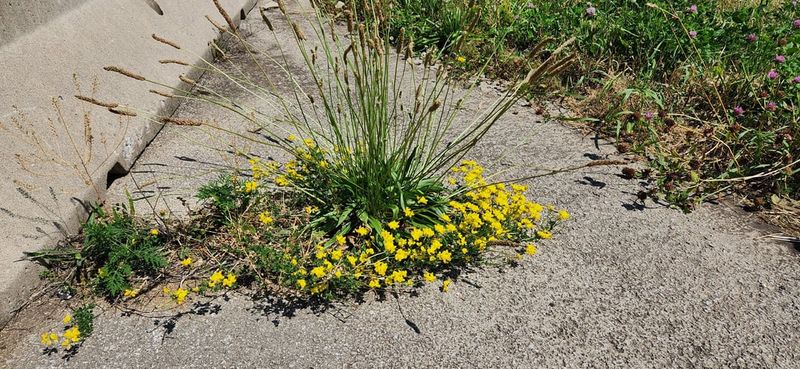
Gravel beds along Arizona’s west-facing walls reach temperatures that most plants experience as an emergency. Angelita daisy experiences them as Tuesday.
Tetraneuris acaulis stays under about a foot tall and wide, which makes it useful in tight spots along pathways, rock borders, and patio edges where larger plants would overwhelm the space.
The small footprint is deceptive. This plant produces golden yellow flowers nearly year-round in warmer climates, and that continuous color is genuinely rare in a spot where other plants go dormant or look ragged by midsummer.
Your Arizona Garden Changes Every Week. Your Plan Should Too.
Gardening in Arizona changes quickly throughout the season. Every Friday you’ll receive a simple weekly plan showing exactly what to plant, prune, fertilize, harvest, and protect so you never miss the right timing.
Full sun and excellent drainage are the requirements. Caliche soil or compacted ground creates root problems, so amending with decomposed granite or planting in a raised gravel bed gives roots the conditions they need.
Spacing of twelve to eighteen inches per plant matters even when the plant looks small at planting time. Crowding traps humidity and creates conditions for root rot, which is the one vulnerability this otherwise tough plant carries.
Water deeply once a week during the first summer to support establishment. After that, rainfall combined with occasional supplemental irrigation is typically sufficient.
Trimming spent blooms encourages fresh flowers consistently. Even without it, the plant keeps producing gold through the hottest weeks of the season.
Angelita daisy is compact, nearly continuous in bloom, and completely comfortable in the conditions that challenge everything around it.
A plant under twelve inches tall that blooms almost year-round in an Arizona gravel bed. It is not showing off. It just genuinely enjoys it there.
3. Blackfoot Daisy
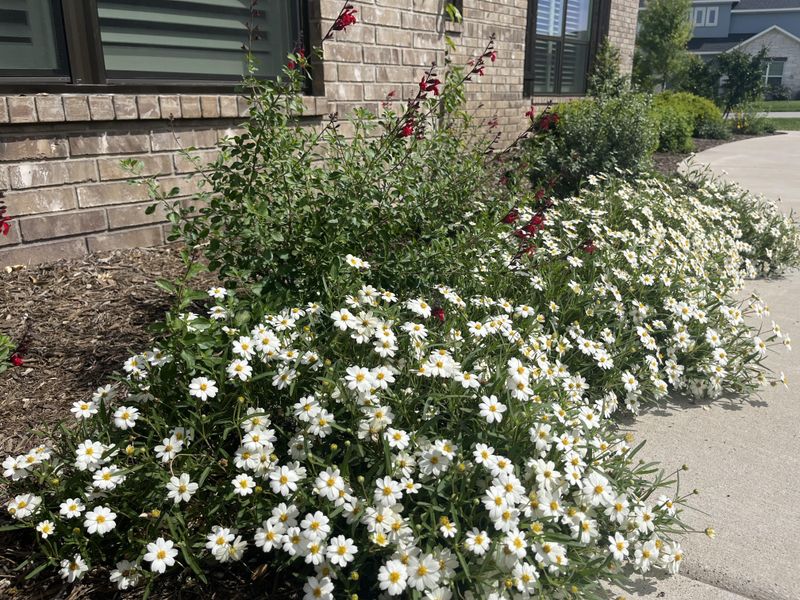
Reflected heat from a stucco wall can feel like standing near an open oven. Blackfoot daisy is not bothered by that description.
Melampodium leucanthum is native to the Chihuahuan and Sonoran deserts and produces white flowers with sunny yellow centers almost continuously from spring through fall.
In mild years, it continues into winter. That extended bloom period makes it one of the most consistently performing plants available for Arizona’s hottest garden positions.
The low, rounded shape typically reaches twelve inches tall and up to eighteen inches wide. That profile suits borders, wall bases, and rock gardens that receive zero afternoon shade.
The white flowers also do something unexpected in a hot space. They cool the visual temperature of the area, making brutally hot spots feel less intense even on August afternoons.
Good drainage is the non-negotiable requirement. Soggy soil creates problems faster than almost any other condition for this plant.
Clay-heavy ground causes root issues quickly. Planting on a slight slope or in amended sandy soil helps moisture move away from roots after irrigation or monsoon rain.
Water established plants deeply every two weeks in summer. Light trimming after bloom cycles keeps the mounding shape tidy and encourages fresh growth.
One small detail worth knowing: the common name comes from the tiny black base at the bottom of each flower head, which is visible up close and genuinely charming.
Blackfoot daisy is the plant that looks delicate and performs like it has never heard the word.
4. Globe Mallow
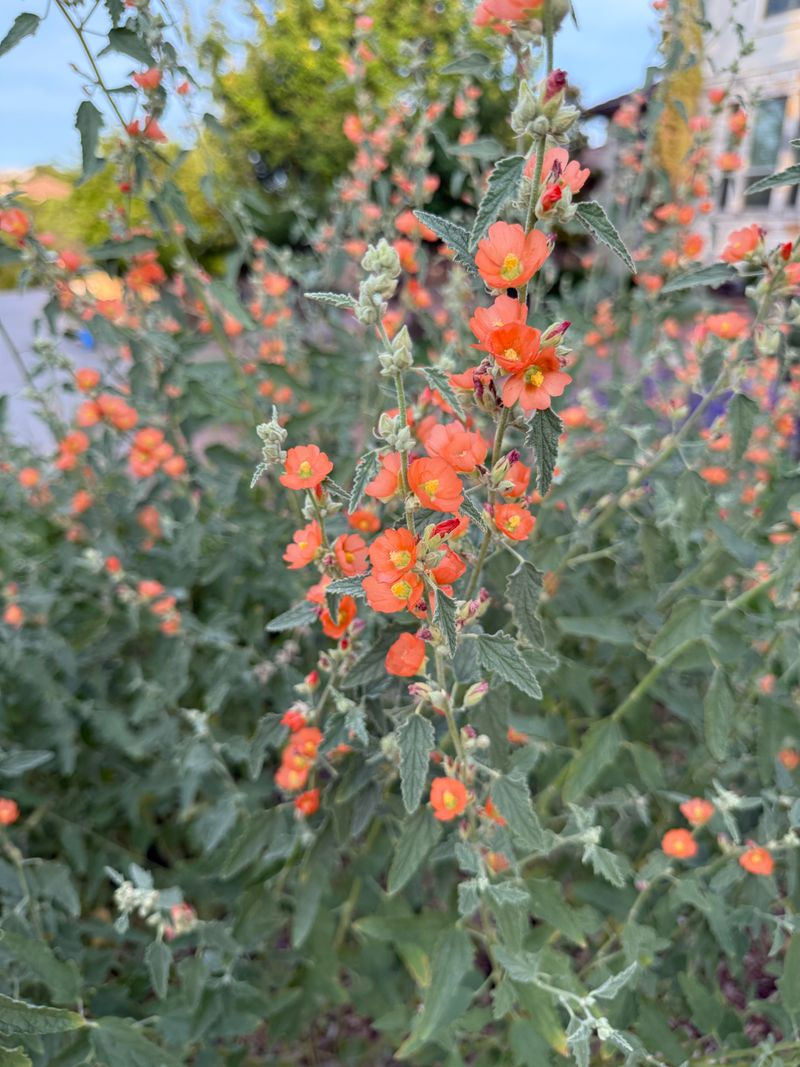
Globe mallow asks for almost nothing. The return on that minimal investment is generous armfuls of vivid orange blooms through some of the harshest conditions a west-facing Arizona yard can produce.
Sphaeralcea ambigua grows naturally along roadsides, dry washes, and desert hillsides. A west-facing garden wall backed by reflected heat and poor soil is essentially its natural habitat, which explains why it performs so reliably in exactly those conditions.
Plants reach two to three feet tall and wide and produce clusters of cup-shaped orange flowers that draw bees, butterflies, and native solitary bees consistently through the blooming period.
Full sun with fast-draining soil is the practical requirement. Globe mallow handles caliche soil better than many native plants, though loosening the top layer helps roots spread during establishment.
Once settled in, supplemental water needs drop significantly. During monsoon season, natural rainfall is often sufficient to keep it blooming into fall.
Wear gloves when handling this plant. The tiny hairs on stems and leaves can irritate sensitive skin. Cut plants back by about half in late winter to encourage vigorous fresh growth and a stronger bloom show in spring.
Globe mallow evolved in conditions that most cultivated flowers would find genuinely discouraging.
Orange blooms, minimal water, poor soil, full blazing sun. At what point does globe mallow just get labeled a problem solver and be done with it?
5. Gaillardia
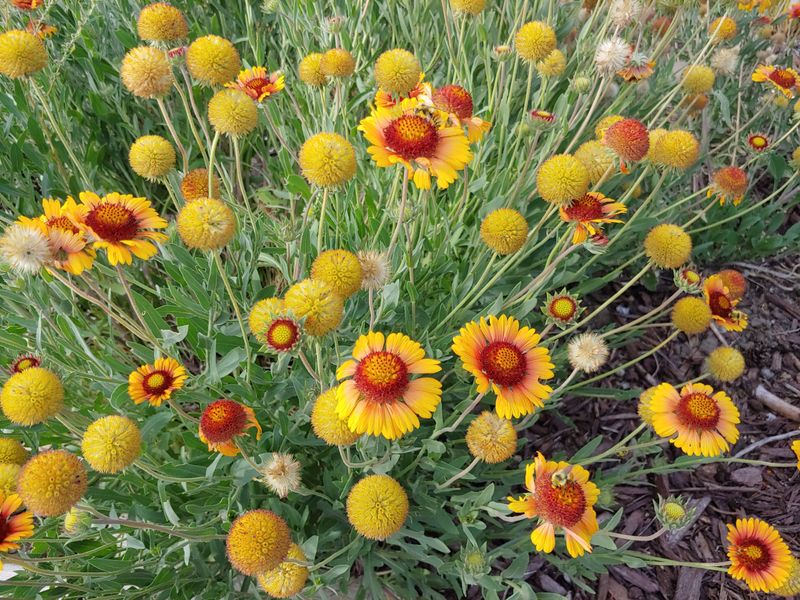
July arrives, the west wall starts radiating heat in visible waves, and most flowering plants begin reconsidering their life choices. Gaillardia keeps going.
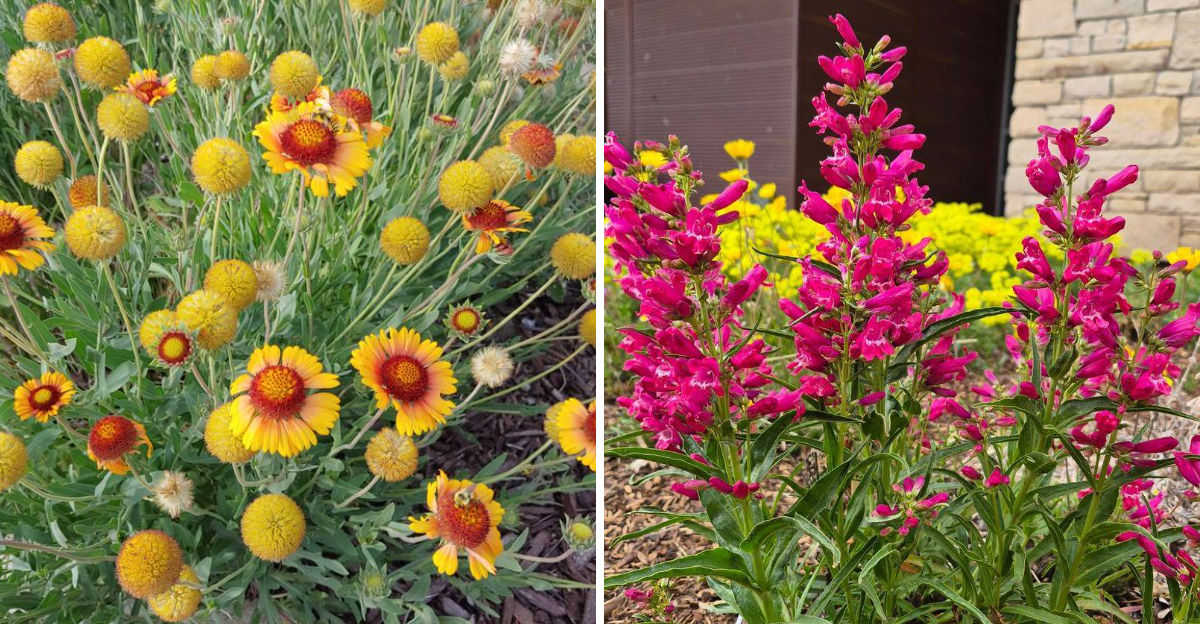
Known as blanket flower, this tough perennial produces bold red and yellow blooms that look like a desert sunset pressed directly onto a flower head. It is one of the few plants that performs noticeably better as heat intensifies rather than worse.
Plants typically grow twelve to eighteen inches tall and wide, fitting neatly into borders, gravel beds, and the base of west-facing walls where reflected heat concentration is highest.
The bloom period runs from late spring through fall, which is a sustained run for any Arizona garden plant operating in full sun.
Full sun and excellent drainage are the two requirements that matter most. Gaillardia struggles in heavy clay or soil that holds moisture after irrigation or monsoon rain.
A raised bed or gentle slope keeps roots dry between watering sessions. Spacing plants twelve to fifteen inches apart allows airflow through the foliage, which reduces fungal pressure during humid monsoon stretches.
Trimming spent flowers consistently keeps new buds coming. Cutting the plant back by about one-third in late summer addresses legginess and sets up a stronger fall display.
The bloom period covers the absolute hottest part of the Arizona gardening calendar with minimal intervention required.
A plant that looks like a sunset and blooms through July in a west-facing Arizona bed. It earns its common name every single season.
6. Penstemon
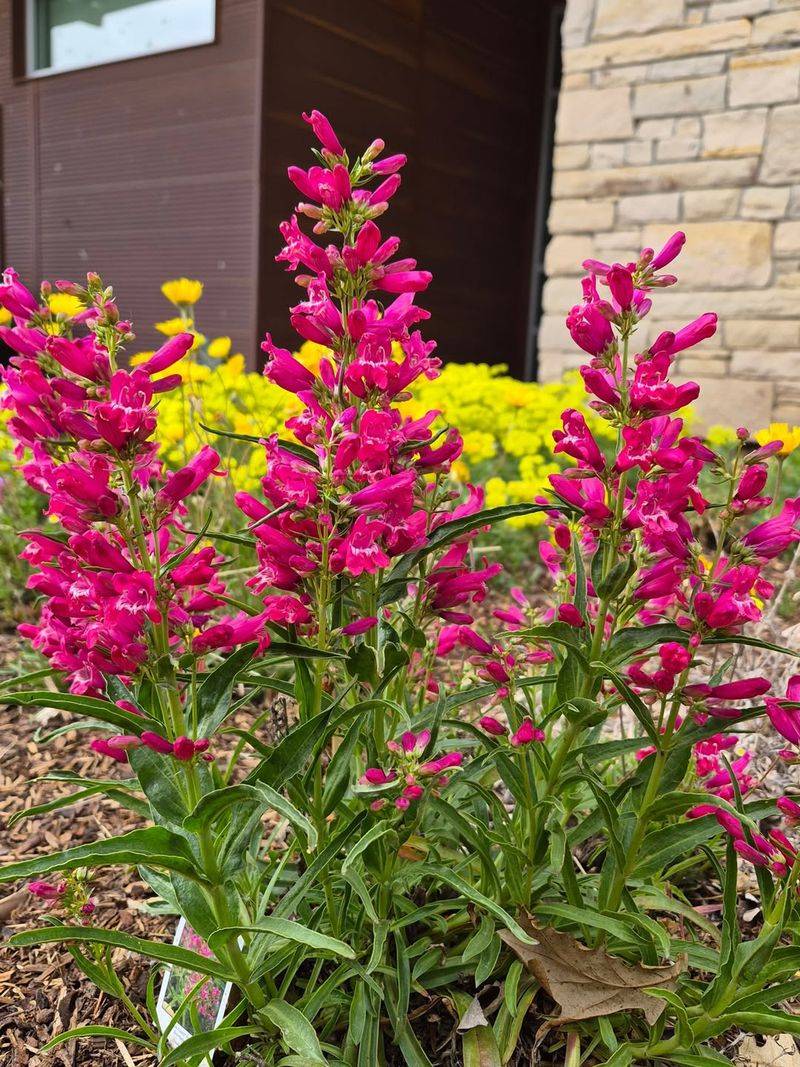
A west-facing border planted with penstemon looks intentionally designed rather than simply surviving.
The tall, tubular flower spikes and the hummingbird activity they generate give the hottest garden edges a genuinely dynamic quality.
Several species are native to Arizona. Penstemon parryi produces bright pink flower spikes reaching three to four feet tall in late winter and spring.
Hummingbirds respond almost immediately, which adds movement and activity to a border that would otherwise be waiting for warmth.
Good drainage is the single most important factor for penstemon success. These plants evolved on rocky slopes and canyon walls with sharp drainage and almost no water retention in the soil profile.
Decomposed granite, sandy loam, or a raised gravel bed provides the conditions roots need. Overhead irrigation during humid monsoon months can lead to fungal problems on the foliage, so drip systems at the base are preferable.
Water established plants deeply every two to three weeks through summer. After the bloom cycle ends, leaving seed stalks standing for several weeks allows birds to feed on them before cutting back to the basal rosette.
New growth emerges with fall temperatures and sets the plant up for another strong spring display.
Penstemon blooms in late winter, draws hummingbirds, and handles reflected wall heat in summer. What exactly is it waiting for in more Arizona yards?
7. Lantana
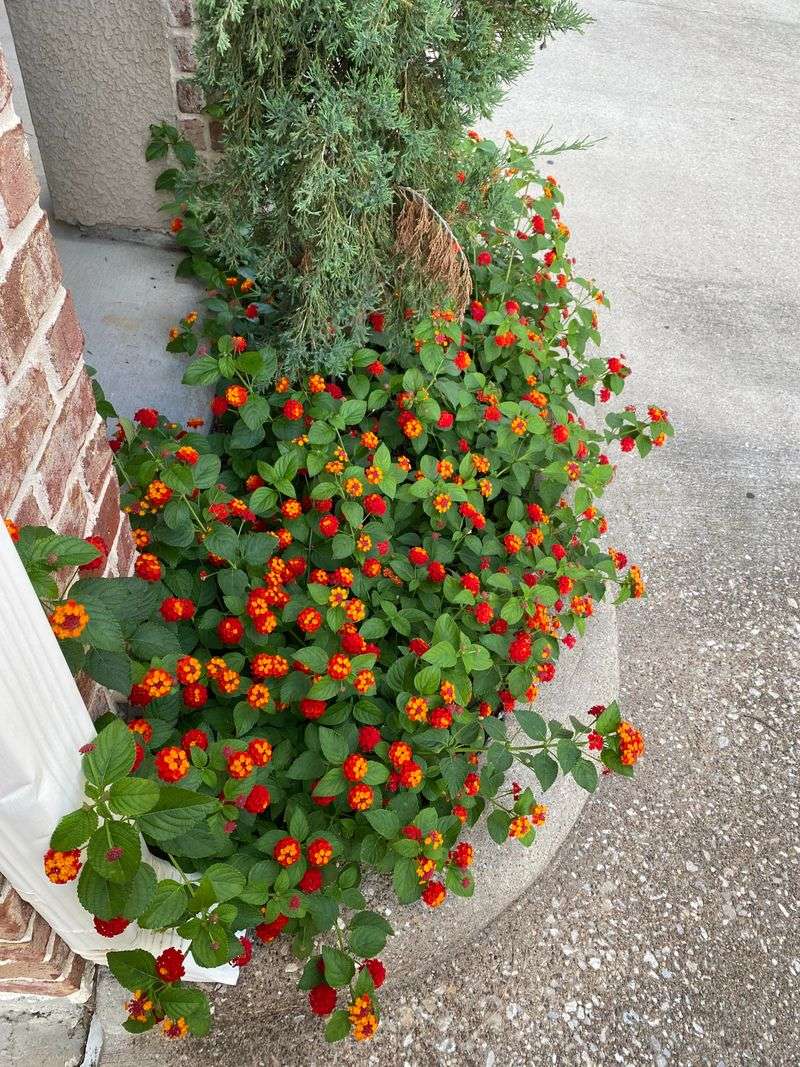
Lantana and Arizona summers are genuinely well matched. Few plants push out dense, multicolored flower clusters through weeks of 110-degree afternoons with the consistency that lantana delivers.
Lantana camara and its cultivars produce flower heads combining orange, yellow, red, pink, and white, often multiple colors on the same plant simultaneously. Butterflies treat the blooms as a primary food source and visit continuously through the warm season.
West-facing spots are where lantana performs at its best. More heat and more sun produce more blooms.
Shadier locations reduce production and cause the plant to grow leggy rather than compact and flowering. A hot gravel bed or south-southwest facing exposure is the ideal position.
Spacing is worth taking seriously. Lantana spreads significantly in warm Arizona climates, and crowded plants trap humidity during monsoon season, which invites whitefly problems.
Four to six feet between plants allows full spread without crowding. In frost-free areas of the state, lantana can develop into a large woody shrub over multiple seasons.
Water deeply but infrequently once established, roughly every one to two weeks in summer. Cut plants back hard in late winter, removing about two-thirds of previous season’s growth.
That reset keeps the form manageable and triggers a strong flush of new blooms as temperatures warm in spring.
One placement consideration worth noting: lantana berries are toxic to pets and children, so spots near active play areas need a second look before planting.
Lantana blooms through the Arizona summer like it has a point to prove. It does not need the encouragement, but it appreciates full sun anyway.
8. Trailing Rosemary
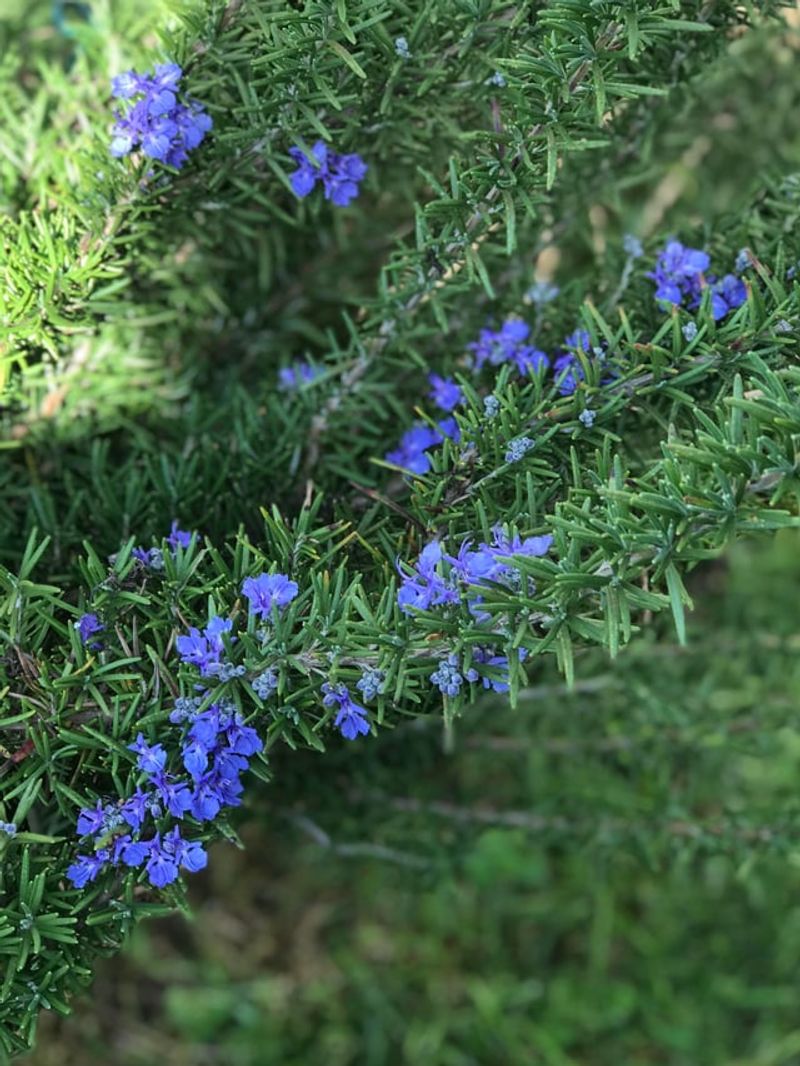
Along a hot wall or dry slope where most plants struggle to establish, trailing rosemary does something quietly impressive.
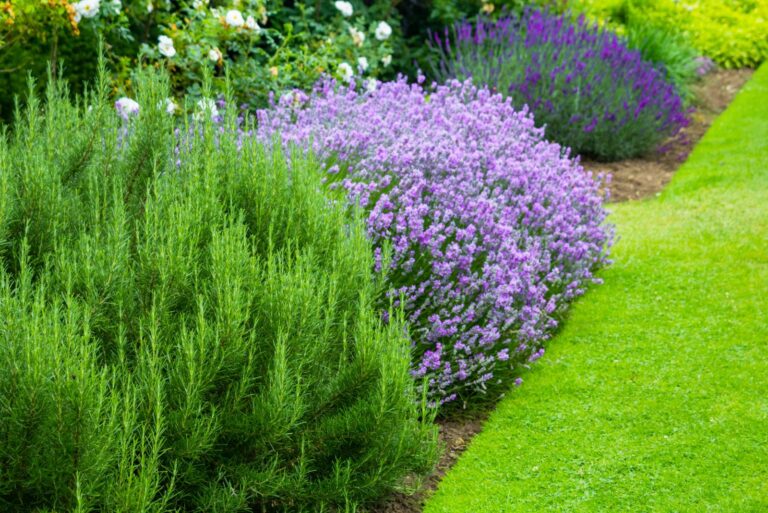
It cascades over edges, softens hard lines, fills the surrounding air with herbal fragrance, and produces small blue flowers in late fall through early spring.
Salvia rosmarinus Prostratus is not a native desert plant. It evolved in the hot, dry Mediterranean region, which gives it the same heat and drought tolerance that Arizona summers consistently demand.
That origin story translates directly into reliable performance in full sun, reflected heat, and extended dry periods once the plant is established.
The gray-green foliage stays attractive even when the plant is not actively blooming, providing year-round texture along walls, slopes, and raised planter edges. In a spot where most plants look stressed by midsummer, trailing rosemary looks composed.
Plant where the form has room to spread three to four feet wide and where the trailing growth can drape naturally over a ledge or slope edge.
Avoid low spots where water collects after monsoon storms. Too much moisture around the crown creates root issues that reverse slowly if at all.
Once established, supplemental irrigation drops to a deep watering every two to three weeks in summer. Heavy fertilizing pushes soft growth that struggles under heat stress. Light trimming after the bloom season keeps the trailing form dense and tidy.
Trailing rosemary handles full Arizona heat, looks attractive year-round, and smells like a kitchen. There are worse things to have against a west-facing wall.