Foamy Brown Clumps Are Showing Up on Minnesota Shrubs And What Is Inside Will Surprise You
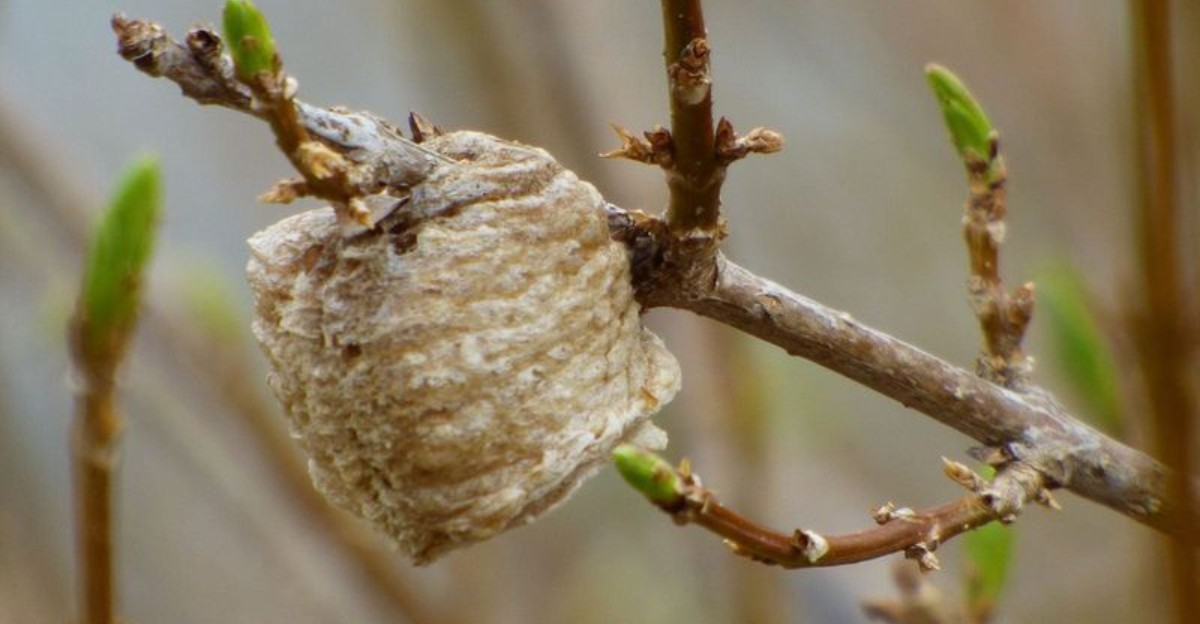
One crusty brown lump on a bare lilac twig can hold a couple hundred sleeping babies. Each one waits out winter inside a shell made of hardened foam.
I spotted my first one while pruning a spirea in my Minnesota yard in late fall. It looked like a toasted marshmallow somebody glued to the branch, and I almost snipped it off without a second look.
My hand froze when I noticed how neatly it was layered. Turns out the mother built it in a single session, whipping liquid into froth that stiffened in the open air.
Gardeners across Minnesota keep finding these odd clumps now that leaves have dropped and stems sit in plain view. You might notice one at eye level on a shrub you walk past every single day.
So what is tucked inside, and should you cheer, worry, or grab the pruners? The real answer is a little more layered than most people expect.
That Toasted Marshmallow on Your Lilac Twig Has a Mother

Most people find their first one in November or March, when bare branches give nothing a place to hide.
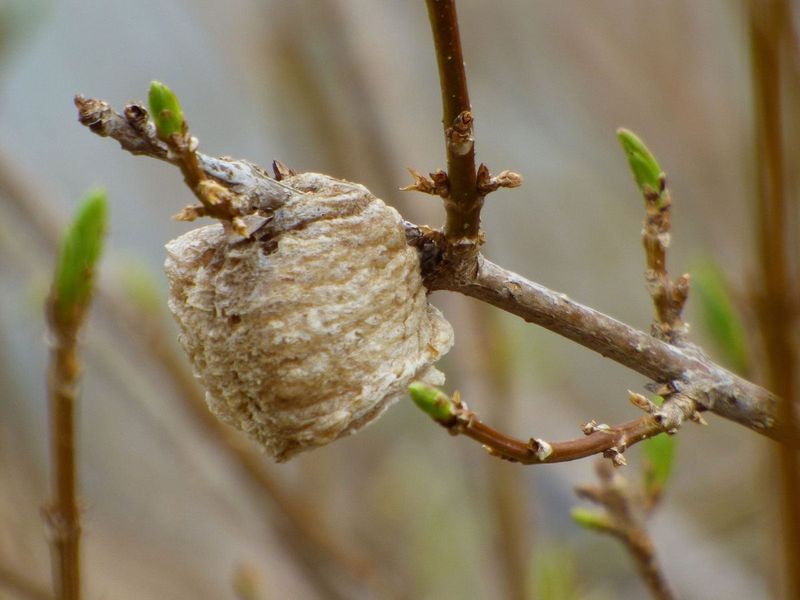
The clump sits snug against a twig, tan and slightly ridged, about the size of a walnut or golf ball. It feels firm, almost like styrofoam, not soft or sticky.
You are looking at an ootheca, the egg case of a praying mantis. A female builds it in fall, usually September or October, right before cold weather ends her season.
She pumps out a frothy liquid from the tip of her abdomen and lays eggs in rows inside it. That foam hardens within hours. It traps tiny pockets of air, which work like insulation, and it shields the eggs from wind, ice, and many hungry birds.
Adult mantises do not make it through a northern winter, so this case is the only way the next generation reaches spring.
I find it a little touching. Mom won’t meet her kids, yet she picked a sturdy stem a few feet off the ground and built them a winter coat.
Your shrub is not being harmed. It is simply serving as an anchor for a very small nursery until warm weather returns.
Praying Mantis Egg Cases Hold Hundreds of Tiny Hatchlings
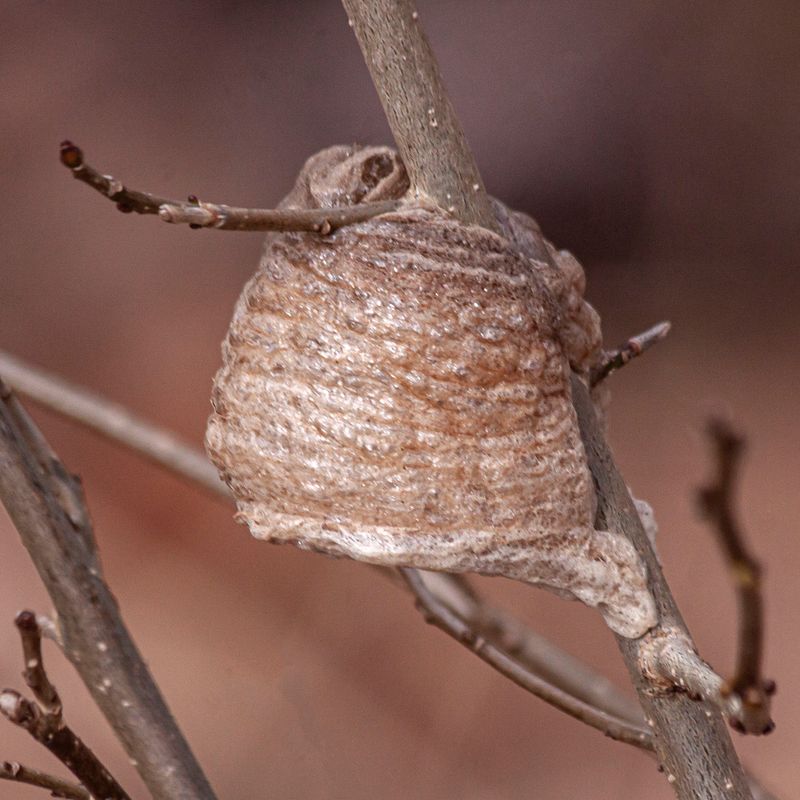
Brace yourself for the jaw-dropper. A single Chinese mantis case can hold somewhere between 100 and 300 eggs, and some counts top 400.
European mantis cases usually carry fewer, often several dozen to around 200. The eggs sit in tidy chambers, layered like seats in a tiny stadium. Nothing happens all winter.
Once spring temperatures stay warm, usually late May into June in Minnesota, the nymphs wriggle out through a seam along the top of the case.
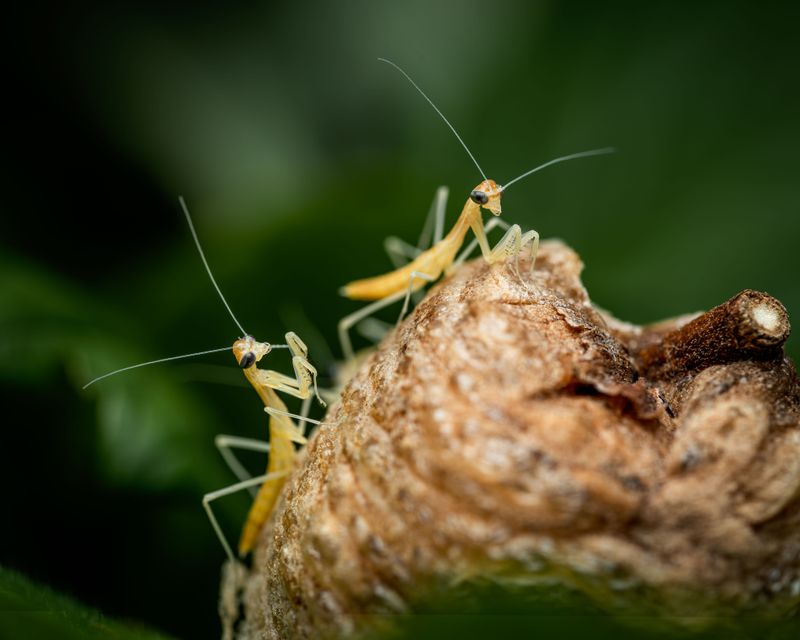
Hatching day is quite a sight. The babies pour out over an hour or so, each about a quarter inch long, dangling on silky threads before they find their footing.
They look like miniature adults without wings, pale at first and darkening within a few hours.
Don’t expect hundreds of mantises patrolling your yard by August, though. The nymphs scatter fast, and many become snacks for spiders, ants, birds, and even their own siblings.
Only a handful from each case usually reach adulthood. Want to catch the show yourself? Check the case every few mornings in late spring.
Bring a magnifying glass and some patience, because emergence often wraps up quickly once it starts.
Chinese and European Mantises Leave Differently Shaped Egg Cases
Mantis watchers in the Upper Midwest mostly run into two species, and neither one is native here. The Chinese mantis and the European mantis both arrived from overseas, partly through garden supply sales over the past century.
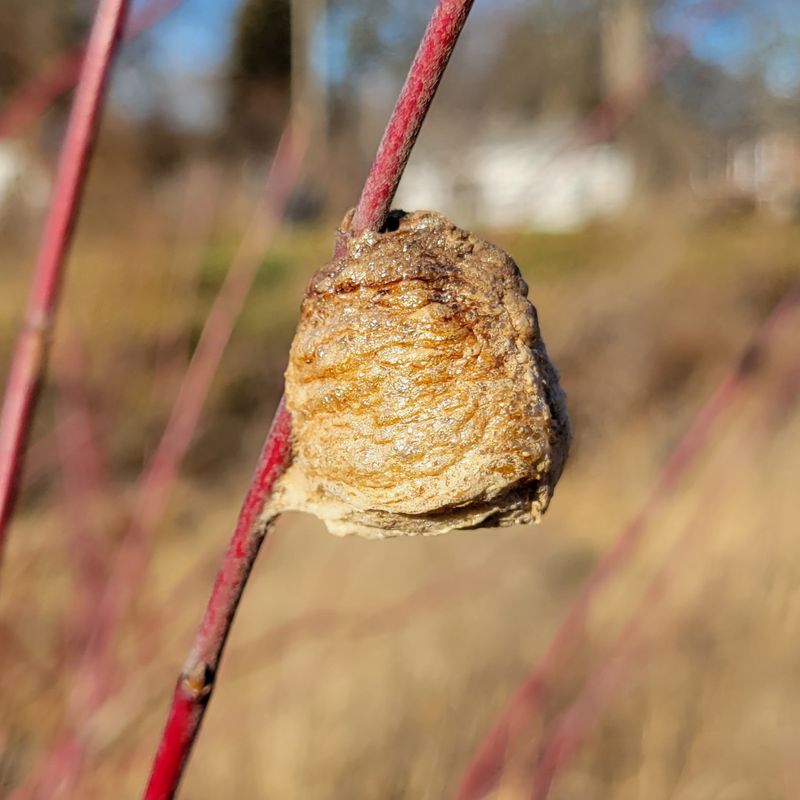
A Chinese mantis case is the classic foamy brown clump. It is roundish, about an inch or a bit more across, light tan, and usually wrapped around a twig or stem. Shrubs, tall perennials, and ornamental grasses are favorite spots.
European mantis cases look different. They are smaller, more oblong, and flatter, with a rougher, slightly darker surface.
Females often tuck them on fence posts, house siding, rocks, or low stems close to the ground.
Telling them apart hints at what will show up next summer. Adult Chinese mantises can stretch to four inches long and come in green or tan.
European mantises are smaller and often sport a black-ringed spot on the inner front leg, a neat detail you can catch with a close look.
Snap a photo of any case you find so you can compare it later. Fun fact for the kids: the European mantis is the official state insect of Connecticut, even though it is an import there too.
Leave the Mantis Egg Case Outside on the Shrub
A pretty egg case on a nature table sounds charming until warm indoor air tricks it into hatching in February. Suddenly you have a couple hundred tiny mantises climbing your curtains with nothing to eat.
Trust me, that is a cleanup nobody enjoys. The eggs actually need a long stretch of cold. Winter chill keeps them dormant and sets their internal clock so they hatch when spring insects appear for food.
Snow, ice, and subzero nights are part of the plan, not a threat. A garage or porch is not a great compromise either. Temperatures swing up and down there, which can confuse the timing or dry the case out.
So the easiest move is to do nothing. Leave the branch where it is and skip pruning that particular stem this year.
If you trim shrubs in early spring, tie a bit of bright yarn nearby so you remember which twig to spare.
Hold off on spraying dormant oils or insecticides right on the case. Those products are meant for pests, and the foam shell offers only so much protection. Let birds, weather, and time handle the rest until the nymphs make their exit.
Hungry Mantis Nymphs Don’t Pick Favorites in the Garden
Mantises have a reputation as garden bodyguards, and it is only half earned. They are generalist predators, which means they grab whatever moves within reach. Aphids, caterpillars, flies, and grasshoppers are on the menu.
So are bees, butterflies, lady beetles, and other helpful insects. A mantis parked on a coneflower is just as happy to snag a bumblebee as a pest.
Larger Chinese mantises have even been documented catching hummingbirds now and then, which surprises plenty of bird lovers.
Young nymphs start small, eating tiny insects like aphids and fruit flies. As they molt and grow through summer, their targets get bigger. By late August, adults sit motionless on flowers and wait for visitors.
University entomologists generally agree that mantises are fun to watch but not dependable pest control. One mantis eats a modest number of insects, and it does not single out the ones damaging your plants.
For that reason, many experts advise against buying egg cases to release. My take is simple. Enjoy them as fascinating guests, and keep realistic expectations.
Your best pest helpers are still a mix of birds, native lady beetles, lacewings, and parasitic wasps that thrive around diverse plantings.
Spongy Moth Egg Masses and Spittlebug Foam Can Fool You
Not every brown or foamy blob is a mantis nursery. A few lookalikes show up in yards, and one of them deserves a call to the state.
Spongy moth egg masses are the big one to know. They are flat, fuzzy, and buff to tan, roughly one to two inches long, and stuck to tree bark, firewood, or outdoor furniture rather than wrapped around a twig.
Females lay them in mid to late summer, and each holds hundreds of eggs. This invasive moth strips leaves from oaks and many other trees.
The Minnesota Department of Agriculture tracks it closely, especially in the northeast, and asks residents to report suspected egg masses.
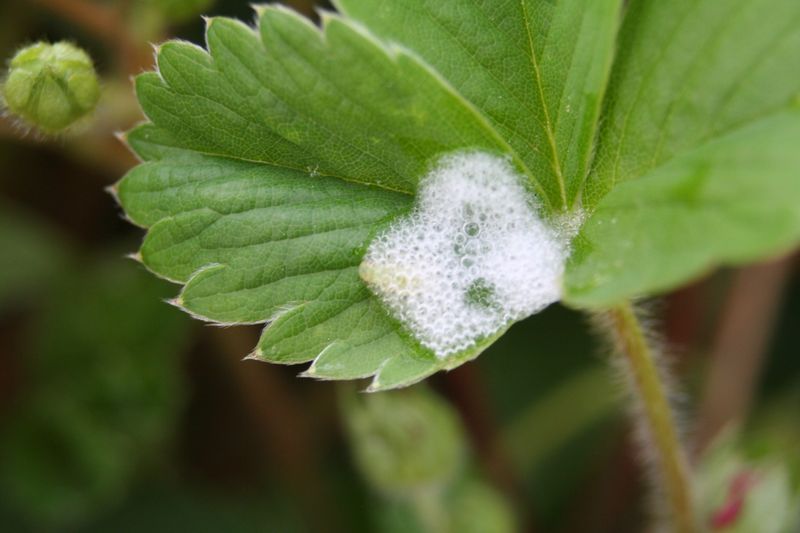
Spittlebug foam is another common mix-up. It is white, wet, and bubbly, sitting on stems in late spring and early summer.
A small green nymph hides inside, sipping plant sap, and it rarely causes serious harm. Eastern tent caterpillar eggs look different again. They form a dark, shiny band circling a cherry or apple twig.
Quick rule of thumb: hard and tan on a twig in winter points to a mantis. Fuzzy and flat on bark deserves a closer look.
Moving a Mantis Egg Case Safely When the Shrub Needs Pruning
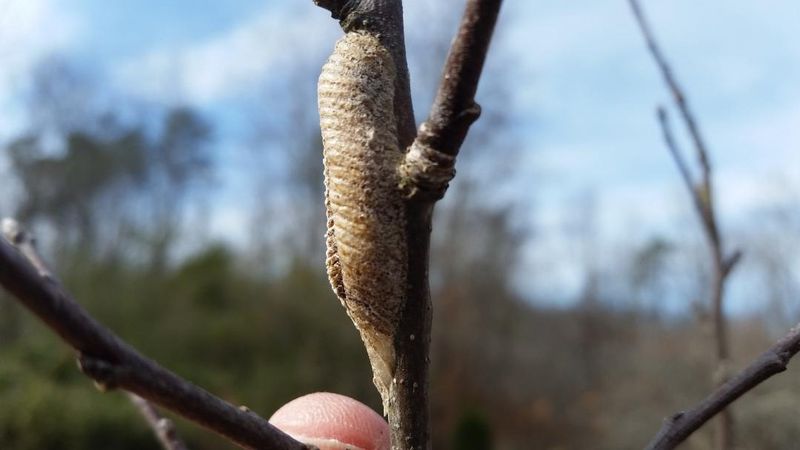
Sometimes that egg case lands on the exact branch you planned to cut. Maybe the shrub is coming out, or the stem is broken. You can relocate it without much fuss.
Clip the twig several inches below the case so you never touch the foam itself. Then find a protected spot in another shrub, two to four feet off the ground.
Tie the twig in place with soft garden twine, keeping it in the same upright position it had before.
Avoid setting the case on the ground or in a pot of soil. Ants, mice, and moisture can ruin it there. An evergreen or dense deciduous shrub gives good shelter from wind and curious birds.
Now for the bigger picture. Because Minnesota mantises are not native, there is no reason to buy more cases or spread them around. Simply let the ones already in your yard be.
If you want more natural pest control, plant native flowers like coneflower, bee balm, and goldenrod. They feed pollinators and attract a wide team of predatory insects. Then grab a cup of coffee this spring and watch that tiny brown clump burst into life.