Fuzzy White Caterpillars Keep Turning Up On Missouri Sidewalks
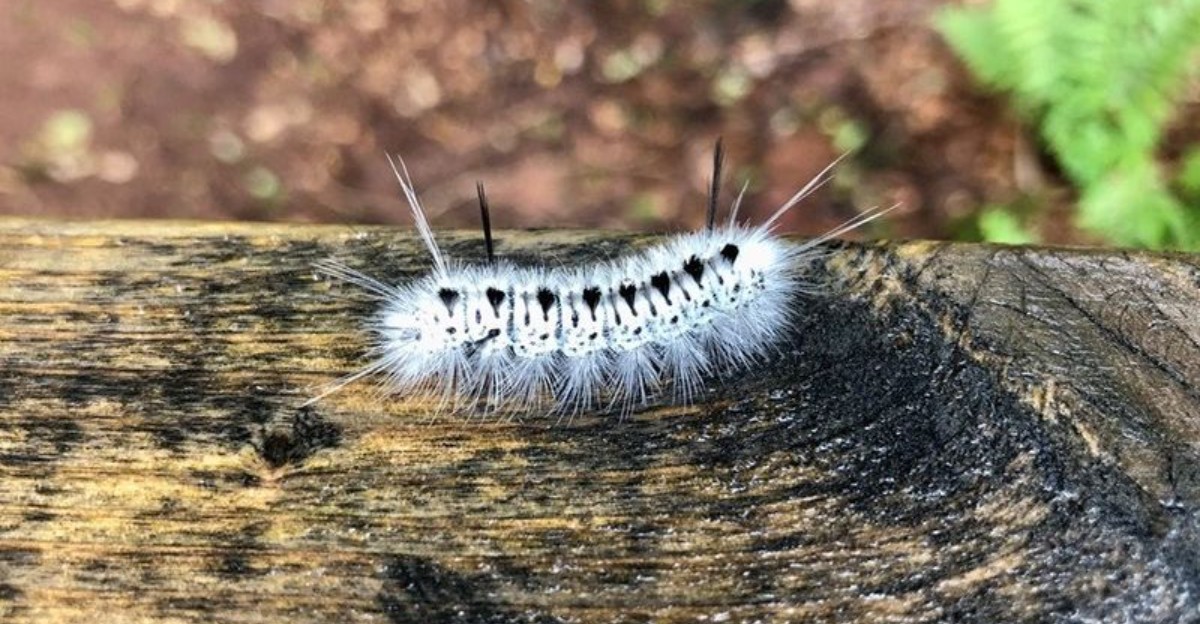
A fuzzy white caterpillar can crawl across a sidewalk looking like a tiny wandering cotton ball. Many Missouri residents spot them from late summer into fall, often moving with surprising speed.
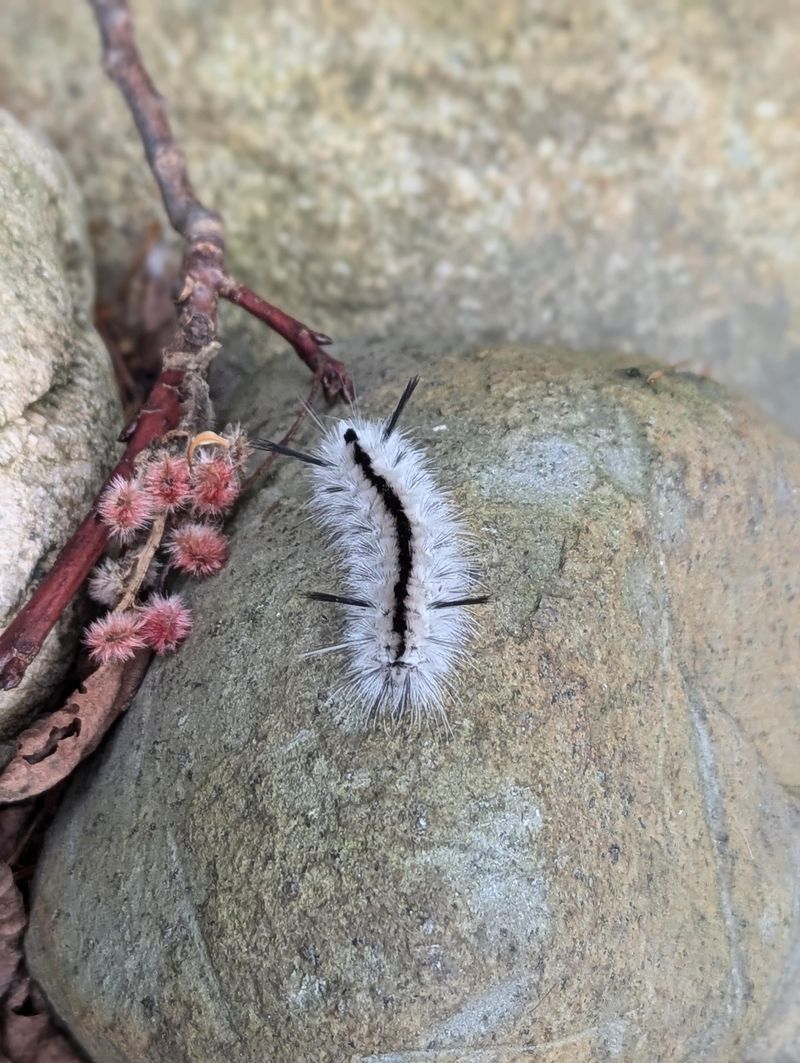
Their bodies are covered in soft white tufts, and some carry a neat row of black tufts down the back. Up close, they look less like insects and more like something that slipped out of a pillow.
I find it fun that a creature so small can make people stop and stare. You can often see one pausing on a cool driveway in the afternoon, as if it is checking for traffic.
Neighbors snap photos, and kids crouch down for a closer look. Meanwhile, the caterpillar carries on as if it has somewhere important to be.
For a creature with no map and very short legs, it moves with impressive confidence. Honestly, its sense of direction could rival a few GPS apps.
They Are Searching For A Sheltered Spot To Transform
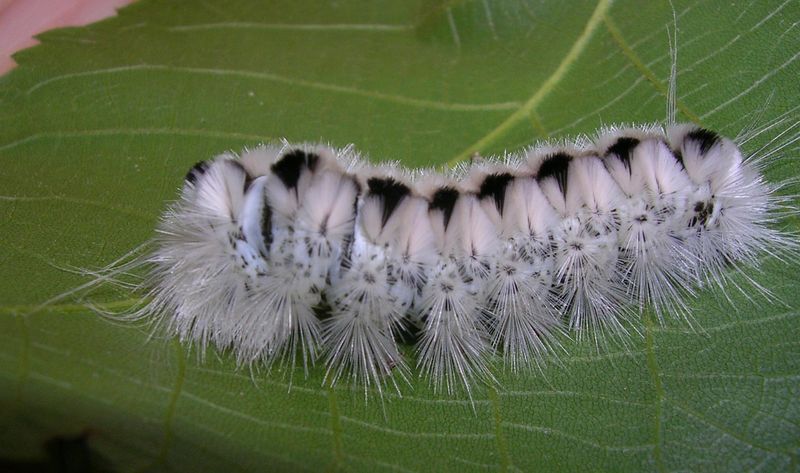
Last fall, a friend sent me a photo of a white fuzzy caterpillar hurrying along her driveway. It turned out to be a hickory tussock moth caterpillar, and it was not out for a casual stroll.
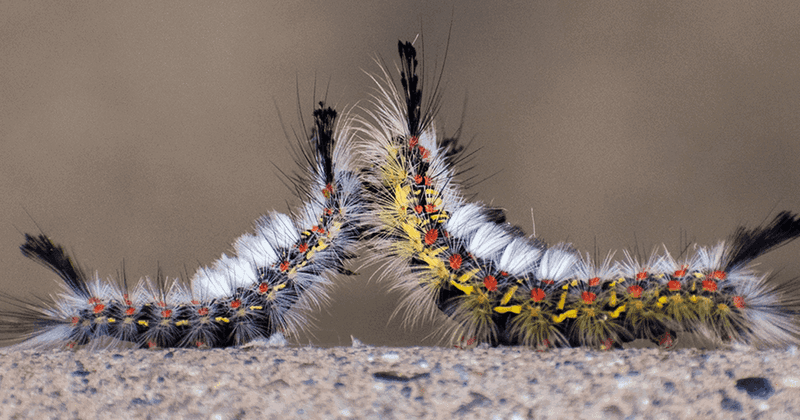
Despite its name, this species belongs to the tiger moth group rather than the true tussock moths. Other pale, fuzzy crawlers, such as the American dagger moth caterpillar, can look similar at a glance.
By fall, many of these caterpillars have finished eating and are ready to pupate, which means entering the resting stage before becoming a moth. They leave the trees and wander across open ground in search of cover.
Good hiding places include leaf litter, loose bark, fence posts, and the edges of woodpiles. Because pavement is open and bare, you notice them on a sidewalk far more than you would in thick grass.
For their size, these caterpillars can travel quite far. The one on your walkway may have started its trip several yards away, so they sometimes turn up a surprising distance from the nearest tree.
University extension offices in the Midwest describe this wandering as normal late-season behavior. Seeing several in one week usually just means a nearby tree hosted a group of them over the summer.
If you spot one, give it room and let it keep going. Watching it pass by can be a neat little fall science lesson for the whole family.
The Bristly Hairs Can Irritate Sensitive Skin
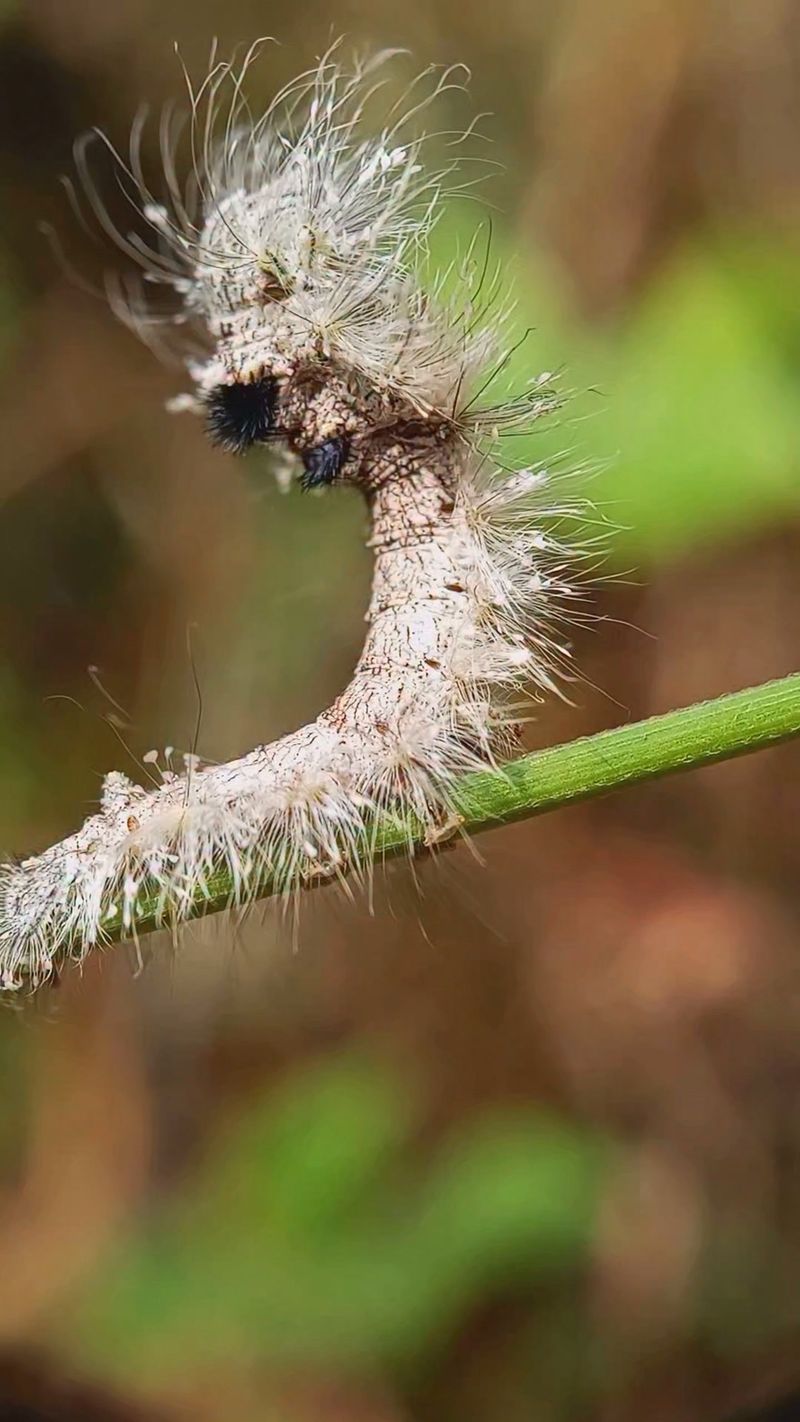
Soft as they look, those white tufts deserve a little respect. The hairs on hickory tussock moth caterpillars can cause an itchy rash on some people.
Reactions vary a lot from person to person. Some folks feel nothing at all when they pick one up, while others notice red, bumpy skin within minutes.
People with sensitive skin may react more strongly, and children are more likely to pick one up out of curiosity. The safest plan is to look without touching.
The hairs are tiny and can break off easily. They may cling to clothing, pet fur, or a gardening glove, so a caterpillar does not need to be held to leave a few behind.
Your Missouri Garden Changes Every Week. Your Plan Should Too.
Gardening in Missouri changes quickly throughout the season. Every Friday you’ll receive a simple weekly plan showing exactly what to plant, prune, fertilize, harvest, and protect so you never miss the right timing.
If you brush against one by accident, press sticky tape on the spot to lift stray hairs, then wash with soap and water. Try to avoid scratching, since it can spread the irritation.
Extension specialists note that most reactions are mild and fade within a few days. If swelling spreads or the rash gets worse, check with a doctor. Any trouble breathing calls for prompt medical care.
Keep hands away from your eyes after any contact, since the hairs can irritate them as well. Rinsing with clean water is a sensible first step if that happens.
It also helps to teach kids a simple rule: caterpillars are for watching. A phone camera makes a great substitute for a small hand, and everyone stays comfortable.
Hickory Trees Are Among Their Favorite Feeding Spots
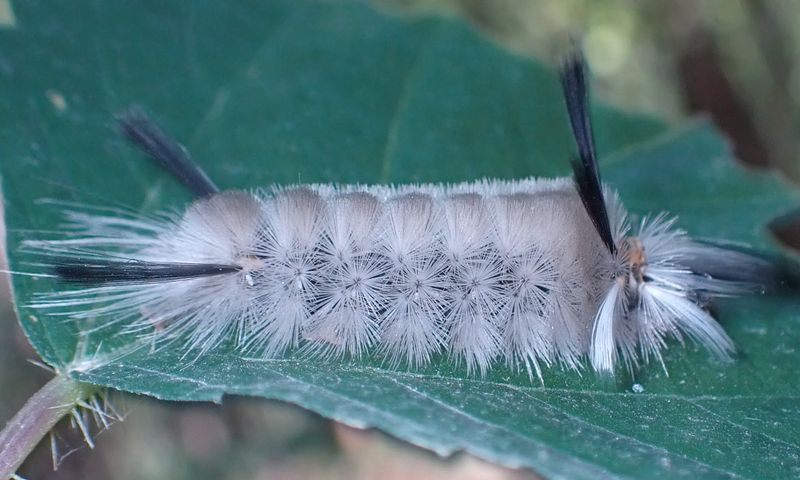
Hickory is right there in the name of the hickory tussock moth. Its caterpillars chew on hickory leaves, and they also feed on walnut, pecan, ash, elm, oak, and several other hardwoods.
Missouri has plenty of these trees. They grow in woodlands, along streets, and in backyards across the state, so a hardwood is often standing nearby when a pale caterpillar turns up on a walkway.
Shagbark hickory and black walnut are especially familiar sights in Missouri woods. Both are native to the state, and both turn up in plenty of older yards and neighborhoods as shade trees.
A quick look overhead can solve the mystery. Check the leaves for ragged edges or small holes, and look at the undersides, where late feeders may still be resting in the shade.
Young caterpillars feed in groups and often chew away the soft leaf tissue, leaving a lacy web of veins behind. Older ones tend to spread out and eat whole sections of the leaf on their own.
Feeding usually peaks in late summer and early fall, when the caterpillars reach full size at about 1.5 inches long. By October, most have eaten their fill and started to wander toward winter shelter.
Try tracing the path back from the sidewalk to the nearest hickory or walnut. It is a fun little detective game for a family afternoon, and the answer is often closer than you expect.
Mature Trees Typically Shrug Off The Leaf Damage
Chewed leaves can look worrying, but big healthy trees are tougher than they seem. Most mature hardwoods handle a bit of caterpillar feeding without any lasting trouble.
The reason is timing. Feeding happens late in the growing season, when the tree has already stored most of the energy it needs, and the leaves will drop soon anyway.
Hickory tussock moths also usually produce just one generation a year in Missouri. That means a tree faces a single round of feeding each season rather than repeated waves.
Young or stressed trees can be a different story. A small sapling with limited leaves may take a bigger setback, especially after a dry stretch, though a few caterpillars rarely cause serious harm.
Extension guidance generally says spraying is not needed for these insects on large trees. Chemicals can also harm helpful insects like pollinators and the predators that feed on caterpillars.
Parasitic wasps, tachinid flies, and a few birds, such as cuckoos, help keep caterpillar numbers in balance. Many birds avoid hairy caterpillars, so these specialists do much of the work.
The best fall care is simple. Water young trees if the weather turns dry, rake leaves as usual, and keep an eye on overall health.
If a tree seems to struggle year after year, a certified arborist can take a look. Repeated stress often points to other issues, such as drought, soil problems, or root damage.
A Silk Cocoon Laced With Hairs Carries Them Through Winter
Nature has a clever winter blanket for these crawlers. Once a caterpillar finds shelter, it spins a silk cocoon and weaves its own body hairs right into the wall.
The finished cocoon looks like a small, fuzzy, grayish-brown oval. It usually sits in leaf litter, under loose bark, or tucked beneath debris near the ground.
Inside, the caterpillar changes into a pupa and rests through the cold months. A pupa does not eat, so winter is a slow, quiet stretch of waiting.
Those woven-in hairs add a layer of protection, since the bristles may discourage some predators. It is a neat bit of natural engineering made from materials the insect already had.
When warm weather returns, the adult moth emerges, usually in late spring or early summer. It has tan wings marked with pale cream spots and flies at night, often drawn to porch lights.
Females lay eggs on the undersides of host tree leaves, and a new group of caterpillars hatches in summer. The cycle then repeats on the same kinds of hardwoods.
If you find a cocoon during fall cleanup, you can leave it where it is. Moving it is rarely needed, but if it sits right where you work, relocate it gently with gloves.
The hairs in the cocoon wall can still irritate skin, so treat it with the same care as the caterpillar itself. A nearby leaf pile makes a fine new spot.
Gloves Or A Broom Move Them Off Walkways Safely
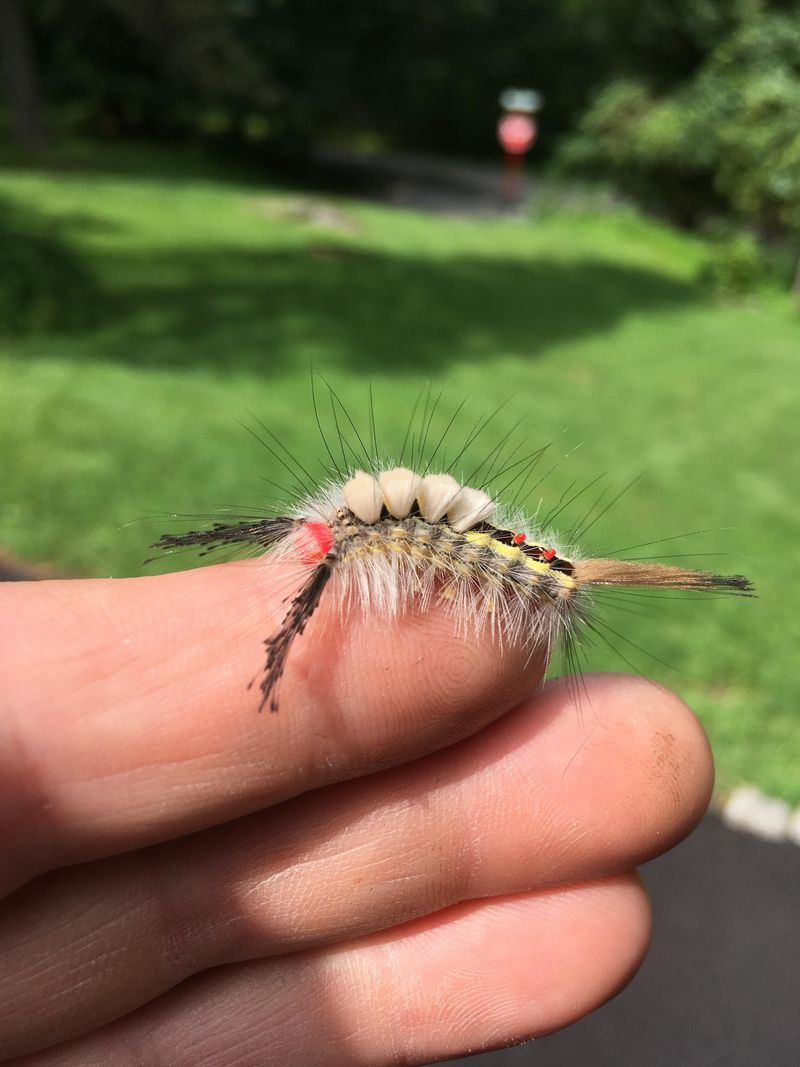
Need to clear the path without a fuss? A little gentle help goes a long way, and the whole job takes only a moment with the right tool.
Skip bare hands and grab a pair of garden gloves instead. A soft broom, a dustpan, a stick, or a folded piece of paper works nicely too.
Slide the caterpillar onto the tool and carry it a few feet away from foot traffic. Move slowly, since a sudden flick can send it tumbling back onto the pavement.
Set it down on leaves, mulch, or the base of a tree. That gives it a fresh start near cover, which is exactly what it is looking for.
Wash your hands and any tools afterward, even if you wore gloves. Hairs can linger on fabric, so shake out gloves outside before storing them.
Pets are curious, so keep dogs and cats from sniffing or licking the caterpillars. A pet that mouths one may drool or paw at its face, so call the vet if that continues.
Spraying is not needed for a few wandering caterpillars. These insects pose little risk when left alone, and they will soon settle in for the winter.
A kind nudge keeps your walkway clear and gives the caterpillar a fair chance to finish its autumn journey. Come early summer, it may turn up again as a moth near the porch light.