Fuzzy Black-And-Orange Caterpillars Crossing Missouri Driveways Are Searching For Winter Shelter
A fuzzy caterpillar crossing your driveway in October can freeze solid this winter and still crawl away in spring. Its body makes a natural antifreeze that protects its cells while ice forms in the spaces between them.
I love that the hurried crawl you see in Missouri this month is a search, not a random stroll. These caterpillars mostly stop eating in fall and hunt for leaf litter, loose bark, or rock crevices.
People have tried to read the coming winter in their black and orange stripes for generations. Scientists say the band widths mostly reflect the caterpillar’s age and growing conditions, not snowfall ahead.
It helps to slow down on gravel lanes and paved drives during warm October afternoons. I believe a tiny animal that can spend winter as a frozen bead deserves a little room, don’t you?
A Search For Leaf Litter Or Loose Bark Before Winter
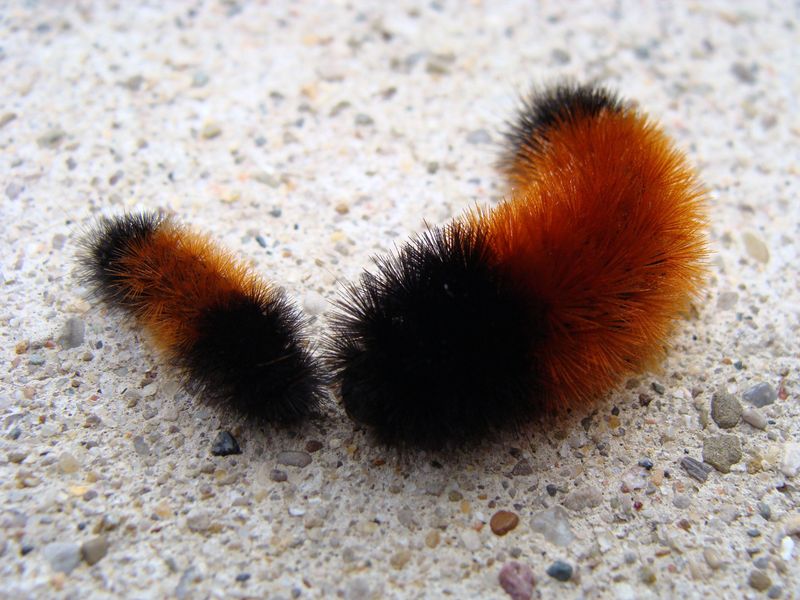
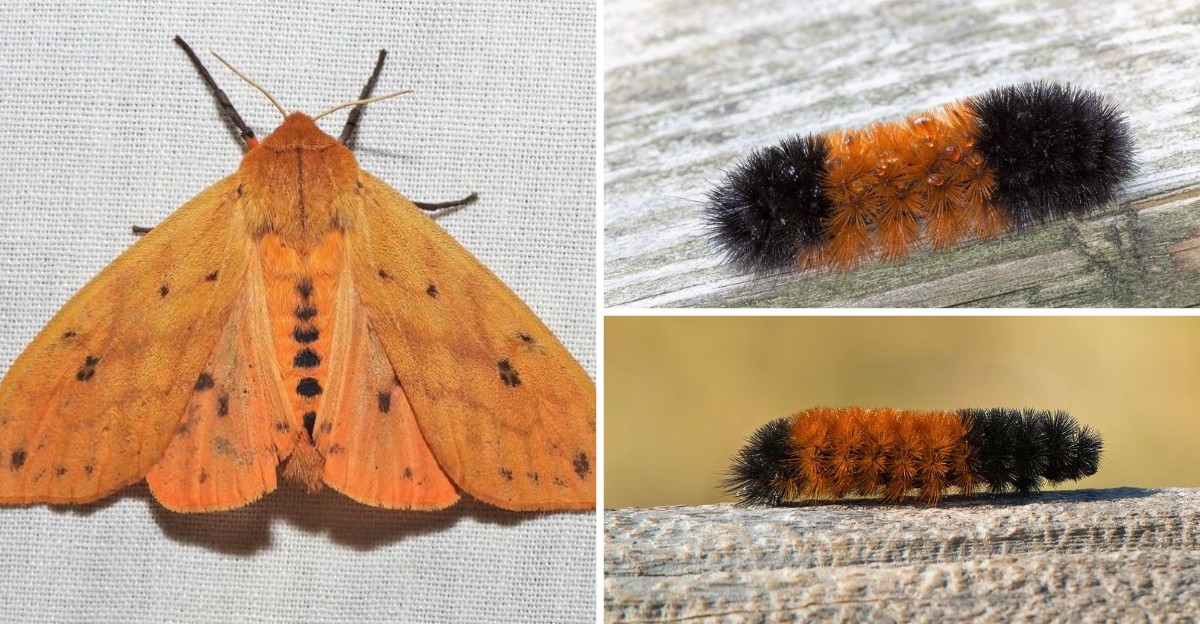
That fuzzy wanderer on your driveway is most likely a banded woolly bear, the larva of the Isabella tiger moth. Its scientific name is Pyrrharctia isabella, and it lives across Missouri in fields, yards, and woodland edges.
In fall, these caterpillars have finished most of their feeding and start searching for a protected spot. They are not heading anywhere in particular, so the road or driveway is simply part of their path.
Good shelters include thick leaf litter, loose bark on logs, hollow stems, and gaps under flat rocks. These places block drying winds and keep the caterpillar from sitting out in open, exposed ground.
Woolly bears move surprisingly fast for their size, which is why you notice them crossing warm pavement. Sunny October afternoons warm their bodies, giving them energy to travel farther before cold nights slow them down.
Extension experts describe them as some of the most familiar caterpillars people spot during a Missouri autumn. Kids often pick them up, and the caterpillar may curl into a tight, bristly ball for protection.
Their bristles look sharp, but they mostly feel soft and are not known to sting people. A few sensitive people get mild skin irritation, so washing hands after handling one is a smart habit.
If you find one on the driveway, gently move it to a leafy bed in the direction it was traveling. That small favor spares it a long crossing over the pavement and puts it close to winter cover.
A Body That Can Freeze Solid Then Thaw In Spring
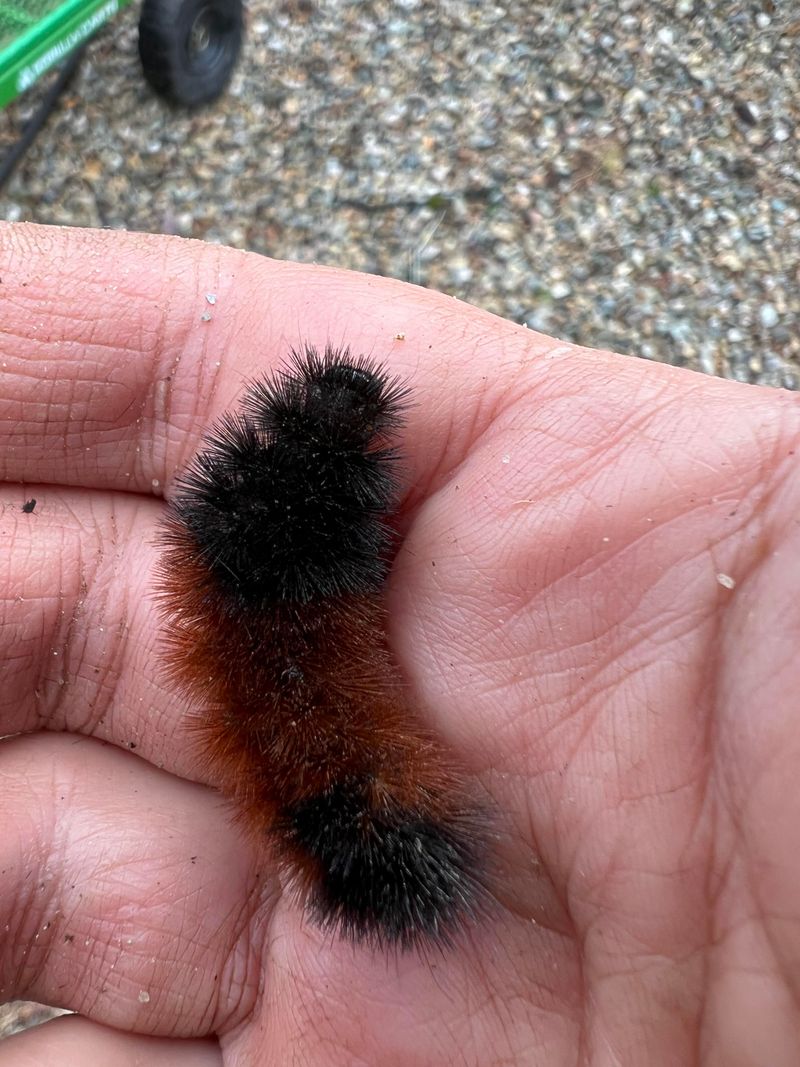
Few animals can turn into a small chunk of ice and wake up months later as if nothing happened. Woolly bears are freeze tolerant, which means they survive ice forming inside their bodies through a Missouri winter.
The trick is a natural antifreeze called glycerol, which the caterpillar builds up as days get colder. Glycerol helps protect the cells, so ice forms mostly in the spaces around them instead of inside.
Researchers have found that the caterpillar’s body functions pause while it sits frozen under the leaves. It simply waits for warmer weather to return.
Your Missouri Garden Changes Every Week. Your Plan Should Too.
Gardening in Missouri changes quickly throughout the season. Every Friday you’ll receive a simple weekly plan showing exactly what to plant, prune, fertilize, harvest, and protect so you never miss the right timing.
Far to the north, an Arctic caterpillar cousin may freeze and thaw through several winters before finishing its growth. Missouri woolly bears usually need just one winter, since our longer growing season lets them feed quickly.
Leaf litter matters here because it softens sudden temperature swings that can stress a frozen caterpillar. A thin blanket of leaves also keeps it from drying out on windy days in January and February.
If you uncover one while raking in winter, it may look stiff and motionless to you. Gently cover it back up with leaves, because it is likely just resting until spring warms the ground.
When March and April bring warm days, the caterpillar thaws, wakes, and nibbles a little fresh greenery. Soon afterward it spins a fuzzy cocoon, using its own bristles as part of the silky wall.
The Tawny Moth It Becomes By Summer
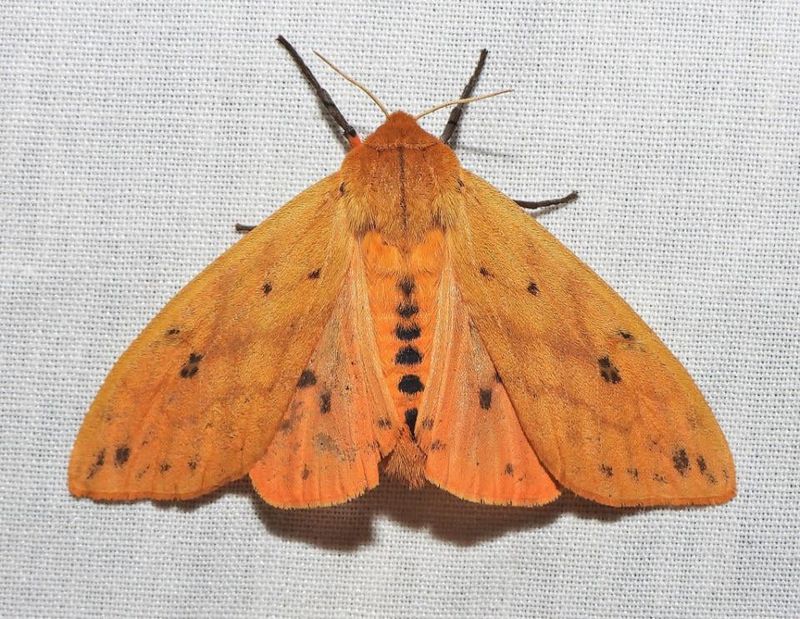
Most people who adore the fuzzy caterpillar walk right past the adult moth without a second look. The Isabella tiger moth has dull yellow to orange-tan wings sprinkled with a few small dark dots.
Its wingspan measures roughly two inches, which makes it a medium-sized moth among Missouri’s many species. The body is fairly stout, and some moths show faint orange on the front legs or abdomen.
After a couple of weeks inside the spring cocoon, the moth crawls out and dries its new wings. Adults fly mostly at night and are often drawn to porch lights during warm late spring evenings.
Females lay eggs on low plants, and a new batch of caterpillars hatches to feed through summer. In parts of Missouri there may be two generations a year, and the later one faces winter.
Woolly bears are not picky eaters, which helps explain how common they are in yards and fields. They munch plantain, dandelion, clover, grasses, and many other low weeds, and they rarely bother prized garden plants.
Extension entomologists rarely consider them pests, since the damage they cause is usually small and scattered. You can enjoy watching them without much worry for your vegetables or flower beds.
Next summer, try checking your porch light for a tawny moth with tiny dots on its wings. Spotting one is a fun way to connect the fuzzy driveway traveler with its grown-up, winged form.
Old Weather Folklore Tied To The Orange Band
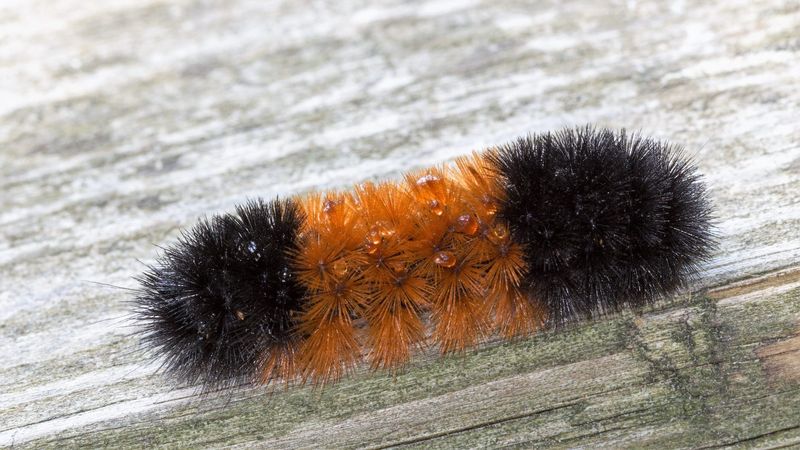
Grandparents across Missouri have long studied woolly bears the way some people study the evening sky. The old saying claims a wide orange band means a mild winter, while a narrow one warns of hard cold.
Some versions go further and split the caterpillar into 13 sections that match the weeks of winter. Black at the front supposedly means a harsh early winter, and black at the back predicts a rough ending.
The legend got a boost in the late 1940s from Dr. C. H. Curran, a museum entomologist in New York. He counted band widths on a small number of caterpillars, and a newspaper story made his findings famous.
Curran himself admitted the study was mostly for fun and that his sample was far too small. Still, the idea stuck, and several towns now hold woolly bear festivals each fall to celebrate the tradition.
I think the folklore lasts because it gives families a reason to slow down and look closely at nature. Kids love comparing caterpillars and making their own winter guesses on the walk to the school bus.
For real winter outlooks, the National Weather Service and its Climate Prediction Center offer seasonal forecasts online. Those predictions use ocean patterns and computer models, not stripes, but they still carry plenty of uncertainty.
Feel free to keep the caterpillar tradition alive as a fun family game during this October. Just treat the result as a cheerful guess and check the official forecast before planning winter trips.
The Real Reason Band Widths Vary
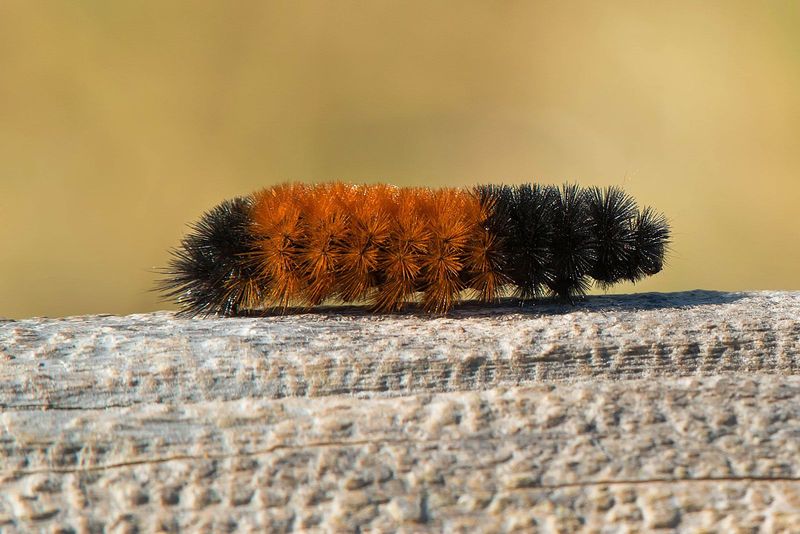
Scientists who study woolly bears point to age, not weather ahead, as the main reason stripes look different. Each time the caterpillar molts, its orange middle band usually grows wider and the black ends get shorter.
Woolly bears molt about six times, so an older caterpillar often carries more orange bristles. A younger one, or one that hatched late in summer, may still show mostly black on its body.
Food and growing conditions matter too, because a long, warm season gives caterpillars more time to grow. Research suggests the band can reflect conditions during the past season, which is the opposite of a forecast.
Genetics plays a role as well, since two caterpillars from the same yard can look surprisingly different. Even siblings from one batch of eggs may end the fall wearing slightly different color patterns.
You may also spot caterpillars that are all black, all yellow, or even pale white crossing Missouri roads. Many of those belong to other tiger moth species, such as the giant leopard moth or yellow woolly bear.
A fun experiment is to photograph several caterpillars in October and compare their band widths side by side. You will likely notice wide variety, which shows that one fuzzy traveler cannot speak for a whole season.
Keep notes on dates, locations, and stripe sizes if your kids enjoy a little backyard science. Platforms like iNaturalist let you share sightings, and those records help researchers track where these caterpillars appear.
Leaf Piles Worth Leaving Along Fence Lines
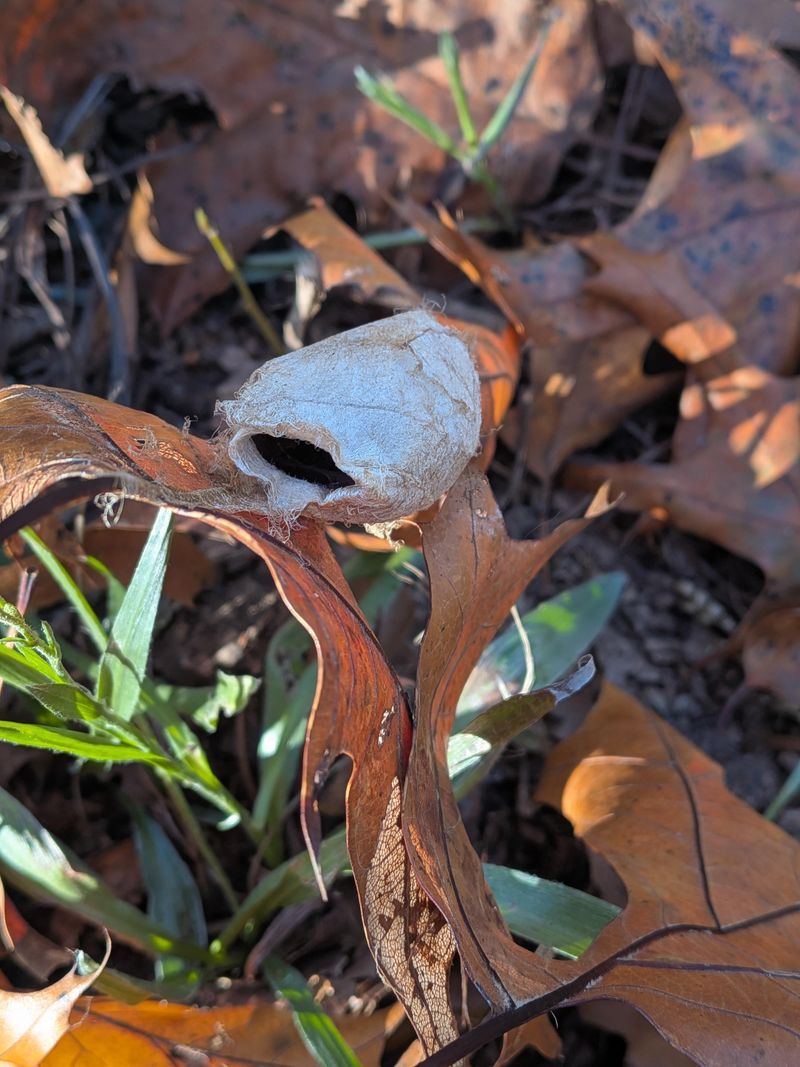
Raking every leaf off the property feels tidy, yet it can leave overwintering insects with nowhere to hide. A modest pile along a fence line or under shrubs gives woolly bears a ready shelter close by.
University extension services often suggest leaving some leaves in garden beds and on the edges of yards. Leaves break down slowly, adding organic matter to the soil while sheltering beetles, bees, and moth larvae.
Thick leaves on the lawn itself can smother grass, so you still need to manage the open turf areas. Mow or rake leaves off the lawn, then move them into beds where they do some good.
A layer about two to four inches deep works well for insects and still lets perennials push through in spring. Oak, maple, and other mixed leaves are fine, and shredding is optional if you want a neater look.
Loose bark, a fallen log, or a small brush pile in a back corner also makes a welcome winter hideout. Keep these spots away from your house foundation so they do not invite unwanted pests indoors.
Try waiting to clean beds until spring temperatures stay above about fifty degrees for several days in a row. That delay gives frozen caterpillars and other insects time to thaw, wake up, and move along naturally.
I like knowing a messy fence line might hold a sleeping woolly bear waiting out the Missouri cold. Your small pile of leaves could become the launch pad for a tawny moth next summer.