Green Fruit The Size Of Grapefruit Is Dropping Along Missouri Roadsides
Drive almost any gravel road in Missouri this October and you might hear a solid thud overhead. Something heavy just dropped out of the branches above, and it is definitely not a black walnut.
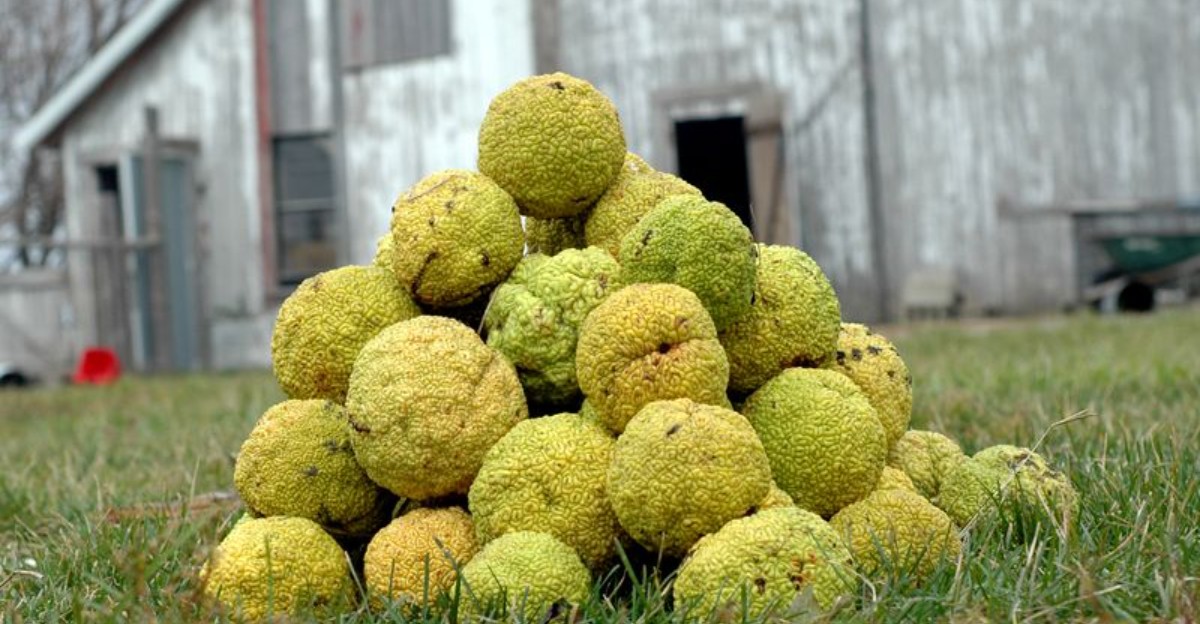
The ground beneath certain old fencerows looks like somebody spilled a whole crate of wrinkled green softballs. They roll into ditches, bounce off mailboxes, and sit there smelling faintly of orange peel.
Country folks have hauled them into basements for generations, convinced the things chase spiders far away. Squirrels shred them apart for the seeds inside, while cattle usually give them one suspicious sniff.
The tree responsible for it all fenced the whole prairie, back before barbed wire existed. Its fruit still arrives every autumn, unpaid and uninvited, like a cousin with too much luggage.
Hedge Apples From The Osage Orange Tree
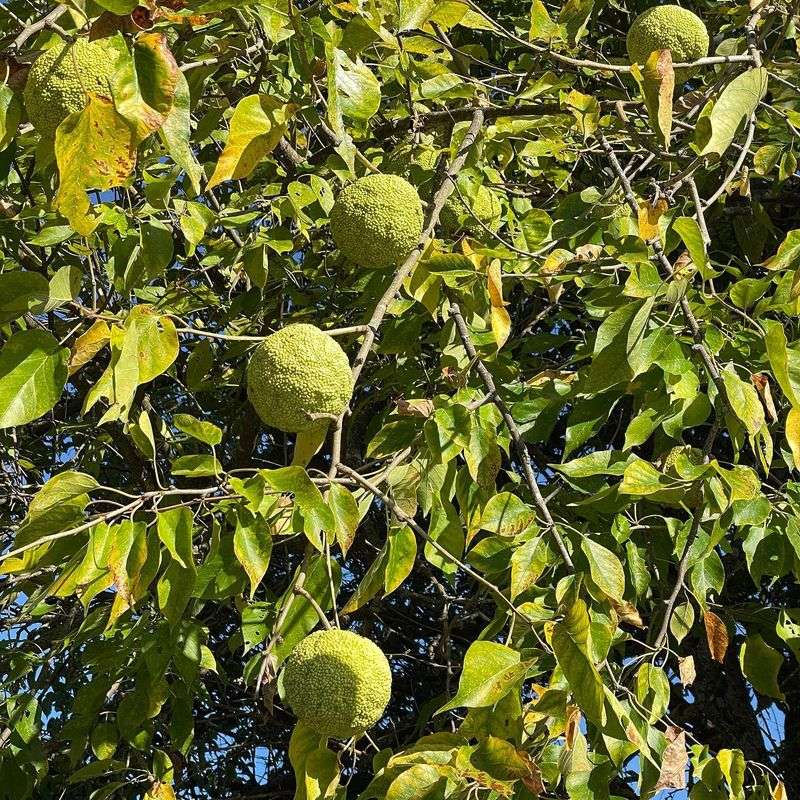
Missouri’s mystery fruit finally has a name, and it belongs to a scrappy tree called Osage orange. Around here folks also call it hedge apple, horse apple, bodark, or just plain hedge.
The fruit itself is a bumpy green sphere, roughly the size of a grapefruit or a softball. Break one open and sticky white sap oozes out, which can irritate skin on sensitive hands.
Each hedge apple is really a cluster of hundreds of tiny fruits fused tightly into one ball. Dozens of flat seeds hide inside, and squirrels will spend all afternoon digging them out.
The tree rarely wins prizes for beauty, since its branches twist into thorny, stubborn, low tangles. Freshly cut wood glows a shocking bright orange before weathering into a rich chocolate brown.
Botanists file it under the mulberry family, which surprises anyone expecting some long lost citrus cousin. The smell leans faintly orange, yet nothing about the flesh works as human food.
Trees grow as separate males and females, so only the female trees ever produce fruit. One mature female can release several hundred heavy green spheres during a single autumn.
Missouri sits close to the tree’s original home range near the Red River of Texas and Oklahoma. Settlers hauled it everywhere, which is exactly why our roadsides look so generously littered today.
Once you learn the shape, you will spot these trees along old property lines everywhere. Missouri roadsides hide more of them than most drivers ever consciously notice.
Autumn Drop Season Along Missouri Fencerows
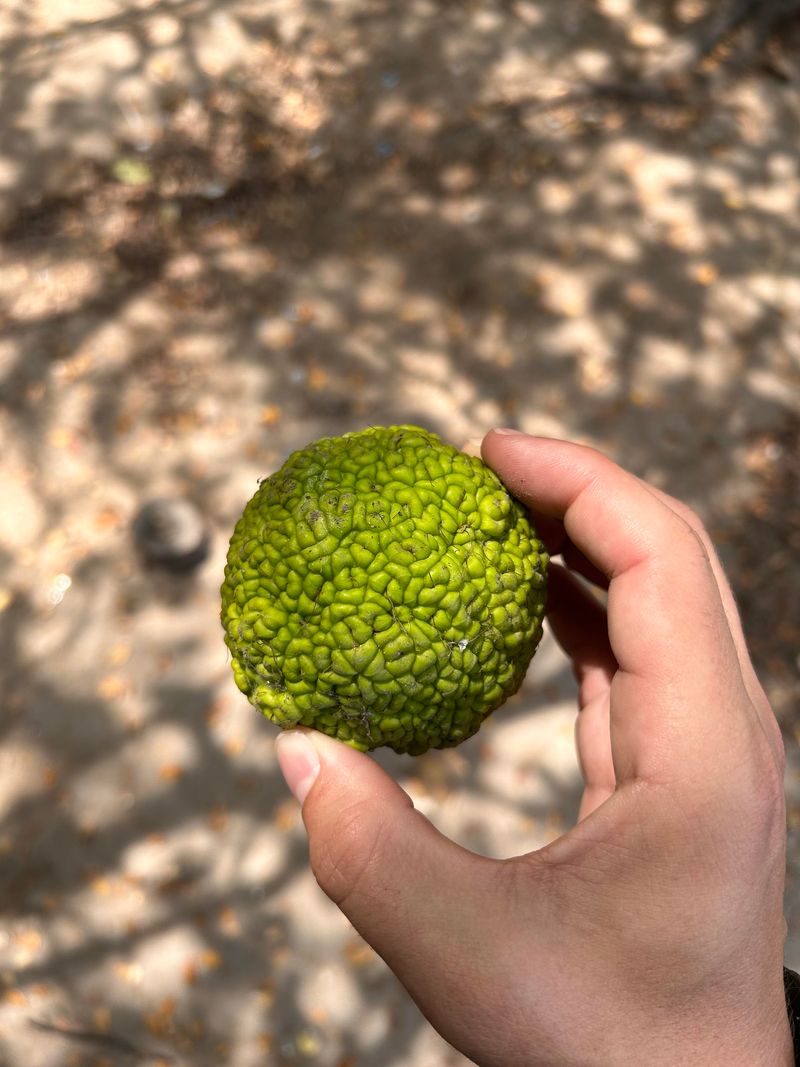
Timing is really the whole show here, and the show starts when September cools into October. Hedge apples ripen late, then let go of the branches in heavy, unpredictable waves.
Green fruit hangs quietly all summer long, hidden among leaves that match its color almost perfectly. By harvest season the leaves thin out and the fruit suddenly seems to appear overnight.
Most of the heavy dropping happens between late September and the middle of November across the state. A hard frost or a windy front can bring down dozens in a single night.
Northern Missouri tends to drop a little earlier than the Bootheel, though local weather shifts everything. Warm autumns stretch the season, while early cold snaps compress it into a few weeks.
Your Missouri Garden Changes Every Week. Your Plan Should Too.
Gardening in Missouri changes quickly throughout the season. Every Friday you’ll receive a simple weekly plan showing exactly what to plant, prune, fertilize, harvest, and protect so you never miss the right timing.
Fruit that lands in tall grass can sit firm and green for many weeks before softening. Roadside pavement speeds things along, since sun and tires mash them into pale brown pulp.
Farmers watch the drop closely because loose fruit clogs mowers and bounces off equipment tires. Anyone brush hogging an overgrown fencerow in October quickly learns to expect a few loud surprises.
Collectors wait for this exact window, gathering bushels for decoration, fall crafts, or basement folklore. Fresh fruit stores longest when picked off the ground quickly and kept somewhere cool.
By early December most of what fell has collapsed into a dark, squishy brown mess. Seeds survive that mess nicely, which is precisely the point from the tree’s perspective.
Prairie Fence Rows That Outlived Their Purpose
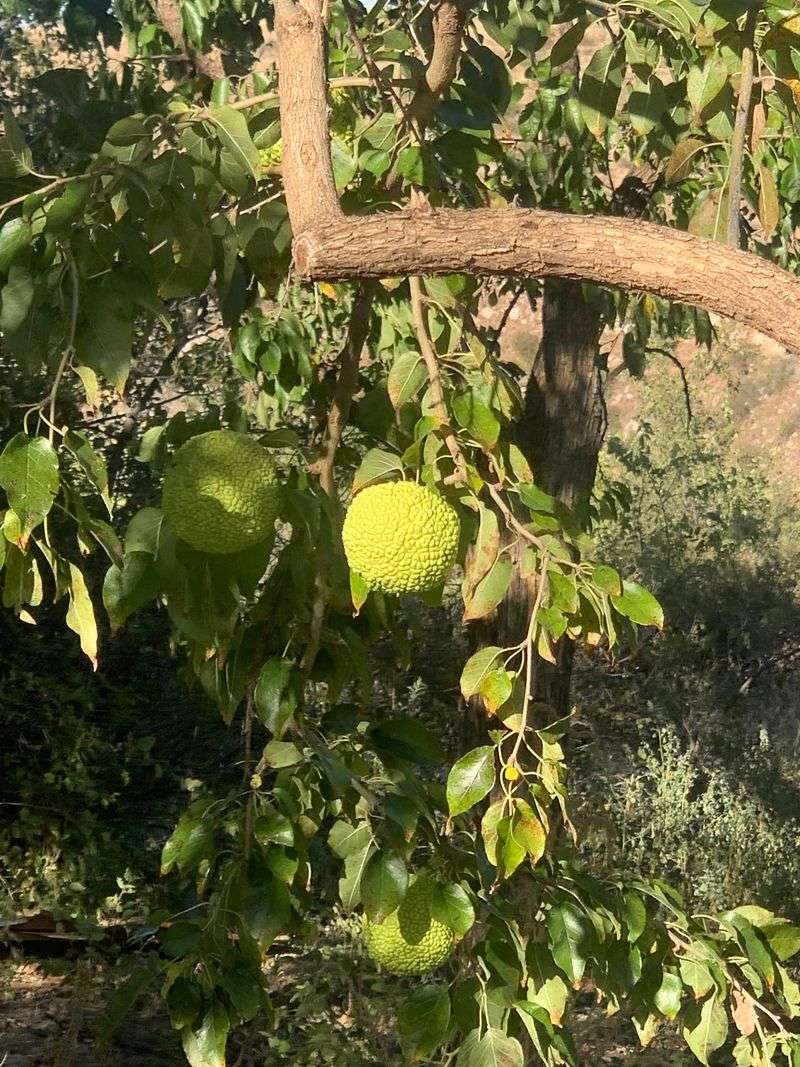
Before barbed wire arrived, farmers needed something living and sturdy to hold cattle inside a field. Osage orange answered that call, planted thick and trimmed low into a thorny green wall.
The old sales pitch promised a hedge that was horse high, bull strong, and pig tight. Millions of young seedlings shipped across the Midwest during the middle of the nineteenth century.
Missouri farms planted mile after mile of it, especially across the northern and western prairie counties. Those planted rows explain why the trees still follow straight lines along country roads.
Barbed wire showed up in the 1870s and made living fences look slow, fussy, and expensive. Farmers stopped trimming, and the neat hedges grew into full sized trees with wide crowns.
Untrimmed trees finally got old enough to flower, and flowering meant fruit by the wagonload. Every grapefruit sized ball on the road shoulder traces back to that abandoned fencing plan.
The dense wood found a second career as fence posts that resist rot for many decades. Old timers joke that a hedge post outlasts the hole it was set into.
Native peoples valued the same wood for bows, which is where the name bodark comes from. French traders called it bois d’arc, meaning bow wood, and the pronunciation drifted.
So a roadside fruit pile is really a leftover from nineteenth century Missouri agriculture. History rolls into the ditch every fall, and most drivers speed right past it.
The Spider Repellent Myth In Missouri Basements
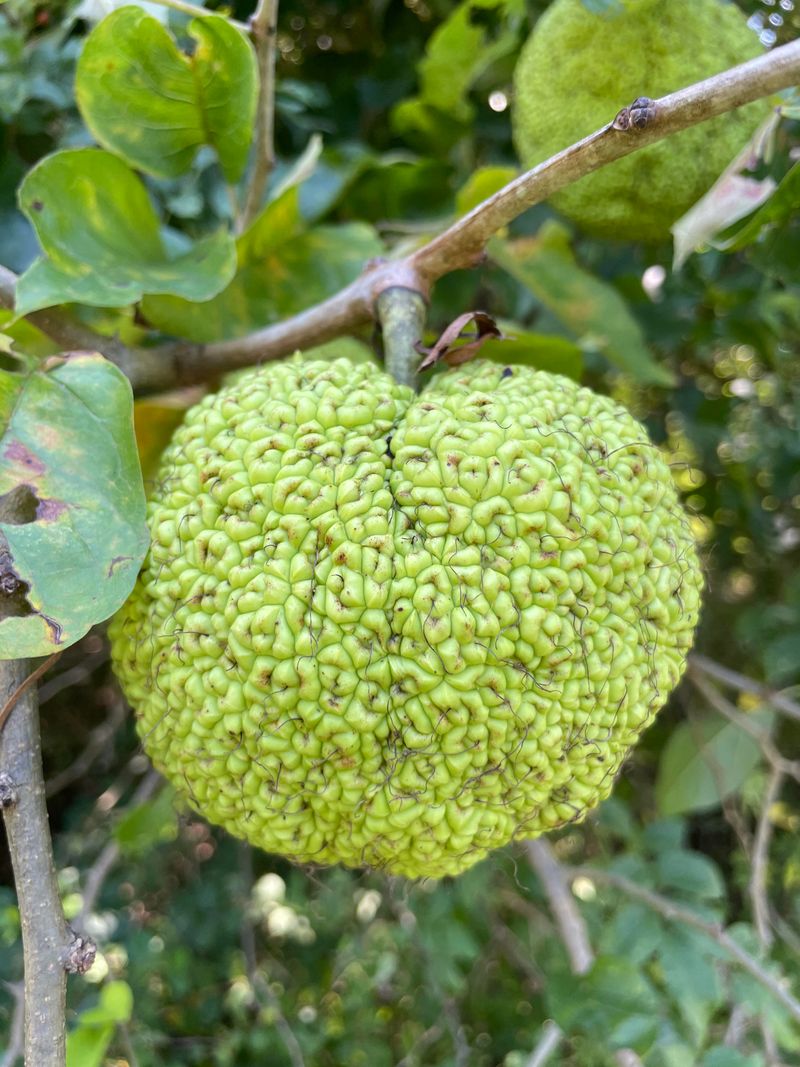
Grandma swore by the trick, and she kept three hedge apples under her basement stairs. The belief that the fruit repels spiders has traveled through Missouri families for generations.
Researchers at Iowa State tested the idea and found a real compound inside the fruit. That compound did repel some insects in a lab dish, but only at concentrated strength.
A whole fruit sitting quietly on a shelf, however, releases far too little to matter. Spiders in a real basement simply ignore the green decoration and carry on hunting.
Folks still do it anyway, partly because the tradition feels comforting and costs nothing. There is honestly no harm in trying, as long as your expectations stay pleasantly low.
One genuine downside shows up after a few weeks, when the fruit begins to soften and collapse. A forgotten hedge apple turns into a sticky puddle that attracts flies and mold.
Pets deserve a mention too, since curious dogs sometimes chew the fruit like a strange ball. The fibrous flesh can lodge in a throat, so vets suggest keeping them out of reach.
Better spider control comes from sealing gaps, reducing clutter, and running a basement dehumidifier regularly. Dry, tidy basements discourage the insects that spiders follow indoors in the first place.
Keep a hedge apple around if you enjoy the tradition and the faint citrus smell. Just do not fire the exterminator based on the power of a single piece of fruit.
Falling Fruit Hazards On Rural Roads
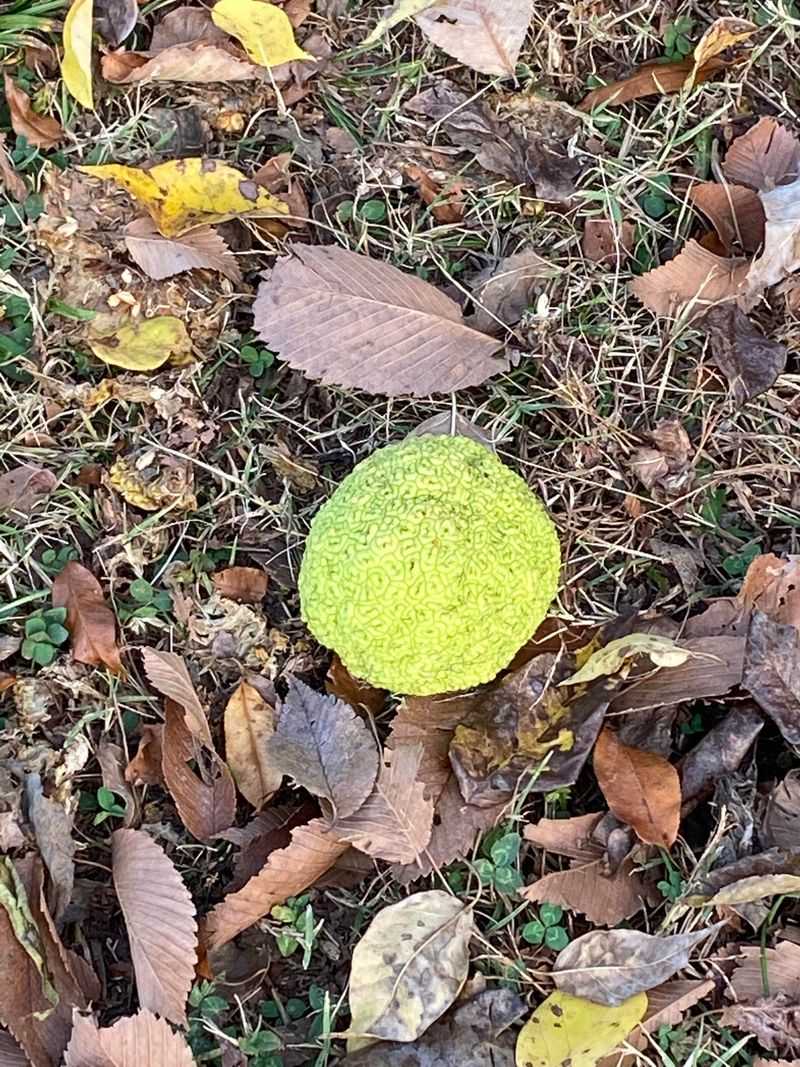
A pound-plus sphere dropping thirty feet lands with surprising force on a car windshield. Drivers along Missouri backroads have collected dents, cracked glass, and a few genuinely racing heartbeats.
The fruit rolls, which makes it far worse than a stationary hazard on a narrow shoulder. Hitting one at speed can jolt the steering wheel or spray pulp across the road.
Motorcyclists face the biggest risk, because a rolling green ball behaves exactly like loose gravel. Riders who know hedge country slow down and scan the pavement beneath every overhanging limb.
Bicyclists deal with exactly the same trouble on shaded county roads during October weekends. Wet, mashed fruit leaves a slick film that behaves a lot like soft mud.
Parking under a loaded female tree is a gamble that nobody should take during autumn. Choose the open sunny spot instead, even if that shade looks awfully tempting at noon.
Road crews in some counties sweep the worst stretches, though tight budgets limit how often. Reporting a heavy pile to your county road department actually helps a lot more than you think.
If one bounces off your hood, pull over safely and check for hidden damage. Insurance usually treats it like any other falling object claim, so document the whole scene.
Mostly, just ease off the gas when you see green spheres scattered in the ditch. The trees overhead are not aiming at anybody, but their accuracy still feels unsettling.
Yard Cleanup For Property Owners With Hedge Trees
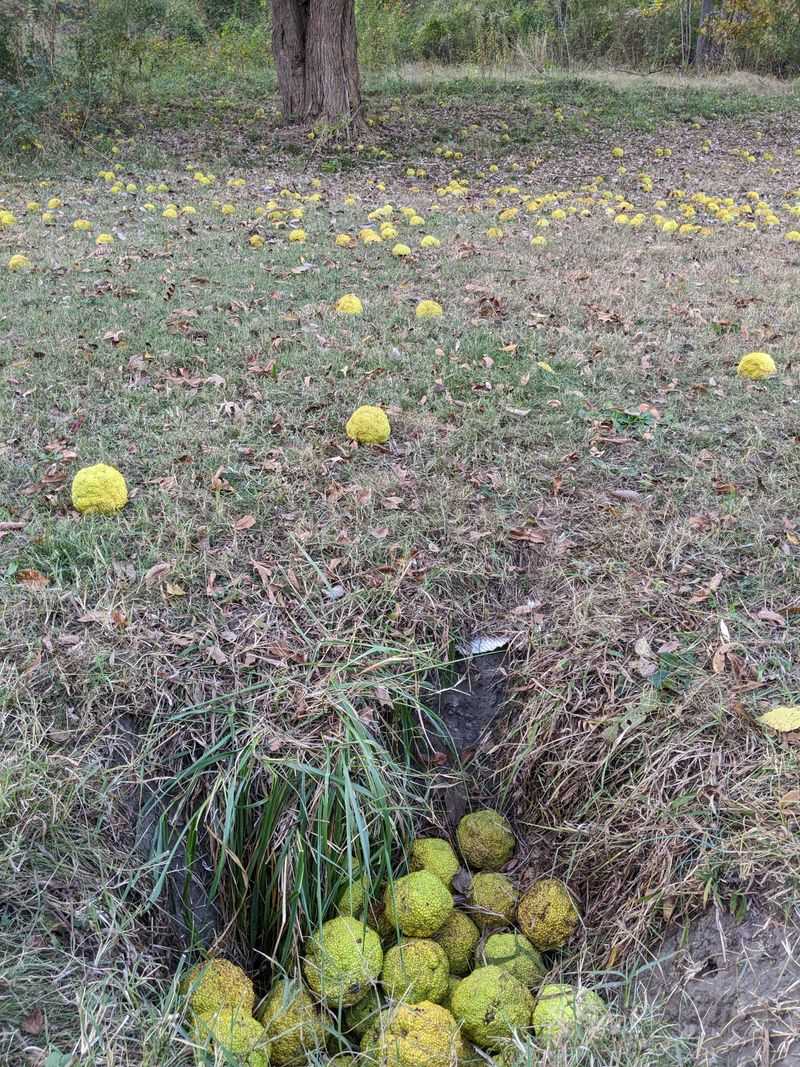
Owning a female hedge tree means signing up for an annual autumn chore you cannot skip. Cleanup gets much easier once you stop fighting the calendar.
Rake or scoop the fruit weekly during the drop instead of waiting for one giant pile. Fresh hedge apples are firm and easy to handle, while old ones turn into mush.
A flat snow shovel and a wheelbarrow beat a rake for moving heavy, round fruit. Sturdy gloves help too, since that milky sap sticks stubbornly to bare hands and tools.
Compost piles handle hedge apples fine if you chop or crush the fruit first. Whole spheres can sit intact for a year, then sprout seedlings you did not plan on.
Mowing over them works fine in a pasture, though flying chunks can chip a mower deck. Keep bystanders, pets, and windows well clear whenever you take that faster approach.
Homeowners tired of the mess sometimes replace the tree with a male cultivar instead. Thornless, fruitless varieties exist and still deliver that tough, drought proof shade you wanted.
Pruning heavy limbs above driveways reduces both the yearly mess and the risk to parked vehicles. A certified arborist can shape the crown without wrecking the tree’s naturally strong structure.
Neighbors often take fruit off your hands for crafts, wreaths, or stubborn family traditions. Set a full bucket by the curb and watch your problem drive away for free.