8 Hardy Michigan Perennials That Thrive In Containers Year Round
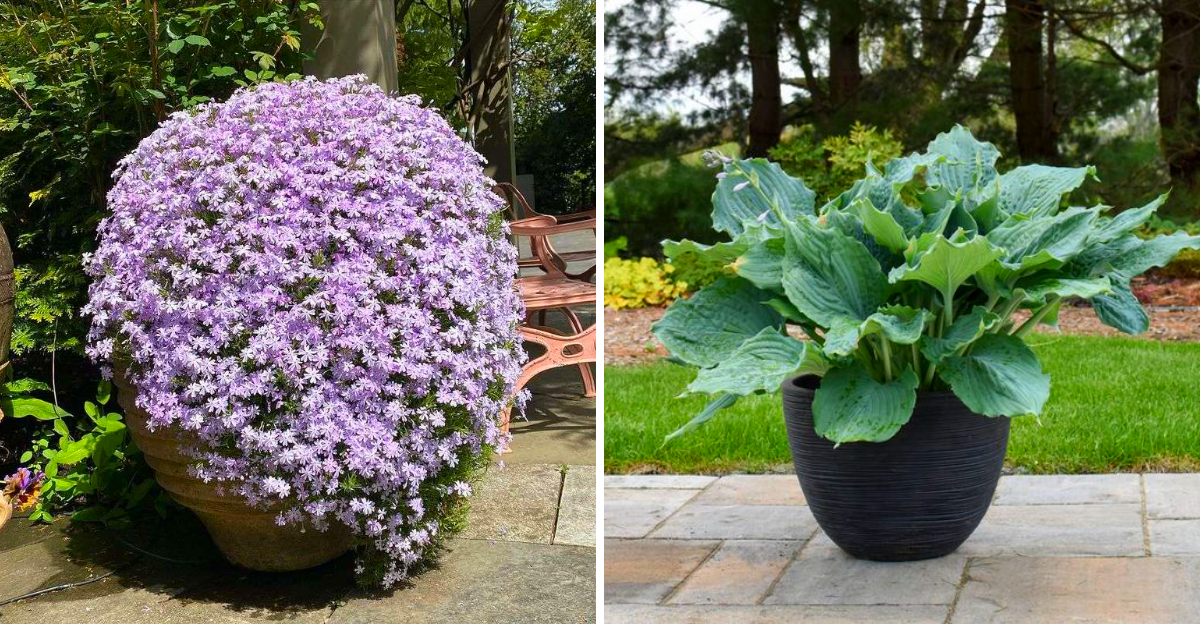
Michigan patios, porches, and balconies can do so much more than host a few tired annuals by midsummer.
If you want containers with a little more staying power, hardy perennials are where things start getting interesting.
They bring texture, color, and personality to pots in a way that feels a lot richer, and honestly, some of them look good even when they are not trying that hard. Big win.
Of course, growing perennials in containers in Michigan is not quite as simple as dropping them in a pot and calling it a day.
Winter likes to keep things exciting around here, and roots in containers are much more exposed to cold than roots tucked safely in the ground.
Still, plenty of perennials can handle container life surprisingly well with the right setup and a bit of thoughtful care.
Pick smart plants, give them decent drainage and enough room, and your containers can stay lush, layered, and full of character for a lot longer than one short growing season.
Pretty satisfying for a pot on the porch.
1. Hosta Brings Lush Leaves To Shady Containers
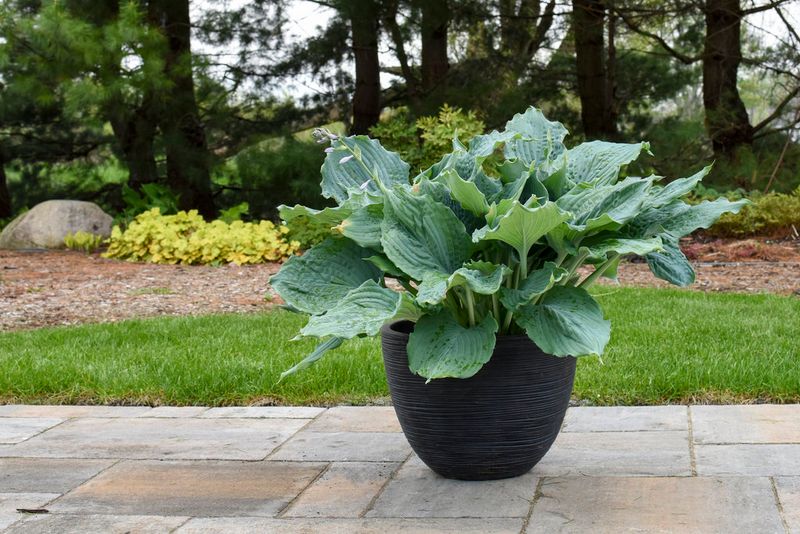
Few plants transform a shady Michigan porch corner quite like a hosta. Those broad, dramatic leaves in shades of blue-green, gold, and creamy white can make even a simple pot look like something special.
Hostas have long been a favorite for shade gardens, but they translate beautifully into containers when given enough room to spread their roots.
For container growing in Michigan, choosing a larger pot matters more than most gardeners expect. A roomy container holds more soil, which helps buffer the roots from Michigan’s cold winters.
Compact or medium-sized hosta varieties tend to settle into pots more comfortably than giant types, though larger cultivars can work in big planters placed on a sheltered porch.
Hostas prefer consistently moist soil and will show stress through leaf scorch if they dry out too often. Shade or dappled light suits them best, making north or east-facing porches and shaded patios ideal spots.
During summer, the foliage stays attractive for months, and some varieties even offer fragrant late-summer blooms as a bonus. As Michigan fall arrives and temperatures drop, hosta leaves will naturally decline.
Moving containers to an unheated garage or sheltered area through the coldest months gives the roots a much better chance of returning in spring, making hostas one of the more rewarding perennial choices for Michigan container gardeners.
2. Daylily Adds Bright Color To Sunny Pots
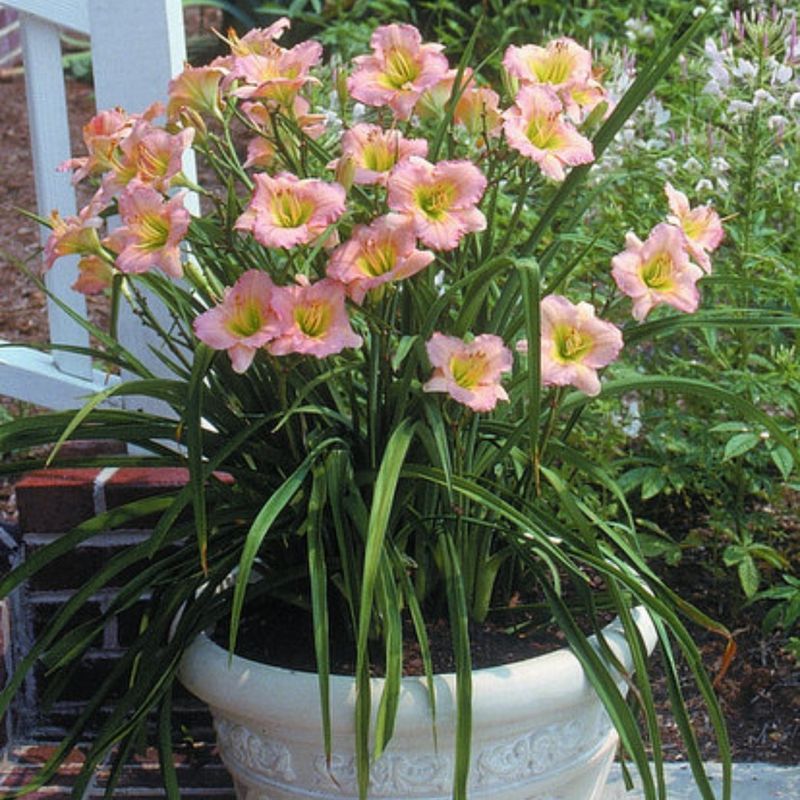
Sunny Michigan patios can get hot and bright in summer, and daylilies take that kind of exposure in stride better than many other perennials.
Their cheerful trumpet-shaped blooms open in waves throughout the summer months, bringing reliable color to pots that sit in full sun from morning to afternoon.
Compact daylily varieties work especially well in containers because they do not need as much root space as their larger cousins.
Daylilies are also surprisingly tolerant of occasional dry spells, which makes them forgiving for gardeners who sometimes miss a watering.
Your Michigan Garden Changes Every Week. Your Plan Should Too.
Gardening in Michigan changes quickly throughout the season. Every Friday you’ll receive a simple weekly plan showing exactly what to plant, prune, fertilize, harvest, and protect so you never miss the right timing.
That said, container-grown daylilies do appreciate consistent moisture during their blooming period, so checking soil moisture regularly through Michigan’s warmer months pays off in more flowers and healthier foliage.
Good drainage is equally important because sitting in waterlogged soil can harm the fleshy roots over time.
One of the real appeals of daylilies for Michigan container gardens is their hardiness. Most common varieties are rated for Michigan’s climate zones and can handle cold temperatures well.
Containers left outdoors through winter face more exposure than in-ground plants, so moving pots to a sheltered spot like an unheated garage or covered porch during the coldest weeks can help the roots survive until spring.
With a little winter protection, a well-chosen daylily can return season after season, rewarding Michigan gardeners with fresh blooms each summer.
3. Heuchera Fills Pots With Colorful Foliage
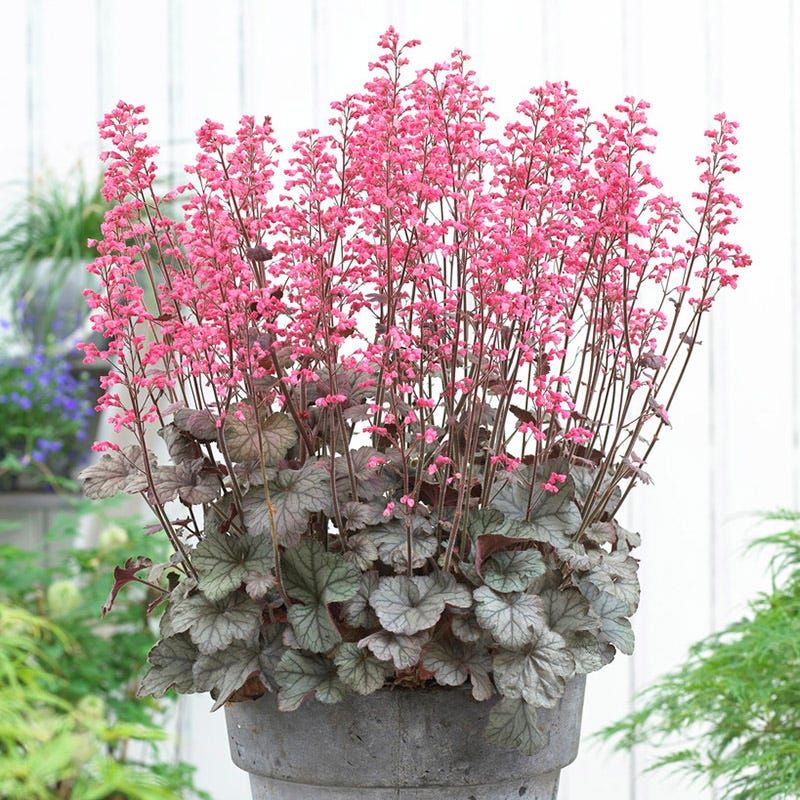
Walk past any well-designed Michigan container garden and there is a good chance heuchera, commonly called coral bells, is playing a starring role.
The foliage on these plants comes in an almost surprising range of colors, from deep burgundy and chocolate to bright lime green, amber, and silvery purple.
That variety makes heuchera incredibly useful in mixed containers where foliage contrast is the goal rather than just flowers.
Heuchera grows well in both partial shade and part sun, giving Michigan gardeners some flexibility about where to place their pots.
A north-facing entryway, a lightly shaded deck, or a porch that gets morning sun and afternoon shade all suit heuchera reasonably well.
The key is avoiding long stretches of intense afternoon sun, which can stress the leaves and cause fading or browning at the edges during Michigan’s hottest summer weeks.
In containers, heuchera benefits from a rich, well-draining potting mix and regular moisture without waterlogging.
The roots are relatively compact, so medium-sized pots work well for single plants, while larger containers allow for creative combinations with ferns, hostas, or trailing plants.
Winter survival in pots depends heavily on container size and placement.
Moving heuchera containers into an unheated but protected space through Michigan’s harshest cold spells gives the crowns a reasonable chance of rebounding in spring with fresh, vibrant new growth.
4. Brunnera Brightens Shade With Silver-Touched Leaves
Shaded corners of Michigan porches and patios can sometimes feel a little flat, especially in midsummer when the light is low and foliage options seem limited.
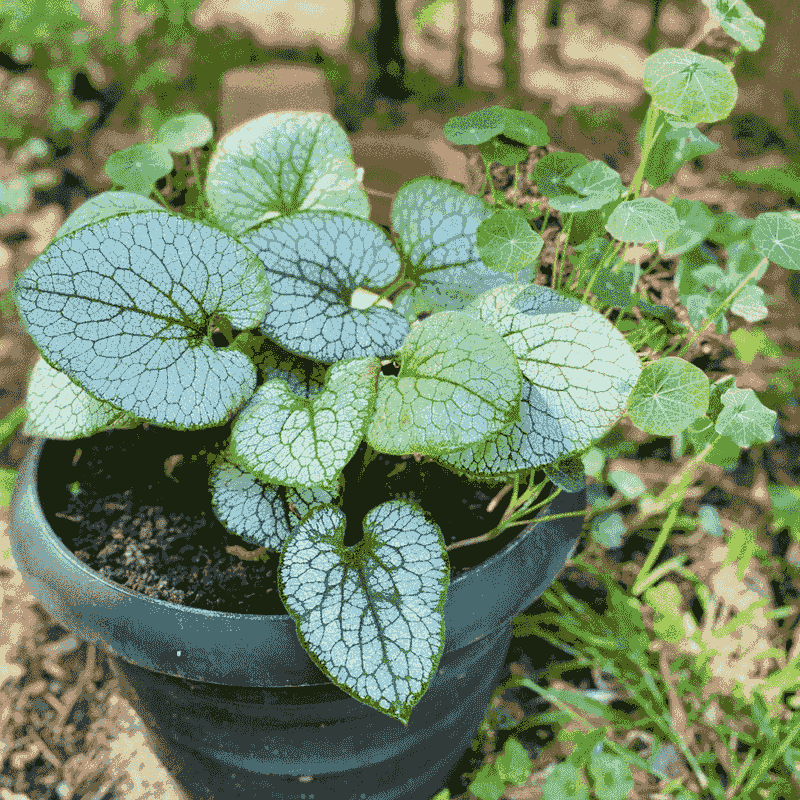
Brunnera, sometimes called Siberian bugloss, brings an unexpected brightness to those spots through its large heart-shaped leaves that are splashed or edged with silver.
Some cultivars are so heavily marked with silver that the leaves almost seem to glow in low light, which makes them stand out even when tucked into a quiet corner.
In spring, brunnera also produces small bright blue flowers that closely resemble forget-me-nots, adding a delicate seasonal bonus before the foliage takes over as the main attraction.
Those blooms tend to appear early in the Michigan growing season, often before many other container plants have fully woken up, giving gardeners an early pop of color when it is most welcome.
Brunnera prefers consistent moisture and shade or partial shade, making it well suited to container spots that do not receive direct afternoon sun. It dislikes drying out, so regular watering through Michigan’s summer is important.
In containers, the roots are more exposed to temperature swings than in-ground plants, so using a generously sized pot and moving containers to a sheltered location during winter helps the crowns rest safely through cold months.
With reasonable winter care, brunnera can return each spring with fresh, beautifully marked foliage ready to brighten a shaded Michigan patio once again.
5. Sedum Handles Sunny Pots With Easy Color
Michigan summers can bring stretches of heat and dry weather that challenge even well-tended containers, and that is exactly where sedum earns its reputation.
These tough, fleshy-leaved perennials store moisture in their thick stems and leaves, which means they handle occasional dry spells without falling apart the way thinner-leaved plants might.
For sunny Michigan patios, decks, or south-facing entryways, sedum is one of the more reliable container choices available.
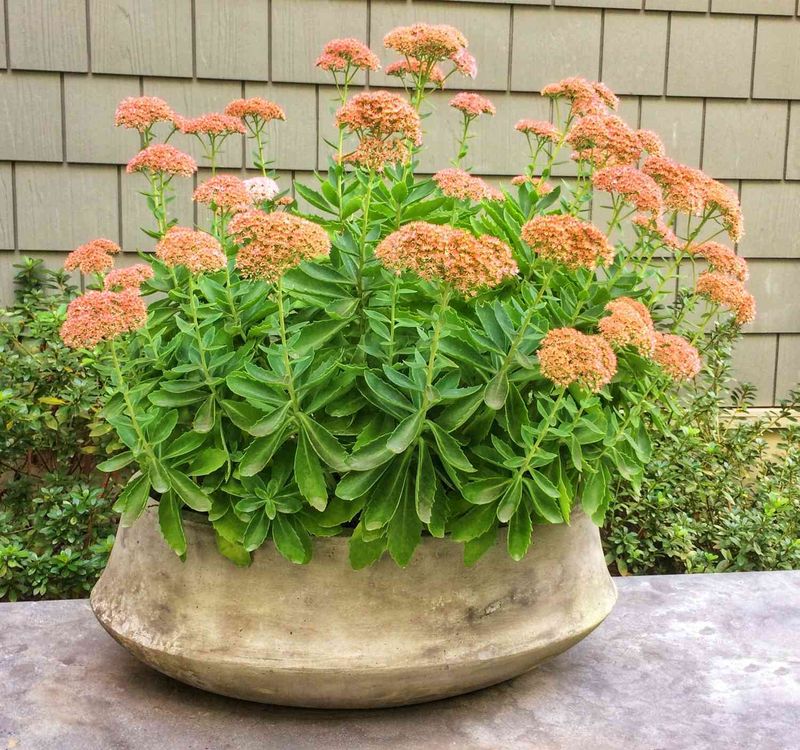
Upright varieties like Autumn Joy are especially popular for containers because they offer something interesting across multiple seasons.
The foliage is attractive from spring onward, the flower buds appear in late summer, and the blooms shift from pink to a warm rusty copper as Michigan fall progresses.
Even after the flowers dry, the seed heads hold their shape and add texture to pots well into the colder months.
Sedum is not fussy about soil but does strongly prefer good drainage. A gritty or well-draining potting mix suits it far better than a heavy, moisture-retaining blend.
Overwatering is the most common issue with container-grown sedum, so allowing the soil to dry somewhat between waterings keeps plants healthier through summer.
For winter, sedum containers benefit from being moved to a sheltered but cold spot, such as an unheated garage, where the roots stay dormant without being exposed to the most extreme Michigan freeze-thaw cycles that can heave or stress container-grown plants.
6. Phlox Adds Full Summer Color To Containers
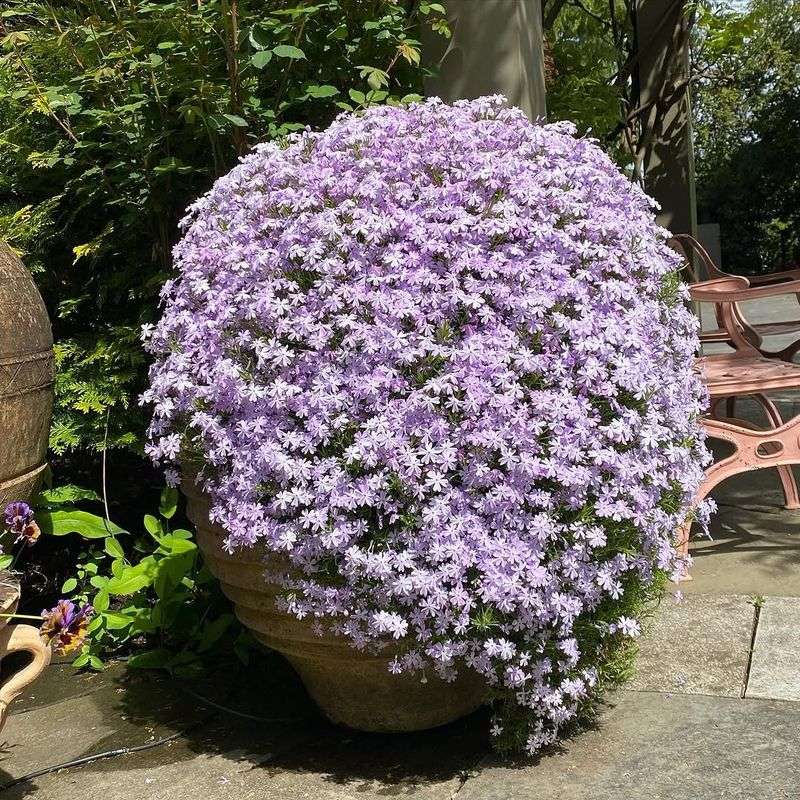
Summer on a Michigan porch feels more complete with something in full, fragrant bloom, and garden phlox delivers that kind of presence with real enthusiasm.
The tall flower clusters, which come in shades of pink, lavender, white, and deep magenta, can make a container feel lush and layered rather than sparse.
Compact phlox varieties bred for smaller spaces tend to work best in pots, since taller types may need staking if they get top-heavy without the support of surrounding garden plants.
Phlox prefers full sun and consistent moisture, which means container-grown plants in Michigan need attentive watering through the warmest weeks of summer.
Good air circulation around the foliage helps reduce the likelihood of powdery mildew, a common issue with phlox that can be more noticeable when plants are crowded or placed against walls with limited airflow.
Choosing mildew-resistant cultivars is a practical step that makes container growing more enjoyable over the long run.
Beyond its summer blooms, phlox also offers attractive green foliage that holds up well through the growing season.
In Michigan, the bloom period typically peaks in mid to late summer, giving porches and patios a colorful focal point during the warmest months.
As temperatures cool in fall, the foliage will naturally decline. Moving containers to a protected area through Michigan’s coldest winter weeks gives the root system a better opportunity to rest and return with fresh growth when warmer weather arrives in spring.
7. Echinacea Brings Pollinator Appeal To Patio Pots
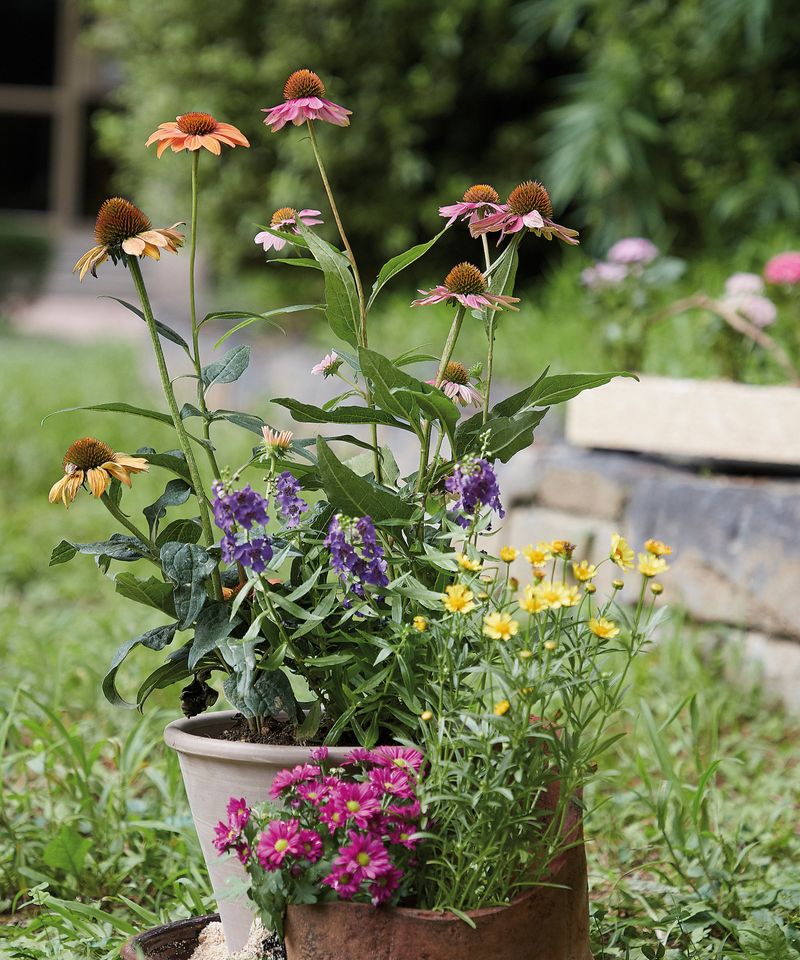
On a warm Michigan summer afternoon, a container of echinacea in full bloom can turn a simple patio into a lively gathering spot for bees, butterflies, and even goldfinches.
Purple coneflower, as echinacea is widely known, has become one of the most popular perennials in Michigan gardens partly because of how reliably it draws pollinators and partly because of how little fuss it demands once established.
Seeing that kind of wildlife activity right on a home porch or deck is one of the more rewarding experiences container gardening can offer.
Echinacea thrives in full sun and handles dry conditions reasonably well once it has settled in, though container-grown plants need more consistent watering than those in the ground because pots dry out faster.
A deep container works better than a shallow one because echinacea develops a taproot that appreciates room to grow downward.
Good drainage is essential to keep the roots healthy through Michigan’s wet spring periods.
The blooms typically arrive in midsummer and can last for several weeks, with the distinctive spiky seed heads remaining attractive well into fall and even early winter. Many Michigan gardeners leave those seed heads in place as a food source for birds.
As winter approaches, moving echinacea containers to a sheltered but unheated space helps the roots stay protected through Michigan’s coldest months, giving these sturdy plants a reasonable chance of returning and blooming again the following summer.
8. Oregano Fills Containers With Fragrant Growth
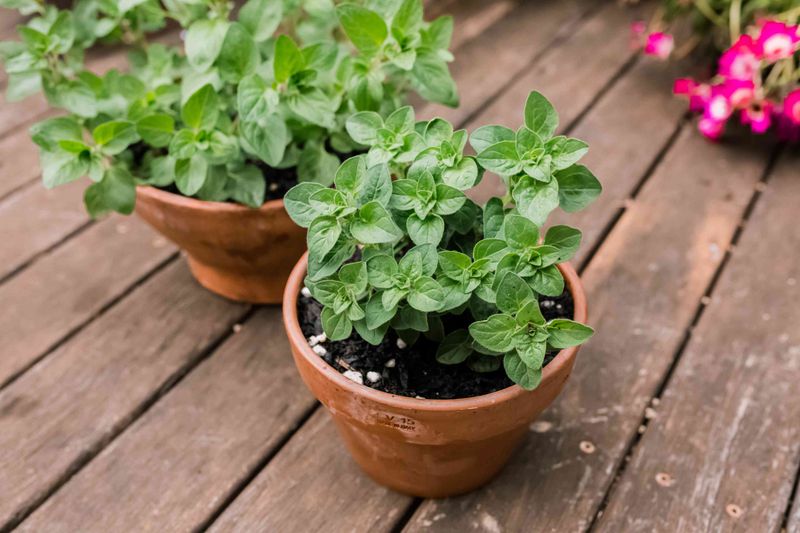
Not every great container perennial is chosen purely for looks, and oregano makes a strong case for being valued equally for fragrance, texture, and usefulness.
The small rounded leaves release a warm, herbal scent whenever they are brushed or touched, which makes oregano containers especially satisfying near a kitchen door, front step, or porch railing where people pass by regularly.
Both culinary and ornamental varieties offer that signature fragrance, with ornamental types sometimes adding a slightly more decorative leaf shape or flower display.
Oregano is well suited to sunny Michigan spots and handles heat and dry conditions with more ease than many other perennials.
In containers, it prefers a well-draining potting mix and does not appreciate sitting in soggy soil, so choosing a pot with good drainage holes and avoiding overwatering keeps plants looking their best through the growing season.
Trimming the stems regularly encourages bushier, more compact growth and helps prevent the plant from becoming leggy over summer.
Small clusters of tiny pink or white flowers appear in mid to late summer, adding a soft seasonal detail to the pot while also attracting small bees and beneficial insects.
As a hardy perennial, oregano has reasonable cold tolerance, though container roots are more exposed than those in the ground.
Moving pots to a sheltered location through Michigan’s harshest winter cold helps the plant rest comfortably and return with fresh, fragrant growth once Michigan spring temperatures begin to rise again.