Have you met the Eclipse hydrangea yet? The dark-leaved beauty Oregon shade gardens have been waiting for
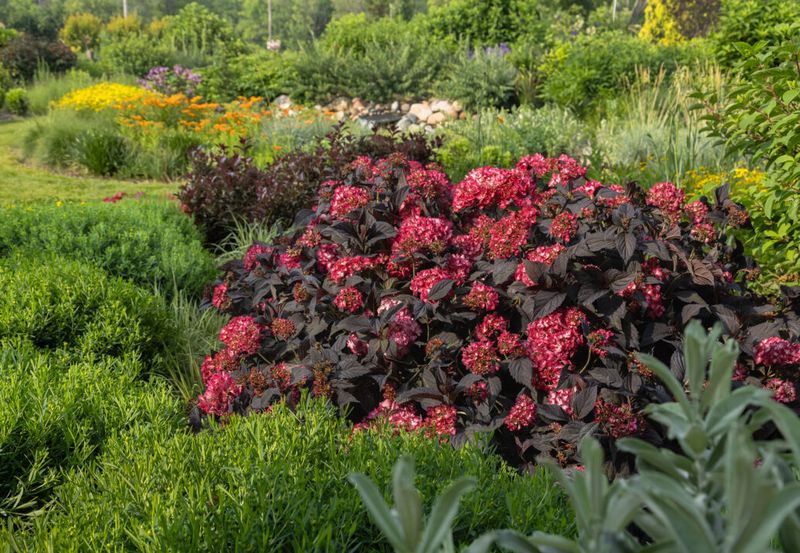
Most hydrangeas blend into a summer border without much fanfare, but Eclipse stops people in their tracks. Its foliage runs so deep purple it reads almost black, turning an ordinary planting into something that feels genuinely dramatic.
Oregon gardeners west of the Cascades have been quietly asking whether this shrub is worth the hype, and the honest answer is: it depends on your site, your watering habits, and what you actually want from a garden shrub.
Eclipse makes the foliage the main event
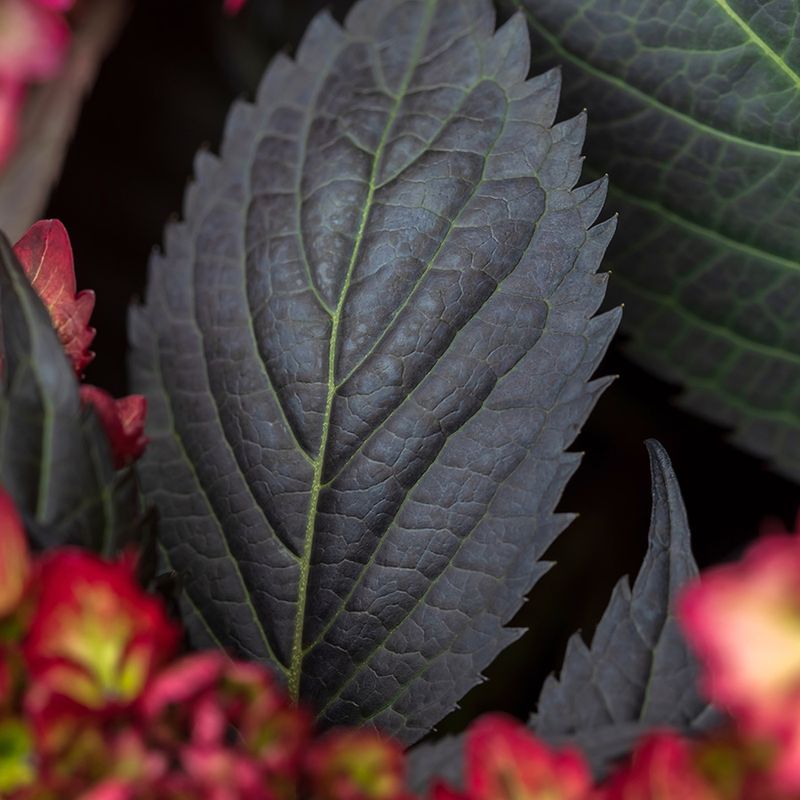
Plenty of shrubs bloom beautifully and then spend the rest of the growing season being forgettable. Eclipse takes a different approach, leading with foliage so dark purple it hovers near black, making the leaves themselves the reason to stop and look.
Sold under the Bailey Nurseries First Editions brand, this bigleaf hydrangea carries the patented cultivar name ‘Bailmacseven’ and U.S. Plant Patent PP34,544, details worth knowing when you are comparing tags at the nursery.
Bailey lists Eclipse at a mature height and spread of roughly 3 to 5 feet, which fits comfortably into most home garden borders without crowding everything around it. It is rated hardy in USDA Zones 5 through 9, a range that covers much of Oregon, though that number tells you only about minimum winter temperatures rather than the full picture of what the plant will do in your yard.
The flower heads are mophead style, the classic round, globe-shaped clusters that most gardeners picture when they think “hydrangea.”
The breeder and the Farwest Show industry listing describe Eclipse as the first true dark-leaf hydrangea, a bold positioning worth noting as a marketing and industry claim rather than an independently verified botanical distinction. What the U.S. plant patent does document is that the foliage retains its dark purple color into summer and fall, even in warm climates, and that the plant carries a remontant habit, meaning it may flower on both old and new growth.
Those are cultivar descriptions from the breeder, not results from independent Oregon field trials, so treat them as the starting point for your expectations rather than a guarantee of what will happen in your specific garden.
The dark leaves change a planting’s visual rhythm
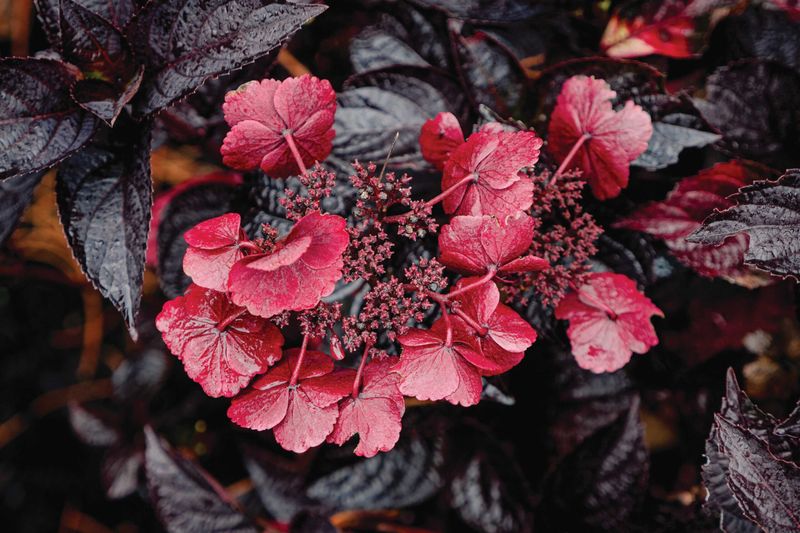
Color contrast is one of the most powerful tools in a garden, and Eclipse hands it to you through its foliage rather than asking you to wait for bloom season. The deep purple leaves read almost black in certain light, and that depth creates a natural pause in a planting that might otherwise be a wash of similar greens.
Pair it near chartreuse hostas, silvery ferns, or the bright new growth of a Japanese maple, and the contrast becomes genuinely striking without requiring any special arrangement skill.
According to Bailey Nurseries, the dark foliage is described as persistent through the growing season, which means the design impact is not limited to the few weeks when the flowers are open. That is a meaningful distinction in a Pacific Northwest garden, where summer can stretch from June well into September and you want plants that earn their space the whole time.
Your Oregon Garden Changes Every Week. Your Plan Should Too.
Gardening in Oregon changes quickly throughout the season. Every Friday you’ll receive a simple weekly plan showing exactly what to plant, prune, fertilize, harvest, and protect so you never miss the right timing.
The foliage color, however, can vary with light levels, soil conditions, and plant age, so one garden’s dramatic near-black may be another garden’s deep burgundy.
What the dark leaves do not signal is unusual toughness under hot Oregon sun. The plant patent describes foliage color persistence in warm climates, but dark pigmentation in leaves is not the same as heat or sun tolerance.
Bigleaf hydrangeas as a group can scorch in strong afternoon exposure, and Eclipse is no exception. Think of the dark foliage as an ornamental characteristic rather than a built-in shield, and plan the site accordingly.
The drama is real; the sun immunity is not.
“Shade garden” still means giving Eclipse some light
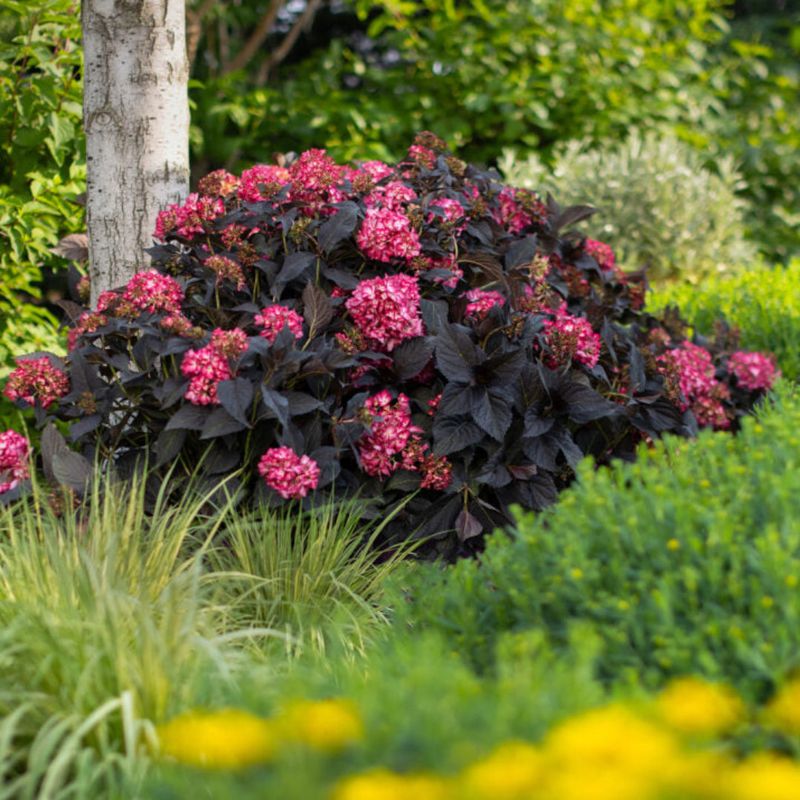
The phrase “shade garden” can mean anything from bright dappled light under a high canopy to the dim, dry zone along a north-facing fence, and Eclipse does not belong in both places equally. Oregon State University recommends morning sun with afternoon shade for bigleaf hydrangeas grown west of the Cascades, and that guidance applies to Eclipse as well.
A site that gets three to four hours of gentle morning light, then transitions to filtered shade during the hottest part of the day, is close to ideal.
OSU Extension’s hydrangea overview notes that excessive sun can scorch leaves, which is a real concern during Oregon’s increasingly warm and dry summers. At the same time, too little light creates its own problems.
A heavily shaded spot may produce attractive foliage but fewer flower buds and weaker overall growth, because the plant simply cannot gather enough energy to do both jobs well.
OSU’s general hydrangea care guidance reinforces that afternoon shade is particularly valuable during the warmest months, when sun angle and intensity are highest. Dark foliage does not change this calculus.
If anything, very dark leaves can absorb more radiant heat than lighter ones, making thoughtful siting even more worthwhile. Morning sun, dappled canopy light, or the bright shade of a lath structure are all workable; the deep, dry shadow under a dense evergreen hedge is not the place to expect Eclipse to shine.
West of the Cascades is the easier fit
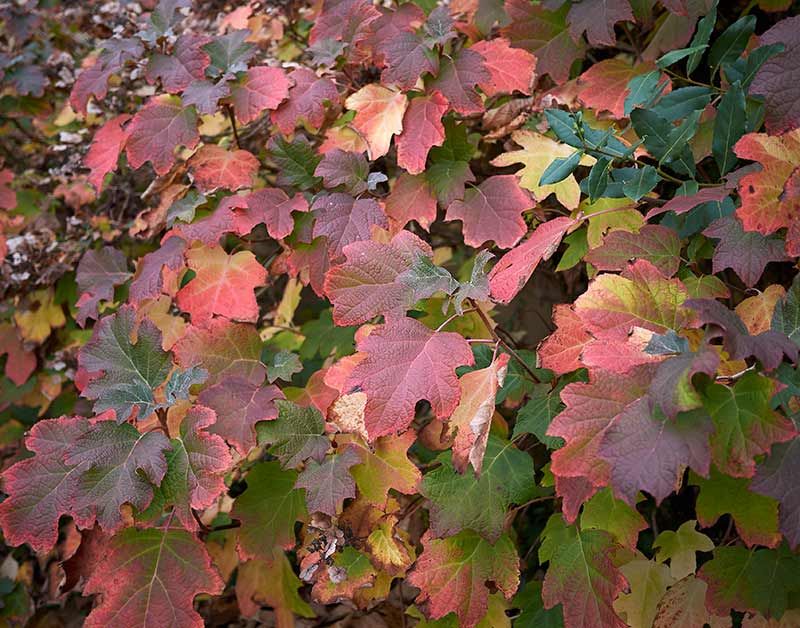
Oregon is not one climate, and a plant that thrives in a Portland front yard may struggle badly in Bend or Klamath Falls. Eclipse is most naturally suited to the milder, wetter west side of the Cascades, where winters are rarely brutal, summers are warm rather than scorching, and rainfall through spring keeps soil moisture reasonable before irrigation season begins.
The Willamette Valley, the coast range foothills, and similar west-side microclimates offer the combination of moderate temperatures, decent summer fog, and manageable soil conditions that bigleaf hydrangeas have always preferred in Oregon.
OSU Extension’s regional hydrangea guidance points out that conditions vary considerably across the state, and that the plants best suited to one Oregon region may not translate well to another. The Bailey listing rates Eclipse hardy in Zones 5 through 9, but a zone rating is a minimum winter-temperature guide, not a promise of uniform performance.
A plant can survive a cold winter and still lose its flower buds to a late-April frost, struggle through a dry June on alkaline irrigation water, or fail to establish against persistent wind.
Central and eastern Oregon gardeners face a different set of challenges: aridity, hard freezes, drying winds, alkaline water from wells and irrigation districts, and late frosts that can catch new growth by surprise. OSU’s waterwise gardening guide for central Oregon recommends drought-adapted plants for those conditions, and bigleaf hydrangeas as a group, including Eclipse, are not on that list.
If you garden east of the Cascades and still want to try Eclipse, a sheltered microclimate with summer irrigation and wind protection gives you the best odds, but go in with realistic expectations.
The dramatic look comes with a steady-water bill
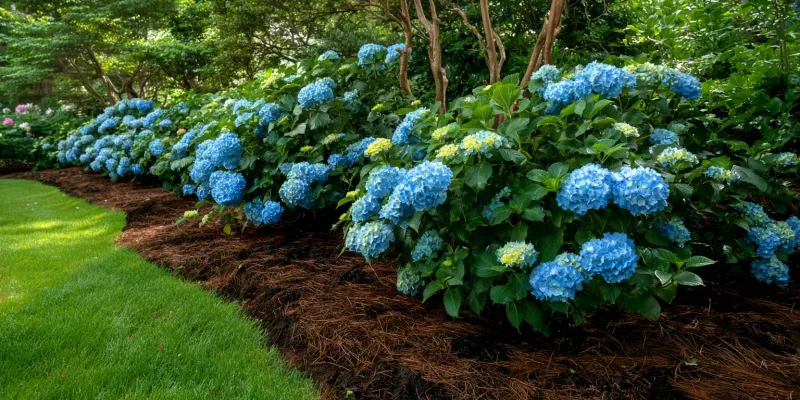
Bigleaf hydrangeas are thirsty plants, and Eclipse does not get a pass on that just because its foliage is dramatic. Oregon’s dry season runs roughly from late June through September west of the Cascades, and a newly planted shrub will need consistent irrigation throughout that stretch.
OSU’s hydrangea care guide recommends watering deeply rather than applying frequent, shallow sprinkles, because deep watering encourages roots to grow down into cooler, moister soil rather than staying near the surface where they are vulnerable to heat and drought.
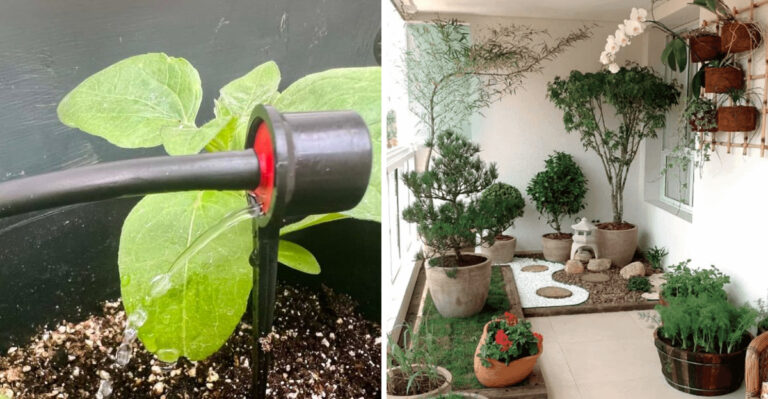
Drip irrigation or a soaker hose laid under the mulch is a practical solution that delivers water where the roots are without wetting the foliage, which matters because overhead watering can contribute to fungal problems. OSU’s water-conservation guidance supports deep, infrequent irrigation as a general best practice for ornamental shrubs in Oregon’s summer-dry climate.
Applying roughly 3 to 4 inches of organic mulch around the root zone, kept a few inches away from the main stems, helps the soil hold moisture between watering sessions and moderates soil temperature during heat waves.
Pruning deserves careful thought with any bigleaf hydrangea. Most of them set flower buds on older stems, so cutting back hard in winter or early spring can remove the buds that would have become this summer’s flowers.
The Eclipse plant patent describes a remontant habit, meaning the plant may also flower on new growth, but “may” is the key word there. Follow the current plant tag or Bailey’s instructions before reaching for the pruning shears, and when in doubt, cut less rather than more.
The flowers will keep some of their own secrets
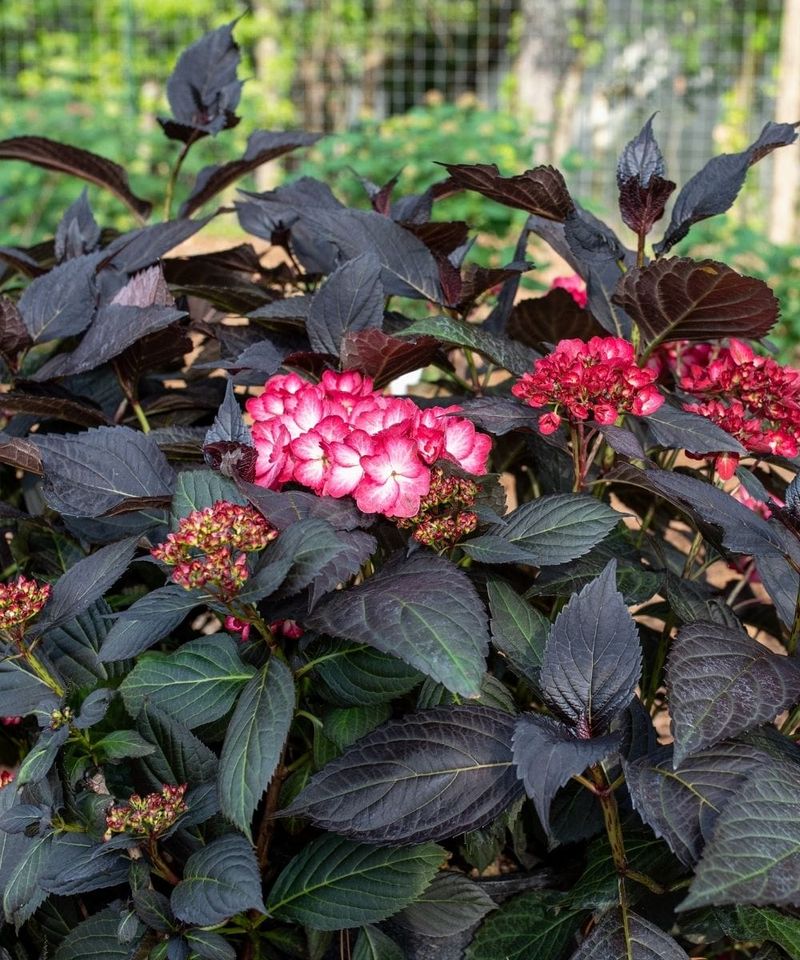
Eclipse’s flowers are genuinely beautiful, but they are also somewhat unpredictable, which is part of what makes bigleaf hydrangeas so interesting to grow. The plant patent describes the inflorescences as red-pink with creamy-white centers under non-bluing conditions, with amethyst and cranberry tones also possible depending on environmental factors.
Those are documented cultivar characteristics from the breeder, not a promise that your Eclipse will produce exactly that color palette in your Corvallis or Eugene garden.
Soil chemistry plays a significant role in bigleaf hydrangea flower color, particularly soil pH and the availability of aluminum. OSU’s hydrangea care resource explains that acidic soils with available aluminum tend to shift flower color toward blue and purple tones, while more alkaline conditions push flowers toward pink and red.
Oregon’s naturally acidic soils west of the Cascades may nudge Eclipse’s flowers toward cooler tones than the patent description suggests, while gardeners using alkaline irrigation water may see warmer pinks.
Timing and repeat blooming add another layer of uncertainty. The patent describes a roughly four-week bloom period in Georgia and a remontant habit that may allow additional flowering on new growth later in the season.
Oregon’s cooler, foggier summers mean that bloom timing and duration will differ from Georgia’s results, and whether rebloom happens in your garden will depend on establishment, summer water, light, and whether winter cold damaged any new-growth buds. Expect a beautiful display when conditions cooperate, and treat any late-season bonus blooms as a welcome surprise rather than a given.
A beautiful shrub is not the same as a habitat plan
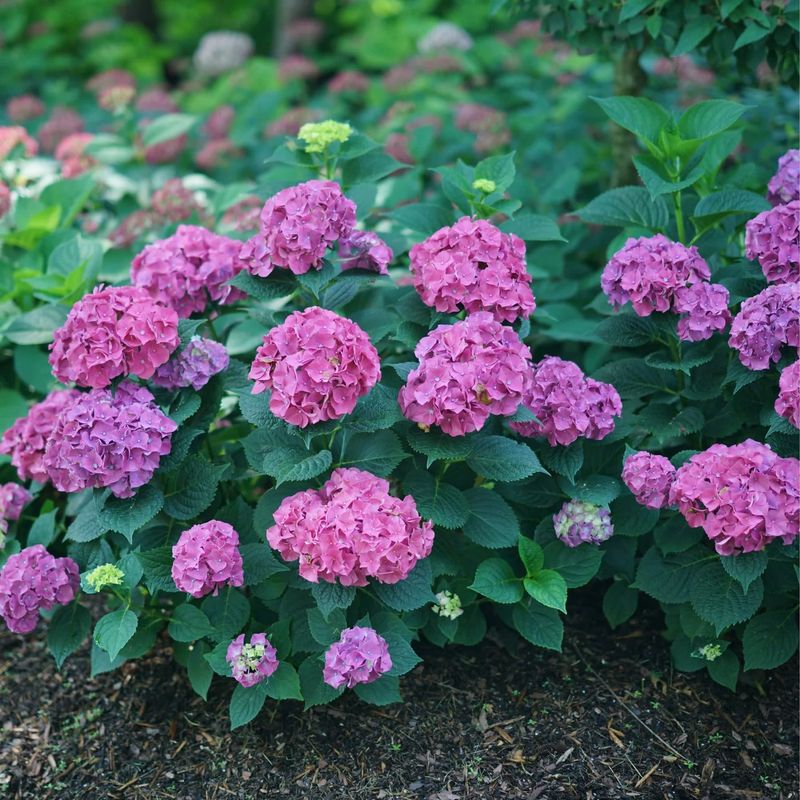
Hydrangea macrophylla originated in East Asia, not the Pacific Northwest, and that matters when you are thinking about what your garden does for local wildlife. NC State Extension’s plant profile notes the species’ East Asian origins, and Penn State Extension’s wild hydrangea resource draws a clear distinction between native hydrangea species and the ornamental cultivars that dominate garden centers.
Eclipse is an ornamental with genuine visual appeal, but it is not a native plant, and it does not carry the co-evolutionary relationships with Oregon insects, birds, and other wildlife that native plants have built over thousands of years.
Mophead hydrangeas like Eclipse have large, showy flower heads made up mostly of sterile florets, which are the big, eye-catching petals that give the globe its shape. University of Maryland Extension’s hydrangea resource explains that these sterile florets do not produce pollen or nectar, while the small fertile flowers tucked within the head can offer some resources to visiting insects.
Lacecap hydrangeas, by comparison, display their fertile flowers more openly and accessibly.
If supporting pollinators and local wildlife is a genuine goal, Eclipse works best as one ornamental element within a broader planting that includes regionally appropriate native plants. OSU Extension’s pollinator-support guide recommends a diverse mix of native flowering plants that provide varied food sources, shelter, and bloom periods across the season.
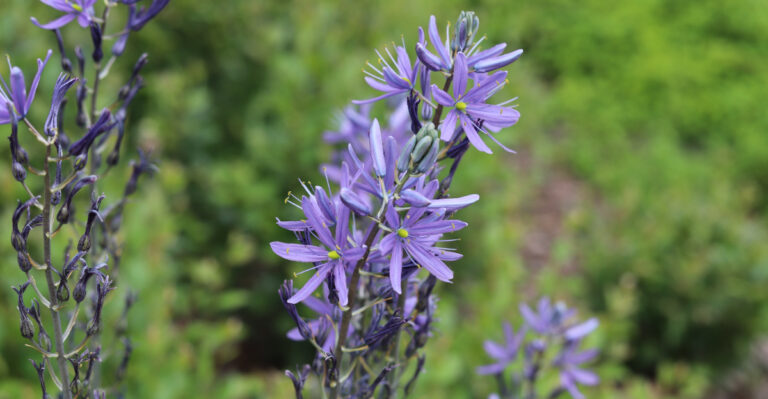
Red flowering currant, native asters, camas, and Oregon grape offer far more to local bees, butterflies, and hummingbirds than any single ornamental hydrangea cultivar can. Let Eclipse earn its place for its drama, and let the natives do the heavier habitat lifting.
Would Eclipse earn a place in your Oregon garden?
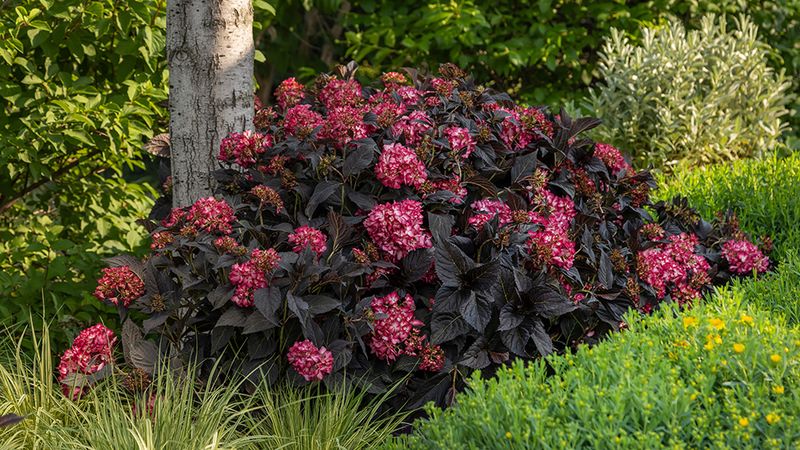
The answer comes down to your site more than your enthusiasm for dramatic foliage, and that is actually good news because sites are something you can assess honestly before spending money. OSU Extension’s Oregon hydrangea overview provides a solid starting checklist: morning sun or dappled light, afternoon shade, well-drained soil, and reliable summer water.
If your garden already provides those conditions for other moisture-loving shrubs, Eclipse has a reasonable chance of delivering the dark-foliage drama the breeder describes.
West-side Oregon gardeners with a sheltered border, a morning-sun bed near a fence, or the bright edge of a tree canopy are the most natural audience for this plant. Pair it with consistent deep watering through summer, some organic mulch, and a light hand with the pruning shears, and the Bailey-described characteristics of persistent dark foliage and mophead blooms have room to show up.
Deep-shade spots, dry gardens, and most high-desert locations are harder fits, and the honest guidance from OSU’s central Oregon waterwise resource is to look toward drought-adapted plants for those conditions instead.
Eclipse is not a carefree shrub, a native plant, a guaranteed rebloomer, or a one-stop pollinator garden. What it is, when the site fits, is a genuinely distinctive ornamental that earns its space through months of dark, moody foliage rather than asking you to wait for a single fleeting bloom.
Sometimes the most interesting thing in a garden is the plant that looks dramatic even before the flowers open.