These Are The Plants Oregon Gardeners Are Using Instead Of Boxwood
Boxwood has a tidy look, but it is not the only way to frame an Oregon garden. Many gardeners want plants with more texture, better seasonal interest, and fewer problems over time.
That is where smart replacements can really shine. The right choice can still give you clean edges, structure, and privacy, but with a softer feel that fits the Pacific Northwest.
Think glossy leaves, compact growth, pretty blooms, or year round color that does more than sit in the background.
Some choices work well for low borders. Others can shape a path, screen a patio, or anchor a mixed bed.
The best part is that these plants can make a yard feel less cookie cutter and more connected to Oregon’s natural style. Choose well, and you may not miss boxwood at all.
1. Weigela Adds Flowers Where Boxwood Only Adds Green
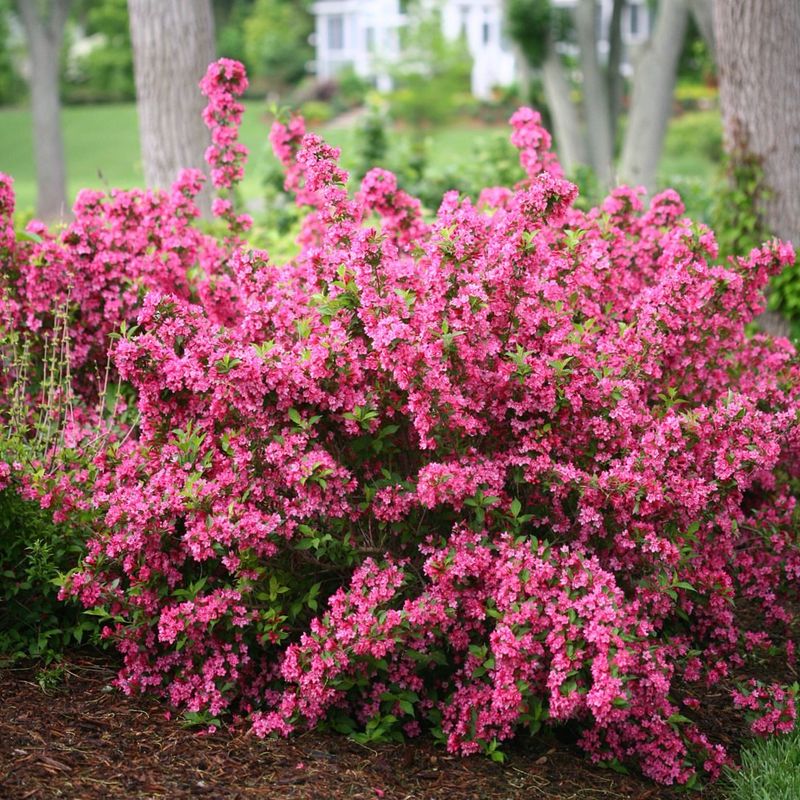
There is something almost joyful about a weigela in full bloom. The trumpet-shaped flowers cover the entire shrub in late spring, drawing in hummingbirds and bees like a magnet.
Boxwood never does anything like that. It just sits there, green and boxy, waiting to be trimmed again.
Weigela is a deciduous shrub, which means it drops its leaves in fall. Some gardeners see that as a downside, but the tradeoff is a spectacular flower show that boxwood simply cannot offer.
The blooms come in shades of pink, red, white, and even bicolor combinations that light up a garden bed.
Most weigela varieties grow between four and six feet tall and wide. They do best in full sun but can handle partial shade, especially in areas where summers get warm.
Our state’s mild climate suits weigela very well, and it rarely needs extra watering once it is established.
Pruning is simple. Cut back about one-third of the oldest stems right after the main bloom period ends.
This keeps the plant open and encourages fresh growth for next year’s flowers. You do not need to clip it into a ball or a box.
It looks great with a natural, arching shape.
Newer varieties like Wine and Roses weigela offer deep purple foliage alongside bright pink flowers. That contrast is striking all season long, not just during bloom time.
For gardeners who want more from their borders, weigela delivers in a big way.
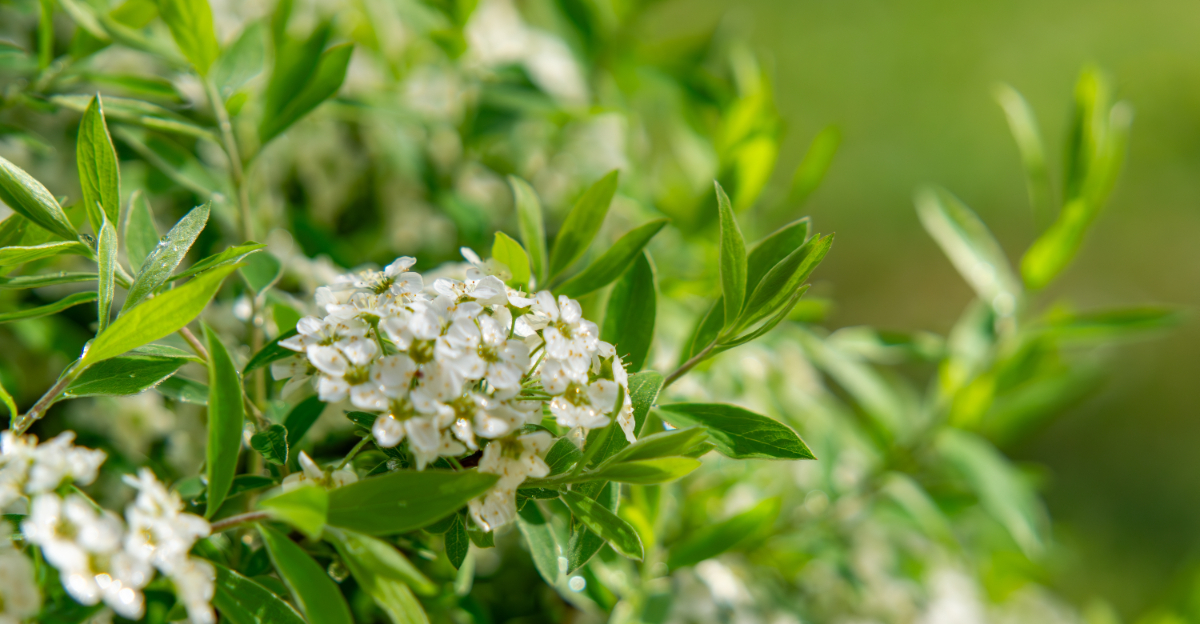
2. Spirea Gives Borders Shape Without The Boxwood Fuss
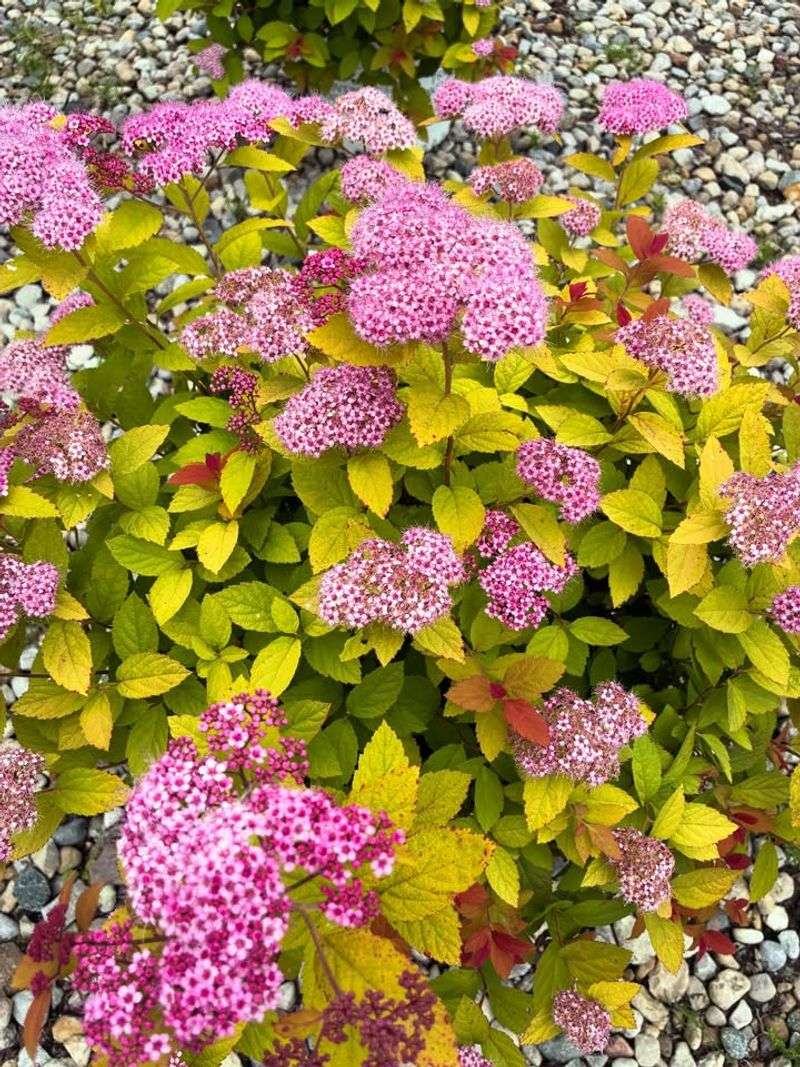
Few shrubs earn their keep as quickly as spirea does. It grows fast, stays tidy, and bursts into bloom every spring without much help from you.
Gardeners across our state have been reaching for spirea when they want clean edges and reliable structure without the disease problems that come with boxwood.
Most spirea varieties stay between two and five feet tall, which makes them perfect for low borders and foundation plantings. You can shear them lightly after blooming to keep them compact.
They bounce back quickly and often push out a second flush of flowers later in the season.
Spirea handles our state’s rainy winters without complaint. The roots do not rot in wet soil the way boxwood roots sometimes do.
Your Oregon Garden Changes Every Week. Your Plan Should Too.
Gardening in Oregon changes quickly throughout the season. Every Friday you’ll receive a simple weekly plan showing exactly what to plant, prune, fertilize, harvest, and protect so you never miss the right timing.
That alone makes it a popular swap for gardeners who have lost boxwood shrubs to soggy ground.
The foliage is another big selling point. Some varieties, like Gold Flame spirea, offer leaves that shift from orange to gold to green as the season changes.
You get color even when the plant is not blooming. That kind of year-round interest is hard to beat in a small shrub.
Pollinators love spirea too. Bees and butterflies flock to the flower clusters throughout spring and early summer.
If you want a border plant that looks good, behaves well, and supports local wildlife, spirea is one of the smartest choices you can make in a Pacific Northwest garden.
3. Hydrangeas Make Foundation Beds Feel Softer And Fuller
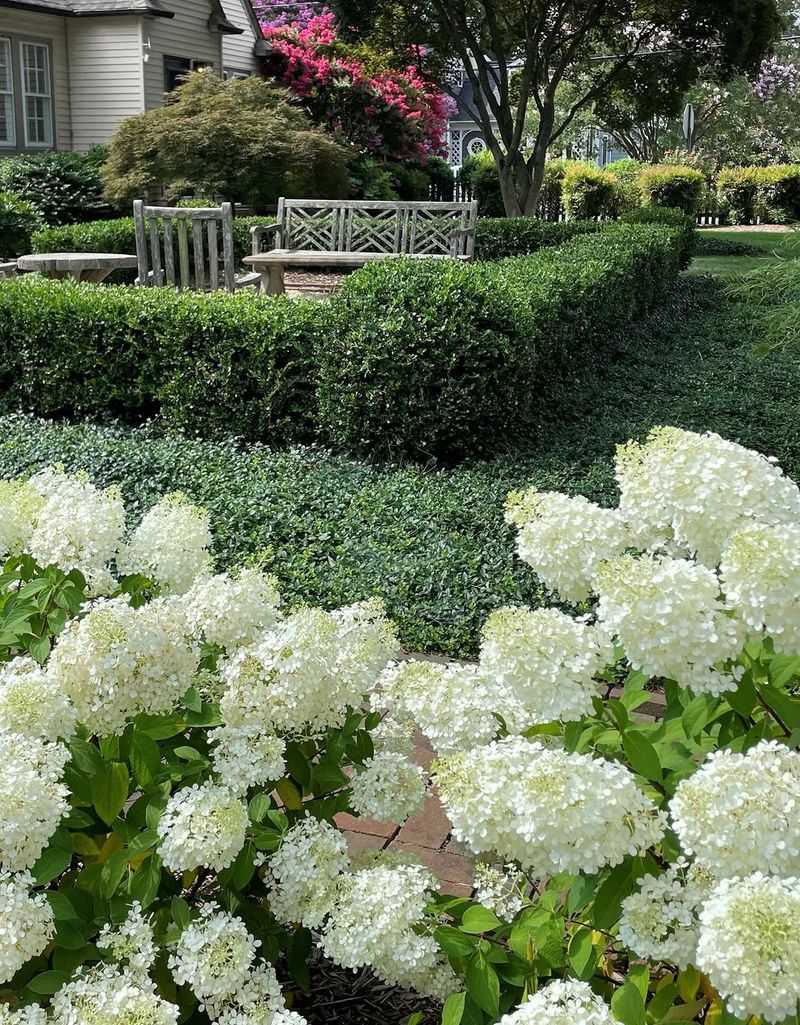
Walk past any neighborhood in our state during summer and you will almost certainly spot hydrangeas.
Their big, bold flower heads turn foundation beds into something that looks designed by a professional.
They have a softness and fullness that no amount of trimmed boxwood can replicate.
Hydrangeas come in several types that suit different garden conditions. Bigleaf hydrangeas love partial shade and moist soil, which makes them a natural fit for our region.
Panicle hydrangeas prefer more sun and are a bit more drought-tolerant once they settle in. Either way, you have options depending on what your yard looks like.
The flowers on bigleaf varieties can actually change color based on your soil’s pH level. Acidic soil, which is common in our region, tends to push the blooms toward blue or purple.
If your soil is more alkaline, the flowers lean pink. It is like having a plant that responds to its environment in real time.
Foundation plantings benefit from hydrangeas because the large leaves create a lush backdrop even when the plant is not in bloom.
The stems hold dried flower heads through fall and winter, adding texture to the garden during the quieter months.
Pruning rules depend on the variety, so it is worth knowing which type you have before you cut anything back.
Cutting at the wrong time can remove next year’s flower buds. A little research up front saves a lot of disappointment later in the season.
4. Rhododendrons Handle Oregon Shade With Big Evergreen Leaves
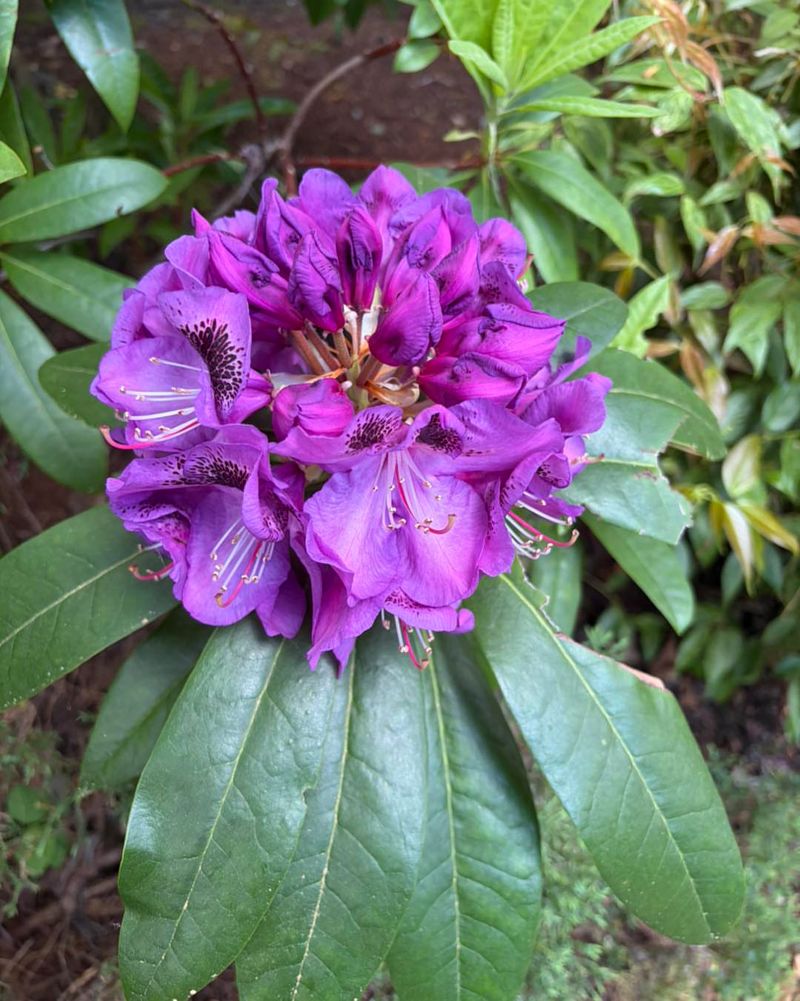
Our state practically runs on rhododendrons. They are everywhere, from city gardens to mountain slopes, and for good reason.
These tough evergreen shrubs thrive in the shady, acidic conditions that our region naturally provides. Where boxwood struggles under a tree canopy, rhododendrons absolutely flourish.
The leaves are one of rhododendron’s greatest assets. They are large, leathery, and deep green year-round.
Even in the middle of winter, a rhododendron looks full and healthy. That kind of evergreen presence is exactly what gardeners want when they are replacing boxwood in a shady spot.
Bloom time is another major draw. In spring, rhododendrons explode with clusters of flowers in shades of purple, pink, white, red, and lavender.
The display can last several weeks depending on the variety and the weather. Some early bloomers start flowering as soon as late winter, which is a welcome sight after the gray months.
Rhododendrons do best in well-drained, slightly acidic soil with some organic matter mixed in. They do not like wet feet, so raised beds or sloped areas work well for them.
Once established, they are remarkably self-sufficient. Regular deep watering during dry summers helps them stay strong.
Size varies widely by variety. Some stay compact at three or four feet.
Others can grow into small trees over time. Choosing the right variety for your space from the start prevents the need for heavy pruning later.
Many local nurseries carry varieties specifically selected for our regional conditions.
5. Azaleas Bring Spring Color To Boxwood-Heavy Beds
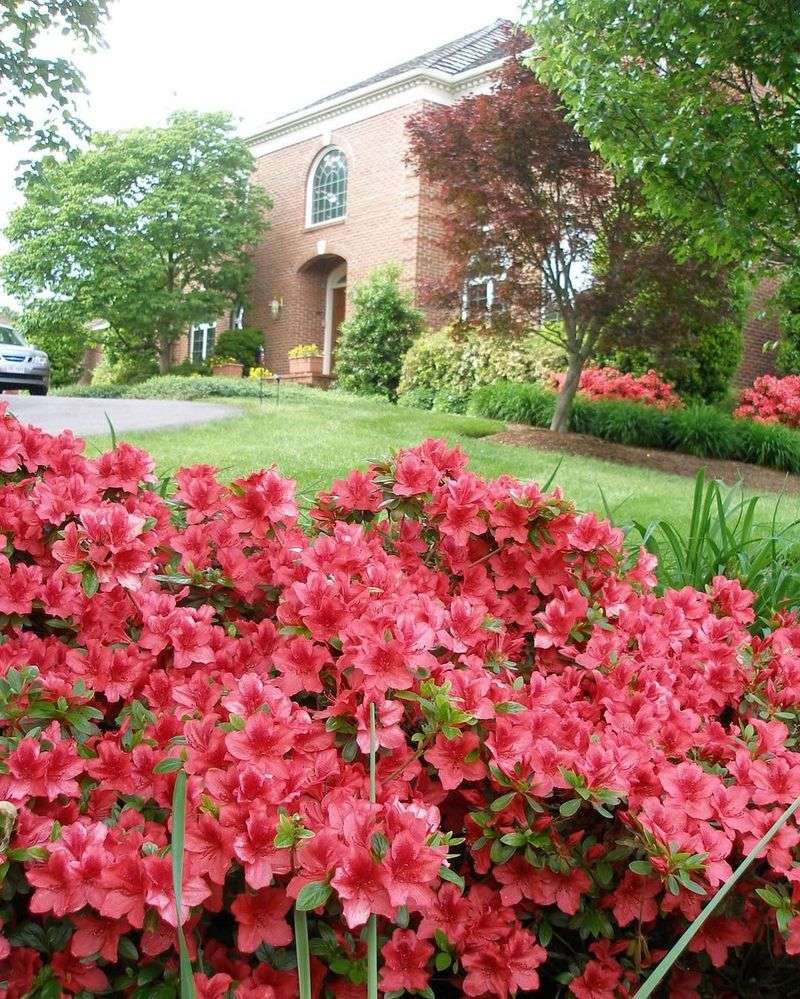
Some plants whisper. Azaleas shout. When they bloom in spring, the color is so intense it stops people in their tracks.
Gardeners who have been relying on plain green boxwood to anchor their beds often get their first azalea and never look back. The transformation is that dramatic.
Azaleas are closely related to rhododendrons and share many of the same growing preferences. They love slightly acidic soil, good drainage, and partial shade.
Our state’s naturally acidic soil gives them a head start right from planting day. You do not have to do much to get them going.
There are both deciduous and evergreen azalea types. Evergreen varieties hold their small, glossy leaves through winter, which gives the garden some structure even in the off-season.
Deciduous types drop their leaves but often offer a bonus of fall color before they do. Both types earn their place in a Pacific Northwest garden.
Compact varieties like Encore azaleas are especially popular for foundation beds and borders. Some Encore types actually rebloom in fall, giving you two flower shows in a single year.
That kind of performance in a small shrub is hard to argue with.
Maintenance is minimal once the plant is settled. Light pruning right after the spring bloom helps shape the plant without removing next year’s buds.
Mulching around the base keeps roots cool and moist during summer. With just a little attention, azaleas reward you with years of spectacular spring color.
6. Camellias Add Glossy Leaves And Cool-Season Blooms
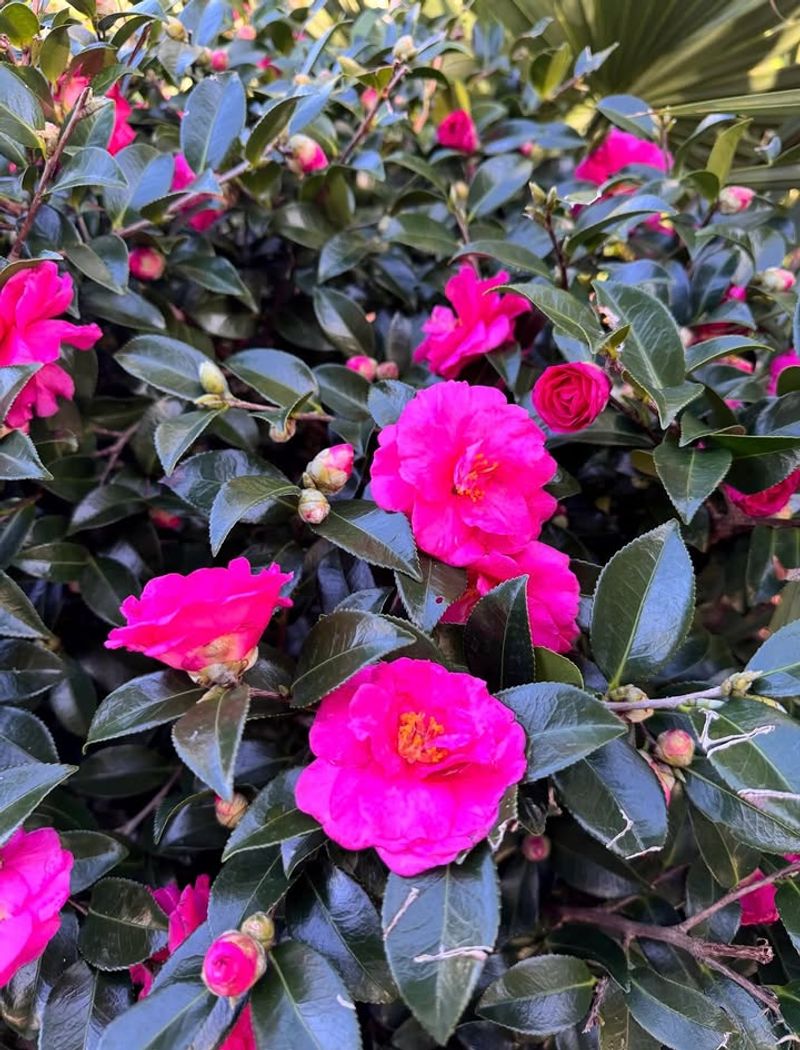
Most flowering shrubs take a break during the cool, gray months that define our winters. Camellias do the opposite.
They bloom when almost nothing else does, pushing out large, waxy flowers in shades of pink, red, white, and bicolor right through the coldest part of the year. That alone makes them worth growing.
The foliage is just as impressive as the flowers. Camellia leaves are deep green, thick, and glossy, giving the shrub a polished, formal look that works beautifully in foundation beds and hedges.
When people talk about wanting something to replace boxwood, they often describe exactly what a camellia looks like.
Camellias prefer partial shade and well-drained, acidic soil. Our region’s natural soil chemistry and mild, wet winters create nearly ideal conditions for them.
They are not as cold-hardy as rhododendrons, so in northern or higher-elevation parts of our state, a sheltered spot near a wall or fence offers helpful protection.
Growth is slow and steady. Most camellias add about a foot of height per year, which means they stay manageable for a long time without heavy pruning.
Shaping them lightly right after blooming keeps them tidy without stressing the plant.
One thing gardeners love about camellias is how long the bloom season lasts. Depending on the variety, flowers can appear from October all the way through March.
Choosing a mix of early, mid, and late-blooming varieties extends that color window even further across the season.
7. Pieris Gives Oregon Gardens Evergreen Structure And Flowers
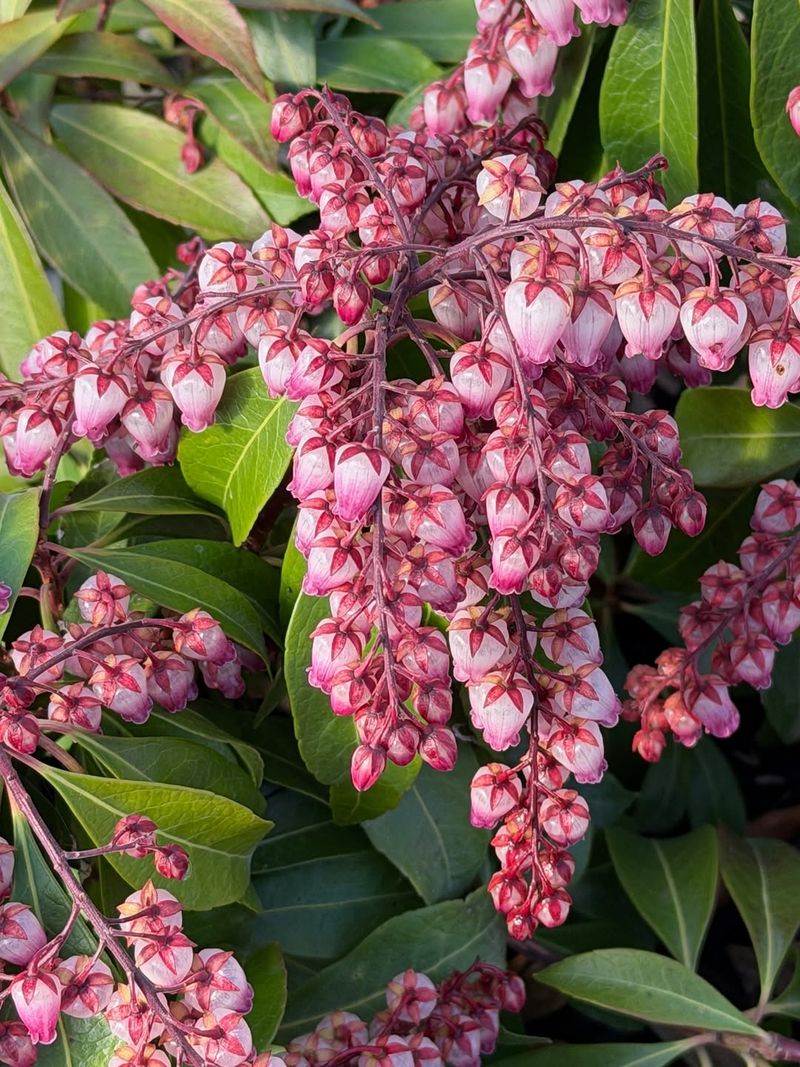
Not many shrubs can claim to look interesting in every single month of the year. Pieris is one of the rare ones that actually pulls it off.
In late winter, dangling clusters of white or pink flower buds form at the branch tips. By early spring, those buds open into bell-shaped blooms that drift like tiny strings of pearls.
Right after blooming, the new growth emerges in brilliant shades of red, orange, or bronze. That flush of new foliage is so vivid that people sometimes mistake it for flowers.
As the season moves on, those leaves gradually deepen to rich green, giving the plant a layered, multi-toned look that lasts through summer.
Pieris thrives in the same conditions that rhododendrons and azaleas love. Partial shade, acidic soil, and consistent moisture suit it perfectly.
Our state’s damp climate is practically tailor-made for this shrub. It rarely needs supplemental watering except during the hottest and driest stretches of summer.
Size stays manageable for most garden situations. Many varieties top out between four and eight feet, though there are compact types that stay under three feet.
Slow growth means less pruning and less maintenance overall, which is a big reason why this shrub is gaining popularity as a boxwood replacement.
One important note: all parts of pieris are toxic to livestock and pets, so placement matters if animals roam your yard.
For most home gardens, though, it is a stunning, low-fuss evergreen that earns its space many times over throughout the year.
8. Ninebark Brings Tough Texture Without Constant Clipping
If you have ever grown boxwood and spent half your weekends trimming it into submission, ninebark might feel like a revelation.
This native North American shrub is rugged, fast-growing, and loaded with personality. It does not ask for much, and it gives back more than most gardeners expect.
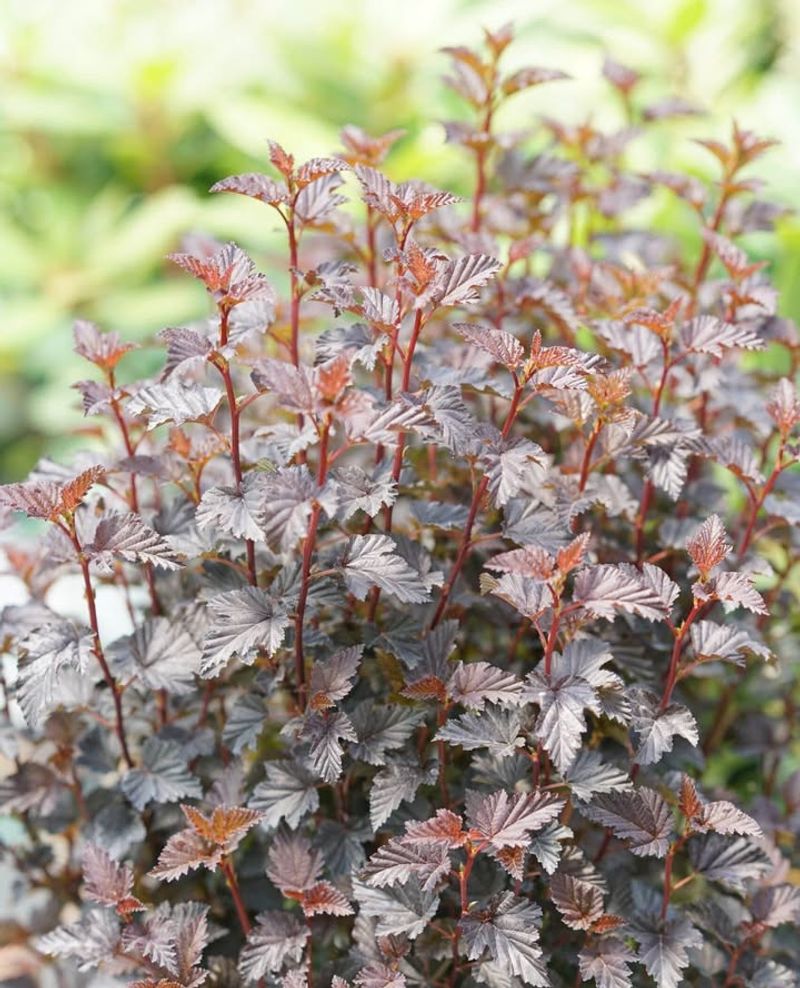
The foliage is the first thing people notice. Varieties like Diablo and Summer Wine offer deep burgundy or purple leaves that hold their color all season long.
That richness of tone creates contrast in a mixed border that plain green boxwood simply cannot provide. Pair it with yellow-flowered plants or silver-leaved perennials for a striking combination.
In late spring, clusters of small white or pale pink flowers cover the branch tips. After blooming, reddish seed capsules form and persist through fall, adding another layer of seasonal interest.
Birds are drawn to those seed heads, so you get wildlife activity in the garden as a bonus.
Ninebark earns its tough reputation through adaptability. It handles clay soil, occasional drought, and wet winters without flinching.
In our state, where soil conditions vary widely from the coast to the valley to the foothills, that flexibility is genuinely useful. It grows well in full sun or partial shade.
Pruning is optional rather than mandatory. You can let ninebark grow into its natural vase shape, which is graceful and full.
If you want to keep it tighter, cut back the oldest stems at the base every few years. That simple approach keeps the plant healthy and looking its best without constant work.
9. Potentilla Keeps Sunny Borders Low And Blooming
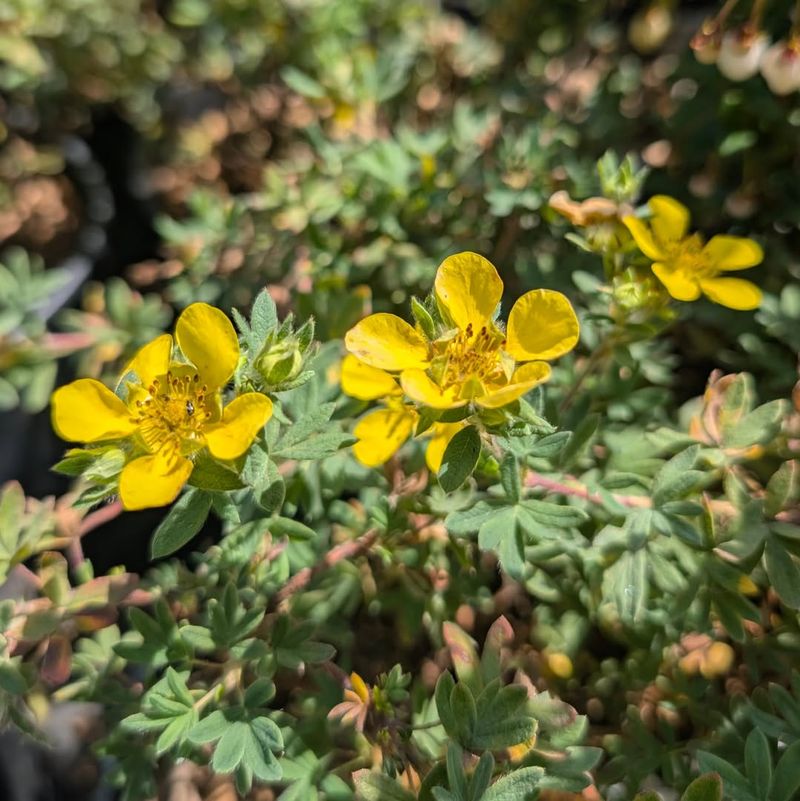
Some gardeners need a plant that stays small, blooms for months, and does not complain about the heat. Potentilla checks all three boxes with ease.
Also known as shrubby cinquefoil, this compact little shrub has been a quiet workhorse in Pacific Northwest gardens for years, and it deserves far more attention than it usually gets.
The flowers are cheerful and simple, looking a bit like small wild roses. Most varieties bloom in shades of yellow, but you can also find white, orange, and soft pink options.
The blooming season is remarkably long, often stretching from late spring all the way through the first fall frosts. Few shrubs of this size can match that kind of staying power.
Potentilla stays naturally compact, usually between two and four feet tall and wide. That makes it ideal for the front of a border, along a driveway edge, or anywhere you need low, tidy structure without constant trimming.
It holds its shape well on its own without being forced into a formal silhouette.
Full sun is where potentilla really shines. It tolerates poor, dry soil better than most shrubs, which is a real advantage in sunnier, drier parts of our state.
Once established, it rarely needs supplemental watering. Good drainage is more important than rich soil for this plant.
Light pruning in early spring freshens the plant up and encourages vigorous new growth. Remove any old, woody stems from the base every few years to keep the center open.
Beyond that, potentilla practically takes care of itself all season long.