Here Are The Signs A Groundhog Is Damaging Your New Jersey Garden

Groundhogs are patient. They will wait until your back is turned, your garden is thriving, and your tomatoes are almost ready to pick.
Then they move in. These stocky, relentless diggers are a familiar presence across New Jersey, and they have a talent for dismantling a well-tended garden before you even realize what is happening.
Learning how to spot the signs early is the difference between a minor nuisance and a full-scale crop loss. Groundhogs are not just casual grazers.
A single animal can put away more than a pound of vegetation in a single day, and they are not picky. Beans, peppers, lettuce, carrots, if it is growing in your garden, it is on their radar.
The eight signs below will help you figure out fast if a groundhog is behind the damage in your New Jersey garden, and what you can do about it before things spiral.
1. Large Burrow Entrances Show Up Near Your Garden Beds
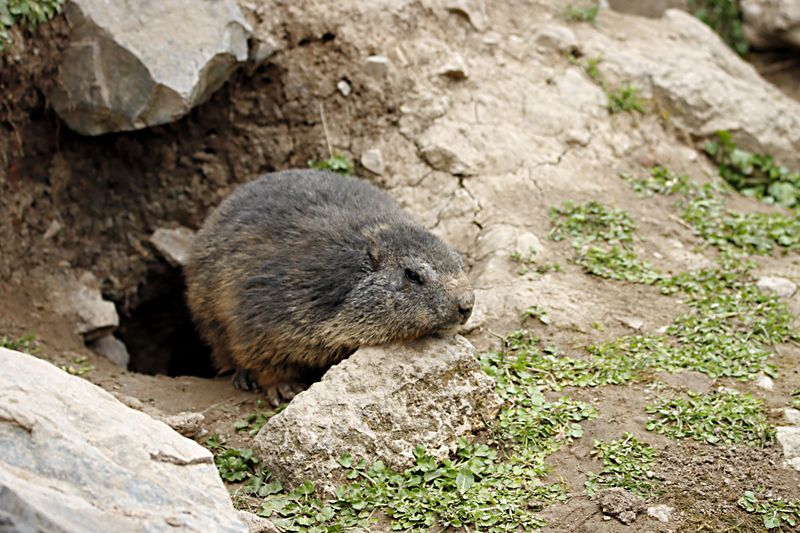
A gaping hole appears overnight near your tomatoes. That is a red flag you cannot afford to ignore.
Groundhog burrows are surprisingly large. The main entrance is typically ten to twelve inches in diameter, wide enough to be hard to miss.
Unlike mole tunnels, which stay underground, groundhog holes open straight up from the surface. You will usually spot a pile of loose dirt right next to the opening.
Groundhogs are strategic diggers. They often place burrow entrances near garden beds because food is close and cover from shrubs or fences gives them a sense of safety.
Check the soil around your raised beds and along fence lines. A burrow entrance there almost guarantees the animal is eating from your garden regularly.
One burrow can have multiple entrances. Groundhogs often dig a hidden back exit a few feet away from the main hole.
Look for flattened grass or disturbed mulch near the secondary openings. These escape routes are how groundhogs avoid predators.
The tunnels themselves can stretch up to fifty feet or more underground. That kind of digging can destabilize raised beds and loosen plant roots over time.
Filling the hole without addressing the animal rarely works. Groundhogs will often re-dig within a day or two.
Your best move is to identify all entrances before deciding on a removal method. Knowing the full scope of the burrow system helps you act more effectively.
2. Vegetables Start Disappearing Overnight

You planted those beans with care. Now half of them are just gone.
Groundhogs are most active during early morning and late afternoon. But they will feed at dusk too, making it look like the damage happened overnight.
Leafy greens tend to go first. Lettuce, kale, spinach, and Swiss chard are groundhog favorites, and a hungry animal can strip a row clean in one sitting.
Beans, peas, and broccoli are also high on their list. If your bean plants were thriving yesterday and look bare today, a groundhog is a likely suspect.
What makes this tricky is that other animals, like rabbits and deer, also feed on vegetables. The key difference is the scale of the damage.
Your New Jersey Garden Changes Every Week. Your Plan Should Too.
Gardening in New Jersey changes quickly throughout the season. Every Friday you’ll receive a simple weekly plan showing exactly what to plant, prune, fertilize, harvest, and protect so you never miss the right timing.
Groundhogs eat more aggressively and lower to the ground. They often chew plants down to a short stub rather than just nibbling the tips.
Check the height of the damage. Groundhogs typically feed between ground level and about eighteen inches up.
Also look for tracks near the missing plants. Groundhog prints show four toes on the front feet and five on the back, with visible claw marks in soft soil.
Setting up a simple wildlife camera overnight can confirm what is raiding your garden. Even a basic model will capture clear footage in low light.
Once you confirm a groundhog is the culprit, you can start planning a targeted response before you lose more of your hard-earned harvest.
3. Shallow Bite Marks Appear On Plants
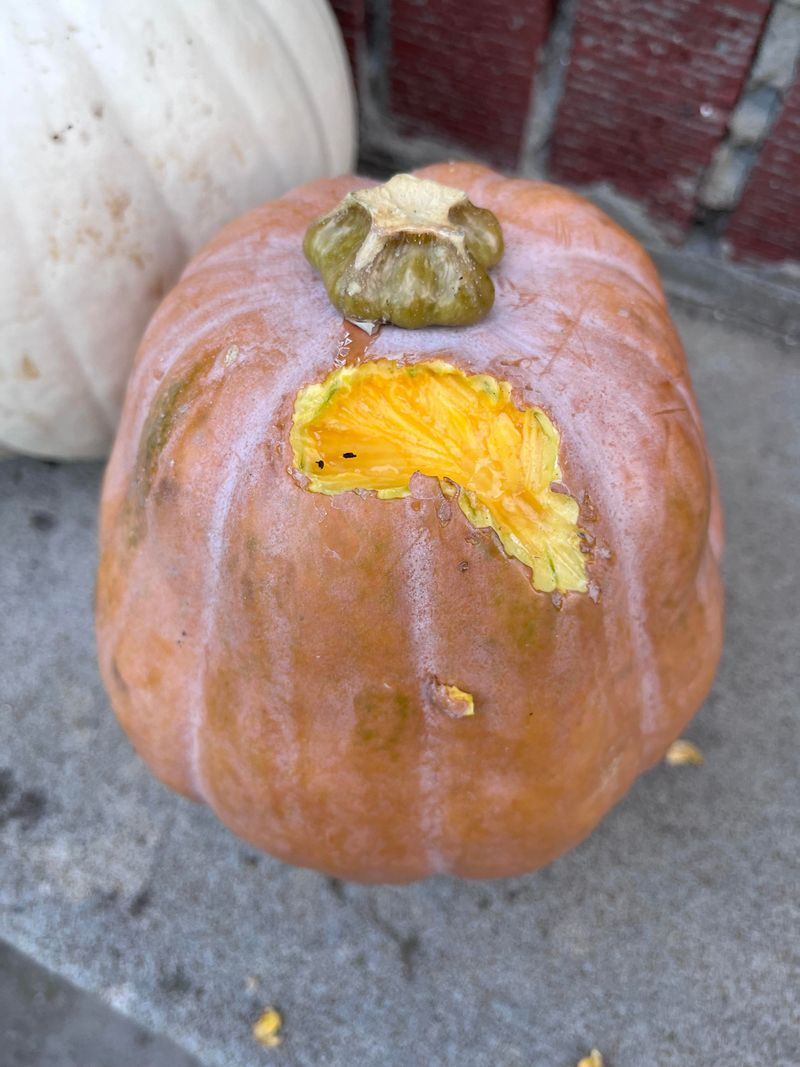
Not all bite marks are created equal. Groundhog bites have a distinct look that sets them apart from other garden pests.
Groundhogs have large, flat incisors designed for cutting through tough stems. Their bite marks are wide and clean, almost like someone used a dull pair of scissors.
Rabbits leave a neat, angled cut on plant stems. Deer tend to tear and shred. Groundhog damage falls somewhere in between but with a wider, blunter edge.
Look closely at the base of your pepper plants, squash vines, or sunflower stalks. If the cut edge looks broad and slightly ragged, a groundhog likely did it.
Groundhogs also gnaw on thicker stems that smaller animals avoid. They can bite through a mature bean plant stalk or a young fruit tree branch without much effort.
Check leaves for large, irregular chunks missing from the edges. Groundhogs do not nibble delicately. They take generous bites and move on to the next plant.
Sometimes you will find a partially eaten vegetable left on the ground nearby. Groundhogs are not tidy eaters, and they often drop food mid-meal.
Look for bite marks at multiple heights on the same plant. Groundhogs stand on their hind legs to reach higher growth when they want to.
Catching this pattern early helps you confirm the pest and take action before the damage spreads across more of your garden beds.
Protecting your plants starts with knowing exactly what is eating them.
4. Unexplained Mounds Of Dirt Dot The Soil
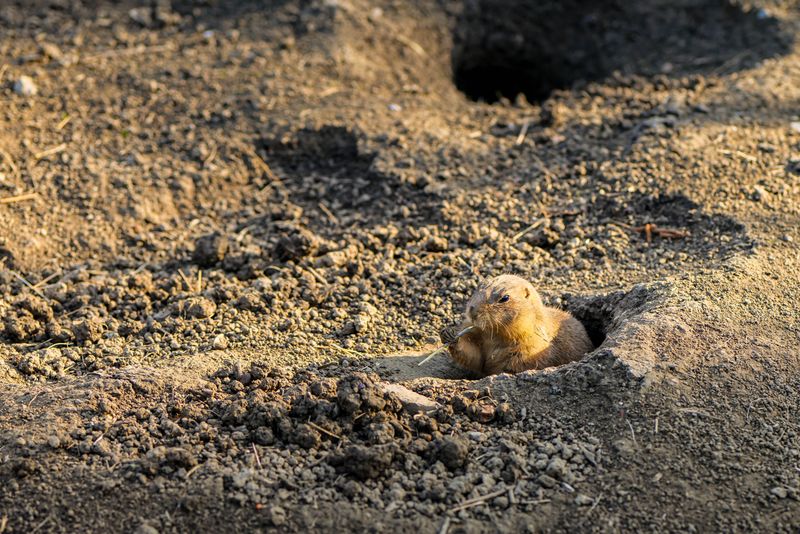
Waking up to mystery mounds in your garden is jarring. It feels like something was very busy while you slept.
Groundhog burrowing pushes large amounts of soil to the surface. The mounds they leave behind are usually loose, crumbly, and appear suddenly near garden borders or fence lines.
These dirt piles are different from mole hills. Mole mounds are small and volcano-shaped. Groundhog mounds are flatter, larger, and often spread out around a burrow entrance.
The soil pushed up by a groundhog can smother low-growing plants nearby. Seedlings and ground-cover plants are especially vulnerable to being buried under fresh soil.
Multiple mounds in a cluster suggest an active, expanding burrow system. Groundhogs do not stay in one place for long if food is plentiful.
Check around the edges of your raised beds and along the base of any garden walls. Those spots attract groundhogs because the structure gives them a reference point for digging.
Fresh mounds with dark, moist soil signal recent activity. Dry, crusted mounds suggest the animal may have moved on temporarily.
Do not just rake the mounds flat and walk away. Leveling the soil without addressing the burrow means the problem will return within days.
Mark each mound with a small flag or stick so you can track where new ones appear. Mapping the activity helps you understand the groundhog’s movement pattern.
Mapping the activity helps you understand the groundhog’s movement pattern before it expands.
5. Worn Pathways Cut Through Your Lawn
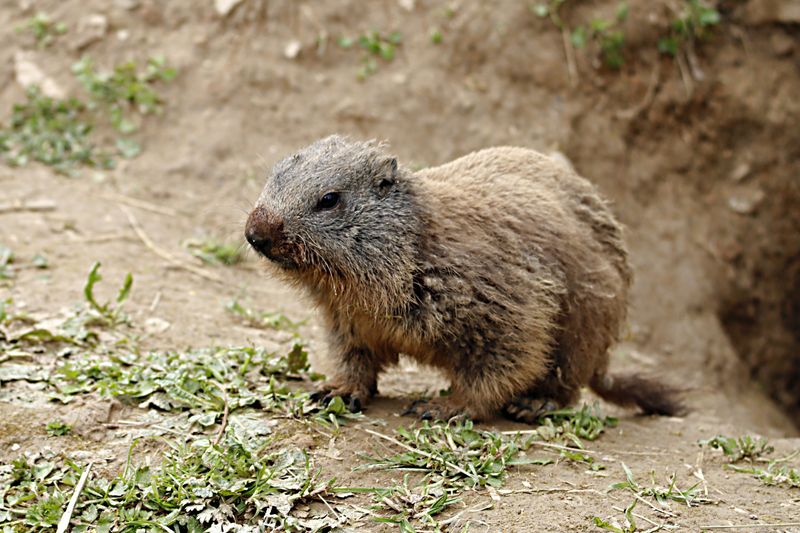
Your lawn suddenly has trails that were not there before. Those faint lines in the grass are telling you something important.
Groundhogs are creatures of habit. They travel the same routes repeatedly between their burrow and their food source.
Over time, these repeated trips wear down the grass and create visible paths. The trails are usually about four to six inches wide and follow a fairly straight line.
Look for worn pathways leading from a wooded edge, a brushy fence line, or a compost pile toward your garden. That route is the groundhog’s daily commute.
The grass along these trails often looks flattened, yellowed, or completely worn away. In dry weather, you may even see bare soil along the path.
Worn trails are one of the more underrated signs a groundhog is damaging your garden. Many gardeners mistake them for foot traffic or pet activity.
Check for accompanying clues like droppings along the trail. Groundhog droppings are small, oval-shaped, and dark brown, similar to rabbit pellets but slightly larger.
You may also notice fur caught on low fencing or thorny shrubs along the trail. Groundhog fur is coarse and grayish-brown with a grizzled appearance.
Once you identify the path, you have a major advantage. Knowing the animal’s travel route helps you position deterrents, traps, or fencing in exactly the right spot.
A trail through your lawn is essentially a map to the problem, and now you know how to read it.
6. Root Vegetables Are Getting Pulled From the Ground

Finding your carrots half out of the ground is a strange sight. It looks like something tried to harvest them before you did.
Groundhogs love root vegetables. Carrots, beets, turnips, and sweet potatoes are irresistible to them, especially once the roots start to swell.
Unlike above-ground feeding, root vegetable damage is harder to spot early. You may not notice until you go to harvest and find the roots chewed or completely missing.
Groundhogs use their powerful claws to loosen soil around the base of plants. Then they grab the greens and pull, often bringing the root up with them.
Signs to watch for include wilting tops on otherwise healthy plants. When a root vegetable wilts without obvious cause, something may have disturbed the root below.
Also check for small excavation sites in your root vegetable rows. Groundhogs dig shallow holes to reach buried food, leaving a mess of loose soil behind.
Partially eaten carrots or beets left on the surface are a giveaway. Groundhogs sometimes drop food after taking a few bites and move to the next plant.
This type of damage can wipe out an entire row of carrots before you realize what is happening. Root crops take weeks to grow, so losing them late in the season stings.
Covering your root vegetable beds with a wire mesh just below the soil surface can block groundhog digging. Even a simple barrier at ten to twelve inches deep can make a big difference for your harvest.
7. Gnaw Marks Show Up On Wooden Garden Structures
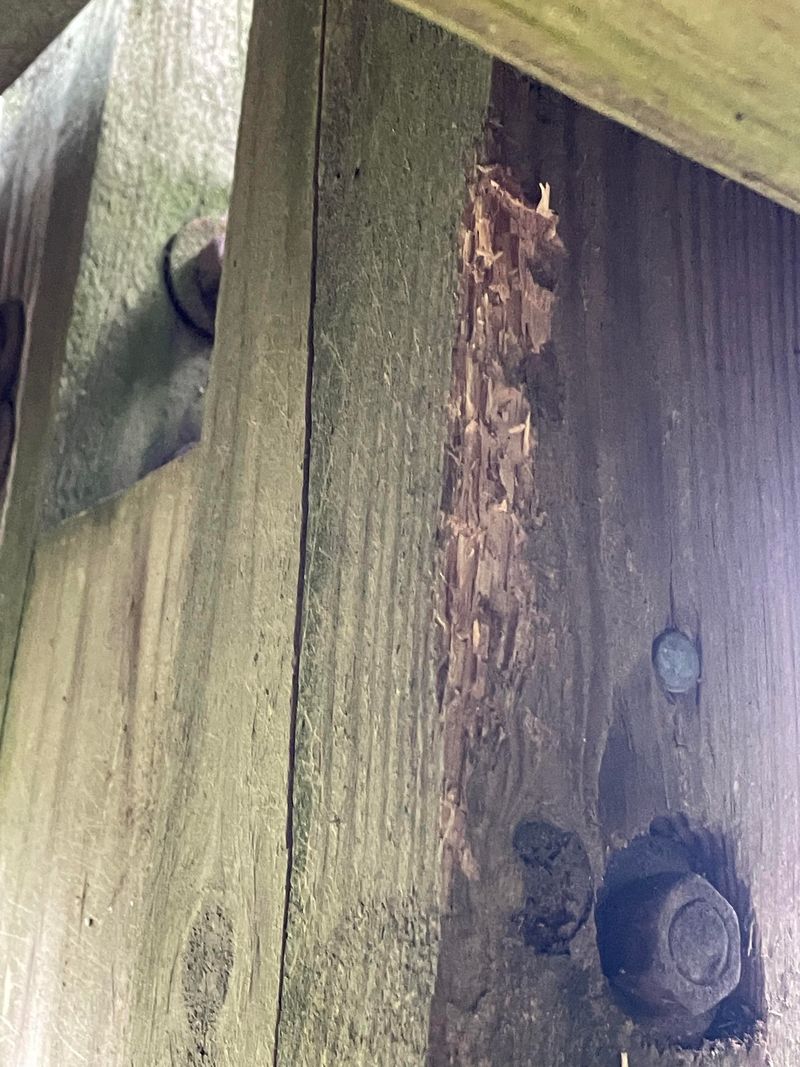
Your raised bed frame has teeth marks on it now. That is not rot, and it is not termites.
Groundhogs are rodents, which means their teeth never stop growing. To keep their incisors manageable, they chew on hard surfaces regularly.
Wooden garden structures are prime targets. Raised bed frames, fence posts, tool handles, and garden stakes all show up on a groundhog’s chewing list.
The marks left behind are wide and deep, often running in parallel grooves. Fresh gnaw marks will show bright, pale wood beneath the surface, making them easy to identify.
Check the lower portions of your raised bed corners first. Groundhogs tend to gnaw at ground level or just above it where they can brace themselves comfortably.
Garden fencing is also at risk. Groundhogs will chew through thin wooden slats or even the base of wooden fence posts to create an opening wide enough to squeeze through.
Composite or treated lumber slows them down but does not always stop them. A determined groundhog can do surprising damage to pressure-treated wood over several weeks.
Wrapping vulnerable wood with metal flashing or hardware cloth can protect your structures. Even a strip of aluminum along the base of a raised bed makes chewing far less appealing.
Finding these marks early means you can reinforce your structures before the damage becomes structural. A crumbling raised bed frame is an expensive fix that a little metal flashing could have prevented.
8. Plants Begin Wilting From Damaged Root Systems
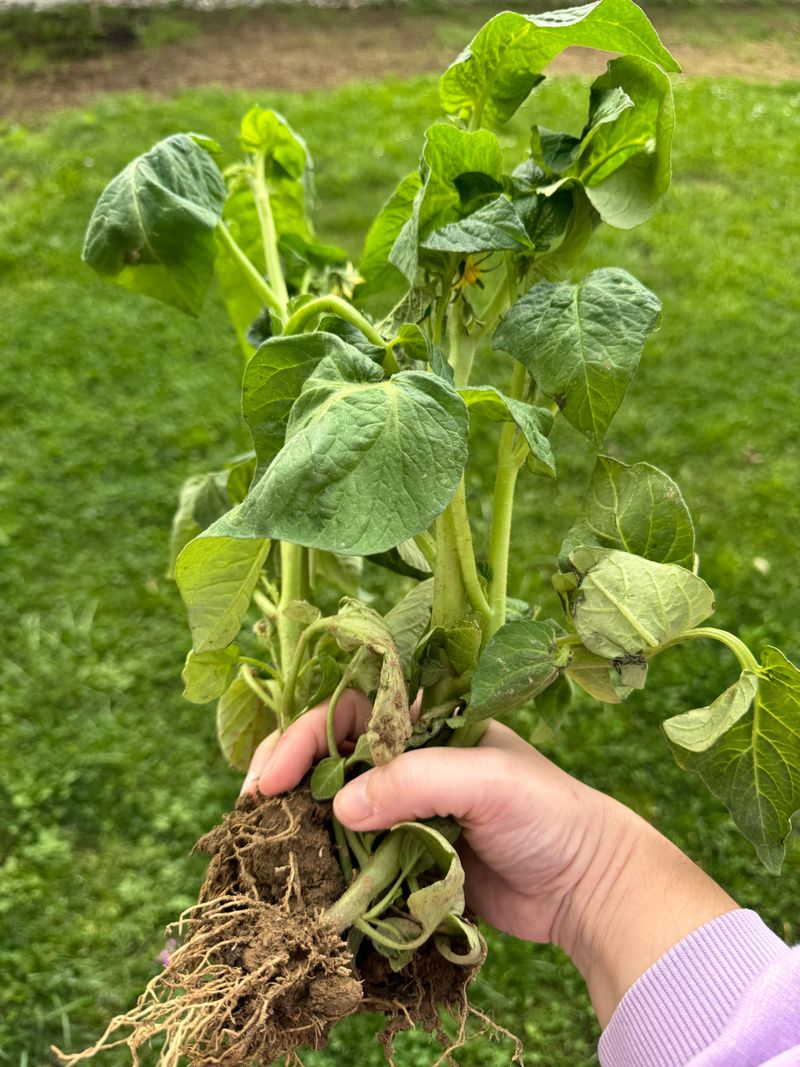
A plant that wilts for no obvious reason is sending you a distress signal. The problem might be happening underground.
Groundhog tunnels can run directly beneath garden beds. As the animal digs, it cuts through plant roots and disrupts the soil structure that holds moisture in place.
Plants with damaged roots cannot pull water up efficiently. Even after a good rain, a plant with severed roots will droop and look stressed within a day or two.
Look for wilting that does not improve after watering. That is a key sign the issue is below the surface rather than a lack of rainfall.
Gently press the soil around wilting plants. If it feels unusually loose or hollow beneath the surface, a burrow tunnel may be running close by.
Sometimes you can actually feel the ground shift slightly when you press down near an active tunnel. That subtle give in the soil is a clue worth investigating.
Pull a wilting plant up carefully and examine the roots. Broken, frayed, or completely missing root sections point to underground disturbance from burrowing activity.
Transplanting the affected plant will not solve the problem if the tunnel remains active. The groundhog will likely damage the new root growth over time.
Addressing the burrow directly is the only lasting fix. Whether you choose live trapping, professional removal, or exclusion fencing, acting on the signs a groundhog is damaging your garden protects every plant in its path.