Here’s Why Rats Show Up Around Bird Feeders In California Yards
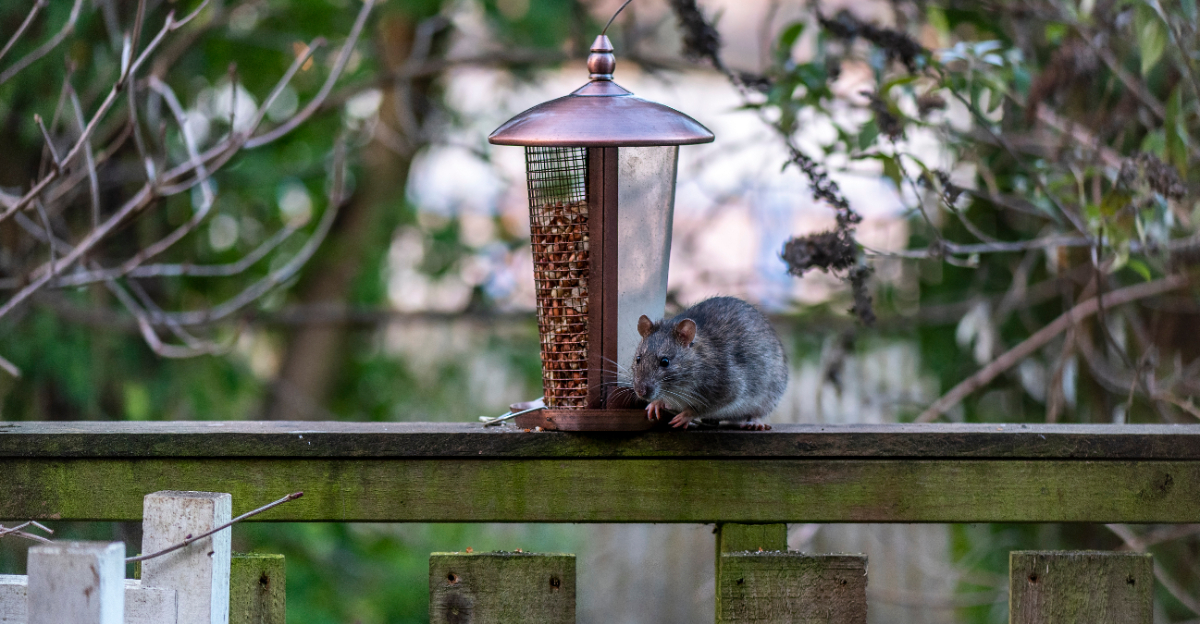
A bird feeder can make a California yard feel lively and welcoming, but birds are not always the only ones paying attention. When rats start showing up nearby, the feeder is often a big part of the reason.
Seed spills, loose husks, and easy shelter under dense shrubs or decks can turn a simple feeding station into an open invitation. In California’s mild climate, that food source can attract unwanted visitors fast, especially in neighborhoods where rats are already active.
The frustrating part is that many homeowners do not realize the connection until the problem is hard to ignore. The good news is that bird feeders do not have to become a magnet for pests.
Once you understand what is drawing rats in, a few simple changes can help you keep the birds you want without encouraging the ones you definitely do not.
1. Spilled Seed Becomes Easy Food
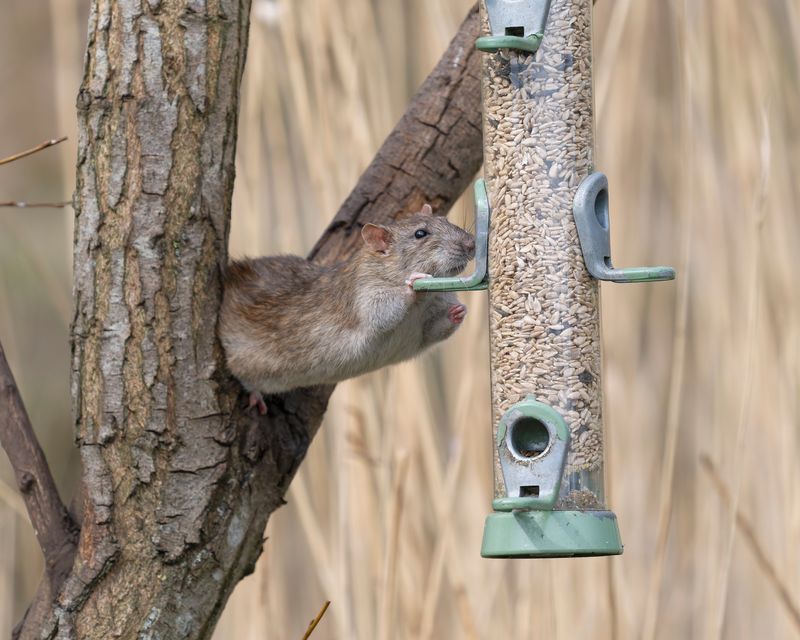
Every time a bird lands on a feeder, seeds go flying. Birds are messy eaters, and they knock out way more food than they actually consume.
All those fallen seeds pile up on the ground, and rats notice quickly.
In California yards, this happens year-round because the mild climate means birds feed in every season. Rats are always searching for reliable food sources, and a patch of scattered seed is like a welcome sign.
They do not have to work hard at all.
Sunflower seeds, millet, and cracked corn are especially attractive to rodents. These are calorie-rich foods that rats love just as much as birds do.
Cleaning up spilled seed every day makes a real difference.
Try using a tray attachment under your feeder to catch falling seed before it hits the ground. Trays are inexpensive and easy to find at garden stores.
Switching to hulled or no-waste seed blends also helps since there are fewer leftovers. Less mess on the ground means fewer reasons for rats to visit your yard each night.
2. Feeders Create A Daily Food Source
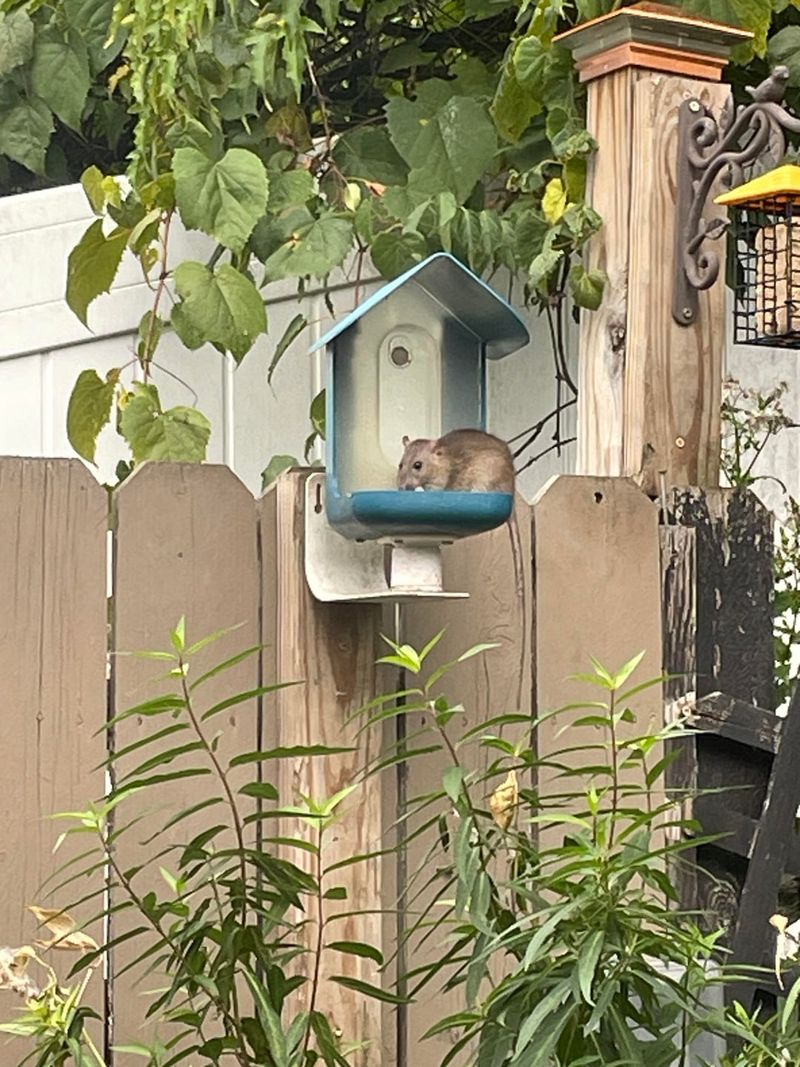
Rats are creatures of habit. Once they find a reliable food source, they return to it every single day.
A bird feeder that gets refilled regularly is exactly the kind of steady supply they look for.
In California, where outdoor living is common and many people maintain backyard feeders all year long, rats have plenty of opportunities. They learn the schedule fast.
If seeds are added every morning, rats will plan their visits around that routine.
This predictable pattern is one of the biggest reasons rodents stick around. They are not just passing through.
They are setting up a home base near your feeder because the food never stops coming.
One smart approach is to only fill feeders with the amount of seed birds can finish before nightfall. Rats are most active after dark, so removing leftover food in the evening cuts off their access.
You can also take feeders inside overnight as a simple but highly effective strategy. Consistency matters here.
Making your yard unpredictable for rats is one of the best ways to discourage them from treating your California garden like their personal dining spot.
Your California Garden Changes Every Week. Your Plan Should Too.
Gardening in California changes quickly throughout the season. Every Friday you’ll receive a simple weekly plan showing exactly what to plant, prune, fertilize, harvest, and protect so you never miss the right timing.
3. Dense Shrubs Offer Quick Cover

Rats do not like being out in the open. They feel safest when they can dart in and out of cover quickly.
Dense shrubs, overgrown bushes, and thick ground cover near your feeder give them exactly the shelter they need.
California yards are often full of lush landscaping, from bougainvillea to ivy to ornamental grasses. While these plants look beautiful, they can become hiding spots for rodents.
Rats build nests and travel corridors through thick vegetation, moving around your yard almost invisibly.
When a feeder sits close to dense plants, rats feel bold enough to visit more often. The cover gives them confidence.
They can grab food and disappear into the bushes within seconds.
Trimming shrubs and keeping vegetation well-maintained near your feeder area is a practical step that many California homeowners overlook. Try to maintain a clear, open zone of at least three to four feet around the base of your feeder.
Remove brush piles, leaf heaps, and any clutter that rodents might use as shelter. A tidy yard is a less inviting yard, and that small effort can significantly reduce rat activity around your outdoor bird-feeding setup.
4. Water Nearby Makes It Worse
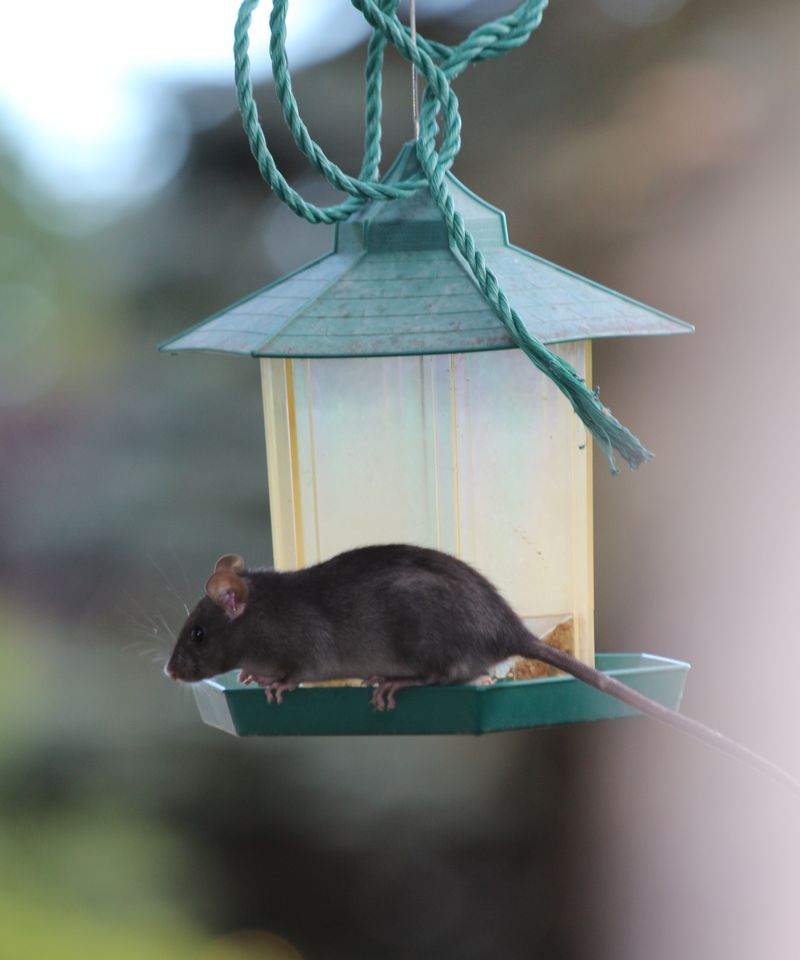
Food is not the only thing drawing rats to your yard. Water is just as important to them.
If you have a birdbath, a leaky hose, a pet water bowl, or even a clogged gutter nearby, you have created the perfect setup for rodents to settle in.
California homeowners often place birdbaths close to feeders to create a welcoming habitat for birds. That makes total sense for attracting wildlife, but it also makes the area far more attractive to rats.
When food and water are both available in the same spot, rodents have every reason to stay permanently.
Standing water is especially problematic during dry California summers. Rats struggle to find water in hot weather, so any consistent source becomes highly valuable to them.
Moving your birdbath away from your feeder is a helpful strategy. Also, check for dripping faucets, irrigation leaks, or low spots in your yard where water collects.
Emptying and refilling birdbaths daily reduces the appeal for rodents while still keeping birds happy. Eliminating water sources near feeding areas is a step that many people skip, but it can make a noticeable difference in how often rats show up in your California yard.
5. Night Feeding Keeps Them Coming
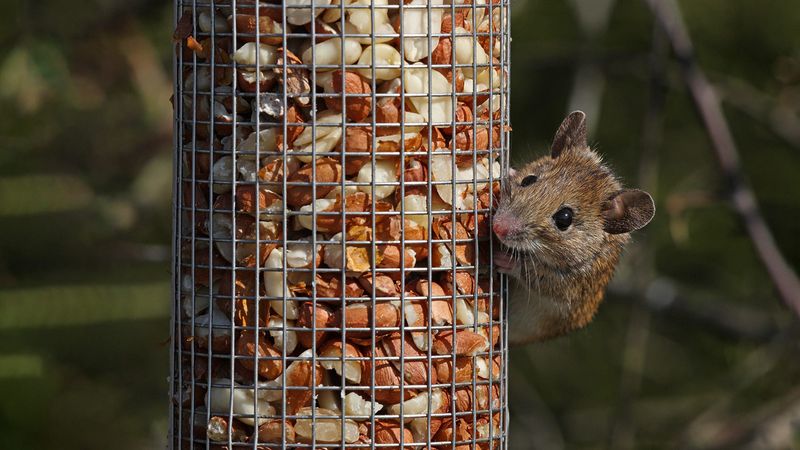
Rats are nocturnal, which means they are most active between dusk and dawn. Birds feed during the day and head off to roost at night, but the seeds left behind in a feeder do not disappear with them.
That leftover seed is just sitting there, waiting.
When the sun goes down in California neighborhoods, rats come out to explore. They quickly learn which yards have feeders with food still inside.
A feeder that stays full overnight is basically an open invitation for nighttime visitors.
Many people never actually see the rats because by the time they check the yard in the morning, the rodents are long gone. The only clues left behind are chewed feeder parts, droppings, or mysteriously empty seed trays.
Bringing feeders inside before dark is one of the most effective habits you can develop. It takes less than a minute and removes the overnight food source completely.
If bringing the feeder inside is not practical, try using a feeder with a built-in cage or cover that closes at night. Being consistent about this evening routine will train rats to stop expecting food from your yard and encourage them to move on elsewhere in California.
6. Ground Debris Attracts More Visitors
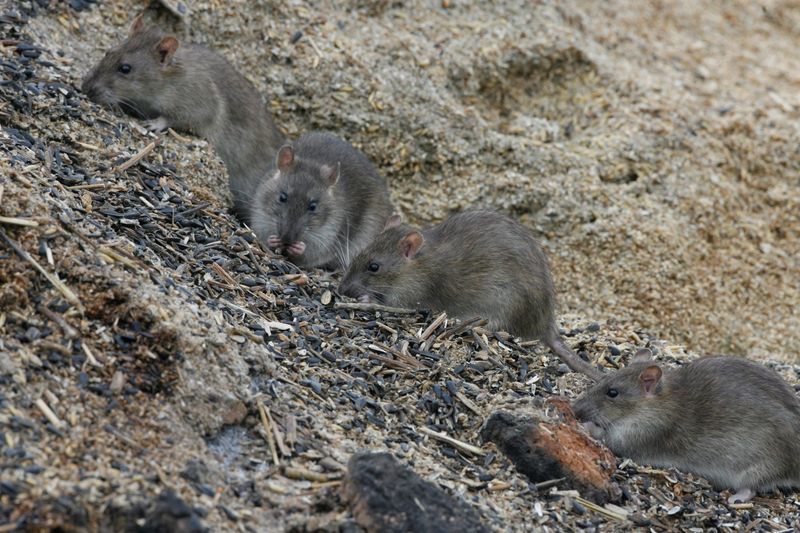
Beyond spilled seed, there is another ground-level problem that many California homeowners miss. General yard debris like fallen leaves, seed husks, rotting fruit, and garden waste creates a rich environment where rats feel right at home.
Rats are scavengers. They will eat almost anything organic they find on the ground.
When debris builds up under and around a feeder, it creates a buffet of smells and textures that rodents find irresistible. It also gives them material to build nests nearby.
Fruit trees near feeders are a common issue in California backyards. Fallen citrus, avocados, or berries add to the food supply and make the area even more appealing to rodents.
Rats do not need much encouragement to stick around when the ground is full of goodies.
Raking and cleaning the area under your feeder at least two or three times a week keeps debris from piling up. Remove fallen fruit daily if you have trees nearby.
Use a sealed compost bin rather than an open pile. Keeping the ground clean and bare around your feeder removes the extra layers of attraction that help rats feel comfortable in your California yard over the long term.
7. Poor Feeder Placement Encourages Rats
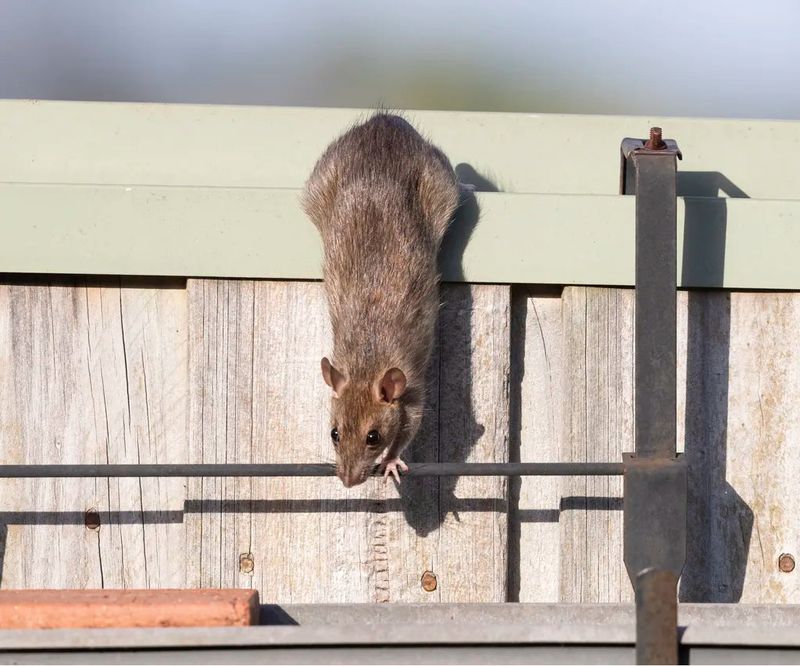
Where you put your feeder matters more than most people realize. A feeder placed close to a fence, tree trunk, or wall gives rats an easy climbing route straight to the seed.
Rats are excellent climbers and can scale rough surfaces, jump short gaps, and squeeze through tight spaces with ease.
In many California neighborhoods, fences run along property lines and trees grow close to patios and garden beds. This common setup means there are plenty of pathways leading right to a poorly placed feeder.
Rats follow these routes naturally as they explore at night.
Experts recommend placing feeders at least four feet off the ground and at least eight feet away from any structure a rat could climb. Using a smooth metal pole instead of a wooden post also makes it harder for rodents to grip and climb up.
Adding a baffle to your feeder pole is another smart move. Baffles are dome-shaped or tube-shaped barriers that slide onto the pole and prevent rats from climbing past them.
They are affordable and widely available at garden centers across California. Thoughtful feeder placement combined with a good baffle system can dramatically cut down on the number of unwanted visitors your yard receives each week.
8. Small Fixes Can Change Everything
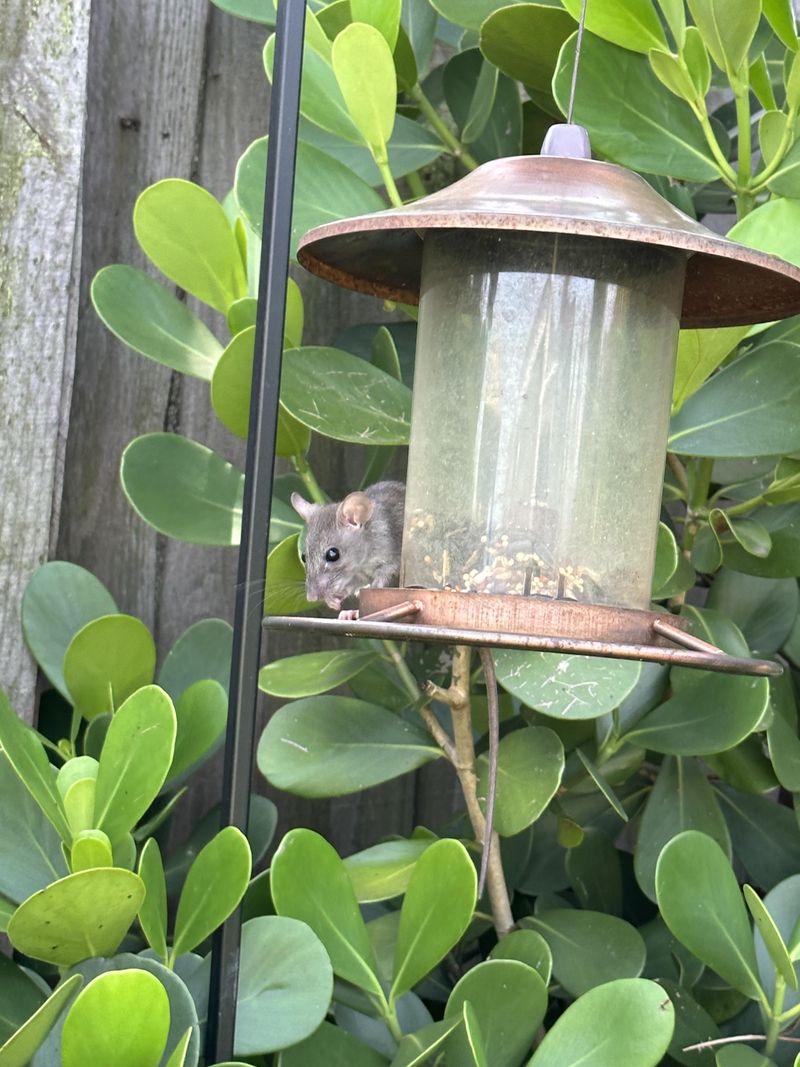
Good news: you do not have to stop feeding birds just because rats have shown up. A few smart, simple changes to your routine and setup can make your California yard much less attractive to rodents without affecting the birds at all.
Start with the basics. Clean under your feeder every day.
Switch to no-waste seed blends. Bring the feeder in at night or use a feeder that closes after dark.
Move it away from fences and trees. Add a pole baffle.
Fix any dripping water sources nearby. Each of these steps removes something rats depend on.
Store your birdseed in a sealed metal or hard plastic container. Rats can chew through bags and thin plastic bins with ease.
A sturdy, airtight container keeps seed fresh and removes the smell that attracts rodents to your garage or shed.
Think of it as a system rather than a single fix. No one change will solve the problem overnight, but combining several of these strategies creates a yard that simply does not reward rat behavior.
Many California homeowners who follow these steps report a big drop in rodent activity within just a couple of weeks. Birds stay happy, and rats move on to easier targets.