How Florida Gardeners Plant Paperwhites Outdoors for Holiday Blooms
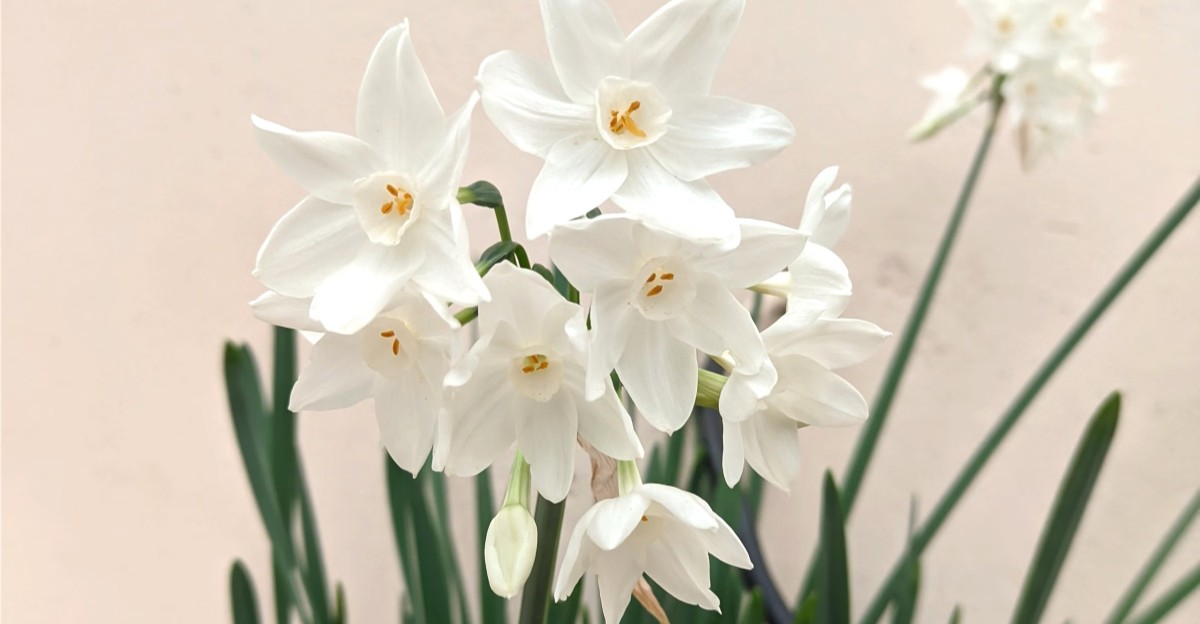
A few flower bulbs can bloom in December without one single night of winter chill. That sounds like cheating, especially when tulips and hyacinths demand weeks in the fridge before they cooperate.
These bulbs come from warm Mediterranean hillsides, so mild winters feel like home to them. Their clusters of starry white flowers carry a sweet, musky perfume that can fill a patio.
Some people adore that scent, and a few people think it smells a bit funky.
I can’t imagine a better trade for Florida gardeners who miss snowy holiday scenes up north. You get bright white blooms outside your front door, and you skip the shoveling.
Personally, I think that beats a plastic wreath any day.
The trick comes down to timing, a sunny bed, and soil that drains fast. Ready to plant a white Christmas you’ll never have to shovel?
These White Narcissus Bulbs Skip the Cold Treatment
Most spring bulbs are a little dramatic. Tulips, crocus, and many daffodils need weeks of cold before they agree to flower, which makes them tough to grow in the South.
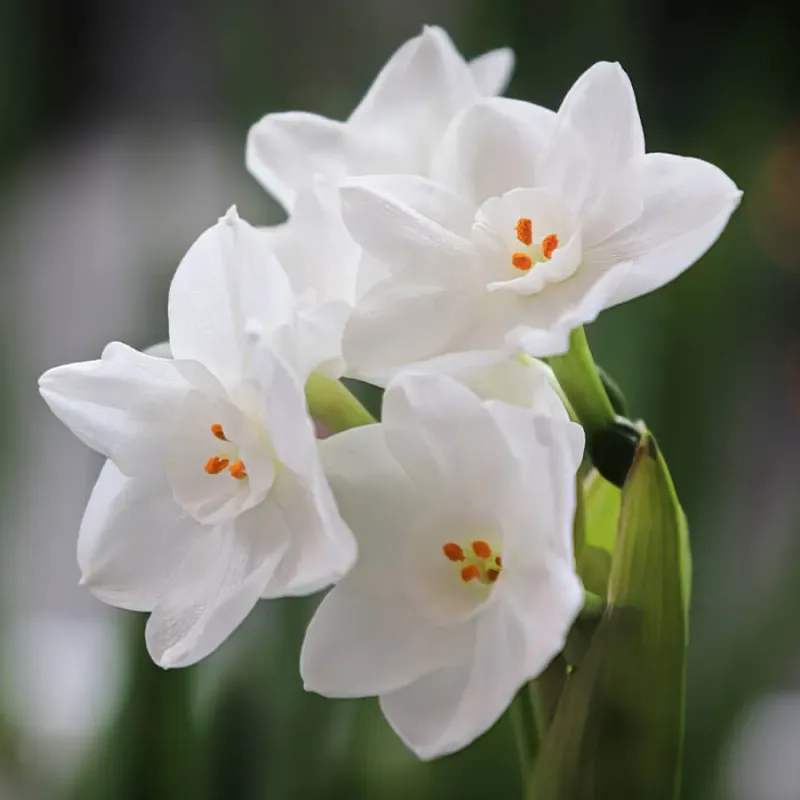
Paperwhites play by different rules. These narcissus, known to botanists as Narcissus papyraceus or Narcissus tazetta types, come from the Mediterranean region, where winters are mild and summers are dry.
Their flower buds are already formed inside the bulb when you buy it, so no chilling period is required.
That one trait makes them a natural fit for Florida. Much of the state falls in USDA zones 8b through 10b, with zone 11 in the Keys.
Warm soil and bright winter sun give these bulbs exactly what they want for a quick holiday show.
I like how little fuss is involved. You plant the bulb, roots form, green leaves pop up, and fragrant clusters open a few weeks later.
One honest note helps set expectations. In the warmest parts of South Florida, bulbs often bloom well the first year but may not return strongly afterward.
In North and Central Florida, many gardeners see them come back for years, so your results depend a lot on where you live.
Plant Paperwhite Bulbs Four to Six Weeks Before Your Holiday Party
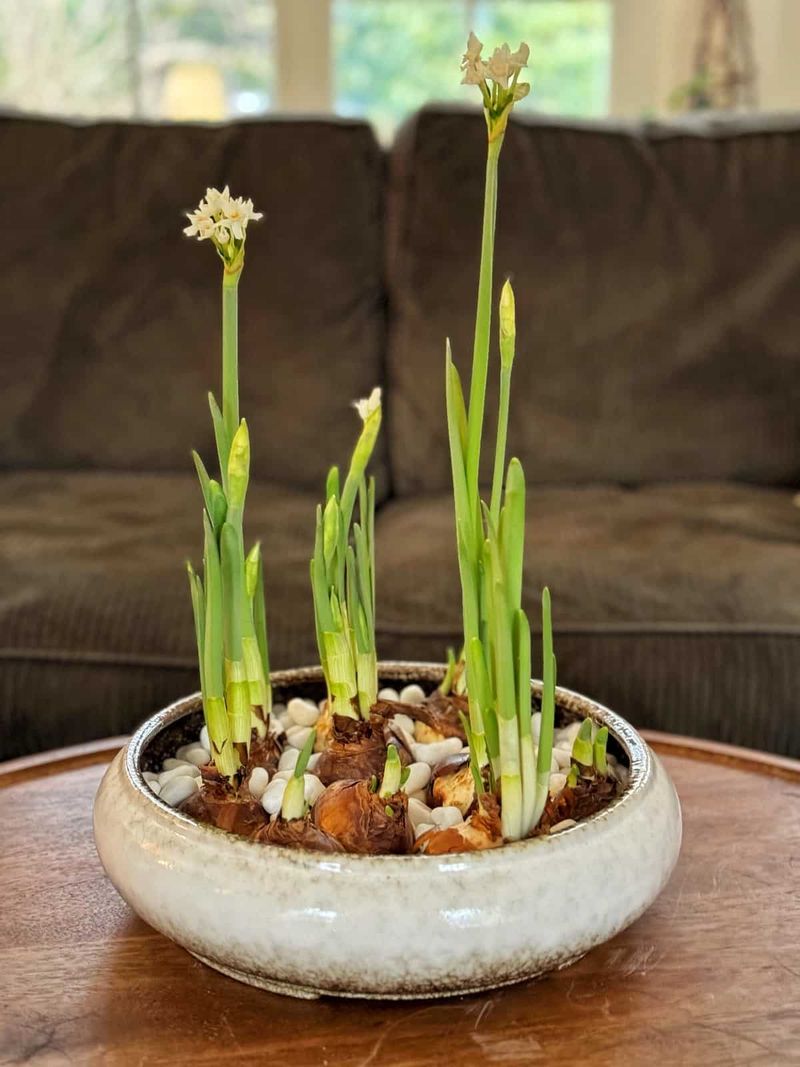
Count backward from the day you want flowers. That simple math is the real secret behind holiday paperwhites.
Outdoors in warm weather, most bulbs bloom about four to six weeks after planting. Cooler stretches slow them down a little, and warm spells speed them up.
For blooms near Christmas, aim to plant between early and late November.
Want flowers for an early December gathering? Get your bulbs in the ground in mid to late October.
Bulbs planted around Thanksgiving week often open close to Christmas Day or just after.
Here is a trick I love using every year. Plant small batches every two to three weeks from October into early January.
That staggered approach, called succession planting, keeps fresh white clusters coming all winter instead of one quick burst.
Store waiting bulbs somewhere cool, dry, and airy, away from fruit and direct sun. A paper bag in a closet works fine.
Avoid plastic bags, since trapped moisture can lead to mold.
Buy firm, heavy bulbs with no soft spots. Larger bulbs usually produce more flower stems, so they are worth the small extra cost when you shop at garden centers or bulb catalogs in early fall.
Sandy Soil Is Actually a Gift for Paperwhite Beds
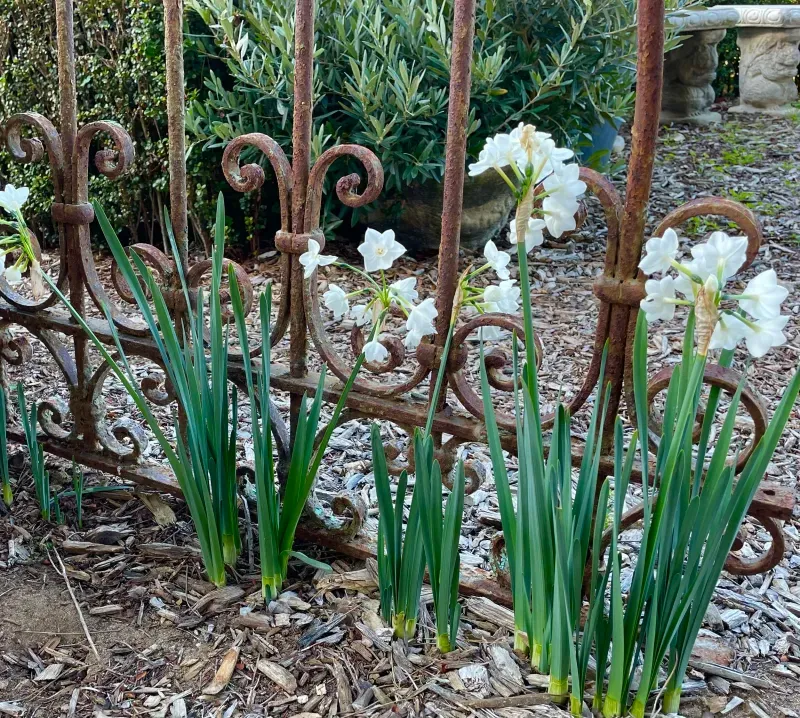
Soggy ground is the biggest enemy of narcissus bulbs. Wet soil invites rot, and a mushy bulb rarely recovers.
Luckily, a lot of Florida yards sit on fast-draining sand. That sand lets extra water slip away, which is exactly what these bulbs prefer.
Mixing in a few inches of compost helps the soil hold enough moisture and nutrients without staying wet.
Pick a spot that gets full sun, or at least six hours of direct light. Bright light keeps stems shorter and sturdier.
In deep shade, the plants stretch and flop over.
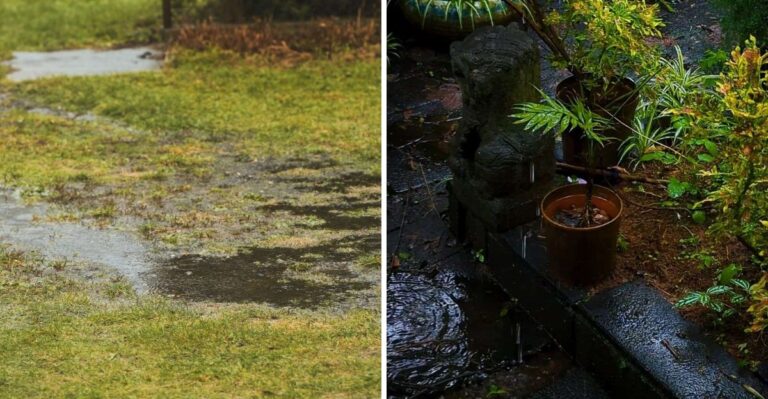
Does your yard hold puddles after summer storms? Build a raised bed or a gentle mound a few inches high.
Heavy clay or low spots near downspouts are areas to skip.
Containers are another solid choice. Use a pot with drainage holes and a quality potting mix, and you can move your display right next to the front steps for guests.
I also suggest checking your soil pH if growth seems weak. Narcissus do well in slightly acidic to neutral soil, and your county UF/IFAS Extension office can test a sample for a small fee.
Pointy Tips Up and Bulbs Packed Close Together
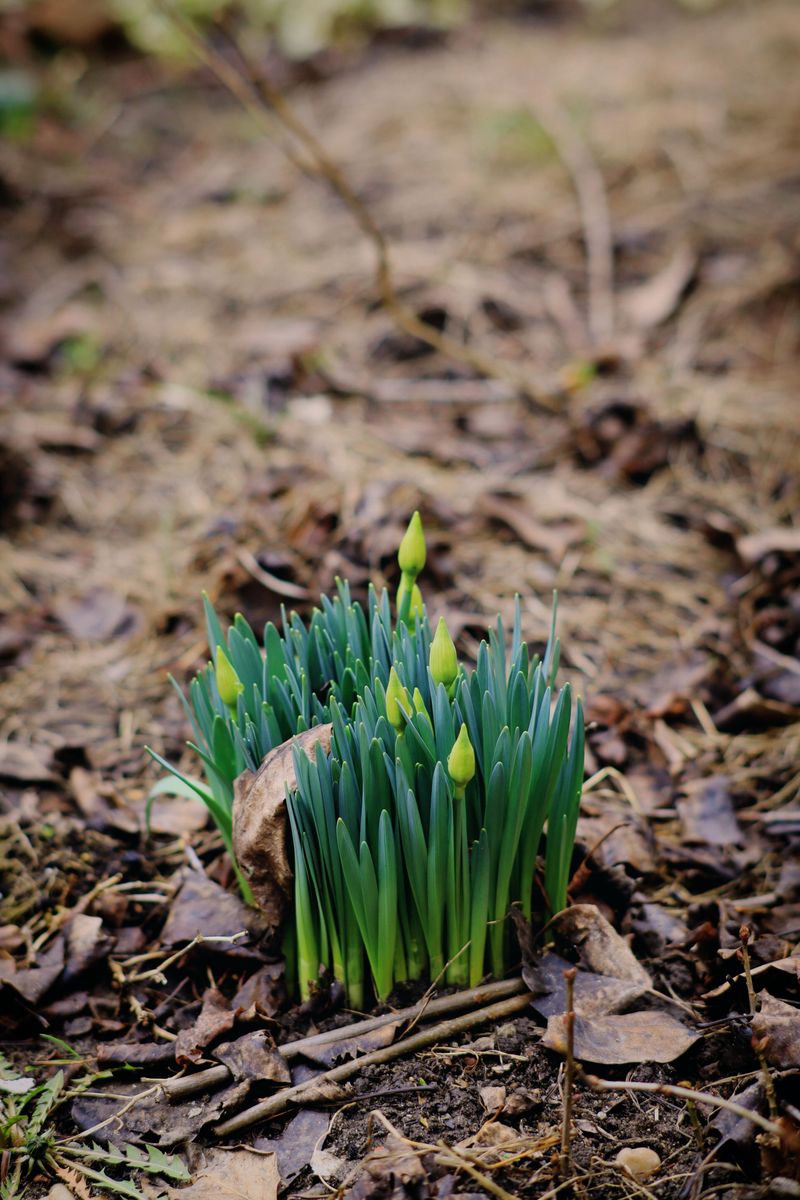
Bulb planting is wonderfully low-tech. Grab a trowel, a bag of bulbs, and maybe a cold glass of iced tea.
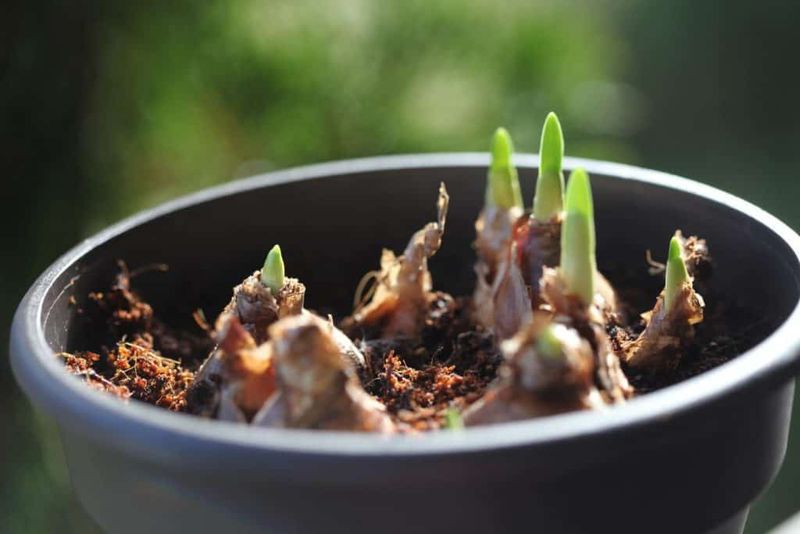
Start by finding the pointed end of each bulb. That tip is where leaves and flower stems emerge, so it faces up.
The flat, slightly hairy bottom is where roots grow.
In garden beds, dig holes about three to six inches deep. A good rule many growers use is planting about two to three times as deep as the bulb is tall.
In pots, you can set bulbs shallower, with their necks peeking just above the soil.
Spacing is where you get to have fun. Planting singly looks sparse, so tuck bulbs into clusters of five to ten, only an inch or two apart.
Grouped bulbs create those full, fluffy drifts of white that look great from the street.
Once everything is covered, water deeply to settle soil around the bulbs and remove air pockets. After that first soak, ease up until green shoots appear.
Personally, I mark each planting spot with a small stake or plant tag. It saves me from accidentally digging into bulbs later when I add winter annuals nearby.
Watering Paperwhite Shoots Without Drowning Them
Picking the right watering rhythm feels a bit like learning a new dance. Too much and the bulbs rot, too little and growth stalls.
Right after planting, bulbs need only light moisture while roots form. Florida winters are usually our dry season, so rainfall can be scarce from November through February.
Check the soil with your finger before reaching for the hose.
If the top inch feels dry, give the bed a good drink. Once leaves and flower buds appear, the plants use more water, so you may need to water once or twice a week in sandy soil.
Skip the daily sprinkler routine. Frequent shallow watering keeps the surface wet and can encourage fungal problems.
A deeper soak less often works better.
Fertilizer is mostly optional the first season. The bulb already holds the food it needs for this year’s flowers.
A thin layer of pine straw or shredded leaf mulch helps hold moisture and keeps soil temperatures steady. Keep mulch loose and light so shoots can push through easily.
Also, follow any local watering restrictions in your area, since many water management districts limit irrigation days.
Floppy Paperwhite Stems Usually Mean Warmth or Shade
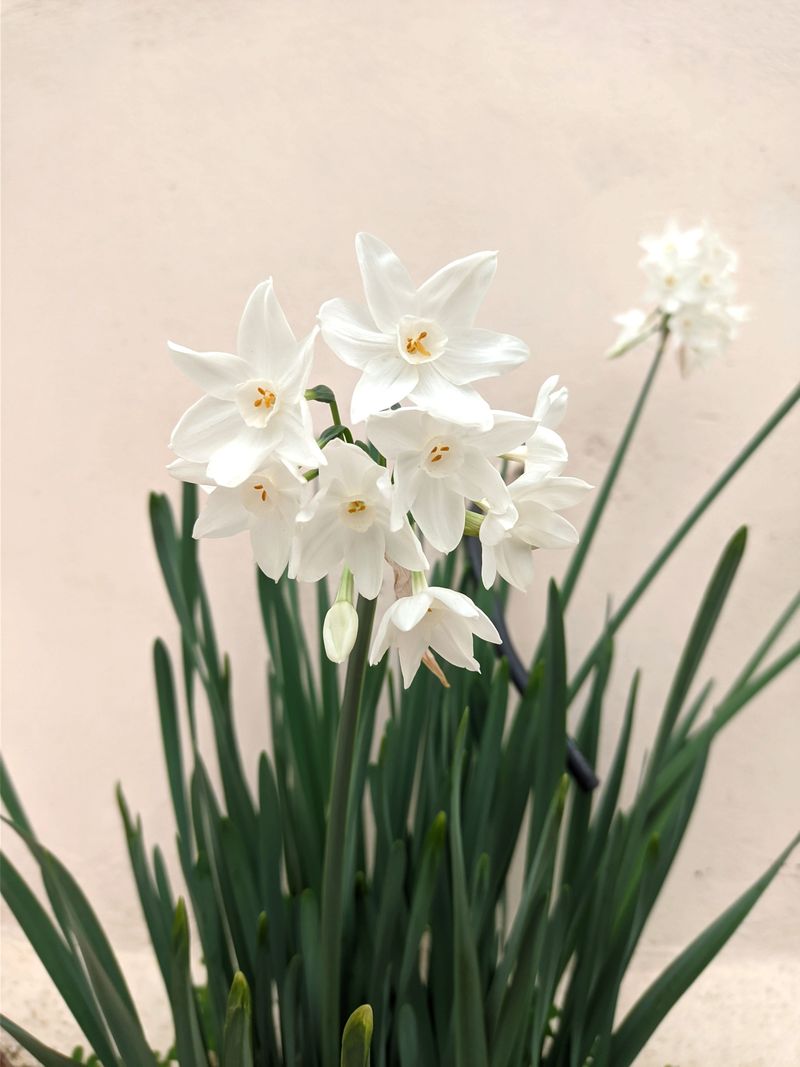
Nothing deflates holiday cheer quite like a beautiful flower cluster face-planted in the mulch. Tall paperwhites can tip over, especially after wind or a heavy rain.
Two things usually cause leggy stems. Low light makes plants stretch toward the sun, and warm temperatures push fast, weak growth.
A warm Florida December can do exactly that.
Full sun is your first defense. Planting in a spot with good air flow helps too, since stems grow stronger in a gentle breeze.
Fun fact for container growers: research from Cornell University found that watering potted paperwhites with a diluted alcohol solution can shorten stems. I prefer simpler tricks outdoors, like sun and support.
Thin bamboo stakes work nicely when pushed in carefully beside each group. Tie the stems loosely with garden twine or a festive ribbon.
Red velvet ribbon makes them look ready for a holiday card.
Planting bulbs tightly in clusters also helps, since the stems lean on each other. Low companion plants such as alyssum or pansies add a soft collar of support and color around the base.
Milder and Yellow-Cupped Paperwhite Varieties Offer More Choices
Not everyone loves the classic paperwhite perfume. Some people describe it as sweet, while others compare it to old socks.
‘Ziva’ is the most common variety sold in stores. It grows quickly and blooms reliably, but its scent is strong.
If you plan to plant near a patio or open window, you might want something milder.
‘Inbal’ and ‘Nir’ are popular choices for gentler fragrance. Both produce bright white clusters and work well outdoors in warm climates.
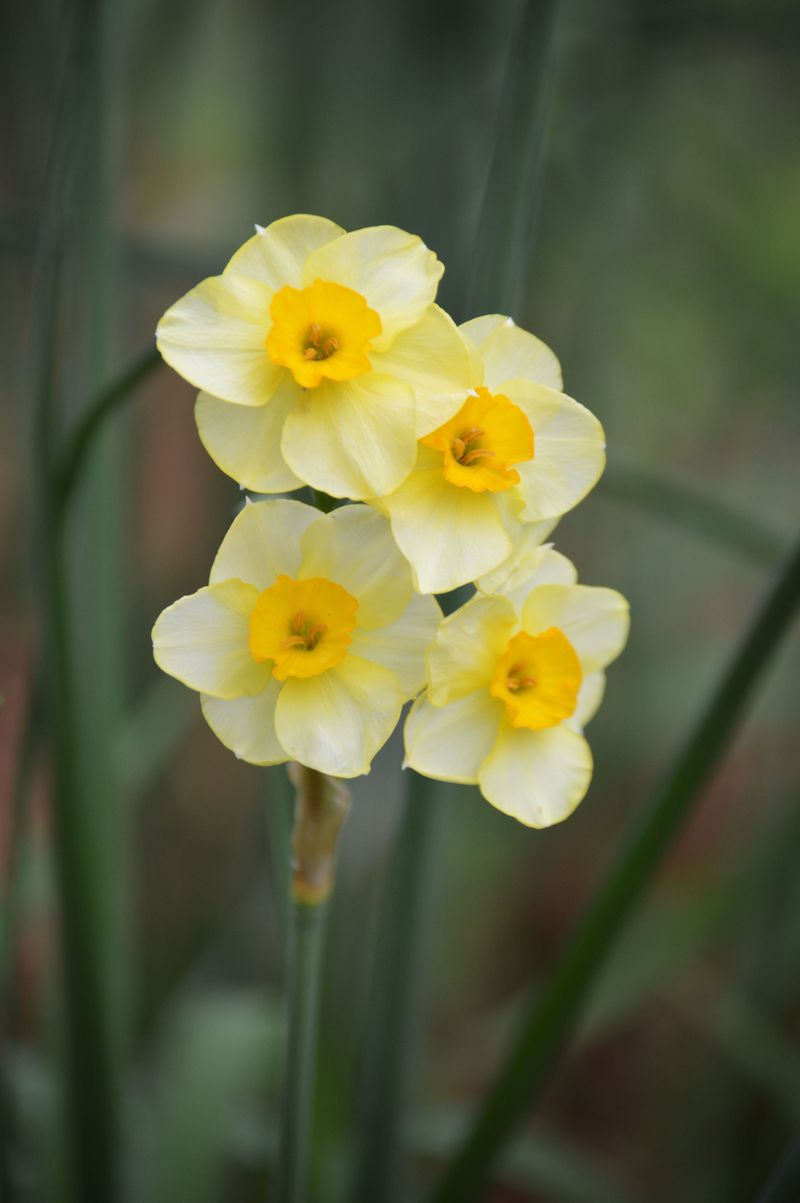
Craving a little color? Tazetta relatives like ‘Grand Soleil d’Or’ have yellow petals with orange cups. ‘Avalanche’ and ‘Erlicheer’ are other heirloom-style options, with ‘Erlicheer’ offering double flowers that look like tiny roses.
Old Southern gardens often hold tazetta bulbs that have bloomed for decades with almost no care. Some families pass them down like heirlooms.
I suggest trying two or three varieties your first year. You will quickly learn which ones bloom best in your yard and which scent you enjoy.
Check catalogs from bulb specialists, since varieties suited to warm-winter areas sell out early, often by late September.
Leave Those Green Narcissus Leaves Standing After the Flowers Fade
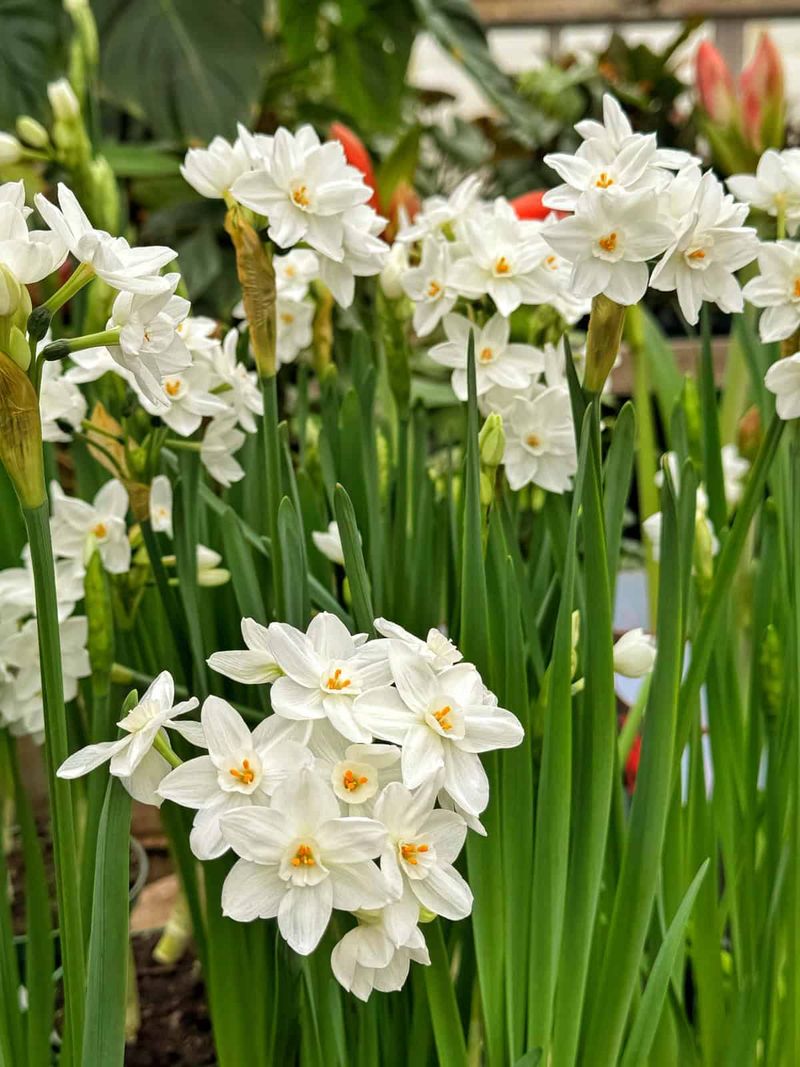
Once the last flower turns brown, the real work for next year begins. Those strappy green leaves are busy recharging the bulb.
Snip off faded flower stems so the plant stops putting energy into seeds. Leave the leaves alone until they turn yellow on their own, usually in late spring.
Cutting or tying them early weakens next season’s display.
A light feeding with a balanced or bulb fertilizer after blooming can help, especially in sandy soil. Follow the label carefully, since too much fertilizer can harm roots.
During rainy summers, dormant bulbs prefer to stay on the drier side. Beds with good drainage give them the best chance to return.
In South Florida, some gardeners simply treat paperwhites as seasonal annuals and replant each fall.
One safety reminder matters a lot. All parts of narcissus plants are toxic to people, dogs, cats, and horses if eaten, and the sap can irritate skin.
Wear gloves and keep bulbs away from curious pets and kids.
Your next step is simple. Jot down the date you plant this fall and when blooms open, and you will have your own perfect timing chart for next year.