How Florida Gardeners Prune Basil So It Keeps Growing Back Fuller
Plenty of Florida gardeners grow basil, and many watch it bolt, flower, and turn bitter before summer even hits its stride. If that sounds familiar, the fix is not a new plant or a better pot.
It is all in how you prune. Basil is one of those plants that rewards you for being bold with it.
The more you cut, the more it gives back. But there is a right way and a wrong way to do it, and the wrong way will have your plant looking like a sad little stick by July.
Florida’s heat puts basil on a fast clock, so you have to stay ahead of it, not play catch-up.
Once you get the hang of this, fresh basil stops being something you buy at the store.
Your garden starts pulling its own weight, all season long.
1. Pinch The Top Before It Flowers
Young basil has ambition. Left alone in warm weather, it will race straight up toward the sun, growing tall and narrow instead of spreading out into the full, leafy bush you actually want.
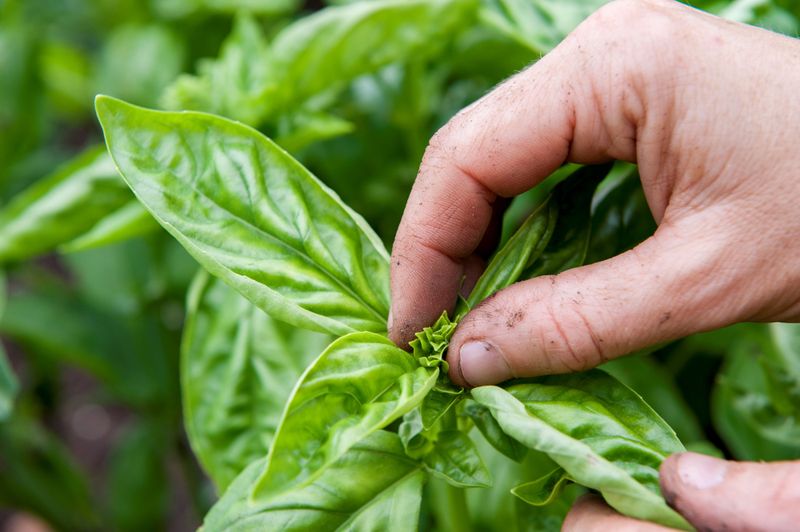
The fix starts early, before the plant even thinks about flowering, by removing that central growing tip as soon as the plant has developed at least three to four sets of true leaves.
Pinching or snipping the very top of the plant just above a healthy leaf pair sends a clear signal to the plant.
Instead of pushing all its energy upward into one main stem, the plant redirects that energy into the side nodes below the cut, producing two new shoots where there was only one.
Over a few weeks, those two shoots become four, and your plant fills out sideways into a dense, productive herb.
Look for the newest, smallest leaves clustered at the very tip of the main stem. Pinch or snip just above the next full leaf pair below it.
Clean scissors work well, but your fingernails are perfectly fine on tender young stems. South Florida gardeners should start this process early because the long warm season can push basil toward flowering quickly.
North Florida gardeners typically get a more defined spring-to-fall growing window, which gives slightly more time before heat stress accelerates flowering.
The mistake most beginners make is waiting too long, watching the plant grow tall and admiring it, only to find it covered in flower buds before a single pinch was made.
Start early and stay consistent.
2. Cut Above A Leaf Pair For Fuller Growth
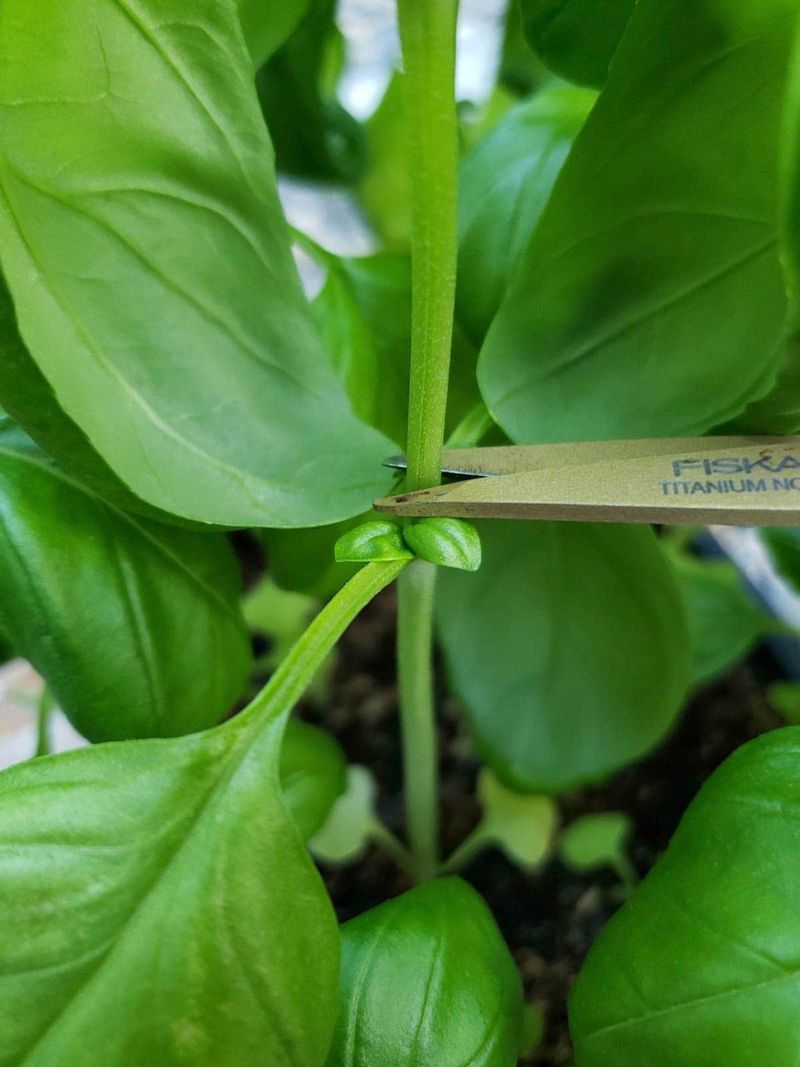
Every pruning cut you make on basil is either working for you or against you, depending on where you place it.
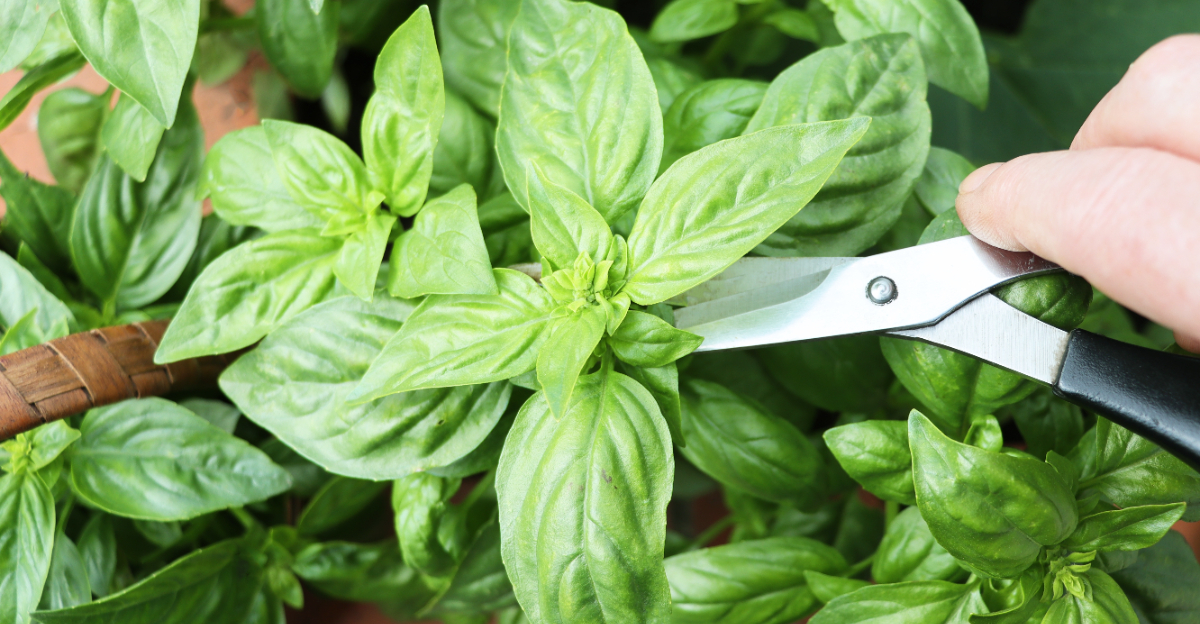
The difference between a cut that produces two new branches and a cut that leaves a bare, struggling stump comes down to a single detail: always cut just above a leaf pair.
That node, the small bump or leaf junction just below your scissors, is where new growth will emerge.
When you snip above a healthy leaf pair, the two buds sitting right at that node activate. Both of them grow into new side stems, effectively doubling the branching at that point on the plant.
Your Florida Garden Changes Every Week. Your Plan Should Too.
Gardening in Florida changes quickly throughout the season. Every Friday you’ll receive a simple weekly plan showing exactly what to plant, prune, fertilize, harvest, and protect so you never miss the right timing.
Repeat this across the plant every time you harvest, and the basil gradually becomes denser, more productive, and easier to keep ahead of before it bolts. It works because more active stems mean more places for fresh leaves to grow.
Later in the season, occasional thinning can help keep that denser canopy from trapping too much moisture.
Use clean, sharp scissors rather than tearing stems with your fingers on mature plants.
Torn stems create ragged wounds that can invite fungal issues. It matters especially in Central and South Florida where humidity and warm rain create favorable conditions for leaf diseases.
Wipe your scissors with clean solution between plants if you notice any leaf spotting.
Avoid cutting into the woody lower portion of older stems where no green leaf nodes are visible. That section of the plant cannot regenerate easily, and cutting there often just removes productive growth without encouraging new branching.
Leave at least two to three healthy leaf pairs below every cut so the plant retains enough foliage to photosynthesize and bounce back quickly after harvesting. Consistent, well-placed cuts make all the difference.
3. Harvest Lightly From Young Plants
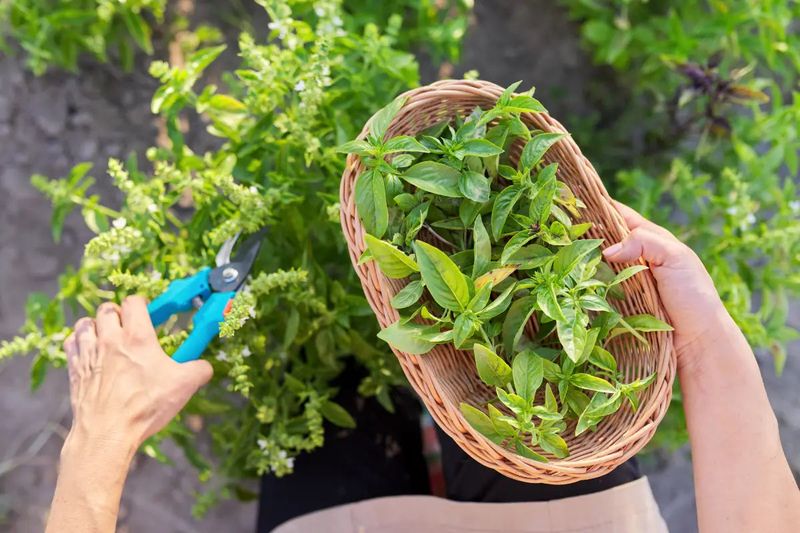
There is a tempting moment every new basil grower faces: you plant a small seedling, it starts filling in nicely, and you immediately want to strip a handful of leaves. Resist that impulse with young plants.
Taking too much from a small basil plant before it has established enough foliage can set back its growth significantly, especially in sometimes unpredictable early-season weather.
Light harvesting during the first few weeks serves a different purpose than feeding your kitchen. Each small snip you take from the top of a young plant trains it to branch rather than grow straight up.
You are essentially guiding the plant’s architecture from the beginning.
Take only the top inch or two of a growing tip, or remove one small sprig at a time, leaving plenty of leaves so the plant can continue photosynthesizing and pushing out new growth.
North Florida gardeners should be especially careful with young plants during cool snaps in early spring or late fall. A small basil plant that loses too much foliage right before a temperature dip has less stored energy to recover with.
Central and South Florida gardeners may notice young plants showing heat stress as temperatures climb quickly in late spring. Keeping the plant leafy during that adjustment period helps buffer the stress.
Watch for signs that a young plant is struggling, such as pale leaves, slow growth, or wilting in the morning. A plant in that condition needs recovery time before the next harvest.
Once the plant has filled in well with multiple branching stems and looks vigorous, you can begin harvesting more freely without slowing it down.
4. Prune More Often In Central And South Florida Heat
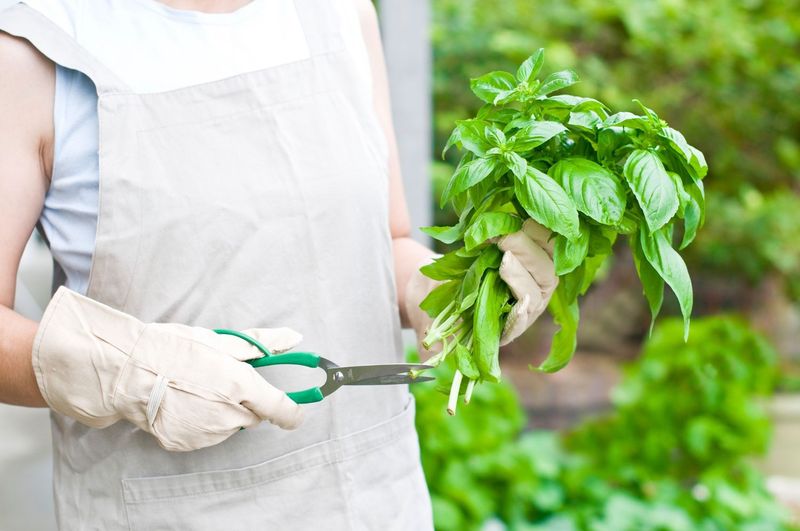
Our summers are relentless, and basil knows it. Heat acts like an accelerator for basil’s biological clock, pushing the plant toward flowering and seed production far faster than it would in cooler climates.
Once basil commits to flowering, its leaf production slows and the flavor of remaining leaves often becomes more bitter. Staying ahead of that cycle requires checking your plants more frequently than a gardening book written for northern states might suggest.
During the hottest months, gardeners in the central and southern parts of the state may need to walk through their herb garden every three to four days.
Fast-growing tips can shoot up noticeably overnight in peak summer heat, and flower buds can appear almost before you realize the plant has shifted gears.
Removing those buds and cutting back the tallest stems before they fully flower keeps the plant focused on leaf production rather than reproduction.
The growing season lasts much longer in these warmer regions than it does farther north, which means more total pruning sessions and a longer period of active management.
In the northern part of the state, gardeners face a more defined season, typically spring through fall, but summer heat there can still accelerate bolting during July and August.
Adjusting your pruning schedule to match the actual weather rather than the calendar is the most reliable approach anywhere in the state.
Avoid letting hot-weather basil go untouched for two or three weeks. Even a plant that looked perfectly managed can bolt quickly during a heat wave.
Keep a pair of clean scissors near the garden door so checking and snipping takes less than five minutes. Small, frequent cuts made consistently through the warm season produce far more harvestable basil than one large cutback every few weeks.
5. Give Humid South Florida Basil Extra Airflow
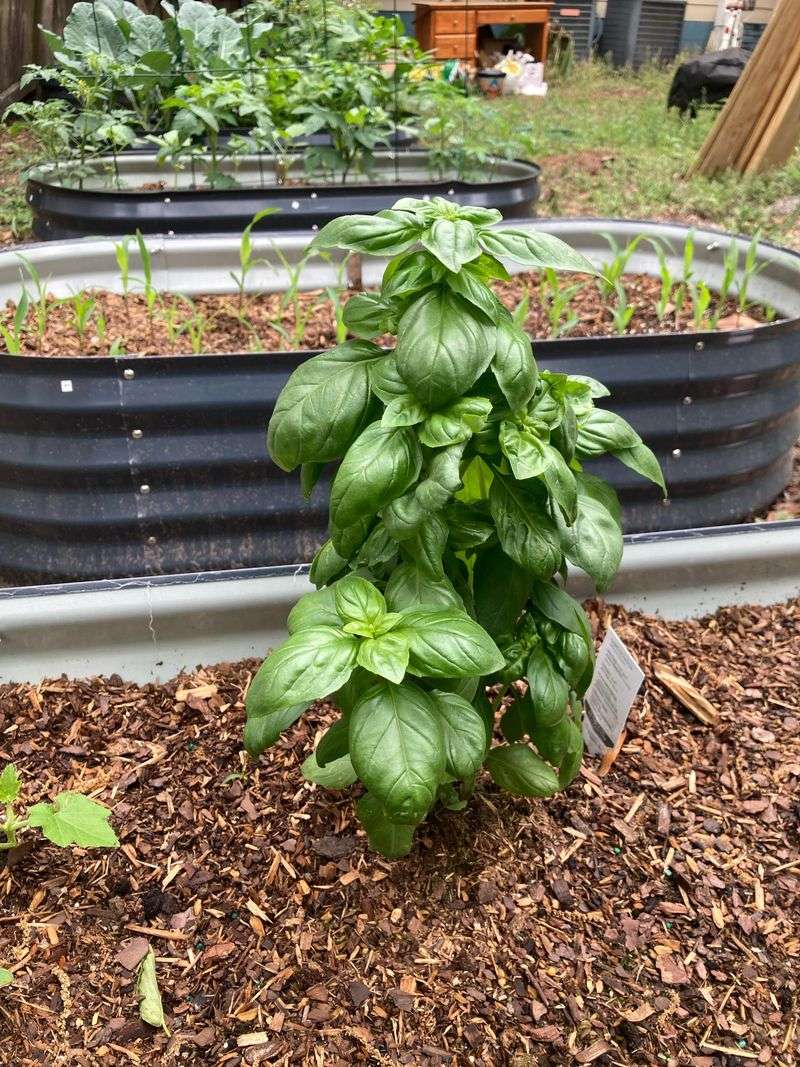
Ask any experienced South Florida gardener about basil and humidity, and you will likely hear a story about a beautiful plant that suddenly developed dark spots and yellow leaves.
That scenario usually traces back to poor airflow through the plant’s canopy.
Dense, unpruned basil traps moisture between its leaves and stems, creating exactly the warm, wet conditions that fungal diseases prefer.
Pruning for airflow means more than just harvesting from the top. Occasionally thin out crowded inner stems by removing a few of the smaller or weaker branches growing toward the center of the plant.
This opens up the canopy so air can circulate freely and leaves dry off faster after rain or irrigation. The rainy season typically runs from late spring through early fall, creating sustained humid conditions that make this kind of thinning especially worthwhile.
Spacing matters too. Planting basil with at least twelve to eighteen inches between plants gives each one room to spread without pressing foliage against its neighbors.
Avoid tucking basil tightly against walls, fences, or dense vegetable plants that block airflow. Water at the base of the plant rather than overhead whenever possible, and try to water in the morning so any moisture on leaves has time to evaporate before evening.
Summer humidity can be an issue farther north too, especially in the Panhandle, so airflow pruning is not only a concern for southern growers.
Still, the longer warm and rainy season in the lower part of the state makes fungal management feel nearly constant rather than seasonal.
A few thoughtful cuts each week can keep the canopy open and your harvest clean throughout the growing season.
6. Take Bigger Harvests From Strong Plants
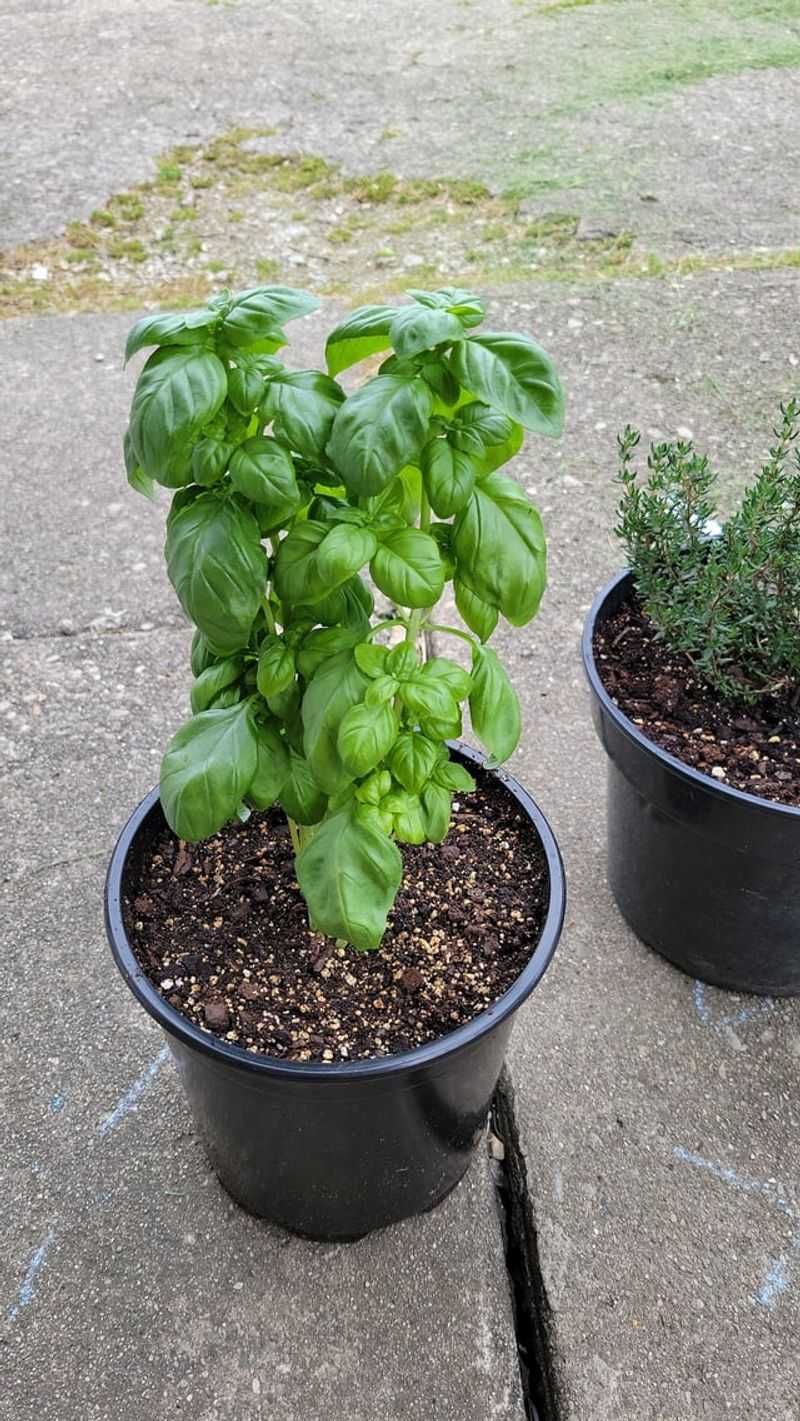
There is a satisfying moment in every basil grower’s season when the plant finally looks genuinely abundant, full of branches, loaded with leaves, and clearly vigorous. That is your green light to start harvesting seriously.
A mature, actively growing basil plant can handle much more generous cuts than a young or stressed one. Those bigger harvests are exactly what encourage the next flush of branching growth.
Cut stems that are four to six inches long, snipping just above a healthy leaf pair as always.
Gather enough for a batch of pesto, a freezer tray of chopped basil, or a big bunch to dry and store.
Taking longer stems rather than just plucking individual leaves actually promotes more regrowth. The cut node triggers two new side shoots rather than just removing a single leaf from a branch that keeps growing the same direction.
The general guideline used by most gardeners, and supported by Extension recommendations, is to avoid removing more than about one-third of the plant’s total foliage in a single harvest.
Cutting more than that at once can slow the plant’s recovery, especially if temperatures are extreme or the plant is already dealing with pest pressure or dry conditions.
Leave enough leafy growth that the plant can continue photosynthesizing vigorously right after the harvest.
In the warmer central and southern growing zones, basil planted in good soil with consistent moisture often rebounds from a generous harvest within a week or two.
Farther north, plants may slow their recovery as cooler fall temperatures arrive, so time your biggest harvests for the warmest part of the season.
Avoid heavy cutting during drought stress, unusual heat waves, or any period when the plant looks less than fully healthy.
7. Refresh Tired Basil With New Cuttings
Every basil plant eventually reaches a point where it has given everything it has. The stems turn woody and brown at the base, the leaves get smaller, and no matter how faithfully you prune, the plant keeps rushing to flower instead of producing lush new foliage.
That is a natural part of the basil life cycle, not a failure on your part. The smart move at that point is not to coax more out of an exhausted plant but to start fresh with cuttings taken from the best growth it still has.
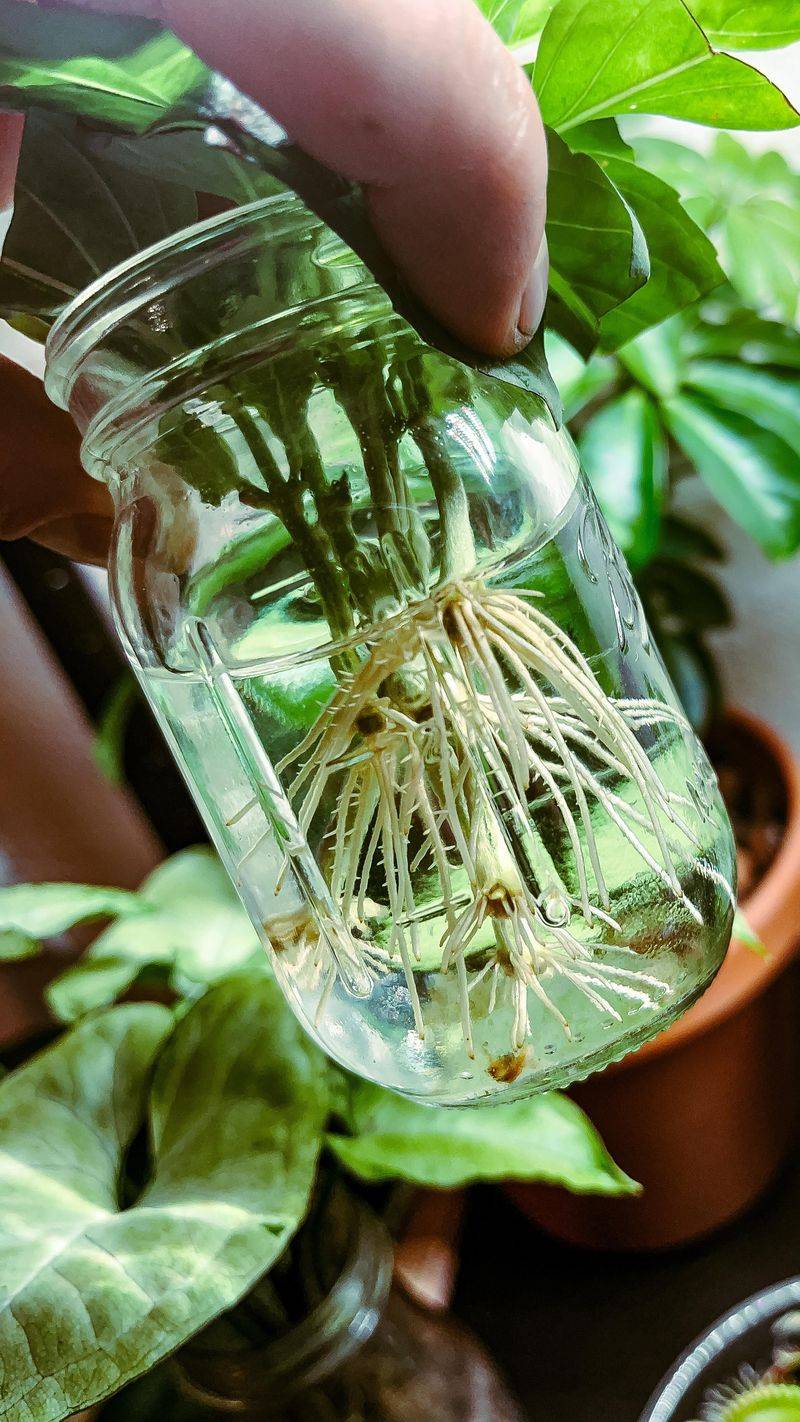
Rooting basil cuttings is genuinely easy. Choose a stem that has not yet flowered, four to six inches long, and strip the leaves from the bottom two inches.
Place the cutting in a clean glass of water in a bright spot away from harsh afternoon sun, and change the water every couple of days. Roots typically appear within one to two weeks in warm indoor or shaded patio conditions.
Once roots are an inch or more long, pot the cutting into fresh, well-draining potting mix and let it establish before moving it into full sun. You can also root cuttings directly in moist potting mix if you prefer, covering the pot loosely with a plastic bag to hold humidity until roots form.
Either method works reliably in warm climate.
In the warmer southern part of the state, gardeners may find themselves refreshing basil plants two or even three times during a long season. Extended heat pushes plants hard and shortens their productive window.
Farther north, new cuttings are often timed for early spring planting or late summer, giving plants a second productive flush before cooler weather arrives. Keeping a rotation of fresh plants going means you never have to go without basil just because one plant has run its course.
8. Remove Flower Buds Before They Open
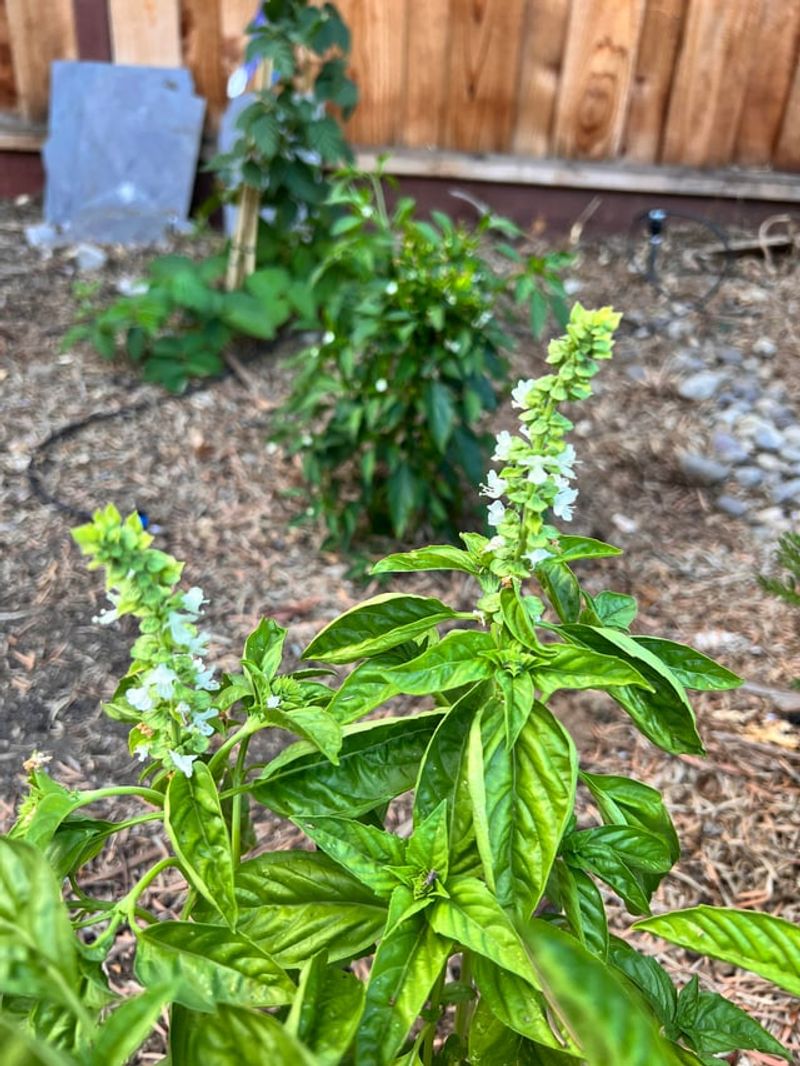
Spotting a flower bud on your basil plant is a warning sign worth acting on immediately. The moment basil commits energy to flowering, leaf production starts to decline.
The plant shifts its biological priorities from growing foliage to producing seeds, and the leaves that remain often develop a sharper, less pleasant flavor.
Catching flower buds early and removing them consistently is one of the most effective ways to extend your basil harvest through long warm season.
Flower buds appear as small, tight clusters at the tips of stems, often looking like a narrow spike of tiny leaves packed closely together. They are easy to spot once you know what to look for.
Pinch or snip the entire flower spike off just above the nearest healthy leaf pair below it.
Do not just remove the bud tip and leave the spike attached, because the plant will simply continue developing the remaining buds along that same stem.
Make removing spent or developing flowers part of your regular garden walk.
In the southern part of the state, year-round warmth can push basil toward almost continuous flowering during peak summer, making bud removal necessary every few days.
Central growers face the same challenge during the hottest months, while farther north, basil usually has a shorter window of extreme heat. Even there, bolting can still happen quickly during July and August.
Avoid letting even one or two flower spikes fully open and go to seed on the plant. Once seeds begin forming, the plant accelerates its decline significantly and becomes much harder to keep productive.
A quick pinch every few days costs almost no time and pays back generously in weeks of additional leafy, flavorful basil ready for your kitchen.