How Georgia Gardeners Keep Sunflowers Standing Through Summer Storms

Georgia summers are gorgeous, but they come with a catch.
Afternoon thunderstorms can roll in fast, dropping heavy rain and gusty winds that flatten even the tallest sunflowers before you can grab your garden gloves.
Every year, backyard gardeners across the state watch their prize blooms bend, snap, or lean so far over they never quite recover.
The good news is that experienced Georgia growers have figured out some clever tricks to keep their sunflowers upright all season long.
From choosing the right variety to staking stems before the first storm cloud appears, these strategies make a real difference.
Whether you are growing sunflowers for the first time or you have been at it for years, knowing how to protect your plants from summer storms is the kind of knowledge that pays off every single growing season.
Georgia weather does not wait for anyone, so getting ahead of it is the smartest move a gardener can make.
1. Choose Shorter Varieties For Wind
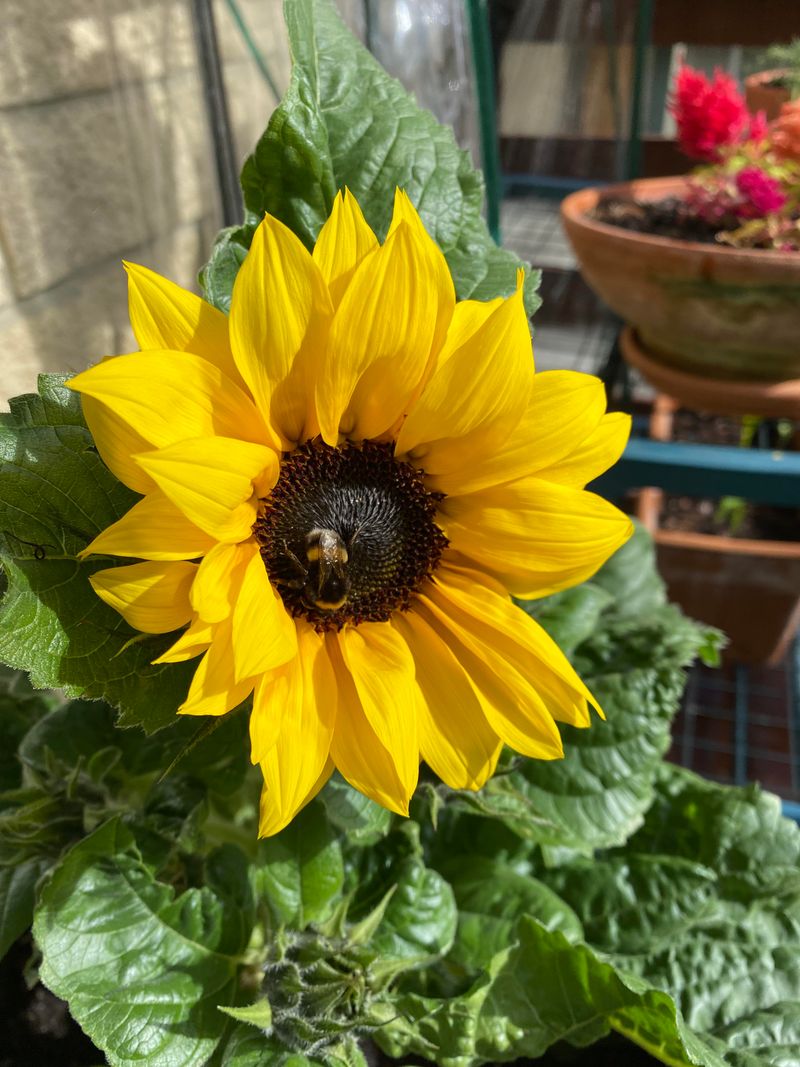
Not every sunflower needs to reach for the sky to be stunning.
Compact varieties like Sunspot, Teddy Bear, and Big Smile top out at one to two feet tall, making them far less likely to snap or topple when summer storms sweep through Georgia.
Their shorter stems mean less surface area for wind to grab onto, which gives them a serious survival advantage over towering giants.
Tall varieties like Mammoth Russian or American Giant can stretch past ten feet.
That height is impressive on a calm day, but during a Georgia thunderstorm with 40-mile-per-hour gusts, those long stems act like sails. They catch wind, flex hard, and often crack right at the base.
Shorter types simply do not have that problem.
Plant selection is one of the first lines of defense against storm damage.
Choosing a variety suited to your conditions is not a compromise. It is smart gardening.
You can always mix compact types in the front of a bed with taller varieties further back where a fence or structure offers natural shelter.
Seed packets list mature height right on the label, so checking before you buy takes about ten seconds.
Branching varieties like Autumn Beauty also tend to be sturdier because their weight is spread across multiple stems rather than loaded onto one.
A little research at the seed rack saves a lot of heartbreak come storm season.
2. Plant Seeds Deep Enough
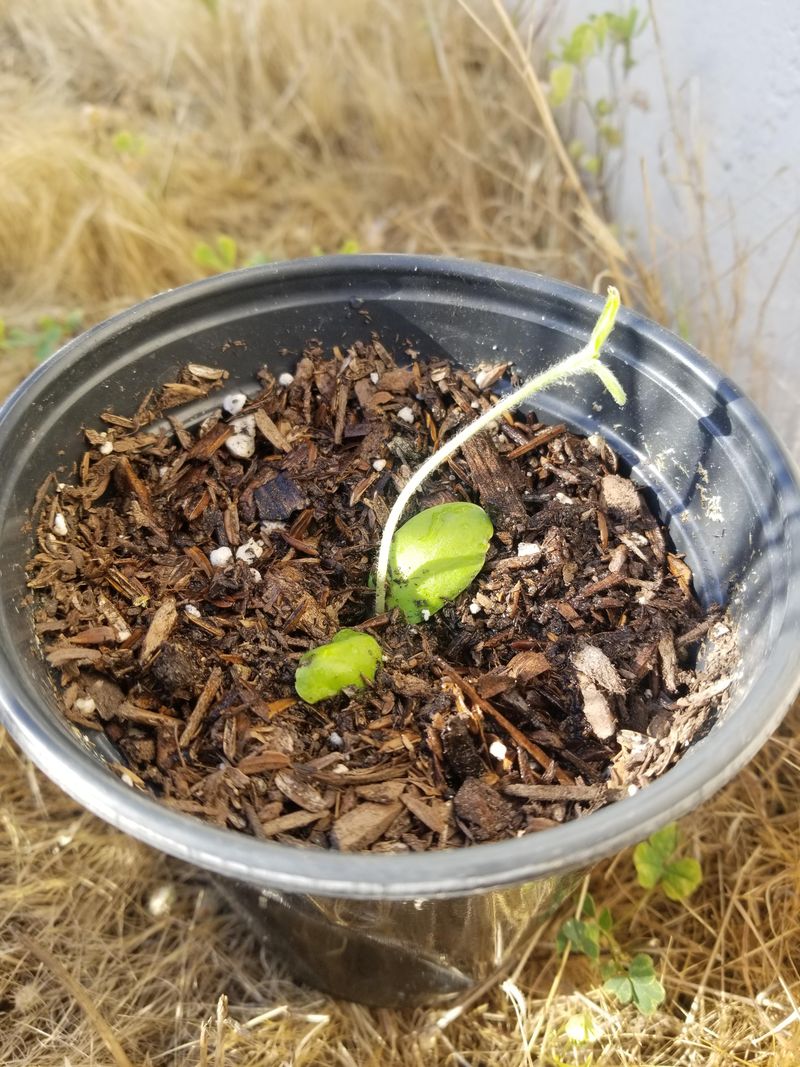
Roots are everything when a storm hits.
A sunflower with a shallow root system has almost nothing to hold it in place when wind and rain arrive together, which is exactly what Georgia storms tend to deliver.
Planting at the right depth from the very beginning gives each plant a fighting chance before it ever sees its first thunderstorm.
Sunflower seeds should be planted about one inch deep in well-prepared soil.
That depth encourages the taproot to push straight down quickly, anchoring the plant before the stem grows tall enough to catch wind.
Seeds planted too shallow tend to produce plants that wobble even in light breezes because their roots spread wide but never go deep enough to grip.
Your Georgia Garden Changes Every Week. Your Plan Should Too.
Gardening in Georgia changes quickly throughout the season. Every Friday you’ll receive a simple weekly plan showing exactly what to plant, prune, fertilize, harvest, and protect so you never miss the right timing.
Soil temperature matters here too.
Sunflower seeds germinate best when soil hits at least 50 degrees Fahrenheit, which in Georgia usually happens by mid-March in the south and early April further north.
Planting into warm soil means faster germination and faster root development, so plants are better established before the heavy storm season peaks in July and August.
Loosening the soil eight to ten inches deep before planting also helps.
Compacted ground forces roots sideways instead of downward, creating a wide but shallow anchor that fails under pressure.
A garden fork or tiller run through the bed before you plant is one of the simplest investments you can make in storm-ready sunflowers.
Strong roots below the surface mean strong stems above it.
3. Space Tall Stems For Airflow
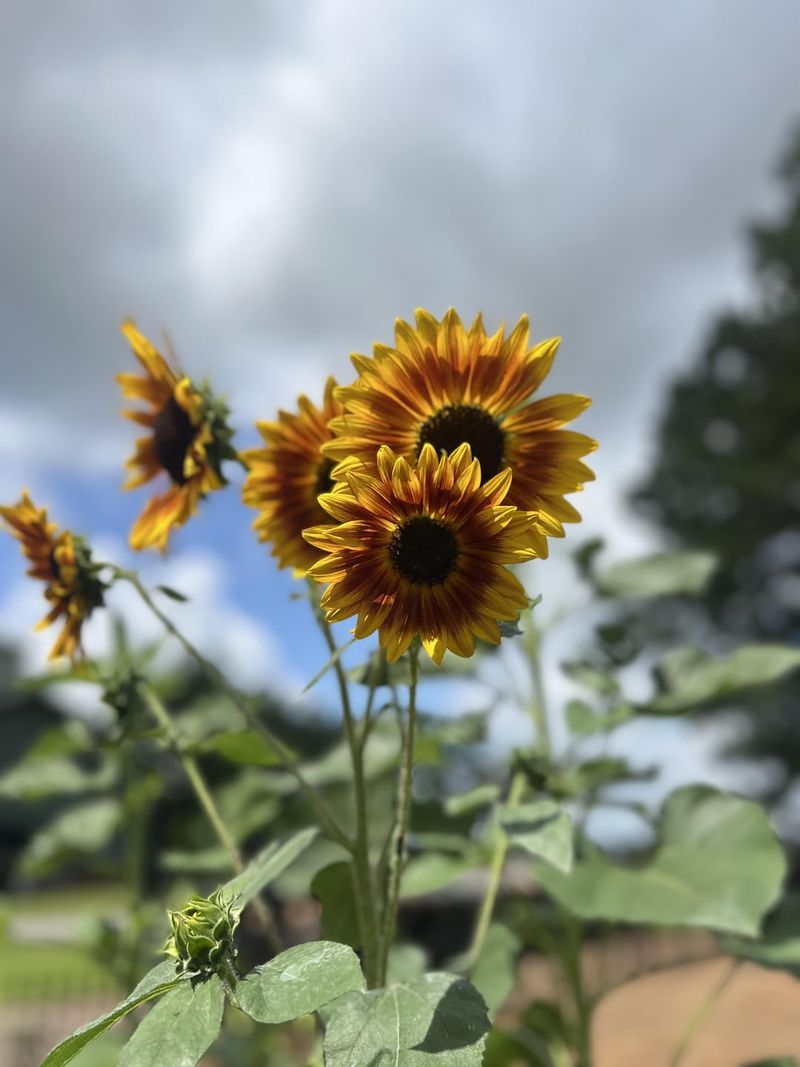
Crowded sunflowers are weaker sunflowers.
When plants grow too close together, they compete for light and end up stretching their stems long and thin trying to reach the sun. That kind of growth looks vigorous, but the stems are actually fragile.
A properly spaced plant builds a thicker, sturdier stem because it gets the light it needs without reaching.
For standard tall varieties, leaving at least 24 inches between plants is the practical guideline.
Dwarf types can be spaced closer, around 12 inches apart, but even they benefit from room to breathe. Good spacing also allows air to move freely through the planting, which reduces the wind resistance that builds up when stems are packed tightly together.
Consider what happens in a dense stand of corn during a Georgia thunderstorm.
The stalks in the middle often snap because they have been shaded out and weakened, while the ones on the outer edge have more structural strength. Sunflowers behave the same way.
Thin the seedlings early, even if it feels wasteful, because the survivors will be dramatically stronger for it.
Proper airflow between plants also reduces humidity around the stems and leaves, which lowers the risk of fungal problems that weaken stalks over time.
A weakened stalk from disease is just as likely to snap in a storm as one from overcrowding.
Giving plants space is one of those gardening moves that solves multiple problems at once, and it costs absolutely nothing to do right.
4. Water Deep Before Heat Builds
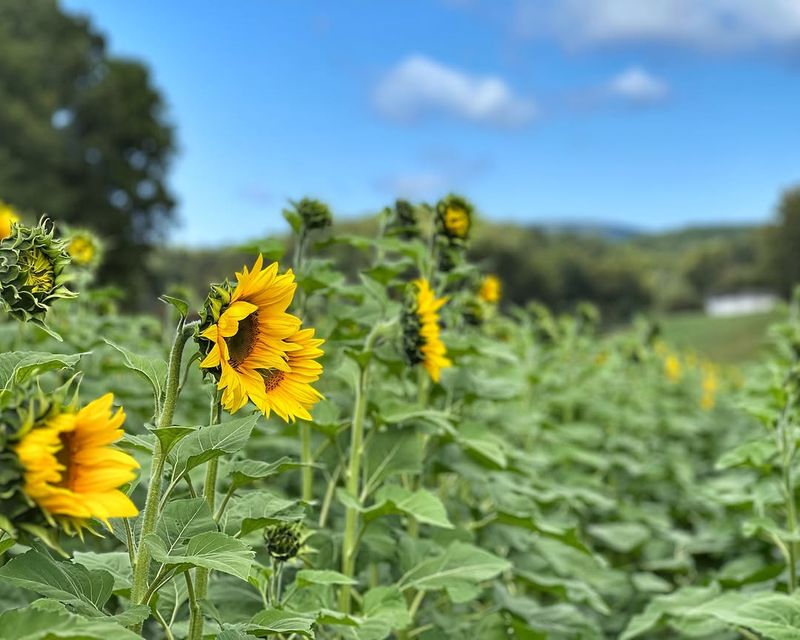
Here is something that surprises a lot of new gardeners: watering lightly and often actually makes plants weaker, not stronger.
When you sprinkle just the surface of the soil, roots have no reason to push downward. They stay shallow, chasing the moisture near the top.
A shallow-rooted sunflower is one storm away from leaning over and not coming back.
Deep, infrequent watering trains roots to follow moisture down into the soil profile, where they anchor the plant much more effectively.
For sunflowers in Georgia, a good deep soak once or twice a week during dry spells works far better than a little water every day. You want the moisture to reach eight to ten inches below the surface so roots chase it down there.
A simple trick to check depth is to push a wooden skewer or thin stick into the soil an hour after watering.
If it comes out damp eight inches down, you have watered deeply enough. If it is only wet at the top two or three inches, you need to slow the water flow and let it soak in longer.
Watering in the early morning also helps.
Moisture that sits on leaves overnight encourages fungal growth, and weak stems from fungal damage are a real problem when storms arrive.
Morning watering means foliage dries out during the day while roots still absorb what they need.
Strong, deep root systems built through smart watering are one of the best storm-proofing tools a Georgia gardener has available.
5. Stake Giants Before Storms Arrive
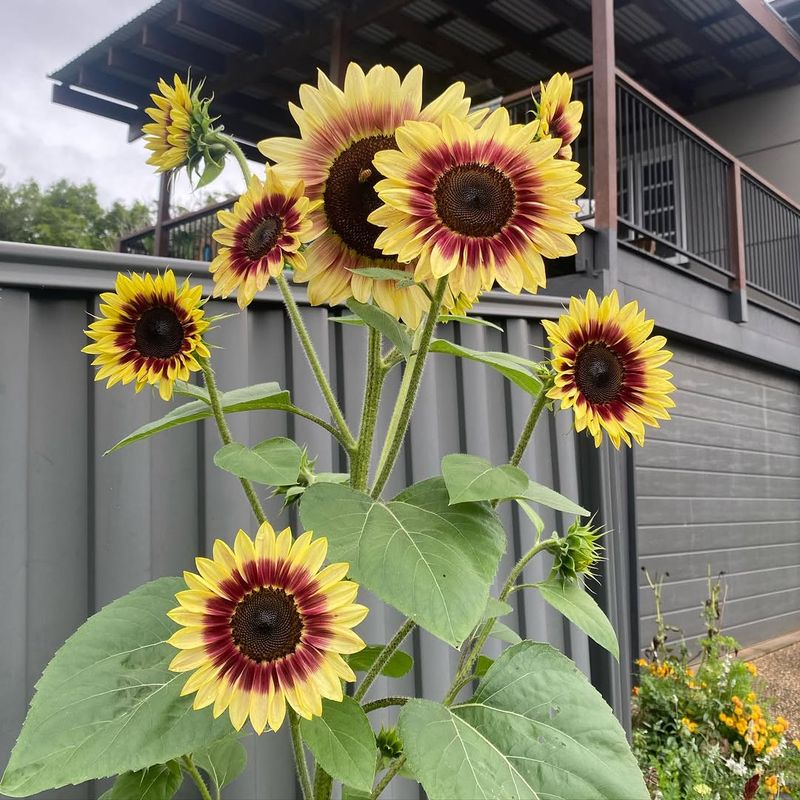
Waiting until a sunflower starts to lean is waiting too long.
By the time a heavy-headed stem tilts, the base may already be stressed or partially damaged at the soil line, and staking it then is more rescue mission than prevention.
Georgia gardeners who have been through a few summer storm seasons know the rule: stake early, stake firmly, and do not skip it for plants over four feet tall.
Bamboo stakes work well for many home garden sunflowers.
Drive a stake about six inches into the soil right next to the plant when it reaches about two feet in height, before the flower head develops and adds significant weight to the top.
Tying the stem to the stake with soft garden twine or stretchy plant tape in a loose figure-eight knot protects the stem while still letting it move slightly in the breeze.
That slight movement is actually important.
Research on plant physiology shows that stems allowed to sway a little develop stronger tissue over time, a process called thigmomorphogenesis.
Tying a stem completely rigid removes that benefit. The goal is support, not a straitjacket. The plant should be held upright but not pinned perfectly still.
For very tall varieties like Skyscraper or Mammoth, use a six-foot metal T-post or a thick wooden dowel and tie the stem at two or three points along its height.
Check ties after every major storm and re-secure anything that has slipped.
A sunflower that survives one Georgia storm with good staking will almost always make it through the season.
6. Avoid Rich Soil That Pushes Flop
More fertilizer does not always mean better plants.
With sunflowers, it can actually mean the opposite.
Soil that is extremely rich in nitrogen pushes plants to grow fast and tall, but that rapid growth produces stems with loose, spongy cell structure. Those stems look impressive right up until the first serious storm, and then they fold like wet cardboard.
Getting a soil test before adding any amendments is one of the smartest things a Georgia gardener can do.
Georgia soils vary widely across the state, from the red clay of the Piedmont to the sandy soils of the Coastal Plain, and what works in one county may cause problems in another.
A soil test costs just a few dollars and tells you exactly what your garden needs, which is far better than guessing.
Sunflowers are actually fairly content in average, moderately fertile soil.
They do not need the heavily amended beds that vegetables or heavy-feeding flowers like dahlias prefer. A light application of balanced fertilizer at planting time is usually enough.
Going heavier with nitrogen mid-season is where gardeners get into trouble, because that late push of growth produces exactly the kind of tall, floppy stems that storms love to knock down.
If your soil is already rich from years of compost additions, you may not need to add anything at all.
Let the sunflowers grow at a natural pace in soil that supports steady, sturdy development.
Slow and strong beats fast and floppy every single time when storm season rolls around in Georgia.
7. Plant In Groups For Support
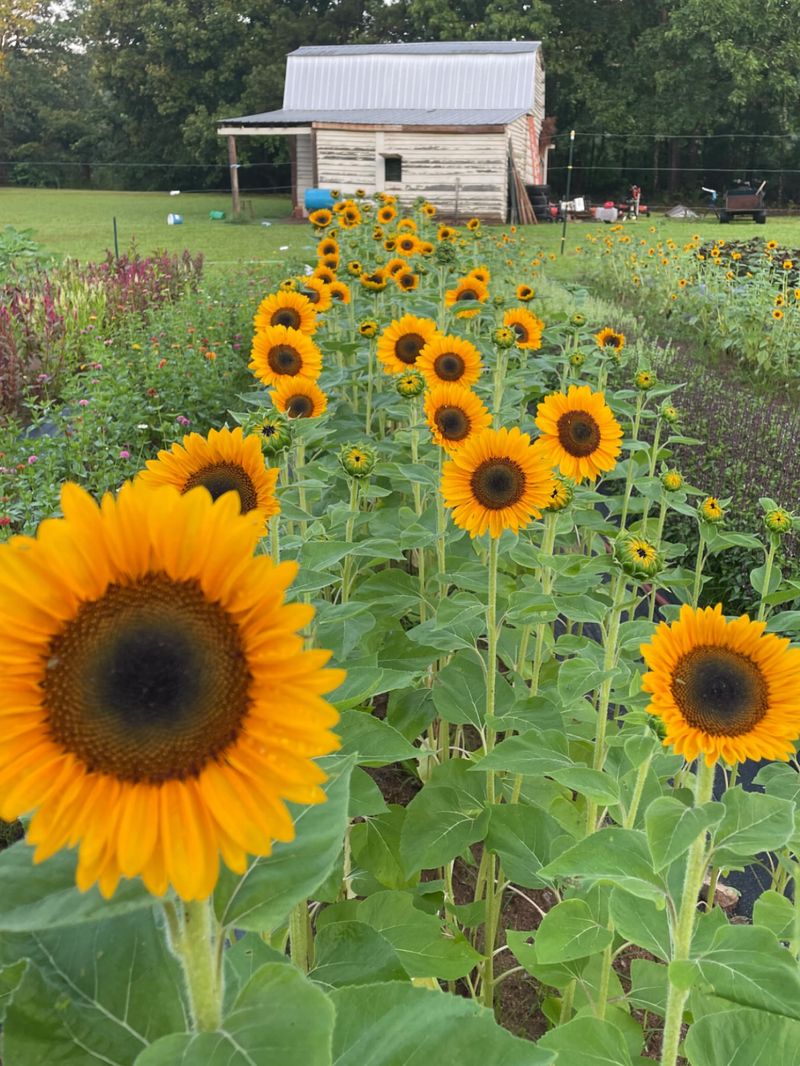
There is real strength in numbers, and sunflowers prove it every summer.
A single sunflower stem standing alone in the middle of a garden bed has nothing to lean on when wind hits from the side.
A group of sunflowers planted together, however, creates a natural support structure where stems brace against each other and share the load of a powerful gust.
Farmers who grow sunflowers for seed production have long known that dense plantings in block formation withstand wind far better than single-row plantings exposed on all sides.
The interior plants in a block are sheltered by the outer plants, which take the brunt of the wind and redirect it upward and around the group rather than straight through it.
For home gardeners, planting sunflowers in clusters of five to seven plants in a roughly circular or square arrangement works beautifully.
Space them at the recommended distance for the variety, but position the entire group so the cluster acts as a unit.
Adding a low fence, trellis panel, or even a row of shorter companion plants like zinnias around the outside of the group adds another layer of wind buffering.
Grouping also makes your garden look more intentional and visually dramatic.
A mass planting of sunflowers in full bloom is a showstopper in any yard, and knowing that the arrangement is doing double duty as storm protection makes it even more satisfying.
It is one of those gardening strategies that is as practical as it is pretty, which is a combination worth celebrating.