How Michigan Gardeners Are Protecting Roses From Peak Japanese Beetle Season
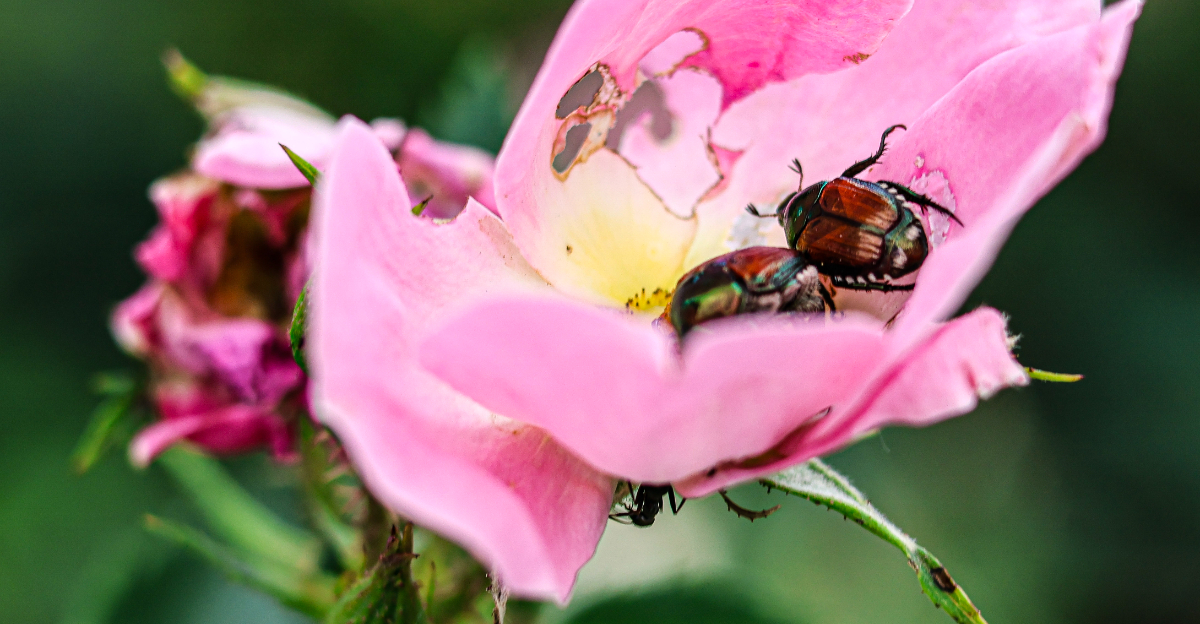
Japanese beetle season puts serious pressure on Michigan roses, but several strategies help gardeners protect their plants during this especially active stretch.
Handpicking beetles in the early morning, when they’re slower moving, offers one of the simplest and most effective control methods available.
Dropping beetles into soapy water prevents them from returning to continue feeding on nearby blooms. Row covers can protect particularly vulnerable roses, though removing them briefly for pollination remains important during blooming periods.
Avoiding pheromone traps near roses actually helps, since these traps often attract more beetles to the area than they capture. Planting beetle resistant companions nearby can help distract pests away from prized rose bushes.
Treating soil for grubs in early fall reduces next year’s beetle population before it even begins. Staying consistent with these methods throughout peak season helps roses recover fully once beetle activity finally tapers off.
1. Gardeners Inspect Roses Every Day During Peak Activity
There is something almost detective-like about walking through your rose garden each morning in July and August.
Japanese Beetles reach peak activity in Michigan during these weeks, and staying ahead of them starts with knowing exactly what you are looking for.
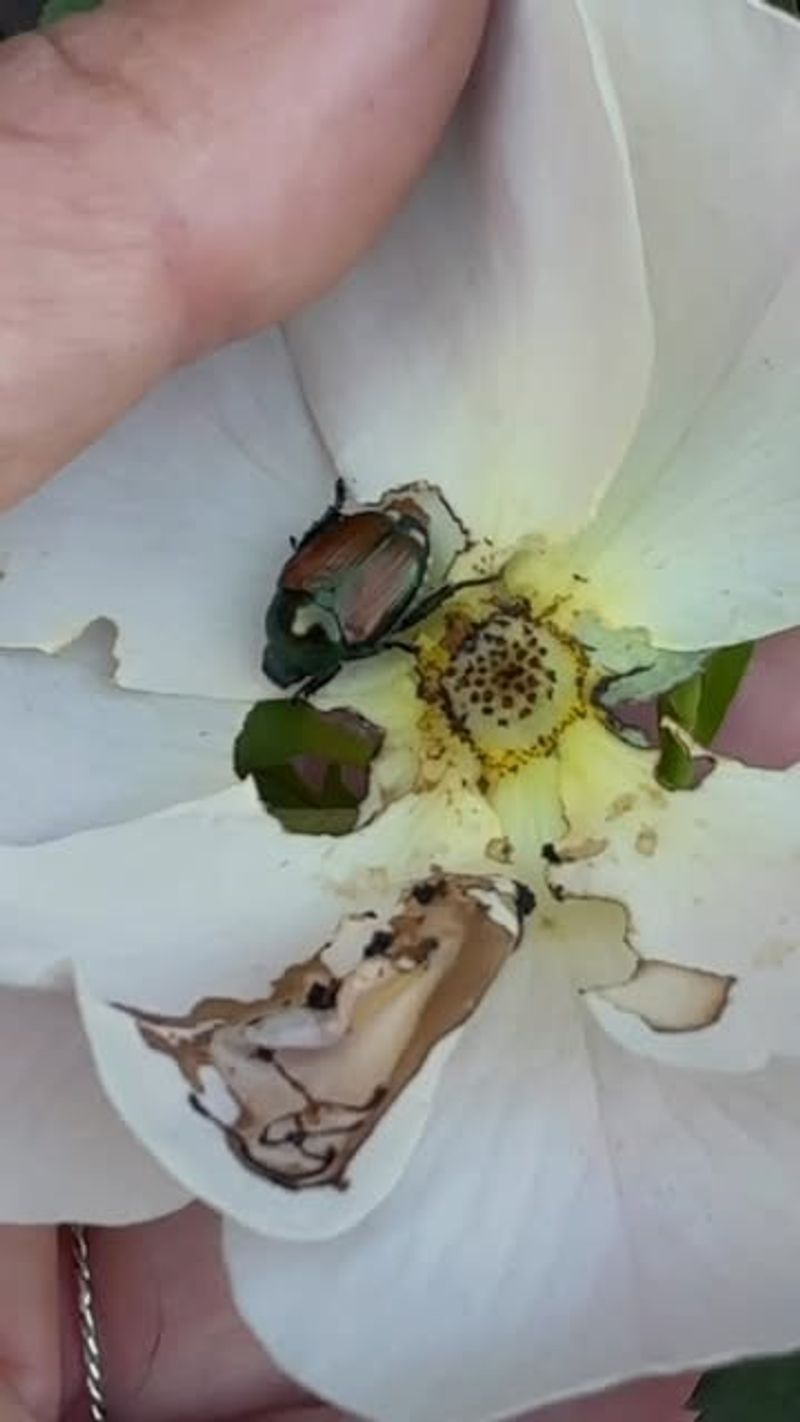
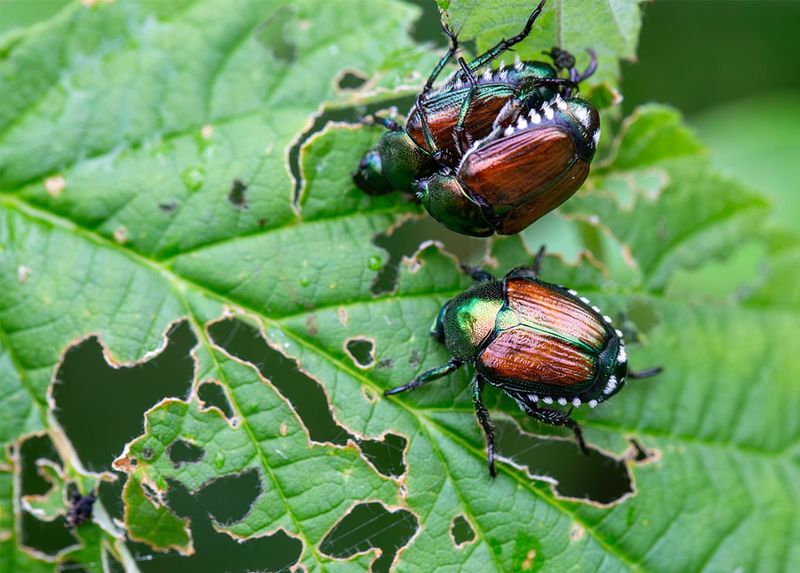
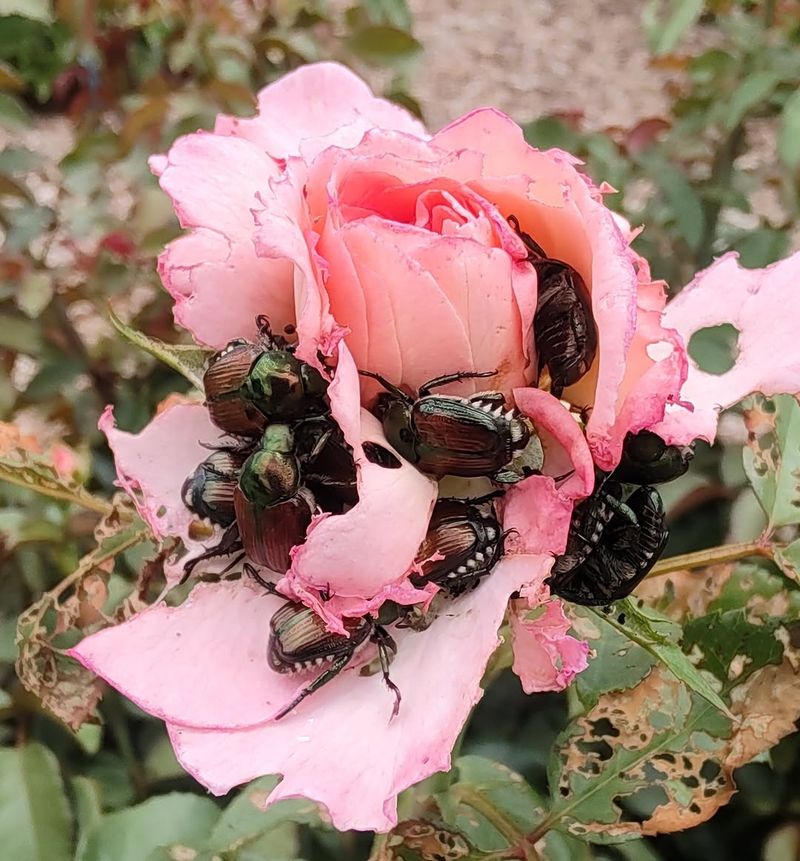
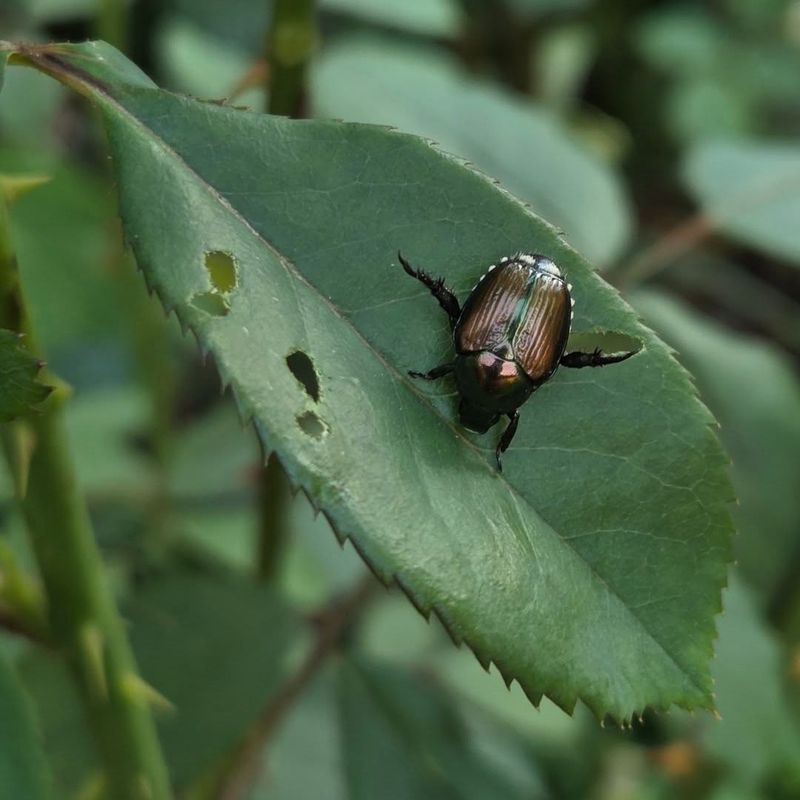
The adult beetle has a striking metallic green body, copper-colored wing covers, and a row of small white hair tufts running along each side of its abdomen. Once you spot one, you will recognize them instantly.
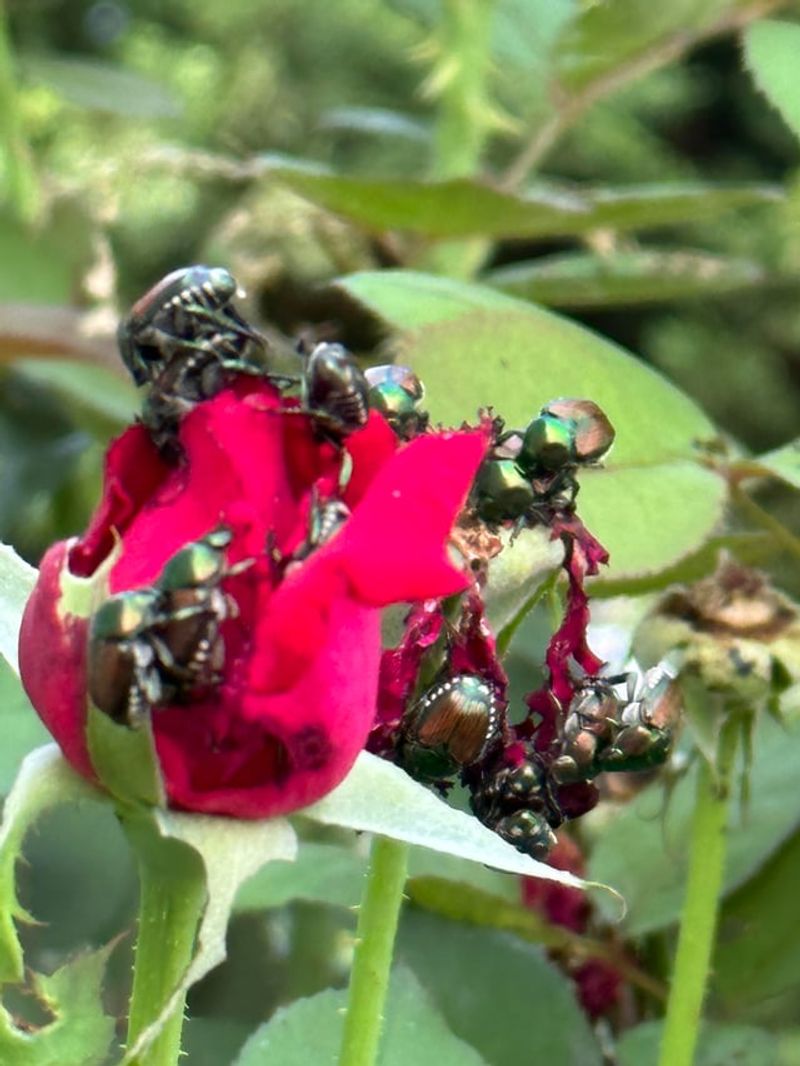
These beetles do not spread evenly across a plant. They tend to cluster together, gathering on sunny upper leaves, open flowers, and the highest points of the rose.
A single stem can host a dozen beetles while the lower branches remain untouched. That clustering behavior is why a quick glance from a distance is not enough.
You really need to check each cane, each blossom, and the undersides of upper leaves where groups tend to settle.
Daily inspection also helps you catch the problem before it grows. One or two beetles arriving on Monday can become a much larger gathering by Wednesday if left alone.
Early action gives you more options and keeps the rose from suffering extended feeding. Setting a consistent time each day, whether after breakfast or before watering, turns inspection into a habit rather than a chore.
A small notebook to track where beetles appear most often can help you focus your attention on the spots that need it most.
2. Beetles Are Removed During Cool Morning Hours
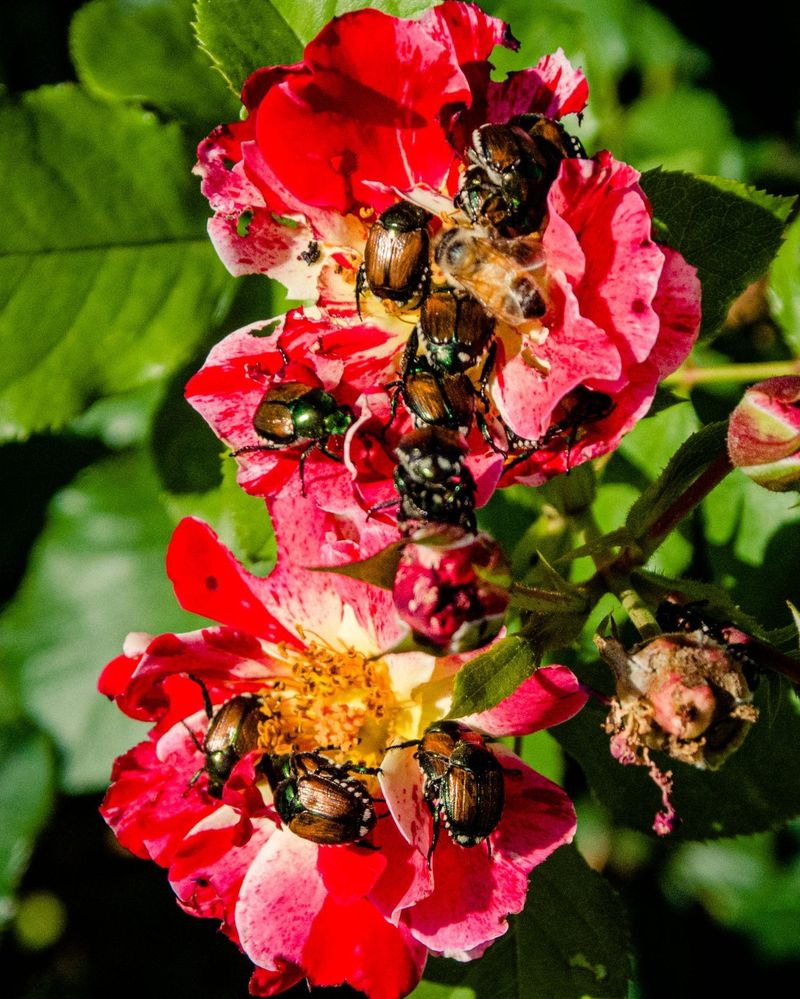
Timing really does matter when it comes to removing Japanese Beetles by hand. Early morning and late evening are the sweet spots because cooler temperatures slow the insects down considerably.
A beetle sitting on a warm afternoon flower is quick, alert, and ready to fly the moment it senses movement. That same beetle on a cool morning is sluggish and much easier to catch before it escapes.
The technique most Michigan gardeners swear by is simple and surprisingly satisfying. Fill a container with warm water and a good squeeze of dish soap, then hold it directly beneath the infested flower or leaf.
Your Michigan Garden Changes Every Week. Your Plan Should Too.
Gardening in Michigan changes quickly throughout the season. Every Friday you’ll receive a simple weekly plan showing exactly what to plant, prune, fertilize, harvest, and protect so you never miss the right timing.
A gentle tap or flick sends the beetles straight down into the soapy solution, where they cannot escape. The soap breaks the surface tension of the water, which prevents the beetles from crawling back out.
No complicated equipment needed, just a steady hand and a little patience.
This approach works best when you have a manageable number of rose bushes. If your garden has just a few plants, morning handpicking can make a noticeable difference within a few days.
The key is consistency. New beetles arrive regularly throughout the season, so a single round of removal will not solve the problem on its own.
Plan to check your roses every morning during peak weeks and remove any new arrivals before the day warms up.
Over time, this regular effort adds up and keeps feeding pressure lower than if beetles were left to gather freely throughout the day.
3. Early Removal Reduces Additional Beetle Attraction
Here is something many gardeners do not realize right away: waiting too long to act can actually make the problem worse.
Japanese Beetles release chemical signals as they feed, and those signals can attract even more beetles from the surrounding area.
A rose that has been heavily fed on sends out a combination of plant odors and beetle attractants that essentially broadcasts an open invitation to others nearby. Acting fast disrupts that cycle before it picks up momentum.
Starting removal as soon as the first beetles appear, rather than waiting until the damage becomes obvious, is one of the most effective strategies available to home gardeners. The first wave of beetles is usually the smallest.
Reducing that initial group before they have time to settle and feed heavily can help slow down how quickly the population builds on your specific plants.
It will not stop every beetle in the neighborhood from eventually finding your roses, but it can reduce the intensity of the gathering.
Damaged foliage also matters here. Leaves that have already been chewed release stronger odors than intact ones, which is part of why a heavily attacked rose seems to attract even more attention.
Removing badly damaged leaves along with the beetles themselves can help reduce those attractant signals. Think of early removal as cutting off the problem at the source rather than chasing it after it has already grown.
The sooner you start, the more manageable the season tends to be, and your roses will show the difference in how they look through August.
4. Damaged Leaves And Flowers Are Watched Closely
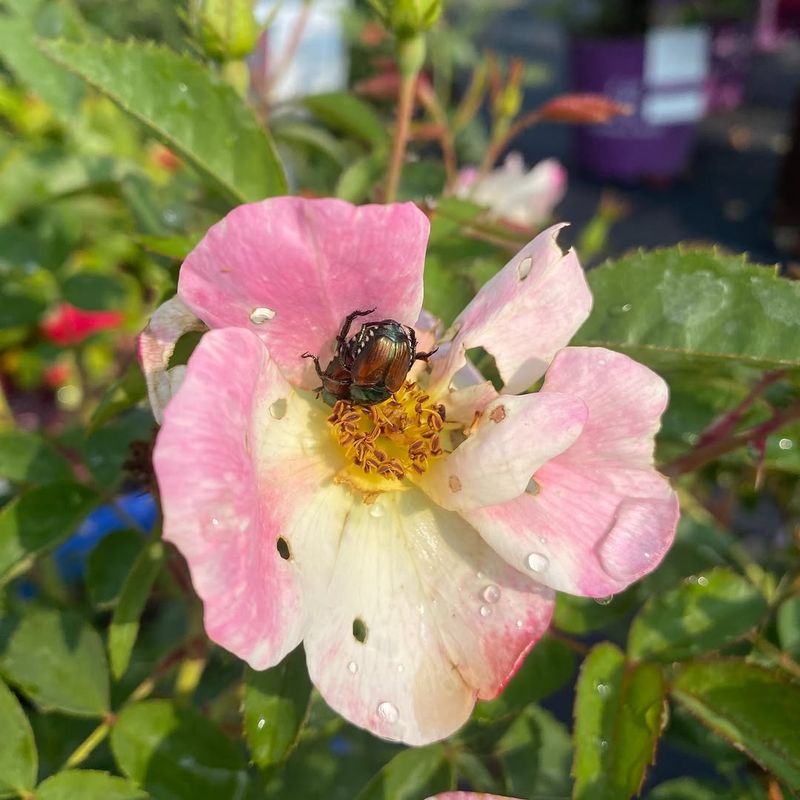
Skeletonized leaves are one of the most recognizable signs of Japanese Beetle feeding, and once you know what to look for, the damage is hard to mistake.
Adult beetles chew the soft tissue between leaf veins, leaving behind a thin, papery network that looks almost like lace.
The veins stay intact while everything in between disappears. On roses, this pattern tends to appear first on upper leaves and open flowers, where the beetles prefer to feed.
Flowers and buds are not safe either. Beetles will chew through petals and can reduce a beautiful bloom to ragged fragments within a day or two of heavy feeding.
Watching both the foliage and the flowers closely helps you stay accurate about what is actually happening in your garden.
Not every type of leaf damage comes from Japanese Beetles, and misidentifying the cause can lead to unnecessary treatments.
Spotting diseases like black spot create circular dark lesions, while leafcutter bees make clean, round notches along leaf edges. Irregular, ragged feeding with no consistent pattern points more toward beetles or caterpillars.
The reassuring news is that a healthy, well-established rose can handle a moderate amount of beetle feeding without losing its long-term health.
Leaves will regrow, and new buds will form once beetle pressure eases later in the season. Complete protection is not always the goal.
Keeping a close eye on the level of damage helps you decide when intervention is genuinely needed versus when your rose is managing just fine on its own. Staying observant puts you in control of those decisions.
5. Japanese Beetle Traps Are Kept Away From Roses
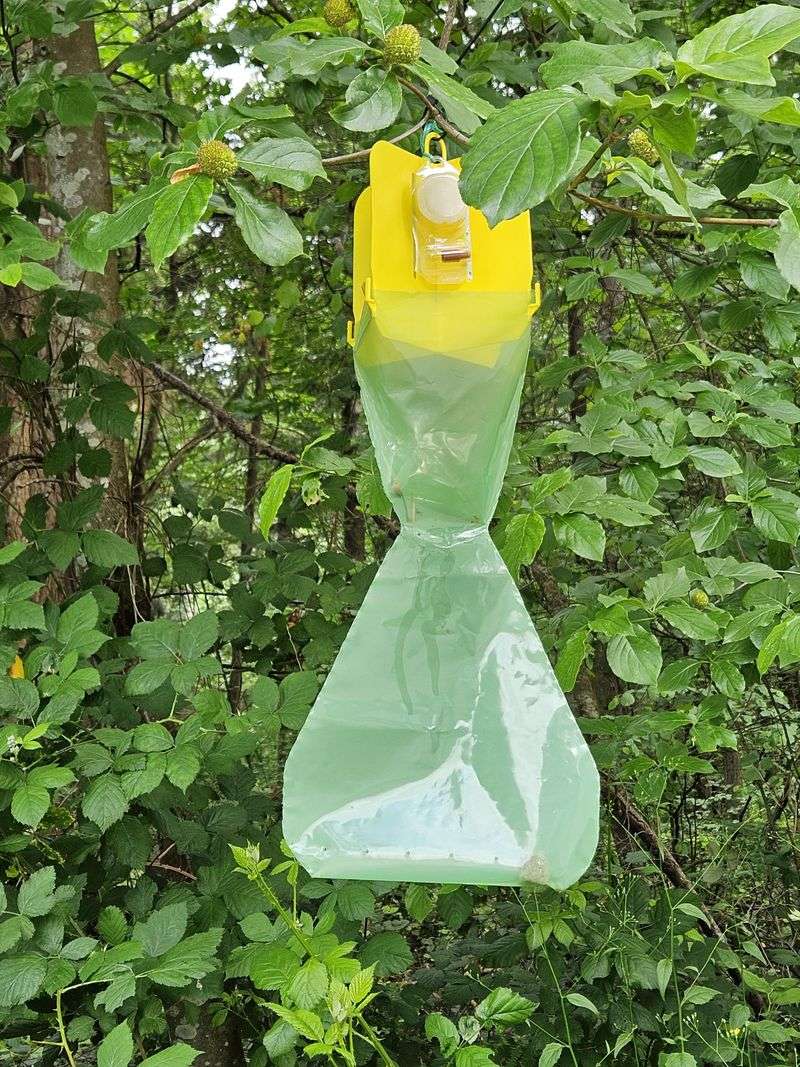
Walk into any garden center during summer in Michigan and you will see Japanese Beetle traps prominently displayed.
The bright yellow bags with their floral and pheromone lures look like a straightforward solution, and the idea makes sense on the surface.
Attract the beetles, trap them, problem solved. The reality turns out to be a bit more complicated, and many experienced gardeners have learned this lesson the hard way after hanging a trap right next to their rose bed.
The lures used in these traps are highly attractive, often drawing beetles from a wider area than would have naturally visited your garden. Studies have shown that traps can attract far more beetles than they actually capture.
The ones that fly toward the lure but miss the trap end up landing on nearby plants instead, which can increase feeding around whatever is growing closest to the device.
Placing a trap near your roses essentially turns them into a landing zone for beetles that were never originally headed your way.
Michigan State University Extension recommends using these traps mainly as a monitoring tool to track when beetles first emerge in your area rather than relying on them as a primary control method in a home landscape.
If you do want to use one, place it well away from your rose garden, ideally at the far edge of your property or in an open area away from ornamental plants.
Using it to track emergence timing can actually help you plan your inspection and removal schedule more effectively throughout the season.
6. Valuable Roses May Receive A Physical Barrier
Sometimes a rose is just too special to risk. Maybe it is a rare variety, a plant that took years to establish, or a gift with personal meaning.
For those prized roses, a physical barrier offers a level of protection that no spray or trap can fully match.
Fine insect netting or a lightweight row cover fabric, installed carefully around the plant, creates a simple but effective shield between the beetles and the flowers they want to reach.
Getting the setup right matters more than most gardeners expect. The netting needs to be secured at the base so beetles cannot crawl underneath, and it should be held away from the foliage and flowers rather than draped directly against them.
Beetles are persistent enough to feed through mesh that rests flat against a petal or leaf, so keeping some air space between the fabric and the plant is important. Small wire hoops or a light frame can hold the material in place without crushing the blooms beneath it.
One real limitation worth considering is pollination. Open roses need access to bees and other pollinators to set hips and continue blooming well.
A barrier that blocks beetles will also block pollinators, which creates a trade-off you need to manage. Many gardeners remove the netting during morning pollinator hours and replace it later in the day.
For roses that bloom continuously throughout summer, this daily routine can become time-consuming.
Physical barriers work best as a short-term solution during peak beetle weeks, especially for show-quality plants or once-blooming varieties that only need protection for a limited window each year.
7. Healthy Roses Are Better Able To Tolerate Feeding
Strong, well-cared-for roses bounce back from beetle feeding much more effectively than stressed ones. That might seem obvious, but it is easy to overlook basic plant care when you are focused on the insects themselves.
Japanese Beetle season in Michigan falls right in the middle of summer heat, which is already a stressful time for roses.
Soil that dries out too quickly, roots competing with weeds, or plants weakened by over-pruning are all going to struggle more under beetle pressure than a rose that is genuinely thriving.
Watering consistently at the root zone is one of the most helpful things you can do during beetle season. Deep, infrequent watering encourages roots to grow downward rather than staying shallow, which makes the plant more resilient overall.
A layer of mulch around the base, roughly two to three inches deep and kept away from the main cane, helps retain soil moisture, moderate temperature, and reduce weed competition all at once.
Avoid heavy fertilizer applications during peak beetle activity because pushing soft new growth can actually make the plant more attractive to feeding insects.
Pruning should also be kept minimal during this period. Removing a large portion of the plant while it is already dealing with beetle feeding adds unnecessary stress at the worst possible time.
Snipping off a few heavily damaged stems is fine, but saving major shaping for late summer or early fall is the smarter move. Good care does not repel beetles, and nobody should expect it to.
What it does is give your roses the strength to keep growing, reblooming, and recovering even when the beetles are at their busiest.
8. Insecticides Are Used Only With Careful Pollinator Protection
Reaching for a pesticide is not the first step most Michigan gardeners take, but there are situations where it becomes a reasonable option.
When a highly valued rose is facing a large and persistent beetle population and daily handpicking is simply not keeping up, a carefully chosen insecticide can help reduce the pressure.
The decision should be thoughtful rather than automatic, and the product selection matters enormously.
Not every garden pesticide is labeled for use on roses against Japanese Beetles, so reading the label before purchasing is not optional.
Pollinators are the biggest concern with any spray treatment during bloom season. Bees, butterflies, and other beneficial insects visit open rose flowers regularly, and many insecticides are highly harmful to them.
Timing applications for early evening after pollinators have returned to their nests reduces that risk significantly. Avoiding treatment of open flowers altogether and focusing instead on foliage and buds offers another layer of protection.
Some gardeners choose to remove open blooms before treating and allow new ones to open after the product has had time to break down.
Consistency is also important to understand before starting any chemical treatment. Japanese Beetles continue arriving throughout the season, and a single application rarely solves the problem permanently.
Repeated treatments may be necessary, which increases both cost and potential impact on the garden environment.
Combining any insecticide use with daily inspection and physical removal stretches the effectiveness of each application and reduces how often you need to reapply.
Always follow every direction on the product label and store any remaining product safely away from children and pets.