How To Attract Georgia’s Summer Tanagers With Native Plants And Habitat
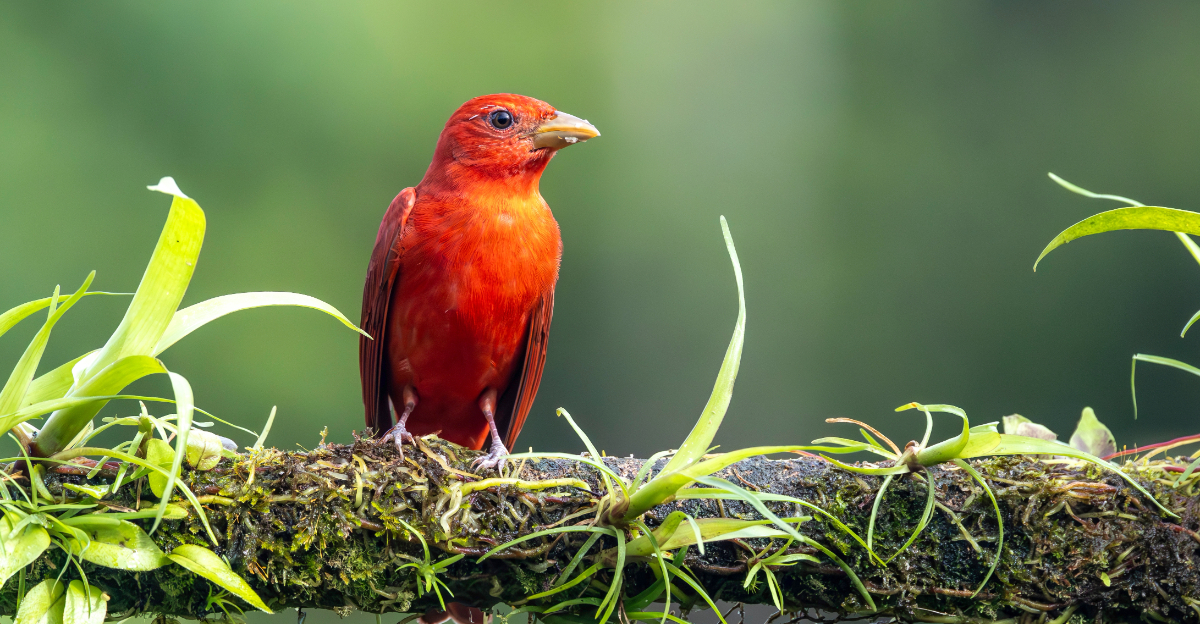
Some birds seem to appear out of nowhere. One day the yard feels quiet, and the next there is a flash of color moving through the trees or a new song coming from a spot that was empty just days before.
Those unexpected visitors are often the ones people remember most. They turn an ordinary morning in the garden into something worth talking about for the rest of the day.
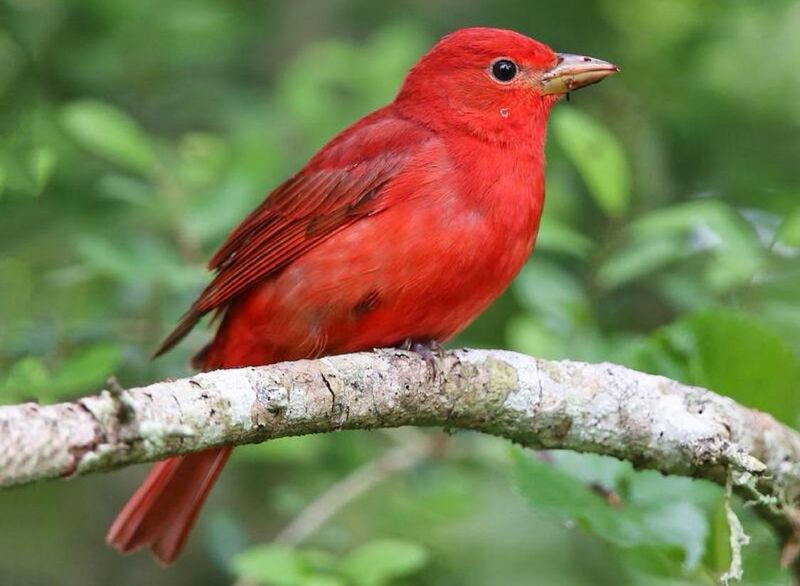
Summer Tanagers have that effect on many bird lovers. Their seasonal visits are easy to appreciate, but getting them to spend more time around a yard is not always as simple as putting out food or water.
Like many native birds, they are drawn to places that provide the things they naturally look for throughout the season.
That is one reason habitat matters so much. Many Georgia landscapes already have some of the features Summer Tanagers prefer, while others may be missing a few important pieces.
The good news is that small changes can sometimes make a bigger difference than people expect, especially when native plants are part of the picture.
1. Native Oaks Support A Steady Supply Of Insects
Oak trees are arguably the single most valuable plant you can add to a wildlife-friendly yard. A mature oak supports hundreds of caterpillar species alone.
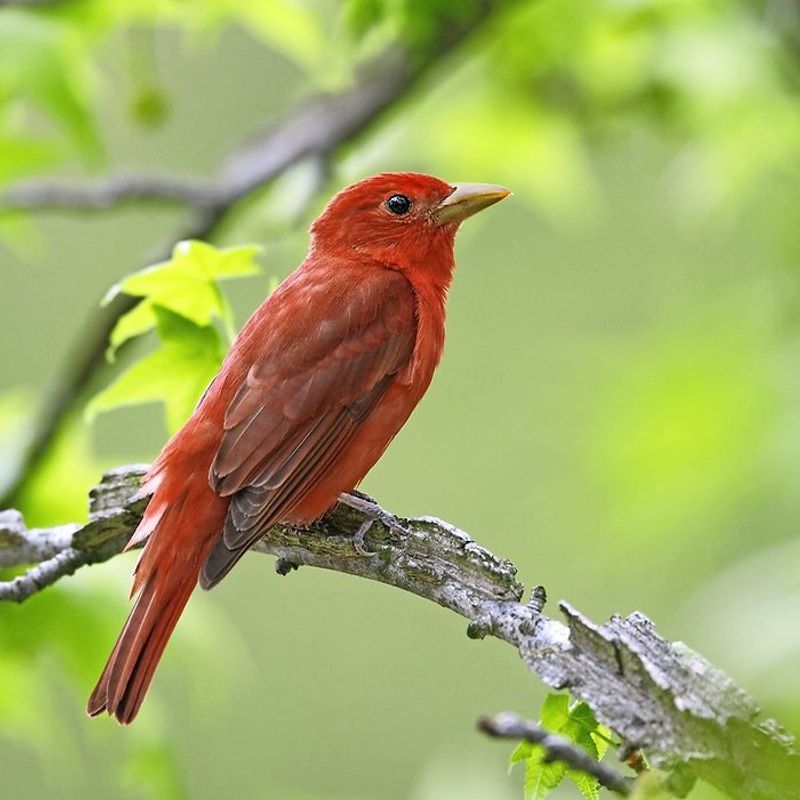
Summer Tanagers rely heavily on caterpillars and other soft-bodied insects during nesting season, so a yard with oaks is a yard with food.
Native oaks like Willow Oak, Water Oak, and Cherrybark Oak all grow well across the Southeast. Each one attracts slightly different insect communities, so planting more than one type increases variety.
More insect variety means more reasons for tanagers to stick around.
Oaks do take time to establish. A young tree planted now may not support peak insect activity for several years.
Still, even a sapling begins attracting insects within its first growing season.
Leaf litter under oaks is just as important as the canopy above. Ground beetles, moth pupae, and other invertebrates overwinter in fallen leaves.
Leaving that layer intact supports the full food web tanagers depend on.
Avoid raking aggressively under oaks if possible. A light layer of leaves provides real habitat value.
Pair oaks with other native plants for a layered effect that benefits more than just tanagers.
2. American Beautyberry Provides Late-Season Fruit
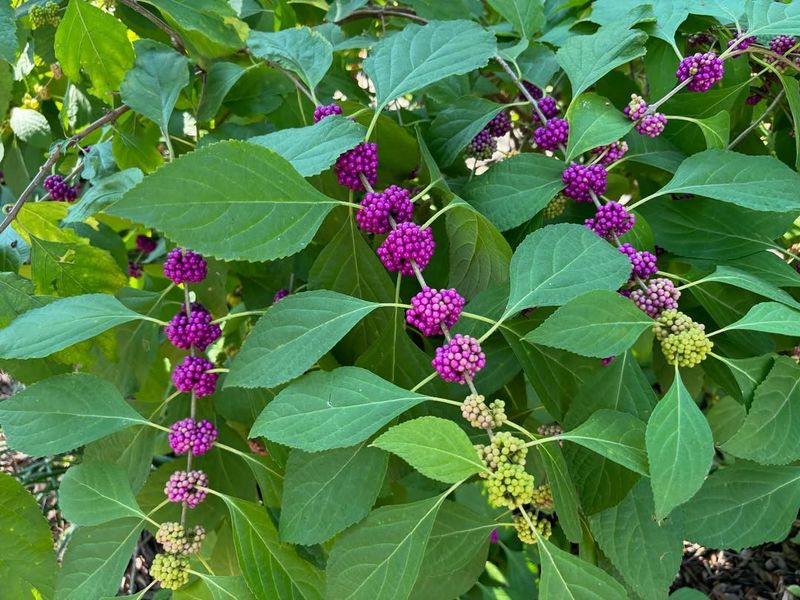
American Beautyberry is one of those native shrubs that earns its place in any wildlife garden. Clusters of vivid magenta berries appear in late summer and persist well into fall.
Tanagers passing through during migration often hit these shrubs hard before continuing south.
Callicarpa americana grows naturally across the Southeast in woodland edges and disturbed areas. It tolerates partial shade, handles humidity well, and rarely needs much attention once established.
That low-maintenance quality makes it a smart choice for gardeners who want results without constant upkeep.
The berries are not just attractive to tanagers. Mockingbirds, thrashers, and catbirds also target Beautyberry heavily.
A single shrub can draw a surprising number of species in a short window.
Your Georgia Garden Changes Every Week. Your Plan Should Too.
Gardening in Georgia changes quickly throughout the season. Every Friday you’ll receive a simple weekly plan showing exactly what to plant, prune, fertilize, harvest, and protect so you never miss the right timing.
Plant Beautyberry in groups of three or more when space allows. Clustered shrubs create a more visible fruit display and offer better shelter.
Birds feel safer feeding near cover than out in the open.
Beautyberry benefits from a hard cutback in late winter. New growth comes in strong and produces the best berry crop on fresh wood.
It bounces back quickly and can reach six feet in a single growing season under good conditions.
3. Black Cherry Attracts Important Food Sources
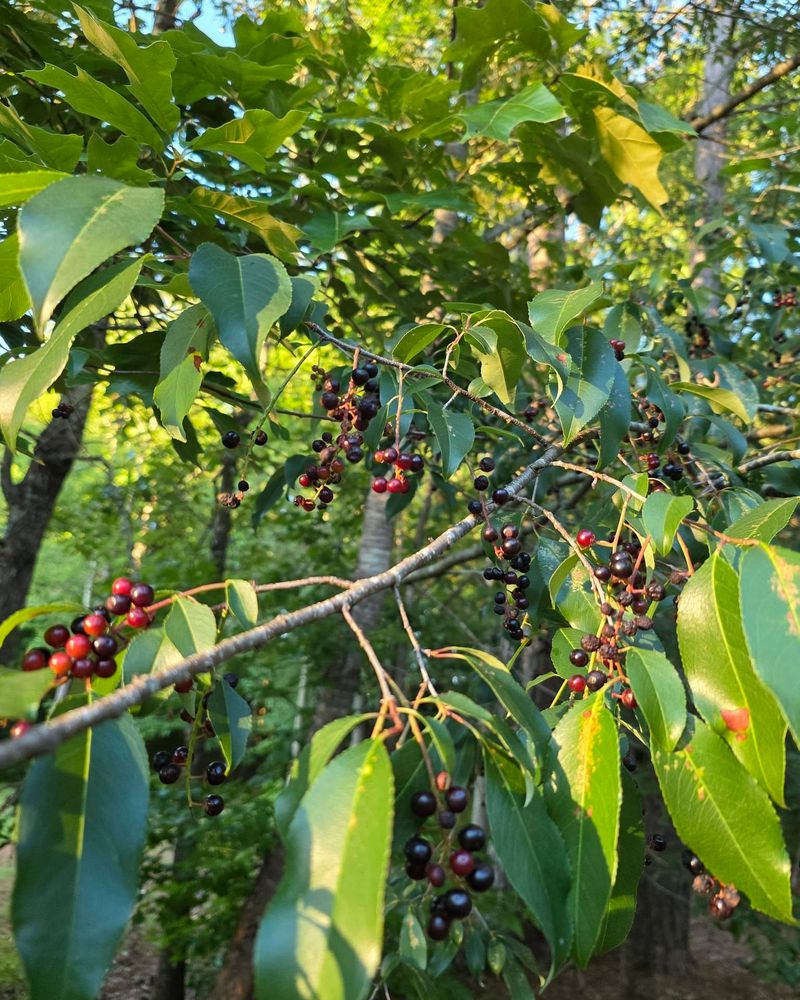
Black Cherry punches well above its weight in wildlife value. Prunus serotina is a host plant for over 400 lepidopteran species, meaning it supports an enormous insect community.
Summer Tanagers hunting for caterpillars and beetles find Black Cherry trees extremely productive.
Beyond insects, the small dark cherries ripen in midsummer and attract a wide range of fruit-eating birds. Tanagers, orioles, and waxwings all visit Black Cherry trees when fruit is available.
Timing matters here since the fruit window can be short depending on competition.
Black Cherry grows fast and can reach significant height within a decade. It prefers well-drained soil and full to partial sun.
Avoid planting it in low-lying wet areas where standing water collects after rain.
One thing worth knowing: Black Cherry can spread readily from bird-dropped seeds. Keep an eye on seedlings appearing in unwanted spots.
Pulling young volunteers early is much easier than managing larger ones later.
The bark and leaves contain compounds that some livestock find harmful, so placement matters if you have animals nearby. For a purely wildlife-focused yard, though, Black Cherry is one of the most ecologically productive trees you can plant.
Few native trees deliver this level of value for both insects and birds.
4. Native Persimmon Provides Seasonal Fruit
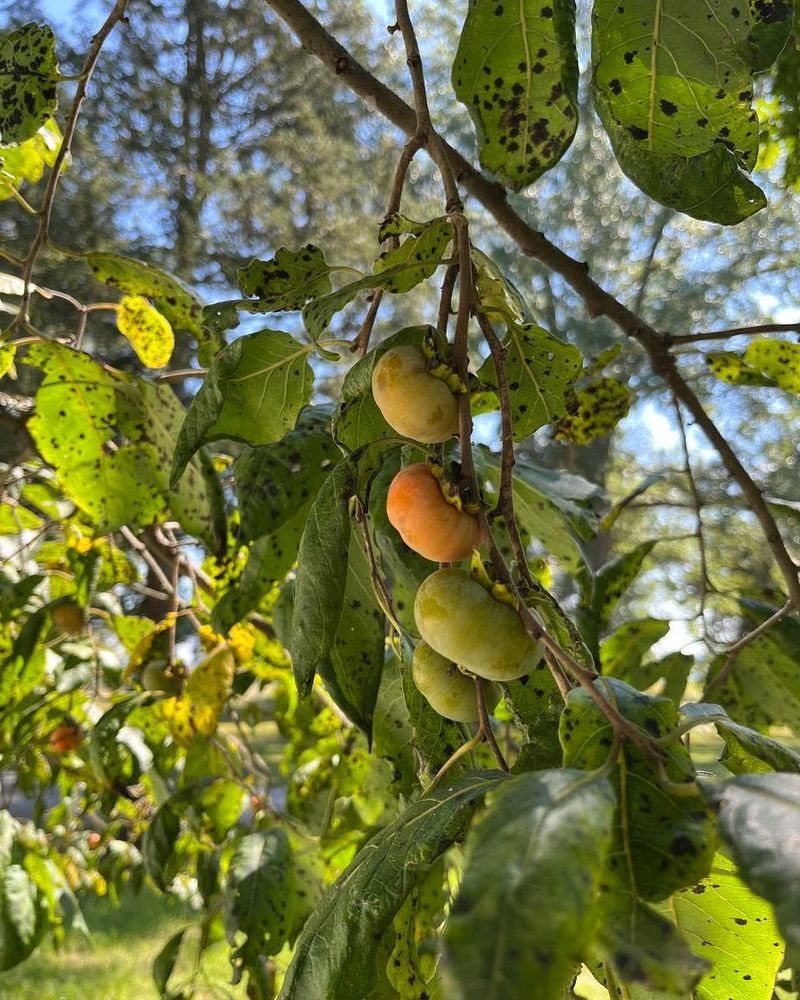
American Persimmon is a tree that rewards patience. Diospyros virginiana fruits in fall, and the ripe orange globes persist on branches long after leaves drop.
Birds that linger into late season rely on that fruit when other food becomes scarce.
Summer Tanagers are primarily insect eaters, but they do consume fruit when it is available and ripe. Persimmon offers a reliable late-season supplement.
Pairing it with earlier-fruiting plants creates a longer window of food availability across the warmer months.
Native Persimmon is tough. It handles drought, clay soil, and full sun without much fuss.
Once established, it needs almost no supplemental watering in most years. That resilience makes it practical for yards without irrigation systems.
Keep in mind that Persimmon is dioecious, meaning you need both a male and female tree to get fruit. A single tree will not produce reliably.
Planting two or three trees increases the chance of having at least one fruit-bearing female.
Wildlife value extends beyond birds. Deer, raccoons, and foxes also feed on fallen persimmons.
If you want the fruit to stay on branches longer for birds, consider some light fencing around the base to slow ground-level competition. Persimmon fits naturally into a layered native planting scheme.
5. Open Woodland Edges Create Ideal Conditions
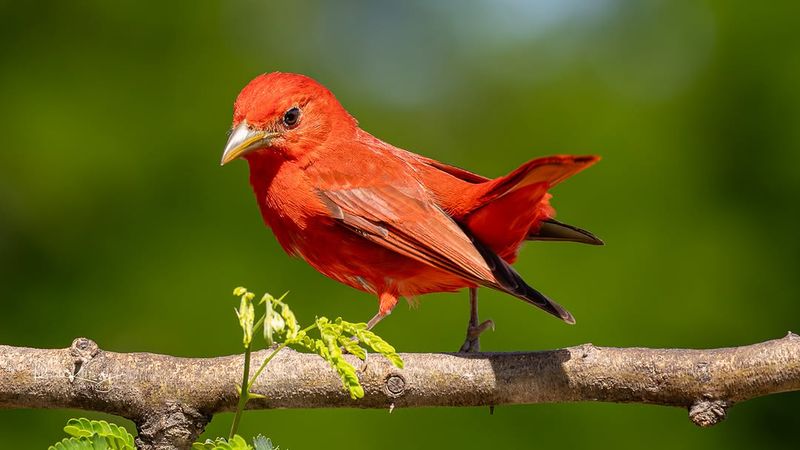
Summer Tanagers are birds of open woodland and forest edge. Dense, closed-canopy forest is not their preferred zone.
They want light gaps, scattered trees, and shrubby understory mixed with open patches where insects are easy to spot from above.
Replicating that structure in a backyard is more achievable than it sounds. A yard with a few tall trees, some mid-height shrubs, and open lawn or meadow areas already starts to resemble productive tanager habitat.
You do not need acres of land to make it work.
Avoid filling every inch with dense planting. Tanagers hunt by watching from a perch and dropping onto prey.
Open sight lines between plants help them forage efficiently. A yard packed wall-to-wall with shrubs actually reduces that hunting opportunity.
Transition zones between sun and shade are especially productive for insects. Moths, beetles, and flies concentrate along these edges.
Tanagers learn to work these zones systematically during peak foraging periods.
If your yard borders a natural area, the existing edge is already a major asset. Connecting your native plantings to that natural zone extends the habitat corridor.
6. Layered Vegetation Offers Better Protection
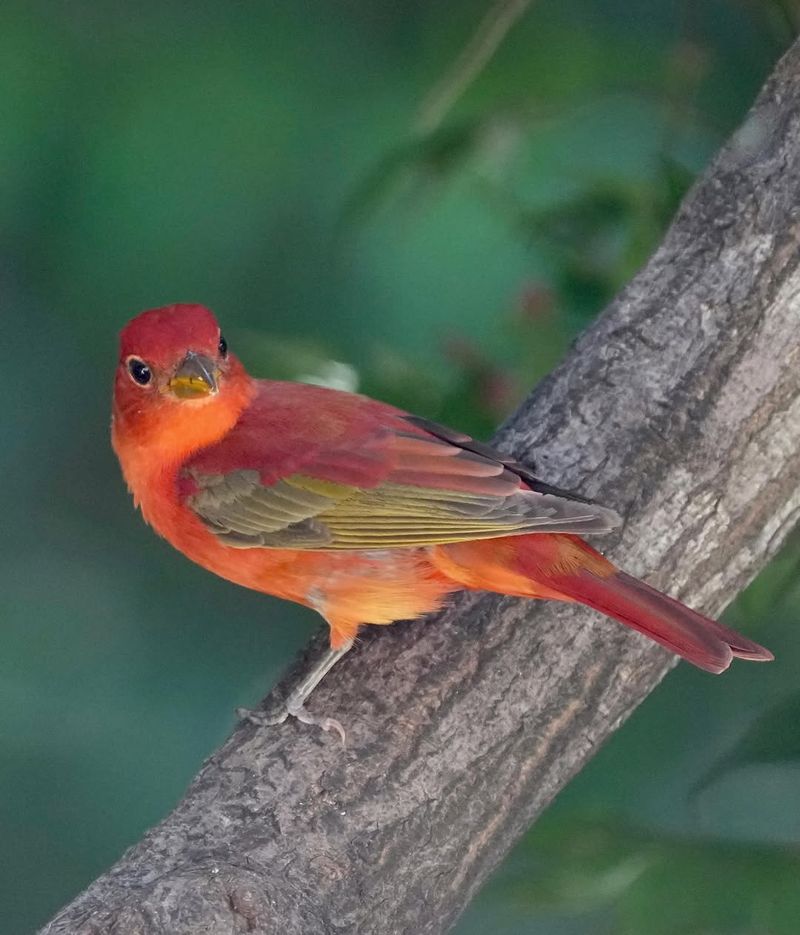
Vertical structure matters more than most gardeners realize. A yard with only lawn and tall trees leaves birds exposed and limits nesting options.
Adding layers between the ground and the canopy creates shelter, nesting sites, and more foraging zones.
Think in three levels: canopy trees, mid-story shrubs, and low groundcover or native grasses. Each layer supports different insects and offers different types of cover.
Tanagers nest in the mid-to-upper canopy but forage across all levels depending on prey availability.
Native shrubs like Oakleaf Hydrangea, Buttonbush, and Sparkleberry all work well in the mid-story layer across the Southeast. Each one supports specific insect communities and provides visual screening that birds find reassuring.
Shelter plants encourage birds to stay longer rather than just passing through.
Groundcover plants matter too. Native ferns, wild ginger, and low-growing grasses hold moisture, support beetles and other ground-dwelling invertebrates, and reduce bare soil that erodes easily.
Bare ground dries out fast and supports far fewer insects than covered ground does.
Planting in clusters rather than scattered individuals creates more cohesive habitat blocks.
7. Chemical-Free Spaces Support More Insects
Pesticides are one of the fastest ways to undercut everything native plants are supposed to do. A yard full of native oaks and fruiting shrubs loses most of its value if the insect community has been reduced by chemical applications.
Tanagers need live insects, not just plant structure.
Systemic insecticides are especially problematic. Products containing neonicotinoids move into plant tissue and can affect insects feeding on treated plants for an extended period.
Even low-level exposure disrupts insect behavior and reproduction over time.
Switching to a chemical-free approach does not mean accepting a damaged garden. Healthy native plant communities tend to regulate pest pressure naturally through predator-prey balance.
Beneficial insects, spiders, and birds work together to keep plant-feeding insects at manageable levels.
Accepting some leaf damage is part of the deal. Chewed leaves mean caterpillars are present, and caterpillars are exactly what tanagers are hunting.
A few imperfect leaves on an oak is a sign the system is working, not failing.
Compost and organic mulch replace the need for synthetic fertilizers in most cases. Healthy soil biology supports stronger root systems and more productive plants.
Start with one section of the yard and expand the chemical-free zone gradually as confidence builds. Progress does not have to happen all at once.
8. Fresh Water Encourages Regular Visits
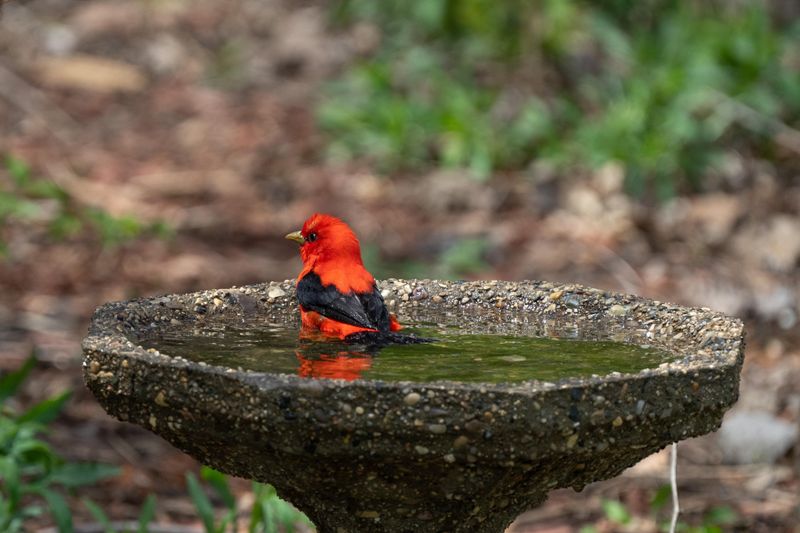
Water is the one element that draws birds faster than almost anything else. Summer Tanagers need fresh water for drinking and bathing, especially during hot summer months.
A reliable water source keeps them returning even when insect activity slows during the hottest part of the day.
Shallow depth matters more than size. A bath no deeper than two inches at the center works well for most songbirds.
Tanagers are not large birds, and they prefer water they can wade into comfortably without submerging completely.
Moving water dramatically increases visibility and appeal. Drippers, misters, and small recirculating pumps all create sound and surface ripple that birds detect from a distance.
Sound carries through vegetation and signals safety and freshness to birds scanning the area from the canopy.
Change the water every two to three days during warm weather. Stagnant water grows algae quickly and can harbor mosquito larvae.
Keeping the bath clean is a simple habit that makes a real difference in how often birds use it.
Placement near shrubs or low branches gives birds a quick escape route if startled. Open birdbaths with no nearby cover get used less frequently.