How To Keep A Potted Meyer Lemon Happy Indoors Through A North Carolina Winter
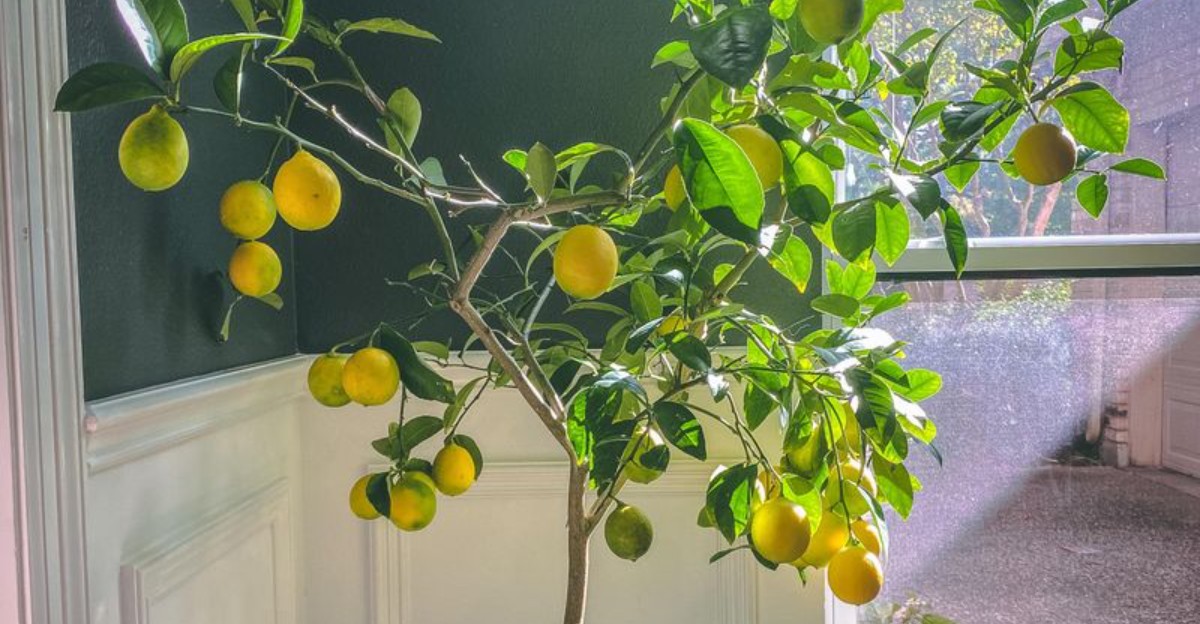
A Meyer lemon tree is a bit of a drama queen. It drops leaves when the light changes, sulks when the room is too warm, and shows its feelings in a way that frightens new owners. Moving it indoors for winter is the moment when most trees get into trouble.
North Carolina’s mild climate makes people believe it can stay outside a little longer, and then a cold night proves otherwise. Light, water, and temperature all matter, and the balance is delicate.
Done well, the tree rewards you with glossy leaves, fragrant flowers, and fruit that ripens in the cold months. Done badly, you will find a pile of yellow leaves on the floor. Learn what it wants before the first frost.
1. Bring It Inside Before Cold Nights Arrive
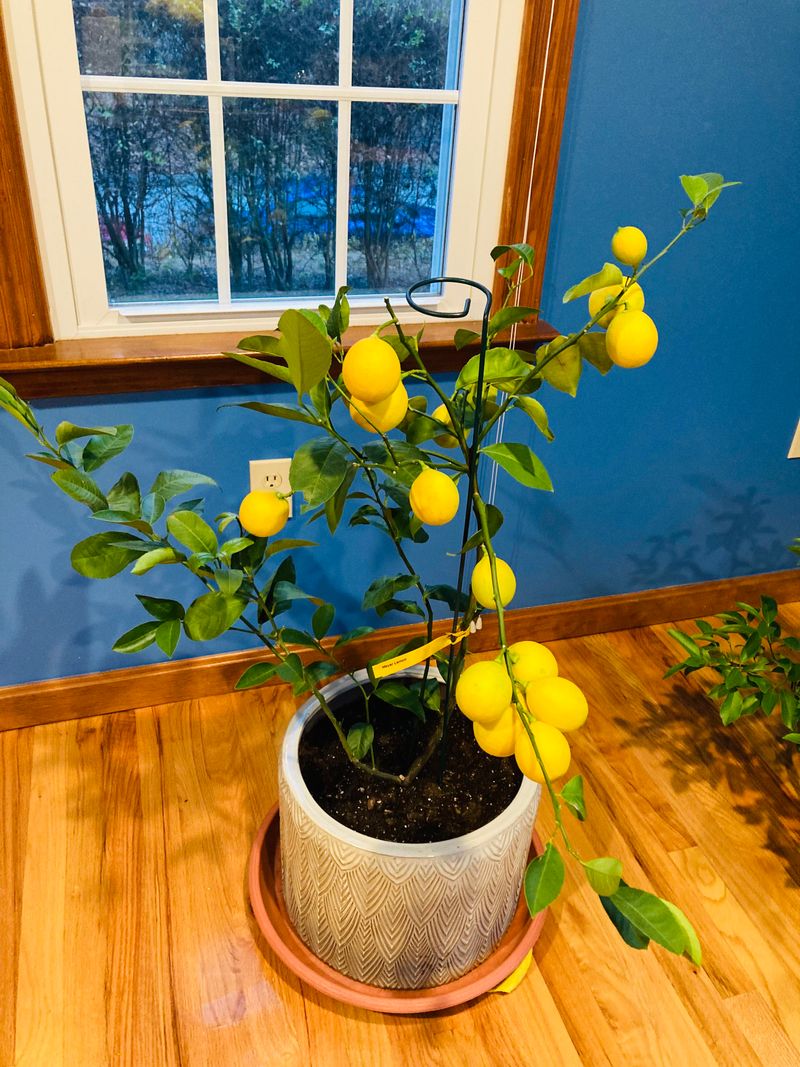
Timing is everything when your lemon tree spends summer on the porch. Meyer lemons (Citrus × meyeri) can shrug off a short cool spell, but temperatures near freezing can harm their leaves, flowers, and fruit.
A little planning in fall saves you from a scramble on the first frosty night. Watch the forecast once October rolls around.
When nights start dropping into the low 40s on a regular basis, it is time to move the pot indoors. Trees brought inside before the cold settles in adjust much more easily than ones rushed in after a sudden freeze.
Before you carry it through the door, give the tree a careful once-over. Look under the leaves and along the stems for tiny bugs, sticky spots, or webbing.
Rinsing the leaves with a gentle spray of water outdoors can wash away hitchhikers before they spread to your houseplants.
Winter in North Carolina loves to keep everyone guessing. One day might feel like spring, and the next night could bring a hard freeze. Many gardeners from Asheville to Wilmington know that wild swing well.
Those mild days can actually help your tree. When the temperature climbs above about 50°F, you can set the pot back outside for a few hours of real sunshine.
Just remember to bring it in well before evening, since temperatures can tumble fast once the sun goes down. A plant dolly or rolling caddy makes these trips much easier on your back.
Heavy pots full of damp soil weigh more than you might expect. With wheels underneath, moving your lemon in and out becomes a quick and easy chore instead of a workout.
2. Give It The Brightest Spot You Have
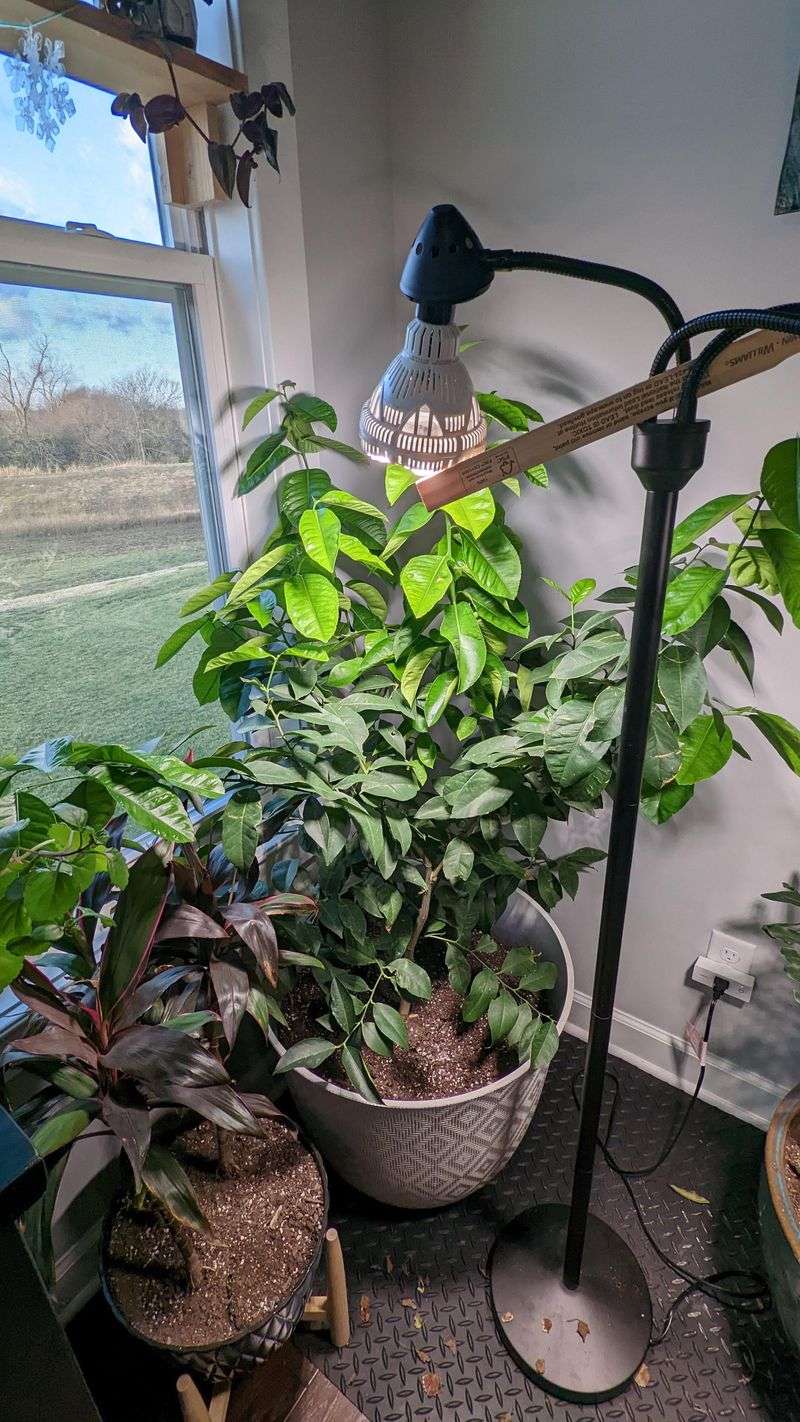
Sunlight is the fuel that keeps a lemon tree going. Citrus trees need plenty of light to hold onto their leaves, make flowers, and ripen fruit.
When light runs low indoors, leaves often start falling, and that is one of the most common winter complaints from lemon growers.
So go window shopping in your own home. The sunniest south-facing or west-facing window is usually the best seat in the house. Place the tree right in front of the glass, close enough to soak up as much direct sun as possible.
Plants naturally lean toward the light, which can leave one side looking thin. Turning the pot every week or two keeps growth even and gives every branch a fair share of sunshine. A quick quarter turn is all it takes.
Many North Carolina homes sit under tall oaks, pines, and maples. Even in winter, those trunks and evergreen branches can cast long shadows across your windows.
Add in short days, with the sun setting before dinner, and your lemon may get far less light than it needs.
A grow light can fill that gap beautifully. Set a full-spectrum LED light above the tree and run it for about 10 to 12 hours a day. A simple plug-in timer handles the schedule, so you never have to remember to flip the switch.
Keep the light a reasonable distance from the leaves, following the instructions on the package.
You will often notice greener, glossier foliage within a few weeks. Happy leaves mean the tree has the energy to keep those little lemons growing toward a sunny yellow finish.
3. Water When The Top Of The Soil Dries
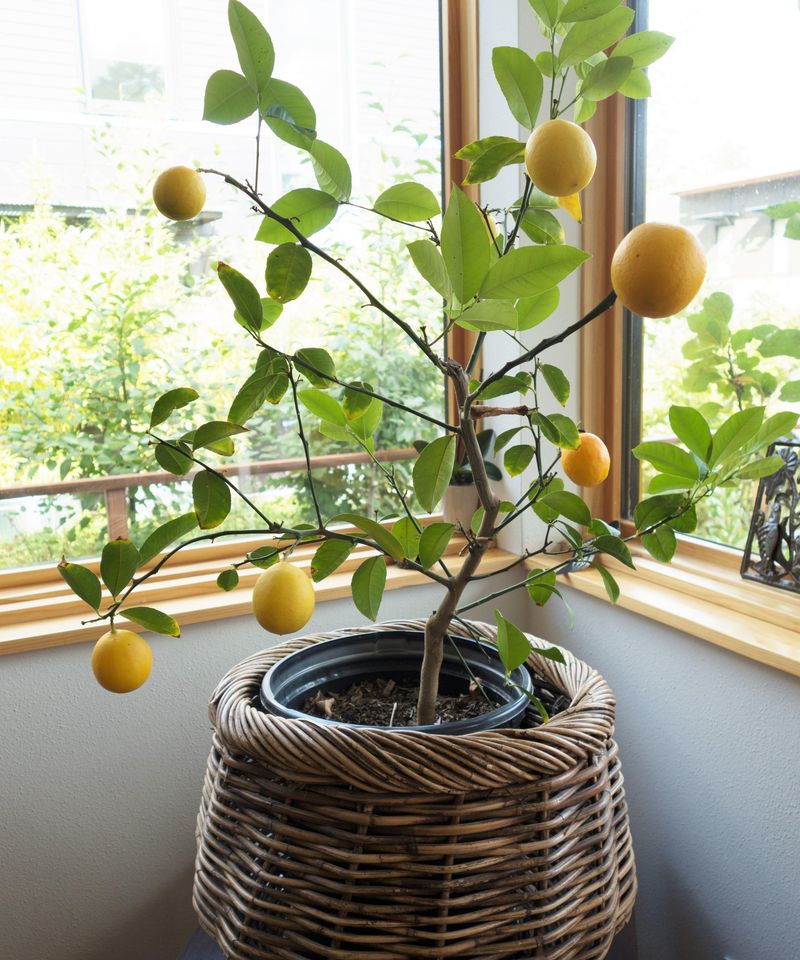
Your finger is the best watering tool you own. Citrus roots hate sitting in soggy soil, because too much water leads to root rot.
On the other hand, letting the pot dry out completely causes leaves and fruit to drop, so the goal is steady, careful watering.
Every few days, push a finger into the soil. If the top inch or two feels dry, it is time for a drink. If it still feels damp, wait and check again later.
When you do water, be generous. Pour slowly until water flows out of the drainage holes, which tells you the whole root zone got moisture. Then let the extra water drain away completely before setting the pot back in place.
Saucers are handy for protecting floors, but they can trap water. Empty them after each watering so the roots never sit in a puddle. A pot with drainage holes is a must, and a fast-draining citrus potting mix helps water move through quickly.
Heat pumps are common across North Carolina, and they can make watering a bit of a puzzle. A tree near a warm air flow may dry out in just a few days. Another tree in a cooler back bedroom might stay moist for over a week.
That difference is why a fixed schedule rarely works well. Checking the soil keeps you in tune with what your tree needs right now.
Some growers use an inexpensive moisture meter for extra peace of mind, especially with large pots where dryness hides deeper down.
4. Raise The Humidity Around The Tree
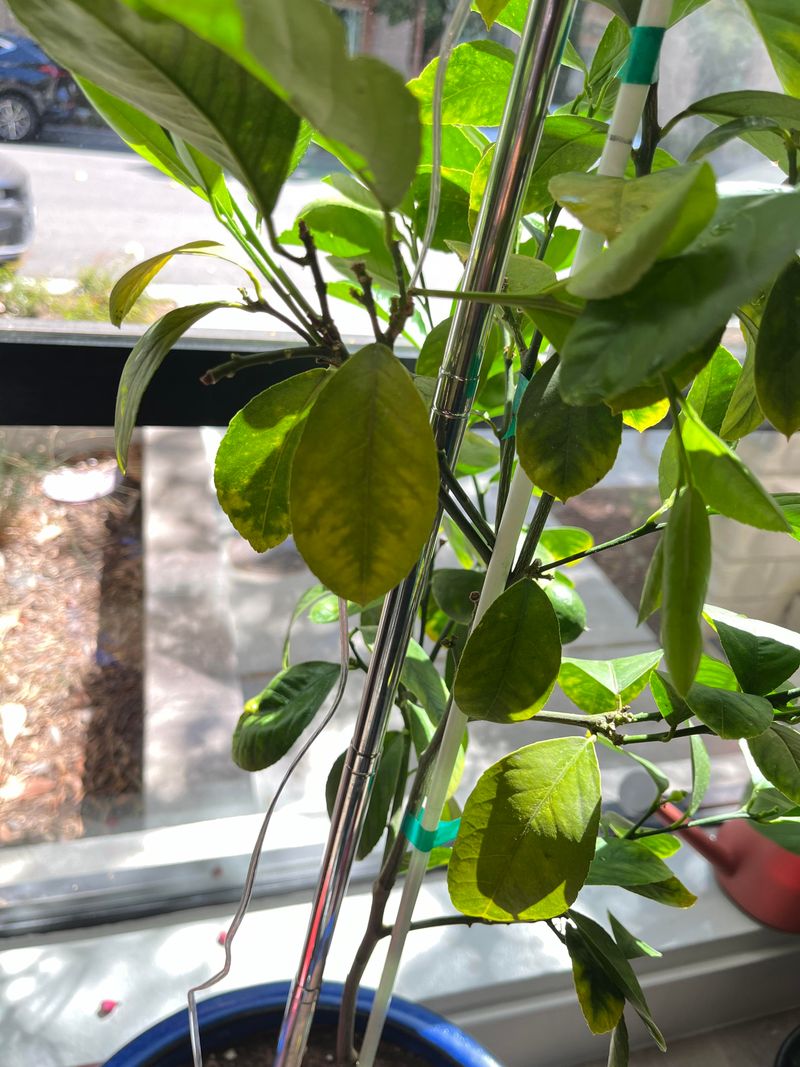
Ever notice how your lips crack and your skin feels tight in January? Your lemon tree feels that dry air too. Heated indoor air can make citrus leaves curl, turn brown at the edges, or fall off.
Dry rooms also roll out a welcome mat for spider mites. These tiny pests thrive when the air lacks moisture, and they can multiply fast. Adding a bit of humidity helps the tree look better and makes your home less inviting to them.
A pebble tray is a simple, low-cost fix. Fill a wide tray with small stones, add water until it sits just below the top of the pebbles, and set the pot on top. As the water evaporates, it creates a pocket of moist air right around the leaves.
Plants also enjoy company. Grouping your lemon with other houseplants builds a small zone of shared humidity, since every plant releases moisture through its leaves. A cool-mist humidifier placed nearby gives an even bigger boost on the driest days.
Location matters just as much. Keep the tree away from heating vents, fireplaces, wood stoves, and drafty doors. Blasts of hot or cold air stress the leaves and can trigger sudden drop.
Forced-air heating runs a lot in North Carolina homes from late fall through early spring. All that blowing air pulls moisture from the room day after day.
With a few easy tweaks, your Meyer lemon can stay leafy and comfortable until warmer weather returns.
5. Feed Lightly To Support Winter Blooms And Fruit
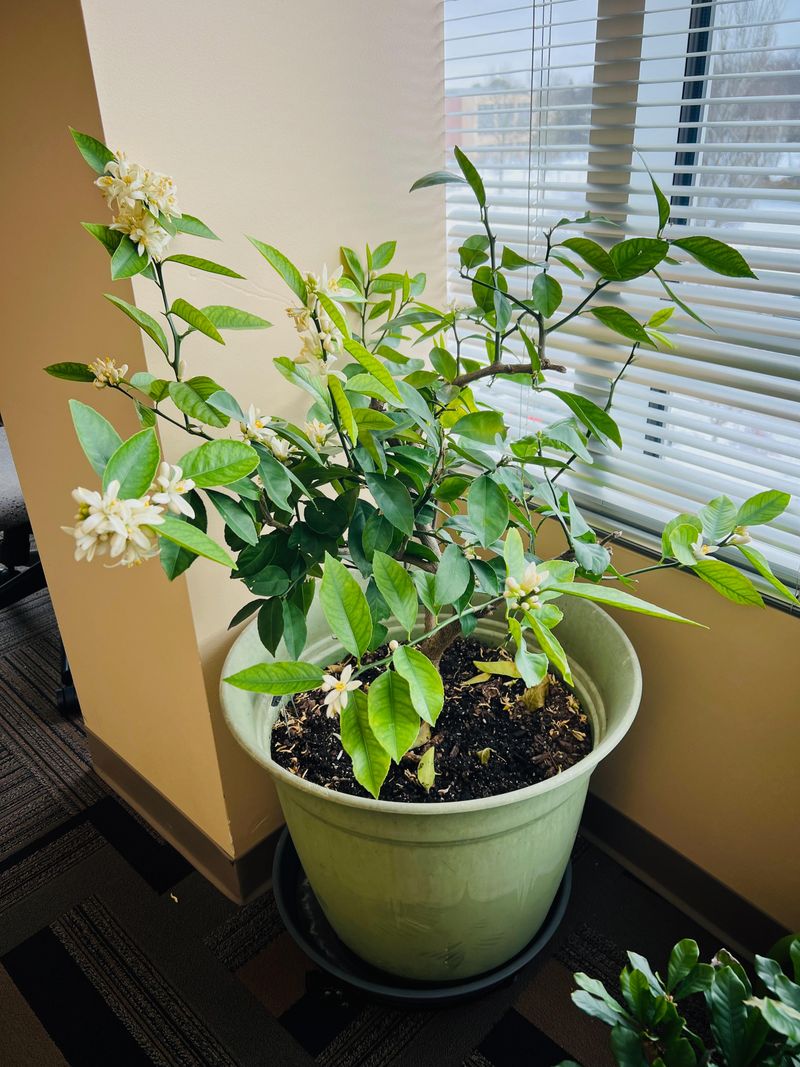
Here is a surprise for many new growers: Meyer lemons often bloom and ripen fruit during the cooler months. While your garden outside rests, your indoor tree may be busy with fragrant flowers and swelling lemons. All that work takes nutrients.
Growth does slow down in winter, though, because there is less light. That means your tree needs food, just not as much as it does in summer. Think of it as a light snack instead of a big meal.
Choose a fertilizer made for citrus. These blends include nitrogen plus micronutrients like iron, zinc, and manganese, which citrus trees use to stay green and productive. General houseplant food often leaves out some of these important extras.
Always read the label before feeding. Many products list a reduced winter rate, so follow those directions closely. Too much fertilizer can build up salts in the pot and burn tender roots, so more is never better.
Your tree will drop hints when it gets hungry. Pale or yellowing leaves can signal a nutrient shortage, especially if the veins stay green while the rest of the leaf fades. Check your watering habits too, since soggy soil can cause similar yellowing.
For North Carolina gardeners, smart feeding is a big part of the payoff. A well-fed tree has the strength to hold onto its fruit instead of dropping young lemons early.
When late winter brings ripe, juicy lemons for tea or lemonade, you will be glad you kept up those small, steady meals.
6. Hand-Pollinate The Flowers Indoors
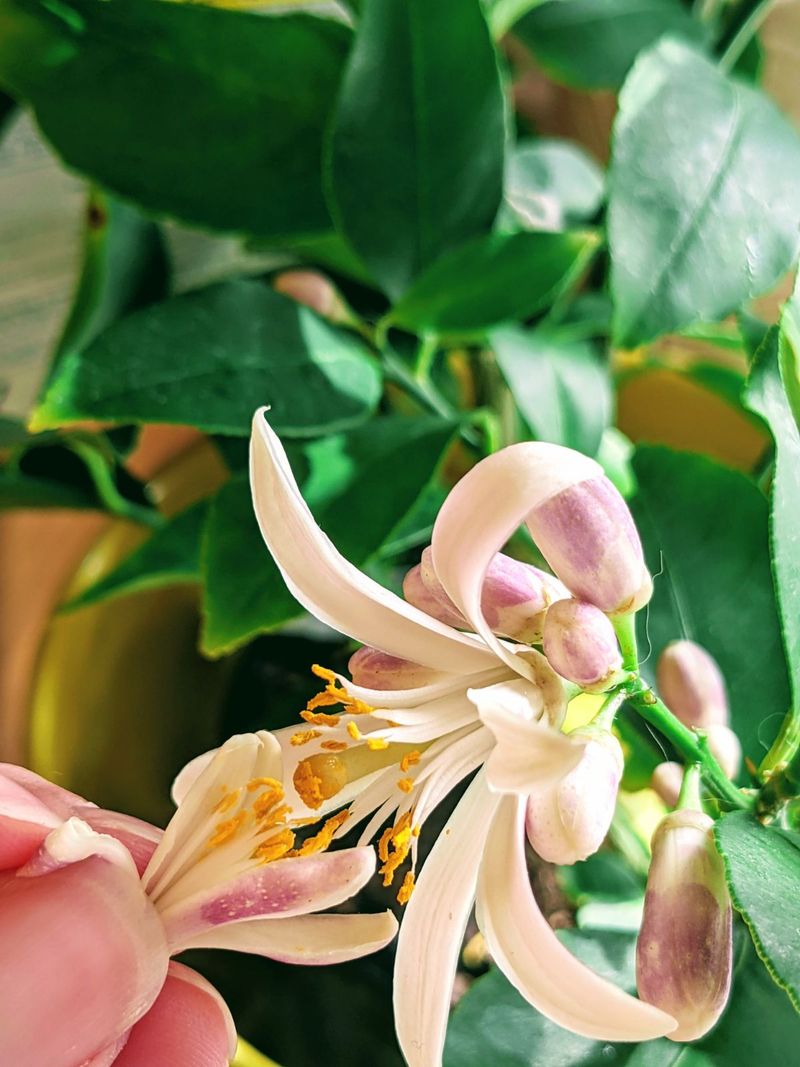
Walk past a blooming Meyer lemon and you will stop in your tracks. The white flowers smell sweet and fresh, like a mix of honey and citrus. That scent can fill an entire room in the middle of a gray winter.
Those lovely blooms have a job to do, though. Meyer lemons are self-fertile, so each flower can make fruit with its own pollen. Outdoors, bees and breezes move that pollen around, but inside your house, neither one is around to help.
So you get to play bee for a while. Grab a small, soft paintbrush or a cotton swab. When the flowers open, gently brush the center of each one, swirling lightly to pick up the yellow pollen.
Move from flower to flower as you go. Carrying pollen between blooms helps spread it around and improves your chances of fruit set. Be gentle, since the flower parts are delicate.
Repeat every few days while the tree keeps blooming. New flowers open over several weeks, so regular visits catch each one at the right moment. Kids often love this task, and it turns into a sweet little family ritual.
After a successful match, the petals fall and a tiny green bump appears at the center. That bump is a baby lemon. Not every one will stay, which is normal, but many will grow.
For North Carolina gardeners keeping a tree indoors all winter, this simple step can mean the difference between a few lemons and a real harvest. Homegrown fruit tastes extra special when you helped make it happen.
7. Watch For Pests And Expect A Little Leaf Drop
A few yellow leaves on the floor do not mean your tree is in trouble. Some leaf drop is normal as a Meyer lemon adjusts to lower indoor light. Heavy leaf loss, however, points to a problem with light, water, or temperature that needs attention.
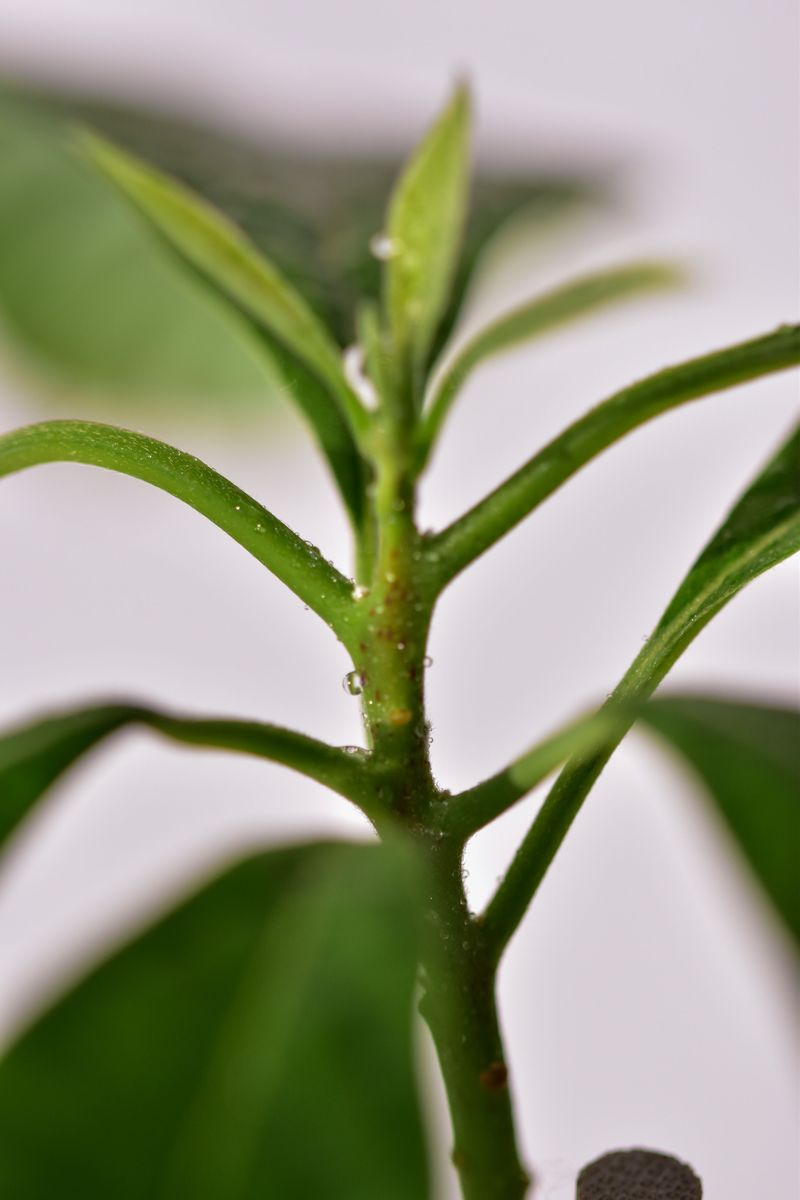
Pests are the other winter troublemakers. Scale, mealybugs, and spider mites often show up on indoor citrus when the air is warm and dry. Catching them early makes a huge difference.
Make inspections part of your routine. Look for small brown bumps on stems and leaf veins, which usually mean scale. White cottony fuzz in leaf joints points to mealybugs, while fine webbing and speckled leaves suggest spider mites.
Light problems often respond to simple fixes. Wipe pests off with a damp cloth or rinse the tree in the shower. For bigger outbreaks, treat with insecticidal soap or horticultural oil, following label directions carefully and coating the undersides of leaves.
Spring brings the reward for all your effort. Once the danger of frost has passed, usually around mid-April in much of North Carolina, start moving the tree outside.
Begin with a few hours in shade, then slowly add more sun over a week or two so the leaves do not scorch.
Warm, humid Carolina summers suit citrus wonderfully. Bright sunshine, fresh air, and natural pollinators help your Meyer lemon bounce back and build strength.
By next fall, it will be ready for another cozy winter indoors, full of fragrant blooms and bright, cheerful fruit.